



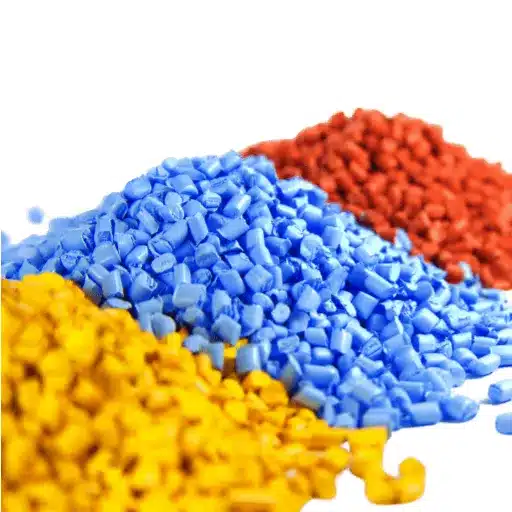


The busy customer called the Tier 2 automotive supplier in Michigan because their main client contacted them in October 2021. Three weeks before the production launch, the dashboard trim panels for the new SUV model showed warping during summer heat tests. The procurement team chose “general purpose ABS” material from their inventory without verifying the Heat Deflection Temperature (HDT) specification requirements. The material they selected began to soften when exposed to 85°C. The application required 105°C minimum.
Most engineers actually know about this situation because it happens too frequently. ABS resin exists as a material family which contains multiple terpolymer formulations that show completely different performance characteristics. The selection of an incorrect grade results in three different outcomes which include dimensional instability and surface defects and compliance failures. The correct selection of ABS enables users to obtain superior impact resistance and surface finish and processing efficiency.
Your guide provides grade-specific information which exists beyond typical material descriptions. The presentation will show both CHIMEI POLYLAC and INEOS TERLURAN specifications together with practical processing parameters and COA verification protocols which help identify prime resin versus inferior materials. The guide provides technical details which help you choose materials for automotive interior components and assess suppliers for your upcoming electronics housing project.
What Is ABS Resin?

ABS Chemical Composition and Structure
ABS resin which stands for acrylonitrile butadiene styrene functions as a thermoplastic material that designers developed to create a material which uses the best attributes of three separate chemical building blocks. The molecular composition of ABS demonstrates why it remains the primary choice for projects which need materials that maintain both strength and visual attractiveness.
Acrylonitrile (A) gives the substance chemical resistance together with thermal stability and enhanced tensile strength. The polar element establishes the intermolecular forces which enable ABS to maintain its rigidity while resisting oils and greases and various industrial chemicals. The material needs acrylonitrile to develop its structural foundation which enables it to support heavy loads.
Butadiene (B) gives the material its ability to resist impacts and maintain toughness. The rubber-like elastomeric phase of the material functions as an energy absorbing mechanism which protects against sudden breaks. The butadiene content—typically 15-35% of the polymer matrix—determines how much punishment the material can take without cracking. The material achieves higher impact protection through increased butadiene content while experiencing minor reductions in stiffness and heat resistance.
Styrene (S) provides three essential functions of enabling processability and creating surface gloss and establishing material rigidity. This element guarantees that ABS maintains proper flow during injection molding operations while creating components which achieve superior visual results. Styrene enables ABS to bond effectively with various surface finishes such as paint and metallizing and adhesive bonding materials.
The polymerization process serves as the central transformative element for this substance. ABS production occurs through either the emulsion process or the mass polymerization method which allows manufacturers to manage butadiene rubber particle distribution within the styrene-acrylonitrile (SAN) matrix. The two-phase structure of ABS consists of rigid SAN material which surrounds flexible butadiene nodules to create a material that combines strength with flexibility.
Global ABS Manufacturing Landscape
The global ABS resin market reached USD 23.1 billion in 2024 and projects to grow at 5.3% CAGR through 2030. The main driver behind this expansion is the increasing demand for automotive electrification and consumer electronic products. The procurement professionals need to understand the manufacturer landscape because it enables them to assess supply chain dangers while determining product authenticity.
CHIMEI Corporation (Taiwan) produces the POLYLAC brand which customers view as the top-quality product for injection molding grades. The PA-757 general-purpose grade has established itself as the standard industry benchmark which automotive OEMs and appliance manufacturers across the globe use to select materials.
INEOS Styrolution (Germany/USA) manufactures TERLURAN grades which achieve strong market presence throughout European and North American automotive supply chains. The GP-22 grade provides underhood applications with better heat resistance because it exceeds standard general-purpose ABS heat protection abilities.
Other Major Producers:
- SABIC — Extensive portfolio including specialty flame-retardant and high-heat grades
- LG Chem — Strong in Asian markets, competitive pricing on standard grades
- Formosa Chemicals — Major supplier for commodity ABS applications
- Trinseo — Formerly Dow Styron, strong in specialty and automotive grades
ABS Key Properties Summary
| Property | Typical Range | Notes |
|---|---|---|
| Density | 1.04-1.07 g/cm³ | Grade dependent; higher with fillers |
| Tensile Strength | 29-65 MPa | Standard grades ~45 MPa |
| Flexural Modulus | 1,800-3,000 MPa | Indicates stiffness |
| Notched Izod Impact | 6-22 kg·cm/cm | Higher with increased butadiene |
| Heat Deflection Temp | 85-115°C | Critical for automotive underhood |
| Vicat Softening Point | 90-115°C | Often higher than HDT |
| Melt Flow Index | 1.0-25 g/10min | Processing ease indicator |
| Mold Shrinkage | 0.4-0.9% | Design for dimensional accuracy |
ABS Material Properties Reference

Physical Properties
The density of ABS material typically exists within the range of 1.04 to 1.07 g/cm³ which results in a weight that exceeds water weight by approximately 5%. The specific gravity of this material remains uniform for most general-purpose grades, yet glass-filled variants attain specific gravities that exceed 1.25 g/cm³. The hygroscopic nature of the material requires special handling because ABS material absorbs water vapor from surrounding air and needs drying before its production process begins.
The average water absorption rate after 24 hours of immersion establishes a range between 0.20 and 0.45 percent which reaches saturation levels between 0.5 and 1.0 percent based on the grade of the material. The absorbed moisture creates surface defects in molding yet it also hydrolyzes polymer chains at processing temperatures which results in permanent reduction of mechanical strength. The processing section will explain the correct methods for material drying.
The range of mold shrinkage extends from 0.4 to 0.9 percent while processing conditions and part design determine the exact shrinkage value. This particular engineering plastic exhibits high shrinkage because its shrinkage rate of 0.5 to 0.7 percent for PC and 1.8 to 2.5 percent for POM requires precise mold construction especially in applications demanding exact measurements. The amorphous material structure leads to more uniform shrinkage patterns which result in decreased potential for warping during manufacturing.
The surface characteristics of ABS material function as its most effective marketing asset. The material enables high-gloss finishes which emerge directly from the mold and achieve 60-85 gloss units at 60° based on the temperature and texture of the mold. The natural gloss of this material enables multiple cosmetic applications to function without the need for additional finishing.
Mechanical Properties
The mechanical performance of ABS materials depends on the specific grade which has been selected for use. The engineers need to understand these ranges because they help with proper specification work while keeping costs under control.
Tensile Strength: Standard general-purpose grades deliver 40-50 MPa tensile strength at yield. High-impact grades exhibit a decrease to 35 MPa because they contain more butadiene yet glass-filled grades produce results above 60 MPa. HIPS achieves 25-35 MPa for tensile strength while ABS provides approximately 40% higher strength than this material.
Flexural Properties: Flexural modulus of 1,800-2,400 MPa provides the stiffness needed for structural housings and load-bearing components. The material displays higher stiffness than HIPS which has a stiffness of approximately 1,600 MPa and PP homopolymer which has a stiffness of approximately 1,400 MPa yet it falls short of PC which has a stiffness of 2,300 MPa and POM which has a stiffness of 2,800 MPa.
Impact Resistance: Notched Izod impact strength of 10-20 kg·cm/cm makes ABS significantly tougher than polystyrene derivatives. The material maintains its impact performance at low temperatures while PP becomes brittle when close to freezing point. The butadiene rubber phase absorbs impact energy through deformation rather than crack propagation.
Hardness: Rockwell R hardness of 100-115 indicates good scratch resistance for consumer-facing applications. The material maintains its durability through this hardnesswhich requires more intense processing for harder materials.
Thermal Properties
Thermal performance limits represent the most common cause of ABS specification failures. Engineers must distinguish between several temperature metrics:
Glass Transition Temperature (Tg): Approximately 105°C, this is the temperature where the polymer transitions from glassy to rubbery behavior. Above Tg, stiffness drops dramatically even if the material hasn’t melted.
Heat Deflection Temperature (HDT): Measured under load (typically 1.82 MPa), HDT for standard ABS ranges 85-98°C. This is lower than the Tg because applied stress accelerates deformation. Critical specification point: Automotive interior applications often require HDT ≥95°C for hot climate durability.
Vicat Softening Temperature: 90-115°C depending on grade and test load. Vicat typically exceeds HDT and represents the temperature where a needle penetrates the material under specified conditions.
Continuous Service Temperature: -40°C to +80°C for general-purpose grades. Brief excursions to 100°C may be tolerated, but prolonged exposure above 80°C causes creep and dimensional change.
Electrical Properties
ABS serves extensively in electrical and electronic housings due to favorable dielectric characteristics:
- Dielectric Strength: 15-20 kV/mm
- Volume Resistivity: 10^15-10^16 ohm·cm
- Dielectric Constant: 2.4-3.2 at 1 MHz
- Arc Resistance: 60-120 seconds
ABS exhibits these qualities which make it appropriate for use in equipment enclosures and switch housings and consumer electronics. Standard ABS material does not provide high-temperature electrical performance because it requires specialty grades with better thermal resistance for such applications.
Flame-retardant ABS grades achieve UL94 ratings from HB (basic) to V-0 (self-extinguishing). The formulations use halogenated or non-halogenated flame retardants which create minimal changes to electrical characteristics—users must confirm dielectric standards for FR grades used in electrical work.
Chemical Resistance
ABS chemical resistance is good but not comprehensive. The material withstands:
- Acids: Dilute acids, including acetic, hydrochloric, and sulfuric (at low concentrations)
- Bases: Weak alkalis and cleaning solutions
- Oils and Greases: Mineral oils, hydraulic fluids, and most lubricants
- Alcohols: Isopropyl alcohol, ethanol (not methanol)
ABS fails in contact with:
- Ketones: Acetone, MEK, methyl isobutyl ketone (causes stress cracking and dissolution)
- Esters: Ethyl acetate, butyl acetate
- Aromatic Hydrocarbons: Benzene, toluene, xylene
- Chlorinated Hydrocarbons: Methylene chloride, carbon tetrachloride
The study has a second restriction which pertains to its UV resistance. The material unstabilized ABS shows degradation through sunlight exposure as it develops surface chalking and color shift and embrittlement within months of outdoor exposure. The UV-stabilized grades which contain hindered amine light stabilizers (HALS) and carbon black extend their service life to 3-5 years but ABS requires protective coatings for its outdoor usage.
ABS Grades and Applications

Standard ABS Grades
General-Purpose ABS balances properties for broad applicability. CHIMEI POLYLAC PA-757 and INEOS TERLURAN GP-22 serve as moderate-impact-strength materials which maintain proper flow behavior and regular thermal protection. The ABS family depends on these materials for standard applications which do not require special conditions.
High-Impact ABS contains increased butadiene rubber content, which boosts impact resistance by 50-100% over standard grades. The material shows trade-offs that include minor stiffness reduction, decreased heat resistance and slight decrease in surface gloss. Use these grades for applications expecting rough handling or potential impact—power tool housings, luggage, sporting goods.
High-Gloss ABS optimizes surface finish for cosmetic applications. The grades demonstrate excellent flow capabilities which enable them to fill thin walls while maintaining fine mold texture reproduction. The materials show high aesthetic value which leads to their common use in appliance panels and consumer electronics bezels and automotive interior trim.
Specialty ABS Grades
The Heat-Resistant ABS (HH ABS) material provides a solution to the thermal restriction problem which standard grades of materials face. The HDT range of HH ABS material which contains higher acrylonitrile content and heat stabilizers reaches between 100 and 115 degrees Celsius. The automotive industry requires these high-quality materials to manufacture electric vehicle battery housings and HVAC systems and engine covers. The price of standard ABS products will increase by 15 to 25 percent.
Flame-Retardant ABS contains additives achieving UL94 ratings from V-2 to V-0. These grades are essential for electronics housings, TV enclosures, and electrical equipment where fire safety codes apply. Processing requires lower temperatures (200-230°C melt) to prevent flame retardant degradation, and mold corrosion resistance becomes important due to halogenated additives in some formulations.
Electroplatable ABS contains proprietary rubber formulations that accept chrome and nickel plating for automotive trim, decorative hardware, and premium appliance accents. The plating process requires specific surface preparation, and not all ABS grades plate successfully. The term “electroplating grade” should be used to identify metal finishing requirements.
Glass-Filled ABS incorporates 10-30% glass fiber reinforcement which results in a substantial increase of stiffness that reaches a flexural modulus of 4500 MPa. These grades resist creep under load and reduce thermal expansion by 50% or more. The material finds use in manufacturing structural parts for vehicles and bases for appliances and brackets for mounting purposes.
The standard formulation of Transparent ABS (MABS) has been modified to create a transparent material. MABS provides better protection against impacts while lacking the same level of transparent visibility which PC and PMMA provide. These specialty grades find usage in medical device housings and display windows and cosmetic packaging.
ABS Applications by Industry
Automotive (Largest Market Segment)
The polymer ABS accounts for about 12.5% of all polymers used in passenger vehicles. The interior space uses the material for multiple purposes including dashboard components and door panels and trim pieces and console elements. The material works perfectly for high-end interior finishes because it can hold soft-touch paints and vacuum metallizing.
The exterior uses the material for grilles and wheel covers and body side moldings but these applications need either UV-stabilized grades or protective clear coats. The transition to electric vehicles opens up fresh possibilities because battery pack housings and charging port doors and thermal management components need heat-resistant ABS grades.
Electronics and Electrical
TV and monitor housings, computer enclosures, printer components, and keyboard keys represent major ABS consumption. Flame-retardant grades meet safety requirements while providing the impact resistance needed for consumer handling. The material’s electrical insulating properties and ability to accept EMI shielding coatings add to its suitability.
Appliances
Refrigerator door liners, vacuum cleaner housings, blender bases, and small appliance enclosures rely on ABS for durability and appearance. The material resists household chemicals and cleaning agents while providing the structural integrity for daily use.
Consumer Goods
LEGO bricks—perhaps the most famous ABS application—demonstrate the material’s precision molding capability and durability. Luggage shells, sporting goods, and toy manufacturers specify ABS for impact resistance and vibrant colorability.
Medical Devices
FDA-compliant ABS grades serve in sterilizable housings, equipment enclosures, and diagnostic device components. These grades meet USP Class VI and ISO 10993 biocompatibility requirements. Note that not all ABS is medical-grade—verify compliance documentation for healthcare applications.
Grade-Specific ABS Data

How to Read ABS Specifications on COAs
Certificate of Analysis documentation separates prime resin from off-grade or counterfeit material. When reviewing ABS COAs, verify these critical parameters:
Melt Flow Index (MFI): Reported in g/10min at 220°C/10kg (ISO 1133), MFI indicates processing viscosity. Typical general-purpose ABS ranges 1.5-3.0 g/10min. Values significantly outside published datasheet ranges suggest degradation, contamination, or wrong grade.
Izod Impact Strength: Notched Izod values in kg·cm/cm or J/m indicate toughness. Standard grades show 15-20 kg·cm/cm; high-impact grades exceed 25 kg·cm/cm. Low impact values may indicate improper rubber dispersion or moisture contamination.
Heat Deflection Temperature: Verify HDT at 1.82 MPa load matches your application requirements. Standard grades: 85-95°C. Heat-resistant grades: 100-115°C.
Additive Declarations: COAs should specify flame retardant type and loading, UV stabilizers, or other modifiers. Undeclared additives compromise processing consistency and regulatory compliance.
Lot Number Traceability: Authentic manufacturer COAs include lot numbers verifiable with the producer’s regional office. This traceability is your insurance against counterfeit material.
Common ABS Grades and Specifications
| Grade | Manufacturer | MFI (g/10min) | Notched Izod (kg·cm/cm) | HDT (°C) | Key Characteristics |
|---|---|---|---|---|---|
| PA-757 | CHIMEI | 1.8 | 22 | 88 | High impact, high gloss |
| PA-765A | CHIMEI | 2.1 | 20 | 85 | Flame retardant V-0 |
| PA-777D | CHIMEI | 1.4 | 28 | 88 | Super high impact |
| PA-777B | CHIMEI | 2.0 | 24 | 100 | Heat-resistant grade |
| GP-22 | INEOS | 2.0 | 15 | 96 | Balanced GP grade |
| GP-35 | INEOS | 2.5 | 12 | 95 | High flow |
| HH-106 | INEOS | 1.8 | 14 | 105 | High heat resistance |
| 3325MT | SABIC | 2.2 | 18 | 93 | Automotive grade |
Yifuhui Stocked ABS Grades
CHIMEI POLYLAC PA-757
Our most requested ABS grade, PA-757 delivers the ideal balance for general-purpose applications. With MFI of 1.8 g/10min, it flows well in thin-wall molds while maintaining excellent impact resistance (22 kg·cm/cm notched Izod). The high-gloss surface finish reduces or eliminates secondary operations for cosmetic parts.
Specifications at a glance:
- Density: 1.05 g/cm³
- Tensile Strength: 48 MPa
- Flexural Modulus: 2,100 MPa
- HDT: 88°C
- Applications: Appliance housings, toys, automotive interior trim, electronics enclosures
INEOS TERLURAN GP-22
GP-22 offers slightly higher heat resistance (96°C HDT) than typical general-purpose ABS, making it popular for applications with moderate thermal exposure. The balanced property profile suits consumer goods, electronics, and automotive components requiring reliable performance without specialty grade premiums.
Specifications at a glance:
- Density: 1.04 g/cm³
- Tensile Strength: 45 MPa
- Flexural Modulus: 2,000 MPa
- HDT: 96°C
- Applications: Consumer goods, business machine housings, automotive components
ABS Processing Guidelines

Pre-Processing: Drying Requirements
Here’s a rule that will save you thousands in scrap and rejected parts: ABS must be dried before processing. No exceptions.
The material’s hygroscopic nature means it readily absorbs atmospheric moisture. Processing wet ABS produces splay (silver streaking), surface blemishes, and—most seriously—hydrolytic degradation that permanently reduces mechanical properties.
Proper Drying Parameters:
- Temperature: 80-90°C (176-194°F)
- Time: 2-4 hours minimum for virgin material; 4-6 hours for regrind
- Target moisture content: <0.2% (0.1% preferred)
- Equipment: Desiccant dryer required; hot air ovens insufficient
Moisture-related defects often don’t appear immediately—parts may look acceptable upon ejection but develop cracks or show reduced impact strength days later. Always verify dryer operation with a calibrated moisture analyzer before starting production runs.
Injection Molding Parameters
Barrel Temperature Profile
| Zone | Temperature Range | Purpose |
|---|---|---|
| Rear (Feed) | 180-210°C | Pre-heating, prevents bridging |
| Middle | 210-240°C | Primary melting and mixing |
| Front (Nozzle) | 220-260°C | Final homogenization |
Melt temperatures above 260°C risk thermal degradation, causing yellowing, reduced impact strength, and acrid odor. Monitor actual melt temperature with a pyrometer—barrel setpoints don’t account for shear heating from the screw.
Mold Temperature Considerations
Mold temperature significantly affects surface finish and dimensional stability:
- 40-50°C: Fastest cycle times, matte finish, higher molded-in stress
- 50-70°C: Good balance of cycle time and surface quality for most applications
- 70-80°C: High-gloss finish, reduced stress, longer cycles
For cosmetic parts requiring Class A surfaces, run at the high end of the mold temperature range. For structural components where appearance is secondary, lower temperatures improve productivity.
Injection Parameters
- Injection Pressure: 500-1,500 bar depending on part geometry and wall thickness
- Injection Speed: Moderate to high; ABS tolerates aggressive filling
- Holding Pressure: Approximately 50% of injection pressure
- Back Pressure: 50-150 bar for consistent melt homogenization
- Screw Speed: 50-100 RPM; higher speeds increase shear heating
Mold shrinkage of 0.4-0.9% requires careful mold design. Amorphous structure means shrinkage is relatively isotropic compared to crystalline materials, but gate location and part geometry still influence dimensional stability.
Extrusion and Blow Molding
ABS extrudes successfully into three different product forms which include sheet material and profile products and pipe products. The Temperature profiles for this process begin at lower temperatures in the feed section and then progress to higher temperatures until they reach the die. The typical range of extrusion temperatures for operations extends from 180 degrees Celsius to 230 degrees Celsius based on the thickness of the product being processed.
Blow molding ABS produces hollow parts like automotive ducting and appliance housings. The development of parison programming and die design requires attention to ABS melt strength properties. The use of multi-layer constructions together with barrier materials allows ABS material to be used in chemical containment applications.
Secondary Operations
ABS accepts most common plastic finishing operations:
Machining: Drilling, tapping, and milling work well with standard high-speed steel or carbide tools. Avoid excessive heat buildup that can cause melting and smearing.
Surface Treatment: Painting, printing, and metallizing adhere excellently to ABS. Light solvent wiping (isopropyl alcohol) removes mold release residue before finishing. For critical adhesion applications, corona or plasma treatment improves bond strength.
Welding: Ultrasonic welding, hot plate welding, and vibration welding all work with ABS. Joint design requires consideration of the amorphous structure—avoid sharp internal corners that concentrate stress.
Adhesive Bonding: Cyanoacrylates, epoxies, and urethanes bond well to ABS. Avoid solvent cements containing ketones or aromatics that attack the substrate.
ABS vs. Alternative Materials

ABS vs. HIPS (High-Impact Polystyrene)
HIPS offers lower cost—typically 30-35% less than ABS at approximately 1.30/kgversus1.30/kgversus1.97/kg for standard ABS. But the savings often disappear when performance requirements are considered.
| Property | ABS | HIPS |
|---|---|---|
| Tensile Strength | 40-50 MPa | 25-35 MPa |
| Notched Izod Impact | 15-22 kg·cm/cm | 8-15 kg·cm/cm |
| Heat Deflection Temp | 85-100°C | 70-85°C |
| Surface Gloss | Excellent (85+) | Good (60-80) |
| Processability | Excellent | Excellent |
| Cost (2024) | ~$1.97/kg | ~$1.30/kg |
When to choose HIPS: Cost-sensitive applications with moderate performance requirements—disposable packaging, low-cost appliance liners, promotional items.
When ABS is worth the premium: Structural components, parts requiring impact resistance, applications above 75°C service temperature, or where premium surface finish matters.
ABS vs. Polypropylene (PP)
PP offers superior chemical resistance and lower density (0.90-0.91 g/cm³ versus 1.05 g/cm³ for ABS), making it attractive for chemical containers and weight-sensitive applications. However, the materials differ significantly in other respects.
| Property | ABS | PP |
|---|---|---|
| Density | 1.05 g/cm³ | 0.90-0.91 g/cm³ |
| Tensile Strength | 40-50 MPa | 30-35 MPa |
| Flexural Modulus | 2,000-2,400 MPa | 1,200-1,600 MPa |
| Heat Resistance | 85-100°C | 100-130°C (homopolymer) |
| Low-Temp Impact | Excellent | Poor (becomes brittle) |
| Surface Hardness | Rockwell R 100-115 | Rockwell R 80-95 |
| Chemical Resistance | Good | Excellent |
Marcus runs procurement for a lawn equipment manufacturer evaluating housing materials. His initial specification called for ABS due to impact resistance requirements, but the chemical engineering team flagged potential exposure to gasoline and oils. Testing revealed that while ABS withstands brief contact, prolonged fuel exposure caused stress cracking. The team switched to a chemically resistant PP grade for the fuel tank housing while keeping ABS for the control panel and handle components where impact resistance and surface finish were priorities.
ABS vs. PC (Polycarbonate)
PC offers superior heat resistance (HDT ~135°C), optical clarity, and toughness, but at significantly higher cost (3.50−4.50/kgversus3.50−4.50/kgversus1.97/kg for ABS). PC/ABS alloys bridge the gap, offering intermediate properties at moderate premiums.
Choose PC when: optical clarity is required, service temperatures exceed 100°C, or maximum impact resistance is essential.
Choose ABS when: cost is a consideration, processability matters, or the application doesn’t require PC’s extreme performance.
For applications requiring higher heat resistance than ABS provides, consider exploring our PA66 nylon resin options for automotive and industrial uses.
Material Selection Framework
| Requirement | Recommended Material |
|---|---|
| Maximum impact resistance, moderate cost | ABS |
| Lowest cost, moderate performance | HIPS |
| Chemical exposure, flexibility | PP |
| High heat (>100°C), transparency | PC |
| Balanced properties, premium applications | PC/ABS alloy |
| Wear resistance, low friction | POM |
Sourcing ABS from China: Procurement Guide
What to Look for on ABS Certificates of Analysis
Counterfeit and off-grade ABS circulates in global markets. Protect your supply chain by verifying COA documentation:
Manufacturer Authentication: Confirm the COA bears official manufacturer letterhead and formatting. CHIMEI, INEOS, and other major producers use standardized layouts with security features. Compare against known authentic samples.
Specification Verification: Cross-check all values—MFI, impact strength, HDT, density—against official manufacturer datasheets. Minor variations (±10%) are normal between lots; deviations beyond 15% warrant investigation.
Lot Number Validation: Every authentic COA includes manufacturer lot numbers. Contact the manufacturer’s regional office to verify lot existence and production date. This single step eliminates most counterfeit material.
Additive Documentation: For specialty grades (FR, UV-stabilized, heat-resistant), COAs should specify additive types and loadings. Missing additive information suggests generic material mislabeled as specialty grade.
Testing Date and Location: Verify testing occurred at certified laboratories. Manufacturer in-house testing is standard; third-party testing adds confidence for critical applications.
Verifying Grade Authenticity
Beyond COA review, implement these verification practices:
Physical Sample Testing: Before accepting large shipments, conduct incoming inspection:
- Melt flow index verification (quick, indicative test)
- Density measurement (simple gravity test)
- Visual inspection for contamination or color variation
Supplier Qualification: Evaluate suppliers on:
- Direct manufacturer relationships (authorized distributor status)
- Warehouse and handling facilities (climate control for hygroscopic materials)
- Documentation practices and traceability systems
- Quality management certifications (ISO 9001 minimum)
ABS Price Factors (2024-2025)
ABS pricing fluctuates with raw material costs and global demand. Key factors affecting your procurement costs:
Raw Material Costs: Styrene, butadiene, and acrylonitrile monomer prices drive base resin costs. Butadiene is particularly volatile due to its co-production with ethylene in naphtha cracking.
Grade Premiums: Specialty grades command significant premiums:
- Heat-resistant ABS: +15-25%
- Flame-retardant ABS: +20-35%
- Glass-filled ABS: +30-50%
- Electroplating grades: +10-20%
Volume and Packaging: Bulk quantities (full truckloads or container loads) reduce per-kilogram costs. Standard 25 kg bags offer flexibility; bulk boxes or silo deliveries suit high-volume continuous operations.
Market Outlook: The ABS market is projected to grow at 5.3% CAGR through 2030, with automotive electrification and consumer electronics driving demand. Supply constraints during peak seasons (Q4 consumer goods production) may affect availability and pricing.
Working with Yifuhui for ABS Supply
Stocked Grades: We maintain inventory of CHIMEI POLYLAC PA-757 and INEOS TERLURAN GP-22 at our Suzhou facility. These proven grades cover approximately 80% of general-purpose ABS applications.
25 kg MOQ: Unlike suppliers requiring full pallet or container commitments, we offer 25 kg minimum orders. This flexibility supports:
- R&D and prototyping projects
- Small-batch production trials
- Grade evaluation before volume commitment
- Just-in-time inventory management
Documentation Package: Every shipment includes:
- Manufacturer Certificate of Analysis
- Material Safety Data Sheet (MSDS)
- Compliance certificates (RoHS, REACH as applicable)
- Full lot traceability documentation
Logistics Advantage: Located 90 minutes from Port of Shanghai, we offer export packaging and documentation for international shipment. Typical lead times: 7-14 days to major Asian ports, 14-21 days to Europe and North America.
Quality Verification: All material is stored in climate-controlled warehouses with humidity monitoring. Desiccant packaging protects material during transit. We guarantee manufacturer-authentic material with full COA documentation—or your money back.
ABS Sustainability and Recycling

ABS Recycling Process
ABS carries Resin Identification Code 7 (Other), reflecting its classification outside the main recycling categories. However, the material is recyclable through mechanical reprocessing.
Recycling Challenges:
- Butadiene rubber phase degrades with each heat history cycle
- Impact strength drops 10-20% with first regrind use
- Color contamination limits aesthetic applications
- Separation from plated or painted parts requires additional processing
Best Practices for Regrind Use:
- Limit regrind to 20-30% of total feedstock for critical applications
- Use 100% regrind for internal non-cosmetic components
- Maintain separate regrind streams by color and grade
- Test mechanical properties of regrind lots before use
Bio-Based and Sustainable ABS Developments
Leading manufacturers are developing sustainable alternatives:
INEOS offers bio-attributed ABS produced using renewable feedstock via mass balance certification. These grades match conventional ABS performance while reducing carbon footprint.
Mechanical Recycling Grades: Some producers offer ABS containing post-consumer recycled (PCR) content, typically 10-30%. These grades suit non-critical applications where slight property reduction is acceptable.
Design for Recyclability: When specifying ABS, consider end-of-life:
- Design single-material constructions where possible
- Avoid incompatible additives that complicate recycling
- Select labels and adhesives compatible with ABS reprocessing
- Specify unpigmented or lightly pigmented material for broader recyclability
Frequently Asked Questions
What is the difference between ABS and HIPS?
ABS contains butadiene rubber for superior impact resistance and higher heat tolerance (85-100°C vs. 70-85°C). HIPS is cheaper but less durable. ABS also offers better surface gloss and chemical resistance. For structural or cosmetic applications, ABS justifies the 30-35% price premium.
Is ABS food safe / FDA compliant?
Standard ABS is not FDA-compliant for food contact. Specific grades meet FDA requirements for limited food contact applications, but these require explicit verification. For food containers, PP or HDPE are generally preferred alternatives.
What is the maximum temperature ABS can withstand?
Continuous service temperature for standard ABS is 80°C, with brief excursions to 100°C possible. Heat-resistant grades (HH ABS) extend this to 100-115°C continuous. Above these temperatures, ABS creeps and loses dimensional stability.
How do I choose the right ABS grade for injection molding?
Start with your application’s critical requirements: heat exposure dictates whether standard or HH grades are needed; impact requirements determine high-impact versus general-purpose; regulatory needs (UL94) specify flame-retardant grades. When in doubt, begin with a proven general-purpose grade like CHIMEI PA-757 or INEOS GP-22 and validate through testing.
Can ABS be used for outdoor applications?
Standard ABS degrades in UV exposure, showing surface chalking and embrittlement within 6-12 months. UV-stabilized grades extend service life to 3-5 years. For long-term outdoor exposure, consider ASA (acrylonitrile styrene acrylate) or painted/coated ABS.
What is the shelf life of ABS resin?
When stored properly in original packaging at moderate temperatures (<30°C) and low humidity, ABS resin maintains properties for 2-3 years. Exposure to moisture or heat accelerates degradation. Always dry material before processing regardless of storage duration.
Does ABS require drying before processing?
Yes. ABS must be dried at 80-90°C for 2-4 hours to reach <0.2% moisture content. Processing wet ABS causes surface defects, hydrolytic degradation, and reduced mechanical properties. Desiccant drying is mandatory—hot air ovens are insufficient.
What is ABS resin price per kg?
As of 2024-2025, standard general-purpose ABS averages $1.90-2.10/kg for prime material. Specialty grades command premiums: heat-resistant (+15-25%), flame-retardant (+20-35%), glass-filled (+30-50%). Prices fluctuate with raw material costs and global demand.
Conclusion
The training data you acquired exists in two different formats. The performance of ABS resin shows three essential engineering plastic qualities because it provides exceptional toughness and maintains visual aesthetics and enables efficient manufacturing processes. The material has been used in various demanding applications for 70 years because it demonstrates reliable performance from automotive interiors to electronics housings.
The successful use of ABS requires specific knowledge about different grades of the material. The selection of standard ABS or heat-resistant formulation determines whether a product will maintain its shape for multiple years or whether it will distort during hot summer temperatures. You need to understand your application’s temperature requirements and impact needs and regulatory constraints to choose the most suitable grade for your project.


