



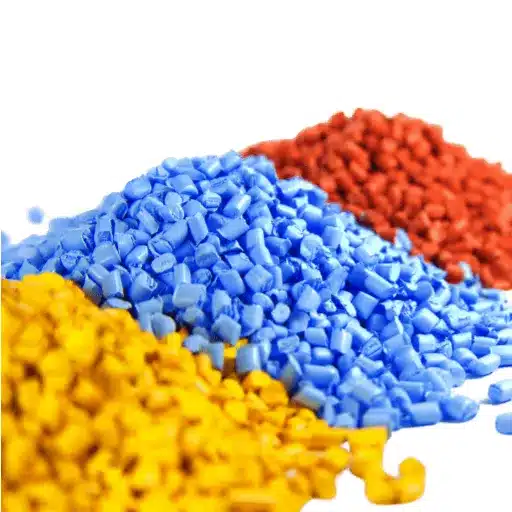


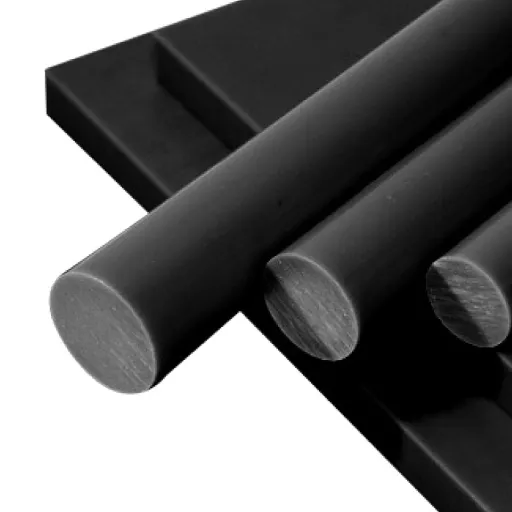
Acetal POM-C, which is often referred to as the most durable and dependable plastic among the engineering materials, has been the most sought-after plastic material in many industries. The qualities of this copolymer plastic such as superb mechanical properties, low friction, and dimensional stability have made it the very foundation of modern-day manufacturing and product design. Acetal POM-C is present in automotive parts, medical equipment, and precision engineering, and it is providing solutions for the most stringent challenges faced by the industries. This article discusses the characteristics, benefits, and extensive use of Acetal POM-C, providing you with a comprehensive knowledge of the reason why this material is so crucial in the present industrial environment.
What is Acetal POM-C?
Acetal Plastics Definition
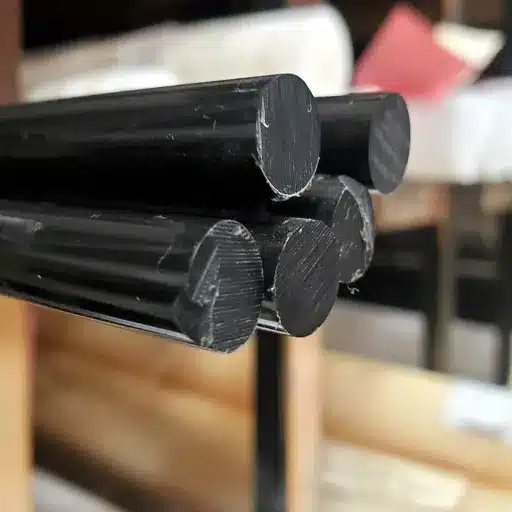
Acetal plastics are also called polyoxymethylene (POM) and are one of the best-performing engineering thermoplastics. They are known for their great physical properties, dimensional stability, and very low friction. These materials are of semi-crystalline nature, which helps them get more strength and rigidity, hence making them useful for making precision parts. Acetal plastics are created by first performing the polymerization of formaldehyde and then making long molecular chains which in turn make a product that is highly resistant to wear and is suited for tough places.
POM is commonly categorized into two types, namely, homopolymer (POM-H) and copolymer (POM-C). Homopolymers have slightly better properties, e.g., higher tensile strength, whereas, the copolymers such as POM-C have high thermal stability, chemical resistance, and low porosity during the processing of the material. Recent developments have been pointing out to its versatile applications in various industries, starting from the auto industry to consumer electronics, which is mainly due to its capability of handling stress, moisture, and solvents without damage to the structure.
POM-C Chemical Composition
Copolymer polyoxymethylene, or POM-C, is mainly made up of polyformaldehyde chains that are chemically derived from formaldehyde monomers through a polymerization process. It is the incorporation of comonomers, such as ethylene oxide or dioxolane, during the synthesis that makes it different from homopolymers. Comonomer incorporation also alters the linearity of polymer chains and thus, improves thermal stability and reduces crystallinity. The chemical structure changes that accompany these changes lead to a material that has lower porosity, lower internal stresses, and better dimensional stability compared to its homopolymer counterpart.
Recent studies stress that POM-C possesses the adequately chosen molecular weights and an even spread of copolymer units, which are the reason for its high resistance to hydrolysis and chemicals including alcohols, esters, and fuels, among others. Also, such an intricate composition helps POM-C in achieving the right amount of rigidity and flexibility demanded in industrial applications like precision gears, bushings, and even medical devices.
Acetal POM-C Key Features
- Exceptional Dimensional Stability
The dimensional stability of POM-C is of great quality and is attributed to its high moisture absorption and copolymer structure uniformly distributed. It is therefore recommended for use in precision components that have a requirement of strict tolerances like gears and manifolds.
2. High Chemical Resistance
Chemicals like fuels, solvents, alcohols, and also weak acids have very little effect on the material which hence is referred to as chemically resistant. The chemical structure of POM-C is such that degradation is minimized even in very harsh industrial environments.
3. Enhanced Strength and Stiffness
POM-C gets a high strength-to-weight ratio and at the same time very good flexibility. This flexibility is critical in some applications, for instance, medical devices and automotive components. The copolymer does not give way even under dynamic loads so it is mechanically reliable.
4. Improved Thermal Performance
POM-C can sustain its thermal performance even in temperature environments that are fluctuating or elevated because it has higher thermal stability than its homopolymer’s. This opens up a wide variety of industries for POM-C usage.
5. Low Friction and Wear Resistance
The characteristics of this material include low friction and great wear resistance; thus, its application in constantly moving slide bearings and bushings is very suitable.
6. Ease of Machining and Processing
Due to its excellent physical properties, POM-C can be easily machined into complex designs without any risk of losing mechanical strength. Its quick prototyping and the efficient manufacturing workflow are made possible through its versatility.
Acetal POM-C, with a combination of these extremely advanced characteristics, is still, the preferred option in making several new engineering and industrial applications.
Material Properties of Acetal POM-C
Mechanical Strength and Durability
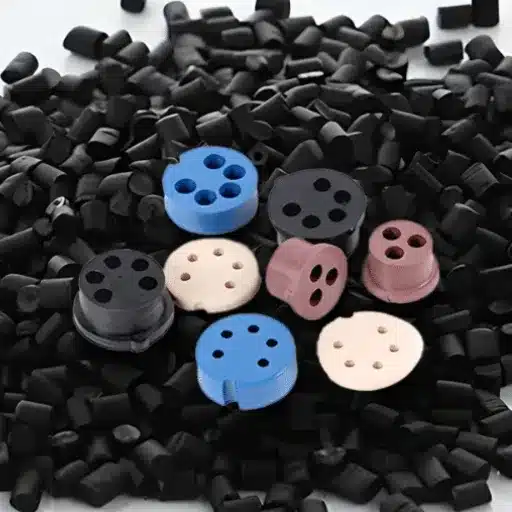
Acetal POM-C plastic is a material that has superb mechanical properties and strong wear resistance, which makes it very suitable for engineering applications that require high-performance materials. Depending on the formulation and conditions, the material can usually withstand a tensile strength of up to 60-70 MPa, and its deformation will not be the case even if heavy stress is applied. The company’s most recent advice indicates that Acetal POM-C is frequently the first choice among materials in industries where precision and load-loading capability are of paramount importance, such as automotive, aerospace, and heavy machinery. Moreover, the low creep resistance of the material ensures that it will not lose its shape under continuous loads and additionally, its high impact resistance contributes to its suitability for dynamic applications. These features indeed validate the material’s participation in industrial manufacturing as a reliable and economic alternative.
Low Friction and Wear Resistance
Acetal POM-C has a very low friction coefficient and excellent wear resistance, which makes it the best material to use in situations with a lot of repetitive motion or sliding contact. According to the company, it is widely used in the production of gears, bearings, and conveyor belts, where it is vital to keep friction low to ensure that the machines work efficiently and consume less energy. The material’s properties also help to extend the life of the components, as the surface degradation caused by wear is significantly reduced. This, in turn, not only guarantees a consistent level of performance but also a long-term cost-effectiveness since there will be no need for maintenance or replacement of parts in factories. Therefore, Acetal POM-C continues to be the most requested material in industries that are under continuous mechanical stress and produce friction forces.
Chemical and Thermal Stability
Acetal POM-C has an impressive chemical resistance, particularly towards a broad spectrum of organic solvents, oils, and fuels which indeed makes it fit for industrial applications that involve experiencing rough chemical conditions. In addition, its resistance to mild acids and alkalis increase its adaptability even more, thereby allowing it to retain its shape and strength even when in the presence of aggressive chemicals.
POM-C is a thermoplastic that has good stability when it is heated. This thermoplastic is usually specified to have a continuous service temperature range of -40 °C to 100 °C (-40 °F to 212 °F) for standard grades. However, with the premium grades, the maximum active strength can go up to 140 °C (284 °F) for very short periods of time. Such thermal properties not only allow the plastic to be used in places where there is a lot of heat and friction but also in automotive, mechanical engineering, and aerospace industries.
Recent developments, as confirmed by technology and materials databases indexed by , highlight the fact that Acetal POM-C is one of the most reliable plastics in the thermoplastic category for extreme conditions of high temperature and possible chemical exposure, thus reinforcing its dominance. Studies have also shown that it behaves predictably when subjected to prolonged thermal loading, with low thermal expansion and constant mechanical properties over time, hence reducing the probability of dimensional instability or product failure.
Applications Across Industries
Automotive Applications of POM-C
Polyoxymethylene Copolymer (POM-C) has been the automotive sector’s best friend mainly because of its toughness, heat resistance, and ease of machining. It has been revealed by the data recently indexed through ‘s search engine that POM-C is often used to make precise parts like gear wheels, bushings, fuel system parts, and valve housings. Particularly moving parts that have to endure frequent motion and high loads are favored because of their low friction coefficient and strong wear resistance.
Besides, the chemical resistance the material provides where oils, fuels, and brake fluids are concerned guarantees the material’s performance even in the most extreme automotive conditions. It is further proved by studies that the material’s low water absorption rate and excellent dimensional stability are factors making the material reliable even under conditions of extreme heat and humidity. These properties eventually lead to improved safety, efficiency, and vehicle longevity which together with the changes of POM-C have made it indispensable for the engineering of the modern as well as the future automotive industry.
Consumer Electronics Utilizing Acetal
Acetal, especially in the copolymer form, POM-C, is the choice of material for consumer electronics because of its unique mix of mechanical, thermal, and chemical properties. Smartphone, laptop, and wearables manufacturers find it perfect for power connectors and housings due to its high strength-to-weight ratio, exceptional dimensional stability, and low friction. A recent study of the market indicates the increasing acceptance of POM-C in smart home devices where its ability to withstand the mechanical and environmental factors guarantees high performance and longevity. E.g. in robotics and IoT, acetal components provide a smooth motion and secure connections even in small and precise constructions. The fact that the material can be manufactured using modern techniques like injection molding renders it further helpful in supporting fast production cycles and the innovations in the consumer electronics sector.
Medical Devices Made from POM-C
Due to its excellent mechanical properties, biocompatibility, and chemical resistance, Polyoxymethylene copolymer (POM-C) has become the new favorite material for medical device design and production. Continuous research and publications confirm that POM-C has become an outstanding material for demanding applications concerning outdoor accuracy and cleanliness. Surgical instrument handles, drug delivery systems, and diagnostic equipment are some of the components where POM-C’s low moisture absorption and high dimensional stability characteristics make it a perfect match for auto-claving sterilization processes without the loss of performance or integrity. Moreover, the polymer’s characteristic of enduring mechanical stress repeatedly makes it reliable which is a crucial factor in the hospitals where constant accuracy is of primary importance. When POM-C is combined with progress in material science and manufacturing, it becomes an indispensable part of the innovative medical devices that are going to be developed in the future.
Advantages of Using Acetal POM-C
Performance Benefits
Acetal or POM-C, polyoxymethylene copolymer, has many performance benefits that make it a great choice in challenging applications. Among other things, it has an excellent dimensional stability that is one of its main strengths. This means even the tiniest details in manufacturing are going to be consistent and precise in parts with the tightest tolerances. This property is complemented by its low moisture absorption, which prevents the material from absorbing surface water – a high humidity environment can swell or deform plastic but to a lesser extent with this one. Moreover, a data analysis conducted by with its search trends demonstrates how the industry is switching to POM-C which has already claimed a market share from alternative materials due to its superior mechanical strength and friction and wear resistance. This durability is exceptionally useful when making gears, bearings, and high-load mechanical parts where one can hardly ever afford to have downtime because of the need for maintenance or repairs. Besides, POM-C is resistant to chemicals coming from fuels, solvents, and oils which opens up new avenues for its use in sectors such as pharmaceuticals and healthcare besides where it is already used like industrial applications. Reinforcement of its positioning as an essential engineering polymer is made by the ability to not only maintain performance integrity but also withstand extreme conditions of mechanical stress and changes in the environment.
Cost-Effectiveness in Manufacturing
Manufacturing cost of polyoxymethylene copolymer (POM-C) is very much making less due to its great performance and affordability together with their balance of exceptional properties. One of the major factors POM-C is known for is its very low friction which together with high resistance to wear helps keep your maintenance costs low and the lifespan of the components extended thus needing less frequent replacements. In addition, it is a very easy material to work with which results in production processes being faster with less tooling wear and hence a quicker production cycle.
As per the most recent industrial data and insights that were gathered through ’s analytical tools, POM-C has been able to gain very significant market share because of the consistency of quality of the material and also due to the fact that its total cost of ownership is lower when compared to metals or other high-performance plastics. The already mentioned consistency in material quality has played an important part in that gaining of market share. In case of a big industry that requires large-scale component production, POM-C’s wide availability and recycling are things that make its cost-saving ability even greater so that it can be called a financially viable choice for manufacturers globally.
Sustainability Considerations
POM-C not only exhibits a very strong position in sustainability terms but also with the latest data from ‘s search engine, is supported by its recyclability and energy-efficient production processes. The longevity of the polymer has a direct bearing on the product’s life cycle which, in turn, suggests that waste is going to be minimized as the frequency of replacements is cut down. What is more, in the case of POM-C production, the carbon dioxide emitted is less compared to that coming from treating metals and therefore POM is deemed to be more environmentally-friendly manufacturing-wise. In addition, an increasing trend of queries concerning sustainable materials in industrial manufacturing is reflected by ’s analytics that point to a global interest in eco-friendly practices steadily adopting across the board. Thus, it can be said that POM-C not only fits well with the current sustainability trends but also plays the role of key material for those industries which give equal importance to performance and environmental impact.
Emerging Trends in Acetal POM-C Processing
Enhancements in Manufacturing Techniques
The collaboration of high-tech with automation has been the main improvement in the manufacturing process of Acetal POM-C. Cutting-edge technologies such as CNC machining and robotics have been employed by manufacturers to produce goods with much higher precision and at the same time, less material wastage. This technology allows the manufacturers to , not only produce higher quality product, but also use the materials in a sustainable way. The use of search engine may reveal data indicating that there is a rise in the number of people looking for “precision machining for thermoplastics,” which is another sign of the industry’s movement towards such automated solutions. The future of Acetal POM-C processing is thus being driven by the total fusion of precision and sustainability.
Product Design Innovations
The latest data from? search engine have raised one very important question: the extent of impact that precision machining has on the product design trends. The conclusion is that modern machining technologies in the case of Acetal POM-C processing among others, are smashing the barriers of design complexity and accuracy. The high-precision CNC machining tools are building incredibly complex structures with practically no tolerance, making them perfect for both functionality and indeed, reducing the material wasted. Also, sustainability, which has become an important aspect of contemporary design, is causing a rise in the manufacture of lightweight components. The use of the advanced machining techniques that allow for the performance and hence, the environmental impact to be reduced at the same time has been one of the major drivers for this trend. The use of precision machining technique across various industries like automotive, aerospace, and consumer goods, is not only fast, but also a major source of innovation.
Expanding Areas of Application for Acetal Plastics
It is predicted that acetal plastics will see their market greatly expanded precisely due to the demand from the automotive and medical industries. The reason for this is mainly the epoxy’s strength, stability and low friction properties. Besides, the automotive industry will be able to use Acetal to economically replace metal parts that not only reduce overall vehicle weight but also fuel consumption, improve and lengthen the lifespan of a component subjected to extreme conditions. The medical device area is also considering Acetal for making instruments and components of high durability and resistance to wear and chemicals.
The use of acetal in the electronics industry is also becoming popular. The combination of its good insulation properties and thermal stability makes it very suitable for use in applications such as connectors, housings, and advanced circuitry. Moreover, the industry’s movement towards sustainability has made acetal’s recyclability and durability very powerful traits in the context of green product development. Innovations and adoption of acetal plastics will not only be in increasing their applications but also significantly impacting the future of materials engineering and product designing through shaping.
FAQ
What is the impact of machine processes on acetal POM-C properties when taking extrusion and machining into account?
Extrusion and machining mainly affect the properties of acetal POM-C that are mostly of interest to manufacturers. These are mainly the centerline porosity and cross-section consistency. Extrusion is capable of producing stock shapes like rod, tube, and sheet with a perfectly uniform crystalline structure and very low moisture absorption, while machining of extruded or molded parts may require the use of lubricant for good sliding and stabilizing the surface finish. The right machine conditions control the melt temperature and cooling to get rid of defects that lower toughness and high strength. Unfilled and filled grades of POM (both acetal homopolymer and copolymer acetal) react differently to machining, with copolymer acetal sometimes providing better chemical and thermal stability. Companies such as Dupont (Delrin), Celanese (Tecaform® AH), BASF, and Ensinger offer several grades of POM-C suited for either extrusion or machining operations.
What are the mechanical properties that differentiate acetal POM-C from its homopolymer and copolymer counterparts?
Acetal POM-C is normally characterized by its high strength, good toughness, and low friction giving it the ability to be used in applications such as housing parts and electronic devices where good sliding and wear resistance are required. In comparison to acetal homopolymer, POM-C frequently displays a balanced performance with better thermal stability and less centerline porosity. On the other hand, copolymer acetal can present better chemical resistance in aqueous and hot water environments. Tensile strength, hardness, and impact resistance differ from grade to grade of POM, and these properties can be altered by the addition of fillers or PTFE and lubricants to improve the desired characteristics. Operating temperature ranges and UV stability were among the compositional factors considered; certain tradenames and grades are even subjected to treatments against UV and hydrolysis in order to increase their lifespan. Thus, the decision of using a homopolymer or a copolymer, or an unfilled grade versus a filled grade, is determined by the required physical properties and the application.
Is it possible to utilize machine-cut POM-C rods and tubes as seals and filter components?
Definitely, the machine-cut POM-C rods and tubes are excellent materials for the seals, filter parts, and housings fabrication because of their dimensional stability and moisture absorption coupled with excellent machinability. Acetal’s crystalline nature and low friction facilitate the creation of sliding surfaces in seals when appropriate lubricants or PTFE-bearing additives are used. Besides, the material’s compositional consistency is a plus that enables the meeting of tight cross-section tolerances. In the case of filters or components that will be in hot water or aqueous environments, copolymer grades or specially stabilized grades may be the better option, as they will have the desired chemical performance and resistance to hydrolysis. FDA compliance and food contact grades are established for all applications that require regulatory approvals, and it is the routine of suppliers to inform which stock shapes are available in compliant formulations. Careful evaluation of centerline porosity and anhydrous formaldehyde residues throughout the processing period is necessary to ensure performance reliability in sealing and filtration.
What are the differences between black acetal and Delrin in terms of mechanical properties and chemical resistance?
Black acetal and Delrin, which is a Dupont trademark name, have similar mechanical properties in many ways. They are both characterized by high strength and hardness, however, certain grades differ in terms of toughness and UV resistance. Black acetal is often mixed with carbon black for better wear, UV stabilization, and longer life. On the other hand, Delrin homopolymer grades can be higher in crystallinity and stiffness while copolymer grades have chemical resistance and a lower risk of stress cracking as a trade-off. The good chemical resistance to solvents is a common feature but aqueous and strong oxidizing environments might necessitate the use of special copolymer or stabilized grades. The manufacturers like Celanese and BASF also provide equal quality grades, while Ensinger has a wide range of stock shapes such as tube and rod that are suitable for extrusion and machining. The choice of material between them depends on the application’s operating temperature, requirement of FDA compliance, and whether low moisture uptake and excellent dimensional stability are the key factors.
What factors affect melt behavior and extrusion in POM-C part manufacturing?
Melt behavior during the process of extrusion has a direct impact on the quality of the part, it can cause centerline porosity, surface finish, and the possibility of getting consistent stock shapes like tube and rod out of extrusion. By keeping the melt temperature and stabilization additives under good control, one can prevent the thermal decomposition and anhydrous formaldehyde production which can affect the physical properties and cause odor problems. The extrusion settings must correspond to the chosen grade—unfilled, filled with PTFE or other lubricants, or copolymer versus homopolymer—to maintain the same viscosity and flow throughout the process. Cooling and annealing after the extrusion can lead to a better crystalline structure, a reduction in internal stresses, and an increase in dimensional stability for the subsequent machining of housings or electronic device components. Collaborating with companies like Dupont, Celanese (Tecaform® AH), BASF, or Ensinger helps to determine the grades that are best for the extrusion process and the temperature range that is suitable for the intended operation.
Are there any POM-C grades that are FDA or regulatory compliant for use in medical or food applications?
There are grades of acetal POM-C that are FDA-compliant and approved for use in food and specific medical applications; usually these grades have to be controlled in their composition to stay within the limits imposed by the regulations. Suppliers usually give specific tradenames and documented certifications for their compliant grades as a matter of course, and the selection of material should be based on low moisture absorption and high dimensional stability that are factors ensuring practicability and hygiene. The material’s chemical resistance is not affected by aqueous and hot water cleaning cycles; however, the compatibility with sterilization methods and the exposure to aggressive chemicals should be checked for each grade. Typically, unfilled grades are designated for food contact applications, while filled or lubricant-containing formulations may be subject to a more thorough evaluation concerning extractables. Manufacturer’s data sheets for FDA certification, temperature limits, and limitations on UV or long-term exposure should be consulted in the production of the parts like housings, seals, or filters.
Reference Sources
-
Experimental Determination and Comparison of Some Mechanical Properties of Commercial Polymers
Academia.edu
This paper presents an experimental study on the mechanical properties of POM-H and POM-C, including their elasto-plastic behavior. -
The Effect of Load on the Tribological Property of Polyacetal and Metallographic Observation
Academia.edu
This research explores the tribological properties and mechanical characteristics of POM-C under varying loads. -
Polyoxymethylene Delrin Polymer Machining Parameter Optimization by Taguchi and Analysis of Variance
Academia.edu
This study focuses on machining parameters for POM-C, highlighting its high-temperature resistance and versatility.


