



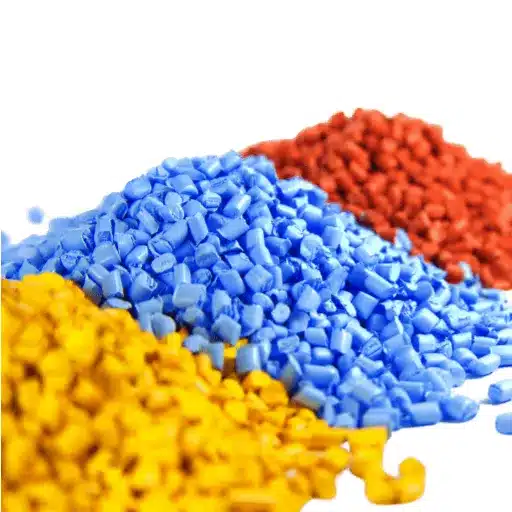


Acrylonitrile Butadiene Styrene (ABS) plastic has become a highly popular material across various industries because it delivers strong yet durable performance at an economical price. The material exhibits engineered properties which establish both its functional boundaries and its suitable usage conditions. The research study investigates the main drawbacks of ABS plastic by demonstrating its fundamental weaknesses which assist businesses and engineers in selecting more effective project materials that achieve optimal performance while maintaining environmental sustainability.
Introduction to ABS Plastic

What is ABS Plastic?
Acrylonitrile Butadiene Styrene (ABS) plastic serves as a robust lightweight thermoplastic polymer which manufacturers use in multiple industries because it possesses outstanding physical attributes and manufacturing simplicity. The structural composition of ABS consists of a copolymer which combines three separate monomers:
- ▪
Acrylonitrile – Provides chemical resistance together with thermal stability - ▪
Butadiene – Improves impact resistance and material toughness - ▪
Styrene – Creates a rigid structure with a smooth surface finish which serves aesthetic design needs
The latest market data shows that ABS plastic maintains its leading position in the automotive, consumer electronics, and construction industries because it demonstrates high impact resistance and chemical resistance while maintaining its shape during temperature changes. The material becomes the top choice for rapid prototyping and mass production because it works well with both injection molding and 3D printing processes.
Properties of ABS Material
ABS (Acrylonitrile Butadiene Styrene) stands as a thermoplastic polymer which demonstrates exceptional mechanical and thermal property distribution that makes it suitable for various industrial uses. The main attributes which define ABS include:
High Impact Resistance
Absorption values are grouped as energy range (300 J/m). They are brittle at low temperature; hence, the launching of Amazon Echo at a gypsum wall could present a problem for ABS casing.
Thermal Stability
ABS maintains its structural form in moderate heat environments with a glass transition temperature (Tg) of approximately 105°C.
Chemical Resistance
ABS has excellent resistance to acids, alkalis, and oils but poor resistance to strong solvents and prolonged UV exposure.
Dimensional Stability
These materials can easily maintain their accurate dimensions and stability under different mechanical loads during temperature variation, making them suitable for precision engineering.
Processability
Medium melt viscosity allows for an efficient operation in injection molding, extrusion, and 3D printing, leading to the manufacture of intricate shapes.
Electrical Insulation
Dielectric strength is appropriate for the electrical insulation portion and packaging of the electronic components, and it is approximately 15-30 kV/mm high.
Common Applications of ABS Plastic
The unique mechanical toughness, thermal stability, and electrical insulation capacity of ABS make it suitable for use in various industrial applications:
1. Automotive Industry
ABS serves as a primary material for manufacturing interior and exterior car parts, including dashboards, door panels, and mirror housings. The material provides strong impact resistance and simple molding capability for parts experiencing wear and mechanical stress.
2. Consumer Electronics
ABS serves as the primary material for manufacturing product housings including keyboards, televisions, and smartphones, providing excellent insulation properties and flame-retardant capabilities.
3. Medical Devices
ABS serves as the primary material for non-critical medical tools including device housings and laboratory equipment, providing easy sterilization and biocompatibility with medical-grade formulations.
4. Construction Materials
ABS pipes function as durable reliable materials for drainage systems, withstanding extreme temperature conditions and protecting against chemical breakdown.
5. 3D Printing
ABS serves as a popular thermoplastic filament in 3D printing, allowing easy production and creating robust heat-resistant materials with precise detailed designs.
6. Household Goods
Everyday products such as luggage, kitchen appliances, and toys benefit from ABS material, combining lightweight properties with scratch resistance and affordable pricing.
Disadvantages of Using ABS Plastic

Environmental Impact of ABS Plastic
The environmental effects of ABS plastic arise from its synthetic polymer composition which starts from fossil fuels that are extracted from petroleum. The production process uses energy-intensive methods which produce greenhouse gases that drive global warming.
Key Environmental Concerns:
- Non-biodegradable nature: The landfill disposal of ABS plastic leads to permanent plastic waste problems because the material remains intact for multiple centuries.
- Microplastic pollution: The improper disposal methods produce microplastics which damage ocean wildlife and subsequently enter the human food supply.
- High energy production: The manufacturing processes require large amounts of energy which results in greenhouse gas emissions.
- Petroleum dependency: The dependence on materials derived from fossil fuels creates sustainability issues.
Progress in Sustainability: Companies have developed new recycling solutions which process ABS materials through mechanical recycling and chemical recovery methods to achieve sustainability. The industry shows increasing interest in bio-based ABS alternatives to decrease the use of petroleum-derived materials.
Durability Limitations of ABS
The material properties of ABS limit its ability to endure different working conditions throughout its multiple industrial uses. The material has fundamental flaws that restrict its application in certain environments:
Industries are responding to these limitations by developing UV-resistant coatings and additives to boost durability for ABS products. The development of high-performance ABS blends aims to create materials that maintain flexible use while gaining extreme condition durability.
Cost-Effectiveness Concerns
The evaluation process for ABS cost-effectiveness requires analysis of its low material expense together with its operational constraints and required industry-standard adjustments.
Cost Considerations:
- Rising demand for cost-effective UV-resistant solutions requiring special additives and coatings
- Production process requires additional expenses for enhancements that boost durability and performance
- Companies must decide if investments will bring appropriate financial gains from product modifications
The challenge of achieving desired performance outcomes with minimal expenses constitutes the primary issue when using ABS for regular and high-performance applications.
Industry-Specific Challenges with ABS Plastic

Challenges in 3D Printing with ABS Filament
To achieve successful results in 3D printing with ABS filament, multiple challenges require effective management throughout the printing process:
Warping Issues
Different parts cool at different rates, leading to layer separation and deformation. Requires heated enclosed printing space with consistent temperature.
High Temperature Requirements
Requires heating to 220°C-260°C, necessitating printers that can effectively handle high temperatures.
Toxic VOC Emissions
Emits volatile organic compounds during printing, requiring sufficient airflow and ventilation for safe working conditions.
Recommended Solutions:
- Use heated bed and ABS slurry as adhesive
- Create textured build surfaces for better adhesion
- Set optimal slicing parameters for print speed and layer height
- Operate cooling fans at low levels to prevent layer attachment problems
Issues in Manufacturing ABS Plastic Parts
The manufacturing process for ABS plastic parts faces technical obstacles arising from the need to use advanced manufacturing technologies and production techniques:
Industry Response: Companies are investing substantially in cutting-edge software-based simulation tools and automated quality inspection systems to detect potential production problems before manufacturing, resulting in decreased resource waste and increased efficiency.
Limitations of ABS in Various Plastic Applications
Acrylonitrile Butadiene Styrene provides users with various benefits but also limits their ability to use it for specific plastic applications:
- UV Degradation: The material has weak resistance to ultraviolet rays which leads to both material degradation and color changes that restrict outdoor use after extended sunlight exposure
- Solvent Sensitivity: The material becomes unusable through contact with strong solvents and high temperatures which establishes specific requirements for chemical and heat resistance
- Recyclability Issues: The present major obstacles to businesses because material streams and processing systems become complex and difficult to handle
- Non-biodegradability: High environmental standards require biodegradable alternatives which create difficulties for waste management
Comparative Analysis

Advantages and Disadvantages of ABS vs. Other Plastics
✓ Advantages
- ▸
Exceptional mechanical characteristics with high impact resistance - ▸
Combined toughness and dimensional stability for demanding components - ▸
Lightweight with superior surface finish characteristics - ▸
Lower manufacturing expenses than other engineering plastics - ▸
Maintains thermal stability and easy processing for 3D printing
✗ Disadvantages
- ▸
Lack of UV protection leads to material breakdown in sunlight - ▸
Cannot withstand strong acids, alkalis, and solvent exposure - ▸
Non-biodegradable nature creates sustainability challenges - ▸
Faces competition from eco-friendly alternatives like PLA and rPET - ▸
Pressure to develop greener solutions for environmental standards
When to Use ABS vs. Alternative Materials
The decision to use ABS versus alternative materials largely depends on the specific requirements of the application, including mechanical performance, environmental considerations, cost constraints, and industry trends.
Industry Insight: Search volume for terms like “biodegradable plastics” and “sustainable materials for manufacturing” has seen extraordinary growth, indicating that industries now prioritize environmental standards while maintaining production capacity and product quality. Organizations need to consider the special requirements of each material together with current market developments when selecting their preferred material.
Future Trends in ABS Material Usage

The development of material science and market requirements will drive Acrylonitrile Butadiene Styrene to undergo material changes which will lead to its continued success in important market segments.
The mixture of ABS with additives or polymers creates materials which provide enhanced flame protection and impact resistance and thermal stability for specialized uses.
Researchers study recycled ABS (rABS) and bio-based ABS materials to create sustainable products which satisfy environmental regulations and fulfill customer requirements.
Market Outlook: The automotive and electronics sectors are expanding their use of ABS, which provides an optimal combination of product durability, workability, and cost efficiency. The material shows strong flexibility because it can fulfill both established industrial needs and new market demands, allowing it to keep its industrial significance in changing times.
Frequently Asked Questions
Common questions about ABS plastic limitations and considerations
Reference Sources
Plating on Acrylonitrile–Butadiene–Styrene (ABS) Plastic: A Review
Source: SpringerLink
This review discusses the history, applications, and drawbacks of ABS plastic, providing insights into its limitations and areas of improvement.
Recent Progress in Sustainable Recycling of Waste Acrylonitrile–Butadiene–Styrene (ABS) Plastics
Source: MDPI Sustainability
This article explores the challenges in recycling ABS plastic and highlights its environmental impact, offering a perspective on its sustainability limitations.
Investigating the Properties of ABS-Based Plastic Composites Manufactured by Composite Plastic Manufacturing
Source: MDPI Journal of Manufacturing and Materials Processing
This study examines the properties and limitations of ABS-based composites, particularly in manufacturing processes like FFF/FDM.


