





The packaging manufacturer from Zhejiang lost a contract worth ¥2.3 million because their HDPE containers failed to pass drop testing. The material they specified—generic “HDPE resin” from an unverified trading company—had a melt flow index of 8 g/10min, which was suitable for injection molding but hazardous for blow-molded containers that needed to withstand impacts. The molecular structure at MFI 8 did not contain sufficient long-chain entanglement to support load-bearing functions. The containers broke when hit with an impact force that should have been able to withstand by a proper blow molding grade material, which falls between MFI 0.3 and MFI 1.0.
The present situation exposes a basic fact about high-density polyethylene plastic because it consists of multiple material types. The material exists as a grade family which extends from 0.1 to 50+ g/10min melt flow indices and 0.941 to 0.965 g/cm³ density range, with applications that do not intersect. The generic “HDPE” specifications fail to recognize important material differences that result in significant expenses for both processors and end users.
The guide provides HDPE data, which engineers and procurement professionals need to select specific grades along with their property specifications, processing parameters and application-grade matching information. We present the specific grades which Yifuhui inventory currently holds, including Reliance HDPE M60075 and Sinopec HDPE 5502BN together with Certificate of Analysis verification protocols which guarantee that you will get the materials required by your specification.
What is High-Density Polyethylene Plastic?

HDPE Chemical Structure and Molecular Architecture
High-density polyethylene is a thermoplastic polymer that manufacturers create through catalytic polymerization of ethylene monomer. The term “high density” describes the material because its crystalline structure allows HDPE to maintain minimal branching, which enables its polymer chains to create tight packing that results in crystalline regions which occupy 70 to 90 percent of its total volume.
The crystallinity of HDPE makes it different from low density polyethylene (LDPE) which contains excessive chain branching that hinders molecular packing and produces densities between 0.910 and 0.940 g/cm³ while HDPE shows a density range between 0.941 and 0.965 g/cm³. The HDPE material displays its fundamental properties because scientists arranged its molecules in a highly organized structure which produces exceptional chemical resistance and stiffness and a higher melting point than other polyethylene types.
HDPE polymerization occurs through three primary catalytic processes:
Phillips Process (Chromium Catalyst)
Produces HDPE with broad molecular weight distribution and excellent processability for film and blow molding applications. The Phillips process dominates global HDPE production for packaging grades.
Ziegler-Natta Process (Titanium/Aluminum Catalyst)
Creates HDPE with narrower molecular weight distribution and superior mechanical properties for injection molding and pipe applications. Ziegler-Natta grades typically offer higher stiffness and tensile strength.
Metallocene Process (Single-Site Catalyst)
Enables precise molecular architecture control, producing HDPE with tailored property profiles for demanding applications requiring exceptional clarity, impact resistance, or processing consistency.
Key Physical Properties Summary
| Property | Typical Range | Notes |
|---|---|---|
| Density | 0.941–0.965 g/cm³ | Higher density = higher crystallinity |
| Melting Point | 120–140°C | Grade dependent; processing window 200–280°C |
| Tensile Strength | 20–37 MPa | Higher for high-density, low-MFI grades |
| Flexural Modulus | 0.8–1.4 GPa | Key metric for stiffness-critical applications |
| Melt Flow Index | 0.1–50+ g/10min | Primary grade differentiator |
| Crystallinity | 70–90% | Determines optical and barrier properties |
HDPE vs. LDPE vs. LLDPE: Material Family Comparison
Understanding where HDPE fits within the polyethylene family enables informed material selection:
High-Density Polyethylene (HDPE)
The polymer structure achieves its maximum crystallinity because it consists of linear polymer chains which have only limited branching. The material exhibits superior stiffness combined with excellent chemical defense and maximum temperature resistance yet its ability to withstand impacts falls short of LDPE. The material serves as the primary choice for making rigid containers and pipes together with structural components which need to maintain their original dimensions.
Low-Density Polyethylene (LDPE)
The polymer structure contains multiple branches which block the formation of crystalline structures. The material demonstrates two opposite characteristics because it combines excellent flexibility with strong toughness and it has great impact resistance while its melting point remains low and its clarity becomes more pronounced. The material serves as the primary choice for film production and flexible packaging and squeeze bottle manufacturing because its flexible nature proves more beneficial than its rigid qualities.
Linear Low-Density Polyethylene (LLDPE)
The material consists of linear polymer chains which contain short branches that have been designed to grow from specific points. The material combines the clean processing benefits of HDPE with the strong puncture protection and toughness features which characterize LDPE. The material serves as the primary choice for stretch film production and heavy-duty bag manufacturing and all applications which require both strong performance and flexible movement capabilities.
The selection among these three materials depends entirely on application requirements. A pipe manufacturer specifying HDPE for pressure-bearing applications requires the stiffness and creep resistance that LDPE cannot provide. A film converter specifying LDPE for shrink wrap requires the flexibility and clarity that HDPE’s crystallinity prevents.
HDPE Material Properties Reference

Physical Properties
Density and Crystallinity
HDPE density reaches its maximum level when crystalline materials achieve their peak level in the material. The material exhibits its highest stiffness and chemical resistance properties at 0.955–0.965 g/cm³ density which corresponds to 80–90% crystallinity. The material exhibits diminished capacity to resist impact and to withstand stress cracks. Lower-density HDPE (0.941–0.950 g/cm³) provides better toughness and environmental stress crack resistance (ESCR) while maintaining moderate stiffness decline.
The COA documentation which procurement personnel need to acquire contains all necessary documentation which shows density measurements. The density requirement from your specification needs verification through cross-referencing which shows that processing behavior and final part properties will experience major changes from density variations which exceed ±0.003 g/cm³.
Melting Characteristics
HDPE displays a wide melting range which extends from 120 to 140 degrees Celsius and its maximum melting point rises with increasing material density. The temperature range from 200 to 280 degrees Celsius enables sufficient melt flow while preventing thermal damage to the material. The thermal stability of HDPE remains intact during standard processing operations because the material can undergo multiple recycling cycles without significant loss of its properties when it receives appropriate drying and stabilization treatment.
Mechanical Properties
Tensile and Flexural Performance
The tensile strength of HDPE reaches 20 MPa for high-MFI injection grades, while reaching 37 MPa for low-MFI high-density pipe grades. The flexural modulus which measures stiffness for pipe and structural container applications, typically ranges from 0.8 GPa to 1.4 GPa.
HDPE displays material properties that position it between polypropylene which has similar stiffness but lower density and engineering plastics POM and PA66 which offer much higher stiffness at a significantly greater expense. The materials spectrum includes HDPE as the only option that provides moderate stiffness at commodity pricing.
Impact Resistance
The impact strength of HDPE decreases when its density and crystallinity increase. High-density grades (0.960+ g/cm³) display brittle behavior when exposed to low temperatures or fast impact loading conditions. The medium-density HDPE range (0.945–0.955 g/cm³) delivers optimal stiffness and toughness performance for common applications.
Creep Resistance
HDPE shows strong resistance to creep deformation when exposed to continuous weight at its intermediate temperature range. The ability of HDPE to maintain dimensional stability under hydrostatic pressure makes it the primary choice for pressure pipe applications. Engineers use ISO 9080 and ASTM D2837 testing protocols to establish 50-year creep rupture strength ratings which classify materials into PE80 and PE100 categories for infrastructure design purposes.
Chemical Resistance
HDPE exhibits exceptional chemical resistance across a broad range of media:
Excellent Resistance (No Attack):
- Dilute acids (sulfuric, hydrochloric, nitric) at all concentrations up to 60°C
- Dilute alkalis (sodium hydroxide, potassium hydroxide) up to 50% concentration
- Alcohols, glycols, and most organic solvents
- Oils, greases, and aliphatic hydrocarbons
- Aqueous salt solutions
Limited Resistance (Testing Required):
- Concentrated oxidizing acids (chromic, concentrated nitric)
- Aromatic hydrocarbons (benzene, toluene, xylene) at elevated temperatures
- Chlorinated solvents
- Strong oxidizing agents
Environmental Stress Crack Resistance (ESCR)
ESCR represents HDPE’s Achilles heel. The material maintains chemical resistance under unstressed conditions yet brittle cracking starts when exposed to specific surfactants and oils together with mechanical stress. The high-density grades demonstrate lower ESCR than the medium-density grades. The selection of ESCR grades for detergent container and chemical drum and stressed pipe component applications needs careful consideration—request ESCR test data (ASTM D1693 or ISO 4599) on the COA for critical applications.
Thermal Properties
Service Temperature Range
HDPE continuous service temperature typically ranges from -50°C to +60°C for pressure applications, extending to +80°C for non-load-bearing uses. The material can withstand 100°C for brief periods without destruction, although its dimensions will begin to change after reaching the crystalline melting point.
Low-temperature performance remains excellent: HDPE retains flexibility and impact resistance at cryogenic temperatures, making it suitable for frozen food packaging and cryogenic storage containers.
Heat Deflection Temperature (HDT)
At 0.45 MPa flexural testing, HDPE displays HDT values that vary between 70 and 90 degrees Celsius depending on its density and grade. The material exhibits a lower HDT measurement of 40 to 60 degrees Celsius under 1.8 MPa testing, which serves as a more accurate simulation of actual structural conditions because the material loses its crystalline form. The HDT restriction prevents HDPE from being used in hot-fill operations above 60 degrees Celsius unless special design features are implemented to handle thermal expansion.
HDPE Grades and Applications

HDPE Injection Molding Grades
Typical MFI Range: 4–30 g/10min (190°C/2.16kg)
The injection molding grades choose their flow properties because they need to fill thin-wall and complex geometries through their rapid cavity filling requirements. The high-volume applications of caps, closures and thin-wall containers use materials with MFI values between 15 and 30 g 10 min because these values enable quick production cycles in their manufacturing processes. The lower MFI injection grades, which operate between 4 and 10 g 10 min, provide better mechanical strength properties to structural components, which include crates, pallets, and industrial housings.
Common Applications:
- Crates and totes for logistics and agriculture
- Industrial pallets and material handling containers
- Caps, closures, and dispensing closures
- Thin-wall food containers and dairy cups
- Housing components for appliances and tools
Key Selection Criteria:
The selection of MFI values in injection molding applications needs to meet both flow requirements and mechanical property specifications. The processing of High-MFI grades becomes simple to handle yet results in products that possess diminished tensile strength and impact resistance. Low-MFI grades require higher injection pressures and longer cycle times but deliver superior mechanical performance.
Yifuhui Stocked Grades:
The blow molding process uses Reliance HDPE M60075 (MFI 0.75) although users can injection mold it by using correct process settings to create thick-wall structural components. For true injection grades, we source through our brand partnerships—contact us with your MFI and property requirements for specific grade recommendations.
HDPE Blow Molding Grades
Typical MFI Range: 0.2–1.0 g/10min (190°C/2.16kg)
Blow molding requires exceptional melt strength to support the parison (hollow tube) during the blowing process without sagging or thinning. Low MFI grades provide the high melt viscosity and melt strength necessary for uniform wall thickness in bottles, drums, and large containers.
Common Applications:
- Milk bottles and juice containers (1 gallon and smaller)
- Industrial chemical drums (55-gallon and intermediate bulk containers)
- Automotive fuel tanks (coextruded multilayer constructions)
- Large storage tanks and water containers
- Household and industrial detergent bottles
Key Selection Criteria:
Blow molding grade selection depends on container size, wall thickness requirements, and drop/impact performance specifications. The lowest MFI grades between 0.2 and 0.4 g/10min are necessary for large containers which exceed 20 liters because that level of MFI provides necessary parison stability. Smaller bottles may use medium MFI grades which range from 0.7 to 1.0 g/10min to achieve better processing speed.
Yifuhui Stocked Grades:
- Reliance HDPE M60075: MFI 0.75 g/10min, density 0.954 g/cm³. General-purpose blow molding grade for containers up to 25 liters. Good balance of processability and mechanical properties. Available with full COA documentation.
- Sinopec HDPE 5502BN: MFI 0.35 g/10min, density 0.955 g/cm³. High molecular weight grade for large containers and drums requiring superior impact resistance and ESCR. Preferred for chemical and detergent container applications.
HDPE Pipe and Extrusion Grades
Typical MFI Range: 0.1–0.4 g/10min (190°C/5.0kg or 21.6kg)
Pipe grades represent the highest molecular weight HDPE formulations, which provide exceptional long-term strength together with environmental stress crack resistance. PE80 and PE100 classifications (referring to the minimum required strength in bar at 20°C for 50 years) define the performance hierarchy for pressure pipe applications.
Common Applications:
- Water distribution mains and service lines
- Natural gas distribution systems
- Irrigation and drainage pipes
- Mining slurry transport
- Geothermal heating/cooling systems
Key Selection Criteria:
Grade selection depends on three factors: pressure rating and diameter, and the methods used for installation. PE100 provides greater strength which enables the construction of thinner walls that achieve the same pressure ratings, thus reducing material expenses and allowing larger pipe diameters within the same external pipe size. PE80 remains common for non-pressure drainage and lower-stress applications.
Standard Classifications:
- PE80: Minimum Required Strength (MRS) 8.0 MPa at 20°C/50 years
- PE100: MRS 10.0 MPa at 20°C/50 years
Pipe grade specifications reference MFI measured at 190°C/5.0kg or 190°C/21.6kg (high load) conditions rather than the standard 2.16kg load used for other HDPE grades. The test method needs verification because direct MFI value comparison between 2.16kg and 21.6kg weights remains invalid.
HDPE Film Grades
Typical MFI Range: 0.1–2.0 g/10min (190°C/2.16kg)
Film-grade HDPE provides high molecular weight materials which enable tear resistance protection and maintain suitable processing properties for blown film extrusion. HDPE film functions in particular markets which need its stiff materials and moisture protection and temperature resistance capabilities.
Common Applications:
- Grocery and retail bags (thinner gauge than LDPE alternatives)
- Industrial liners and heavy-duty shipping sacks
- Freezer bags and low-temperature applications
- Lamination films for multilayer structures
- T-shirt bags and merchandise sacks
Specialty HDPE Grades
UV-Stabilized Grades
Standard HDPE degrades under UV exposure through photo-oxidation, which causes the material to become brittle and develop cracks on its surface. The UV-stabilized grades use hindered amine light stabilizers (HALS) and carbon black to control ultraviolet radiation through absorption and scattering. The material serves two different purposes: outdoor furniture and agricultural film and above-ground pipe installations.
Food-Contact/FDA-Compliant Grades
HDPE suitable for food-contact applications must meet FDA 21 CFR 177.1520 requirements or equivalent regional regulations (EU 10/2011, etc.). The grades use stabilizer and additive packages which food contact authorities have approved. The FDA status of each specific grade needs to be verified because “HDPE” as a material family is FDA-compliant but particular grades may include additives which restrict food-contact usage.
Color Masterbatch Compatible Grades
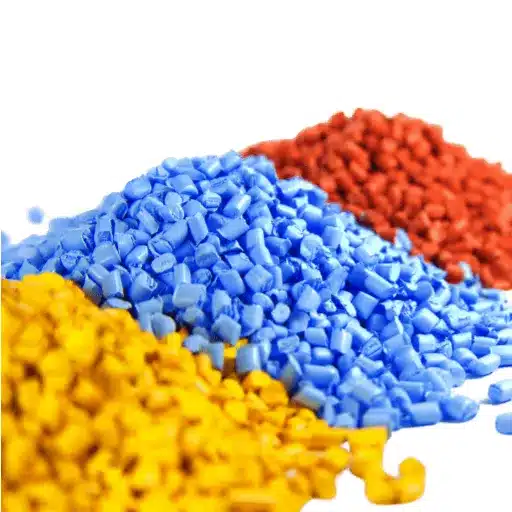
High-MFI injection grades often serve as base resins for color masterbatch letdown. Grade selection considers pigment carrier compatibility and letdown ratio requirements. Yifuhui supplies natural (white/off-white) HDPE suitable for custom color compounding.
Grade-Specific HDPE Data

How to Read HDPE Specifications on COAs
The Certificate of Analysis accompanying branded HDPE shipments provides verification that material properties fall within specification. Key values to verify:
Melt Flow Index (MFI)
Primary grade identifier. Compare COA MFI against your process baseline—MFI variations beyond ±20% of nominal typically indicate either off-grade material or significant batch-to-batch variation that will affect processing parameters.
Density
Confirms grade classification and predicts stiffness/chemical resistance balance. Density measurements should fall within ±0.003 g/cm³ of published specification.
Molecular Weight Distribution (MWD)
Some COAs include polydispersity index (PDI) indicating MWD breadth. Narrow MWD (metallocene grades) provides more consistent processing but different mechanical properties than broad MWD (conventional grades).
Additives and Stabilizers
COA may list additive types (antioxidants, UV stabilizers, slip agents) without specific concentrations. For regulated applications, request full formulation disclosure or compliance certification beyond the standard COA.
Common HDPE Grades and Specifications
| Grade | Manufacturer | MFI (g/10min) | Density (g/cm³) | Primary Application |
|---|---|---|---|---|
| M60075 | Reliance (India) | 0.75 | 0.954 | Blow molding, containers |
| 5502BN | Sinopec (China) | 0.35 | 0.955 | Large containers, drums |
| 5502BB | Sinopec (China) | 0.35 | 0.955 | Pipe extrusion |
| F6006 | Sinopec (China) | 0.06 | 0.956 | Large blow molding |
| HM5000 | LG Chem (Korea) | 0.03 | 0.957 | PE100 pipe grade |
| CRP100N | Sinopec (China) | 0.20* | 0.959 | PE100 pipe, high stress |
*Measured at 190°C/5.0kg
Reliance HDPE M60075 (Yifuhui Stocked)
The medium-flow blow molding grade which functions at MFI 0.75 g/10min allows the creation of containers that reach a maximum capacity of 25 liters. The material with a density of 0.954 g/cm³ demonstrates good stiffness and sufficient ESCR protection against household chemical exposure. The 0.75 MFI solution delivers improved cycle times compared to ultra-low-MFI drum grades while retaining enough melt strength to ensure stable parison control.
Sinopec HDPE 5502BN (Yifuhui Stocked)
The material displays high molecular weight properties which meet the requirements of demanding blow molding tests. The supreme ESCR performance of 5502BN outperforms all higher-MFI products making it suitable for use in detergent bleach and industrial chemical containers which require protection against stress cracking. The BN designation shows that butene-1 comonomer was added to the material which enhances its resistance to stress cracking compared to the performance of homopolymer materials.
Melt Flow Index and Application Suitability
MFI serves as the primary processability indicator for HDPE grade selection:
MFI < 0.5 g/10min: Large blow molding, pipe extrusion, applications requiring maximum ESCR and mechanical properties. Processing requires higher temperatures and longer cycle times.
MFI 0.5–2.0 g/10min: General blow molding for bottles and containers up to 50 liters. Balanced processability and properties for most packaging applications.
MFI 2.0–10 g/10min: Film extrusion, small blow molding, heavy-wall injection molding. Good flow for complex geometries without excessive property sacrifice.
MFI 10–30 g/10min: Thin-wall injection molding, caps and closures, high-speed production. Maximum flow for rapid cavity filling; reduced mechanical properties acceptable for light-duty applications.
MFI > 30 g/10min: Specialty applications, melt-blown fibers, coating applications. Very high flow with correspondingly low mechanical strength.
Density Variations Within HDPE Family
HDPE density selection involves tradeoffs:
High Density (0.960–0.965 g/cm³):
- Maximum stiffness and tensile strength
- Best chemical resistance
- Highest melting point
- Reduced ESCR and impact resistance
- Applications: Rigid containers, pipe, structural parts
Medium Density (0.945–0.959 g/cm³):
- Balanced stiffness and toughness
- Superior ESCR versus high-density grades
- Better low-temperature impact
- Applications: General blow molding, film, chemical containers
Lower Density HDPE (0.941–0.945 g/cm³):
- Maximum toughness and ESCR
- Good flexibility for film and sheet
- Reduced stiffness versus higher densities
- Applications: Film, liners, flexible containers
HDPE Processing Guidelines

Injection Molding Parameters
Melt Temperature: 200–280°C
The best melt temperature for materials depends on their MFI value and their specific design. The blow molding grades that have lower MFI values need their temperatures to be set between 250 and 280 degrees Celsius to achieve proper flow. High-MFI injection grades function effectively between 200 and 240 degrees Celsius which helps to decrease both thermal degradation and cycle duration.
The melting process of HDPE requires temperature control because its melting range demands that barrel zones move from feed zone temperatures of 160 to 180 degrees Celsius through compression temperatures of 180 to 220 degrees Celsius until they reach metering zone temperatures of 200 to 280 degrees Celsius. When temperature changes rapidly, it results in the formation of unmelted particles and thermal degradation.
Mold Temperature: 20–60°C
The process of cooling controls the development of crystallinity while the system maintains mold temperatures at specific values. The mold temperatures between 40 and 60 degrees Celsius result in higher crystallinity which creates stiffer materials with better surface gloss. The reduction of cycle time happens with lower mold temperatures which range from 20 to 30 degrees Celsius, but this causes warpage in thick sections because of different cooling stress patterns.
In order to produce parts with critical dimensions, you must keep the mold temperature stable within a range of ±5°C throughout all cavities. The crystallization process of HDPE causes part dimensions to keep changing for three hours after molding because crystallization remains active whereas standard procedures require a 24 to 48 hour waiting period before measuring dimensions.
Injection Pressure and Speed:
Most HDPE applications need an injection pressure range between 50 and 100 MPa which corresponds to 7000 and 15000 psi. The process needs higher pressure because of the requirements for thin walls and low MFI grades. The speed of injection determines how molecules orient: fast injection creates flow-direction orientation which increases tensile strength in the flow direction but results in uneven shrinkage and warping.
Shrinkage: 1.5–4.0%
HDPE shrinkage varies with density, MFI, and processing conditions. Higher density grades shrink more due to greater crystallinity. Lower MFI grades shrink less than high-MFI alternatives. Uniform wall thickness and consistent processing minimize differential shrinkage and warpage.
Blow Molding Considerations
Parison Programming
Extrusion blow molding requires parison programming—adjusting extrusion rate during the parison formation to control wall thickness distribution. HDPE’s high melt strength enables large parison diameters without excessive sagging, but programming remains essential for uniform wall thickness in non-cylindrical containers.
Melt Temperature: 170–220°C
Lower than injection molding to maximize melt strength. Excessive temperature causes parison sag and thinning; insufficient temperature causes surface defects and poor weld line strength.
Die Design
HDPE blow molding dies require smooth flow channels without dead zones where material can stagnate and degrade. Spiral mandrel dies distribute flow evenly around the circumference. Die gap typically 0.5–2.0 mm depending on container size and wall thickness requirements.
Cooling Time
HDPE crystallizes relatively slowly—cooling time significantly affects production rate and part properties. Under-cooling produces soft parts with poor dimensional stability. Over-cooling wastes cycle time without additional benefit. Typical cooling time: 10–30% of total cycle time for small containers, up to 50% for large drums.
Extrusion Processing
Temperature Profile
Extruder barrel zones progress from 160°C (feed) to 200–230°C (metering). Die temperatures 190–220°C depending on product requirements. Sheet and film extrusion typically uses lower temperatures than pipe extrusion.
Die Design Considerations
HDPE’s sensitivity to melt fracture at high shear rates requires careful die design. Land length and die opening geometry must balance output rate against surface quality. Dies for pipe extrusion incorporate sizing sleeves to maintain dimensional tolerances during cooling.
Draw Down Ratios
Film and sheet extrusion use draw-down to achieve final gauge. HDPE tolerates moderate draw-down (2:1 to 4:1) without excessive orientation. Higher draw-down improves clarity in film applications but increases machine-direction orientation affecting tear resistance.
Drying Requirements
HDPE only needs predrying when it is used in specific applications because it does not have the same requirement as hygroscopic materials, which include PA66 and PET. The presence of moisture on pellet surfaces leads to cosmetic defects, which appear as splay and silver streaking in parts that require a specific appearance. The brief drying process, which lasts from 2 to 4 hours at temperatures between 70 and 80 degrees Celsius, effectively removes surface moisture from pellets that show visible moisture, whereas it does not harm the material.
The significance of regrind drying increases when production processes implement high percentages of reprocessed material. The process of multiple heat histories leads to both moisture accumulation and the formation of degradation products, which occur during the dry regrind process that requires 80°C for 4 hours before blending with virgin material.
HDPE Applications by Industry

Packaging Industry
Rigid Containers
HDPE serves as the primary material for making rigid containers which hold household chemicals and personal care items and food products. The material enables storage of aggressive cleaners and solvents because of its chemical resistance properties. The material enables manufacturers to produce thin-wall containers at high production rates which match standard market prices.
A typical laundry detergent bottle illustrates HDPE’s value proposition: blow-molded in 2–5 liter sizes from MFI 0.3–0.8 grades, the container withstands surfactant exposure, provides adequate drop resistance for shipping and handling, and processes at high speeds (20,000+ bottles/hour on rotary blow molding equipment) enabling competitive unit costs.
Caps and Closures
Injection-molded HDPE caps deliver three essential properties which include thread strength and chemical resistance and processability for continuous thread and child-resistant and dispensing closures. High-MFI grades (15–30 MFI) enable thin-wall designs which achieve fast cycle times. Living hinge designs in flip-top caps exploit HDPE’s fatigue resistance through millions of flex cycles.
Food Packaging
The FDA-approved HDPE grades package milk and juice and food products. The material protects product quality through its moisture barrier properties while maintaining strength during refrigerated and frozen distribution. The world produces millions of HDPE milk bottles every day which serve as the material’s most common use.
Pipe and Infrastructure
Water Distribution Systems
HDPE pipe—specifically PE80 and PE100 grades—replaces metal and concrete for water mains and service lines. The material’s corrosion immunity eliminates tuberculation and flow reduction that plague iron pipes. Flexible installation through directional drilling reduces excavation costs versus rigid pipe materials.
The installation of an HDPE water main system which follows proper procedures delivers more than 50 years of dependable operation with minimal upkeep needs. Fusion welding creates monolithic, leak-free systems with fewer joints than segmented pipe materials. Pressure ratings to 16 bar (232 psi) serve most municipal distribution requirements.
Natural Gas Distribution
Worldwide distribution networks use PE80 and PE100 pipes to transport natural gas. HDPE’s flexible design enables it to maintain stability during ground movement and prevent leaks. The process of fusion joining removes all mechanical joints which have the potential to become loose or corrode. The industry standards require yellow color coding to identify gas service lines.
Industrial and Mining Applications
The HDPE pipe system transports slurries and process chemicals while withstanding the wear of abrasive materials that would destroy metal pipes. Mining operations use HDPE for tailings transport, process water, and leach solution distribution. The material’s abrasion resistance and chemical immunity provide service life measured in years where steel pipe fails in months.
Industrial Applications
Chemical Storage and Transport
HDPE drums and intermediate bulk containers (IBCs) exist to handle the storage and transportation needs of chemicals and lubricants and food products. The material’s complete resistance to chemical exposure enables the use of single-material design for various applications which normally require special materials like stainless steel and FRP at elevated expenses.
The building design of IBC demonstrates how HDPE provides structural strength: containers with 1,000-liter capacity which designers produce through blow molding high-MW HDPE materials can endure both stacking weight and forklift usage and transportation operations while they hold liquids up to 1.9 specific gravity. Ex-Proof IBCs for flammable materials use conductive materials to stop static electricity from discharging.
Pallets and Material Handling
Wooden pallets for material handling applications now get replaced by injection-molded HDPE pallets which provide both hygienic and durable performance. HDPE pallets maintain their original measurements which allows automated handling systems to operate without interruptions and they protect against washdown cleaning damage while blocking moisture and bacterial contamination. Recyclability at end-of-life supports sustainability objectives.
Tanks and Processing Equipment
Rotational molding and thermoforming produce HDPE tanks for chemical storage, water treatment, and process applications. The large tanks which can hold more than 50000 liters water capacity take advantage of HDPE material properties because rotational molding enables them to create chemical-resistant tanks through seamless construction methods.
Consumer Goods
Toys and Sporting Goods
HDPE material demonstrates toughness and colorability and processability attributes which make it appropriate for manufacturing toys and outdoor furniture and sporting equipment. The UV-stabilized grades maintain their original properties during outdoor usage for several years. The recyclability of products enables effective management of waste materials from consumer items which have reached their end-of-life stage.
Housewares
The storage containers and cutting boards and kitchen utensils use HDPE material because of its ability to meet food contact standards and its durable and economical properties. The material’s resistance to dishwasher detergents enables its use in reusable containers that need to maintain their washing performance throughout multiple cycles.
Agricultural Applications
Irrigation Systems
Modern irrigation systems use HDPE pipe which includes both pressure-rated PE80 and PE100 pipes and non-pressure drainage pipes as their main structural component. The system permits installation of buried pipelines because it allows pipes to be installed without creating any junctions. The pipes maintain their structural integrity during fertigation because they possess chemical resistance to fertilizer injection.
Greenhouse Film
HDPE greenhouse film provides diffused light transmission together with durability and cost advantages that exceed those of both glass and polycarbonate. UV-stabilized grades provide 3–5 year service life in outdoor exposure. The system uses wide film widths that extend beyond 20 meters to decrease the need for seaming operations.
Sourcing HDPE from China: Procurement Guide

What to Look for on HDPE Certificates of Analysis
When sourcing HDPE from Chinese suppliers, the COA provides your primary quality verification tool. Required COA elements include:
Material Identification
COA must specify “High Density Polyethylene” or “HDPE” with grade designation (e.g., “HDPE 5502BN,” “HDPE M60075”). Generic descriptions like “PE granules” or “plastic resin” are insufficient for branded material verification.
Manufacturer Identification
COA should identify the resin manufacturer (Sinopec, Reliance, LyondellBasell, etc.), not merely the trading company or distributor. Manufacturer lot numbers enable traceability back to production records.
Property Verification
Key properties to verify against your specification:
- Melt Flow Index with test conditions (temperature/load)
- Density (g/cm³)
- Melting point or Vicat softening temperature
- Tensile strength (for structural applications)
Compliance Declarations
For regulated applications, COA should reference applicable standards (FDA, RoHS, REACH) with specific grade certifications noted. Generic “compliant” statements without grade-level documentation require follow-up verification.
Verifying Grade Authenticity
Cross-Reference Against Published Specifications
The process requires you to download official datasheets from manufacturer websites of Sinopec, Reliance, and LyondellBasell in order to compare COA values with published specification ranges. The supplier must provide an explanation for any case where MFI measurements exceed the range of nominal value by more than 20 percent or density measurements exceed the range of 0.005 g/cm³.
Lot Number Verification
The manufacturing company requires you to reach out to their regional offices for COA lot number verification. Producers who operate at a large scale preserve their production information in databases which show whether a lot exists and what its fundamental characteristics are. The verification process detects fake documents which people commonly use to trade resin on the spot market.
Physical Sample Testing
The production lot requires us to take samples of 1 to 5 kilograms which we need for critical applications before we start shipping. The in-house MFI testing process uses ISO 1133 and ASTM D1238 standards to verify COA accuracy. The material classification process uses basic density measurements from gradient column and calibrated displacement methods for verification.
Batch-to-Batch Consistency Considerations
The primary HDPE material which major manufacturers supply through approved distributors shows consistent quality across all production runs. The MFI values for each grade maintain a standard deviation which remains within 10 percent of the specified nominal value. The presence of higher material fluctuations indicates that the product either contains defective content or uses recycled materials or originates from unreliable secondary supply sources.
Establish incoming inspection protocols:
- Visual inspection for pellet uniformity and contamination
- MFI verification on each lot for critical applications
- Retain samples from each lot for comparison against future shipments
- Document supplier performance over time—consistency matters as much as absolute properties
MOQ and Sampling Strategies
Trial Order Approach
The 25 kg minimum order quantity from Yifuhui permits customers to conduct material testing through initial shipment deliveries. The customer should place orders for trial quantities using the particular grade and lot which they plan to produce. The customer must operate their equipment with test material while maintaining records of all processing conditions and storing samples for later analysis.
Trial orders serve two functions because they first check material quality before customers decide on their final purchase amount and they second create standard operating procedures for production processes. Your baseline data will show you whether to make process adjustments or start supplier discussions when your production materials arrive from a different lot.
Volume Order Planning
After trial qualification, volume orders should specify:
- Exact grade designation (including any suffixes indicating additive packages)
- Single-lot shipment if possible (minimizes lot-to-lot variation in production)
- Required documentation package (COA, MSDS, compliance certificates)
- Incoterms and delivery timeline
For ongoing production requirements, discuss blanket order arrangements with your supplier. Scheduled releases from reserved inventory provide consistent supply while accommodating your production scheduling.
Working with Yifuhui for HDPE Supply
Yifuhui stocks HDPE grades from Reliance (India) and Sinopec (China) with manufacturer-issued COA documentation. Our Suzhou warehouse maintains inventory of common blow molding and pipe grades, with 25 kg minimum order quantity for all materials.
Available Documentation:
- Manufacturer-issued Certificate of Analysis for every shipment
- Material Safety Data Sheet (MSDS/SDS) for regulatory compliance
- Commercial invoice and packing list for customs clearance
- Compliance certifications (FDA, RoHS, REACH) for qualifying grades
Technical Support:
Our team provides grade selection guidance based on your application requirements—operating temperature, chemical exposure, processing method, and regulatory constraints. We recommend specific grades from our stocked inventory or source specialty grades through our manufacturer relationships.
Logistics:
Located in Suzhou with direct access to Port of Shanghai, we ship FOB Shanghai or CIF to your destination port. Standard lead time is 7–14 days to major international ports depending on destination and Incoterm selection.
HDPE Sustainability and Recycling

Recycled HDPE (rHDPE) Properties and Applications
Post-consumer and post-industrial HDPE recycling produces rHDPE with properties generally 10–20% below virgin material benchmarks. Melt flow index typically increases (material flows easier) due to polymer chain scission during reprocessing. Impact strength and ESCR decrease modestly. Color variations from mixed sources limit aesthetic applications.
Despite these property reductions, rHDPE serves many applications effectively:
- Non-pressure pipe and drainage applications
- Non-food contact containers and drums
- Pallets and material handling products
- Landscaping and outdoor furniture
- Film and sheet products where color variation is acceptable
Designing for Recycling
When specifying HDPE for products with end-of-life recycling requirements, consider:
- Single-material construction (avoid multi-layer or multi-material assemblies)
- Standard colors (natural, black, white) that integrate into recycled material streams
- Avoidance of incompatible additives that contaminate recycling streams
- Label adhesives and inks compatible with HDPE recycling processes
HDPE Recycling Codes and Identification
HDPE carries resin identification code “2” in the recycling symbol (chasing arrows with “2” inside). This identification enables automated sorting in recycling facilities and communicates material composition to downstream processors.
Recycling rate for HDPE varies by application and region:
- Milk bottles: High recycling rates (60–80% in developed markets) due to established collection infrastructure
- Pipe and industrial applications: Lower recycling rates due to long service life and collection challenges
- Film and flexible packaging: Recycling infrastructure developing; mechanical recycling produces lower-grade applications
Environmental Considerations
Life Cycle Assessment
The life cycle studies show that HDPE material delivers better performance than other materials in equivalent applications. The production of HDPE needs less energy than the energy requirements of aluminum and steel production. The material’s durability extends product service life, which results in decreased need for replacements. The recyclability of materials allows for their recovery after they reach their end-of-life, which prevents landfill disposal.
Carbon Footprint
HDPE carbon footprint varies by production feedstock:
- Conventional (naphtha/steam cracking): ~1.5–2.0 kg CO2/kg HDPE
- Bio-based feedstocks: Potentially carbon-neutral depending on feedstock source and production method
- Recycled content: Significantly lower footprint versus virgin production
Regulatory Trends
Extended Producer Responsibility (EPR) regulations in EU and other markets now demand packaging to contain recycled materials. The existing recycling system for HDPE enables the material to meet upcoming regulatory requirements. Manufacturers need to track recycled content regulations across their target markets while creating products that can be easily recycled.
Frequently Asked Questions
What is the difference between HDPE and PET?
The distinction between HDPE and PET lies in their respective polymer families which exhibit different material properties. HDPE demonstrates superior chemical resistance while maintaining a lighter weight and simpler manufacturing process but it possesses less strength and barrier effectiveness against gases compared to PET. PET dominates carbonated beverage bottles due to superior CO2 barrier; HDPE dominates milk bottles and chemical containers due to chemical resistance and cost. HDPE exhibits lower stiffness compared to PET while its flexibility exceeds that of PET; PET offers glass-like transparency which HDPE cannot reach.
Is HDPE safe for food use?
Specific HDPE grades are FDA-compliant for food contact under 21 CFR 177.1520. The specific HDPE grade and its additive package together determine whether the material receives food-contact approval. Always verify FDA status for the specific grade you intend to use, and request compliance documentation from your supplier. Because unpigmented natural HDPE contains no pigments, it receives wider food-contact approval than colored HDPE products.
What is the maximum temperature HDPE can withstand?
HDPE maintains its functional performance for continuous use between 60°C and 80°C under non-structural conditions. HDPE can endure 100°C temperatures for short periods without suffering complete failure, although its shape stability becomes compromised once temperatures exceed the crystalline melting point of approximately 130°C. The use of HDPE in hot-fill applications above 60°C requires special design features which protect against thermal expansion and creep deformation.
Which HDPE grade should I select for my particular application needs?
The process of selecting a grade requires two steps. The first step requires you to identify the processing method that needs to be used which includes injection or blow molding or extrusion or pipe. The second step requires you to identify mechanical requirements which include stiffness and impact resistance and environmental stress cracking resistance. The third step requires you to define regulatory requirements which include FDA standards and pressure rating requirements that might enforce particular grade selections. The fourth step requires you to check whether the supplier can deliver both certificate of analysis documents and uninterrupted availability of the chosen grade.
Can HDPE be used for outdoor applications?
Standard HDPE degrades under UV exposure which causes it to become brittle and break apart through time. UV-stabilized grades with carbon black or HALS additives provide 5–10+ year outdoor service life. Black HDPE pipe commonly serves outdoor water and gas distribution with decades of proven performance. For outdoor applications that do not use black materials, you should use UV-stabilized grades and check the additive package durability against your specific climate conditions.
What is the shelf life of HDPE resin?
Properly stored HDPE resin maintains properties for 2–3+ years. The storage requirements demand a cool dry space that should not receive direct sunlight while maintaining temperatures under 40°C and using sealed packaging to stop moisture and contaminants from entering the storage area. The MFI values will experience a small increase because the material will become more flowable, which occurs through extended storage time that causes slow crystallization and antioxidant depletion. The MFI value stays within the authorized range for all approved grades.
How does moisture affect HDPE processing?
HDPE does not absorb internal moisture because it behaves differently than hygroscopic materials which include nylon and PET. Surface moisture on pellets leads to cosmetic defects which include splay silver streaking and surface roughness that affect appearance-critical parts. For high-clarity applications or when surface moisture is visible dry pellets 2-4 hours at 70-80°C before processing. The regrind process needs extensive drying which requires 4 hours at 80°C because it contains both moisture and degradation products that result from heat exposure.
Conclusion
High density polyethylene plastic occupies a unique position in the materials spectrum: commodity pricing with engineering-grade reliability, processing versatility across injection molding, blow molding, and extrusion methods, and chemical resistance that rivals specialty materials at a fraction of the cost. The properties of HDPE materials show their ability to dominate all packaging applications together with infrastructure projects and industrial usage.
The complete potential of HDPE materials can only be achieved through grade-level testing. The difference between MFI 0.35 and MFI 8.0 is not a minor variation—it is the difference between a container that survives drop testing and one that fails, between a pipe rated for 50 years and one that creeps to failure in five. The production process needs proper “HDPE” specifications which expose your production to exactly these risks.
Reliable material supply connects to material procurement practices which the guide defines through COA verification, lot traceability, incoming inspection, and supplier qualification. Your production process needs consistent material supply which these practices provide because they protect against scrap material creation and rework needs as well as field failures.
Yifuhui supplies stocked HDPE grades from Reliance and Sinopec with manufacturer-issued COA documentation, 25 kg MOQ for trial and production quantities, and export from Port of Shanghai to global destinations. Tell us your application requirements—processing method, mechanical requirements, regulatory constraints—and we’ll identify the appropriate grade from our inventory or source specialty grades through our manufacturer relationships.


