



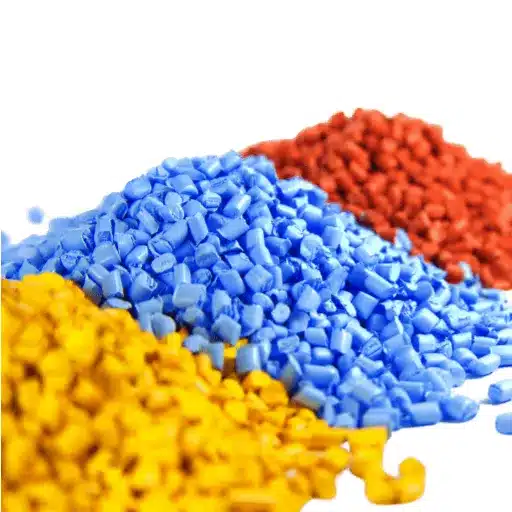


This control laboratory discovered an unusual result after the Midwest dairy facility received its shipment of HDPE resin, which they needed for their milk bottle production process. The COA showed a grade designation they had not ordered, an industrial formulation containing UV stabilizers not cleared for food contact. The supplier had substituted food-grade HDPE with a cheaper industrial variant without documentation. The production team discovered a mistake during their incoming inspection process, which prevented 50,000 non-compliant containers from entering the supply chain.
The incident demonstrates that high-density polyethylene safety depends on three factors that determine whether the base polymer material is used for safe purposes. Not all HDPE carries food-contact approval. Not all HDPE handles elevated temperatures safely. The materials supplied as “HDPE” by different suppliers do not necessarily match the specific HDPE grade which your application needs.
The guide establishes an absolute safety evaluation for HDPE, which applies to food contact, drinking water, and industrial use. The document explains how to meet FDA compliance standards while providing information about BPA and chemical safety and temperature restrictions and Certificate of Analysis documentation, and safety verification methods. You will learn the conditions under which HDPE material becomes safe or unsafe and the process for secure material procurement by the conclusion of the training.
Quick Answer: Yes, With Important Caveats

The Short Answer
High density polyethylene (HDPE) is generally recognized as safe by the FDA for food contact applications when manufactured under 21 CFR 177.1520 compliance. The base polymer contains no BPA, no phthalates, and no intentionally added hazardous substances. However, safety depends on three critical factors:
- Grade specification: Food-grade HDPE uses FDA-cleared additive packages; industrial grades may contain non-food stabilizers
- Temperature conditions: HDPE has defined safe temperature limits; exceeding them risks deformation and potential additive migration
- Supplier verification: COA documentation confirms the material meets claimed safety standards
Safety at a Glance
| Application | Safe? | Critical Conditions |
|---|---|---|
| Food storage containers | Yes | Food-grade HDPE only; verify FDA compliance |
| Drinking water bottles | Yes | Food-grade material; avoid long-term sun exposure |
| Hot liquids above 60°C | No | Exceeds continuous safe temperature limit |
| Microwave heating | No | Not microwave safe; melting risk |
| Dishwasher (top rack) | Yes | Food-grade only; bottom rack risks deformation |
| Chemical storage | Grade-dependent | Verify chemical compatibility |
| Outdoor/long-term UV | No | Requires UV-stabilized grades |
FDA Compliance and Food Contact Safety

21 CFR 177.1520, Olefin Polymers Compliance
The U. S. Food and Drug Administration regulates HDPE for food contact under 21 CFR 177.1520, which covers olefin polymers used in articles intended for food contact. This regulation specifies:
- Base polymer compliance: HDPE manufactured with proper catalyst systems and meeting density specifications (0.941–0.965 g/cm³) complies with FDA requirements for the base resin
- Additive restrictions: Only additives cleared for food contact under FDA food additive regulations may be used in food-grade HDPE
- Use conditions: Compliance depends on intended use temperature, food type, and contact duration
For procurement professionals: FDA compliance exists at the grade level, not the material family level. A COA stating “HDPE” without specific FDA compliance documentation for that grade is insufficient for food-contact applications.
Food-Grade vs Industrial HDPE Grades
The distinction between food-contact and industrial HDPE is not visible in the pellet appearance. Both materials look similar, white or off-white granules with characteristic polyethylene odor. The difference lies in formulation:
Food-Contact Grades:
- Stabilizer packages cleared under FDA 21 CFR 178.2010 (antioxidants) and related regulations
- Specific migration limits (SMLs) tested and confirmed
- Manufacturing process controls ensuring no cross-contamination
- Traceable lot documentation for recall scenarios
- Examples from Yifuhui inventory: Sinopec HDPE grades with documented FDA compliance; Reliance HDPE M60075 when specified with food-contact certification
Industrial Grades:
- May contain UV stabilizers, conductive additives, or colorants not cleared for food contact
- Different antioxidant packages optimized for processing rather than migration limits
- Often lower cost due to fewer regulatory constraints
- Suitable for pipe, structural components, and non-food packaging
The procurement team at the beverage company needed to obtain HDPE material for their new juice bottle production line so they asked three suppliers to provide price estimates. The supplier submitted a certificate of analysis that included specific language about FDA compliance for the particular grade of material. The two suppliers presented general food safety declarations which lacked any official reference to safety regulations. The team selected the supplier with documented compliance, and avoided the regulatory risk that undocumented claims would have created during their customer’s audit.
Verifying Food-Contact Status on COAs
A valid Certificate of Analysis for food-contact HDPE should include:
- Explicit FDA compliance statement: Reference to 21 CFR 177.1520 or equivalent regional regulation (EU 10/2011, etc.)
- Grade-specific designation: “HDPE 5502BN” or equivalent, not generic “HDPE resin”
- Manufacturer identification: Brand owner (Sinopec, Reliance, LyondellBasell, etc.), not merely distributor
- Lot number: Traceable to production batch
- Additives declaration: Confirmation that stabilizer package meets food-contact requirements
Red flags on COAs:
- Generic “food grade” or “food safe” claims without regulatory citation
- Missing grade designation
- No manufacturer identification
- Supplier-generated document without manufacturer quality department authorization
BPA and Chemical Safety

Does HDPE Contain BPA?
No. High density polyethylene does not contain bisphenol A (BPA). BPA is used in:
- Polycarbonate (PC) production as a monomer
- Epoxy resin formulations for can linings
- Certain other specialty polymer systems
HDPE is manufactured through ethylene polymerization using Ziegler-Natta, Phillips, or metallocene catalyst systems. These processes do not involve BPA chemistry. Third-party testing of HDPE resins consistently confirms BPA-free status.
For applications where BPA avoidance is critical (baby bottles, food containers in BPA-conscious markets), HDPE offers a straightforward BPA-free solution without requiring special formulation.
Other Chemical Safety Considerations
Phthalates: HDPE production requires no phthalates for its manufacturing process. Phthalates function as plasticizers primarily in PVC applications. HDPE maintains its flexible properties through its molecular structure which includes density and crystallinity but does not require plasticizer additives.
Heavy Metals: The RoHS and related regulations establish maximum allowable limits for lead cadmium mercury and hexavalent chromium which bind to food-contact plastics. Reputable branded HDPE grades from major manufacturers (Sinopec, Reliance, LyondellBasell, SABIC) consistently meet these limits with substantial safety margins.
Residual Catalysts: Contemporary HDPE production uses catalyst systems that maintain extremely low residual levels after their application. Food-contact grades undergo additional purification and testing to ensure compliance with extractives limits specified in FDA regulations.
Migration Testing and Extractives
FDA compliance for food-contact HDPE requires adherence to extractives testing protocols:
- n-Hexane extractives: Limits on non-volatile residue extracted by n-hexane simulating fatty food contact
- Xylene extractives: Limits applicable to specified use conditions
- Specific Migration Limits (SMLs): For any additives present, migration into food simulants must remain below regulatory thresholds
These tests are conducted by manufacturers on representative grade formulations. Results are available in regulatory compliance letters that supplement the standard COA for food-contact applications.
Temperature Safety Limits
Safe Operating Temperature Range
HDPE’s practical safety limits depend on application stress and duration:
| Condition | Maximum Temperature | Notes |
|---|---|---|
| Continuous service (unstressed) | 80°C | Dimensional stability maintained |
| Continuous service (under load) | 60°C | Creep resistance limit |
| Short-term exposure | 100°C | Minutes, not hours |
| Melting point | 120–140°C | Material failure, not safe use |
Critical consideration: HDPE’s heat deflection temperature under load (1.8 MPa) is typically 40–60°C, significantly below the crystalline melting point. Applications involving mechanical load at elevated temperature require careful design review.
Hot Fill Applications
HDPE containers have limited suitability for hot-fill packaging:
- Standard limit: 60°C maximum fill temperature for rigid containers
- Exceeding limits causes:
- Dimensional distortion and wall thinning
- Potential stress cracking upon cooling
- Increased extractives migration
- Permanent deformation reducing container performance
For hot-fill applications above 60°C, polypropylene (PP) offers superior temperature resistance to 100°C. Polycarbonate (PC) and polyethylene terephthalate (PET) variants also serve hot-fill markets where HDPE is unsuitable.
Dishwasher Safety
Food-grade HDPE containers are generally dishwasher-safe on the top rack:
- Top rack: Safe for most food-grade HDPE; distance from heating element prevents overheating
- Bottom rack: Risk of deformation due to proximity to heating elements
- Temperature exposure: Standard dishwasher cycles reach 60–70°C, approaching HDPE’s safe limit
- Repeated cycling: Gradual stress cracking possible over hundreds of cycles; inspect regularly
The takeaway: HDPE is dishwasher-tolerant but not dishwasher-optimized. For heavily used food containers, periodic inspection for stress cracks or deformation is prudent.
HDPE vs Other Plastics: Safety Comparison

Consumer Safety Comparison Table
| Material | BPA Content | Microwave Safe | Typical Heat Limit | Food Contact FDA |
|---|---|---|---|---|
| HDPE | No | No | 60°C (loaded) | Yes (food-grade) |
| PET | No | No | 50°C | Yes |
| PP | No | Yes | 100°C | Yes |
| PC | Possible** | No | 120°C | Yes |
| PVC | No | No | 60°C | Rare |
| PS | No | No | 70°C | Limited |
All materials require food-grade designation for food contact
**Some polycarbonate grades contain BPA; BPA-free PC variants exist
When HDPE Is the Safer Choice
HDPE offers specific safety advantages over alternatives:
Chemical resistance: HDPE resists acids, alkalis, and alcohols better than PET or PC. For applications involving acidic foods, cleaning chemicals, or alcohol-based sanitizers, HDPE maintains integrity where other materials may degrade.
No BPA concern: Unlike polycarbonate, HDPE carries no BPA-related concerns regardless of grade variant.
Lower migration risk: HDPE’s crystalline structure (70–90% crystallinity) creates natural barriers to additive migration compared to more amorphous polymers.
Established recycling: HDPE’s #2 recycling code identifies it for established recycling streams, supporting sustainability objectives.
When to Choose Alternatives
Hot-fill packaging (>60°C): Polypropylene (PP) serves hot-fill applications to 100°C where HDPE would deform.
Microwave use: PP or ceramic/glass are required; HDPE is not microwave-safe.
High clarity requirements: PET or glass provide transparency HDPE cannot achieve.
Extreme chemical resistance: PTFE or PFA may be required for aggressive chemicals beyond HDPE’s compatibility range.
Industrial Safety Considerations
Environmental Stress Crack Resistance (ESCR)
HDPE’s primary industrial safety limitation is environmental stress cracking, brittle failure under simultaneous mechanical stress and chemical exposure. This is not a toxicity concern but a structural integrity risk.
Risk scenario: An HDPE chemical drum containing detergent (surfactant) experiences stress at the base from stacking load. Over time, surfactant exposure at stress concentration points initiates cracking, potentially leading to leakage.
Mitigation through grade selection:
- High-MW, low-density HDPE grades offer superior ESCR
- Butene copolymer grades (like Sinopec 5502BN) improve stress crack resistance
- ESCR testing per ASTM D1693 should be specified for critical applications
UV Degradation and Safety
Standard HDPE degrades under UV exposure through photo-oxidation:
- Degradation mechanism: UV radiation breaks polymer chains, causing embrittlement
- Safety implication: UV-degraded HDPE becomes brittle and prone to cracking
- Structural failure: Cracked containers lose containment capability
- Timeline: Unstabilized HDPE may show significant degradation within months of outdoor exposure
UV-stabilized grades incorporate carbon black or hindered amine light stabilizers (HALS) to absorb or scatter UV radiation. These grades are essential for:
- Outdoor storage containers
- Agricultural applications
- Above-ground pipe installations
- Marine/floating applications
When specifying HDPE for outdoor use, specify UV-stabilized grades explicitly. Do not assume standard grades will perform adequately.
Recycled HDPE (rHDPE) Safety Considerations
Post-consumer recycled HDPE presents specific safety considerations:
Food contact: The FDA does not permit post-consumer recycled HDPE to be used in food contact applications. The recycling process fails to eliminate contamination risks which result from previous use of chemical containers and automotive tanks.
Property reduction: Recycled HDPE typically shows 10–20% reduction in mechanical properties versus virgin material. The materials show decreased performance in impact resistance and ESCR testing.
Color and contamination: The recycling process results in mixed-source recycled HDPE production which contains colorants and labels and other materials that prevent suitable application.
For food-contact applications, specify virgin food-grade HDPE with documented FDA compliance. The supplier must provide evidence of recycled content and product performance characteristics which are necessary for non-food applications that accept rHDPE.
Sourcing Safe HDPE from China

Verifying Food-Contact Claims
When sourcing HDPE from Chinese suppliers, rigorous verification prevents costly compliance failures:
Required documentation:
- Manufacturer COA (not supplier-generated) with explicit FDA 21 CFR 177.1520 compliance statement
- Grade designation matching manufacturer’s published portfolio
- Lot number enabling traceability to production records
- Additive declaration confirming food-contact clearance
Verification steps:
- Download official datasheet from manufacturer website (Sinopec, Reliance, LyondellBasell)
- Compare COA values against published specifications
- Contact manufacturer regional office to verify lot number authenticity
- For critical applications, request independent third-party testing
Red Flags in Sourcing
Price significantly below market: Genuine food-grade HDPE from branded manufacturers has established global pricing. Discounts exceeding 20–30% below market warrant investigation.
Generic “food safe” claims: Legitimate suppliers cite specific regulatory compliance (“FDA 21 CFR 177.1520”); vague claims suggest undocumented material.
No manufacturer identification: COAs must identify the resin manufacturer, not merely the trading company.
Refusal to provide documentation: Professional suppliers welcome qualification questions and provide documentation promptly. Defensiveness or delay is a warning sign.
Yifuhui Food-Grade HDPE Supply
Yifuhui stocks HDPE grades with documented FDA compliance from Reliance (India) and Sinopec (China). Every food-grade shipment includes:
- Manufacturer-issued COA with FDA compliance statement
- Material Safety Data Sheet (MSDS)
- Commercial invoice and packing list
- Available compliance certifications (FDA, RoHS, REACH)
- 25 kg MOQ for trial orders
- Port of Shanghai export with 7–14 day lead times
Frequently Asked Questions
Is HDPE safe for baby bottles?
Yes, food-grade HDPE is safe for baby bottles. HDPE is naturally BPA-free and meets FDA requirements for food-contact applications when properly specified. Verify the specific grade carries food-contact documentation.
Can HDPE leach chemicals into water or food?
Under normal use conditions within specified temperature limits, properly manufactured food-grade HDPE does not leach harmful chemicals. FDA extractives testing protocols confirm compliance with migration limits.
Is HDPE safer than PET for food storage?
Both materials are safe for food contact when properly specified. HDPE offers better chemical resistance to acids and cleaning agents; PET offers better clarity and oxygen barrier. Selection depends on specific application requirements.
Is recycled HDPE safe for food contact?
Generally no. Post-consumer recycled HDPE is not FDA-approved for food contact due to potential contamination from prior use. Virgin food-grade HDPE is required for food-contact applications.
Does HDPE cause cancer?
No. HDPE is not classified as carcinogenic by IARC, EPA, or other major regulatory bodies. The polymer itself is chemically inert under normal use conditions.
Is HDPE safe for essential oils?
Generally yes for most essential oils at moderate concentrations. However, concentrated essential oils may stress-crack certain HDPE grades over time. For concentrated oil storage, testing with the specific grade is recommended.
What happens if I accidentally microwave HDPE?
Microwaving HDPE risks melting and deformation. If melting occurs, discard the container. HDPE decomposition products at typical microwave temperatures are not highly toxic, but the container is no longer suitable for use.
How can I tell if my HDPE container is food-grade?
Check for recycling code #2 (HDPE). For commercial applications, request the COA from your supplier showing FDA compliance. For consumer products, look for “food safe” or “FDA compliant” labeling from the manufacturer.
Conclusion
High density polyethylene is safe for food contact, drinking water, and most consumer applications when properly specified and used within intended conditions. The key safety requirements are straightforward:
- Specify food-grade HDPE with documented FDA 21 CFR 177.1520 compliance, not generic industrial grades
- Respect temperature limits, 60°C under load, 80°C unstressed maximum
- Avoid microwave use and hot-fill above 60°C
- Verify COA documentation to confirm grade authenticity and compliance claims
- Specify UV-stabilized grades for outdoor applications
The global food-contact material industry uses HDPE because it contains no BPA and shows superior resistance to chemicals and meets all regulatory requirements. The safety concerns that periodically surface about “plastic” generally relate to other materials (BPA in polycarbonate, plasticizers in PVC) or misuse of HDPE beyond its temperature and chemical compatibility limits.
For procurement professionals who need to evaluate HDPE suppliers from China the safety equation requires them to verify supplier information. The compliant material supply process relies on three elements which include COA documentation and manufacturer traceability and lot-level consistency.
Yifuhui supplies food-grade HDPE grades from Reliance and Sinopec with full FDA documentation and 25 kg minimum order quantity for qualification trials and export from Port of Shanghai. Tell us your application, food packaging, drinking water, chemical containment, and we’ll identify the appropriate grade with the compliance documentation your quality system requires.


