





The engineering team at Lumina LED Systems needed to choose lens material for their new street lighting fixture because this decision would establish the product’s complete operational lifespan. Polycarbonate provided impact protection that could withstand a baseball hit. The contract requirements for municipal street lighting needed acrylic because it offered superior light transmission. They chose PMMA. The three-year-old fixtures still emit 91 percent of their initial light output while competing PC-based systems have yellowed and dropped to 82 percent output.
The process of choosing transparent thermoplastic materials presents difficulties for engineers. The decision between PMMA acrylic and polycarbonate does not aim to find the “best” material. The matching process requires material properties to connect with application requirements. Our company supplies PMMA acrylic resin to engineering and procurement teams from North America through Europe to Asia because this specification decision occurs more than 1000 times annually.
The guide presents technical PMMA properties that determine material selection and lists specific high-performance branded grades and compares PMMA to polycarbonate for optical uses and explains the verification process for sourcing acrylic resin from China.
What Is PMMA Acrylic Resin?

PMMA (polymethyl methacrylate) is a transparent thermoplastic polymer synthesized from methyl methacrylate monomers. Commercially known as acrylic, Plexiglas, Acrylite, or by branded grade names like Mitsubishi’s Acrypet and Diakon lines, PMMA occupies a distinct position among engineering thermoplastics.
The Chemistry Behind the Clarity
The molecular structure of PMMA displays an amorphous configuration, which contains polymer chains that have their molecular components arranged in a random manner. The polymer exhibits an optical property that approaches glass-like clarity because its refractive index measurement equals 1.49 and its material structure exists in an amorphous state. The material transmits 92 93 percent of visible light which surpasses glass transmission rates of 90 92 percent and polycarbonate transmission rates of 88 90 percent.
The military developed PMMA during World War II to create transparent aircraft canopies and gun turrets because its material properties provided a lightweight solution that maintained shatter resistance and glass-like transparency. The same material characteristics which make PMMA suitable for automotive lighting applications also apply to LED optics and medical devices and architectural glazing.
Physical Forms for Different Processing Methods
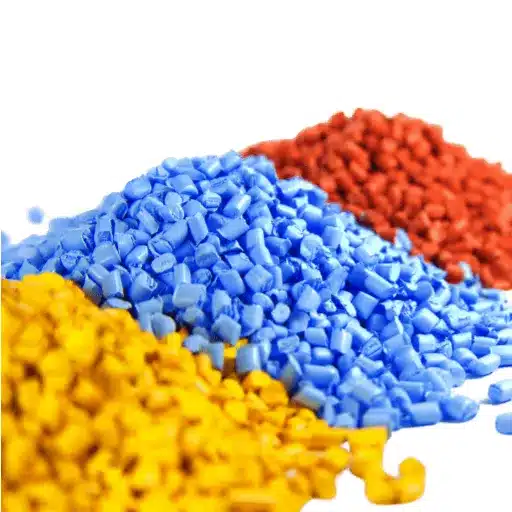
The resin pellets provide the necessary materials for creating precise optical parts which includes automotive lenses and electronic housings through injection molding. The pellet grades require melt flow rate (MFR) specifications which enable them to suit both processing equipment and part geometry needs.
The cast and extruded sheets function as raw materials for signage and architectural glazing and thermoforming applications which involve transforming flat stock into three-dimensional shapes. The cast sheets deliver superior optical performance together with enhanced chemical resistance when compared to their extruded counterparts.
The rods and tubes supply machinable materials which engineers use to create custom optical parts and light guides and prototype testing.
Key Properties of PMMA Acrylic

Optical Performance
The primary characteristic of PMMA is its ability to transmit light between 92% and 93% of the total light. The material surpasses both polycarbonate which transmits 88% to 90% of light and glass which transmits 90% to 92% of light and almost all other transparent plastic materials. The distinction becomes crucial for situations which depend on every single light output percentage since it affects both energy efficiency and visual output.
The refractive index of 1.49 produces results which show that PMMA lenses and optical components create less distortion than glass counterparts. The material enables production of eyeglass lenses and camera optics together with precise light guides.
The UV stability of PMMA establishes its distinct identity when compared to polycarbonate. PMMA shows natural resistance against UV degradation while PC needs UV stabilizer additives to stop yellowing caused by outdoor exposure. The acrylic material retains its optical clarity together with color stability for several years in outdoor signage and automotive lighting and architectural applications which do not use protective coatings.
Mechanical Properties
| Property | Typical Value | Notes |
|---|---|---|
| Tensile Strength | 66–77 MPa | Grade dependent; standard grades ~70 MPa |
| Flexural Modulus | 3,200–3,300 MPa | High stiffness for precision components |
| Rockwell Hardness | M 92–101 | Higher than PC; better scratch resistance |
| Impact Strength | 15–20 J/m | 17× glass; 1/30th of PC |
| Density | 1.19 g/cm³ | ~50% of glass; lightweight advantage |
The surface hardness of PMMA exceeds polycarbonate significantly. While PC scratches easily and requires hard coatings for display applications, PMMA maintains gloss and clarity longer in contact-prone environments. Scratched acrylic can also be polished to restore optical clarity; polycarbonate cannot.
Thermal and Environmental Performance
Heat deflection temperature ranges from 84°C to 100°C depending on grade. Standard general-purpose grades handle continuous service up to 80°C. Mitsubishi Acrypet VH-001 heat-stabilized grade reaches 100°C which makes it appropriate for automotive lighting applications that require thermal management.
Weatherability is exceptional among transparent plastics. PMMA withstands prolonged outdoor exposure without the yellowing or surface degradation that affects polycarbonate. This makes it the preferred material for outdoor signage, skylights, and automotive exterior lighting.
Chemical resistance is application-specific. PMMA resists dilute acids, alkalis, and most household chemicals. The material undergoes attacks from ketones, esters, and aromatic hydrocarbons while solvent-based adhesives and certain cleaning agents lead to surface damage through crazing or cracking of acrylic materials.
PMMA vs Polycarbonate: Engineering Selection Guide

The choice between PMMA and PC represents one of the most common material selection decisions in optical component design. Both are transparent thermoplastics. Both process via injection molding and extrusion. Both replace glass in impact-sensitive applications. But their performance profiles diverge significantly.
Side-by-Side Property Comparison
| Property | PMMA (Acrylic) | PC (Polycarbonate) | Selection Implication |
|---|---|---|---|
| Light Transmission | 92–93% | 88–90% | PMMA wins for optical efficiency |
| Impact Strength | 15–20 J/m | 600–850 J/m | PC wins for impact resistance |
| Scratch Resistance | High (M 92–101) | Low (requires coating) | PMMA wins for durability |
| UV Stability | Excellent (no coating) | Poor (yellows without UV additives) | PMMA wins for outdoor use |
| Heat Deflection | 80–100°C | 130–140°C | PC wins for high-temp apps |
| Flexibility | Rigid/brittle | Ductile/flexible | PC wins for cold-forming |
| Flammability | Burns slowly (HB) | Self-extinguishing (V-0) | PC wins for flame resistance |
| Cost | Lower | ~35% higher | PMMA wins for cost-sensitive apps |
When to Specify PMMA
LED lighting and optical applications where luminous efficacy is primary. The 4–5% light transmission advantage over PC translates directly to energy efficiency or brighter output for the same power input.
Outdoor signage and architectural glazing requiring long-term UV stability without protective coatings. PMMA’s natural UV resistance eliminates coating costs and degradation risks.
Display and cosmetic applications where scratch resistance and surface gloss matter. PMMA maintains appearance longer than PC in contact-prone environments.
Cost-sensitive optical components where impact resistance is not the primary constraint. PMMA typically costs 30–35% less than comparable PC grades.
When to Specify Polycarbonate
Safety equipment and machine guards where impact resistance is paramount. PC’s 30–40× impact strength advantage makes it essential for protective applications.
High-temperature environments exceeding 100°C continuous service. Automotive underhood components, industrial lighting, and high-power LED housings often require PC’s thermal performance.
Cold-temperature impact applications where brittle fracture cannot be tolerated. PC maintains ductility at -40°C; PMMA becomes increasingly brittle.
Flame-retardant requirements where UL94 V-0 rating is mandatory. PC achieves V-0 inherently; PMMA burns slowly and requires additives for improved flame performance.
Applications by Industry

Automotive Lighting
PMMA dominates headlight and taillight lens applications where optical precision meets exterior weathering requirements. The material’s UV stability eliminates the yellowing that would otherwise degrade light output and appearance over a vehicle’s 10–15 year service life.
Key grades:
- Mitsubishi Acrypet VH-001: Heat-stabilized to 100°C for high-thermal LED headlight applications
- Mitsubishi Acrypet IR-G504: Impact-modified grade for improved durability in exposed lens positions
- Optical diffusion grades: For LED applications requiring controlled light scattering
LED Lighting and Electronics
Light transmission efficiency makes PMMA the default choice for LED lens, light guide, and diffuser applications. The material’s ability to transmit 92%+ of emitted light maximizes luminous efficacy while maintaining color rendering accuracy.
Application examples:
- LED street and area lighting lenses
- Edge-lit display light guides
- Backlight diffusion plates
- Optical sensor windows
Signage and Displays
Illuminated channel letters, point-of-sale fixtures, and architectural signage leverage PMMA’s light transmission for backlighting efficiency and UV stability for outdoor durability. Cast acrylic sheets provide the optical quality required for premium display applications.
Medical and Dental
PMMA’s biocompatibility and optical clarity support applications including:
- Dental prosthetics and crown materials
- Intraocular lenses (with specialized medical-grade formulations)
- Diagnostic device housings requiring visibility
- Medical equipment panels and guards
Architecture and Construction
Skylights, aquariums, and transparent architectural panels use PMMA’s combination of light transmission, impact resistance (versus glass), and weatherability. The material’s 50% weight reduction versus glass reduces structural load and installation complexity.
Branded PMMA Grades and Specifications

Mitsubishi Chemical, Acrypet™ and Diakon®
Mitsubishi Chemical represents one of the premier PMMA manufacturers globally, with production capacity serving automotive, electronics, and optical markets. Their Acrypet and Diakon product lines offer grade-specific formulations for distinct application requirements.
Standard Injection-Molding Grades:
| Grade | MFR (g/10min) | HDT (°C) | Light Transmission | Key Applications |
|---|---|---|---|---|
| V 001 | 2.3 | 93 | 92.5% | General molding, displays |
| VH-001 | 2.0 | 100 | 92% | Automotive lighting, high-heat apps |
| MF 001 | 14 | 84 | 92% | Thin-walled parts, fast cycling |
Impact-Modified Grades:
| Grade | MFR | HDT | Impact Strength | Applications |
|---|---|---|---|---|
| IR-G504 | 0.9 | 85 | High | Automotive parts, durable lenses |
| IRK304 | 3.1 | 94 | Medium | Electronics housings |
| IRL509 | 1.7 | 88 | High | Industrial components |
Specialty Grades:
- Optical diffusion grades: For LED lighting applications requiring controlled light scattering
- UV-enhanced grades: Extended outdoor weatherability for signage and architectural applications
- High-flow grades: For complex thin-wall injection molding
Key Specifications to Verify on COA
When sourcing Mitsubishi or any branded PMMA, the Certificate of Analysis should specify:
- Melt Flow Rate (MFR): Measured at 230°C/3.8 kg per ISO 1133. Typical range 2–14 g/10min for standard grades; lower for impact-modified variants.
- Light Transmission: Optical grades should specify 92%+ transmission at 3mm thickness.
- Heat Deflection Temperature: Verify against application requirements; standard grades 84–93°C, heat-stabilized grades to 100°C.
- Vicat Softening Point: Secondary thermal indicator, typically 95–105°C for standard grades.
- Rockwell Hardness: M-scale values of 92–101 indicate surface hardness suitable for scratch-resistant applications.
Sourcing PMMA Resin from China
The global PMMA market totals approximately $6.2 billion (2026), with China representing roughly 45% of global production capacity. For international buyers, China-based sourcing offers competitive pricing and access to Asia-Pacific brand grades that Western distributors may not stock efficiently.
The 25kg MOQ Advantage for Development Programs
When BrightView Signage needed to qualify PMMA for a new illuminated channel letter product line, their engineering team required three different grade trials before finalizing specifications. A 1,000 kg minimum order would have committed them to material before validation. Instead, they sourced 25 kg trial quantities of three Mitsubishi grades, completed their qualification testing, and then scaled to production volumes with confidence.
This accessibility at trial quantities is critical for:
- R&D material qualification
- New product development
- Process validation before production commitment
- Small-batch custom manufacturing
COA Verification for Optical-Grade PMMA
Certificate of Analysis verification is particularly important for PMMA because optical properties are not visually apparent. A pellet sample may look identical while varying significantly in light transmission or clarity.
Verification checklist:
- Confirm manufacturer issuance: The COA should be issued by Mitsubishi Chemical (or respective manufacturer), not generated by the distributor.
- Cross-reference MFR: Compare the measured melt flow rate against the published specification for the grade. Acrypet V-001 should show approximately 2.3 g/10min; significant deviation suggests either off-spec material or incorrect grade identification.
- Verify lot number format: Mitsubishi lot numbers follow identifiable patterns; an experienced supplier can confirm format consistency.
- Check optical specifications: For optical-grade material, the COA should specify light transmission percentage, typically 92% or higher.
Documentation Package Requirements
Every PMMA shipment for international import should include:
- Commercial invoice specifying brand, grade, and lot numbers
- Packing list matching invoice quantities
- Manufacturer-issued Certificate of Analysis
- Material Safety Data Sheet (MSDS/SDS)
- Applicable compliance certifications (FDA, RoHS, REACH) for qualifying grades
Port of Shanghai Logistics
Suzhou-based suppliers with Port of Shanghai access offer significant logistics advantages:
- Standard lead time of 7–14 days to major international ports
- Access to one of the world’s highest-frequency container departure ports
- Competitive freight rates due to port volume and sailing frequency
- Established customs documentation workflows
Processing Guidelines for PMMA

Injection Molding Parameters
Drying: 3–4 hours at 80–90°C to achieve moisture content below 0.02%. Moisture causes bubbles and optical defects in molded parts.
Melt Temperature: 220–260°C depending on grade MFR. Lower MFR grades (impact-modified) require higher temperatures; high-flow grades process at lower temperatures.
Mold Temperature: 60–80°C for optimal surface finish and dimensional stability.
Shrinkage: 0.2–0.6% depending on processing conditions and part geometry. Optical components require tight process control to maintain dimensional tolerances.
Extrusion and Sheet Processing
PMMA extrudes well into sheet and profile forms. Temperature control is critical for optical-quality output; temperature variations cause optical distortion and haze.
Machining and Fabrication
PMMA machines cleanly with standard CNC equipment. Key considerations:
- Use sharp cutting tools to prevent stress cracking
- Avoid excessive heat buildup during machining
- Polishing can restore optical clarity to machined edges
- Thermal forming requires controlled heating to prevent bubble formation
Conclusion
PMMA acrylic resin holds a distinctive and important status among all transparent thermoplastic materials. The material achieves 92 to 93 percent light transmission together with its inherent UV protection and its surface hardness properties, making it suitable for optical and lighting and signage and display uses which require both maximum clarity and weatherability protection.
The key to successful PMMA specification is matching grade properties to application requirements. The company developed Mitsubishi Acrypet VH-001 as a high-heat material for use in automotive lighting applications. Standard V-001 for general optical components. The grade IR-G504 provides impact-modified properties which enable the production of durable lenses with enhanced toughness. Each grade delivers specific performance optimized for distinct application demands.
When you need to acquire PMMA from a Chinese PMMA acrylic resin supplier, confirm that your supplier presents manufacturer-issued COA documentation and maintains inventory of all required branded grades and can provide trial quantities before your production commitment. The 25 kg MOQ accessibility that qualified distributors offer enables proper material qualification without unnecessary volume risk.
Frequently Asked Questions
What is the difference between cast and extruded acrylic?
The production method for cast acrylic involves the pouring of liquid resin between glass plates which then cures. The material provides superior optical clarity and enhanced chemical resistance while maintaining consistent thickness throughout its structure. The manufacturing process for extruded acrylic involves pushing heated resin through a die which produces a product that costs less but displays inferior optical properties and greater internal tension. For optical applications, use cast materials. The standard requirements for most applications can be met through the use of extruded materials.
Is PMMA food-safe?
Certain PMMA grades achieve FDA approval for use in food-contact applications. The material itself is non-toxic and biocompatible. For food-contact applications, verify that the specific grade carries FDA compliance documentation and request the compliance certificate from your supplier.
Can PMMA be used outdoors?
Yes. The outdoor performance of PMMA exceeds that of polycarbonate because of its natural resistance to ultraviolet radiation. PMMA maintains its optical clarity and color stability through outdoor exposure which lasts for years without protective coatings in outdoor signage and lighting and architectural use. The company provides UV-enhanced grades which meet requirements for extended outdoor exposure.
How does PMMA compare to glass?
The comparison between PMMA and glass shows that PMMA transmits more light because it achieves 92 to 93 percent transmission which exceeds glass transmission of 90 to 92 percent while weighing half as much. The material shows approximately 17 times better resistance to impacts than glass which has the same thickness. PMMA provides better protection from damage in impact situations than its glass counterpart but it gets scratched more easily and has lower resistance against heat. The better option for applications requiring weight reduction together with impact protection and shatter resistance is PMMA.
What is the best PMMA grade for LED lenses?
The standard optical grades of Mitsubishi Acrypet V-001 provide 92.5% transmission which LED applications need for their maximum light transmission requirements. The heat-stabilized VH-001 which operates at 100°C should be specified for high-thermal LED applications that include high-power automotive and industrial lighting. The optical diffusion grades scatter light in applications needing diffused light output while they maintain efficiency in light transmission.
Is PMMA BPA-free?
Yes. The material PMMA contains no bisphenol A which is known as BPA. The material exists as a polymer which results from methyl methacrylate monomer polymerization without any BPA components in its chemical composition. This makes it suitable for applications where BPA-free certification is required.
Can scratched acrylic be restored?
The ability to restore scratched acrylic surfaces depends on the extent of the scratches. The ability to polish PMMA provides it with a superior advantage against polycarbonate materials. Acrylic surfaces with minor scratches can be restored through the application of specific polishing techniques and compounds. To repair deep scratches, the process begins with sanding and ends with polishing. Display and cosmetic applications benefit from this restorability which extends their operational period.
What certifications should PMMA have for automotive use?
Automotive PMMA applications typically require grade-specific OEM material approvals rather than generic certifications. Common requirements include heat aging performance data, UV stability testing, and lot traceability documentation. The interior applications need to comply with VOC emission regulations which follow VDA 278 standards. Always confirm the specific OEM material specification before sourcing.


