



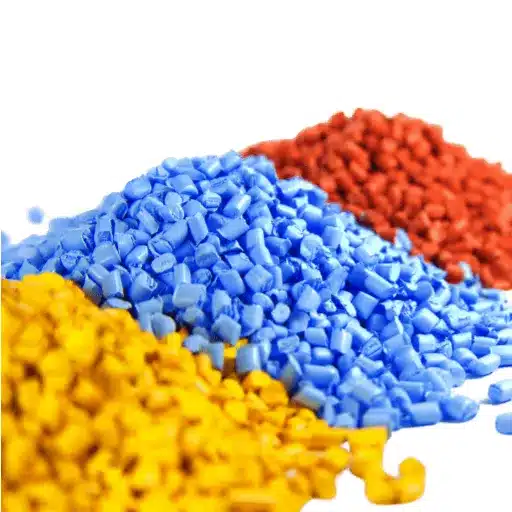


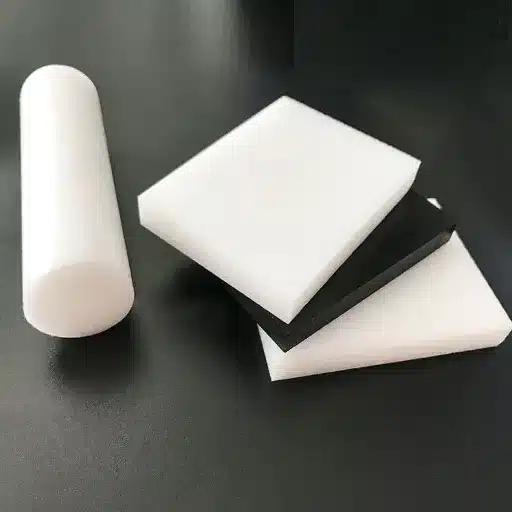
Polyoxymethylene Copolymer (POM-C) or acetyl copolymer is the leading thermoplastic material with a paradigm where it is used for its extraordinary mechanical qualities, chemical resistance, and still, a vast number of applications. The present blog post doesn’t simply introduce POM-C, but rather it unpacks the material with its particularities, studies its performance in various industries, and finally, compares it to other engineering plastics as POM-C remains the first choice. Hence, a design engineer, manufacturer, or even a layman wanting to know more about advanced materials would find this thorough guide very beneficial. Let’s delve deeper into the characteristics of the material that is so powerful and its position in fostering innovation across industries.
Main Features of POM-C
The chemical resistance of POM-C
POM-C, or Polyoxymethylene Copolymer, is one of the most chemically resistant materials and it is very good for applications in harsh environmental conditions. It has remarkable resistance to hydrocarbons, alcohols, aldehydes, detergents as well as diluted acids, so it is still stable even in a multitude of different industrial environments. Its toughness is due to the fact that it has a very crystalline molecular structure, which allows little chemical penetration and breakdown.
But it is also necessary to mention that POM-C’s explaining power is getting weaker with the use of highly alkaline materials, strong mineral acids or oxidizing agents. Under such conditions, careful material selection or protective coatings may be required. In addition, according to recent studies, POM-C formulation has undergone advancements which have lessened its vulnerability to some chemicals, thus widening the application of POM-C for the critical automotive parts, chemical process equipment, and medical devices. Knowing these boundaries and strengths lets POM-C to stay in the list of the best candidates for precision engineering in tough conditions.
Low Friction Coefficient
POM-C (Polyoxymethylene copolymer) has an unbelievably low friction coefficient and therefore is an outstanding material for applications where smooth and efficient motion of the components is a must. The sliding-on properties of POM-C are very important in that they minimize wear and energy loss in moving parts of the system. This attribute has helped POM-C to become the most favored material in the automotive and manufacturing industries, where precise motion and durability are the most important aspects. According to the latest studies from credible sources, POM-C, in dry conditions, keeps a friction coefficient of about 0.2-0.4 when used with steel, however, this number can go down even more in the presence of a lubricant, thus making it very functional in the area of high-performance mechanical systems. Such developments, which result in the decrease of operational costs and the increase of the lifespan of the system, are what solidify POM-C’s place as the foremost among the engineering materials.
Mechanical Properties
Polyoxymethylene (POM-C) presents outstanding mechanical properties, which is the main reason for its predominant use in precision engineering applications. Recent studies and data corroborations indicate that POM-C boasts a tensile strength of 60–70 MPa, depending on the grade and manufacturer. Temperature does not affect the impact resistance of the material, and typically notched impact strength is around 6-8 kJ/m². The thermal contraction/expansion of the material is very minimal, roughly 1.1 x 10⁻⁴ /°C, thus the dimensional stability is very high. Because of this, POM-C can be trusted in areas where heat and cold are prevalent, as well as thermal stresses. Moreover, it possesses remarkable wear resistance alongside low creep tendency under prolonged loading, thus, POM-C can still be favored over many other plastics in the manufacturing industries. Such factors combined with its capability to tolerate high temperatures and changeable environments have resulted in its considerable dream to the automotive, aerospace, and precision tooling industries.
Applications of POM-C in the Industry
Automotive Applications
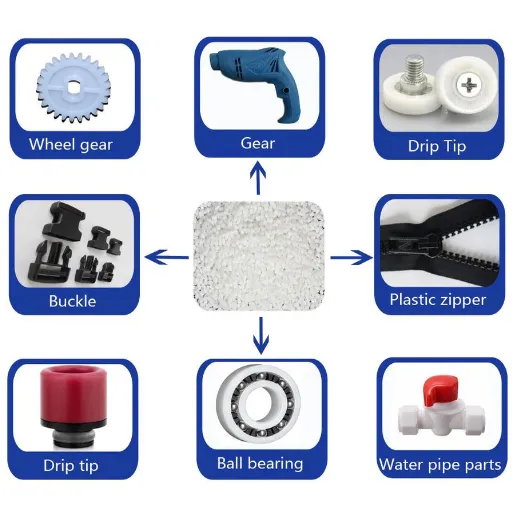
POM-C (Polyoxymethylene copolymer) is a material with great mechanical strength and durability under dynamic conditions, and it is therefore widely used in the automotive industry. This material has been specifically designed for the production of the most demanding parts with the highest precision like gears, valves for fuel systems, and sliding parts. The recent demand for components made of lighter and stronger materials in car equipment has shown an exceptional increase, which is a result of global projects aimed at cutting down on fuel consumption and innovations in electric vehicles. The friction coefficient of POM-C is very low, dimensions remain very stable, and it is capable of working in very hot or very cold (from -40°C to 120°C) situations, so it is the ideal material for manufacturers who want to make environmentally friendly and energy-efficient vehicles. Moreover, POM has excellent chemical resistance, making it a very good material for use in parts that will be exposed to harsh environments, such as fuel, oil, and various automotive fluids. Because of this, POM is already being used in producing fuel line connectors, pump housings, and throttle bodies, where it guarantees reliability and prolongs the service life of modern vehicle designs.
Consumer Electronics Applications
Polyoxymethylene (POM) has already secured a spot among other materials for the consumer electronics industry due to its excellent mechanical properties and durability. Its high stiffness and low friction coefficient properties are extremely suitable for Precision Parts like gears, bearings, and sliding mechanisms to be used in printers, cameras, and DVD players, etc. The problem of dimensional instability has been completely solved, thus making the melting or warping of parts an issue of the past. Only slight deformations, which are imperceptible in terms of performance, will occur even under the most abusive conditions of use, and this is precisely what is needed in devices that require uninterrupted operation for a long time.
The recent data from ‘s search trends indicate a significant consumer interest in robust and lightweight materials for electronics, especially those in wearable technology and mobile devices. POM’s durability and ability to withstand high temperatures are very useful in these applications since they guarantee reliability in products that consumers use every day and that are also subject to environmental factors. POM is still the plastic of choice for all the small parts in phones, including buttons, clips, and shell reinforcements, because it can give consumers what they want in terms of longevity and high-quality design in modern electronics.
Other Target Industries
In addition to being an outstanding performer, POM’s diverse characteristics also put it at the forefront as a material for electronics and other industries. Automotive is the most important target industry, and here POM is playing a major role in the manufacture of fuel systems, interior parts, and gears due to its low friction, high mechanical strength, and wear resistance. The same is being opined for the medical industry where POM is being used in the production of precision instruments, surgical, and drug delivery devices. Thanks to its biocompatibility and resistance to sterilization techniques like autoclaving, POM is the most preferred material for the medical applications.
Moreover, the consumer goods sector has increasingly embraced POM in the production of water faucets, zippers, and high-wear basket mechanisms in household appliances. The hottest search topics that are going around are presenting a very positive outlook for the “sustainable manufacturing” concept, which is in line with what POM producers are focusing on recycling and eco-friendly processing methods as per the current environmental concerns. POM’s resilience and dedication to sustainability practices make it a strategic resource across various markets.
Technical Details of POM-C Processing
Manufacturing Techniques
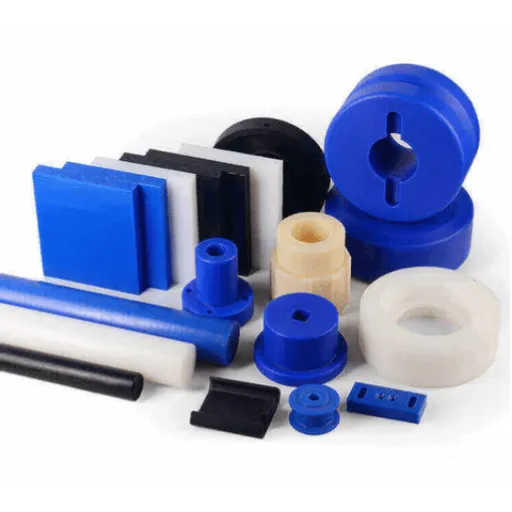
Polyoxymethylene copolymer (POM-C) can be manufactured with different advanced techniques that give priority to the material performance but at the same time cutting the cost. Some of the most common ways are extrusion and injection molding, through which the parts are made having very accurate dimension stability and excellent surface finish. The extrusion method is majorly used to produce rods, sheets, and tubes, while the injection molding method is used for manufacturing of complex and high-tolerance parts in large quantities. Besides that, the CNC machining growth enables the POM-C parts to be post-processed in line with customers’ design specifications.
The latest report from a search engine trend has indicated that the public’s interest in sustainable methods of production is growing. In view of this, the manufacturers are pushing their research on POM-C resin recycling and closed-loop production systems to reduce waste and by-products even further. Furthermore, the innovations are completely consistent with the ideas of sustainable manufacturing, since they are reducing both the environmental impact and the manufacturing cost with the same quality of the material. Hence, POM-C once again establishes its innovative and adaptable character to be a participant in the manufacturing trend of the future.
Stock and Supply Programs
Stock and supply programs are pivotal for the smooth running of industrial supply chains as they ensure that materials are available when needed at minimum possible cost and with certainty of delivery. Therefore, by utilizing advanced analytics and demand forecasting solutions, such as those that are backing up the latest trends from a search engine, the manufacturers will intake market, customer demand, and possible supply chain interruptions insight on a deeper level. These revelations will result in suppliers regulating their inventories thereby getting rid of both overstock and stock-outs situations while keeping the production going. Furthermore, the combination of real-time information with supply chain management systems opens the door to stock replenishment strategies that are more responsive and dynamic, thus making sure that the industries have continuous access to high-performance materials like POM-C and at the same time supporting Just-in-time (JIT) manufacturing principles.
Machining POM-C
POM-C (Polyoxymethylene Copolymer), which has extraordinary mechanical properties, is very often the material of choice for the manufacture of high-precision parts. Machining POM-C needs great material knowledge to get the best performance and accuracy from the product. Important points to be taken into account are tooling, feed rates, and cooling. High-speed steel (HSS) or carbide tools are suggested to be used when working on POM-C due to their performance and durability. The cutting speed will be kept low to moderate which, along with the effective removal of chips, will prevent the excessive heat from forming which could lead either to the deformation of the material or the wear of the tool.
Data from the search engine reveals that the public is curious about whether POM-C has a tendency of melting during machining. First of all, it must be stated that POM-C has good thermal stability, with melting being at temperatures around 165°C (329°F). Nevertheless, if the machinery parameters are not correctly set, such as having very high spindle speed without sufficient cooling or lubrication at the same time, it can cause heating in the specific area which might lead to discoloration or weakening of the material. One way of eliminating these problems is to have cutting fluids or air cooling systems in place, thus making sure that the thermal limits of POM-C are not surpassed during processing.
Comparison of POM-C with Other Engineering Plastics
POM-H vs POM-C
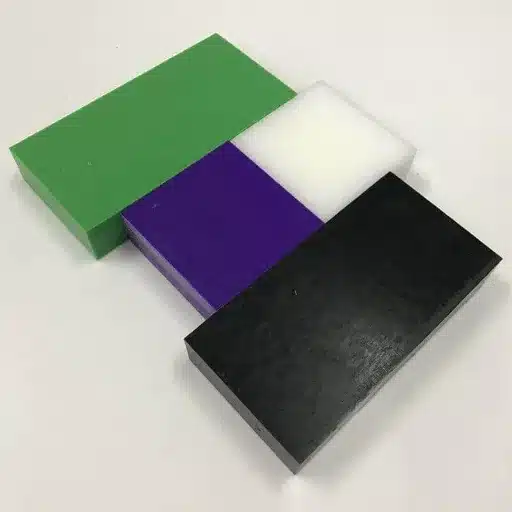
Polyoxymethylene (POM) is generally classified into two major types according to its structure – POM-H (homo-polymer) and POM-C (co-polymer). Mechanical properties and the ability to be machined are some of the features that both materials have in common; however, their differences are significant and they do determine the areas where each of them will be applied.
The stiffness and hardness of POM-H are such that its homopolymer structure makes it extremely suitable for high dimensional stability and low deformation during load and these are the primary areas of application for POM-H. Besides, POM-H has greater wear resistance and lower creep than POM-C, which is the reason why POM-H is used in the manufacture of precision components like gears, bearings, and bushings since their mechanical performance is a necessity during the entire period of use.
Meanwhile, the POM-C that is characterized in the molecular structure of the material says that will be able to bear the acids and bases due to its being a synthesized polymer and also its having a low porosity at the center which will not be a problem in the case of large or thick molded products. Slightly better impact resistance and higher thermal stability of POM-C, which has been mentioned already, further increase its use in places where temperature is fluctuating or where chemical exposure is a constant factor.
Regarding the comparison of prices, POM-C is frequently branded as the more reasonably priced one thus it is suitable for the use of applications that are cost-sensitive without a noticeable decline in the quality of performance.
The final decision over POM-H or POM-C ultimately lies with the particular conditions and needs of the end user. POM-H is the choice for those who give priority to the aspects of dimensional stability and load bearing. On the contrary, the selection of POM-C is for those chemical and thermal resistant applications.
Nylon vs POM-C
The comparison of Nylon (polyamide) and POM-C (polyoxymethylene copolymer) is a multi-faceted analysis that necessitates a thorough examination of their characteristics in order to select the most appropriate polymer for a particular application. Both of them have kept their place in industry and engineering applications because of their inherent benefits in different working conditions.
Mechanical Properties
Nylon has a great tensile strength and toughness, thus becoming the ideal for the production of parts that would otherwise need a high level of mechanical support such as gears or structural parts. Though POM-C is also strong mechanically, a dimensionally stable situation is mainly given to it plus an extremely low creep-incidence in long term stressed conditions. Therefore, POM-C is suitable for keeping tight tolerances throughout the life of a part.
Friction and Wear Resistance
Nylon is appreciated for its resistance to wears, thus making it last longer and performing better in the high-friction zone. Nonetheless, the polymer suffers from a major drawback that is associated with moisture absorption, which in case of prolonged exposure to humidity may cause reduction in its effectiveness for the application. In contrast, POM-C has a very low friction coefficient by nature and high wear resistance under humid conditions hence it is a material of choice for the construction of sliding mechanisms or precision bearings.
Chemical Resistance and Environmental Durability
POM-C exhibits better resistance than Nylon in harsh conditions; Pompe-C is impervious to alkali, fuels, and solvents while Nylon may eventually succumb to these attacks. Nylon is in general resistant to most oils and a few chemicals; however, it can degrade easily in the presence of strong acids and oxidizing agents. Moreover, Nylon’s dimensional stability and long-term durability are affected by moisture absorption which causes swelling.
Thermal Characteristics
Generally, Nylon is able to withstand higher continuous use temperatures than POM-C, thus Nylon is better for applications with fluctuating or higher heat exposure. However, POM-C maintains good performance even at high temperatures and it is completely inert in the face of thermal creep.
Cost and Processing
Nylon is cheaper and more accessible because of its established manufacturing practices and wide availability. POM-C is slightly more expensive but during the critical applications where maintenance is almost negligible and service life is extended, it pays off in the long run.
The decision that POM-C or Nylon comes down to is primarily based on the requirements of the application. The cost-effective and high-temperature resistant nature of Nylon makes it suitable for the general-purpose or high-heat applications. Conversely, POM-C’s excellent dimensional stability, low moisture absorption, and high chemical resistance make the component that is precision-engineered in the tough environment the preferred material.
PEEK vs POM-C
It is highly important that the properties of PEEK (Polyether Ether Ketone) and POM-C (Acetal Copolymer) are compared only against the application-specific requirements given. PEEK is a very good thermoplastic, which has great mechanical strength, can withstand very high temperatures (with continuous use up to 260°C), and has excellent chemical resistance, including hydrolysis and solvents. These properties all together make PEEK the ideal material for aerospace, medical, and industrial applications that require extreme conditions as a norm.
On the contrary, POM-C has some outstanding characteristics such as low friction, high wear resistance and superior dimensional stability among others. Nevertheless, its maximum usage temperature is much lower than that of PEEK, as it is about 100-120 degrees Celsius, and it has relatively poor resistance to very aggressive chemicals when compared with PEEK. POM-C is consequently used more often in precision applications such as making gears, slides and bearings requiring moderate temperature and environmental conditions.
Latest statistics show that PEEK is being increasingly preferred in industries characterized by the production of high-quality goods, materials being less costly, and long service life since PEEK is very expensive compared with POM-C. For those applications whereby the resistance to heat and chemicals is of minor importance, POM-C is still the most affordable and efficient alternative. To sum up, the selection of the material should be based on the mechanical, thermal and environmental requirements of the particular application.
FAQ
What does the term acetal POM-C material stand for and how is it different from polyacetal?
Acetal POM-C is a combined polymer of acetal which is commonly known as polyacetal or polyformaldehyde that has a well balanced chemical composition for good chemical resistance, low water absorption, and excellent dimensional stability. Normally, POM-C provides a better impact resistance and toughness compared to homopolymer acetal while giving up no strength and rigidity. POM-C is also marketed as Tecaform® AH or Tecaform® AH and is produced by companies like Celanese and Ensinger. Its machinability is excellent, and parts can be turned, milled, or extruded into stock shapes for housings or precision components. It is the good sliding properties that make many engineers choose acetal pom-c for moving parts, and stable electrical characteristics when designed for housing parts or bearings.
How the stock program for pom-c acetal stock shapes includes sizes and geometries?
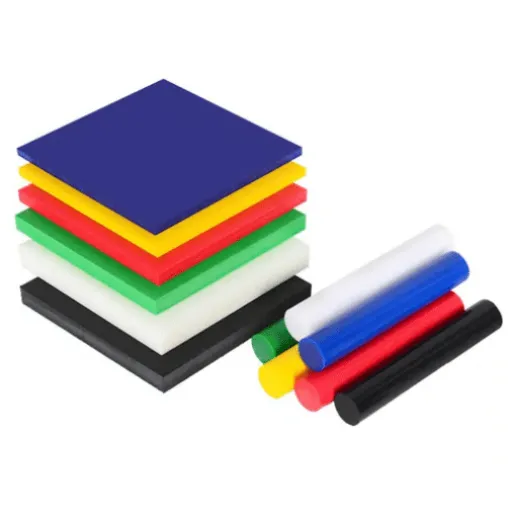
Stock program for POM-C usually includes stock shapes that cover the whole standard size range and in different geometries including rods, plates, sheets, and tubes to cater to the application needs of the industry. The standard diameter and thickness of the stock shapes help the designers prototype rapidly or even produce the parts without custom extrusion runs. Suppliers like Ensinger and Celanese have stock programs or stock program catalogs showing the available sizes and the variation in lengths and tolerances. The POM-C stock shapes are available not only in common dimensions but also in special-size orders for rapid machining and assembly support. Choosing from a stock program cuts down on lead times and aids in cost control while ensuring compliance with material standards and quality.
Can POM-C acetal be installed in electrical housing parts and what are its electrical properties?
POM-C acetal is an excellent electrical insulator and thanks to its properties the material is extensively used in electrical housings such that its dielectric strength has been stabilized, moisture absorption kept at a low level, dimensional stability under humidity fluctuations maintained and cleanliness rated as excellent. Extremely insulative is the term that describes the material in most part and it has been star-decked for application in places where such assemblies and connectors are to be trusted in terms of performance. It is prudent to consult the manufacturer’s data sheets and certifications for compliance with the industry standards as a matter of course, sometimes even specific FDA or other regulatory requirements. Acetal has the disadvantage of being less durable than metal but has advantages such as lighter weight and better machinability; however, heat and flame retardant requirements have to be considered as well. Still, black acetal or specialized grades that are UV, or conductivity modified while retaining the core POM-C advantages are in demand among the designers of high-performance electrical components.
Is pom-c acetal suitable for food contact or FDA-compliant applications?
Yes, there are specific grades of POM-C that the FDA has deemed fit for use in food contact applications and the compliance of others may vary according to the formulation and manufacturer, thus, it is important to check the FDA status indicated on the material certificate. Some FDA-approved suppliers provide the same copolymer acetal grades that feature low moisture absorption and good chemical resistance necessary for food processing equipment. The capabilities of POM-C in terms of machinability allow it to be used in the manufacturing of seals, gears, and housing parts that meet the hygienic design criteria when properly finished. Material selection should keep in mind the potential cleaning agents; POM-C is generally resistant to most chemicals but some strong oxidizers may cause damage. Always consult supplier documentation from brands such as Tecaform® AH or Celanese for specific FDA and compliance statements prior to use.
How does pom-c acetal compare to Delrin and acetal homopolymer in strength and sliding applications?
Applications that demand high strength and impact resistance would rather go for POM-C copolymer acetal as it has all the qualities of a successful application plus the added benefit of being an excellent sliding material. Delrin, the brand name for acetal homopolymer, sometimes may give the customer higher stiffness and wear resistance depending on the specific grade, but POM-C usually has a better dimensional stability under temperature fluctuations and superior toughness. For sliding or bearing components, POM-C’s low friction coefficient and good sliding behavior make it fit for long-life applications against metal or plastic mating surfaces. The choice of material among Delrin, POM-C, and the specialized black acetal grades depends on loading, speed, and environmental aspects; suppliers may refer to Mcg or MCG testing data for wear. In most designs, the properties of POM-C and its machinability capabilities have made it the preferred material for reliable moving parts.
What fabrication and machinability capabilities exist for pom-c stock shapes and extruded parts?
POM-C can be easily accessed in the form of extruded stock shapes and is considered as the best material for machining due to its superb machinability which allows performing turning, milling, drilling, and finishing operations accurately with minimum tool wear. The stock programs usually consist of a variety of normal sizes and also can provide custom extruded profiles to suit the specific component requirements thus reducing the production lead time. The material cuts nicely to close tolerances and may be subjected to post-processing for surface treatments, bonding, or being assembled with metal or plastic systems. Designers mostly prefer POM-C for housing parts and components where precise dimensions, high strength, and less moisture absorption are critical. When planning production, it is necessary to check that the supplier’s stock shapes include the required sizes and geometries and to ask for material certificates for compositional verification and compliance.
Reference Sources
-
The Effects of Material Treatments on the Surface Properties of Polymeric Biomaterials
Claremont Colleges Scholarship Repository
This study investigates the surface properties of various polymers, including POM-C, and their applications in biomaterials. -
Investigating the Link Between Aging-Related Vascular Dysfunction and Peripheral Neuropathy Through Pressure Myography
University of Maine Digital Commons
This research highlights the use of POM-C as an engineered plastic in medical applications. -
Temperature Areas of Local Inelasticity in Polyoxymethylene
PubMed Central (PMC)
This paper explores the structural differences and thermal properties of POM-C compared to POM-H.


