



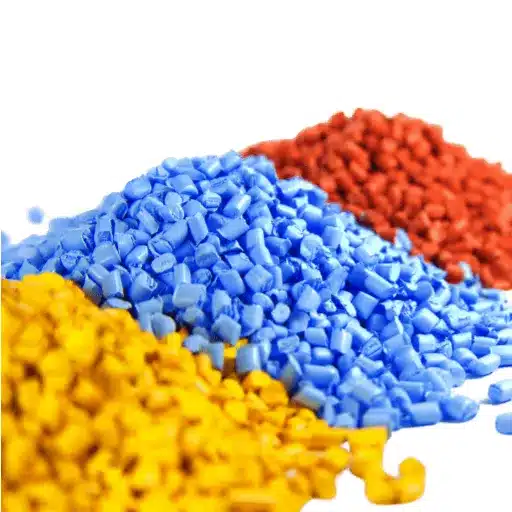


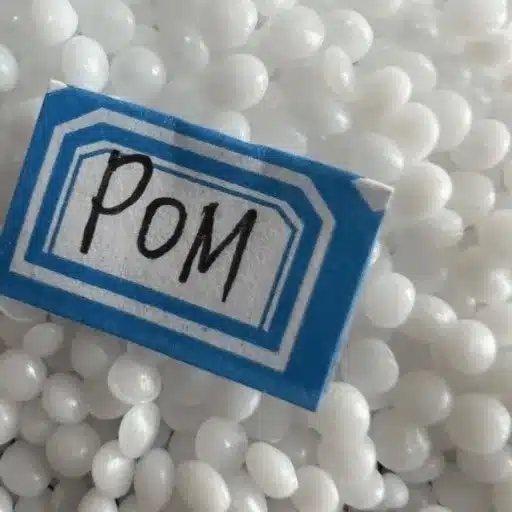
Polyoxymethylene (POM), the same as acetal or polyacetal, is a high-performance engineering thermoplastic extensively used in various industrial sectors. One of its most important properties is the density of POM homopolymers which significantly influences mechanical performance, structural integrity, and overall functionality. Knowing POM density helps to make choices of right materials for the applications. This detailed guide presents the importance of POM density, techniques of measurement, and its effect on polymer behavior in the harsh conditions of processing. It doesn’t matter whether you are working in materials engineering, product design, or you just have an interest in advanced polymer science, this analysis is full of insights that are crucial for unlocking POM’s full potential.
Introduction to POM Density
What is POM?
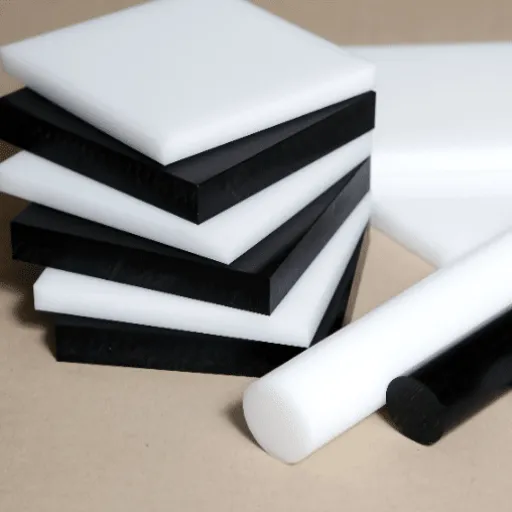
Polyoxymethylene (POM), which is known by the names acetal and polyacetal, is a plastic material that is considered as an engineering plastic with the best properties because of its great mechanical strength and stability in dimensions. POM is a thermoplastic polymer made up of long chains of alternating carbon and oxygen atoms which makes it achieve a great degree of crystallinity. The crystallinity here is a very important factor responsible for its remarkable robustness, hardiness, and resistance to such common issues as wearing out and getting tired.
POM can be produced as a homopolymer or as a copolymer; either type has its own special advantages according to the application needs. Automotive, electronics, and precision engineering are some industries that depend on POM for its low coefficient of friction, chemical resistance, and ability to perform effectively even in harsh operating conditions. It is the main choice for gears, bearings, and precision components manufacture with tight dimensional tolerances, proving its reliability even in the most difficult working conditions.
Importance of Density in Polyoxymethylene
Density is determined to be one of the major factors of polyoxymethylene (POM) and indirectly affects the material’s mechanical performance, dimensional stability, and compatibility with certain applications. In general, the density of POM varies between 1.41 and 1.43 g/cm³, with differences depending on the type of polymer being either a homopolymer or copolymer. This attribute is one of the major reasons why POM is even more in demand for the automotive and aerospace industries.
Key Industry Insight
The recent trends in precision engineering have reiteratively stressed the importance of density. The polymers’ components that possess a consistent and uniform density distribution are said to exhibit predictable performance even when subjected to various mechanical stresses, especially in gears and bearings where high tolerances and accurate load distribution are necessary.
Moreover, POM’s density plays a significant role in its resistance to wear and tear, prolonging its life and performance in terms of creep and fatigue resistance, therefore, making it a reliable material in applications subjected to dynamic or high-load conditions. Manufacturers have to keep track of the density levels of, and make necessary adjustments to, materials throughout production to ensure that the high-quality standards set by modern industrial applications are met.
Overview of Polyacetal Types
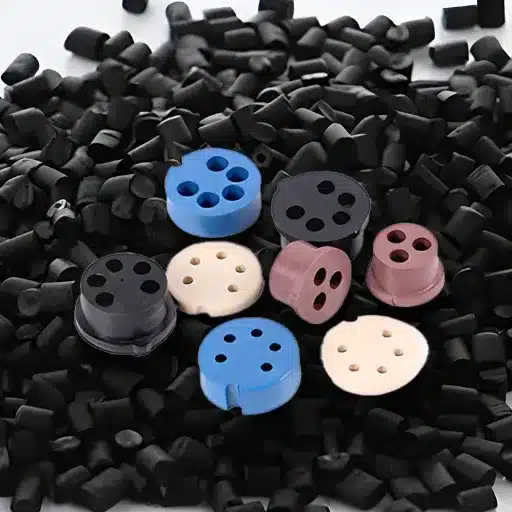
Polyacetal or polyoxymethylene (POM) is categorized primarily into two types: homopolymer and copolymer. While both grades possess high stiffness, dimensional stability, and low frictional resistance suitable for engineering applications, they differ in structural and performance characteristics that address varying industrial needs.
1. Homopolymer Polyacetal
Crystalline homopolymer POM has the best mechanical properties of tensile strength, stiffness, and precision over other polymers, thanks to its formation of a highly crystalline structure. This type is used in many applications where rigidity and precision are most important, such as in the manufacture of gears, conveyor systems, and electrical insulators.
Caution: The polymer’s high crystallinity, which causes the excellent properties, has made it very susceptible to thermal and chemical degradation, thus, limiting its use in applications involving high temperatures and/or alkalis.
2. Copolymer Polyacetal
Copolymer POM comprises comonomers throughout the process of polymerization. It thus has a somewhat reduced crystallinity when compared to the homopolymer variant. Such a change gives rise to better thermal stability and stronger hydrolysis resistance that are beneficial in scenarios where water contact and temperature changes, like plumbing fittings and fuel system parts, are involved.
Trade-off: The copolymer grades are weaker than homopolymers, but on the other hand, they are more chemically stable, and thus they are used in a variety of applications over different environments.
Both POM types can be produced in various grades through advanced processing techniques targeting specific performance requirements. Researchers continue exploring new possibilities in polymer science to further enhance POM’s versatility by fine-tuning its mechanical and thermal properties for specialized industrial applications.
Mechanical Properties of POM
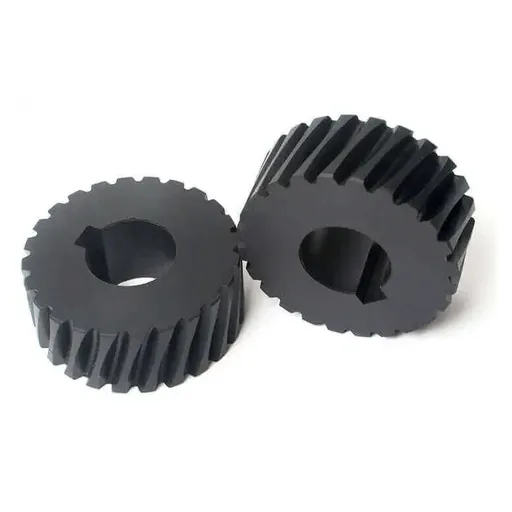
Key Mechanical Properties of Polyoxymethylene
Polyoxymethylene (POM) shows a remarkable range of mechanical characteristics that set it up as the material of choice for tough applications. The usual tensile strength that POM can bear is 60-70 MPa, however, some grades even surpass the lower limit. Furthermore, POM shows flexural modulus values of 2500 MPa or more, which gives it very high stiffness when subjected to the load.
| Property | Value/Range | Significance |
|---|---|---|
| Tensile Strength | 60-70 MPa | High load-bearing capacity |
| Flexural Modulus | ≥2500 MPa | Excellent rigidity under stress |
| Coefficient of Friction | Low | Reduced wear in moving applications |
| Dimensional Stability | High | Effective creep resistance under constant stress |
| Impact Resistance | Good at low temperatures | Maintains toughness across temperature ranges |
✓ Key Advantages
- Low coefficient of friction minimizes wear in gears and bearings
- Superior hardness ratings on Rockwell M or R scale
- Maintains toughness at low temperatures
- Excellent dimensional stability resists creep under constant stress
The latest scientific studies along with the manufacturer data have proved that POM grades are still being further improved by the innovations made. Tailored mechanical functions which comprise higher fatigue resistance as well as better performance under cyclic loading are provided by the new copolymer and homopolymer formulations. These improvements ensure that POM remains one of the most important materials for many industries like automotive and consumer electronics.
Comparing Homopolymer and Copolymer Mechanical Characteristics
Polyoxymethylenes (POM) of different grades—homopolymer and copolymer—are compared and one of the most prominent differences in their mechanical properties turned out to be that homopolymer POM has higher tensile strength and stiffness, and, thus, better static load-bearing properties, and one typically due to its crystalline nature.
Thereby, this very condition is usually associated with lower impact resistance and fatigue tolerance.
On the other hand, the POM made by copolymerisation is noted for better thermal degradation resistance and maintaining its performance even in dynamic or cyclical-loading environments. The comonomers present in the molecular structure are responsible for the interrupting crystallinity which is the reason for the slight reductions in stiffness and density but great gains in resistance to cracking and wear. Therefore, the use of copolymers is advisable in applications where mechanical parts are subjected to repetitive stress or extreme temperature variations.
A significant amount of research and development is now being directed towards the combination of additives and reinforcements that will enhance the specific features of each grade further. For example, new copolymers are being developed with very high resistance to hydrolysis and excellent dimensional stability which in turn can be used in high-performance environments, such as automotive fuel systems and precision gears, due to the expansion of the market.
Applications in Industry
Polymers with the added value of recent innovations now have a versatile nature, hence their applications in many industrial sector have been significantly increased. High-performance polymers are quickly moving into the automotive, aerospace, healthcare and consumer electronics markets.
Industry-Specific Applications:
- 🚗 Automotive: Fuel injection systems and lightweight structural components promoting energy efficiency
- ✈️ Aerospace: Weight-critical components replacing metals while maintaining mechanical integrity
- 🏥 Healthcare: Biocompatible surgical instruments, implants, and drug-delivery systems
- 📱 Consumer Electronics: Precision components requiring dimensional stability
This trend demonstrates that manufacturers continue investing in research to develop customized solutions addressing specific market challenges.
Advantages and Disadvantages of POM
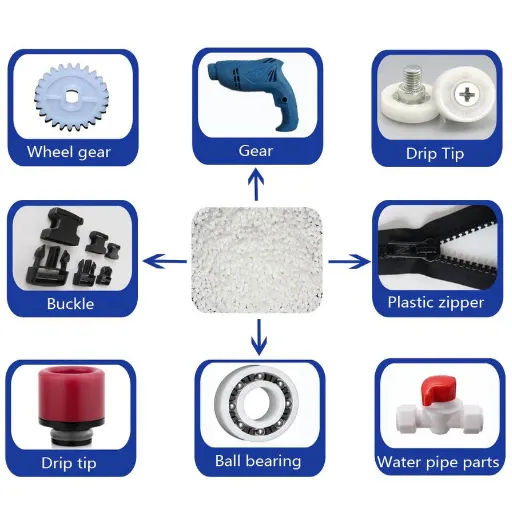
Benefits of Using Acetal in Manufacturing
Acetal, also termed polyoxymethylene (POM), offers numerous benefits in manufacturing due to its unique combination of mechanical properties and chemical resistance. This high-performance technical thermoplastic is primarily valued for its strength, rigidity, and low friction characteristics, which define its application range in precision-engineered components such as gears, bearings, and fasteners.
✓ Primary Benefits
- Dimensional Stability: Maintains precise dimensions compared to other polymers with minimal moisture absorption
- Wear Resistance: Extended component life reduces replacement frequency and costs
- Processing Efficiency: High-precision production through injection molding or extrusion with minimal material wastage
- Chemical Resistance: Excellent resistance to fuels, solvents, and oils—ideal for automotive and aerospace applications
- Environmental Performance: Remains functional in environments with humidity or temperature fluctuations
Recent research highlights ongoing developments in blending Acetal with fillers and reinforcements to further enhance performance, especially in high-load or demanding conditions. Such advancements continue opening new possibilities for its use while aligning with industry demands for durable, lightweight, and cost-effective solutions.
Common Disadvantages and Limitations
Although Acetal presents many advantages, it comes with certain limitations that must be considered:
⚠ Key Limitations
- Chemical Sensitivity: Limited resistance to degradation from strong acids and oxidizing agents
- UV Resistance: Low resistance to UV radiation leading to discoloration and mechanical property loss with prolonged sun exposure
- Temperature Constraints: Operates continuously up to approximately 212°F (100°C), less suitable for high-temperature applications compared to thermoplastics like PEEK
- Brittleness: Inherent brittleness can be problematic in applications requiring high impact resistance, despite reinforcement advancements
These limitations necessitate careful evaluation of Acetal’s suitability regarding specific environmental and performance requirements.
Degradation and Its Impact on Performance
Thermal and oxidative environments and the prolonged application of UV radiation are the main reasons for the degradation of Acetal (polyoxymethylene/POM). The process when Acetal is heated, depolymerization is a reaction that leads to the release of formaldehyde gas which, in turn, hampers the development of the material by affecting its toughness and dimensional stability.
According to some recent studies and industry reports, the main reason for the formation and growth of micro-cracks, which in turn results in the reduction of fatigue resistance, is surface oxidation caused by environmental factors. Moreover, continuous UV radiation exposure leads to the breakdown of the polymer’s molecular weight resulting in the loss of the material’s strength, and at the same time, it causes the polymer to change color.
Mitigation Strategies
Measuring POM Density
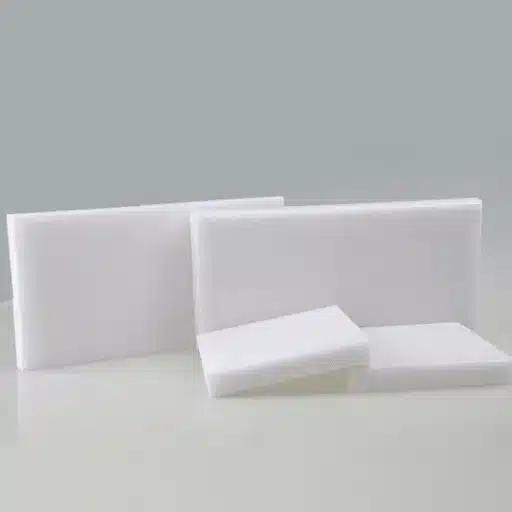
Scientific Methods for Density Measurement
The density of polyoxymethylene (POM) ranks among the most important parameters directly affecting its mechanical properties and performance across various applications. Density measurement of POM can be accomplished using several scientific methods:
| Method | Principle | Application |
|---|---|---|
| Archimedes’ Principle | Measures volume by liquid displacement | Precise results under controlled conditions |
| Densitometry Devices | Computerized scales with calibrated fluids | Higher accuracy measurements |
| X-ray/Ultrasound Methods | Non-destructive analysis | Ideal for irregularly shaped samples |
| Gravimetric Techniques | Advanced weight-based measurements | Laboratory precision testing |
Recent developments in materials science demonstrate that automated instruments enable real-time density control for industrial POM production, particularly in extrusion and molding operations. Accurate density measurement and interpretation are prerequisites for proper grading of POM for specific applications, whether load-bearing or subject to wear.
Tools and Machines Used in Density Testing
Density testing employs a wide variety of sophisticated instruments specifically designed to deliver precise and reliable measurements:
Primary Testing Instruments:
- Density Gradient Column: Enables accurate measurement by mixing liquids of different densities and observing material floating behavior
- Hydrostatic Weighing: Uses Archimedes’ principle to measure density by calculating displaced fluid volume
- Gas Pycnometer: Employs air displacement for small or irregularly shaped specimens with minimal error percentage
- Digital Densitometers: Utilize oscillating U-tube technology for real-time analysis
- In-line Density Monitoring Systems: Provide continuous density data crucial for quality control in industrial settings
Recent capacity data indicates that integration of automated density measurement tools is advancing the field. High-resolution imaging and 3D scanning complement these testing processes, where material science principles meet computational precision to redefine proper testing protocols.
Interpreting Measurement Results
The reliable and usable nature of polyoxymethylene (POM) parts depend largely on accurate interpretation of the measurement results. Through accurate localization and quantification of the material-property deviations, the real-time density data and the advanced imaging outputs are merged.
Interpretation Best Practices:
- Data may reveal minor inconsistencies in polymer crystallinity affecting mechanical properties such as tensile strength or wear resistance
- Machine learning algorithms can predict future performance under various operational conditions
- Comparison of performance metrics against industry standards optimizes formulations
- Forecasting POM application market trends assists in strategic planning
Collaboration between in-line monitoring technologies and data-driven insights equips management to achieve zero-defect quality control requirements while maximizing production efficiency simultaneously.
Real-World Applications of POM Density
Case Studies in the Automotive Industry
One notable case study involves the use of POM (Polyoxymethylene) in manufacturing automotive fuel system components, including fuel caps, pump housings, and precision gears. The material’s higher density and lower moisture absorption properties enabled manufacturers to produce more durable and efficient components.
Case Study Highlights:
Application: POM-based fuel pump gears
Results: Tests demonstrated significant increases in wear resistance under high-stress conditions compared to traditional materials, extending product life and reducing maintenance costs.
Market Trend: Global interest in “lightweight materials in automotive design” continues rising, indicating ongoing demand for high-performance materials like POM that satisfy both lightweight requirements and excellent mechanical properties.
These next-generation consumables showcase the unity of real-world implementations and market requirements, thereby reinforcing the argument for POM’s role as the mainstay of contemporary automotive creativity.
Use in Consumer Products
Consumer Product Applications:
- Kitchen Appliances: Gear mechanisms and moving parts requiring low friction
- Electronics: Precision housings and internal components
- Sporting Equipment: Durable, lightweight components for enhanced performance
- Hardware: Fasteners and connectors with dimensional stability
Recent reports show that there is a great deal of consumer interest in sustainable and durable product solutions, which encourages more and more the use of materials like POM. Its flexibility nature gives manufacturers the possibility to produce light and efficient products with durability at the same time, which is a winning choice for the innovation of consumer markets.
Trends in POM Applications and Innovations
| Trend | Application | Impact |
|---|---|---|
| Automotive Lightweighting | Fuel economy enhancement | Reduced emissions and improved efficiency |
| Electronics Miniaturization | Compact, durable components | Dimensional stability and electrical insulation |
| Sustainability Push | Bio-based and recycled variants | Meets eco-friendly consumer demands |
| Advanced Processing | Enhanced performance characteristics | Specialized industrial applications |
The performance and sustainability stemming from POM’s unique properties underscore its evolving role in manufacturing today, positioning it as an essential material for cutting-edge, responsible innovation.
Frequently Asked Questions (FAQ)
❓ What is the typical density of POM (polyoxymethylene) and how does it compare to other engineering plastics?
Polyoxymethylene (POM) in its homopolymer form, POM-H, or copolymer form, POM-C, has a density of about 1.41-1.42 g/cm³ on average, which is higher than that of most common thermoplastics but still lower than that of metals. The density of this semi-crystalline polymer is an indicator of its crystallinity and mechanical properties. It is generally true that wear and creep resistance are superior in the case of POM grades with higher density and thus greater crystallinity. Above all, these enhancements come with excellent sliding properties and reduced friction, which are still lower than those of amorphous plastics; hence, POM is highly favored for use as a material in production of gears and bearings. It is also worth mentioning that density plays an important role in determining the degree of porosity which affects the suitability of the material for precision engineering and also the food industry applications that demand roughness tolerances.
❓What is the relationship between density and the performance of mechanical parts produced from acetal homopolymer and copolymer?
Density indicates the level of crystallinity; hence, in the case of POM-H, higher crystallinity leads to increased stiffness, hardness, and tensile strength but at the same time, it provides low friction and excellent abrasion resistance. POM-C might have a somewhat different density with improved thermal and hydrolysis resistance, which means better resistance towards hot water and humid environments. The molecular structure is a significant factor along with density in determining mechanical properties such as creep resistance, impact resistance, and toughness; thus, the difference between POM-H and POM-C is completely based on the application for gears, cams, or seals. The low thermal conductivity of the polymer compared with metals can help control the temperature of the mold and, consequently, the final dimensional stability, since melt behavior is directly related to the processing temperature of the polymer. In the case of electronic or electrical engineering applications, the properties associated with density are of paramount importance in making the correct choice of material for the housing or insulating parts.
❓ What are the main disadvantages associated with POM density and material behavior?
Major drawbacks associated with POM density and crystallinity include:
- Tendency to develop centerline porosity during rapid cooling or poor molding, affecting mechanical property uniformity and appearance
- Susceptibility to hydrolysis or oxidative degradation under harsh chemicals or high temperatures
- Limited water absorption but prolonged hot water exposure can reduce creep resistance and dimensional stability in critical sealing or valve components
- Restricted thermal endurance compared to higher-temperature engineering plastics, requiring close monitoring of melt and processing temperatures to prevent formaldehyde release
- For food industry or medical instrument applications, careful grade selection and post-processing are required to meet regulatory and performance standards
❓ How should density factor into the design of machine parts such as POM gears and bearings?
Designers look at the density of POM as a proxy for the crystalline structure and the mechanical reliability aspect of the material when selecting parts like gears, bearings, and cams that need to be low-friction and have high wear resistance. The grades with high-density and high-crystallinity provide not only excellent wear resistance, but also significant dimensional stability due to the reduction in wear, which keeps the coefficient of friction low in sliding conditions. The major considerations are lubrication, the loads applied, and the temperature in which the equipment operates since expansion and creep may cause clearance problems; POM’s linear thermal property is usually very good but it still has to be considered in precision assemblies. In the case of the seals, fasteners, or valves in aqueous or hot water systems, the selection of copolymers or grades with better hydrolysis resistance protects from degradation, and finally, the machining and post-fabrication handling can affect the degree of centerline porosity and the quality of surface finish, hence the process control is very important to achieve reliable mechanical performance.
❓ How does density determine POM’s vulnerability to degradation and what environmental factors are important?
Density is a measure of how much space a substance takes up and is an indicator of the level of crystallinity in the material. The more crystalline regions in POM, the less permeable they are, and thus chemical resistance is higher, which in turn results in less susceptibility to both types of degradation: oxidative and hydrolytic. In situations where high temperatures, UV light, or specific solvents are present, the degradation process may be accelerated, thus resulting in shorter lifetime of the electrical and mechanical properties. The use of high-temperature water hydrolysis as well as strong acids and bases can lead to chain scission, particularly for the lower-density or unstabilized grades, which makes selection of POM-C or stabilized grades a good practice for aqueous and high-temperature applications. Thermal degradation during melt processing of POM leads to the release of formaldehyde and discoloration, thus the processing conditions must be so controlled as to prevent the material properties from being affected. Periodic checks done on the heavy-duty components in service, especially in the automotive or water supply areas, allow for the early stages of degradation to be spotted and the corresponding maintenance of functionality to be carried out.
❓Are POM-H and POM-C readily identified and their processing behavior predicted by means of density measurements?
Density measurements along with material knowledge can play a significant role in the differentiation of POM-H (acetaldehyde homopolymer) and POM-C (copolymer) since the former are more crystallin with a little bit higher density. Such distinctions affect melting behavior, hardness, and resistance to creep which are critical for both injection molding and machining; in this case, the homopolymers provide mechanical strength and wear resistance that is superior to that of the copolymers, but on the other hand, the latter generally have better thermal and hydrolysis stability. The combination of density with melt temperature and thermal conductivity facilitates the setting of processing parameters in such a way that centerline porosity is avoided and consistent sliding properties and little friction are obtained in the finished parts. Besides, when considering materials for electrical engineering or electronic devices, one should think of the accompanying mechanical performance and electrical insulation properties of density. Good grade selection and processing control ensure the making of reliable parts for medical instruments, valves, or fasteners used in various industries.


