



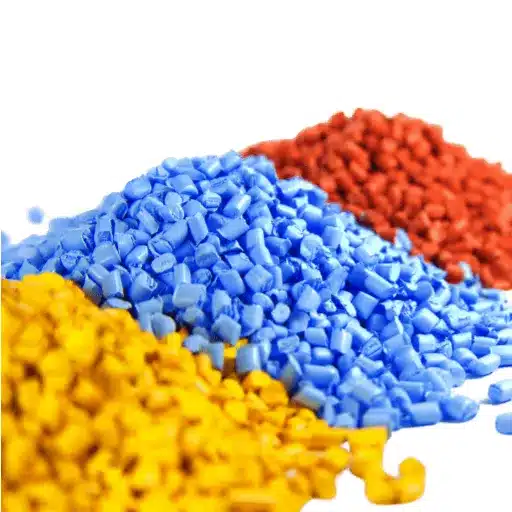


The Ohio automotive Tier 2 supplier received an alarming laboratory testing report during the previous spring. The new fuel sender unit components showed warping during 85°C fuel immersion testing which maintained POM copolymer specifications throughout the testing process. The main problem stemmed from neither contamination nor processing mistake. The procurement team obtained “acetal resin” from a supplier who had not been approved which led to them receiving homopolymer material that remained stable only until 60°C. The difference between POM homopolymer and copolymer chemistry—just a few percent comonomer content—was the difference between a passing component and a field failure.
The selection process of POM resin requires precise material identification which goes beyond basic material classifications because of this situation. The term POM refers to polyoxymethylene which scientists identify as acetal or polyacetal and it comprises multiple crystalline thermoplastics whose performance characteristics change based on their molecular structure. The two main branches, homopolymer and copolymer, share enough surface similarities that they’re often treated interchangeably. The two solutions maintain identical performance levels throughout 90 percent of their applications. The wrong selection results in production failures and warranty claims and compliance risks during hot water exposure and aggressive chemical contact and thick-section machining operations.
The guide provides you with specific grade data which material overviews do not offer for general materials. The tutorial will demonstrate BASF Ultraform and Celanese Hostaform and Polyplastics DURACON specifications and the essential decision process which distinguishes homopolymer from copolymer materials and the processing techniques which stop formaldehyde deterioration and the COA verification methods which distinguish prime resin from dangerous materials. The guide helps you choose technical materials for fuel system components while choosing suppliers for your next gear train application because it offers complete technical information.
What Is POM Resin?

POM Chemical Composition and Structure
POM resin—polyoxymethylene—is a high-crystallinity engineering thermoplastic that engineers use because it combines mechanical strength and dimensional stability with self-lubricating properties. The molecular architecture of POM explains its dominance in precision mechanical applications which previously relied on metal components.
The polymer backbone consists of repeating -CH2-O- units, which develop a crystalline structure that produces POM’s exceptional stiffness and low friction coefficient. This crystallinity typically reaches 70-80%, which exceeds the values of amorphous polymers such as ABS or PC. This crystallinity also provides better mechanical properties but results in increased mold shrinkage, which ranges from 1.8-2.5% compared to the 0.4-0.9% shrinkage of ABS.
The POM homopolymer contains uninterrupted -CH2-O- repeating units, which create a permanent structure. The material exhibits its strongest tensile strength at 70 MPa and its greatest stiffness through a 2800 MPa flexural modulus while displaying the least friction coefficient. The trade-off results in thermal and chemical protection loss because the homopolymer material degrades after reaching 230°C and shows poor resistance against bases and hot water.
POM copolymer adds a comonomer to its polymer chain through 1,3-dioxolane or ethylene oxide which creates -CH2-CH2-O- bonds that interrupt complete crystallization. The material shows a slight reduction in tensile strength which results in 60 MPa but the landing shows better performance the temperature processing increases until 240°C without degradation and the chemical resistance proves effective against alkaline environments and hot water up to 85°C continuous exposure.
POM Nomenclature: Acetal, Polyacetal, Polyoxymethylene
The material travels under multiple names depending on geography and industry:
- POM — The ISO 1043 standard designation, increasingly preferred in global technical documentation
- Acetal — Common North American terminology; technically refers to the -C-O-C- functional group
- Polyacetal — Older European terminology still found in legacy specifications
- Polyoxymethylene — IUPAC chemical name; used in formal technical literature and medical device documentation
When sourcing material, specify the complete designation: “POM copolymer, BASF Ultraform N2320” rather than just “acetal resin.” Generic specifications open the door to grade substitutions that may not meet your application’s requirements.
Global POM Manufacturing Landscape
The global POM resin market reached USD 5.8 billion in 2024 and is projected to grow at 5.2% CAGR through 2030. The automotive industry requires electrification and industrial automation to drive market growth, while fuel system components and precision gears function as the main application segments.
BASF SE (Germany) produces Ultraform® grades, which have achieved recognition as the European quality standard. Their N2320 injection-molding grade functions as the industry standard for general-purpose POM-C use in European automotive supply chains.
The Hostaform® and Amcel® product lines from Celanese Corporation (USA/Germany) serve as their primary manufacturing output. The C27021 fuel-resistant grade stands as the most thoroughly tested POM material that automotive manufacturers use in their fuel system designs according to specifications from Ford and Volkswagen Group and other original equipment manufacturers.
DURACON® grades, which Polyplastics Co., Ltd. (Japan) produces, stand as the leading materials for automotive supply chains throughout Asia, especially in networks that supply Toyota, Honda, and Denso. The M90-44 grade is their standard injection-molding specification.
Other Major Producers:
- Kolon Plastics (South Korea) — KOCETAL® grades, strong in high-flow applications
- Formosa Plastics (Taiwan) — FORMOCON® grades, competitive pricing with UV-stabilized variants
- DuPont (USA) — Delrin® homopolymer, historically significant but primarily available as semi-finished shapes rather than resin pellets
POM Key Properties Summary
| Property | Homopolymer | Copolymer | Notes |
|---|---|---|---|
| Density | 1.42 g/cm³ | 1.41 g/cm³ | Slightly higher for homopolymer |
| Tensile Strength | 60-70 MPa | 55-65 MPa | Homopolymer 10-15% stronger |
| Flexural Modulus | 2,800 MPa | 2,400 MPa | Homopolymer stiffer |
| Notched Izod Impact | 6-8 kJ/m² | 8-12 kJ/m² | Copolymer more ductile |
| Melting Point | 175°C | 165°C | Critical processing difference |
| Continuous Use Temp | 95°C | 100-110°C | Copolymer thermally superior |
| Coefficient of Friction | 0.20-0.25 | 0.20-0.35 | Self-lubricating |
| Mold Shrinkage | 2.0-2.5% | 1.8-2.2% | Account for in mold design |
| Water Absorption (24h) | 0.2% | 0.2% | Major advantage over nylons |
POM Material Properties Reference

Physical Properties
The POM material exhibits a density range of 1.41 to 1.42 g/cm³ which results in a weight that is 40% more than water yet exceeds the density of PA66 which measures 1.14 g/cm³. The material demonstrates its higher density through its crystalline structure which gives products a solid quality that consumers can experience.
POM demonstrates a decisive edge over polyamides because it absorbs only 0.2% of water after being submerged for 24 hours. The material properties of POM remain unchanged because it shows no dimensional expansion when humidity levels change but PA66 absorbs 2.5% moisture which causes dimensional expansion and property changes. The stability of POM material testing allows for testing without the need to dry molded parts which PA66 requires to meet dimensional acceptance testing standards.
Mold shrinkage of 1.8-2.5% is higher than ABS (0.4-0.9%) or PC (0.5-0.7%), requiring careful mold design with generous draft angles and proper gate sizing. The crystalline structure causes shrinkage to occur at different rates because the flow direction exhibits more shrinkage than the transverse direction which results in warpage when parts have uneven distribution of weight.
The surface characteristics of the material show two features which include polished molds that create perfect gloss and natural lubricity which eliminates the need for friction reduction additives. Natural POM exists as an opaque white to off-white material which achieves excellent colorability when using standard pigments.
Mechanical Properties
Tensile and Flexural Performance: The POM homopolymer material achieves tensile strength between 65 and 70 MPa and flexural modulus of 2800 MPa which makes it compete with certain aluminum alloys based on their strength-to-weight ratio. The copolymer grades provide tensile strength between 55 and 65 MPa and flexural modulus that ranges from 2400 to 2600 MPa which exceeds the stiffness of standard plastics such as PP and HDPE.
Impact Resistance: The notched Izod impact test results show POM achieves toughness between 6 and 12 kJ/m² which exceeds polystyrene derivatives yet trails behind PA66 and PC. The copolymer grades deliver better impact performance than the homopolymer especially during low temperature conditions. The elastomer-modified copolymer grades provide solutions to applications that need enhanced impact resistance.
Creep Resistance: The POM material maintains its form under continuous mechanical stress because it shows better creep resistance than PA66 and ABS. The propertyof POM makes it the ideal material to use for spring clips snap-fits and load-bearing gears because these components need to keep their engagement geometry throughout multiple years of use.
Fatigue Resistance: POM endures millions of cyclic loading cycles without any failures which explains its use in ratchet mechanisms seatbelt components and cyclic gear applications. Fatigue endurance limits typically reach 30-40% of ultimate tensile strength.
Friction and Wear Properties
The coefficient of friction between POM and steel ranges from 0.20 to 0.35 because POM functions as a self-lubricating material which does not require any additives and shows lower friction performance when compared to PA66 and ABS. The natural lubricating properties of this material enable several gear and bearing systems to operate without needing additional lubricant applications.
The PV limits for unfilled POM materials start at 0.5 MPa·m/s and reach 1.0 MPa·m/s depending on which surface and lubrication method they use. PTFE-filled grades achieve PV limits over 2.0 MPa·m/s which makes them suitable for demanding bearing applications.
POM shows low wear rates against smooth metal surfaces, but it experiences wear when it comes into contact with rough or abrasive surfaces. The surface finish of mating components directly impacts wear performance because polished steel surfaces with Ra values below 0.4 μm produce superior results compared to machined or cast surfaces.
Thermal Properties
Melting Temperature: Homopolymer melts at 175°C; copolymer at 165°C. This 10°C difference affects processing—copolymer’s lower melting point provides a wider processing window between melting and thermal degradation.
Heat Deflection Temperature: Under 1.82 MPa load, POM-C grades show HDT of 100-110°C; homopolymer slightly lower at 95-100°C. This thermal capability suits automotive underhood and appliance applications where sustained temperatures reach 85-100°C.
Continuous Service Temperature: Copolymer grades handle 100-110°C continuous exposure; homopolymer limited to 95°C. Brief excursions to 120°C are tolerated, but prolonged exposure above continuous limits causes oxidative degradation and embrittlement.
Thermal Conductivity: 0.30-0.35 W/(m·K)—similar to other engineering plastics. Adequate for most applications, though not suitable for heat sink applications.
Chemical Resistance
POM chemical resistance is excellent for hydrocarbons but limited for polar solvents:
Excellent Resistance:
- Gasoline, diesel, and fuel blends (including E10-E85 ethanol blends for copolymer grades)
- Mineral oils, hydraulic fluids, and lubricants
- Aliphatic hydrocarbons
- Weak acids (pH 4-6)
Good Resistance:
- Alcohols (methanol, ethanol, isopropanol)
- Glycols and glycol-based coolants
Poor Resistance (Critical Limitations):
- Strong acids (sulfuric, hydrochloric, nitric)—cause chain scission
- Strong bases/alkalis (pH >9 for homopolymer, >13 for copolymer)
- Ketones (acetone, MEK)—cause stress cracking and dissolution
- Chlorinated hydrocarbons
- Hot water/steam above grade limits
POM Homopolymer vs Copolymer: Complete Comparison

Molecular Structure Differences
The fundamental distinction between POM-H and POM-C lies in molecular chain regularity:
The POM Homopolymer contains only one repeating unit of pure -CH2-O- which continues without any breaks. The crystalline structure achieves maximum intermolecular force strength, which results in enhanced material stiffness and strength. The structure creates a weakness because thermal energy builds up at regular ether linkages during material overheating, and chemical attacks follow the path of the uniform chain.
The POM Copolymer uses comonomer units, which make up 2-5% of the total content, to create -CH2-CH2-O- linkages throughout the polymer chain. The present “defects” cause a slight decrease in crystallinity, but they function as obstacles that stop thermal degradation and chemical attack from spreading. The combined effects produce thermal stability that exceeds normal levels while increasing chemical resistance at the expense of slight mechanical strength reduction.
Performance Comparison Table
| Property | Homopolymer (Delrin® type) | Copolymer (Hostaform®/DURACON®) | Advantage |
|---|---|---|---|
| Tensile Strength | 65-70 MPa | 55-65 MPa | Homopolymer (+10-15%) |
| Flexural Modulus | 2,800 MPa | 2,400-2,600 MPa | Homopolymer (+10%) |
| Impact Strength (Notched) | 6-8 kJ/m² | 8-12 kJ/m² | Copolymer (+50%) |
| Melting Point | 175°C | 165°C | Homopolymer (+10°C) |
| Thermal Degradation Onset | 220-230°C | 230-240°C | Copolymer (+10°C) |
| Hydrolysis Resistance | To 60°C | To 85°C | Copolymer |
| Chemical Resistance (pH range) | 4-9 | 4-13 | Copolymer |
| Centerline Porosity | Higher | Lower | Copolymer |
| Processing Window | Narrower | Wider | Copolymer |
| Cost | Higher | Lower | Copolymer (-10-20%) |
When to Choose POM Homopolymer
Specify homopolymer when your application demands maximum mechanical performance in a controlled, dry environment:
The 15% higher tensile strength and stiffness of the homopolymer gives better gear tooth strength and load capacity than other materials. The material maintains mesh tolerances because it has a lower coefficient of linear thermal expansion which helps control dimensional changes throughout its various operating temperatures.
Thin-walled structural components. Where wall thickness is minimal and maximum compressive strength prevents distortion, homopolymer delivers better dimensional stability than copolymer.
Consumer electronics snap-fits. The harder surface and higher modulus of homopolymer reduce creep in thin-walled structural components that must maintain retention force over product lifetime.
Caveat on centerline porosity. If parts require CNC machining of thick sections (>10 mm) be aware that homopolymer’s greater centerline porosity can expose porous cross-sections. For thick machined parts, specify low-porosity homopolymer grades or consider copolymer with inherently lower porosity.
When to Choose POM Copolymer
POM copolymer serves as the primary material for most injection molding processes. The material’s extended processing capabilities combined with its superior chemical resistance and reduced centerline porosity make it suitable for use in most industrial production facilities.
The components of automotive fuel systems. POM-C material dominates for fuel caps sender units filler necks and pump impellers because its resistance to fuels and oils and alcohol blends (E10, E85) and hydrolysis resistance to 85°C. Celanese Hostaform C27021 is a globally specified grade for this application.
The material has applications in plumbing and hot-water systems. Continuous exposure to hot water above 60°C leads to POM-H degradation. POM-C handles continuous hot-water service to 85°C which is essential for faucet components and valve bodies and pump housings that contact hot tap water.
The material serves medical device manufacturing needs. POM-C’s lower centerline porosity reduces outgassing, making it more suitable for medical-grade applications where VOC emission is regulated. FDA-compliant grades like Celanese Hostaform KP25 and BASF Ultraform N2320 are commonly specified.
The process requires high-volume injection molding. The wider processing window (broader temperature range between melting and degradation) enables molders to optimize their production cycles while decreasing defects caused by operational differences. Molders find POM-C to be easier to work with in production.
POM Grades and Applications

Standard POM Grades
The majority of POM applications use general-purpose injection molding grades BASF Ultraform N2320 and Celanese Hostaform standard grades and Polyplastics DURACON M90-44 as their main materials. The unfilled copolymers provide balanced performance for manufacturing gears and bearings and housings and structural components.
High-flow grades (higher MFI, 5-10 g/10min) enable thin-wall molding and complex geometries. The materials used for this purpose include Celanese C52021 and Formosa FM090. Use these for intricate multi-cavity parts or long flow paths.
The application of high-viscosity grades involves extrusion processes and the injection molding of thick sections which require strong melt characteristics. BASF N2630 serves as a typical example of this product category.
Specialty POM Grades
Your training data extends until the month of October in the year 2023. UV-Stabilized POM protects outdoor applications through its use of hindered amine light stabilizers and carbon black which enable extended outdoor service life. Standard POM degrades in UV within months; UV-stabilized grades last 3-5 years. The Formosa polymers FORMOCON FM270UV and FM130UV serve automotive exterior and outdoor equipment applications.
Low-Friction/Wear-Resistant Grades use PTFE (polytetrafluoroethylene) or silicone to achieve friction coefficient values that go below 0.15 and enhance PV performance. These grades suit bearing applications where standard POM’s lubricity is insufficient.
High-Impact Grades contain elastomer modifiers that increase notched Izod impact to 15+ kJ/m²—double standard copolymer values. Use for applications requiring exceptional toughness or snap-fit assemblies with high insertion forces.
FDA/Food-Contact Grades meet FDA 21 CFR 177.2480 requirements for repeated food contact. The food processing equipment and appliance components market uses Celanese Amcel KP25 and KP30 together with BASF Ultraform N2320 which has food-contact certification.
POM Applications by Industry
Automotive (35% of global POM consumption)
- Fuel systems: Pump housings, valves, sender unit floats, filler necks, fuel caps (Celanese C27021 dominates)
- Safety systems: Seatbelt pawl mechanisms, retractor springs, pretensioner components
- Interior: Door handle assemblies, window lift clips, HVAC controls, seat adjustment mechanisms
- Powertrain: Throttle body components, transmission valve body elements
Industrial & Mechanical
- Gears: Precision spur gears, bevel gears, worm gears replacing metal in noise-sensitive applications
- Bearings and bushings: Self-lubricating sleeve bearings, thrust washers, slide bearings
- Conveyors: Sprockets, chain guides, rollers for food and packaging machinery
- Pumps: Impellers, housings, valves for chemical and water pumps
Consumer Goods
- Fasteners: Zippers (YKK standard), snap fasteners, spring clips
- Appliances: Coffee machine brewing groups, dishwasher spray arm bearings, washing machine dampers
- Toys: High-performance yo-yos, mechanical construction sets
Electronics & Electrical
- Connectors: Housing bodies, latch mechanisms, terminal retainers
- Printers: Precision gears for paper feed mechanisms, toner cartridge components
- Switches: Actuators, slider mechanisms, rotary encoder wheels
Medical Devices
- Drug delivery: Inhaler mechanism components, insulin pen dose setting mechanisms
- Surgical instruments: Instrument handles, clip appliers, disposable tool components
- Diagnostics: Pump components for analytical instruments
Grade-Specific POM Data

How to Read POM Specifications on COAs
Certificate of Analysis documentation separates prime resin from off-grade material. When reviewing POM COAs, verify these parameters:
Melt Flow Index (MFI): Measured per ISO 1133 at 190°C/2.16 kg load, MFI indicates processing viscosity. Standard injection molding grades range 2-4 g/10min. Values outside ±20% of nominal specification suggest degradation, contamination, or wrong grade.
Tensile Strength: Should align with manufacturer datasheet within ±5%. Lower values may indicate moisture contamination or thermal degradation during processing.
Melting Point: DSC (differential scanning calorimetry) measurement should show 165°C ±3°C for copolymer, 175°C ±3°C for homopolymer. Broad or shifted melting peaks indicate contamination or processing history.
Additive Declarations: COAs should specify UV stabilizers, lubricant packages, or impact modifiers present. Undeclared additives compromise processing consistency.
Common POM Grades and Specifications
| Grade | Manufacturer | MFI (g/10min) | Tensile (MPa) | Key Characteristics |
|---|---|---|---|---|
| N2320 | BASF Ultraform | 2.5-3.5 | 65 | Standard injection molding; European OEM preferred |
| W2320 | BASF Ultraform | 2.0-3.0 | 62 | Weather-resistant; outdoor applications |
| N2630 | BASF Ultraform | 1.5-2.5 | 68 | High viscosity; extrusion, thick sections |
| C27021 | Celanese Hostaform | 2.0-3.0 | 62 | Fuel-resistant; automotive fuel systems |
| C52021 | Celanese Hostaform | 4.0-6.0 | 58 | High-flow; thin-wall, complex geometries |
| KP25 | Celanese Amcel | 2.5-3.5 | 60 | FDA food-contact compliant |
| M90-44 | Polyplastics DURACON | 2.0-3.0 | 60 | Standard grade; Asian automotive preferred |
| GH-25 | Polyplastics DURACON | 2.0-3.0 | 85 (GF) | 25% glass-filled; structural stiffness |
| K300 | Kolon KOCETAL | 2.0-4.0 | 62 | High rigidity; thin-wall capable |
| FM090 | Formosa FORMOCON | 2.0-3.0 | 60 | Standard grade; competitive pricing |
| FM270UV | Formosa FORMOCON | 2.0-3.0 | 58 | UV-stabilized; automotive exterior |
Yifuhui Stocked POM Grades
BASF Ultraform N2320
Our most versatile POM grade, N2320 serves as the benchmark for general-purpose copolymer applications. With MFI of 2.5-3.5 g/10min, it flows well in standard mold geometries while maintaining excellent mechanical properties.
Specifications at a glance:
- Density: 1.41 g/cm³
- Tensile Strength: 65 MPa
- Flexural Modulus: 2,600 MPa
- Melting Point: 165°C
- Applications: Gears, bearings, precision components, appliance parts
Celanese Hostaform C27021
The industry-standard grade for fuel system applications, C27021 offers validated resistance to aggressive fuel blends including E85. This grade appears in Ford, Volkswagen Group, and other OEM material specifications.
Specifications at a glance:
- Density: 1.41 g/cm³
- Tensile Strength: 62 MPa
- Flexural Modulus: 2,500 MPa
- Fuel Resistance: Validated for E10-E85 blends
- Applications: Fuel caps, sender units, pump components, filler necks
Polyplastics DURACON M90-44
The dominant POM grade in Asian automotive supply chains, M90-44 balances moldability with mechanical performance. Its consistent batch-to-batch quality makes it preferred for high-volume production.
Specifications at a glance:
- Density: 1.41 g/cm³
- Tensile Strength: 60 MPa
- Flexural Modulus: 2,400 MPa
- MFI: 2.0-3.0 g/10min
- Applications: Industrial components, consumer goods, automotive interior
POM Processing Guidelines
Pre-Processing: Drying Requirements
POM is hygroscopic and must be dried before processing. Processing wet POM causes hydrolytic degradation, reducing molecular weight and mechanical properties permanently.
Proper Drying Parameters:
- Temperature: 80-100°C (176-212°F)
- Time: 2-4 hours for virgin material; 4-6 hours for regrind
- Target moisture content: <0.2%
- Equipment: Desiccant dryer required
Moisture-related defects appear as surface splay, reduced impact strength, and brittleness. Unlike some materials where moisture only affects appearance, hydrolyzed POM has permanently degraded polymer chains—re-drying cannot restore properties.
Injection Molding Parameters
Barrel Temperature Profile
| Zone | Homopolymer | Copolymer | Purpose |
|---|---|---|---|
| Rear (Feed) | 170-180°C | 160-170°C | Pre-heating, prevent bridging |
| Middle | 180-190°C | 170-180°C | Primary melting |
| Front (Nozzle) | 190-210°C | 180-200°C | Homogenization |
Critical Safety Warning: Exceeding recommended temperatures causes thermal degradation with formaldehyde release. Formaldehyde has a pungent, irritating odor and is classified as a carcinogen. If you detect a strong formaldehyde smell during processing, immediately shut down and purge the machine—do not continue processing.
Mold Temperature
- Standard parts: 60-80°C (good balance of cycle time and surface quality)
- High-gloss parts: 90-120°C (improved surface finish, longer cycle)
- Fast cycle: 40-60°C (matte finish, molded-in stress)
Injection Parameters
- Injection pressure: 700-1,200 bar depending on part geometry
- Injection speed: Moderate to high; POM tolerates aggressive filling
- Holding pressure: 50-70% of injection pressure
- Back pressure: 50-150 bar for consistent melt
- Shrinkage allowance: 1.8-2.5% (design molds accordingly)
Extrusion and Blow Molding
POM extrudes well into rod, sheet, and profile products. The temperature profiles which control the process follow the same principles that apply to injection molding because they begin at cooler temperatures in the feed section and progress towards higher temperatures throughout the die section.
Blow molding POM produces hollow parts like automotive ducting. Parison programming requires attention due to POM’s melt strength characteristics. POM does not frequently use multi-layer constructions which include barrier materials.
Secondary Operations
Machining: POM machines beautifully with standard high-speed steel or carbide tools. Its crystalline structure produces clean chips rather than stringy swarf. Recommended cutting speeds: 200-400 m/min for turning, 100-200 m/min for milling.
Threading and Tapping: Sharp, well-defined threads are achievable. Use generous relief angles and plenty of coolant to prevent heat buildup.
Welding: Ultrasonic welding works well with POM. Joint design requires attention to the amorphous skin layer—joint surfaces should be designed to break up this layer during welding.
Adhesive Bonding: POM’s low surface energy makes adhesive bonding challenging without surface preparation. Corona treatment, plasma treatment, or mechanical abrasion improves bond strength significantly.
POM vs. Alternative Materials

POM vs. PA66 (Nylon 66)
The POM versus PA66 decision is one of the most common material selection questions in precision mechanical applications:
| Property | POM | PA66 |
|---|---|---|
| Moisture Absorption | 0.2% | 2.5% (24h) |
| Dimensional Stability | Excellent | Good (requires conditioning) |
| Coefficient of Friction | 0.2-0.35 | 0.3-0.4 |
| Tensile Strength | 60-70 MPa | 70-85 MPa |
| Impact Resistance | Moderate | Higher |
| Creep Resistance | Excellent | Good |
| Chemical Resistance (Fuels) | Excellent | Good |
| Cost | Lower | Higher |
When to choose POM over PA66: Applications requiring dimensional stability across humidity variations, fuel contact, low friction, or sustained load without creep. The use of POM as materials for gears and bearings and fuel components provides better performance than PA66 in these particular situations.
When PA66 wins: Applications requiring higher impact resistance, structural load-bearing at elevated temperatures (PA66 continuous service to 120°C vs POM’s 100-110°C), or where PA66’s higher toughness justifies the cost premium.
Sarah manages procurement for a power tool manufacturer evaluating gear materials. Her initial specification required glass-filled PA66 because it matched the design standards of previous designs. Testing showed that PA66 provided enough strength but the material suffered from humidity-based size changes which created problems for gear operation during the summer months. The company switched to POM copolymer which eliminated humidity sensitivity while maintaining enough strength to achieve a 40% reduction in warranty claims during the first year.
POM vs. UHMWPE
Ultra-high molecular weight polyethylene offers superior impact resistance and wear life in abrasive environments but sacrifices precision:
- UHMWPE advantages: Extreme impact resistance, excellent wear against abrasive media, lower cost
- POM advantages: Dimensional precision, stiffness (UHMWPE is flexible), machinability, load-bearing capacity
Choose UHMWPE for bulk material handling, conveyor liners, and abrasive wear pads. Choose POM for precision gears, bearings with tight tolerances, and structural components.
POM vs. PTFE
PTFE offers superior chemical resistance and lower friction coefficient (0.05-0.10) but compromises mechanical performance:
- PTFE advantages: Virtually universal chemical resistance, lowest friction coefficient, wide temperature range (-200°C to +260°C)
- POM advantages: Mechanical strength (PTFE creeps under load), stiffness, machinability (PTFE is difficult to machine to precision), cost (POM is 3-5x cheaper)
Choose PTFE for aggressive chemical environments, high temperatures, or extreme low-friction requirements. Choose POM for structural components, gears, and bearings where load-bearing capacity matters.
When to Choose POM: Decision Framework
Select POM when your application requires:
- Dimensional stability across humidity and temperature variations
- Low friction without external lubrication
- Fuel or oil contact resistance
- Precision tolerances maintained over product lifetime
- Fatigue resistance for cyclic loading
- Machinability to tight tolerances
Avoid POM when your application involves:
- Strong acids or bases outside pH 4-13 range
- Continuous hot water/steam above 85°C (copolymer) or 60°C (homopolymer)
- Temperatures above 110°C continuous service
- Extreme impact requirements better met by PA66 or UHMWPE
Sourcing POM from China: Procurement Guide

What to Look for on POM Certificates of Analysis
Verifying POM quality requires attention to specific parameters:
Melt Flow Index Verification: Cross-reference COA values against manufacturer datasheets. BASF Ultraform N2320 specifies MFI 2.5-3.5 g/10min. Values significantly outside this range indicate off-spec material or incorrect grade.
Melting Point Confirmation: DSC data should show sharp melting peaks at 165°C (copolymer) or 175°C (homopolymer). Broad melting ranges suggest contamination or thermal history.
Additive Documentation: UV stabilizers, lubricants, and impact modifiers should be declared. Undisclosed additives compromise processing consistency.
Lot Number Traceability: Authentic COAs include manufacturer lot numbers verifiable with BASF, Celanese, or Polyplastics regional offices.
Verifying Grade Authenticity
Implement these verification practices:
Physical Sample Testing: Before accepting large shipments, run samples through your molding process. Compare cycle times, fill behavior, and part appearance against your validated baseline. Significant deviations warrant investigation.
Supplier Qualification: Evaluate suppliers on:
- Direct manufacturer relationships and distributor documentation
- Warehouse facilities with climate control for hygroscopic materials
- Documentation practices and traceability systems
- Quality management certifications
POM Price Factors (2024-2025)
POM pricing reflects raw material costs and grade complexity:
Raw Material Costs: Formaldehyde and methanol prices drive base resin costs. Methanol is particularly volatile as a commodity chemical.
Grade Premiums:
- UV-stabilized grades: +10-20%
- High-flow grades: +5-15%
- FDA food-contact grades: +15-25%
- Glass-filled grades: +30-50%
Volume and Packaging: Standard 25 kg bags offer flexibility; bulk boxes reduce per-kilogram costs for high-volume users.
Market Outlook: POM demand continues growing with automotive electrification and industrial automation. Supply constraints during peak automotive production periods may affect availability.
Working with Yifuhui for POM Supply
Stocked Grades: We maintain inventory of BASF Ultraform N2320, Celanese Hostaform C27021, and Polyplastics DURACON M90-44 at our Suzhou facility. These grades cover approximately 80% of general-purpose POM applications.
25 kg MOQ: Our minimum order quantity supports R&D trials, small-batch production, and material qualification without large volume commitments.
Documentation Package: Every shipment includes manufacturer Certificate of Analysis, Material Safety Data Sheet, and applicable compliance certificates.
Logistics Advantage: Located 90 minutes from Port of Shanghai, we offer export packaging and documentation for international shipment. Typical lead times: 7-14 days to major Asian ports, 14-21 days to Europe and North America.
POM Limitations and Design Considerations

Chemical Limitations
POM’s Achilles’ heel is chemical resistance outside hydrocarbon environments:
Strong Acids: pH <4 causes rapid degradation. Sulfuric, hydrochloric, and nitric acids attack the ether linkages in the polymer chain. Even dilute acids can cause stress cracking under mechanical load.
Strong Bases: pH >9 (homopolymer) or >13 (copolymer) causes chain scission. Sodium hydroxide, potassium hydroxide, and ammonia solutions attack POM. Copolymer’s improved base resistance is often the deciding factor in cleaning equipment and food processing applications.
Hot Water/Steam: Continuous exposure to hot water above grade limits causes hydrolysis. Homopolymer tolerates only 60°C continuous; copolymer extends to 85°C. Neither grade suits steam sterilization applications—use PA66, PPS, or PEEK instead.
Thermal Limitations
Processing Temperature Sensitivity: POM degrades above 230°C (homopolymer) or 240°C (copolymer), releasing formaldehyde. Maintain strict barrel temperature control and avoid excessive residence time.
Continuous Service Temperature: Maximum 95°C (homopolymer) or 110°C (copolymer) continuous. Brief excursions to 120°C are tolerated, but prolonged exposure causes oxidative embrittlement.
Thermal Degradation Indicators: Pungent formaldehyde odor, yellowing, and reduced melt viscosity indicate degradation. Degraded material must be purged and discarded—do not attempt to reprocess.
Design Best Practices
Wall Thickness: Avoid thick sections (>10 mm) which can develop voids, sink marks, and centerline porosity. Use ribbing to increase stiffness without excessive wall thickness.
Radii: Maintain generous internal radii (minimum 0.5 mm) to reduce stress concentrations. Sharp corners are initiation points for fatigue failure.
Draft Angles: Provide 1-2° draft on all vertical walls. POM’s crystalline structure and high shrinkage create strong mold adhesion.
Gates: Size gates appropriately for part volume. Undersized gates create excessive shear heating and potential degradation. Direct gating into thick sections helps minimize porosity.
Frequently Asked Questions
What is the difference between POM homopolymer and copolymer?
Homopolymer has pure -CH2-O- repeating chains delivering maximum strength (70 MPa) but limited thermal and chemical stability. The copolymer system combines different comonomer units which produce a minor strength reduction of 60 MPa but provide exceptional thermal stability that extends to 240°C and hydrolysis resistance that lasts until 85°C and chemical resistance from pH 4 to pH 13. The default material for injection molding operations in most cases is copolymer.
Is POM the same as acetal?
The common name for polyoxymethylene (POM) in North America is acetal. The term “acetal resin” fails to provide a complete identification of the material. The complete name “POM copolymer, BASF Ultraform N2320” must be used to identify the precise material grade.
What is the difference between Delrin and POM?
Delrin® serves as DuPont’s trademark for acetal homopolymer (POM-H) material. The product comes in semi-finished shapes which include rod and sheet and tube instead of resin pellets that are used for injection molding. For injection molding applications, POM copolymers from BASF (Ultraform), Celanese (Hostaform), and Polyplastics (DURACON) are typically specified.
Can POM be used for food contact applications?
The specific POM-C grades which meet FDA requirements for repeated food contact. The two materials which food processing equipment is commonly made from are Celanese Hostaform KP25 and KP30 and BASF Ultraform N2320 which has food-contact documentation. The grade level must be confirmed because suppliers need to provide FDA compliance documentation.
What is the maximum temperature POM can withstand?
The homopolymer has a continuous service temperature of 95°C while the copolymer can operate between 100°C and 110°C. The system can handle brief temperature increases which reach 120°C. The processing temperatures for copolymer range between 180°C and 210°C while the processing temperatures for homopolymer range between 190°C and 210°C which both lead to thermal degradation that releases formaldehyde when exceeded.
How does POM compare to nylon (PA66) for gears?
POM provides superior dimensional stability through its ability to absorb minimal moisture which leads to decreased dimensional changes and its self-lubricating properties which result in lower friction and its exceptional fuel resistance. The PA66 material provides superior impact resistance together with improved performance at high temperatures which allows continuous operation at 120 degrees Celsius and enhanced material toughness. POM serves as the preferred material for precision gears within controlled environments whereas PA66 works better for situations that require high-impact or high-temperature performance.
Does POM require drying before processing?
Yes. POM must be dried at 80-100°C for 2-4 hours to reach <0.2% moisture content. Processing wet POM causes hydrolytic degradation—permanent molecular weight reduction that re-drying cannot reverse.
What is POM resin price per kg?
As of 2024-2025, standard general-purpose POM-C averages $2.80-3.50/kg for prime material. Specialty grades command premiums: UV-stabilized (+10-20%), FDA food-contact (+15-25%), glass-filled (+30-50%). Homopolymer grades typically cost 10-20% more than copolymer.
Can POM be used for outdoor applications?
Standard POM exists for a period of months before it starts to degrade when exposed to ultraviolet light. The UV-stabilized grades (Formosa FORMOCON FM270UV, FM130UV) provide extended service life which lasts between three to five years. The suitable materials for outdoor usage which lasts several years are ASA, UV-stabilized PC, and painted or coated POM.
How do I verify authentic branded POM resin?
Request manufacturer-issued Certificate of Analysis (COA) with lot numbers traceable to production records. Official manufacturer datasheets show MFI and property values which researchers need to cross-check with their findings. The manufacturer’s regional office should be contacted to confirm the existence of a lot when there are doubts about its authenticity. I will work with suppliers who provide complete documentation packages and they respond transparently to my qualification inquiries.
Conclusion
POM resin provides engineering plastics with three exceptional properties which combine to create metal-like strength and nylon-like dimensional stability and self-lubricating capabilities. POM has demonstrated its ability to perform reliably in demanding conditions throughout its 60 years of use in automotive fuel systems and precision gears and medical device components.
To achieve success with POM users must first learn about the differences between homopolymers and copolymers. The molecular architecture difference exists because only a few percent of comonomers were added which results in major thermal stability changes and chemical resistance shifts and processing behavior alterations. For fuel system components, hot water exposure, or high-volume injection molding, copolymer is the clear choice. The controlled dry environment gives homopolymer its best mechanical performance.
Yifuhui maintains inventory of BASF Ultraform N2320 and Celanese Hostaform C27021 and Polyplastics DURACON M90-44 which constitute established materials that suit most injection molding needs. Our 25 kg MOQ lets you validate material performance before committing to volume orders, and every shipment includes full COA documentation for quality verification.


