
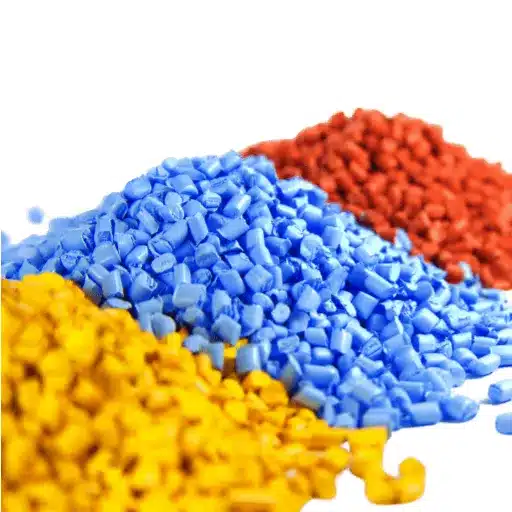
High-Density Polyethylene (HDPE) stands as one of the most adaptable plastics in global use — combining exceptional strength, long-lasting durability, and remarkable versatility across applications. HDPE provides dependable and affordable material performance which industrial piping systems and household containers and nearly every other sector use. The unique properties of HDPE which include a chemically resistant molecular structure and mechanical performance that works well across different temperature ranges and its sustainable attributes which surpass many other plastics make it highly valuable material. The complete study of HDPE begins with its chemical synthesis and proceeds through its physical properties and industrial uses and environmental impact assessment and comparison with other widely used plastics.
0.97
Max Density (g/cm³)
31 MPa
Max Tensile Strength
130°C
Max Melting Point
#2
Recycling Symbol — Widely Recyclable
Chemical Structure and Synthesis of HDPE
Chemical Composition of Polyethylene
The base material of polyethylene consists of multiple ethylene monomer chains which create high-density polyethylene (HDPE) as its densest form. The polymer chains develop through the polymerization process which involves converting ethylene gas into polymer chains while using Ziegler-Natta or metallocene catalysts to determine the resulting structure and density of the polymer. HDPE molecular chains show more linearity because they contain less branching than all other polyethylene types, which results in denser molecular packing capacity. The combination of this structural feature enables HDPE to achieve its exceptional strength-to-density ratio and chemical resistance and structural stability. The material’s chemical properties make it suitable for a wide range of industrial and consumer applications, including piping and food-safe containers. Research efforts in polymer science continue to create novel techniques which enhance HDPE materials because of the increasing worldwide demand for this material.
Synthesis Methods for High-Density Polyethylene
HDPE is produced through ethylene polymerization using specific catalyst systems. The two most widely used industrial processes are the slurry process and the gas-phase process, both utilizing Ziegler-Natta or Phillips-type catalysts to create high-molecular-weight chains with the preferred physical characteristics.
Slurry Process
The reaction occurs inside a liquid hydrocarbon medium which contains ethylene and which operates under specific pressure and temperature conditions for polymerization. The method provides effective heat dissipation while creating consistent polymer particles that meet industrial production requirements.
Gas-Phase Process
Operates without a liquid medium, utilizing ethylene gas at moderate pressures. The process achieves high energy efficiency while producing HDPE with exceptional physical characteristics that make it suitable for multiple industrial applications.
Polymerization Techniques in HDPE Production
HDPE production relies on three primary catalyst systems — Ziegler-Natta catalysts, Phillips catalysts, and single-site metallocene catalysts — each enabling different degrees of control over molecular weight and branching characteristics.
| Catalyst Type | Key Capability | Notable Advantage |
|---|---|---|
| Ziegler-Natta | Produces high-crystallinity, high-structural-integrity polymers | Historical backbone of HDPE production; reliable and well-characterized |
| Phillips Catalysts | Enables production of different HDPE grades at lower cost | Better performance across various applications with economic advantages |
| Single-Site Metallocene | Precise control over polymer chain stereochemistry and architecture | Superior impact resistance, optical clarity, and tailored performance |
Physical and Mechanical Properties of HDPE
Property 01
Density & Molecular Weight
HDPE exhibits a density range of 0.93 to 0.97 g/cm³, producing a strength-to-weight ratio that sets it apart from alternative polymers. This density is achieved through highly linear polymer chains with low branching. Molecular weight plays a decisive role in physical performance — higher molecular weight polymers provide better tensile strength, impact resistance, and stress-cracking resistance, making them appropriate for high-demand industrial situations.
Advanced catalytic systems now allow manufacturers to customize both density and molecular weight for specific industrial standards — from packaging solutions to high-pressure piping systems.
Property 02
Tensile Strength & Impact Resistance
HDPE shows tensile strength between 25 MPa and 31 MPa which allows the material to endure extreme stress until it breaks. The material’s impact resistance enables it to survive sudden force applications without breaking, which ranks as an equally vital characteristic of the material. The combination of these properties makes HDPE appropriate for industrial piping systems and water storage tanks and heavy-duty container usages which experience both continuous and sudden weight distribution.
Advanced polymerization methods and new catalyst technologies continue to produce HDPE grades that display superior durability under extreme environmental and mechanical conditions.
Property 03
Melting Point & Thermal Properties
The melting point of HDPE ranges from 120°C to 130°C (248°F to 266°F), depending on formulation and molecular composition. The low thermal conductivity of HDPE makes it a better insulating material for applications that require temperature control. The recent manufacturing advancements have improved the material’s ability to withstand temperature cycling because the material maintains its structural integrity during multiple heating and cooling cycles which makes it suitable for industrial and consumer use.
The ability to perform across a wide operating temperature range makes HDPE a popular material selection for applications that must handle variable thermal environments.
HDPE Key Properties Quick Reference
| Property | Value / Range | Significance |
|---|---|---|
| Density | 0.93 – 0.97 g/cm³ | High strength-to-weight ratio; lightweight yet durable |
| Tensile Strength | 25 – 31 MPa | Suitable for high-stress structural and piping applications |
| Melting Point | 120°C – 130°C (248°F – 266°F) | Usable in moderate-to-elevated temperature environments |
| Water Absorption | Very low | Excellent moisture resistance; protects contents in packaging |
| Chemical Resistance | High — resists most solvents and acids | Suitable for chemical storage and aggressive industrial environments |
| Thermal Conductivity | Low | Effective thermal insulator across temperature-sensitive applications |
Common Applications of HDPE
Packaging Solutions
The packaging industry uses HDPE as a primary material because it provides strong, lightweight protection against water and chemical substances. Current applications include bottles, containers, grocery bags, and milk jugs. HDPE maintains product quality through its strong structure which extends shelf life making it suitable for food and beverage packaging. New production technologies enable manufacturers to produce packaging with reduced material usage while preserving complete functional capabilities which results in sustainable operational efficiency.
- Food and beverage bottles and containers
- Grocery bags, milk jugs, and household product bottles
- Recyclable packaging with reduced material weight
Construction & Building Materials
The construction and building industry uses HDPE as a dependable material because it combines strength and lightweight design with strong resistance to deterioration. HDPE performs effectively in piping networks and geomembranes and temporary building constructions by maintaining its physical properties under demanding weather conditions. The rising search interest for HDPE sustainable construction demonstrates a growing demand for materials that provide structural strength and environmental sustainability which HDPE naturally possesses.
- Piping networks and drainage systems
- Geomembranes for land containment and waterproofing
- Temporary construction materials and panels
Agricultural Applications
Agricultural operations obtain significant and lasting value from HDPE across multiple applications. HDPE piping is widely used for irrigation systems because it provides consistent water delivery while reducing leakage and system losses. HDPE films and sheets serve greenhouse construction by providing UV protection and long-term structural strength that enables crop protection in variable weather. Search data shows increasing interest in HDPE for agriculture — reflecting recognition of its capacity to create durable, recyclable, and cost-effective solutions for environmentally sustainable farming systems.
- Irrigation piping and water delivery systems
- Greenhouse films and UV-protective coverings
- Mulching films and agricultural containment solutions
Industrial & Electrical Uses
The combination of HDPE’s low dielectric constant and low electrical conductivity together with its high dimensional stability makes it suitable as an insulating material used in cable sheathing and wire jackets and electrical components. The exceptional stability of these properties throughout various temperature and humidity conditions arises from HDPE’s ability to absorb minimal water and its strong resistance against chemical substances. The material demonstrates both mechanical strength and impact resistance which makes it suitable for use in electrical infrastructure because the system needs both physical defense and complete insulation.
- Cable sheathing and wire insulation
- Industrial containers and chemical storage tanks
- Outdoor furniture, marine components, and HDPE sheets
Environmental Benefits and Considerations
Recyclability of HDPE
HDPE is one of the most commonly recycled plastics across multiple sectors. The material maintains its ability to undergo multiple recycling cycles, which enables the production of new products that include piping systems and storage containers and plastic lumber. The growing recognition of HDPE recyclability shows that the public now understands how this material helps create circular economy systems for agricultural and construction and consumer products.
Sustainability Profile
HDPE’s long-term durability minimizes replacement frequency in applications such as irrigation systems, mulching films, and greenhouse coverings. Its production process requires less energy compared to alternative materials. The material can undergo multiple reuse cycles while retaining its original properties, which directly decreases waste generation across its service life — positioning HDPE as a leading material choice in the effort to reduce industrial environmental impact.
Comparative Environmental Impact
HDPE demonstrates meaningful environmental advantages over PVC and PET. PET production and recycling require more energy than HDPE, while PVC creates significant environmental issues because its production and disposal processes release dangerous chemical substances. HDPE requires less energy in production, generates fewer hazardous waste materials, and achieves higher recycling rates — resulting in a lower carbon footprint than PVC and comparable or better performance than PET when recycled material is used.
Environmental Performance vs. Common Plastics
| Criteria | HDPE | PET | PVC |
|---|---|---|---|
| Recyclability | High — widely accepted in recycling streams | High for bottles; limited for other forms | Low — additive contamination complicates recycling |
| Production Energy | Lower compared to PET and PVC | Moderate — higher than HDPE | Higher; chlorine-based chemistry adds energy demand |
| Hazardous Waste | Minimal during production and end-of-life | Low — relatively clean process | High — releases dioxins and chlorinated compounds |
| Carbon Footprint | Lower than PVC; comparable to PET with recycled content | Comparable to HDPE with recycling | Higher than HDPE across lifecycle |
Comparative Analysis of HDPE with Other Plastics
HDPE, LDPE, PVC & PET — Side-by-Side
| Attribute | HDPE | LDPE | PVC | PET |
|---|---|---|---|---|
| Molecular Structure | Linear, low branching | Highly branched | Vinyl chloride polymer | Aromatic polyester |
| Rigidity | High | Low — very flexible | High (rigid grade) | Moderate |
| Chemical Resistance | Excellent | Good | Good | Moderate |
| Primary Use | Piping, containers, industrial | Bags, cling wraps, soft packaging | Plumbing, construction, electrical | Beverage bottles, food packaging |
| Recyclability | High | Moderate | Low — additive issues | High for bottles |
| Fire Resistance | Moderate | Low | High — self-extinguishing | Low to moderate |
HDPE vs. LDPE
The linear and low-branching structure of HDPE produces greater density and higher material strength and better tensile properties than the highly branched structure of LDPE which provides flexible materials with lower density. Manufacturers use HDPE to make milk jugs and detergent bottles and piping while they use LDPE to produce plastic bags and cling wraps and soft packaging materials. Because HDPEHDPE enables better environmental sustainability through its higher recyclability and reduced manufacturing environmental impact, manufacturers who want to decrease their carbon footprint prefer this material.
HDPE vs. PVC
The material HDPE outperforms all other options because it provides better chemical protection and enables better impact resistance and greater flexibility during extreme operational conditions. Two types of PVC provide flame protection and rigid structural qualities through their rigid and flexible forms, which enable the material to endure temperatures that exceed HDPE’s maximum operational capacity, this feature becomes essential for thermal treatment processes. The recycling process of HDPE produces reduced environmental impact because it needs fewer resources and successfully bypasses the difficulties that PVC recycling faces with its various materials.
HDPE vs. PET
HDPE provides exceptional impact resistance and chemical protection which makes it suitable for piping systems and outdoor furniture and industrial components. PET serves as a lightweight transparent material which provides excellent protection against moisture and gas making it the perfect choice for food and beverage packaging that requires product freshness maintenance. The beverage industry shows increasing demand for PET single-use bottles while HDPE maintains its position as the preferred material for industrial applications that need durability and chemical protection and do not require transparency and lightweight features.
Overall Selection Guidance
Material selection depends on the specific combination of properties required by the application. HDPE proves best for industrial outdoor and agricultural use because it combines three essential properties. PVC provides better fire protection and performance in high-temperature situations than other materials. PET leads for lightweight transparent consumer packaging. LDPE serves where material flexibility and softness are the primary requirements. The evaluation process begins with specific application needs which help determine the best materials for use.
Frequently Asked Questions
What is the polymer structure of HDPE and how does it affect performance?
The thermoplastic polymer HDPE exists as a linear molecular structure which creates high crystallinity that produces its strength and rigidity characteristics. The material maintains strong mechanical properties and excellent toughness because it has a low level of branching. The crystalline structure of the material offers chemical resistance and barrier protection which surpasses the capabilities of branched polyethylene and low-density polyethylene versions. The processing behavior of HDPE depends on its structural components and crystallinity which create specific effects that impact melt flow and weldability. The linear molecular structure of HDPE enables its use in high-impact applications through HDPE sheets and HDPE containers which need to maintain their structural strength when exposed to weight.
What are the main material properties of HDPE?
HDPE combines high strength with good chemical resistance and low moisture absorption which makes it suitable for chemical storage and outdoor products and applications that experience humidity or liquid contact. The material’s density exists between metal and LDPE which produces a strength-to-weight ratio that enables specific grades to reach medium density classification. The material exhibits good insulation properties and stable electrical characteristics that enable use in cable jackets and electrical insulation. HDPE is highly recyclable and commonly processed into new bottles, pipes, and industrial components. The material’s toughness and impact resistance and fatigue resistance make it the ideal material for handling repeated mechanical loads throughout its entire service life.
Where is HDPE used and why is it used in those applications?
HDPE serves as the main packaging material because it creates plastic bottles and containers which deliver better protection against moisture and chemicals. The material serves as a chemical storage solution because it maintains its integrity when exposed to extreme chemical conditions. HDPE functions as the primary material for geomembranes and HDPE sheets and industrial containers because its strength and impact protection enable it to endure mechanical pressure without breaking. HDPE injection molding and extrusion processing capabilities enable manufacturers to create both consumer products and industrial components at all production levels. The material’s insulation and electrical properties also make it suitable for environments requiring safe performance around electrical wiring and infrastructure components.
What properties determine how long HDPE will last in service?
HDPE withstands extreme environmental conditions because its combination of high crystallinity and high strength and chemical resistance and toughness. The material protects against different solvents through its low water absorption which makes it suitable for chemical storage and container uses. The combination of mechanical strength and impact resistance ensures long service life for pipes, tanks, and structural components. The mechanical performance of HDPE exceeds that of low-density and branched polyethylene because its higher melting point maintains shape stability during manufacturing and actual use heat exposure. Manufacturers choose ultra-high molecular weight polyethylene variants when they need materials that provide both extreme wear resistance and outstanding mechanical performance.
What common HDPE products exist and how do their properties match application needs?
Common HDPE products include plastic bottles HDPE bottles HDPE sheets piping geomembranes and molded containers which all use HDPE because of its strength and chemical resistance properties. The products used for fluid transport or storage require strength and chemical resistance to ensure safe operation throughout their entire lifespan. The barrier properties of HDPE packaging together with its low permeability enable the packaging to protect its contents while enabling HDPE waste to be processed into new items. HDPE products exhibit mechanical toughness which allows them to endure extreme impact situations and operate in conditions that demand high mechanical performance. Manufacturers can create HDPE products with different density and molecular weight profiles to achieve specific rheological characteristics and final product features which meet their production needs and application criteria.
What electrical characteristics does HDPE possess and which applications rely on them?
The combination of high dielectric strength and electrical conductivity results in HDPE becoming an ideal material for protecting cables and insulating elements used in electrical systems. HDPE shows constant electrical performance throughout different temperature and humidity conditions because its water absorption rate remains low and its chemical resistance abilities are outstanding. The electrical industry uses HDPE as an insulating polymer because it provides mechanical strength and dimensional stability alongside its electrical performance. The rheological properties and structure of HDPE determine how cable jacket materials behave during extrusion processing. Special HDPE formulations and polyethylene composites improve the electrical performance of standard HDPE material through their advanced electrical insulation capabilities and their flame retardant properties.
Reference Sources
Source 01
Mechanical and Physical Properties of PP and HDPE
Explores the mechanical and physical properties of HDPE and provides comparative analysis against polypropylene across key performance metrics.
Source 02
Impact on HDPE Mechanical Properties and Morphology Due to Processing
Investigates how processing conditions — including temperature, pressure, and cooling rates — affect the mechanical properties and microstructural morphology of HDPE.
Source 03
Rheological and Thermal Behavior of High-Density Polyethylene (HDPE) at Different Temperatures
Examines how HDPE’s rheological and thermal properties change under varying temperature conditions, with implications for processing and material selection.