



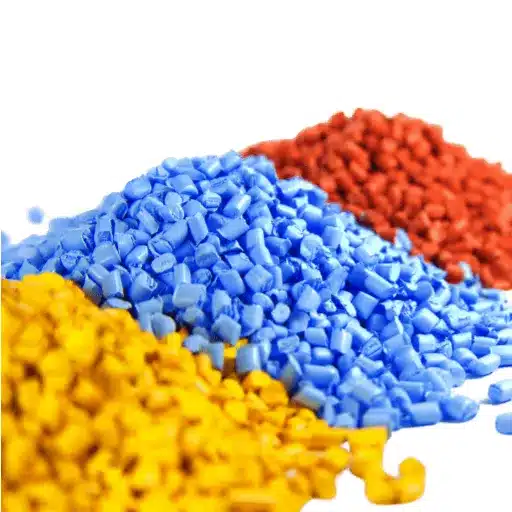


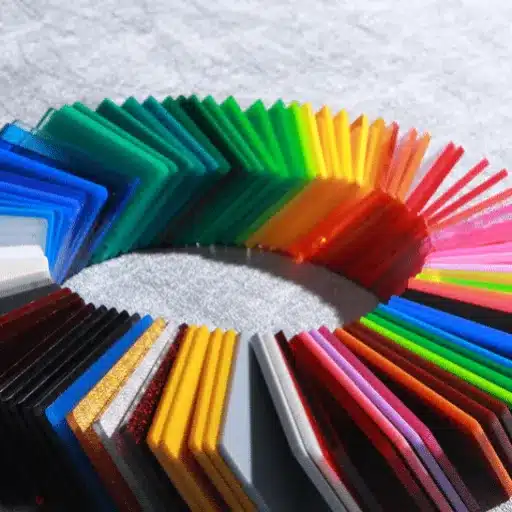
Polymethyl Methacrylate, commonly known as PMMA, is a versatile and highly durable material that has found its way into various applications and industries, thus gaining its popularity. PMMA has been used in modern life as a non-breakable and lighter alternative to glass, and in the very sophisticated and modern medical devices, among other things. But what exactly is PMMA and why is it with such a great demand in various sectors? This all-encompassing guide takes the reader to the center of polymethyl methacrylate and reveals its extraordinary properties, benefits, and present-day applications.
Introduction to PMMA

Definition of PMMA
Polymethyl methacrylate (PMMA) is a hard and very clear thermoplastic, which isused as a lighter and less breakable substitute for glass. PMMA is the name of the chemical, but it is also known as acrylic or with brand names like Plexiglas and Lucite; apart from being a group of synthetic polymers, PMMA is also a type of acrylic, and the monomer used to make it is called methyl methacrylate (MMA). PMMA is highly appreciated for its properties like the visual purity, property of great strength, and long-lastingness, which led to its wide application in a variety of industries like architecture and car manufacturing, not to mention its use in the medical field and consumer products. The ability to adapt to various conditions and the cost efficiency have confirmed PMMA’s versatility as a high-performance material.
History of Polymethyl Methacrylate
PMMA was synthesized for the first time in 1928 through the individual but simultaneous activities of the three chemists named William Chalmers, Otto Röhm, and Walter Bauer. However, it was Röhm who the first to factor the new material in and got it patented in 1933 under the brand name “Plexiglas”. PMMA was thus widely used and became a standard material in the aircraft industry during WWII through its use in cockpits, gun turrets, and submarine periscopes, etc. because of its excellent optical quality and high resistance to breaking. In time, PMMA was gradually adopted and made available in the automotive industry, construction, healthcare, and other sectors.
📊 Recent Industry Trends
One of the main goals in the latest production of PMMA is to make it more eco-friendly and less damaging to the planet. Analysis of the industry mentions that the production of recycled PMMA has increased four times over the last decade, or maybe even more. They are trying to find new uses for PMMA via chemical recycling that brings it back to its original monomers (methyl methacrylate), thus enabling the material’s life cycle to conform to the current sustainability objectives. By the end of 2023, PMMA was still being used for high-performance applications, which not only confirmed its importance in the industrial sector but also in the consumer market.
Chemical Structure and Properties
Polymethyl methacrylate (PMMA) is a transparent polymer very similar to plastic, and it consists of repeating units of methyl methacrylate (MMA). The monomer of the polymer, MMA, has the molecular formula C5H8O2. The process of polymerization is responsible for the development of long chains of segments which are the distinct characteristics of PMMA. PMMA, from a structural viewpoint, is a very homogeneous and durable material due to the combination of its strong carbon backbone and the introduction of ester functional groups which give it strength and make it resistant to environmental effects.
🔬 Key Material Properties
- UV Resistance: Effectively blocks UV rays and resists weathering
- Light Transmission: Achieves up to 92% transparency
- Thermal Endurance: Withstands continuous exposure to approximately 160°F (70°C)
- Fabrication Methods: Compatible with extrusion, injection molding, and thermoforming
The latest findings indicate that PMMA is capable of UV rays blocking to a high extent and resisting weathering, so the outdoor application for windows, signs and shielding barriers would be a sensible option. Furthermore, the features of low weight and low density along with excellent light transmission lead to the application of PMMA instead of glass in much smaller areas. The refractive index of PMMA enables it to perform like a light conductor whereby it can be 92% transparent, a characteristic that is only shared by some other transparent materials.
Types of Acrylic and Their Uses
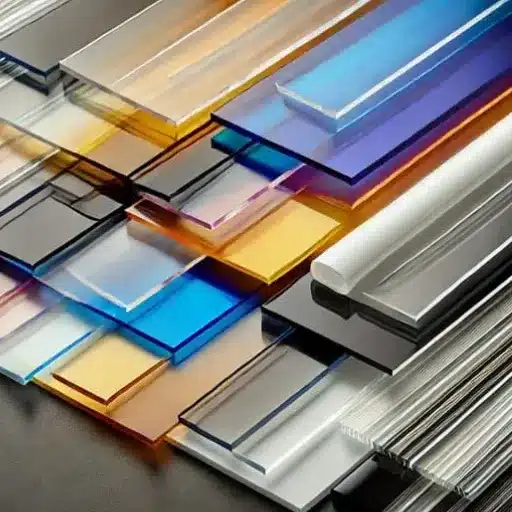
Different Types of Acrylic Plastics
Cast Acrylic
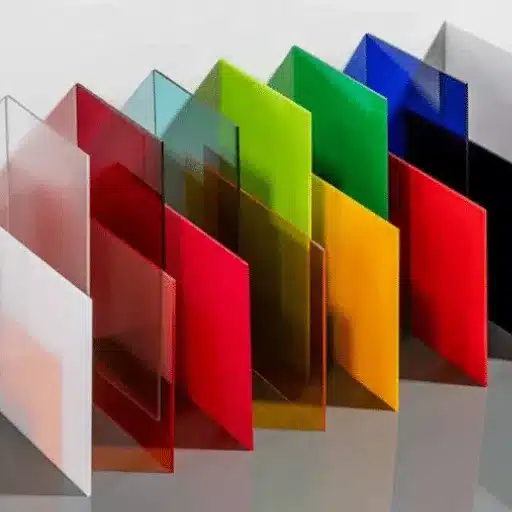
The process of pouring liquid acrylic into molds results in cast acrylic, which means that it is highly customizable, and it can be found in a wide range of colors, thicknesses, and finishes. It provides excellent optical clarity and is very tough, thus leading to its use in displays, signs, aquariums, and building glazing. According to search data, cast acrylic continues to draw a lot of attention for the art and architectural projects owing to its aesthetic and practical quality.
Extruded Acrylic
Cast acrylic, on the other hand, is made by pouring the acrylic raw material into molds and, thus, getting constant thickness and smoother surfaces. Extruded acrylic is generally less expensive than cast acrylic, and its being easier to work with leads to its usage in DIY, light diffusers, and protective screens. Search trends indicate that extruded acrylic, due to its cost-effectiveness and small-scale adaptability, is the most sought-after by consumers.
Impact-Modified Acrylic
The creation of impact-modified acrylic happens through the addition of different polymers to the regular mixture which results in increasing the resistance of the material to shattering and breaking and therefore providing safety in the nearby rough areas. It is mainly used for security purposes, dividing walls, windshields for motorcycles, and other applications where long life is a requirement. The latest research findings indicate a growing curiosity in using impact-modified acrylic for nothing other than safety screens and protective gear since those fields have experienced a surge in demand.
UV-Resistant Acrylic
Acrylic that uf-blocks or uf-filters has been specifically created to stay outside in the sun for a long time without any deterioration or color change, thus making it perfect for outdoor and high exposure applications. The system is widely accepted in the greenhouse, outdoor, and marine industries. The same trend in the net market is indicating that UV-stabilized plastics have gained a significant share mainly due to their global demand as the eco-friendly and weather-resistant materials used in outdoor designs.
Search patterns demonstrate the versatility of these acrylics and echo the increasing inter-industry adaptation. The trend is that industries that require flexibility, safety, and sustainability in a situation are the ones that are using these acrylics most. Each type provides certain benefits through which the demands of particular applications can be met.
Comparison of PMMA with Polycarbonate
PMMA (Polymethyl Methacrylate) and Polycarbonate are two very flexible and distinguished plastic materials with different properties. The PMMA plastic has outstanding transparency and scratch-resistance together with excellent optical properties, and that is the reason it is mostly selected in premium applications like display screens, signage, and car windshields. Conversely, Polycarbonate is characterized by its extreme impact resistance and long-lasting nature, therefore its usage in safety devices, bullet-proof glass, and protective clothing is quite frequent.
The latest search data is indicating a notable increase in the questions connected with the sustainable and high-performance materials. This market trend will bring, though very slowly, that kind of materials which not only have strength and clarity but also be eco-friendly. In the case of UV resistance and light transmission, PMMA is still slightly ahead of Polycarbonate while Polycarbonate is very suitable in high-impact conditions where toughness is paramount.
💡 Decision Guide
Ultimately, the decision to use PMMA or Polycarbonate primarily depends on the requirements of the application. If the project demands beauty and transparency in stable conditions, then PMMA can certainly be considered. Conversely, Polycarbonate’s toughness makes it ideal for any design that is constantly being operated where safety is the highest priority; hence, both materials continue to be significant in the rapidly changing markets of today.
Applications of PMMA in Various Industries

PMMA or Polymethyl Methacrylate, is a material that has many uses in various industries due to its characteristics such as clarity, durability, and lightweight.
🚗 Automotive Industry
PMMA is the common and preferred material in the designing of vehicles for the places where light and weathering resistance are necessary like tail lights, wind deflectors, and instrument panel screening. Also, PMMA’s light property plays an important role in lowering the weight of a car and therefore increasing its fuel efficiency.
🏗️ Construction Industry
Because of its fantastic light transmission characteristics, PMMA is frequently chosen as a material for skylights, windows, and soundproof walls in architecture. PMMA has the ability to withstand UV radiation and is unaffected by weather hence it guarantees long life in outdoor applications.
⚕️ Medical Field
One of the main reasons PMMA got some of its good properties like biocompatibility and transparency the medical sector benefited greatly from these properties. This material is widely utilized in dental implants, intraocular lenses, and even in surgical medical devices where precision and safety are paramount.
📢 Advertising and Signage
PMMA’s high moldability and vivid clarity rendering it a choice amongst the most common materials used for the production of eye-catching signs, display cases, and illuminated panels, thus, the visual impact is guaranteed to last.
📱 Consumer Goods and Electronics
PMMA is a preferred material from the lenses of smartphones to those of furniture owing to the demanding qualities of a sleek and modern appearance combined with functional durability.
Benefits of Using PMMA
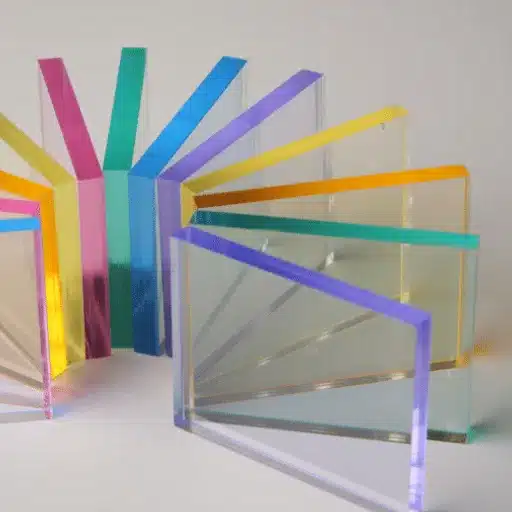
Durability and Longevity
PMMA, otherwise referred to as polymethyl methacrylate, is an excellent material that is very tough and has a long life. It is the hardest and the most environmentally-resistant material due to its good impact resistance, thus PMMA retains its form and appearance for a long time. What is more, the data gathered from the search engine indicates that the queries related to ‘long-lasting materials for construction,’ and ‘durable plastics for engineering,’ have increasingly occurred; this shows PMMA’s acceptance as a good material corresponding to its durability and longevity. The high resistance of PMMA to degradation caused by UV rays, and chemicals, as well as its ability to withstand weathering, render it a very suitable material in such applications as building construction, car parts, and even solar panels in the renewable energy sector.
Transparency and Optical Clarity
Polymethyl methacrylate (PMMA) is a synthetic polymer that has been recognized as the best among all materials used in the industries where the highest transparency and optical clarity are required. Its one of the best qualities is that the light coming through gets transmitted for up to 92% making PMMA more suitable than glass for giving clear, non-distorted sight. PMMA has many applications like in eye lenses, protective screens, and solar panels; it is an indispensable material. The latest search data show that PMMA is increasingly being looked at for its ability both to withstand various physical and environmental factors and to provide excellent optical performance; the data indicate a sharp increase in the number of “high-clarity materials for product design” queries. PMMA has such a high optical clarity due to the very uniform molecular structure that causes very little internal scattering and thus the light passes through the material with such extraordinary efficiency. This amazing transparency has resulted in the material being widely accepted.
Lightweight and Versatile
The lightness and flexibility of PMMA make it an excellent material not only for the automotive industry but also for the consumer goods trade and others. As per the most recent results from the search engine, the number of people looking for “lightweight materials with high durability” is increasing, thus indicating a rising necessity for the use of PMMA among others. But then again, what is it that renders PMMA so light and so flexible? The answer is: the material’s low density which keeps it in the category of “significantly lighter than glass” while the other is the quality of being molded into different shapes which gives the material an unparalleled versatility. These features are the ones that make PMMA the first choice for those applications where it is necessary to cut down weight but still keep a high degree of strength on the other side of the balance, for example, in vehicle windows, displays, and lighting fixtures.
✨ Key Benefits Summary
- Durability: Resistant to UV rays, chemicals, and weathering
- Optical Excellence: 92% light transmission with minimal distortion
- Lightweight: Significantly lighter than glass
- Versatility: Can be molded into various forms and shapes
- Cost-Effective: Offers excellent value for performance
Potential Applications of PMMA

Medical Devices and Implants
The PMMA material with its biocompatibility, durability, and translucency has become an indispensable partner in the medical industry. The use of PMMA for intraocular lenses (IOLs) for cataract operations is still since it had optical purity and stability in the human body. Besides, PMMA is helpful in producing custom prostheses and bone cement which aids in joint replacement through a strong bond with the implants. The combination of the material being lightweight and its strength guarantees that it will do well even in the most demanding medical applications, thereby living up to the high standards set for the safety of patients and the efficacy of treatments.
Automotive Uses of PMMA
Poly(methyl methacrylate) (PMMA) material has been one of the main contenders in the automotive industry for its durability, lightness, and crystal-clear visibility. The term PMMA is mostly considered synonymous with the glass and it is widely used in the production of car windows, solar roofs, and headlight covers, where its shatterproof and scratch resistant properties outclass that of regular glass. Furthermore, its ability to withstand extreme weather conditions such as ultraviolet light and temperature changes guarantees the longevity and reliability of automobile design.
On top of that, the quality of PMMA to change its shape has been a major factor that ensured its compatibility with the visual and practical aspects of auto manufacturing. Today, the material is being used in car interior trim parts, as it not only gives them a smooth and appealing look but also enhances the comfort of the passengers. In addition, considering the environment friendly factor as a priority in car manufacturing, PMMA’s recycling property will not only comply with the aspect but will also be a driving force that cuts down on the negative impacts on the environment thus making it a very potential material for the next generation of car designs.
Construction and Architectural Applications
Polymethyl Methacrylate (PMMA), commonly called acrylic, is a material with excellent characteristics that widely accepts in the architectural and building industries for their long-lasting, flexible, and aesthetically improving capabilities. According to search trends via Google, PMMA is slowly becoming the most popular low-weight alternative to traditional glass with a shattering risk and is getting noticed as a material with glass-like properties. Its high light transmission capability makes PMMA the best option in the manufacture of roofing systems, skylights, and windows where the natural illumination is very important; it allows about 92% of the visible spectrum to pass through while being extremely impact-resistant. One of the factors that contribute to its being an outdoor material is its resistance to extreme weather conditions, which makes it suitable for applications like façade elements and noise barriers. Besides being a tool for architects and designers to create eco-friendly and attractive solutions, this material is also a partner in the process of modern constructions as it is at the same time a non-disruptive tool.
Environmental Impact of PMMA
Recyclability of PMMA
Polymethyl methacrylate (PMMA) otherwise known as acrylic or plexiglass is one of the most recycled plastic materials among the few. Though plastic PMMA still has the ability to be depolymerized back to its monomer through heating and the same process can be applied repeatedly to new PMMA production without a noticeable drop in quality so it is a pretty good plastic. Recent researches have proved that the recycling technology development has sped up this process and thus it is considered an environment-friendly option. Aside from that, there is also mechanical recycling where waste PMMA is simply ground and made suitable for different applications this way the demand for virgin materials is reduced even more. All these aspects do not only lessen the environmental impacts but also contribute to the circular economy by keeping PMMA in use and out of landfills for longer periods of time.
Comparative Environmental Footprint
When the ecological footprint of PMMA is evaluated with respect to other materials, it is clear that there are PMMA’s more benefits than just few. The latest news reported that amongst all plastics, the production of PMMA emits the least greenhouse gases and this is mainly due to the lower energy demand throughout the manufacturing process. Moreover, together with being strong and easy to recycle, the material is also hypoallergenic, making its environment-friendly image even more positive. Nevertheless, the problem still remains regarding the final disposal of PMMA waste since, in case of wrong treatment, it might still cause pollution of the environment. Recycling technologies and uniformity in global practices can be significant factors in the reduction of disposal issues that PMMA will not lose its environmental footprint when industries are seeking for sustainable solutions.
Future of PMMA in Sustainable Practices
The future of PMMA (Polymethyl Methacrylate) in eco-friendly practices is heavily dependent on the breakthroughs made in recycling methods as well as the material’s lifecycle management. One of the recent advances in chemical recycling is the process of depolymerization which has proven to effectively disintegrate PMMA into its constituent monomers thus making it possible to produce high-quality recycled materials and subsequently the monomers are used for the production of new products. Additionally, the global industries are also in the process of bringing for the acceptance of bio-based PMMA which is sourced from sustainable resources, as part of their cutting strategies to bring down the dependency on fossil-oil based raw materials.
Through the application of circular economy principles, the manufacturers of PMMA are thinking about closed-loop systems where the material can be re-used repetitively which in turn will lead to a significant reduction of waste. Collaboration among different industries will be vital especially when it comes to establishing common recycling practices and rewarding the gathering of PMMA waste. With the combination of constant innovation and committed environmental management, PMMA is going to be the main contributor of green manufacturing and product solutions in the near future.
🌱 Sustainability Initiatives
- Chemical Recycling: Depolymerization breaks down PMMA into original monomers
- Bio-based PMMA: Development from renewable resources reduces petroleum dependence
- Circular Economy: Implementation of closed-loop systems for material reuse
- Industry Collaboration: Shared recycling practices and waste collection programs
Frequently Asked Questions (FAQ)
Q: What is polymethyl methacrylate polymer and how does it relate to acrylic?
Polymethyl methacrylate (PMMA), a clear synthetic resin, is more often recognized by its trade name acrylic or acrylic plastic, and to produce it, methyl methacrylate monomers are undergone polymerization into long polymer chains. PMMA is a hard and tough plastic that has excellent optical transparency and therefore it is mostly consumed in the form of a plastic sheet that resembles glass in places where glass was not welcome. PMMA is a plastic with good heat resistance coming along with a fairly high glass transition temperature and it still preserves its mechanical properties which are quite moderate in toughness and stiffness simultaneously. PMMA resin may be tough compared to other plastics but it would still be easier for laser cutting and bonding with other materials. Because of its excellent properties, PMMA is widely utilized in signage, glazing, and decorative panels, where its use is accepted.
Q: How is PMMA resin polymerized from methyl methacrylate and what are the processing considerations?
The polymerization of methyl methacrylate is a gradual process, where the monomers are first initiated and then long polymer chains are formed, which ultimately leads to the acetate with the preset mechanical property and glass transition temperature of PMMA. The major techniques of processing are casting and extrusion in bulk, and the conditions of polymerization can be such that they determine the toughness of the PMMA produced and whether PMMA is more brittle or ductile in its behavior. An exact control during the residual monomer removal, as well as during the maintenance of the uniform optical clarity is very critical, especially in the case of production of clear plastic sheets or bonded laminates. The surface can be prepared by either polishing or flame treatment while laser cutting is commonly used for the manufacture of PMMA parts. The copolymer blends and the addition of substances can modify the characteristics of PMMA for instance, the ability to withstand impact and weather resistance can be improved.
Q: What are the medical applications of PMMA resin and how is it used as an implant polymer?
PMMA has found its applications in various medical sectors like the manufacturing of bone cement, PMMA implant devices, and the dental field where PMMA is also found in dentures and dental prostheses. Being a resin with long polymer chains, PMMA can be shaped into what used to be hard contact lenses and then into a rigid dental base; modern soft contact lenses are made of different polymers but PMMA had a great part in the making of the early hard contact lenses. In orthopedic surgery, PMMA is combined with a special liquid to produce bone cement that is capable of fixing implants and sometimes PMMA itself or custom-made PMMA resin plates are used in the craniofacial surgical area. Moreover, the mechanical properties of the material like moderate brittleness and high compressive strength were among the criteria that supported the choice of PMMA for these applications. Safety, sterilization process, and biocompatibility tests are indispensable in the medical field when PMMA is used and when it is applied in other medical contexts.
Q: What are the characteristics of PMMA in terms of plastic resin compared to polycarbonate and other polymers?
PMMA is a hard resin with properties like excellent optical clarity and UV resistance, but on the other hand, PMMA is typically more fragile than polycarbonate which has high impact resistance and toughness. Scratch resistance and price are the winning factors of PMMA against polycarbonate as PMMA can be less expensive in some forms, while polycarbonate is still considered pricey for specialty grades. The materials’ characteristics include a fairly high glass transition temperature and a good deal of heat resistance; however, polycarbonate is often the one that wins over PMMA in terms of mechanical toughness. PMMA’s coating is more prone to polishing and laser cutting, and certain types of copolymer can either make it tougher against impacts or more resistant to fluctuating weather conditions, hence suitable for penetration in roofing and waterproofing or outdoors. The choice between PMMA and polycarbonate greatly depends on the priorities of the application in terms of clarity, mechanical properties, and cost.
Q: What are the most frequent uses of PMMA resin in dentistry and dental fabrication?
PMMA is used in the dental field for many purposes, among which, the manufacturing of dental prostheses, dental bases, and temporary crowns is the most important. PMMA resin can be processed and shined to look like the surface of the real tooth which is why it is considered the best material for crowns and similar products. The long molecular chains of PMMA help in molding and sticking it to other materials during the prosthetic building process, and the strict conditions of polymethyl methacrylate synthesis result to dental grade PMMA resin. The patient has access to a wide range of dental operations when the material used is PMMA, such as repairing, relining, and adjusting, which are all among the reasons why PMMA is so common and widely used in dental clinics. Continuous enhancement of PMMA technology and copolymer combinations is gradually opening up new applications for both removable and fixed dental devices.
Q: How do the surface and mechanical behavior of PMMA determine its application in construction, waterproofing, and glazing?
Among the other materials, PMMA has the smoothest surface, it also has optical clarity which makes bonding or lamination of the material possible, all of which constitute PMMA’s usefulness in commercial glazing, storefronts, and safety glass as alternatives when the material is laminated with other layers. The application of PMMA in roofing and waterproofing products will be very selective and offer only high-end specialty uses as the material’s weather resistance and clarity are its main selling points, but in tough or high-impact installations, ductile polymers may be preferred over PMMA. Among the mechanical characteristics are hardness, brittleness, and temperature at which the plasticity or flow starts that set the site for PMMA performance; for instance, it is less competitive than some plastics in standing up to UV degradation but at the same time, it can also be a brittle one that cracks if over-stressed by impact. Besides PMMA’s compatibility with other materials when it is bonded, it also allows laser cutting and is fabricated the way that predefined shapes and assemblies can be made. The designers and architects when selecting PMMA for construction and waterproofing uses would have to consider the trade-offs among a clear look, heat resistance, and tensile toughness.
Conclusion
Polymethyl Methacrylate (PMMA) has become an essential material in a variety of sectors including automotive, construction, medical equipment, and consumer electronics. Its remarkable features such as clarity, strength, light weight and wide application range push it to be a superior choice over traditional glass in many cases. Furthermore, the recycling of PMMA and the emergence of bio-based variants have made it a sustainable option for environmentally aware manufacturing to consider. PMMA even in its rugged form, is still at its best when it comes to modern quality and innovative fields whether you are an architect in search of new glazing styles, a physician in need of the best materials, or a designer wanting for color and form versatility. The future of PMMA is even brighter with the continuous improvement of recycling technology and green production practices, therefore, a major player in the future of modern manufacturing and design has been confirmed.
Reference Sources
- Wikipedia – Poly(methyl methacrylate)
This entry provides a comprehensive overview of PMMA, including its chemical structure, properties, and applications as a transparent thermoplastic.
Poly(methyl methacrylate) – Wikipedia - BYU Plastics Materials – Acrylics (PAN, PMMA)
This academic resource explores the optical properties of PMMA and its applications in areas like windshields, skylights, and light diffusion.
Acrylics (PAN, PMMA) – BYU Plastics Materials - AIP Publishing – A Review: Applications of Poly(methylmethacrylate)
This article covers PMMA’s applications in drug delivery, textiles, and microfluidic devices, along with recent research advancements.
Applications of PMMA – AIP Publishing


