


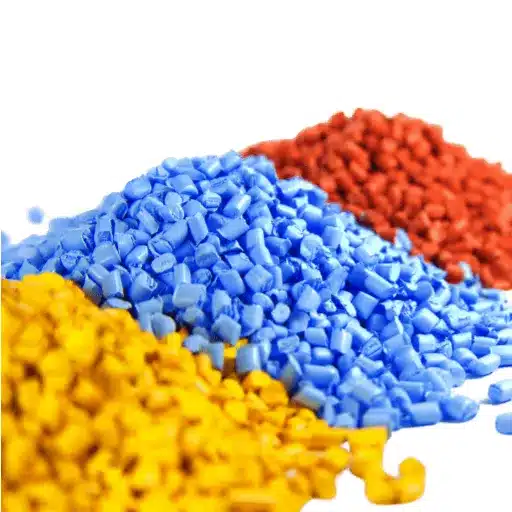


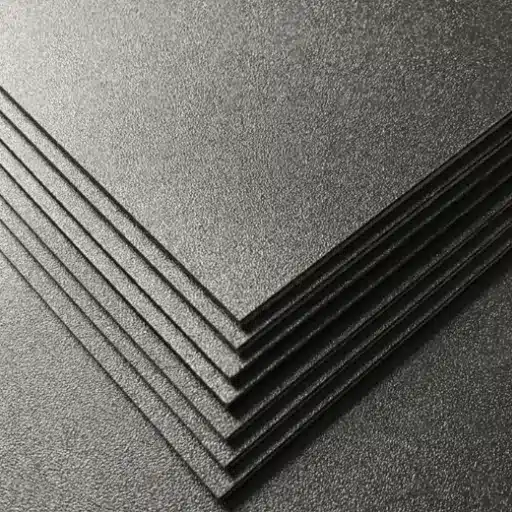
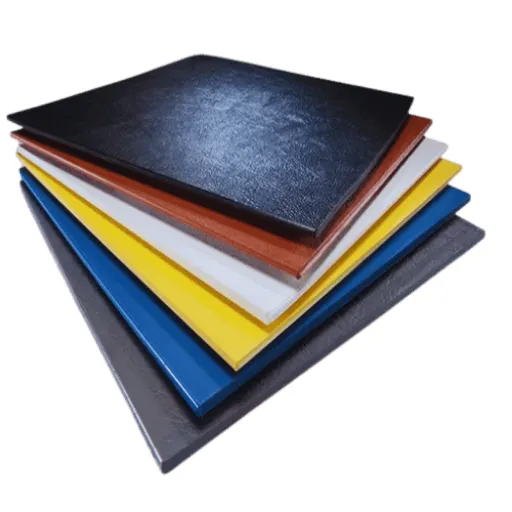
Among all the thermoplastics, Acrylonitrile Butadiene Styrene (ABS) is one of the most versatile and universally accepted ones. Due to its excellent mechanical strength, high anti-wear characteristics, and good processing properties, ABS has become a typical material in various industries such as automotive, consumer electronics, and 3D printing. The guide will give a deep insight into the main features of ABS, its various usage, and the reason why it keeps being the engineers’ and manufacturers’ number one choice around the globe.
Properties of ABS
1
Physical Properties
Acrylonitrile Butadiene Styrene is praised for its terrific mix of strength, flexibility, and impact resistance. It has a very low density of about 1.04 g/cm³ which makes it easy to shape and mold according to any design requirement. One of the most astonishing characteristics of the material is that it can stay almost unbreakable at low temperatures and can bear a lot of physical stress without getting cracks.
🔬
Key Physical Characteristics
- Density: Approximately 1.04 g/cm³ – lightweight and easy to process
- Glass Transition Temperature: Around 105°C (221°F) – maintains structural integrity under moderate heat
- Impact Resistance: Exceptional durability even at low temperatures
- Dimensional Stability: Excellent resistance to wear and tear
The thermal properties of the material are characterized by a relatively high glass transition temperature of about 105°C, which allows the material to withstand heat up to that point without any change in shape. On top of this, ABS has an outstanding thermal stability and high durability, which makes it applicable in a wide range of fields such as automotive components and consumer products. The merger of high-quality physical properties with reasonable pricing is the reason why ABS is still the material used in both industrial and daily applications.
2
Mechanical Properties
ABS plastic is an excellent choice because it combines strength, toughness, and stiffness in a perfect ratio. It is a material of choice for many industries and absorbs energy almost completely without breaking. The tensile strength of ABS varies between 40 and 50 MPa based on the specific formulation, while the impact resistance assures that the product will perform for a long time even in harsh environments.
| Mechanical Property | Value/Range | Significance |
|---|---|---|
| Tensile Strength | 40-50 MPa | High load-bearing capacity |
| Flexural Modulus | 2,000-2,500 MPa | Excellent resistance to bending |
| Impact Resistance | High | Durable under stress |
| Machinability | Excellent | Easy to mold, cut, and drill |
The material can resist bending stress up to approximately 2,000 to 2,500 MPa (flexural modulus). Additionally, ABS possesses excellent machinability properties, enabling easy molding, cutting, or drilling without compromising the material’s technical characteristics.
💡
Recent Advancements
Recent advancements indicate that there is a continuous movement to create tailormade ABS formulations in order to provide the desired characteristics for particular industrial applications. The enhancement of the ABS has made it more resistant to environmental factors such as UV degradation and different types of chemicals, thus greatly increasing its potential areas of use. These innovations are a proof of the ability of ABS to adapt to the changing market needs by providing the customers with the desired characteristics even in the case of chemical and physical properties together with the modern delights of refinement.
3
Thermal Properties
The heating up of Acrylonitrile Butadiene Styrene (ABS) calls for very high temperatures which is why it is still the favored material in several industrial applications. The thermal degradation of the material starts at around 221°F (105°C) and during that temperature period it changes its character from tough and rigid to soft and pliable. That temperature represents its glass transition temperature.
The latest information indicates that the ABS formulations have preserved and even increased the thermal resistance, with some classes specifically meant for handling even more difficult temperature variations. These advancements lead to the use of ABS in applications where the temperature is a crucial factor, for instance, engine components and housing for electric devices, without sacrificing performance. The combination of high temperature resistance and flexibility allows ABS to be an excellent option for high-end applications.
Applications of ABS
🚗
Automotive Industry
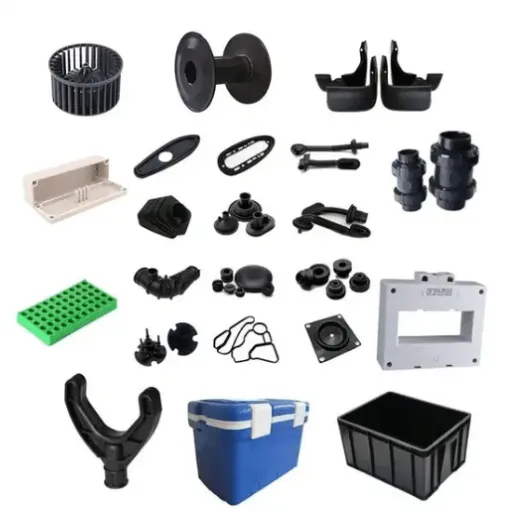
The usage of ABS plastic in the automotive industry is very wide because of its rare mixture of characteristics that are strong, flexible, and light in weight. Between the production of dashboards, manufacturing of door panels, and construction of car seats, ABS is the main player needing materials with both durability and beauty.
Key Automotive Applications:
- Dashboard components and trim elements
- Door panels and interior fixtures
- Car seat structural components
- Engine compartment parts (heat-resistant grades)
The new ABS compositions have been developed that are recyclable and lightweight materials and also meet the green project standards and therefore facilitating the vehicle fuel consumption reduction. The latest developments reveal that there is a growing preference for the use of environmentally friendly ABS materials in electric vehicles (EVs), which is a sign that the manufacturing sector is slowly shifting towards sustainability. This need has been accepted along with the new advanced ABS formulations that are in alignment with the trends of the evolving automotive industry.
🏠
Consumer Goods
The adaptability of ABS has resulted in its widespread adoption for producing consumer products ranging from small household appliances to various everyday items. Its long-lasting and moldable nature makes ABS the preferred choice for manufacturing phone cases, keyboard housings, and kitchen utensils.
Are eco-friendly ABS materials suitable for everyday products?
Yes, without a doubt. The scientific advancements in materials have come up with the so called green ABS which is made of either recyclables or bio-based materials and is as strong and flexible as the traditional one. The latter would attract manufacturers who are looking for sustainable high-end consumer goods that fulfil the requirements of environmentally conscious customers with no quality trade-off.
💻
Electronics
The adoption of eco-friendly ABS materials in the electronics industry has made a big contribution to the area of sustainable manufacturing. Recent statistics indicate that customers are more and more drawn to sustainability as a factor in the choice of electronics. Eco-friendly ABS is being used in the production of gadgets to combat environmental issues like reduced reliance on pure plastic and higher content of recycled material.
Among the uses are protective cases for mobile phones, outer shells for laptops, and other electronic devices that require strength and heat resistance. This transition corresponds with the increasing desire for eco-friendly technology, showing that it is possible to have sustainability and performance together in consumer electronics.
Advantages of ABS
✓
Durability and Impact Resistance
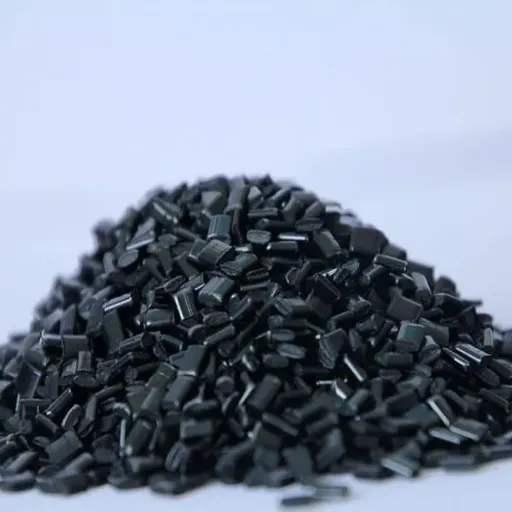
Acrylonitrile Butadiene Styrene, or simply ABS, is very well-known for its great durability and resistance to impact, thus it is commonly used for the making of electronic casings and other high-quality products that need strong materials. The most recent data show that ABS can withstand great mechanical forces without any cracks or distortions, giving the devices a long-lasting safety barrier. Its ruggedness through different temperatures has turned it into a favorite in areas where reliability is crucial. One of the reasons that ABS is used in such large quantities is its life span that is longer than the product lifetime, which is exactly why manufacturers regard ABS as a necessary material in their production.
✓
Ease of Processing
ABS is extremely easy to process, thus being the most used material for a variety of manufacturing processes including injection molding, 3D printing, and extrusion. Its melting point and flow properties allow shaping into intricate and detailed designs without the risk of loss of strength. The latest data trends reveal that people are not just interested in specific ABS applications for prototyping but also large-scale production, which means that plastic’s multifunctionality is still a key factor in controlling both the time and the cost of the production process.
✓
Versatility in Applications
ABS shines through with its exceptional versatility across numerous applications. Industries including automotive, electronics, construction, and consumer goods have benefited greatly from ABS plastic. Recent studies indicate that public interest has increasingly focused on ABS use in 3D printing and custom part manufacturing.
Applications span:
Automotive interiors • Home gadgets • Mock-up models • Lightweight components • Strong structural parts
This coincides with ABS’s distinctive abilities of durability, heat resistance, and ease of working, collectively rendering it suitable for making parts that are both light and strong. Its malleability explains why it remains a favorite in consumer and industrial design when developing new solutions.
⚠️ Limitations of ABS
1. Susceptibility to UV Degradation
ABS is a plastic that is widely used in different sectors because of its good mechanical properties, but its usage outdoors is limited to a great extent under very strong sunlight. The ongoing exposure to UV rays finally leads to the total destruction of the material which is characterized by the change of color, brittleness and the reduction of strength—a process commonly referred to as photodegradation. In this process, the UV rays are responsible for breaking up the ABS molecular structure and thus the material loses its qualities.
Solutions: Manufacturers address this problem by applying UV-resistant coatings or adding UV inhibitors to the material, making ABS more durable and longer-lasting in outdoor applications. However, the varying degrees of impact from such treatments require thorough analysis of environmental exposure and protection measures before selecting ABS for use in areas with extremely sunny conditions.
2. Temperature Sensitivity
One of the main properties of ABS material is its extreme temperature tolerance. The material will be able to withstand moderate temperatures and still perform, but when it comes to more heat or cold, it will lose its structural integrity. The glass transition temperature of ABS is roughly 105°C (221°F) and that’s where it starts softening leading to distortion or warping in hot environments. On the other hand, low-temperature brittleness makes ABS easily broken with little movement allowed.
Industry Response:
The situation has prompted the industry to look for solutions in flexible materials and methods, specifically, in the automobile and electronics sectors searching for material stability where the temperature-related inflexibilities of ABS gradually overcoming are steady trends. Modified ABS research covers the use ofadditives or blending with other polymers to a great extent to achieve an extended temperature range of operation. This development in the area marks a notable rise in the viability of ABS under both high and low temperature conditions, thereby opening up the field for numerous applications.
3. Cost Considerations
One of the most important aspects for companies regarding material choice is cost, especially for the industries whose main concern is to find the best material for their application that fits their budget. Being a thermoplastic, ABS is extremely inexpensive, thus maintaining its popularity among the various kinds of plastics. Its price is consistently lower than polycarbonate or acrylic since it is altogether cheaper to manufacture, mainly due to easy and quick sourcing of raw materials and efficient and low-cost manufacturing processes.
The most recent developments in plastic materials suggest that there is a great increase in the number of searches for “cheap ABS alternatives,” which points to manufacturers being alert to what the market asks for in terms of price. Still, they are not going to lower their quality and are going to stick to their standards, even in the automotive and consumer electronics industries where strict quality control measures are adopted. Therefore, as ABS remains at a fair price, the continuous engagement of resources in research and development secures that price will not be a barrier to performance.
Parts Manufactured from ABS
Typical Applications in Various Industries
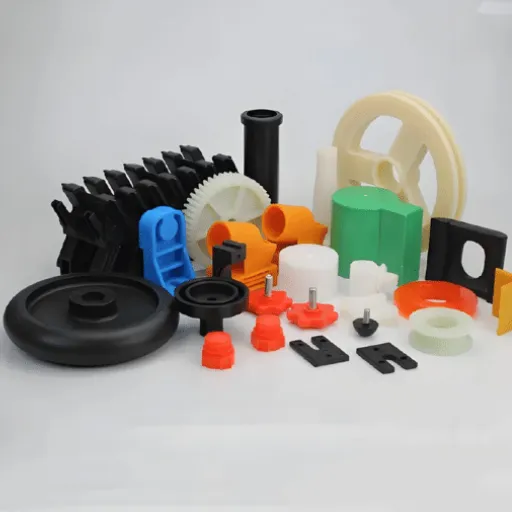
Synthetic thermoplastic made from acrylonitrile, butadiene, and styrene, ABS is widely used in various industries on account of its great features. The automotive industry is one of these industries, which, among others, uses ABS for the production of such parts as dashboards, trim components, and interior panels, where durability and resistance to wear are the factors that matter the most. The consumer electronics segment also uses ABS a lot for such applications as laptop casings, mobile phone housings, and remote control shells, at the same time benefiting from its low weight and high impact resistance.
| Industry | Common ABS Applications | Key Benefits |
|---|---|---|
| Automotive | Dashboards, trim, interior panels | Durability, wear resistance |
| Electronics | Laptop casings, phone housings, remotes | Lightweight, impact resistant |
| Household | Vacuum cleaners, kitchen appliances | Moldability, good finish |
| 3D Printing | Functional parts, prototypes | Smooth finish, excellent melting properties |
Also, the plastic is employed in making things for the house like vacuum cleaners and kitchen machines due to its easy molding and nice looking finish. Data from Google suggests that there has been a consumer trend towards cheaper plastics as recent searches for “cheap ABS alternatives” indicate. But still, ABS is the selected plastic since it has shown its durability and reliability in hard-going sectors like automotive and electronic fabrics. Continuous innovation is the means by which manufacturers intend to make ABS competitive by upgrading the production method and researching on mixes that meet high standards on quality and costs. This movement makes it certain that ABS will forever be a reliable choice in various applications, even as consumers are on the lookout for other options.
Design Considerations for ABS Parts
Designing top-notch ABS (Acrylonitrile Butadiene Styrene) components means you have to take into account a number of factors which could possibly influence their performance and reliability. The material under consideration, i.e., ABS, besides being impact resistant, is very durable and therefore, it is the best choice for making parts that are going to be available under mechanical stress. The wall thickness, together with other parameters of the design, is very critical because the even thickness prevents the molded part from becoming skewed due to the injection molding process. Moreover, rib or gusset incorporation not only increases the strength of the structure but also leads to material savings.
📐
Critical Design Factors
- Wall Thickness: Maintain uniform thickness to prevent warping during injection molding
- Structural Reinforcement: Add ribs or gussets to increase strength while reducing material usage
- Surface Finish: ABS permits very smooth, shiny finishes or textured designs for consumer products
- Dimensional Stability: Consider proper tolerances in hot areas to avoid deformation
- Sustainability: Utilize eco-friendly blends and recyclable production methods
Surfaces are yet another important factor, particularly for consumer products, since ABS allows very smooth, shiny surfaces or even textured designs. Besides, dimensional stability is what designers should think about, especially in hot areas, where correct tolerances can prevent deformation. To conclude, eco-friendlier and recyclable blends and production methods are becoming trendy, which is a direct reflection of the global environmental concern and consumer priorities. This guarantees both the environmentally friendly design and safe manufacturing practices in regard to the environment.
Examples of ABS Parts and Products
ABS (Acrylonitrile Butadiene Styrene) is a multifunctional material used in numerous product productions due to its durability, flexibility, and cost-effectiveness. Among the most frequent examples are automobile parts like dashboards, trims, and wheel covers, where its resistance to impact and ability to survive temperature ranges are essential.
🚗
Automotive
- Dashboards
- Interior trims
- Wheel covers
💻
Electronics
- Laptop housings
- Computer keyboards
- TV casings
🏠
Household
- Storage bins
- Vacuum cleaners
- Piping systems
🖨️
3D Printing
- Functional parts
- Intricate prototypes
- Custom models
In the field of consumer electronics, ABS is frequently employed for the production of device casings that are light but strong at the same time, for instance, laptops, keyboards, and TVs. Besides, storage bins, parts of vacuum cleaners, and piping systems are some of the other applications of ABS plastic, the main reasons being their strength and manufacturability. Besides, due to its excellent melting characteristics and smooth surface finishes, ABS is one of the most widely used materials in 3D printing for the making of both functional parts and intricate models.
Frequently Asked Questions (FAQ)
❓ What are the prominent characteristics of ABS material properties, and how can they possibly influence the applications?
ABS is a plastic material that has very high impact resistance and toughness among its properties, which makes it suitable for a wide range of applications. It is a thermoplastic copolymer made of three monomers: acrylonitrile, butadiene, and styrene. Mixing styrene with acrylonitrile is a major determinant of the material’s tough and chemically resistant properties. ABS is produced in various grades, such as high impact, medium impact, and alloyed ones, and also can be reinforced with glass fibers for better stiffness. The material is recognized for its wide-ranging application due to its good electrical insulation property. Different production techniques like extrusion or injection molding will greatly influence the final appearance, mechanical, and thermal properties.
❓ How does heat resistance or high heat resistance of ABS compare to other plastic materials?
Acrylonitrile Butadiene Styrene or ABS, though possessing excellent heat resistance properties, is classified as a medium material which can support the temperatures usually associated with its application but not withstand the high temperatures for long. The plastic has a higher thermal expansion coefficient than that of certain engineering plastics, which may lead to problems for parts requiring tight tolerances and for assemblies made of different materials. The mixing of grades or the use of specialized grades may be a solution for high heat resistance applications; however, the designers tend to favor other plastics that have superior thermal performance. The printer for 3D printing with ABS uses heated enclosures and controlled printing process settings to keep warping and layer adhesion under control. In summary, ABS can be seen as a practical compromise between thermal performance and processability.
❓ Which drawbacks have to be kept in mind when opting for ABS for products created on a typical desktop 3D printer?
Usually, the main drawback that can be mentioned is that ABS is prone to warping, which means that reliable printing on desktop 3D printers usually requires a heated bed and an enclosure. One of the properties of ABS is that it is chemically resistant, but it may not resist some solvents, which not only cause damage but also make the surface cloudy, so at every instance the chemical resistance must be dealt with. Besides, the printing process of ABS gives off a styrene smell, thus, good ventilation during 3D printing of ABS is strongly advised.
Important Note: Whereas, in comparison to PLA, it has better impact and high impact strength; however, its printing, processing, and post-processing are more demanding. Moreover, UV exposure for long periods can affect appearance and functional properties negatively unless UV-stabilized grades are used.
❓ How do processing conditions like extrude temperature affect ABS parts and their mechanical properties?
The extrude temperature, cooling rate, and mold temperature are processing conditions that not only highly influence the resistance but also the mechanical properties of the materials like impact strength and stiffness. A wrong configuration can result in the formation of stresses, reduction of impact strength, surface quality problems, and consequently, a high percentage of plastic sheets or molded parts being rejected. In the case of ABS 3D printing, the use of an enclosure and careful temperature management during the printing process help to reduce layer separation and enhance the bonding of the filaments. It is up to the manufacturer to define the processing ranges for every ABS grade in order to obtain the desired properties of the acrylonitrile butadiene styrene. In addition to this, the use of optimized conditions also aids in mitigating dimensional changes that could be brought about by the thermal expansion coefficient.
❓ Does 3D printing of ABS differ from other filaments and what information should 3D printing with ABS be accompanied with?
Printing with ABS in 3D is one of the most complicated processes since the material requires to be melted at a high temperature, it needs a heated bed, and at times the printer needs to be in an enclosure to prevent it from cooling which might cause warping or cracking. A desktop 3D printer can still manage to print ABS if it has good control over the printing and airing-out process since utterances may also have styrene. The material itself is treated after printing easily: it can be subjected to sanding, solvent application for smoothing, or even joining with other ABS parts through welding. Therefore, ABS is widely used for making plastic parts and prototypes due to its easy processing.
Best Results: ABS prints have good impact strength and a mix of stiffness that is suitable for functional prototypes and housings. For optimal results, control processing conditions and choose the appropriate grade for mechanical and thermal demands.
📚 Reference Sources
1
Characterization of ABS Material: A Review
This paper provides a detailed theoretical study of ABS material, including its thermal decomposition and polymeric properties.
Access this comprehensive research for detailed material characterization insights. Read the study here
2
The Chemical, Mechanical, and Physical Properties of 3D Printed Materials Composed of TiO2-ABS Nanocomposites
This research explores the impact of TiO2 on the chemical and mechanical properties of ABS nanocomposites.
Explore advanced nanocomposite formulations and their enhanced properties. Read the study here
3
Anisotropic Material Properties of Fused Deposition Modeling ABS
This study characterizes the anisotropic properties of ABS parts produced through fused deposition modeling (FDM).
Learn about 3D printing-specific material behavior and optimization techniques. Read the study here


