



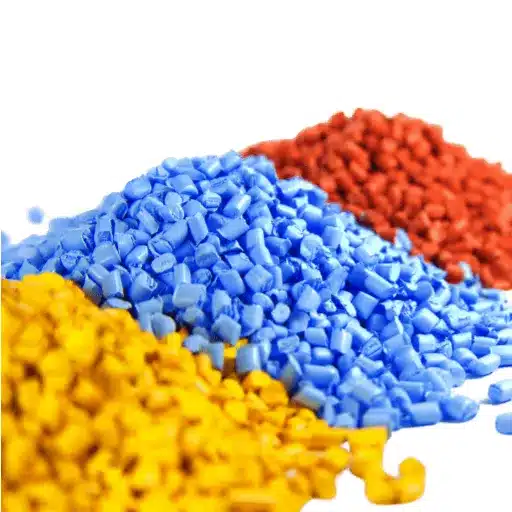


Introduction to HDPE and Its Properties

What is High-Density Polyethylene (HDPE)?
High-Density Polyethylene (HDPE) serves as a multifunctional thermoplastic polymer which manufacturers frequently use because of its ability to maintain high strength despite low density. The chemical structure of this material consists of polyethylene containing straight chains of carbon and hydrogen atoms that result in high molecular weight and durable properties.
Key HDPE Characteristics
- Lightweight: Low density with high strength-to-weight ratio
- Impact Resistant: Excellent durability under physical stress
- Corrosion Resistant: Withstands chemical exposure and environmental factors
- Highly Durable: Long-lasting performance in diverse applications
- Recyclable: Environmentally friendly and supports sustainable products
The material produces various products which include piping systems, containers, plastic bottles, and cutting boards. The material exhibits a softening range which extends from 120°C to 180°C (248°F to 356°F) and this range differs between its various grades. HDPE serves as an essential material for contemporary manufacturing and daily activities because it provides manufacturers with affordable resources which enable them to create products of exceptional quality.
Physical and Chemical Properties of HDPE
HDPE exhibits a unique set of physical and chemical characteristics enabling its use in various industrial applications. The material exists as a strong, rigid substance possessing a density falling between 0.93 g/cm³ and 0.97 g/cm³.
| Property | Value/Description |
|---|---|
| Density | 0.93 – 0.97 g/cm³ |
| Tensile Strength | High strength under tension |
| Chemical Resistance | Exceptional against solvents, acids, and bases |
| Moisture Absorption | Low moisture uptake, excellent stability |
| Impact Resistance | High, especially at low temperatures |
| Electrical Insulation | Exceptional for electrical and telecommunication systems |
Recent research shows HDPE maintains high impact resistance capacity under low temperature conditions, making it suitable for products undergoing extreme environmental conditions. Ongoing technological progress enables HDPE to surpass traditional materials through both dependable performance and modern engineering techniques.
Comparison of HDPE with Other Polyethylenes (LDPE)
High-Density Polyethylene (HDPE) and Low-Density Polyethylene (LDPE) exhibit distinct differences in their physical characteristics and industrial uses. The higher density and tensile strength of HDPE make it more robust than LDPE, which has a flexible and lightweight physical composition.
| Feature | HDPE | LDPE |
|---|---|---|
| Molecular Structure | Straight chains, linear structure | Branched molecular arrangement |
| Density | Higher (0.93-0.97 g/cm³) | Lower density |
| Tensile Strength | Higher, more robust | Lower, more flexible |
| Impact Resistance | Excellent performance | Moderate performance |
| Chemical Resistance | Superior resistance | Good resistance |
| Temperature Resistance | Better extreme temperature resistance | Lower temperature tolerance |
| Recyclability | Better recycling capabilities | Recyclable, but less efficient |
| Common Applications | Piping, containers, industrial equipment | Film packaging, bags, squeeze bottles |
Selection Guidance: The choice between HDPE and LDPE needs to consider specific application requirements, including evaluation of strength, flexibility, expense, and environmental factors. New findings demonstrate HDPE offers better recycling capabilities and extreme temperature resistance, providing major advantages for sustainable industries, while LDPE maintains importance for single-use products because of affordable production costs.
Thermal Characteristics of HDPE

Understanding HDPE Softening Temperature
High-density polyethylene (HDPE) demonstrates a softening temperature range that extends from 120°C to 180°C (248°F to 356°F) according to its production and treatment methods. The temperature range is affected by the material’s extensive crystalline structure which provides both strength and thermal protection.
HDPE Temperature Ranges
Softening Temperature Range
120°C to 180°C (248°F to 356°F) – varies by grade and production method
Short-Term Temperature Tolerance
Up to 248°F (120°C) – maintains structural integrity during brief exposure
Continuous Operating Range
-220°F to 176°F (-140°C to 80°C) – safe for regular-use products
The thermal performance of HDPE makes it suitable for use in situations needing heat protection, including piping systems, industrial containers, and specialized packaging. Recent data shows technological developments in polymer engineering allow HDPE to exceed thermal limitations, enabling applications in new heat-intensive fields.
Factors Influencing Softening Temperature
The softening temperature of HDPE is influenced by several key factors including molecular weight, crystallinity, and the presence of additives or fillers.
Key Influencing Factors
🔬 Molecular Weight
Higher molecular weight develops better thermal resistance and structural integrity during thermal exposure
⚛️ Crystallinity
Increased crystallinity causes material to maintain structural integrity during thermal exposure
🧪 Additives and Fillers
Introduction of stabilizers and reinforcements enables HDPE to reach higher temperature resistance levels
Current polymer engineering advancements demonstrate novel alterations to HDPE molecular structure create significant thermal thresholds extending beyond existing limits. Manufacturing companies utilize advanced processing methods to achieve better control over crystallinity, resulting in uniform thermal characteristics throughout their products.
Thermal Resistance and Heat Resistance of HDPE
The advanced thermal and heat resistance features of HDPE make it essential for multiple industrial applications. Recent advancements show HDPE maintains structural integrity when exposed to temperatures up to 248°F (120°C) during short time periods.
🔥 Piping Systems
Thermal stability essential for moving hot liquids safely and efficiently
📦 Food Storage
Containers experiencing constant temperature changes require thermal stability
⚙️ Industrial Applications
Molecular engineering enables products functioning in demanding environments
Testing Methodologies for HDPE Softening Temperature

Standard Testing Procedures
Standard testing procedures establishing the softening temperature of HDPE material use both the Vicat Softening Temperature test and Differential Scanning Calorimetry method.
Primary Testing Methods
Vicat Softening Temperature (VST)
The test establishes the temperature which leads to the deformation of HDPE material when subjected to defined weight. The needle-shaped indenter delivers constant force while the temperature rises to determine the softening threshold. The test offers accurate results which show how materials respond to specific temperature and mechanical force testing conditions.
Differential Scanning Calorimetry (DSC)
Examines thermal characteristics through measurement of heat flow occurring during temperature variations in HDPE material. The system delivers exact values for softening points, melting temperatures, and glass transition points, enabling creation of accurate thermal profile. DSC provides comprehensive thermal analysis essential for quality control and material development.
The standardized methods produce precise and dependable outcomes furnishing essential information about how HDPE material reacts to thermal testing. Industries can safely implement HDPE material for thermal stability demanding applications through combination of material discovery advancements and data analysis breakthroughs.
Experimental Approaches to Measuring Softening Temperatures
Multiple experimental techniques exist for determining the softening points of HDPE and other materials. The testing methods of Differential Scanning Calorimetry and Vicat Softening Temperature testing represent established testing methods.
Advanced Testing Approaches
- DSC involves heating material at controlled rate to monitor energy changes, identifying transitions like melting or softening
- Vicat test involves applying standardized needle with defined weight to test material while temperature rises until assessment reaches softening point
- Advanced computational methods combine with machine learning to boost method accuracy
- High-resolution thermal imaging and predictive algorithms enable quicker and more detailed analyses
- New technologies offer businesses better product development and quality control through improved efficient techniques
Interpreting Test Results
The evaluation of thermal property test results requires researchers to assess both actual results and machine learning tools which process advanced data. Latest data from search engine results enhances process accuracy.
Modern Analysis Tools
- Predictive algorithms combined with machine learning models enhance thermal analysis results
- Capacity to detect patterns which traditional methods would miss
- Understanding material performance during extreme temperature changes
- Analysis of heat conduction efficiency
- Test result interpretation develops into comprehensive method through integration of advanced tools
Practical Applications of HDPE Based on Temperature Resistance

HDPE in Agricultural Applications
High-Density Polyethylene (HDPE) serves as an essential material for modern agricultural operations because of its outstanding heat resistance and permanent structural integrity. Current research indicates that construction projects utilize HDPE materials to create irrigation systems and greenhouse roofing and silage bags.
Agricultural Benefits
- Temperature Resilience: Maintains operational capabilities under extreme temperature conditions
- Irrigation Systems: HDPE pipes construct drip irrigation systems which deliver water under different weather conditions
- Water Conservation: Enables farmers to conserve water while maintaining system reliability
- Non-Toxicity: Suitable for systems which handle drinking water and food storage
- Environmental Protection: Supports agricultural practices that protect both the environment and public health
Industrial Uses of HDPE Sheets
The industrial sector depends on HDPE sheets because their flexible properties combined with strong durability and affordable pricing make them essential for multiple industrial applications. They are widely used in industries such as construction, automotive, and marine.
🏗️ Construction
- Landfill liners
- Chemical containment systems
- High chemical resistance
- Complete impermeability
🚗 Automotive
- Lightweight fuel tanks
- Interior components
- Improved energy efficiency
- Preserved structural integrity
⚓ Marine
- Dock fenders
- Boat parts
- Water damage resistance
- UV exposure protection
The ability of HDPE sheets to withstand harsh conditions and their alignment with sustainable practices make them essential materials for all industrial applications.
HDPE in Construction and Infrastructure
High-Density Polyethylene (HDPE) serves as an essential building material for construction projects and infrastructure development because of its flexible properties and strong strength and cost-effective nature.
Construction Applications
- HDPE Pipes: Reliable solutions for water supply and drainage systems providing protection against corrosion, impact damage, and chemical destruction
- Market Growth: Global HDPE pipe market will experience substantial growth as urban and rural areas require environmentally friendly and efficient pipeline systems
- Geomembranes: Environmental protection through use as lining materials for landfills, reservoirs, and canals preventing environmental damage and leaks
- Installation Benefits: Lightweight characteristics with simple installation methods supporting sustainable practices throughout construction duration
Frequently Asked Questions
What is the typical softening temperature of HDPE plastic?
The typical softening temperature for HDPE plastic ranges from 80 to 130 degrees Celsius, depending on both specific grade and methods used for production. The range of melting and softening points for HDPE increases due to its greater crystallinity compared to other polyolefins with lower density. Thermal properties of HDPE change according to its density and strength of molecular connections between polymer chains. Thermal transition ranges of HDPE production through polymerization depend on temperature and pressure control used during production and choice of ethylene and Ziegler-Natta catalyst feed materials. Designers should consider both operating temperature and heat sealing or thermoforming requirements when choosing grade for their design needs.
How does resin selection affect the softening temperature of HDPE resin?
The resin selection process determines softening temperature because each resin type possesses unique molecular weight properties and crystallinity values and comonomer content that differs from other ethylene monomer resins. Resin produced through fluidized bed reactor and slurry process manufacturing methods displays different physical characteristics and mechanical strength properties which determine its thermal performance. Ziegler catalyst and other HDPE catalysts enable producers to change polymerization processes which results in different thermal transition patterns and final molecular structures. Resin identification code plus additives indicate whether material meets requirements for specific uses including film production and plastic lumber manufacturing. When comparing supplier properties check density of HDPE plus pressure rating and recommended operating temperature for intended specific applications.
Can HDPE plastic’s softening point affect its suitability for food contact applications?
The softening point and thermal stability of HDPE plastic determine its suitability for food contact applications because heat exposure during processing and use operations reach softening temperatures. FDA allows many HDPE products to comply with their regulations permitting use in food contact applications when manufacturers formulate and process products according to 21 CFR 177.1520. Food contact grades require testing of environmental stress crack resistance while containers and piping systems must evaluate pressure rating and operating temperature. Selection of resin for food contact applications requires verification of standard compliance plus HDPE stability assessment under expected temperature and blow molding and rotational molding handling conditions. Proper selection ensures safety and performance during sealing, filling, and storage operations.
How do processing methods like blow molding or thermoforming affect the softening behavior and ultimate characteristics of HDPE plastic material?
Processing methods of blow molding and thermoforming and rotational molding subject HDPE to temperature variations which reach or surpass its softening point. Selected method of processing determines speed of cooling and degree of crystallinity which results in fast cooling methods creating less crystallinity and higher effective softening temperatures while slow cooling methods produce more crystallinity and greater material stiffness. Processing conditions together with catalyst selection and monomer selection determine how mechanical properties of HDPE will develop including toughness and environmental stress crack resistance and electrical characteristics. Engineers can predict performance for demanding applications by analyzing specific resin grade and HDPE density and production method used to create resin through slurry or fluidized bed reactor processes. Plastic manufacturers use processing temperature control and pressure adjustment to create specific film products and plastic lumber materials while they control intermolecular forces and final weight of HDPE components.
What impact do additives and copolymers have on the softening properties of HDPE resin in challenging applications?
Additives and comonomers change softening characteristics of HDPE resin by breaking down crystalline regions or becoming plasticizing materials that alter density and rigidity of HDPE. Application requirements of specific use cases can be satisfied through combination of comonomers or blending of polypropylene with other polyolefin materials. Antioxidants and UV stabilizers and impact modifiers influence thermal stability of materials and their resistance to environmental stress cracks during operational lifespan. When project will experience hydrocarbon exposure or high-temperature conditions, it becomes essential to choose resins possessing necessary thermal resistance and Ziegler-Natta catalyst history. Controlled temperature and pressure testing process confirms finished HDPE products will fulfill strength and performance standards.
Reference Sources
- Impact on HDPE Mechanical Properties and Morphology Due to Processing – A study exploring the thermomechanical properties of HDPE under different processing techniques.
- Mechanical and Physical Properties of PP and HDPE – Research focusing on the thermal and mechanical properties of HDPE, including its softening temperature.
- Tensile Behavior of High-Density Polyethylene – An investigation into the tensile behavior of HDPE, considering temperature effects.


