




Polycarbonate has acquired a remarkable reputation for strength and versatility, thus, becoming the number one material of choice in various industries and applications. However, the question that arises is, what exactly are the factors behind polycarbonate sheets’ extraordinary strength and ability to absorb impacts? A thorough exploration of interests in polycarbonate’s properties is the content of this guide that delivers how its molecular structure leads to superior performance. In case you are a construction worker or a manufacturing specialist or just someone wanting to know about advanced materials, this article is going to be very useful in telling why polycarbonate sheets are often the first choice when the requirements are durability and reliability.
Understanding Polycarbonate
What is Polycarbonate?
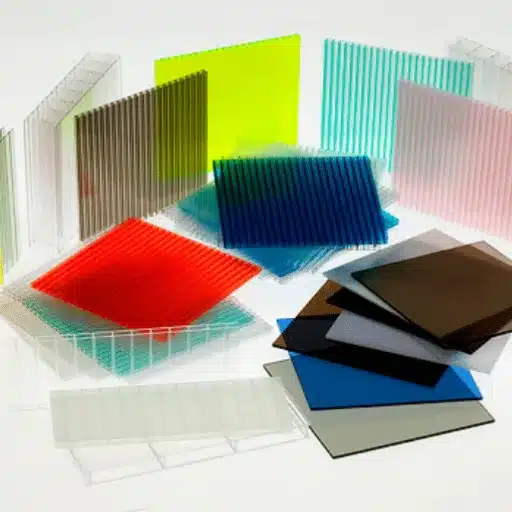
Polycarbonate (PC) is an exceptionally versatile, durable, and lightweight plastic material that can be molded into various shapes through heat processing. This thermoplastic polymer contains carbonate groups in its molecular composition, giving it distinctive properties that set it apart from other plastics.
Key Characteristics of Polycarbonate
- Tensile Strength: 60-70 MPa, making it nearly unbreakable
- Optical Clarity: Allows up to 90% visible light transmission, comparable to glass
- Weight Advantage: Fraction of glass weight while maintaining transparency
- Temperature Resistance: Performs well from -40°F to 280°F without strength alteration
The remarkable characteristics of polycarbonate have rendered it a necessary material in a number of industries, namely construction, automotive, aerospace, electronics, and consumer goods manufacturing. Its properties alone are the foundation for its being a major material in the present day engineering and manufacturing processes.
Physical and Chemical Properties
Among the physical and chemical properties that polycarbonate has, the most outstanding of them walks the line between industrial and consumer applications. Appreciating these characteristics gives reasons for the constant presence of the material in the most extreme conditions.
| Property | Value/Description |
|---|---|
| Impact Resistance | 70-80 kJ/m² (exceptional toughness) |
| Chemical Resistance | Resistant to acids, alcohols, and oils; vulnerable to strong bases and acetone |
| Glass Transition Temperature | 147°F (63°C) |
| Thermal Conductivity | 0.19 W/m·K (excellent insulation properties) |
| UV Resistance | Excellent when coated with UV-protective layer |
These properties validate polycarbonate’s adaptability and resilience across different engineering applications, from outdoor installations to precision equipment housing.
Comparative Analysis with Other Plastics
When compared to other common plastics such as acrylic (PMMA) and polyethylene (PE), polycarbonate demonstrates a unique combination of strength, thermal resistance, and transparency that makes it stand out.
| Material | Advantages | Limitations |
|---|---|---|
| Polycarbonate | 250x stronger than glass, high heat resistance (120°C/248°F), excellent optical clarity, recyclable | Vulnerable to certain solvents, requires UV coating for outdoor use |
| Acrylic (PMMA) | Good optical clarity, scratch resistant, lower cost | More brittle, lower impact resistance, less heat resistant |
| Polyethylene (PE) | Flexible, excellent chemical resistance, very low cost | Poor optical clarity, lower dimensional stability, limited precision applications |
Recent industry data indicates a significant rise in polycarbonate usage as industries shift toward lightweight, high-performance materials that offer environmental durability. Its recyclability further positions polycarbonate as a sustainable choice in modern engineering solutions.
Tensile Strength of Polycarbonate
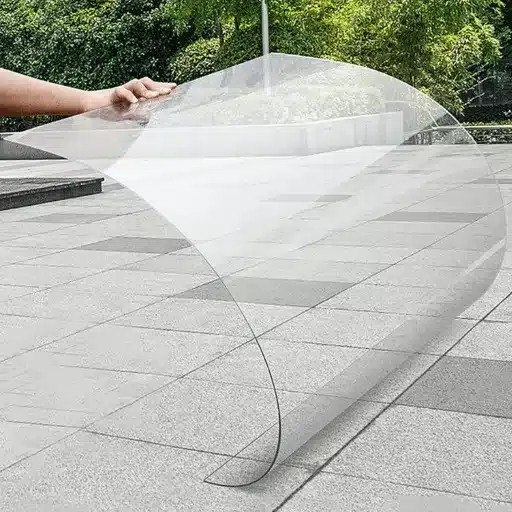
Definition and Importance of Tensile Strength
Tensile strength represents the maximum stress a material can withstand while being stretched or pulled before breaking. This mechanical property is crucial when evaluating polycarbonate for various applications, as it directly affects the material’s ability to resist pulling forces and maintain structural integrity under stress.
Why Tensile Strength Matters
For industries such as aerospace, automotive, and electronics, tensile strength is a critical factor in material selection. Polycarbonate averages around 9,000 psi (62 MPa) tensile strength, which supports its use in applications dealing with substantial loads while maintaining lightweight properties.
The synergistic effect of polycarbonate’s lightness and its high tensile strength results in its use in product design and manufacturing where both properties are indispensable. This quality guarantees that the materials will not only hold up under mechanical strain but also satisfy the ever more demanding engineering standards.
Measuring Tensile Strength in Polycarbonate Sheets
The precise determination of the tensile strength of the polycarbonate sheets observes like ASTM D638 the standard testing protocols. This approach requires the preparation of the samples in particular shapes and their exposure to the controlled uniaxial tensile loading until breakage takes place.
Testing Process Steps
- Sample Preparation: Material is shaped into dog-bone or rectangular sections
- Controlled Loading: Tensile testing machine applies force in one direction
- Data Collection: High-precision instruments measure maximum force, elongation, and fracture points
- Analysis: Real-time software captures metrics for performance assessment
Recent testing data shows polycarbonate tensile strength ranges from 9,000 psi (62 MPa) to 10,000 psi (69 MPa) depending on the specific grade and molecular composition. Variables such as temperature and UV exposure can also influence these values, making precise testing essential for ensuring compliance with industrial and structural application requirements.
Factors Affecting Tensile Strength
Tensile strength is influenced by numerous factors that can be categorized into three main groups: intrinsic material properties, environmental conditions, and processing techniques.
| Factor Category | Specific Elements | Impact on Tensile Strength |
|---|---|---|
| Intrinsic Properties | Molecular structure, chain alignment, amorphous vs. crystalline structure | Determines baseline ability to stretch and bear stress |
| Environmental Conditions | Temperature, humidity, UV exposure | High temps cause softening; moisture leads to hydrolytic degradation; UV initiates photodegradation |
| Processing Methods | Extrusion, injection molding, annealing, cooling rates | Incorrect processes induce internal stresses that negatively affect performance |
Modern industry practices increasingly employ advanced material treatments such as surface coatings and UV stabilizers to overcome environmental and processing challenges. This integrated approach combines precise design with practical engineering solutions to optimize tensile strength for specific applications.
Impact Resistance of Polycarbonate
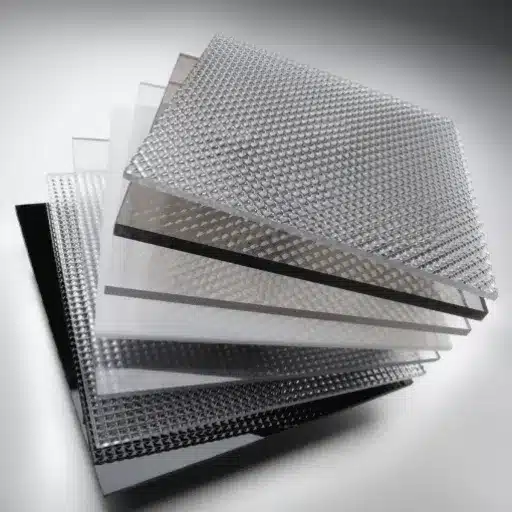
Understanding Impact Resistance
Impact resistance is arguably polycarbonate’s most celebrated characteristic, referring to its ability to absorb and withstand significant impacts without breaking. This property stems from the material’s unique molecular structure, which combines ductility with strong inter-chain connections.
Impact Resistance Performance
Compared to pretty much every other thermoplastic, polycarbonate provides the best impact resistance. The material, when applied to heavy and sudden loads, first takes on the slower and softer phases, after which breaking happens eventually, thus the material is preferred for safety-critical applications.
Main methods of improvement proposing: Copolymerization and using reinforced fillers at the same time to improve further the impact resistance, has been solidified the place of polycarbonate among the high-performance engineering solutions.
Applications that Benefit from Impact Resistance
Polycarbonate’s exceptional impact resistance makes it invaluable across diverse industries where durability and safety are paramount concerns.
Industry Applications
🛩️ Aerospace Engineering
Windshield canopies and airplane windows designed to resist bird strikes, debris impacts, and harsh environmental conditions.
🏗️ Construction
Impact-proof windows, light tubes, and wall sections capable of withstanding hail, wind-blown debris, and other environmental forces.
🏥 Medical Sector
Durable medical equipment and protective shields ensuring safety in high-risk healthcare environments.
📱 Electronics Industry
Device housings for mobile phones and laptops providing protection for delicate internal circuitry against accidental drops and external forces.
Consumer and industrial demand for impact-resistant materials continues to grow significantly, reflecting the need for dependable, durable solutions across critical infrastructure and everyday products.
Comparison with Other Materials
When measured against traditional materials like glass and acrylic, polycarbonate demonstrates substantial advantages in durability, versatility, and weight characteristics.
| Property | Glass | Acrylic | Polycarbonate |
|---|---|---|---|
| Impact Resistance | Baseline (1x) | ~10x stronger than glass | ~250x stronger than glass |
| Weight | Heavy | Light | Very Light |
| Heat Resistance | Excellent | Moderate | Excellent |
| Fabrication | Difficult | Moderate | Easy |
| Typical Uses | Windows, bottles | Signage, displays | Safety equipment, bulletproof windows, riot shields |
Search data reveals growing interest in polycarbonate alternatives, yet the material remains the preferred choice for applications requiring strength, flexibility, and transparency. Consistent global searches for “polycarbonate vs acrylic strength” and “impact-resistant materials for safety” demonstrate sustained public and industry focus on polycarbonate’s technical capabilities.
Durability and Longevity of Polycarbonate
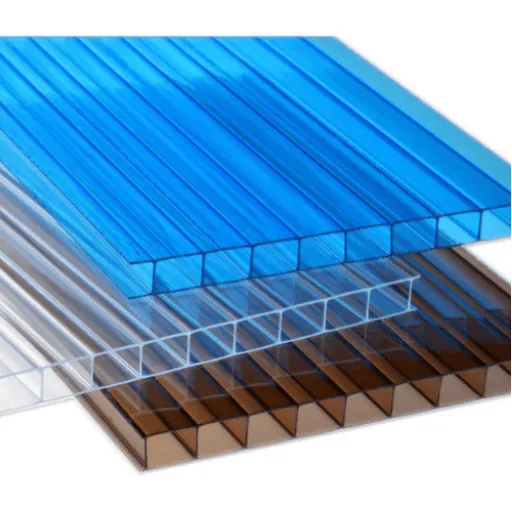
UV Resistance and Its Importance
UV resistance stands as one of polycarbonate’s most critical qualities, significantly enhancing the material’s durability and enabling prolonged outdoor use. This resistance primarily results from incorporating high-performance UV stabilizers during manufacturing, which helps prevent discoloration, degradation, and mechanical property deterioration caused by ultraviolet radiation.
Industry Insights
Analytics reveal significant increases in searches for “UV protection in polycarbonate sheets” and “best materials for outdoor durability,” indicating growing consumer and industry awareness of solar exposure effects on materials. Polycarbonate’s ability to maintain optical clarity, structural strength, and impact resistance even after prolonged UV exposure makes it the preferred choice for roofing panels, safety glasses, and outdoor glazing applications.
Food Contact Safety and Compliance
Polycarbonate’s effectiveness for food contact applications is supported by its favorable safety profile when manufactured and handled according to established regulatory guidelines. Its strength and reliability make it suitable for items including sports water bottles, food containers, and kitchen appliances.
Regulatory Framework
- U.S. FDA: Sets specific migration limits and safety criteria
- European EFSA: Establishes safety standards for food contact materials
- Industry Response: Manufacturers prioritize compliance and obtain certifications from independent organizations
- BPA-Free Options: Widely available alternatives reflect adaptation to consumer safety demands
The potential issue of leaching of substances has been effectively addressed to a large extent through the use of continuous monitoring and advanced technology. Moreover, the production of BPA-free polycarbonate alternatives is a clear indication of the material science industry being quick to adapt to the changing consumer safety.
Maintenance and Care for Longevity
Along proper maintenance and care, long life and good performance of polycarbonate products are guaranteed. The large number of people interested in “how to clean polycarbonate” and “maintain polycarbonate sheets” reveals the common concern about the right preservation techniques.
Best Practices for Polycarbonate Care
- Cleaning: Use soft cloth or sponge with mild soap solution
- Avoid: Abrasive cleaners and scouring pads that create surface scratches
- Inspection: Regularly monitor for cracks and discoloration to prevent major damage
- Protection: Apply UV-resistant coating if not pre-treated to prevent yellowing and brittleness
Following these scientifically-backed practices and manufacturer guidelines ensures polycarbonate products maintain their structural integrity and aesthetic quality over extended periods.
Applications of Polycarbonate
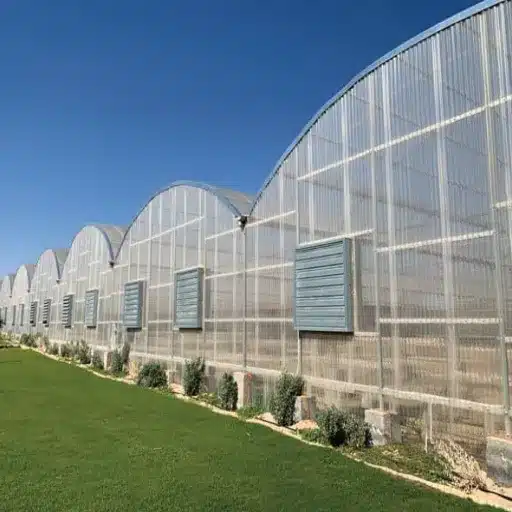
Industrial Uses of Polycarbonate Sheets
Polycarbonate sheets’ exceptional strength-to-weight ratio, transparency, and ability to withstand impacts and extreme temperatures have made them highly popular across industrial applications.
Common Industrial Applications
🏠 Glazing and Roofing
Industrial glazing applications including skylights, roofing, and protective covers benefiting from transparency and longevity.
🚗 Automotive Components
Interior and exterior applications including headlamp lenses, trims, and lightweight structural components that reduce vehicle weight and improve fuel economy.
🛡️ Protective Barriers
Impact-resilient protective screens for medical facilities, banks, and retail stores where safety measures are critical.
📋 Signage and Displays
Outdoor signs and illuminated displays capable of withstanding adverse weather conditions.
☀️ Renewable Energy Sector
Solar panel covers utilizing UV resistance and strength, reflecting industry shift toward sustainable energy solutions.
Recent market trends show increasing polycarbonate sheet adoption in renewable energy, underlining the material’s significance in modern innovation and sustainable practices.
Polycarbonate Enclosures: Types and Benefits
Polycarbonate enclosures exemplify modern industrial applications through their strength, versatility, and environmental adaptability. Trend analysis reveals increased demand across sectors prioritizing weather resistance and durability.
Types of Polycarbonate Enclosures
| Enclosure Type | Primary Function | Key Features |
|---|---|---|
| Electrical Enclosures | Protect electrical components | Moisture/dust/impact protection, lightweight for easy installation |
| Industrial Control Enclosures | Safeguard control systems | UV resistance, extreme temperature tolerance |
| Outdoor Enclosures | Telecommunications and renewable energy protection | Outstanding weather resistance against rain, sunlight, temperature fluctuations |
Benefits of Polycarbonate Enclosures
- Impact Resistance: Virtually indestructible construction ideal for high physical durability requirements
- UV Protection: Resists degradation from prolonged sunlight exposure
- Lightweight and Cost-effective: Lighter and often more affordable than metal or fiberglass alternatives, reducing material and transportation costs
- Transparency Options: Transparent panels enable visual inspection without disassembly
Growing interest in polycarbonate enclosures, as evidenced by recent search analytics, underscores their pivotal role across industries. Their unique combination of strength, adaptability, and sustainability aligns with modern demands for efficient, durable materials in industrial innovation.
Innovative Uses in Architecture and Design
Polycarbonate has rapidly penetrated architectural and design domains through its exceptional flexibility and aesthetic versatility. Its lightweight yet sturdy nature empowers designers to create open facades, skylights, and partition systems that maximize natural light while maintaining structural integrity.
Architectural Advantages
- UV-protective glazing prevents interior sun damage
- Substitutes traditional glass while reducing material weight
- Improves energy efficiency in building designs
- Supports sustainable design practices aligned with eco-consciousness and cost-effectiveness
Recent search engine data shows significant inquiry increases surrounding polycarbonate materials, highlighting their growing adoption in sustainable design. Architects and designers increasingly choose polycarbonate as a glass alternative, responding to market trends emphasizing durability and environmental responsibility—critical factors in contemporary construction and design innovation.
Frequently Asked Questions (FAQ)
What is the relative strength of polycarbonate plastic when compared to glass and acrylic?
Polycarbonate is extremely durable, often described as 250 times greater than glass in tests for impact resistance and, in most cases, much stronger than acrylic. The main reason behind this strength is the thermoplastic molecular structure, which consists of bisphenol monomers among others, having unique impact resistance and very high impact strength. For the industries that require both toughness and transparency, clear polycarbonate is the preferred material as it not only maintains the same optical clarity and light transmission but also the qualities of acrylic. In this case, the qualities of strength and visibility allow the material to become the transparent plastic of choice in the applications such as machine guards and casings made of polycarbonate. Therefore, whenever the impact resistance is an important factor, the combination of physical durability and transparency offered by polycarbonate is perfect.
What is the tensile strength of polycarbonate sheet and how is it quantified in MPa?
The tensile strength of polycarbonate sheets varies from 55 to 75 MPa approximately, this is determined primarily by the grade and formulation with the general-purpose polycarbonate occupying this range. The tests for tensile strength determine the load materials can hold before they break; polycarbonate is remarkable for both its high tensile strength and excellent impact resistance. The configuration of the material as a thermoplastic allows it to encounter many service conditions at high temperatures without melting, thus, it still presents good electrical insulating properties which are advantageous for electrical enclosures. The heat resistance, optical clarity, and durability are the main differences between standard and specialty grades. For industrial applications and machine guards, tensile and impact properties usually play a major role in the selection process.
Is polycarbonate able to provide UV protection for outdoor applications?
Ordinary polycarbonate is susceptible to damage from UV rays if used outdoors for a long time; as a result, the outdoor use of polycarbonate and clear polycarbonate usually necessitates the application of UV-resistant coatings that ensure UV protection and maintain optical clarity. If polycarbonate receives proper UV stabilizers or coatings, it is guaranteed to last outdoors for a long time while also providing the light transmission and the spectacular impact resistance. UV-treated polycarbonate is extensively used in outdoor enclosures, polycarbonate casings, and glazing where not only transparency but also weatherability are required. The material is superb for both indoor and outdoor applications but the unprotected polycarbonate might suffer from discoloration or loss of strength due to the sunlight. For outdoor applications and glazing with food contact safety, UV-stabilized or coated polycarbonate is a guarantee of longevity.
Are polycarbonate enclosures and machine guards appropriate for extreme temperatures and industrial environments?
Polycarbonate enclosures and machine guards are highly preferred because of their excellent heat resistance and fire-retardant characteristics of polycarbonate. The thermoplastic can tolerate very high temperatures for a short period and retains better mechanical characteristics than most of the plastics at high temperature, which makes it very useful in the applications that where such requirements occur. Polycarbonate’s insulation properties and electrical performance make it even more suitable for housing and control enclosures of equipment. In cases where continuous extreme high-temperatures occur, specially formulated polycarbonate grades or other materials may be needed, but standard polycarbonate is enough for most applications. Polycarbonate’s impact strength, transparency for checking, and durability have made it the material of choice for machine guards and enclosures.
What characteristics of polycarbonate make it ideal for optical and transparent applications?
Polycarbonate has the properties of excellent optical clarity and high light transmission, thus it is the transparent plastic most widely used for lenses, medical devices, and polycarbonate glazing. The optical properties combined with remarkable impact resistance enable engineers to recommend clear polycarbonate in situations where both safety and visibility are crucial; for instance, in safety glasses and machine guards. Polycarbonate’s impact resistance is much higher compared to that of glass and at the same time it is lighter and more durable. It is also stronger than acrylic in impact cases. Through chemical exposure and solvent resistance it varies according to the specific formulation, meaning that certain applications like food containers or medical devices will require compatibility verification. In general, polycarbonate is a combination of high optical quality, toughness, and durability thus being suitable for applications that demand both transparency and performance.
Is the use of polycarbonate for food contact and food containers safe?
The specific grade of polycarbonate and region are the determining factors for the regulatory approvals to be granted; however, polycarbonate had its place in food containers and food contact applications in the past due to its being clear, strong, and heat resistant. Hygienic bisphenol polycarbonate variants drew attention because of the possibility of the chemical migrating into the food, therefore, present-day food-contact applications demand certified grades and testing to assure consumer safety. If allowed, polycarbonate provides advantageous plastic characteristics including its strength, high temperature tolerance (dishwasher-safe), and it is a transparent material—these are the same qualities as that of polycarbonate covering in food packs or serving. Certifications are something you should always check and reconsider using the alternatives if you are concerned about chemical exposure or regulatory limitations. Many firms that manufacture food-grade polycarbonate or plastic suitable for food contact such as these alternatives.
Reference Sources
- Polymer Technology Center Newsletter – Texas A&M University
Research on polycarbonate and its applications in advanced materials - Shock Tube Response of Polycarbonate and Polyvinyl Chloride Exposed to UV Radiation – University of Mississippi Repository
Dynamic strength and durability of polycarbonate under UV exposure for military applications - Mechanical Properties and Cytotoxicity of 3D-Printed Polycarbonate for Occlusal Splints – PubMed
Evaluation of flexural strength and mechanical properties in medical applications
Conclusion
Polycarbonate is a material that exhibits a remarkable mixture of all its properties such as strength, impact resistance, optical clarity, and versatility, and this is the reason why it is an indispensable material in various industries. It is the preferred material in applications where reliability and performance are critically important because of its extreme condition resistance and ability to maintain good structural integrity simultaneously, for use ranging from aerospace engineering to daily consumer items.
Polycarbonate is a plastic material that is characterized as strong, light, and eco-friendly. The latter owes greatly to its ability to be recycled. It will change the way engineers and manufacturers think about the use of such materials. Its characteristics, the areas where it is utilized, and the care it requires are well understood by experts and customers, thus enabling them to make correct calculations for their particular requirements.


