





The production team at a Midwest packaging manufacturer expected that operational standards would remain consistent when 2024 brought their switch from polypropylene to HDPE for container production. The two materials share a commonality as polyolefins which require matching processing temperatures while both materials display strong protection against chemicals. The team did not expect to face the challenge of handling HDPE which produces a 2.5-3.0% higher shrinkage rate than PP which has a 1.5-2.0% shrinkage rate. This difference between the materials resulted in their first production run which created containers that exceeded size specifications while producing bases that lost their original form and showed excessive flash.
The material was not the problem. The processing parameters were. engineers need to understand that different PE injection molding applications require distinct temperature profiles together with extended cooling periods and advanced mold temperature management. PE achieves outstanding chemical protection together with minimal moisture uptake and economical manufacturing when engineers establish correct parameters. The project will result in dimensional instability together with sink marks and extended cycle times which will decrease your profit margins.
The guide demonstrates PE injection molding success through its full technical framework that includes processing requirements for HDPE and LDPE and LLDPE grades together with mold design needs and solutions for typical defects. You can access essential information through grade recommendations to make better choices when you need to evaluate new materials or fix production problems or select PE resin for your next project.
Understanding PE Injection Molding Materials

What Is Polyethylene Injection Molding?
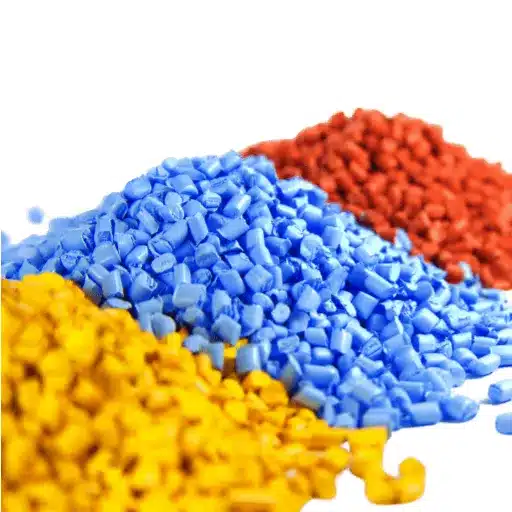
The process of polyethylene injection molding transforms PE resin pellets into finished parts through three controlled stages which involve melting the material and injecting it under pressure and then cooling it inside a precisely designed mold. PE exists as a semi-crystalline thermoplastic which contains both organized crystalline sections and unstructured non-crystalline areas throughout its molecular composition. The intrinsic properties of polyethylene emerge from its crystallinity which provides it with high chemical resistance and low moisture absorption and results in considerable shrinkage during its cooling process.
Semi-crystalline PE displays greater shrinkage during cooling compared to amorphous materials because its shrinkage pattern depends on three factors which are mold temperature and cooling rate and part thickness. Understanding this behavior is essential for mold design, dimensional control, and process optimization.
HDPE vs. LDPE vs. LLDPE: Selecting the Right Grade
Polyethylene exists in three primary structural variants, each with distinct properties that affect injection molding performance:
High-Density Polyethylene (HDPE)
HDPE has minimal branching in its polymer chains, resulting in higher crystallinity (70–80%), greater stiffness, and higher density (0.941–0.965 g/cm³). For injection molding, HDPE offers:
- Higher tensile strength and rigidity than LDPE
- Better chemical resistance to solvents and oils
- Higher melting point (130°C), requiring higher processing temperatures
- Higher shrinkage rate (2.5–3.0%) due to greater crystallinity
- Slower crystallization, requiring longer cooling cycles
Common injection molding applications for HDPE include rigid containers, caps and closures, industrial housings, and pipe fittings. Popular grades include Reliance HDPE M60075 for thin-wall molding and Sinopec HDPE 5502BN for general-purpose applications.
Low-Density Polyethylene (LDPE)
LDPE has significant long-chain branching, which disrupts crystalline packing and produces a more flexible material with lower density (0.915–0.935 g/cm³). For injection molding, LDPE offers:
- Greater flexibility and impact resistance than HDPE
- Lower processing temperatures (melt range 180–240°C)
- Faster injection molding cycles due to quicker crystallization
- Lower shrinkage rate (1.5–2.0%) than HDPE
- Better flow characteristics for thin-wall applications
LDPE is preferred for flexible components such as snap-fit closures, living hinges, gaskets, and parts requiring cold-temperature flexibility. Injection molding grades include Reliance LDPE 16MA400 and LyondellBasell LDPE grades for high-flow applications.
Linear Low-Density Polyethylene (LLDPE)
LLDPE combines the linear structure of HDPE with short-chain branching that reduces density (0.915–0.925 g/cm³) while maintaining higher tensile strength than conventional LDPE. For injection molding:
- Superior puncture and tear resistance compared to LDPE
- Higher environmental stress crack resistance (ESCR)
- Processing behavior intermediate between HDPE and LDPE
- Excellent for applications requiring both flexibility and toughness
LLDPE is increasingly specified for industrial containers, lids, and applications where long-term durability under stress is required.
Side-by-Side Material Comparison
| Property | HDPE | LDPE | LLDPE |
|---|---|---|---|
| Density (g/cm³) | 0.941–0.965 | 0.915–0.935 | 0.915–0.925 |
| Melt Temperature | 220–260°C | 180–240°C | 180–240°C |
| Tensile Strength | 25–35 MPa | 8–12 MPa | 20–30 MPa |
| Shrinkage Rate | 2.5–3.0% | 1.5–2.0% | 1.5–2.5% |
| Flexibility | Rigid | Flexible | Semi-flexible |
| Chemical Resistance | Excellent | Very Good | Very Good |
| Typical Applications | Containers, caps, fittings | Closures, hinges, gaskets | Industrial lids, durable containers |
PE Injection Molding Process Parameters

Successful PE injection molding requires precise control of temperature, pressure, and timing parameters. The following data represents typical ranges for general-purpose injection molding grades — always verify against your specific grade’s datasheet, as formulation additives (UV stabilizers, colorants, nucleating agents) can shift optimal settings.
Temperature Settings
Melt Temperature
| Grade | Recommended Range | Nozzle Setting |
|---|---|---|
| HDPE | 220–260°C | 230–270°C |
| LDPE | 180–240°C | 190–250°C |
| LLDPE | 200–240°C | 210–250°C |
The nozzle temperature should typically run 10–15°C above the front barrel zone to prevent drool while maintaining good flow. The maximum temperature limit for all polyethylene grades must not exceed 300°C because thermal degradation starts at that point, which produces aldehydes and ketones that lead to material discoloration and odor problems and weaker mechanical strength.
Barrel Zone Configuration
| Zone | HDPE | LDPE | LLDPE |
|---|---|---|---|
| Rear (Feed) | 200–220°C | 160–200°C | 180–210°C |
| Middle (Compression) | 220–240°C | 180–210°C | 200–220°C |
| Front (Metering) | 240–260°C | 200–240°C | 220–240°C |
Maintain a gradual temperature increase from rear to front. A too-hot rear zone can cause premature melting and bridging in the feed throat; a too-cool front zone can produce unmelted pellets and poor part consistency.
Mold Temperature
| Grade | Minimum | Optimal | Maximum |
|---|---|---|---|
| HDPE | 30°C | 50–70°C | 80°C |
| LDPE | 20°C | 30–50°C | 60°C |
| LLDPE | 25°C | 40–60°C | 70°C |
Mold temperature controls three important factors in the manufacturing process. The higher mold temperatures lead to a slower crystallization process which results in decreased internal stress and warpage but requires extended cycle times. For HDPE, mold temperatures below 40°C can produce parts with excessive residual stress and reduced dimensional stability.
Pressure Parameters
Injection Pressure
| Grade | Typical Range | Thin-Wall Applications |
|---|---|---|
| HDPE | 70–130 MPa | 100–150 MPa |
| LDPE | 50–100 MPa | 80–120 MPa |
| LLDPE | 80–150 MPa | 100–160 MPa |
The requirements for injection pressure depend on the design of the part and its wall thickness and flow distance. The low viscosity of PE allows for lower injection pressures when producing parts that have the same complexity as engineering plastics such as POM and PA66.
Holding Pressure
For HDPE the holding pressure should be set between 40 to 60 percent of the injection pressure while for LDPE it should be set between 30 to 50 percent. The holding phase of the process compensates for volume loss that occurs during material crystallization and cooling. The process of applying insufficient holding pressure leads to the formation of sink marks and voids while excessive holding pressure results in flash defects and higher residual stress.
Back Pressure
| Grade | Recommended Range |
|---|---|
| HDPE | 5–10 MPa |
| LDPE | 3–8 MPa |
| LLDPE | 5–10 MPa |
Keep back pressure low to moderate. Excessive back pressure generates shear heat that can degrade PE and produce gassing or discoloration. The primary function of back pressure in PE processing is ensuring homogeneous melt and consistent shot volume, not intensive mixing.
Time and Speed Settings
Injection Speed
| Application | HDPE | LDPE |
|---|---|---|
| General molding | Medium | Medium-High |
| Thin-wall | High | High |
| Thick-wall | Medium-Slow | Medium |
| Cosmetic surfaces | Medium | Medium |
Fast injection speeds improve surface finish and reduce weld line visibility but can cause jetting and burn marks if gates are undersized or venting is inadequate.
Cooling Time
| Wall Thickness | HDPE | LDPE |
|---|---|---|
| 1–2 mm | 10–20 seconds | 8–15 seconds |
| 2–4 mm | 20–40 seconds | 15–30 seconds |
| 4+ mm | 40–80 seconds | 30–60 seconds |
The cooling period serves as the most extended part of the injection molding process for polyethylene materials. The crystallization process of polyethylene requires more time for cooling than amorphous materials which can cool down to their final state. The process of ejecting parts from the mold before the core material has fully solidified leads to both warping and loss of size accuracy.
Holding Time
Hold until the gate freezes — typically 3–8 seconds depending on gate thickness. Extended holding beyond gate freeze increases cycle time without improving part quality and can introduce residual stress.
Machine and Mold Design for PE Injection Molding

Screw and Barrel Specifications
| Parameter | HDPE | LDPE |
|---|---|---|
| L/D Ratio | 20:1 to 24:1 | 18:1 to 24:1 |
| Compression Ratio | 2.5:1 to 3.5:1 | 2.0:1 to 3.0:1 |
| Screw Type | General purpose | General purpose |
| Shot Size | 40–60% of barrel capacity | 40–60% of barrel capacity |
PE does not require specialized screw designs like some engineering plastics. A general-purpose screw with moderate compression ratio and L/D ratio of 20:1 or higher provides adequate plasticizing and mixing. Avoid excessive shear by keeping screw speeds moderate (60–100 rpm).
Shrinkage and Dimensional Considerations
PE’s semi-crystalline nature produces significantly higher shrinkage than amorphous materials. This must be compensated in mold design:
Mold Shrinkage Compensation
| Grade | Shrinkage Range | Mold Cavity Scaling Factor |
|---|---|---|
| HDPE | 2.0–3.0% | 1.020–1.030 |
| LDPE | 1.5–2.5% | 1.015–1.025 |
| LLDPE | 1.5–2.5% | 1.015–1.025 |
Design mold cavities larger than the nominal part dimensions by the shrinkage factor. Note that shrinkage varies with mold temperature, wall thickness, and processing conditions — these ranges represent starting points that may require adjustment based on qualification trials.
Gate Design
| Gate Type | Application | Considerations |
|---|---|---|
| Edge gate | General purpose | Simple, reliable, good for most geometries |
| Submarine (tunnel) gate | Automatic degating | Common for PE caps and closures |
| Fan gate | Large, thin parts | Reduces shear and improves flow distribution |
| Diaphragm gate | Cylindrical parts | Concentric filling reduces weld lines |
Avoid direct sprue gating into thick sections — this concentrates heat and produces sink marks. PE’s excellent flow characteristics allow the use of smaller gates than many other materials, but ensure adequate venting to prevent burn marks from compressed air.
Venting
PE releases minimal volatiles during processing (no drying required), but air trapped in the mold cavity must escape. Standard vent depths of 0.01–0.02 mm are typically sufficient. Inadequate venting produces burn marks, incomplete fill, and poor surface finish.
Common PE Injection Molding Defects and Solutions

Warping and Dimensional Instability
Cause: Uneven cooling, excessive shrinkage variation, premature ejection
Solutions:
- Increase mold temperature uniformity (use separate core/cavity temperature control)
- Extend cooling time to ensure full crystallization before ejection
- Reduce holding pressure to minimize residual stress
- Verify mold cavity dimensions account for PE shrinkage (2–3% for HDPE)
Sink Marks and Voids
Cause: Insufficient material compensation during shrinkage, premature gate freeze
Solutions:
- Increase holding pressure and/or holding time
- Raise mold temperature to delay gate freeze
- Reduce part thickness in thick sections (core out if possible)
- Ensure adequate venting to prevent trapped air acting as a heat insulator
Flash Formation
Cause: Excessive injection or holding pressure, worn mold components, poor clamping
Solutions:
- Reduce injection pressure and verify transfer to holding phase is properly timed
- Reduce holding pressure
- Inspect mold parting lines and vents for damage or contamination
- Verify adequate clamp tonnage (minimum 30–50 kN/cm² of projected area)
Jetting (Worm Tracks)
Cause: High injection speed through small gates, material shooting across cavity before contacting mold walls
Solutions:
- Reduce injection speed or use multi-stage injection profiling
- Increase gate size or change gate location to impinge on mold surface
- Raise mold temperature to reduce melt viscosity
Burn Marks
Cause: Compressed air or degraded material trapped in cavity
Solutions:
- Improve venting at last-fill areas and weld line locations
- Reduce injection speed to minimize air compression
- Verify melt temperature is not exceeding 300°C
- Check for degraded material in barrel (black streaks, odor)
PE vs. Polypropylene: Material Selection Guide
Engineers frequently choose between PE and PP for similar applications — both are polyolefins with excellent chemical resistance and cost efficiency. Understanding the key differences enables informed material selection:
| Property | PE (HDPE) | Polypropylene (PP) |
|---|---|---|
| Melting Point | ~130°C | 160–165°C |
| Maximum Service Temp | 80–90°C | 100–120°C |
| Tensile Strength | 25–35 MPa | 30–40 MPa |
| Flexural Modulus | 1,000–1,500 MPa | 1,200–1,800 MPa |
| Impact Strength (low temp) | Excellent (-70°C) | Good (0°C) |
| Chemical Resistance | Excellent (acids, bases) | Good (sensitive to oxidizers) |
| Shrinkage Rate | 2.0–3.0% | 1.5–2.0% |
| UV Resistance | Good | Moderate (requires stabilization) |
| Cost | Lower | Low |
Choose PE Injection Molding When:
- Operating temperatures remain below 80°C
- Superior low-temperature toughness is required (outdoor applications, cold storage)
- Cost minimization is a priority
- Excellent chemical resistance to acids and bases is critical
- UV exposure without significant stabilization is expected
Choose Polypropylene When:
- Operating temperatures exceed 80°C regularly
- Higher stiffness and rigidity are required
- The application involves living hinges or snap-fit fatigue cycles
- Lower shrinkage and better dimensional stability are priorities
- Sterilization (autoclave, gamma) is required
Sourcing PE Injection Molding Grades

When you acquire PE resin for your production process material quality needs to match your established processing parameters together with your documentation requirements. The market contains both counterfeit and off-spec PE materials which result in production failures and warranty claims together with regulatory non-compliance that costs more than any financial benefits from unverified suppliers.
Major Suppliers and Grade Families
Reliance Industries (India)
Reliance is one of the largest PE producers globally, offering comprehensive injection molding grades:
- HDPE Injection Grades: M60075 (MFI 8.0, high-flow for thin walls), H050M81 (MFI 18.0 for caps and closures), 54GC016 for compression molding applications
- LDPE Injection Grades: 16MA400 (MFI 30.0 for high-flow molding and masterbatch applications)
Sinopec (China)
Sinopec produces PE grades widely used in Asian manufacturing:
- HDPE: 5502BN, Q5502BN for injection and blow molding
- LDPE: 2426H, 2426K for flexible applications and closures
LyondellBasell (Global)
LyondellBasell offers premium PE grades with consistent quality:
- Proprietary catalyst technologies producing narrow molecular weight distribution
- Extensive technical documentation and processing support
- Global availability through authorized distribution
Key Specifications to Request
When sourcing PE injection molding resin, specify these parameters to ensure material meets your process requirements:
Melt Flow Index (MFI)
| Application | HDPE MFI Range | LDPE MFI Range |
|---|---|---|
| Thin-wall containers | 20–40 g/10min | 15–30 g/10min |
| General molding | 5–15 g/10min | 5–15 g/10min |
| Heavy-wall parts | 2–8 g/10min | 2–8 g/10min |
Higher MFI values indicate lower viscosity and better flow — appropriate for thin-wall applications. Lower MFI grades provide better mechanical properties but require higher injection pressures.
Density
- HDPE: 0.941–0.965 g/cm³
- LDPE: 0.915–0.935 g/cm³
Verify density falls within the expected range for your grade specification — significant deviation may indicate off-spec material or blending with other polymers.
Certifications to Request
- FDA Compliance: 21 CFR 177.1520 for food-contact applications
- RoHS/REACH: For electronics and EU market applications
- UL94: For applications requiring flame rating documentation
Certificate of Analysis Requirements
Every shipment of PE resin should include a Certificate of Analysis specifying:
- Material grade and manufacturer
- Lot number and date of manufacture
- Melt Flow Index at standard test conditions (190°C/2.16 kg for PE)
- Density measurement
- Pass/fail against manufacturer specification
Cross-reference COA values against the manufacturer’s published datasheet. MFI values within ±10% of nominal are typically acceptable; larger deviations require investigation and may indicate off-spec material.
Grade Verification
Verify PE authenticity by confirming:
- The grade name matches the manufacturer’s published portfolio
- Lot number format follows the manufacturer’s standard pattern
- COA is issued by the manufacturer, not generated by the supplier
- Physical properties (color, pellet appearance) match your baseline
Procurement CTA: Specifying PE for Your Application
Proper PE grade selection and processing method determination needs material property assessment and application demand evaluation and supply chain assessment. The wrong grade choice — or the right grade processed incorrectly — results in dimensional instability, extended cycle times, and production inefficiencies that are entirely preventable with proper specification.
At Yifuhui, we stock HDPE and LDPE injection molding grades from Reliance, Sinopec, and other major producers with full Certificate of Analysis documentation. Our team provides application-specific grade recommendations based on your operating environment, processing method, and end-use requirements.
Trial orders start from 25 kg with FOB Shanghai as our standard export term. Each shipment contains Certificate of Analysis, MSDS, commercial invoice, and all necessary compliance documents.
Frequently Asked Questions
What is the difference between HDPE and LDPE injection molding?
The two types of plastic injection molding processes for HDPE and LDPE operate at different temperature requirements because HDPE needs higher temperatures which range from 220 to 260 degrees Celsius whereas HDPE needs Lower temperatures which range from 180 to 240 degrees Celsius. HDPE produces rigid parts which exhibit exceptional chemical resistance properties while LDPE creates flexible components which deliver superior flow performance and shorter production times.
Should PE be dried prior to the injection molding process?
The material PE requires no pre-drying process because it has minimal moisture absorption which occurs at less than 0.02% under regular conditions when the material exists in sealed storage containers. The material provides a major benefit because it does not require drying for processing unlike hygroscopic substances which need to undergo extensive drying procedures.
What is the standard mold shrinkage measurement for PE injection molding?
HDPE displays a mold shrinkage range between 2.0 and 3.0 percent whereas LDPE shows a shrinkage range of 1.5 to 2.0 percent. The values exceed the standard range because they need to be adjusted during mold cavity design for amorphous plastics which include ABS and PC which show a shrinkage range of 0.4 to 0.7 percent and 0.5 to 0.7 percent respectively. The process of shrinkage occurs more intensively when both the mold temperature and the wall thickness of the product increase.
What causes warpage in PE injection molded parts?
Warpage results from uneven cooling rates between thick and thin sections, excessive residual stress from high holding pressures, or ejecting parts before complete crystallization. The solutions include uniform mold cooling and optimized holding pressure and extended cooling times and designing uniform wall thickness where possible.
Can PE be used for food-contact applications?
Yes specific PE grades comply with FDA 21 CFR 177.1520 for food-contact applications. Both HDPE and LDPE are widely used for food containers caps and closures. Verify that your selected grade carries FDA compliance documentation and request the compliance letter from your supplier as part of your documentation package.
What is the maximum service temperature for PE injection molded parts?
HDPE has a continuous service temperature of approximately 80–90°C while LDPE is limited to approximately 60–80°C depending on load conditions. For applications that need higher temperature resistance you should consider polypropylene which operates between 100 and 120 degrees Celsius or engineering plastics which include PA66 and POM.
How do I prevent flash in PE injection molding?
The process of flash creation in injection molding results from three main factors which include excessive injection or holding pressure and worn mold parts and insufficient clamp tonnage. The process requires you to first decrease injection pressure while you schedule the transfer to the holding phase and check mold parting lines for damage and confirm that clamp tonnage meets the 30-50 kN/cm² requirement based on projected area.
What injection molding machines work best for PE?
The optimal injection molding machines for PE processing require standard general-purpose machines which use 20:1 to 24:1 L/D ratio screws. The processing of engineering plastics requires special equipment whereas this material needs only standard machinery. The machine must deliver a shot size that ranges between 40 and 60 percent of barrel capacity while it needs to provide enough clamp force based on your part design.


