




Polycarbonate panels have indeed brought about a revolution in numerous industries due to their extreme toughness, light weight, and most importantly, their ability to be used in a variety of ways. They find applications in construction, automobile, and even in regular household items which enhance the functionality and efficiency of such spaces and products. So, what is polycarbonate and why is this material so popular in so many different activities? In this article, we will discuss the most important characteristics of polycarbonate panels, mention some of the most interesting polycarbonate applications, and show how they change industries today. Whether you are a professional looking for accurate material data for your next project, or interested in current trends in technology, this book is what you are looking for.
Section 01
Introduction to Polycarbonate

What Are Polycarbonates?
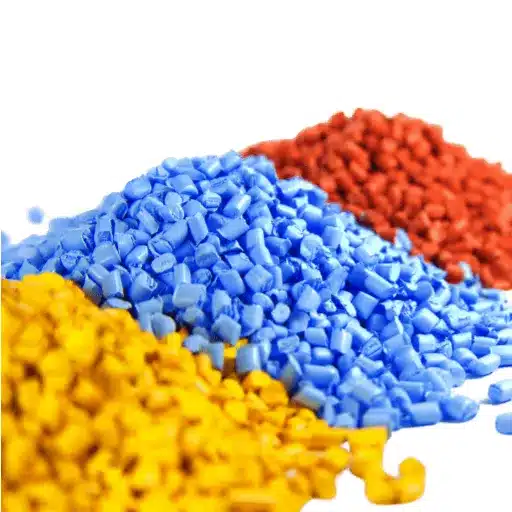
The polycarbonate is a form of plastic that is strong, light, and clear unlike the other materials since it has the strength and toughness to resist impacts. Because it is designed to be almost shatterproof, it is very often used for instances that require the use of glass or acrylic. Chemically, it is produced by polymerizing bisphenol A together with phosgene. This means that it is a very flexible material based on the fact that it can be used to form various shapes by molding and thermoforming it. In addition to that, thermal and optical properties give it an advantage in specific sectors that include engineering purposes, automotive, electronics, and even medical devices. Recent research from search engines shows the surge in the use of search clicks due to its eco-friendliness properties which means that polycarbonate can be used again once the product which is initially produced using it has served its purpose, as well as individuals tend to look for products that are manufactured in these days which are friendlier to the environment than the traditional way.
Key Properties at a Glance
- Near-shatterproof impact resistance
- Lightweight and easily moldable
- Superior optical transparency
- Excellent thermal stability
- UV & X-ray radiation resistance
- Fully recyclable thermopolymer
Proffering of Polycarbonate Plastic
Polycarbonate plastic is considered significant in various sectors based on its qualities. It is efficient in most instances, owing to the fact that these are clear plastics with a lot of strength. Safe, unbreakable glass, eye protective, self-standing glasses, these all are examples of polycarbonate applications. In addition, its transparency gives it the capability to let light pass through, much like glass, hence lenses, windows and even light fixtures are made out of this material.
As for recent search engine statistics, it has been determined that an interest in polycarbonate has also risen because of their ability to withstand temperature differentials and X-ray radiations. This property is clearly advantageous for all forms of external applications e.g. green house panels or car parts. And in context of increasing demand for sustainability, Recyclability of polycarbonate makes it “green” supportive – very suitable for any industry that seeks to lessen its eco-footprint. This coincides with the need of every producer to leverage this expectation of the customers who require materials which are robust, sustainable and technically advanced.
Why Is Polycarbonate the Most Favored Material?
The material polycarbonate is remarkable due to the characteristics it possesses that serve work in various fields. Coating, for example, polycarbonate is brittle but durable as compared to glass or any other plastic. There is information as of late that its clarity and ability to withstand blows have made it a popular selection in the manufacture of protective eyeglasses, sunhouses and other guardian window glasses, for instance. In addition to that, the material called polycarbonate does not lose its properties under drastic temperatures and ultraviolet light, which is advantageous for the performance longevity in outdoor applications. That is why the use of polycarbonate has increased in areas including the adoption of solar photo-voltaic cells also known as solar panels.
Additionally, it is becoming trendy, all thanks to its ability and that of its allies to be processed anew in a cycle, recyclability and reusability, and where the world’s focus is to improve sustainability. Now that there is a trend for customers’ ‘green’ trends means that polycarbonate components are covered by a commodified form of responsibility: the finishing material can still be modified without too significant of a performance drop, and in case of an unwanted color may be recycled. In automotive, healthcare or consumer goods applications — polycarbonate applications keep luring users for it is a contemporary material that not only dispenses novelty but also offers sustainability.
Section 02
Key Industries Utilizing Polycarbonate

Construction Sector
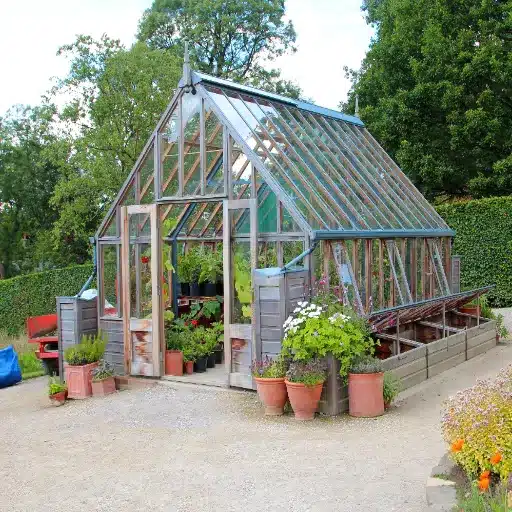
Polycarbonate has gained prominence in the construction sector as a very durable, lightweight, and transparent material. A rise in interest in polycarbonate roofing sheets and polycarbonate roofing panels from the search engine results trends has been observed. This demonstrates the rising appreciation for sturdy yet energy-efficient and weather-resistant materials. Various applications of polycarbonate are most appreciated such as when skylights, greenhouses, or sound barriers are used, and aspirants seek a material which permits light to pass through without compromising a structure. It is versatile and environmentally friendly therefore many architects and builders consider it appropriate for use in their work.
- Skylights & Roofing Panels
- Sound Barriers
- Greenhouse Structures
Automobile Industry
Polycarbonate, on the other hand, came as a breath of fresh air in the auto sector through promising the best of glass and metal without the weight and brittleness. Consequently, headlight components, sunroofs, and interior enhancements are increasingly being made from this material because of its ability to be shaped easily and its good vision capabilities. Growth in the uptake of innovative automotive designs that put more emphasis on sustainability and energy conservation is clear from the analysis of the new web searches. Polycarbonate applications address such concerns directed at the manufacturers due to its role in making vehicles lighter leading to better fuel consumption thus less pollution.
- Headlight Components
- Sunroofs & Panoramic Panels
- Interior Enhancements
Electronics & Telecom
Many people do not know that polycarbonate applications are not only limited to the automotive sector. The applications are also new and reasonable in the electronic and telecommunication industries, where a polycarbonate material is essential in the development and in the manufacture of the devices. With these food habits upsurge a new tendency for the consumption of strong, light as well as heat resistant materials for the use in the new generation of electronics and communication purposes as is evident from search trends. In this regard, polycarbonate serves the purpose of meeting these requirements providing excellent thermal properties, resilience to impacts and offering possibilities within the design stage. This guarantees the durability of the mobiles, laptops and enabling data exchange devices and the flexibility of high performance and aesthetic device design which is well appreciated amongst users. What is it about polycarbonate that has action in advancement of the electronics and telecommunication industries? It enables them to better invention of techniques by even using such materials which are easy to modify, support the environment and are at par with the requirements of the coming years.
- Mobile & Laptop Casings
- Data Exchange Devices
- Heat-Resistant Housings
Section 03
Specific Applications of Polycarbonate

Section 04
Comparison with Other Materials

Durability, efficiency, and flexibility of both materials on a comparative level must be taken into account before choosing between polycarbonate and acrylic materials. Polycarbonate is noted for its high strength as it is 250-fold greater than glass, much more than even acrylic. As such, it becomes the best material of choice for any greenhouses built in areas with extreme weather conditions where roofing is very critical. Acrylic, on the contrary, has excellent optical properties and is extremely resistant to UV light, and is more suitable for situations where it is essential to have high transparency and the material will be used for direct sunlight.
| Property | Polycarbonate | Acrylic (PMMA) | Glass |
|---|---|---|---|
| Impact Resistance | 250× Glass | ~40× Glass | Baseline |
| Optical Clarity | High | Excellent | Excellent |
| UV Resistance | Good (coated) | Excellent | Good |
| Thermal Insulation | Superior | Moderate | Low |
| Weight | Lightweight | Lightweight | Heavy |
| Recyclability | Yes | Limited | Yes |
| Relative Cost | Moderate | Lower | Moderate |
Durability as Well as Cost-Effectiveness Evaluation
When comparing polycarbonate applications to those of acrylic lens, it has been shown that robustness is increased as it is much more impact resistant and weather-proof. Polycarbonate is 250 times as strong as glass and is even more robust compare to acrylic. This therefore makes polycarbonate appropriate as a construction material for permanent structures. Furthermore, it has very durable also meaning that it will not need constant changing and as such reduces the cost.
Having said that, acrylic is generally less expensive, hence may be suitable in projects with limited budgets, primarily for aesthetic or short term purposes. However, acryl is known for its low impact resistance so while this is an advantage in some cases, its vulnerability causes it to fracture very easily, this of course comes with extra costs in terms of repairs or maintenance. Considering the higher socioeconomic status of citizens than other professions and the correlation of such a profile from search engines’ queries, the majority of people preferred the services where they pay less for the purchase or the service and the products last longer than usual such as the use of polycarbonate applications due to cost and impact resistance to sheeting conjoined with a greenhouse or construction. Energy wise it can be seen that it results optimally and economically because if integrated, it will still include polycarbonate.
Environmental Aspects
Section 05
Future Trends in Polycarbonate Applications

Progress in Polycarbonates
Lately, new development in polycarbonates has managed to incorporate features that improve its use and have the benefit of the environment as well. One that is quite conventional concerns the generation of green polycarbonate materials from bioproducts in place of nonrenewable chemical services. This type of innovation minimizes the emissions caused by the process of production and makes it possible to meet the new requirements of environmentally sustainable materials.
Yet another contemporary advancement that is close to transformational in nature that should be highlighted out is the use of nanoparticles in polycarbonate. These particles can be added to enhance characteristics such as impact resistance, UV resistance and temperature, as well as warmth substituting polycarbonates making it suitable in more polycarbonate applications such as in optic lens or new metal projects with car parts.
Furthermore, new methods of recycling namely chemical recycling methods are being developed. This way, it is possible to retrieve the monomer, called pentaerythritol, which is incorporated into polycarbonate applications, and the monomers can be effectively used to produce new products of a defined quality, its biological efficiency remaining almost the same or shortening the life cycle of materials.
In the recent analysis of search trends conducted by experts, a growing interest is in high-performance, environmentally conscious materials in the sectors of construction, automotive, and electronics. The polycarbonate applications versatility combined with the new developments provides a means of addressing the market requirements as more sustainable practices are embraced.
New Regions, New Uses of Technology
The tendency of today’s consumers to use sustainable and versatile materials such as polycarbonate has been a search trend, according to recent statistics. A large scale construction industry constitutes one of the most promising areas for polycarbonate, thanks to its high durability, clarity, and lightweight, which is perfect for making energy-saving structures, such as windows, roofs, and insulation.
The use of polycarbonate has also become a solution to reduce pollution in the automotive industry, which considers fuel efficiency by using lighter parts of the vehicle structure. In a congruent fashion, the question of the use of polycarbonate in electronics has been expanded to ensure a vibrant lightweight composition of different devices from phones to LEDs.
These trends emphasize the need for more materials that give rise to sustainability, minimize the frequency to the environment and furthermore have various features and functions. And so, it is for this reason, polycarbonate has been of great importance particularly to the new markets where innovation and environment have collided.
Sustainability Efforts in the Polycarbonate Manufacturing Industry
Producers of polycarbonates are becoming aware of circular economy concepts by implementing recycling initiatives and integrating PCR (post-consumer recycled) materials into polycarbonate applications. This discourages the use of virgin materials and decreases waste production. Furthermore, the development of technologies has enabled consumerism enhancements towards more energy efficient and less greenhouse-generating procedures. Some consider manufacturing without using phosgene processes, which is a hazardous substance, as it eliminates the toxic chemical-phosgene, is another measure against the growing threats to the environment.
Another important strategy involves the incorporation of renewable energy resources in production operations. The use of solar and wind energy in production processes goes beyond reducing carbon emissions and helps achieve carbon neutrality. In addition, the strength and recyclability of polycarbonate ensure its compatibility with aims for sustainability over the long term, in the sense that polycarbonate products tend to have longer useful lives and can be reused with ease. Such attempts towards sustainability are a manifestation of the fact that, even in this era of environmental consciousness, polycarbonate applications are worth noting.
Section 06
Frequently Asked Questions
Reference Sources
- [01]
PMC – NIH
Material Characterization and Biocompatibility of Polycarbonate Polyurethane — Discusses the mechanical properties and biocompatibility of polycarbonate for biomedical applications.
- [02]
ScienceDirect
3D Printing of Bio-Based Polycarbonate and Its Potential Applications — Explores eco-friendly applications of bio-based polycarbonate in indoor manufacturing.
- [03]
ResearchGate
Perspective of Polycarbonate Composites and Blends — A comprehensive review of polycarbonate composites, their properties, and applications.


