



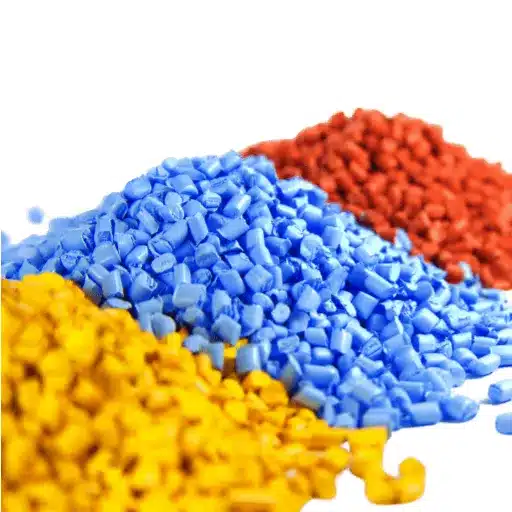


The HydroTech Pumps engineering team selected POM homopolymer as the material for their chemical transfer pump housing because they believed the material would deliver strong performance through its proven track record of toughness and ability to maintain its dimensions. The housings started to develop stress cracks which followed internal channels after they had been used in the field for six months. The failure occurred because chemical substances were not compatible with each other instead of mechanical components breaking down. The pumps operated with cleaning-in-place solutions which exceeded 11 pH because POM homopolymer could not withstand these extreme conditions. The company switched to POM copolymer, which solved their problems, but they lost a customer relationship and spent six weeks on product redesign.
The situation occurs at a higher frequency than it should. POM chemical resistance varies significantly between homopolymer and copolymer grades, and even within copolymer families, not all formulations handle the same chemical environments. Engineers who choose materials for fuel systems and pump components and valves and chemical processing equipment should know these distinctions because they determine whether their product will operate successfully or fail during testing.
The guide contains complete chemical compatibility information which enables you to use POM material specifications with full confidence. The study examines essential distinctions between POM-H and POM-C, while providing details about concentration and temperature boundaries for typical chemicals, as well as the specific branded grade specifications which Celanese, BASF, and Polyplastics offer, and the essential elements to confirm when acquiring chemically resistant POM grades from Chinese manufacturers.
What Is POM and Why Chemical Resistance Matters

POM Material Overview
POM (polyoxymethylene), which people refer to as acetal, and which manufacturers market under the names Delrin and Hostaform and Ultraform, functions as a thermoplastic material that displays semi-crystalline properties and serves as an essential component for precision mechanical parts. The material combines high stiffness, low friction, and excellent dimensional stability with resistance to many common chemicals.
The semi-crystalline structure of POM results in a molecular structure that forms a protective barrier against various organic solvents and fuels and oils. The same crystallinity that protects against solvents makes the material susceptible to damage from strong acids and bases because these substances can break down its polymer chain. The process of proper material selection requires knowledge about how materials perform in different environmental conditions, which enables professionals to identify resistant and non-resistant operating environments.
Why chemical compatibility often trumps mechanical properties:
The material exhibits perfect mechanical properties for fuel system components and chemical processing equipment and medical devices yet fails to function because it cannot endure the chemical environment. A gear with 70 MPa tensile strength provides no value if it dissolves in contact with the hydraulic fluid it is meant to handle.
The cost of chemical incompatibility extends beyond material replacement. The total costs of warranty claims and production line shutdowns and liability exposure and damaged customer relationships typically exceed the original material cost by multiple times. Testing for chemical compatibility before specification is not optional for critical applications.
POM Chemical Resistance Overview

Chemicals with Excellent Resistance
POM demonstrates broad compatibility with chemicals encountered in automotive, industrial, and consumer applications:
Hydrocarbons and Fuels
- Gasoline and diesel (including biodiesel blends)
- Engine oils and lubricating oils
- Mineral oils and greases
- Aliphatic hydrocarbons (hexane, heptane)
POM’s resistance to automotive fuels is one of its defining advantages. Both homopolymer and copolymer grades handle continuous contact with gasoline, diesel, and modern ethanol blends (E10, E85) at temperatures up to 85–100°C. This property drives POM’s dominance in fuel system components.
Alcohols
- Ethanol (including fuel-blend concentrations)
- Methanol
- Glycols (ethylene glycol, propylene glycol)
- Alcohol-based fuels and cleaning agents
While prolonged exposure to high-concentration alcohols can cause slight swelling, the effect is typically reversible when the chemical is removed. POM components maintain mechanical integrity after alcohol exposure.
Organic Solvents
- Esters and ethers
- Ketones (at moderate concentrations)
- Aldehydes
- Agricultural chemicals and pesticides
Weak Acids and Bases
- Dilute organic acids (acetic, citric)
- Weak alkalis (dilute ammonia solutions)
- pH-neutral salts and aqueous solutions
Chemicals with Poor Resistance
POM is unsuitable for contact with:
Strong Acids (pH <4)
- Sulfuric acid (all concentrations)
- Hydrochloric acid (concentrated)
- Nitric acid (all concentrations)
- Chromic acid
Strong acids catalyze hydrolysis of the acetal polymer chain, causing depolymerization and rapid loss of mechanical properties. Even brief contact with concentrated acids can cause irreversible damage.
Strong Bases and Alkalis
- Sodium hydroxide (concentrated)
- Potassium hydroxide
- Caustic soda solutions (pH >9 for POM-H, pH >13 for POM-C)
- Strong cleaning agents
Alkaline attack is particularly problematic for POM homopolymer, which degrades in environments above pH 9. POM copolymer offers better resistance but still fails in strongly caustic environments.
Oxidizing Agents
- Hydrogen peroxide (>10% concentration)
- Chlorine and chlorine water
- Ozone
- Nitric acid
Oxidizing agents attack the polymer backbone, causing chain scission and embrittlement.
Halogenated Hydrocarbons
- Chloroform
- Carbon tetrachloride
- Trichloroethylene
- Methylene chloride
These solvents can cause stress cracking and surface degradation in POM components under mechanical load.
Temperature Effects on Chemical Resistance
Chemical resistance decreases as temperature increases. Above 80°C (176°F), POM becomes susceptible to chemicals it would normally tolerate at room temperature. This temperature-chemical synergy is critical for applications like hot water systems, steam sterilization, and high-temperature chemical processing.
Key temperature thresholds:
- Room temperature (23°C): Broad chemical resistance for compatible chemicals
- Elevated temperature (60–80°C): Resistance begins declining for borderline chemicals
- Above 80°C: Significantly reduced resistance; accelerated degradation in marginal environments
POM-H vs POM-C: Chemical Resistance Comparison

The distinction between POM homopolymer (POM-H) and POM copolymer (POM-C) is the most important factor in chemical resistance selection. While both share the same base chemistry, the copolymer’s modified molecular structure creates significant differences in chemical tolerance.
Structural Differences Explained
POM Homopolymer (POM-H) consists of a single repeating unit (-CH₂O-) which exhibits a crystallinity level between 70 to 80 percent. The regular molecular structure delivers superior mechanical properties but creates vulnerability at the polymer chain ends where hydrolysis can initiate.
POM Copolymer (POM-C) incorporates a second monomer (typically 1,3-dioxolane) into the polymer chain. The process results in disrupted perfect crystallinity which creates a material with decreased mechanical strength but enhanced chemical and thermal stability.
Side-by-Side Chemical Resistance Comparison
| Chemical Environment | POM-H (Delrin) | POM-C (Hostaform) | Recommended Choice |
|---|---|---|---|
| Strong acids (pH <4) | Poor | Poor | Neither suitable |
| Strong bases (pH 9–14) | Poor | Excellent | POM-C mandatory |
| Hot water/steam >60°C | Poor | Good | POM-C preferred |
| Fuels and oils | Excellent | Very Good | Either acceptable |
| Hydrolysis resistance | To 60°C | To 85°C | POM-C for wet environments |
| Oxidative environments | Moderate | Better | POM-C preferred |
Critical Application Implications
When POM-H is still the right choice:
For applications in dry environments where mechanical properties are paramount, POM-H’s 15% higher tensile strength and stiffness may justify its use despite inferior chemical resistance. Examples include precision gears in sealed gearboxes, structural components in controlled environments, and wear parts in dry-running applications.
When POM-C is mandatory:
Any application involving alkaline exposure (pH >9), continuous hot water contact above 60°C, or chemical processing environments requires POM copolymer. This includes plumbing fixtures, pump housings for caustic fluids, components exposed to cleaning agents, and hot water system parts.
Cost-performance tradeoffs:
POM-C grades typically cost 5–15% more than equivalent POM-H grades. For chemical-exposed applications, this premium is negligible compared to the cost of field failures from material incompatibility. For dry mechanical applications, POM-H offers better value.
Detailed Chemical Compatibility Chart

The following tables provide specific compatibility ratings for common chemicals at standard concentrations and temperatures. Ratings are based on immersion testing with property retention >90% considered “Excellent,” 70–90% “Good,” and <70% “Poor/Not Recommended.”
Hydrocarbons and Fuels
| Chemical | Concentration | Temperature | POM-H Rating | POM-C Rating | Notes |
|---|---|---|---|---|---|
| Gasoline | 100% | 23°C | Excellent | Excellent | Standard automotive fuel |
| Gasoline | 100% | 60°C | Excellent | Excellent | Elevated temp fuel systems |
| Diesel | 100% | 23°C | Excellent | Excellent | Diesel engine applications |
| Biodiesel | 100% | 60°C | Good | Excellent | FAME blends per EN 14214 |
| E85 fuel | 85% ethanol | 23°C | Good | Good | Flex-fuel vehicle components |
| E85 fuel | 85% ethanol | 60°C | Fair | Good | Test before specification |
| Engine oil | 100% | 80°C | Excellent | Excellent | Motor oil, transmission fluid |
| Hydraulic oil | 100% | 60°C | Excellent | Excellent | Industrial hydraulic systems |
| Mineral oil | 100% | 23°C | Excellent | Excellent | General lubrication |
Acids
| Chemical | Concentration | Temperature | POM-H Rating | POM-C Rating | Notes |
|---|---|---|---|---|---|
| Acetic acid | 10% | 23°C | Good | Good | Dilute organic acid |
| Acetic acid | Concentrated | 23°C | Poor | Poor | Avoid concentrated acids |
| Citric acid | 10% | 23°C | Good | Good | Food processing applications |
| Hydrochloric acid | 10% | 23°C | Poor | Poor | Not recommended |
| Sulfuric acid | Any | Any | Poor | Poor | Complete incompatibility |
| Nitric acid | Any | Any | Poor | Poor | Oxidizing acid attack |
Bases and Alkalis
| Chemical | Concentration | Temperature | POM-H Rating | POM-C Rating | Notes |
|---|---|---|---|---|---|
| Sodium hydroxide | 10% | 23°C | Fair | Good | Caustic cleaning solutions |
| Sodium hydroxide | 40% | 23°C | Poor | Fair | Strong caustic |
| Ammonium hydroxide | Dilute | 23°C | Good | Good | Weak base acceptable |
| Potassium hydroxide | 10% | 23°C | Fair | Good | Alkaline batteries |
| Caustic soda | pH >11 | 60°C | Poor | Poor | Both grades fail |
Solvents and Other Chemicals
| Chemical | Concentration | Temperature | POM-H Rating | POM-C Rating | Notes |
|---|---|---|---|---|---|
| Ethanol | 95% | 23°C | Good | Good | Fuel, solvent applications |
| Methanol | 100% | 23°C | Good | Good | Fuel additive, solvent |
| Acetone | 100% | 23°C | Fair | Fair | Limited compatibility |
| Chloroform | 100% | 23°C | Poor | Poor | Halogenated solvent |
| Hydrogen peroxide | 3% | 23°C | Fair | Good | Dilute disinfectant |
| Hydrogen peroxide | >10% | 23°C | Poor | Poor | Strong oxidizer |
| Chlorine water | Dilute | 23°C | Poor | Poor | Water treatment |
Branded POM Grades for Chemical Resistance

Celanese Hostaform Series
Celanese Hostaform grades are among the most widely specified POM copolymers globally, particularly for automotive fuel system applications requiring validated chemical resistance.
| Grade | MFR (g/10min) | Key Properties | Chemical Resistance Applications |
|---|---|---|---|
| C 9021 | 2.5 | Standard grade, high rigidity | General fuel resistance, pH 4–14 |
| C 9021 XAP | 2.5 | Low emission, VDA 275 compliant | Automotive interior fuel components |
| C 9021 SW | 2.5 | Anti-friction/anti-squeak | Sliding fuel system parts |
| C 52021 | 5.0 | Easy flow | Thin-wall precision fuel components |
| C 13021 | 2.8 | High viscosity | Higher strength fuel applications |
| C 27021 | 2.7 | Fuel system optimized | Validated for E85, aggressive fuels |
Hostaform fuel resistance data:
Celanese extensively tests Hostaform grades against modern fuel formulations. Key performance data includes:
- Fuel C testing (equal volume toluene/iso-octane): Saturation reached after ~1,000 hours at 65°C with only 2.0–3.5% mass change
- CM15A testing (15% aggressive methanol fuel): Excellent tensile strength retention after 5,000 hours at 65°C
- CE22A testing (22% aggressive ethanol): Validated for worst-case ethanol exposure
- Biodiesel resistance: Confirmed compatibility with FAME blends per EN 14214
The fuel absorption process is reversible; when fuel is removed, the material returns to its original dimensions and properties. This reversible swelling behavior is critical for fuel system seals and valves that experience wet/dry cycling.
BASF Ultraform Series
BASF Ultraform grades offer validated chemical resistance with comprehensive documentation for European and global automotive specifications.
| Grade | Description | Chemical Resistance Applications |
|---|---|---|
| N2320 003 AT | Standard injection molding | General fuel and chemical resistance |
| S1320 003 AT | High stiffness/HDT | Enhanced fatigue strength vs diesel at high temps |
| N2320 0035 LEV AT | Low emission | Vehicle interior fuel components |
| N2320 0035 XLEV AT | Ultra-low emission | Premium interior applications |
| W2320 003 AT | Very easy flow | Complex fuel system geometries |
Ultraform performance characteristics:
- Biodiesel resistance: Validated at +100°C, with test data showing stability at +140°C for stabilized grades
- Alcohol fuel resistance: Good resistance to CM15,P at +60°C
- Reversible swelling: Short-chain alcohols cause slight, reversible swelling without permanent degradation
- No stress cracking: Unlike some engineering plastics, Ultraform does not exhibit stress cracking when exposed to fuels or solvents
BASF provides detailed chemical resistance guides showing compatibility ratings across hundreds of chemicals at various concentrations and temperatures. This documentation supports supplier qualification audits for OEM automotive supply chains.
Polyplastics DURACON Series
DURACON is the dominant POM brand in Asian automotive supply chains, particularly for Japanese OEM specifications.
| Grade | Key Features | Chemical Resistance Notes |
|---|---|---|
| M90-44 | Standard grade | General chemical resistance |
| M25-44 | Extrusion grade | Similar to M90-44 |
| WR-01 | Weather resistant | Enhanced for outdoor chemical exposure |
| TF-20 | PTFE-filled | Low friction + maintained chemical resistance |
| GH-25 | 25% glass-filled | Structural + chemical resistance |
DURACON grades consistently demonstrate the superior chemical resistance characteristics of POM copolymer chemistry, with documented performance in fuel contact, hot water exposure, and weak chemical environments.
Application-Specific Chemical Resistance Guidance

Automotive Fuel Systems
POM dominates fuel system component specifications due to its unique combination of fuel resistance, dimensional stability, and mechanical strength.
Recommended grades:
- Celanese Hostaform C 9021 or C 27021 for validated fuel system applications
- BASF Ultraform N2320 003 AT for general fuel contact components
- Polyplastics DURACON M90-44 for Japanese OEM supply chains
Compatible with:
- Gasoline (all standard formulations)
- Diesel and biodiesel blends
- E10, E85 ethanol blends
- Methanol fuel blends up to 15%
Temperature limits:
- Continuous operation: Up to 100°C
- Short-term exposure: Up to 120°C
Design considerations:
Alcohol-containing fuels may cause slight reversible swelling (2–4% by volume). Design fuel system components with appropriate clearances to accommodate this swelling without binding. The effect is temporary and disappears when fuel is removed.
Real-world example: A Tier 1 fuel system supplier specified Hostaform C 27021 for a new E85-compatible fuel pump housing. After 10,000 hours of accelerated fuel aging testing at 85°C, the components retained 95% of original tensile strength and showed no stress cracking or surface degradation. The material qualification report satisfied OEM requirements and the component entered production without field failures.
Pump and Valve Components
POM is widely specified for precision pump and valve components including:
- Ball valve seats and seals
- Gear pump housings and impellers
- Check valve sealing elements
- Solenoid valve bodies
- Pump bearings and bushings
Chemical environment considerations:
For water and oil-based fluids: Both POM-H and POM-C perform well. Standard grades handle hydraulic fluids, lubricating oils, and water/glycol mixtures at temperatures up to 80°C.
For caustic or acidic environments: Specify POM-C exclusively. Even weak bases (pH 9–10) will degrade POM-H over time. For strongly caustic environments (pH >12), consider alternative materials like PTFE or PPS.
For chemical processing applications: Always consult the specific chemical compatibility chart. When in doubt, request immersion testing with the actual chemical at operating conditions before specification.
Design warning: POM is notch-sensitive. Avoid sharp internal corners in valve seat designs where stress concentrations combined with chemical exposure could initiate cracks.
Food and Medical Processing
FDA-compliant POM grades are available for food-contact and medical device applications. These grades require special consideration for chemical resistance in cleaning and sterilization environments.
Cleaning chemical compatibility:
- Caustic cleaners (pH 10–12): Use POM-C only; POM-H will degrade
- Acidic cleaners (pH 3–4): Neither grade suitable; use PTFE or stainless steel
- Quaternary ammonium compounds: Both grades acceptable
- Chlorine-based sanitizers: Limited compatibility; prolonged exposure causes degradation
Sterilization limitations:
- Steam sterilization (autoclave): POM-C to 85°C; POM-H to 60°C
- Gamma sterilization: Both grades compatible
- Ethylene oxide (EtO): Both grades compatible
For medical device applications requiring frequent sterilization cycles, specify medical-grade POM-C with documented biocompatibility testing (USP Class VI).
Industrial Chemical Handling
POM is not suitable for all chemical processing applications. Understanding its limitations prevents costly mis-specifications.
When POM is appropriate:
- Fuel handling and petroleum processing
- Weak acid and base environments (pH 4–9 for POM-H; pH 4–13 for POM-C)
- Organic solvent handling (excluding halogenated solvents)
- Agricultural chemical equipment
When to specify alternatives:
- Strong acids or bases: Specify PTFE, PFA, or PVDF
- Chlorinated environments: Specify PVDF or PPS
- High-temperature chemicals (>100°C): Specify PEEK or PTFE
- Oxidizing chemicals: Specify PTFE or ceramic materials
Testing and Verification Protocols

Chemical Compatibility Testing
Before specifying POM for a critical chemical environment, validate compatibility through standardized testing:
Immersion testing per ASTM D543:
- Prepare test specimens of the specific POM grade under consideration
- Immerse in the chemical at the maximum operating temperature
- Expose for the required duration (typically 168 hours minimum; 1,000+ hours for critical applications)
- Measure property retention:
- Tensile strength (minimum 90% retention for “Excellent” rating)
- Elongation at break
- Weight change (swelling)
- Dimensional stability
Visual inspection criteria:
- Check for surface cracking, crazing, or blistering
- Examine for discoloration or chalking
- Inspect for stress cracking in mechanically loaded areas
Accelerated aging:
For applications requiring 10+ year service life, conduct accelerated aging tests at elevated temperatures. Use the Arrhenius equation to correlate accelerated test results to expected service life.
COA Verification for Chemical-Resistant Grades
When sourcing POM grades specifically for chemical resistance applications, verify the Certificate of Analysis includes:
- Grade identification: Confirm the specific grade (e.g., Hostaform C 27021, not just “Hostaform POM”)
- Melt flow index: Verify MFR matches specification for process consistency
- Lot number traceability: Ensure manufacturer batch records can be accessed if needed
- Additives confirmation: For fuel-resistant grades, confirm stabilizer package is present
- Compliance certifications: FDA, RoHS, REACH as applicable to your industry
Documentation red flags:
- Generic descriptions (“POM resin” without brand and grade)
- Missing lot numbers or manufacturer identification
- Supplier-generated COAs without manufacturer issuance
- Property values significantly outside published specifications
Sourcing POM with Verified Chemical Resistance

The Yifuhui Sourcing Advantage
For international buyers sourcing POM for chemical-exposed applications, Yifuhui provides:
- Certified branded grades: Celanese Hostaform, BASF Ultraform, and Polyplastics DURACON with full manufacturer COA documentation
- 25 kg MOQ: Trial quantities for chemical compatibility testing without volume commitment
- Application guidance: Technical support for grade selection based on chemical environment
- Port of Shanghai logistics: 7–14 day lead times to major international destinations
- Complete documentation: Every shipment includes COA, MSDS, commercial invoice, and compliance certificates
Documentation Package Requirements
Every POM shipment for chemical resistance applications should include:
- Manufacturer-issued COA: Traceable to production lot, not supplier-generated
- Material Safety Data Sheet (MSDS/SDS): For regulatory compliance and handling safety
- Commercial invoice: Specifying exact brand, grade, and lot numbers
- Compliance certificates: FDA, RoHS, REACH, UL94 as applicable to your application
For automotive fuel system applications, request fuel resistance test data from the manufacturer. Celanese provides extensive validation data for Hostaform C 27021; BASF provides similar documentation for Ultraform fuel-resistant grades.
Conclusion
The selection process requires proper grade selection because POM chemical resistance demonstrates different performance between its homopolymer and copolymer material grades. POM copolymer (POM-C) serves as the primary material for chemical environments because it provides better protection against bases, hot water and oxidative conditions while preserving the fuel and oil protection that automotive POM applications require.
For fuel system components, validated grades like Celanese Hostaform C 27021 and BASF Ultraform N2320 should be used because these materials have documented resistance to modern biofuel blends. POM-C serves as the required material for pump and valve applications that operate in either a wet environment or chemical exposure situations. POM homopolymer should be reserved for dry mechanical applications where its superior mechanical properties provide value without chemical exposure risk.
When you acquire POM from China, you need to check that your supplier provides COA documentation which manufacturers issued and that connects to every production lot. The 25 kg MOQ available from qualified distributors enables proper chemical compatibility testing before production commitment, reducing the risk of field failures from material incompatibility.
Frequently Asked Questions
Is POM resistant to gasoline and diesel fuel?
Yes. Both POM-H and POM-C offer excellent resistance to gasoline, diesel, and biodiesel blends. POM copolymer grades like Celanese Hostaform C 9021 and C 27021 are extensively validated for continuous fuel contact at temperatures up to 85–100°C. The material shows only slight, reversible swelling in fuel with no permanent degradation.
What is the difference between POM-H and POM-C chemical resistance?
POM-H (homopolymer) resists pH 4–9 and hot water to 60°C. POM-C (copolymer) resists pH 4–13 and hot water to 85°C. For alkaline environments (pH >9), hot water applications, or chemical processing equipment, POM-C is mandatory. POM-H is suitable only for dry environments or neutral pH applications.
Can POM be used with strong acids like sulfuric acid?
No. POM is incompatible with strong acids (pH <4). Sulfuric acid, hydrochloric acid, and nitric acid cause rapid hydrolysis and depolymerization. For strong acid environments, specify PTFE, PFA, or PVDF instead.
Is POM suitable for caustic soda (sodium hydroxide) environments?
POM-H is not suitable for any caustic environment (degrades above pH 9). POM-C tolerates weak caustic solutions (pH up to 13) at room temperature but should not be used for concentrated sodium hydroxide or high-temperature caustic applications. For caustic environments, consider PTFE or PPS.
What is the maximum temperature for POM in chemical environments?
Continuous service temperature for POM in chemical environments is 80–100°C depending on the specific chemical. Above 80°C, chemical resistance decreases significantly. For applications above 100°C with chemical exposure, specify PEEK or PTFE.
Can POM be used for steam sterilization?
POM-C can withstand steam sterilization up to 85°C. POM-H should not be steam sterilized above 60°C. For autoclave applications requiring higher temperatures, specify materials with better hydrolysis resistance like PPS or PEEK.
Is POM resistant to E85 ethanol fuel blends?
Yes. Validated POM-C grades like Celanese Hostaform C 27021 and BASF Ultraform fuel-resistant grades are specifically tested for E85 compatibility. These grades show excellent property retention after prolonged exposure to high-ethanol fuel blends at elevated temperatures.
How do I test POM chemical compatibility for my application?
Conduct immersion testing per ASTM D543: immerse test specimens in the actual chemical at operating temperature for the required duration (minimum 168 hours; 1,000+ hours for critical applications). Measure tensile strength retention, weight change, and dimensional stability. Visual inspection for cracking or surface degradation is also essential. Always test with the specific POM grade you intend to use, as formulations vary.


