



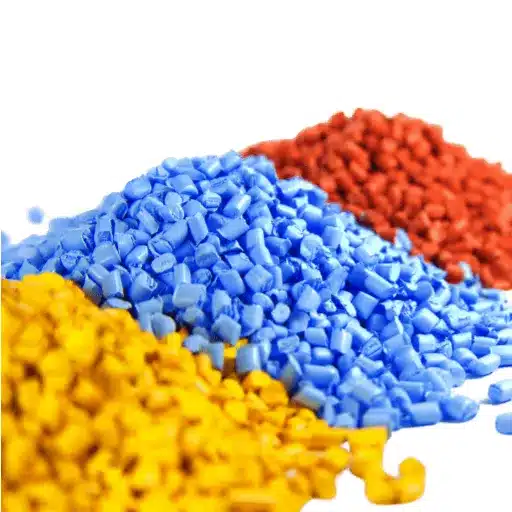


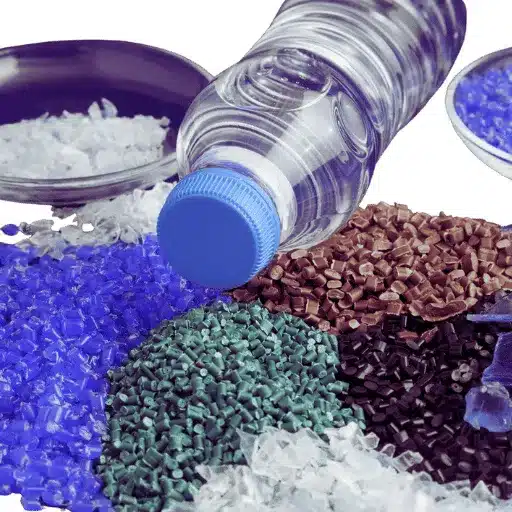
Polyethylene Terephthalate, also called PET, is a plastic that has a very important role in our lives today. It is being used for many applications like water bottles, food packaging, and even in the manufacture of fibers for clothes. The question, however, is what PET plastic really is and what are its environmental and health effects plus its role in the industry? This discussion will cover the history, uses, and controversies of PET plastic. We will discuss its advantages, drawbacks, and the measures that are being implemented for more eco-friendly solutions. This guide is for you if you are either interested in recyclable packaging or the worldwide trend of sustainable and non-toxic alternatives, as it will give you a complete view of PET and its importance.
Introduction to Polyethylene Terephthalate

What is PET Plastic?
Polyethylene Terephthalate (PET) is a type of plastic that is made from polyester and is very common in the making of plastic products, especially the packaging of drinks, food, and other consumer goods. It is a material that is light, strong, and see-through and is characterized by its excellent resistance to blows, water, and chemicals. The production of PET plastic involves a patented procedure that combines ethylene glycol and terephthalic acid and results in a quick-turnaround material that is both economical and exceedingly recyclable.
The most recent statistics indicate that PET is among the few plastic types that are recycled the most across the world, as there are already steps being taken to further boost the recycling rates and lessen the impact on the environment. The capacity of PET to undergo reprocessing and upcycling into new products endorses it as the eco-friendly option for a circular economy centered on sustainability.
History and Development of Polyethylene Terephthalate
Polyethylene Terephthalate (PET) was invented in the early 1940s by two British scientists, Whinfield, and Dickson, who worked for the Calico Printers’ Association. The chemists were trying to obtain a new polymer that had the possibility of being spun into fibers, which in turn would create a material with the characteristics of exceptional strength and flexibility. Consequently, the foundation was laid for the use of PET as a synthetic textile under the trade name “Terylene.”
The application of PET underwent an enormous expansion in the 1970s and was mainly attributed to the introduction of PET bottles to the market, which changed the packaging industry on account of their lightness, durability, and great barrier properties to gas and moisture. Nowadays, the combination of PET technology development and the increased global focus on sustainability still leads to efficiency recycling method creation. According to the latest data, PET remains the topmost recycled thermoplastic material worldwide, and in some regions like Europe and North America, the recycling rate has even gone beyond 50%. These endeavors highlight the crucial part the material plays in fostering a circular economy and waste reduction.
Overview of Polymer Science
Polymer science is concerned with the examination of the structure, properties, and uses of polymers, which are massive molecules made up of numerous repeating structural units. Such materials are indispensable in modern industries, from packaging to construction, because of their flexibility and reliability. One of the latest trends in the sector is the development of environmentally friendly polymers and the improvement in recycling to countermeasures against pollution.
According to the most recent report, the plastics like polyethylene terephthalate (PET) for example, are the most recycled materials and the recycling rates in the regions like Europe and North America are more than 50%. The research and development of polymer recycling technologies are still continuing, the method of chemical depolymerization being one of them, which is used for recovering monomers that can then be used for new material production. These progressions illustrate the standpoint of polymer science that is to harmonize functionality with sustainability and also to be a part of the global shift towards a circular economy.
Properties of Polyethylene Terephthalate
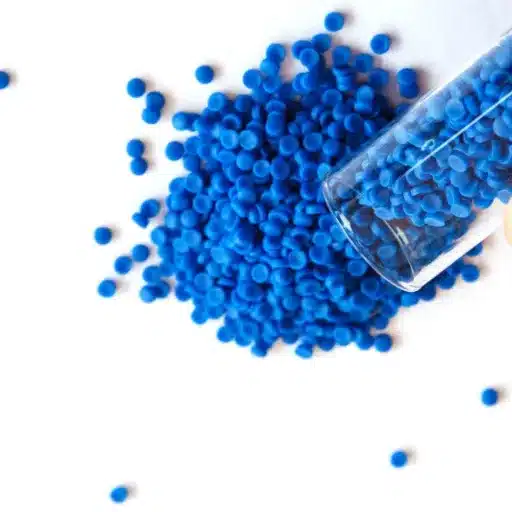
Chemical Composition of PET
Polyethylene terephthalate (PET) is a thermoplastic polymer that is mostly made up of alternating units of the two life-giving substances, ethylene glycol, and terephthalic acid. This is the long chain of units made of ester groups (-COO-) that connect the monomers sterilized by the polymer not in its starting formula ([C10H8O4]n) but through a long chain of units made of ester groups (-COO-) that monomers. This polymer has the unique property of being very strong and at the same time being able to hold up moisture, because its semi-crystalline structure gives it the combination of these two opposite features.
Key Statistics
- Approximately 60% of the world’s PET production goes to making synthetic fibers
- The remaining production is primarily used for packaging, especially food and beverages
- Research continues into bio-based alternatives for terephthalic acid in PET production
Physical Properties of PET Plastic
Polyethylene terephthalate (PET) displays a combination of physical properties that is very rarely seen in the case of other materials, which are majorly due to its very wide range of applications. It is a light-weight yet heavy-duty material with superb dimensional stability, which enables it to bear mechanical strains and still retain its shape. The other major aspect of PET is that it has excellent transparency which is one of the main reasons it finds its way into the packaging of items for which visibility is a factor.
Moreover, its impermeability to moisture, chemicals, and environmental factors renders it durable, and thus, also fits into the category of materials for storage of food and beverages. Furthermore, PET can withstand rather high temperatures due to its high melting point of approximately 250°C (482°F), thus it is also suitable for heat-intensive processes.
Quite recently the barrier properties of PET have been improved such that it is now even more resistant to the permeability of oxygen and carbon dioxide than it was earlier; this done through new formulations. This further allows the plastic to successfully retain the freshness of the goods. Besides, the developments in recyclability continue to invigorate the market for PET; thus it remains a key material in the transition towards eco-friendly product packaging solutions.
Thermal and Mechanical Properties
The thermal stability of PET is so high, it forms glass at around 67°C (153°F) and melts at about 260°C (500°F). This quality makes it an excellent choice for applications that require the use of plastic over a wide temperature range. PET shows high tensile strength, i.e., it can be subjected to a lot of stress without getting deformed. Its combination of hardness and softness gives it a wide field of application in packaging and industry.
| Property | Value |
|---|---|
| Glass Transition Temperature | ~67°C (153°F) |
| Melting Point | ~260°C (500°F) |
| Tensile Strength | High (resists deformation under stress) |
| Impact Resistance | Enhanced through modern formulations |
Developments in PET formulations have even more increased the mechanical toughness of this material mainly in terms of impact resistance and elongation to break. Thus, these improvements confirm the identity of PET as versatile and strong material, especially in the case of demanding applications like containers for beverages and components in the automotive industry. Besides, the plastic’s ability to withstand repeated mechanical loads without alterations in performance puts it in the spotlight as one of the best performing materials in today’s engineering solutions.
Uses of PET Plastic
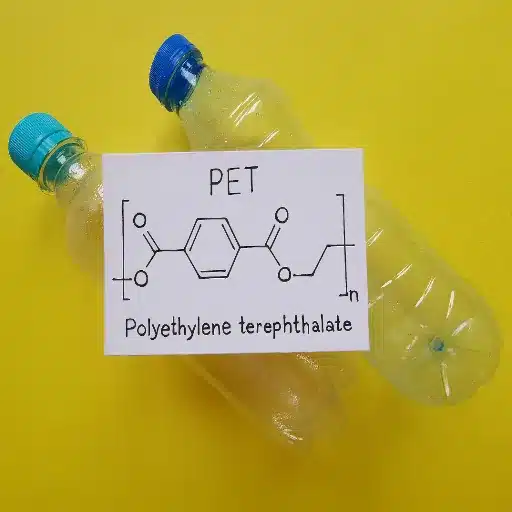
Applications in Packaging
PET plastic has won over the packaging industry as the number one material choice for its lightness, strength, and great barrier properties. Other areas of application are to name a few: plastic beverage and cosmetic containers, and packing food for retail, and all these for a longer time because of PET, which does not allow moisture, oxygen, and foreign substances to come in, thus securing the product and prolonging its shelf life. Eventually, PET’s transparency made it possible for the consumer to be clearly shown what was inside which in fact added to the attractiveness of the product to the consumer.
Recycling Update
The most recent data indicate that the adoption of eco-friendly practices along with the consumers’ demand led to the development of the PET recycling technology and with it about 29.1% of PET bottles and jars were recycled in the USA according to the latest statistics. The increasing emphasis on recycling has given the recognition of the importance of PET not only in efficient packaging but also in the contribution towards the initiatives of a circular economy.
Industrial Uses of PET
PET (Polyethylene Terephthalate) finds its way in the majority of industry sectors due to thrice its main properties, basically, resistance to the roughest conditions, being lightweight, and being recyclable. However, the beverage and food industry is the one that is giving the biggest share of the demand for PET applications where it is mainly used as a drink and food safe material in such product packaging as mineral water bottles, carbonated drinks bottles, and food containers. Its chemical resistance and the ability to keep the contents fresh make it the best choice.
Key Industrial Applications
- Beverage & Food Industry: Mineral water bottles, carbonated drink containers, food packaging
- Textile Industry: Polyester fibers for apparel, upholstery, and industrial fabrics
- Automotive Industry: Lightweight components for fuel-efficient vehicles
- 3D Printing: Material choice for its toughness and flexibility
Consumer Products Made from PET
PET is one of the most popular materials for the production of basic everyday consumer goods due to its properties like versatility, durability, and recyclability. Besides, consumer medical plastic bottles for water, soft drinks, and other beverages are among the main applications the industry has to make. Apart from beverages, PET finds its practical use in the food industry where it is not allowed to come in contact with the product, as in jars for peanut butter or prepared meal containers. Its combination of transparency and strength renders it more than ideal for protecting product integrity while allowing visibility at the same time.
Apart from the above, PET is a must-have material in the textile market where it is extensively used. The process is called recycling, during which PET bottles and containers are not just simply thrown away, but they are turned into polyester fibers that are soft and light and therefore are in great demand for being used in clothing, backpacks, and carpets, and furnishing items like curtains and upholstery. Moreover, PET’s feature of being soft and pliable enables it to be more flexible in the personal care industry, for example, in the case of shampoo bottles, cosmetic containers, and hand sanitizers where PET is used for packaging.
The source of the recent information on PET’s adaptability points to its innovative use as 3D printing material, light automotive components, and even housing for electronic devices. This wide-ranging application not only emphasizes its usefulness and significance in various industries but also its role in modern sustainable practices through recycling and efficient material use.
Recycling and Environmental Impact of PET
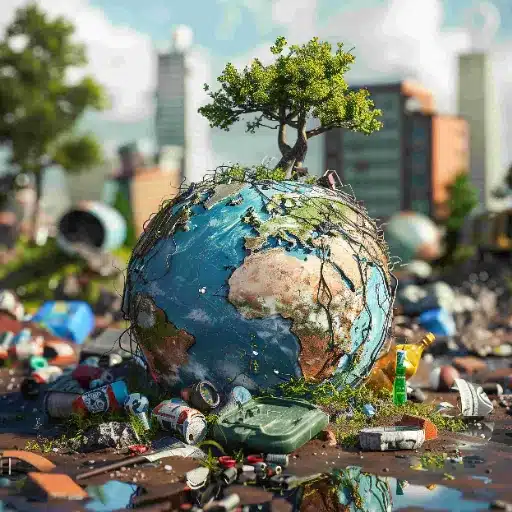
Recycling Processes for PET Plastic
PET plastic recycling is a procedure consisting of stages that are environmentally friendly with great material recovery opportunities and waste reduction. The recycling process starts with collecting and sorting the PET bottles and containers. Nowadays, the use of advanced sorting systems, such as near-infrared (NIR) scanners, has become the norm in the PET separation process from other plastics and impurities, gaining high accuracy in this regard. Once those materials are sorted, the washed PET gets rid of labels, adhesives, and the small quantity of the content that might still be there. The next thing is that the plastic is cut into small flakes and then thoroughly cleaned to confirm that there is no contamination.
PET Recycling Methods
1. Mechanical Recycling
The plastic is heated and remolded to make new products, such as textile fibers, food-grade containers for the plastic industry, or packaging materials.
2. Chemical Recycling
This approach decomposes PET back to its original monomers (terephthalic acid and ethylene glycol), which can then be used for manufacturing new PET with the same quality as the first time.
According to the latest studies, big gains in global PET recycling rates have been made, particularly in countries where modern collection systems and recycling regulations are in place. For instance, in 2022 Europe had a PET bottle collection rate of roughly 62%, which is a clear indicator of the positive contribution by the recycling schemes. So besides the evident benefits of recycling in terms of materials, it also heavily influences the reduction of carbon footprints at production of new PET materials in a manner that indicates recycling as one of the main forces behind sustainability.
Environmental Benefits of Recycling PET
There is no denying that recycling of PET (Polyethylene Terephthalate) has amazing positive impacts on the environment, especially when the latest data are taken into account. Latest reports indicate that if PET was not recycled it could be responsible for greenhouse gases emissions of 30% more compared to the virgin PET case. The emission reduction is the direct climate change control because it brings down the carbon footprint which is related to the whole process starting from raw material extraction, and then their processing till the production of the end product.
| Environmental Benefit | Impact |
|---|---|
| Greenhouse Gas Emissions | 30% reduction compared to virgin PET |
| Resource Conservation | Saves petroleum and natural gas |
| Waste Reduction | Reduces plastic in landfills and oceans |
| Wildlife Protection | Minimizes negative effects on ecosystems |
Moreover, recycling PET saves up the consumption of non-renewable resources, i.e., petroleum and natural gas, which are the main raw materials for producing new plastic. This also results in a significant reduction in the volume of plastic waste that usually finds its way to landfills and the sea thus reducing one of the major environmental concerns, i.e., plastic pollution, along with its negative effects on animals and ecosystems. Recycling can be made more efficient, thus encouraging enviro-friendly practices worldwide, by upgrading collection systems and recycling technology.
Challenges in PET Recycling
Even though recycling of PET has multiple advantages, it still goes through a rough time with a few factors that impede its circulation and efficacy right by the overlapped challenges. The biggest challenge is contamination since even a slight amount of wrongly disposed waste or food residue could significantly lower the quality of recycled PET (rPET) and consequently make it unsuitable for the upscale market. Furthermore, the collecting, sorting, and cleaning procedures for PET waste are often more expensive than the production of virgin plastic materials, in this regard recycling turns out to be economically unfriendly in some parts of the world.
Critical Challenge
Additionally, the global PET recycling situation report indicates that the area of recycling has not improved that much. For example, only about 20–30% of all PET produced worldwide is allowed to reincarnate as new products, while the rest is taking up space in dumps or is dispersed throughout nature. The lacking recycling infrastructure especially in the developing parts of the world worsens this situation because the cities and towns in those regions do not have any recycling plants or even proper waste management systems.
The solutions might not be immediate but would require concerted efforts through continuously investing in recycling technologies, making the public aware through campaigns, and permitting regulations that support proper disposal and recycling of PET. Besides, having a global perspective that regards sustainability as a priority will be a great help, as it would lead to gradually bringing about even more efficient solutions.
Emerging Trends in the PET Industry

Recent Innovations in PET Production
Over the past few years, the PET (Polyethylene Terephthalate) industry has made a remarkable progress in molding by use of technologies that are environmentally friendly. The recycling methods modification, chemical recycling for example, is one major enhancement in the industry. Chemical recycling means that PET is being broken down to its monomers for further production of new plastic materials that are of very good quality. The method cuts down on waste and at the same time it reduces the demand for raw materials.
Another glorious practice is that the industry launched its first bio-based product, which is derived from nature’s resources, like sugarcane. The new bio-based PET can withstand all the hardships and be as flexible as its counterpart, but at a lesser carbon cost. Global corporations are putting their money into discovering ways of making bio-based PET more affordable and technically perfect.
Innovation Highlights
- Chemical Recycling: Breaks down PET to monomers for high-quality new plastic production
- Bio-based PET: Derived from renewable resources like sugarcane with reduced carbon footprint
- Lightweight Materials: Creates stronger, thinner containers with less material input and reduced transport emissions
In addition, the use of light-weight materials in PET production has been steadily rising and it has given a great boost to making the strongest and the thinnest containers having least material input and finally the lessened emission of transport. When all the eco-friendly packaging data and technologies revealed along with the growing consumer demand are considered together, they clearly show that the PET industry is moving positively towards a more sustainable future.
Market Trends and Future Outlook
The PET industry has a coalescence of consumer demand and the very innovations that have been supplying it with new ideas at every step of its journey. It appears to be a trend in search engines that eco-friendly packaging and recyclable materials are receiving a lot of attention, which is an indication that public awareness about environmental issues is increasing. Today’s customers want nothing more than to deal with the brands that have the same environmental concerns as they have and this is why companies have to put their sustainability efforts upfront in their products.
The transition to lightweight materials and plant-based resources is expected to pick up speed since the companies need to comply with strict environmental regulations and the goals they set for themselves in their corporate sustainability plans. Information indicates that the sectors such as food and drink, personal care, and pharmaceuticals are the major users of sustainable PET packaging; in fact, they have already recognized the advantages of it as their diverse applications have proven its versatility and efficiency in all types of industries. In the near future, the PET industry will probably continue to work on taking Bio-Bound PET technology to the next level and at the same time, it will also be increasing recycling infrastructure which is important for keeping PET a key material in the circular economy.
Insights from Industry Experts
The industry experts see that the eco-friendly PET packaging future will depend on a co-operative approach among different people/sections of the value chain. The latest statistics published by ‘s search engine trends show that consumers are developing a strong interest in eco-friendly materials like recycled and bio-based PET. This is in accordance with the experts’ assertions that the public is becoming more knowledgeable and is thus capable of asking for sustainable packaging solutions. So, the question is, what are the ways in which businesses can assure that these solutions are scalable? The reply is through, advancing recycling technology investments, creating durable manufacturing and environmental organization relationships, and teaching consumers about recycling best practices. Focusing on these areas will enable the industry to satisfy consumer demands and at the same time meet global sustainability goals while also reaping economic benefits.
Frequently Asked Questions (FAQ)
What is polyethylene terephthalate (polyester) and how is it abbreviated?
Polyethylene terephthalate, commonly referred to as PET or PETE, is a polyester polymer obtained by both the reaction of ethylene glycol with dimethyl terephthalate or the direct esterification of terephthalic acid. PET is a material widely used in the packaging of beverages like soft drinks and water due to its excellent moisture barrier characteristics and transparency. The material is somewhat hygroscopic, which means that the moisture contained in the bottles or the one stored in the bottles can influence processing if not controlled. A polyester product similar to PET is Polyethylene terephthalate glycol-modified (PETG), which has different machining and thermoforming performance. PET is heavy metal-free and is frequently used when safety in food contact is an important requirement as well as in medical applications where certain standards are met.
How can one recycle pet polyethylene terephthalate and does pet can be recycled effectively?
There are two basic methods of PET recycling, namely mechanical and chemical, through which the used plastic bottles and pet films are gathered, washed, and then pelletized or shredded into flakes to be converted into new plastic resin or feedstock for other materials or new products made of rPET. The output from mechanical recycling includes recycled PET material fit for packaging and textile applications such as pet fiber and pet fibres, while the output from chemical recycling can be monomers like ethylene terephthalate going back for polymer making.
The issue of recyclability of PET comes from sorting, contamination, and presence of additives; however, there are tons of PET being collected around the world, and a lot of pet bottles used for making rPET packaging. Recycled PET can be processed to make new pet resin, rPET bottles, or clothing fibers. The reuse of PET in closed-loop systems greatly enhances the ability of PET to reduce crude oil feedstock demand by replacing virgin PET sourced from petrochemicals.
What are the physical properties and properties of polyethylene terephthalate that matter for packaging?
The combined strength, puncture resistance along with electrical isolation is the main consideration for packing in producing the versatility of packaging polymer. The material gives a good compromise of being rigid and tough, while its different forms, that is, amorphous PET and semi-crystalline, on one hand influence clarity and barrier performance depending on the method of manufacture and treatment with heat. The moisture barrier properties of PET have been rated as the strongest when compared to other plastics, even though the barrier against oxygen might need the application of coatings or the use of multi-layered constructions in order to prolong shelf life.
UV or high temperature induced degradation of PET can be dealt with through the use of stabilizers, and PET is a popular choice because it does not lose its dimensional stability and properties even after a long period of storage. The manufacturers relying on such physical properties help in designing plastic packaging for contact-safe and drink bottling applications such as in the case of soft drinks and water.
What are common pet grades and how is pet used across different applications?
Pet has multiple grades depending on the applications: bottle-grade, fiber-grade, and film-grade for bottles, textiles, and packaging respectively. The grades of PET differ in terms of intrinsic viscosity, additives, and crystallization behavior, for example, while high-viscosity grades are used for polyester yarn, clarified amorphous PET may be used for the application of packaging. The different applications for PET include among others beverage bottles, packaging, medical devices, and electrical insulation; some pet grades are specifically designed with heat resistance or recycling ease in mind.
While pet is mainly produced from petrochemical feedstocks, there are also ways to make it from recycled PET thus avoiding the use of crude oil and environmental impacts. Selecting the right pet grade is important because it guarantees that the material will perform up to expectations and meet regulatory standards for being safe.
Is PET polyethylene terephthalate safe for food and medical applications, and what about biodegradation?
In general, PET is recognized as a plastic that is safe for food contact if it is processed and handled according to the regulatory guidelines, and many bottled products rely on bringing this attribute to those products because it does not contain bisphenol-A and provides a clean inert surface. The use of PET in medical applications received regulatory approval for specific formulations and processing such as sterile packaging and some devices, but it is critical to validate specific grades and sterilization methodologies for safe use.
The degradation of polyethylene terephthalate is a very slow process under environmental conditions, therefore, it is not very common to find the degradation of PET in nature; thus recycling and proper waste management are important. Sustainability discussions often refer to comparisons between PLA and PET, though PET has an edge in terms of recyclability and barrier performance for packaging applications. Compliance with food safety regulations and certification always guarantees that pet is safe for contact with consumables.
Reference Sources
ScienceDirect – Polyethylene Terephthalate (PET) Recycling: A Review
This study explores advancements in PET recycling technologies, addressing knowledge gaps and showcasing innovative solutions.
Polyethylene Terephthalate (PET) Recycling: A Review – ScienceDirect →
Wiley Online Library – Recycling of Polyethylene Terephthalate Wastes: A Review
This review covers various technologies developed for recycling PET wastes and the common routes for recycled PET (rPET).
Recycling of Polyethylene Terephthalate Wastes – Wiley Online Library →
NC State College of Engineering – PET Predators
This article discusses the use of PET in food and beverage packaging, emphasizing its lightweight nature and protective properties.


