



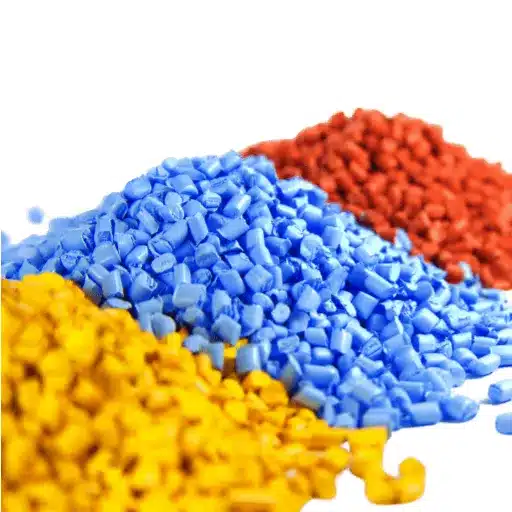


Modern manufacturing relies on precision machining because it serves as an essential element of production. The preferred method for producing durable high-performance plastic parts requires manufacturers to use CNC technology to machine POM (Polyoxymethylene) materials. POM engineering plastic shows excellent dimensional stability and wear resistance properties along with low friction which makes it suitable for use in automotive, electronics, and healthcare industries. This article examines CNC machining methods for POM which show the material’s suitability for plastic parts because advanced machining techniques deliver better results. This guide provides essential knowledge about POM machining which benefits manufacturers and designers who want to learn about material potential.
Introduction to POM and Its Uses

What is POM Plastic?
Polyoxymethylene (POM), also known as acetal or polyacetal, is a high-performance engineering thermoplastic which scientists recognize for its outstanding mechanical characteristics and ability to maintain its shape under changing conditions. The crystalline polymer POM demonstrates exceptional stiffness together with decreased friction properties and outstanding wear resistance which makes it suitable for manufacturing precision components with complicated designs.
POM Material Classifications
The two main types of POM plastics include homopolymer POM-H and copolymer POM-C:
- Homopolymer POM-H: Generally offers higher strength and rigidity for demanding applications
- Copolymer POM-C: Provides improved thermal stability and resistance to hydrolysis
- Low Friction Properties: Facilitates operation in moving parts with minimal wear
- Chemical Resistance: Extends lifespan in demanding applications with solvent exposure
The material’s machinability provides an additional advantage which drives its use across various industries, including automotive, electronics, consumer goods, and medical devices.
Applications of POM in Various Industries
Polyoxymethylene (POM) functions as an essential material across multiple sectors because it provides high mechanical strength together with dimensional stability and outstanding wear resistance.
Automotive Industry
POM serves as a crucial material in automotive production for making exact parts including fuel system elements, gears, fasteners, and seatbelt systems. The product proves essential for its ability to endure friction while blocking fuel leakage and preserving original dimensions when exposed to different temperature conditions. The current trend toward making vehicles lighter has increased its use because POM delivers necessary strength while being much lighter than metal materials.
Electronics and Electrical Industry
POM serves as a major material for making connectors, switches, and small gears which electronic devices require because of its outstanding insulation capabilities and full electrical conductivity resistance. The material shows exceptional durability together with thermal stability, which benefits electronic components that undergo continuous heat and friction exposure.
Medical Industry
POM functions as a vital material for making medical devices and instruments, including inhalers, insulin pens, and surgical tools, due to its ability to work with the human body and its ability to resist environmental elements. The material provides exceptional performance for medical applications because it can endure multiple cleaning processes which involve contact with sterilizing substances.
Consumer Goods
POM provides strength to various household items for personal grooming because of its durability while keeping an attractive appearance, making it suitable for products like zippers, kitchen utensils, and toothbrushes. The material delivers strong protection together with high wear resistance which enables products to withstand extended use.
Industrial Machinery
POM serves as an ideal material for industrial machinery because its self-lubricating properties make it usable in gears, bearings, and conveyor belt parts. The properties of the material decrease maintenance demands while increasing machinery capabilities to operate in intense weight conditions.
Future Developments
POM will continue to serve as a preferred material for industrial applications which require advanced engineering plastics because their demand keeps increasing. Recent studies show that developments in reinforced POM composite materials have broadened their usage range by solving two main issues: obtaining improved thermal protection and achieving better environmental sustainability.
Overview of Delrin and Its Properties
Delrin functions as a registered trademark for polyoxymethylene (POM) resin which DuPont produces and is known for its outstanding mechanical functions and capacity to perform in demanding use situations. The material exists as a high-strength crystalline thermoplastic that construction experts recognize for its ability to withstand extreme conditions and its minimal friction and high precision dimensional stability.
| Property Category | Delrin Characteristics |
|---|---|
| Mechanical Strength | High-strength crystalline thermoplastic with ability to withstand extreme conditions |
| Friction Performance | Minimal friction coefficient enabling precision performance in high-wear applications |
| Dimensional Stability | High precision stability suitable for components requiring exact specifications |
| Chemical Resistance | Maintains usefulness in rigorous applications including automotive fuel systems and medical devices |
| Stress Cycle Endurance | Capacity to endure multiple stress cycles without degradation |
Sustainability Innovations
Recent advancements indicate that Delrin’s application scope continues to broaden as industries seek sustainable solutions. Latest information shows that glass-filled Delrin and other composite material combinations are enhancing the material through innovations which improve both thermal resistance and environmental sustainability. Current efforts focus on developing techniques to improve Delrin’s environmental sustainability through its recyclability and lower carbon emission levels during production processes.
Understanding the Machinability of POM

Mechanical Properties of POM
The outstanding mechanical characteristics of polyoxymethylene operate as the key factor which makes this material suitable for high-precision applications. The material possesses high tensile strength together with stiffness properties, which enable its structural components to withstand heavy mechanical forces without experiencing damage.
Key Mechanical Properties
- Wear Resistance & Low Friction: The material displays exceptional performance which makes it suitable for applications that require continuous movement and sliding contact with gears and bearings and conveyor belts
- Dimensional Stability: The material demonstrates superior ability to maintain its original shape under both thermal and environmental conditions
- Temperature Range: The equipment can operate across a broad temperature spectrum which extends from -40°C to 120°C, thus making it suitable for various industrial uses
- Fatigue Resistance: The material demonstrates strong resistance which allows components to function properly during repeated load testing
- Chemical Endurance: The material shows increased resistance capacity because it can resist damage from moisture and solvent contact and chemical substance exposure.
Why Choose POM for Machining?
POM functions as a preferred machining material because it provides multiple benefits, including advantageous mechanical properties, simple processing methods, and economical pricing.
Machining Advantages
- Low Friction Coefficient: Combined with high dimensional stability makes it excellent for manufacturing precision parts including gears, bearings, and bushings
- Excellent Machinability: Enables operators to achieve precise cutting results while minimizing tool wear during production activities
- Tight Tolerance Specifications: Recent data shows industries requiring tight tolerances have increased demand for POM materials, particularly in automotive, aerospace, and consumer electronics sectors
- Environmental Resistance: The system shows moisture protection and chemical defense capabilities which help the machined elements maintain their structural strength during extreme operational conditions.
- Cost-Effectiveness: The system helps manufacturers to produce higher quality surfaces while reducing their production costs.
Comparison with Other Plastics: Acetal vs POM
Acetal, which people commonly refer to as Polyoxymethylene (POM), serves as a thermoplastic material that belongs to the engineering plastics category because of its superior mechanical characteristics. The terms “Acetal” and “POM” exist as commonly used synonyms, yet people need to understand their actual meaning.
| Material Type | Key Characteristics | Ideal Applications |
|---|---|---|
| POM Homopolymer (Delrin®) | Increased mechanical strength and rigidity due to crystalline structure | Gears, precision components requiring tensile strength and hardness |
| POM Copolymer | Better thermal stability and hydrolysis resistance | Plumbing components, automotive fuel systems requiring high temperature and humidity durability |
Selection Criteria: Recent data highlights that selecting between acetal homopolymer and copolymer depends on application-specific requirements. Engineers need to study the specific differences between the two versions because both products display low friction coefficients and excellent machinability, allowing them to choose materials that will perform best in their specific industrial applications.
The CNC Machining Process for POM

CNC Machine Preparation Process for POM Machining Operations
CNC machine setup for POM Polyoxymethylene machining process functions as an essential operation which guarantees both precise results and efficient work throughout the entire process.
1
Cutting Tool Selection
Selection of appropriate cutting tools forms the first step which requires verification of their sharpness and matching capabilities with thermoplastic machining requirements. The recommendation for optimal cutting tools advises users to select carbide or diamond-coated options because these materials provide protection against wear while producing precise cutting results. Tool design needs proper rake angles to prevent both overheating and material deformation during POM machining operations.
2
Machine Calibration
The machine needs calibration to establish correct spindle speed and feeding speed settings. Research indicates that POM performs best when machined with moderately high spindle speeds (10,000-20,000 RPM), paired with low to moderate feed rates to maintain surface integrity and minimize tool deflection.
3
Temperature Control
The control of temperature establishes another crucial factor because excessive thermal energy leads to melting or softening of this thermoplastic material. Users should apply air or water-based coolant solutions in controlled quantities to achieve effective heat dissipation without damaging the material’s internal structure.
4
Workpiece Clamping
The machinist needs to ensure proper workpiece clamping because POM materials tend to become unstable during machining processes due to their low density. The use of high-quality vises and specialized fixtures provides significant precision advantages when working with intricate geometric shapes.
5
Maintenance Verification
The CNC machine requires maintenance checks that include axis alignment assessment and tool path programming validation to ensure maximum reliability during machining operations.
Best Practices for Machining POM
Machining POM requires several best practices which must be followed to achieve maximum precision while the work is completed with high efficiency.
- Tooling Selection: According to latest industry data, carbide tools are often preferred due to their wear resistance and ability to maintain sharp edges when cutting through POM materials
- Cutting Speed Control: Maintenance of correct cutting speeds operating between 300 and 1200 m/min based on specific POM grade protects against thermal deformation by preventing excessive heat accumulation
- Feed Rate Management: Controlled feed rates need maintenance because excessive rates create surface defects and internal stress build-up affecting material integrity
- Coolant Application: POM requires little cooling but non-reactive coolants should be used only in small amounts to protect material dimensions through heat dissipation
- Secure Clamping: Material needs secure clamping because any vibration during machining operations will result in product accuracy loss
- Finishing Operations: Use deburring operations together with polishing procedures to create better surface results
Machining Tolerances and Surface Finish Considerations
The functionality and reliability of created components depend on specific machining tolerances and surface finishing attributes. Tolerances define the permissible limit of variation in a physical dimension, ensuring that parts fit together precisely during assembly.
| Specification Type | Standard Range | Application Context |
|---|---|---|
| Standard Tolerances | ±0.01 mm to ±0.05 mm | Most POM applications depending on intended use and chosen machining technique |
| High-Precision Tolerances | Below ±0.01 mm | Achieved through specialized techniques like diamond machining and advanced CNC methods |
| Surface Roughness (Standard) | Ra 0.8 µm to 1.6 µm | Standard for most POM applications achieving appropriate smoothness while maintaining production efficiency |
| Surface Roughness (High-Performance) | Below Ra 0.4 µm | Polishing and additional finishing steps for high-performance applications |
Modern Manufacturing Capabilities: Manufacturers today achieve better surface outcomes and tighter tolerances through advancements in CAM software, feedback systems, and cutting tool development according to current engineering knowledge. The advancement creates better operational results while fulfilling strict standards required by aerospace, medical device, and automotive manufacturing industries.
Challenges in POM Machining

Common Issues Encountered During Machining
The process of machining polyoxymethylene (POM) becomes difficult because the material possesses specific properties that limit its machining capabilities.
Tool Wear
Tool wear emerges as a major problem because the crystalline structure, high tensile strength, and natural toughness of POM lead to rapid tool degradation. The production process experiences increased costs because this situation affects product dimensions throughout the entire production period.
Thermal Expansion and Deformation
The POM material experiences thermal expansion because it deforms when exposed to heat which occurs during high-speed machining processes, resulting in finished parts that experience warping or loss of tolerances.
Chip Formation and Evacuation
The process of chip formation and evacuation becomes difficult because POM exhibits low friction and high cutting effectiveness. Chips create operational problems because they can build up to the point of damaging surfaces or stopping the machining process. Machining operations require complete adherence to coolant management requirements and proper chip management methods.
Surface Finish Achievement
Achieving narrow surface finishes on POM material requires specific cutting speeds and feeds together with particular tooling geometries that match the material properties.
Mitigation Strategies
The challenges require research institutions to implement advanced tooling systems because their precise material selection process and process optimization methods need to be combined with testing procedures. The implementation of coated cutting tools and controlled machining parameters with temperature-stable environments will eliminate machining obstacles while maintaining manufacturing consistency and accuracy during POM-based processes.
Solutions to Improve Machining Efficiency
The improvement of machining productivity requires organizations to implement three essential components which include advanced technology solutions, breakthroughs in material science, and their application to data-driven processes.
Advanced Efficiency Solutions
- CNC Systems with Real-Time Monitoring: Implementation of Computer Numerical Control systems using sensors and IoT technologies to detect anomalies while controlling parameters and creating optimal tool paths, resulting in improved precision and reduction of system downtime
- Advanced Coated Cutting Tools: Selection of tools equipped with titanium aluminum nitride (TiAlN) coatings providing effective solutions for wear reduction and thermal stability enhancement during high-speed machining operations
- High-Performance Lubricants: Implementation of lubricants and coolants designed specifically for POM temperature-sensitive materials enhancing heat dissipation while minimizing tool wear
- HSM and MQL Techniques: Implementation of High-Speed Machining and Minimum Quantity Lubrication techniques leading to performance enhancements by decreasing tool load while reducing negative environmental effects
- Machine Learning Algorithms: Newest research evidence shows these algorithms have become essential tools for predicting ideal machining settings helping organizations reduce material waste and boost operational efficiency
Cost Considerations in POM Machining
The machining process of Polyoxymethylene (POM) involves multiple cost factors which include material procurement, machining time, tool wear, and waste management expenses.
Cost Optimization Strategies
- Machining Parameter Optimization: Latest data trends indicate this serves as a critical factor helping organizations achieve cost reductions
- High-Speed Machining Methods: Combination with durable coated cutting tools leads to reduced tool replacement requirements, subsequently decreasing operational expenses
- Predictive Analytics: Search data provides evidence that this serves as crucial element helping organizations achieve cost savings through outcome prediction and parameter recommendation
- Machine Learning Implementation: Enables prediction of machining outcomes while recommending parameters that optimize waste reduction and minimize cycle times
- Data-Driven Methods: Manufacturers achieve product quality consistency while minimizing resource consumption, resulting in lower costs for each produced part
Frequently Asked Questions
How are POM parts fabricated using a CNC machine POM process?
The CNC machining POM process fabricates POM parts through multiple methods which depend on the required production volume and specific shape of the parts. The manufacturing method uses CNC machining to create POM parts through material removal from POM workpieces which results in precise POM components. POM functions as an engineering thermoplastic which provides machinability and exceptional mechanical characteristics making it suitable for both moving parts and precision components requiring high stiffness. CNC operations produce components which have tight tolerances because they use precise CNC features which injection molding cannot produce economically for small production runs. The production method requires injection molding for higher volumes because it reduces per-unit manufacturing costs after the initial tooling expense, but CNC machining remains necessary for manufacturing parts which need accurate dimensions and detailed features.
What makes POM material suitable for machined POM parts and POM components?
The material known as POM, acetal, or Delrin possesses multiple beneficial characteristics including stability, low friction, and strong mechanical properties which enable its use in parts that experience high wear and include moving components. The material POM exhibits predictable machining behavior which enables precise material removal and dimensional stability, resulting in POM parts that achieve tight tolerances through standard finishing methods. POM plastic parts are commonly used in precision parts requiring minimal creep and long service life, and the thermoplastic used in precision parts performs well under CNC milling and other CNC machining processes. The machinability of POM allows standard machining methods and CNC precision operations to create parts which have excellent surface finish and reliable performance. The automotive industry, consumer products, and industrial products utilize POM for its multiple beneficial features which enable its use in numerous application areas.
Can POM CNC machining produce parts which have exact machining tolerances?
The POM CNC machining system produces precise parts with tight tolerances through the use of correct tooling and operational parameters which include feed rates and speed settings. POM proves beneficial for making precision components which need high stiffness and for manufacturing parts which require strict size requirements because POM maintains its original shape and expands very little when heated. The CNC milling and turning process enables the creation of custom parts through its ability to generate standard CNC features which POM handles with precision for parts that need exact fitting. The choice between CNC machining and injection molding for very high-volume production depends on both complexity and cost factors, but CNC machining provides manufacturers with better control when producing intricate POM products. The company maintains machining tolerance standards through regular checks and finishing processes which confirm that all machined POM parts meet required specifications.
How does surface finish affect POM plastic parts in machined POM parts?
The surface finish of machined POM parts impacts their functionality through its effect on friction, wear, and visual appearance. Smoother surface finishes protect moving parts from abrasion and enhance the performance of sealing surfaces. The combination of CNC milling and other plastic machining methods enables operators to create different surface finishes through cutting parameter adjustments and suitable tooling selection which minimizes tool marks to achieve a superior POM surface finish. All surface finishes should be tested because they influence how POM components will function during operation through their contact behavior which determines their long-term durability. The visual and practical performance of POM plastic parts can be improved through post-machining processes that include light polishing and deburring. The decision to include finishing steps in manufacturing processes depends on the balance between required surface finish, cost factors, and the specific POM production methods used by manufacturers.
What specific machining factors must operators consider when they operate acetal machines and Delrin machines to produce components?
The production of acetal parts and Delrin components needs sustained chip development together with maintained low melting capacity, but operators need to control thermal increase by selecting appropriate processing speeds and feed rates while using sharp operational tools to stop material from melting and forming burrs. Standard machining methods effectively work with POM because of its straightforward machining properties, yet supplementing these methods with coolant and chip evacuation systems helps prevent built-up edge and results in better surface quality. The production of precise components with tight tolerances requires predictable dimensional stability which serves as a fundamental characteristic of machining properties. The creation of complex POM products together with POM CNC components needs operators to design fixturing and tool paths to decrease vibrations while achieving precise production results. The POM machining process becomes successful because it enables manufacturers to create products which need both precise size requirements and dependable material characteristics.
Which conditions require you to select CNC machining for POM materials instead of POM plastic parts which will be made through injection molding?
CNC machining of POM becomes the better choice when you need to produce complex POM parts for low-to-medium production volumes, which lets you conduct quick prototyping that achieves short production lead times. The injection molding process becomes the preferred method for high-volume production runs because its tooling expenses spread across multiple products make it more affordable for extensive manufacturing requirements. CNC machining creates parts for precise work which needs strict tolerances together with specialized surface finishes and components that require custom manufacturing because molding production becomes too expensive. The decision between CNC machining and injection molding often depends on a combination of product characteristics and production requirements, which includes parts with precise tolerance needs, complex shapes, and needs for fast prototyping. The production process for many projects begins with CNC machining to create prototypes and initial products, after which they switch to injection molding for full production when the final design has been completed.
Reference Sources
POM: A Highly Visual Production and Operations Management Environment – Discusses the implementation of POM in production and operations management systems, providing insights into manufacturing process optimization.
Optimization Software in Operational Research Analysis in a Public University – Explores the use of POM-related software in operational research, demonstrating advanced analytical applications.
Strategies for Neural Ensemble Data Analysis for Brain–Machine Interface Applications – Includes references to POM in the context of neural data analysis, showcasing interdisciplinary material applications.


