

Two different grades of ABS plastic which share the same datasheet will produce distinct results during molding and testing. The actual distinction between the two objects exists in their tiny structural components which the datasheet only provides basic information about. The structural properties of ABS polymers determine all engineering critical factors which include impact strength surface gloss flow behavior heat resistance and chrome-plated finish adhesion or peeling.
You already know ABS exists as a terpolymer which combines acrylonitrile with butadiene and styrene. Most guides stop there. They list the monomers, cite the composition ranges, and move on to applications. That is not enough. The ABS monomer ratio is only the starting point. The arrangement of monomers, the rubber particle size, the graft bond density, and the SAN matrix molecular weight establish the actual performance capabilities. Two ABS resins with the same nominal composition can have dramatically different rubber particle sizes and that single structural variable separates a general-purpose molding grade from a plating-grade ABS that sells for a 40% premium.
The guide presents an engineering explanation of ABS molecular structure. The two-phase graft copolymer structure will be examined to show its actual physical appearance while demonstrating how each structural element affects real-world performance. The structural differences between commercial grade families and their general-purpose high-impact high-flow heat-resistant plating-grade and PC/ABS alloy components will be demonstrated throughout the study. By the end, you will know not just what ABS is structured like, but which structural variation your application demands and how to source it with verified consistency.
What Is ABS? The Terpolymer Architecture Beyond the Monomer List

The material ABS exists as an amorphous thermoplastic terpolymer because its three monomer components at least one must combine with acrylonitrile (CH₂=CH-CN) and butadiene (CH₂=CH-CH=CH₂) and styrene (C₆H₅-CH=CH₂). The ABS monomer ratio for commercial grade materials reaches 15 to 35 percent acrylonitrile and 5 to 30 percent butadiene and 40 to 60 percent styrene. The design of this acrylonitrile butadiene styrene structure enables the material to exhibit its special combination of toughness and rigidity and processability. But these percentages alone explain almost nothing about how the material will behave in your mold or in service.
The critical distinction is that ABS is not a simple physical mixture of three polymers. The system operates as an ABS graft copolymer that includes two different phases which styrene-acrylonitrile (SAN) copolymer chains chemically attach to a polybutadiene rubber backbone. The SAN forms a continuous glassy matrix. The polybutadiene exists as discrete rubber particles dispersed throughout that matrix. The system maintains its structure through graft bonds which serve as chemical links between rubber particles and the surrounding SAN material, which produces the ABS essential properties through synergistic effects.
The materials would exist as a brittle SAN plastic combined with soft rubber chunks if the graft architecture did not exist. The engineering property of graft bonds to ABS provides greater value than the total value of its individual components. The rigid SAN matrix transmits stress to the rubber particles which enables the rubber to cavitate and absorb energy while the material remains intact.
Want to see how this structure connects to the material properties you specify every day? Our guide to what ABS material is and how it is used maps the same structural features to real-world application performance.
ABS Two-Phase Morphology: SAN Matrix and Rubber Dispersion
To understand ABS two-phase morphology, picture a continuous solid phase with tiny, evenly distributed soft inclusions embedded throughout it. The continuous phase SAN consists of a rigid glass-like copolymer which has a glass transition temperature range between 105 and 115 degrees Celsius. The inclusions consist of polybutadiene rubber particles which measure between 0.1 to 5.0 micrometers in diameter and have a Tg value of approximately -80 degrees Celsius. The particles exist in a different state than standard mixing. The particles exist as covalent bonds which link the SAR matrix to the SAN matrix through copolymer chain extensions that move from the rubber interface into the surrounding plastic space.
The SAN Continuous Phase
The SAN matrix delivers all essential characteristics which define rigid plastics because it produces products with hard surfaces and stable dimensions and strong tensile performance. Acrylonitrile contributes polar nitrile groups that increase interchain forces, giving the matrix its chemical resistance and thermal stability. Styrene provides aromatic rings which make the chain structure more rigid while providing the shiny appearance which ABS molded parts use. The manufacturing process uses acrylonitrile to styrene ratio adjustments in the SAN phase to create a specific chemical resistance material which has defined processing capabilities. The material becomes more difficult to inject mold because higher acrylonitrile content increases solvent resistance but makes processing harder.
The Polybutadiene Dispersed Phase
The rubber particles transform SAN from a brittle plastic material to an engineering material which exhibits toughness. Polybutadiene exists as an elastomeric material at standard room temperature. The rubber particles attract stress which concentrates at the points where ABS receives impact. The particles develop internal voids through the process of cavitation which causes the SAN matrix to undergo shear banding deformation while the surrounding material experiences shear banding which results in energy absorption without creating any cracks. This process explains how ABS achieves exceptional notched Izod impact strength which reaches 200 to 400 J/m. This impact resistance exceeds the performance of unmodified polystyrene and SAN materials.
The Graft Interface: Where the Magic Happens
The most critical technical element in ABS consists of the graft copolymer chains which establish rubber particle connections to the SAN matrix. During the polymerization process SAN chains develop from initiation sites located on the polybutadiene surface which creates a chemical link between the rubber material and the plastic material. The density of these grafts, how many SAN chains are bonded per unit surface area of rubber, determines how effectively stress transfers between phases. The rubber particles will separate from the matrix when stress occurs because there are not enough grafts which leads to early material breakdown. The rubber particles develop complete rigidity when there are excessive grafts which stops them from forming cavitation that would help them absorb energy.
Rubber Particle Size: The Central Engineering Trade-Off
Rubber particle size is the single most important structural variable that distinguishes one ABS grade from another. The rubber particles in general-purpose ABS have a diameter range between 1 and 3 micrometers which allows the material to maintain sufficient impact resistance while keeping its surface gloss intact. High-impact ABS uses larger particles of 2 to 5 micrometers which enhance energy absorption but diminish surface gloss, rendering the material unsuitable for decorative purposes. The chrome plating process requires EMulsion polymerization to produce fine particles of 0.3 to 1.0 micrometers in size which create the necessary etching pattern for chrome adhesion in plating-grade ABS.
Marcus, a product engineer at a Tier 2 automotive supplier in Detroit, switched from a general-purpose ABS to a plating-grade ABS with optimized fine rubber particle distribution, his plating rejection rate dropped from 28% to 4%. The butadiene phase in the plating-grade ABS etched uniformly during the chromic acid process which created consistent anchor sites for metal deposition. The general-purpose ABS contained rubber particles that were both larger and more variable, which resulted in uneven etching that caused some areas to over-etch while others under-etched, which led to the adhesion failures that had caused him production problems for months. The composition was similar. The structure was completely diffe
How Manufacturing Process Controls ABS Structure
Different ABS polymer structures emerge from the same monomer recipe because the execution of polymerization determines the resulting polymer structures. The assessment of ABS grades requires both process expertise and material composition expertise because both elements are critical for accurate assessment.
Emulsion Polymerization
The process of emulsion polymerization begins with the first step which involves polymerizing butadiene to create polybutadiene latex particles within an aqueous medium. The rubber latex serves as a base for polymerizing styrene and acrylonitrile which results in SAN chains that bond to rubber particles while creating a secondary SAN matrix around them. The result creates very fine dispersions of rubber particles which range from 0.1 to 1.0 micrometers and feature high densities of grafting.
Emulsion ABS leads the market for plating-grade and high-gloss products because its tiny particles create perfectly smooth surfaces which develop consistent etching patterns. The process serves as the primary method for producing ABS grades which require exact matching of color and surface texture. The production of emulsion ABS results in the retention of minimal amounts of surfactants and moisture which must undergo thorough drying processes before the material can be used.
Mass (Bulk) Polymerization
The mass polymerization process requires all three monomers to undergo polymerization inside a bulk phase which contains no water. The rubber phase is created first and continues to grow as SAN bonds to it through the entire length of the chemical reaction. The typical properties of Mass ABS include larger rubber particles which range from 1 to 5 micrometers and a more uniform SAN matrix because the process does not use any emulsifiers.
Mass ABS provides food-contact applications and medical device manufacturing with its reduced levels of residual volatiles and improved transparency and cleaner materials. The trade-off results in reduced impact strength when compared to emulsion ABS because larger rubber particles present the same butadiene amount while they decrease shear banding initiation rates.
Combined and Suspension Processes
Some manufacturers use hybrid or suspension processes that combine features of both methods. The process is used to produce specialty grades which require specific combinations of particle size and graft density and matrix purity. The structural variation possible across manufacturing routes explains why two ABS grades with the same nominal composition and MFI can mold differently, the process history is embedded in the morphology.
From Structure to Properties: What the Numbers on the Datasheet Actually Mean

The ABS datasheets contain the same standard properties which are tensile strength flexural modulus notched Izod impact melt flow index and heat deflection temperature. The three elements demonstrate their existence through three aspects which stem from their fundamental structure.
Impact Resistance: The Rubber Particle Mechanism
The Notched Izod impact strength of ABS material depends on two factors which are the rubber particle volume ratio and the rubber particle capacity to create shear bands. The larger particle size enables better shear band formation which leads to decreased particle density throughout the space occupied by the material. The material contains a higher number of small particles although they do not possess effective cavitation abilities during applied pressure. The general-purpose grades of products contain a particle size distribution that ranges from 1 to 3 micrometers which serves as the standard used in the industry. The high-impact ABS material meets the requirements of this range while it displays reduced surface gloss in order to achieve maximum durability.
Rigidity and Tensile Strength: The SAN Matrix Contribution
The SAN continuous phase controls both tensile strength which lies between 29 and 48 MPa for unfilled ABS and flexural modulus which ranges from 1.8 to 3.0 GPa. The interchain forces become stronger when acrylonitrile content increases which leads to higher values for these material properties. The material demonstrates better processing capabilities through higher styrene content although its rigidity undergoes minimal reduction. The glass-filled ABS grades create structural changes by incorporating short glass fibers into the SAN matrix which results in a flexural modulus increase to 4-7 GPa while the rubber phase remains unchanged.
Thermal Behavior: Two Glass Transition Temperatures
Unlike single-phase polymers, ABS has two distinct glass transition temperatures: one at approximately -80°C for the polybutadiene rubber phase, and one at approximately 105–115°C for the SAN matrix. This dual-Tg architecture explains why ABS remains tough at low temperatures, the rubber phase is still elastomeric at -40°C, while the SAN matrix maintains dimensional stability up to its Tg (ScienceDirect). There is no sharp melting point; ABS softens gradually as the SAN matrix transitions from glassy to rubbery, which is why processing temperatures (220–250°C for injection molding) are well above the Tg but the material does not have a crystalline melting point like POM or PA66.
For a deeper look at how this amorphous thermal behavior affects processing, see our guide to ABS melting temperature and thermal processing.
Chemical Resistance: The Acrylonitrile Effect
The chemical resistance of ABS material depends on the acrylonitrile content present in the SAN matrix. The polar nitrile groups create strong intermolecular attractions that resist penetration by non-polar solvents. This chemical composition enables ABS to withstand attacks from diluted acids along with alkalis and aliphatic hydrocarbons. The chemical substances that damage ABS perform poorly against aromatic hydrocarbons and ketones and esters and chlorinated solvents which disrupt SAN interchain forces and oxidize unsaturated butadiene rubber. The double bonds present in the polybutadiene backbone structure create a structural vulnerability because they offer chemical access which SAN protection cannot provide.
Surface Properties: Gloss, Paintability, and Plateability
The amount of rubber particles that stay on the surface determines both the surface gloss level and the coating adhesion strength. General-purpose ABS rubber particles create microscopic texture on molded surfaces which decreases gloss to mirror-like levels that some applications need while others find undesirable. The surface of plating-grade ABS contains emulsion-polymerized rubber particles which undergo selective etching during chromic acid pretreatment to form microporous anchor sites that provide mechanical bonding between metal deposits and plastic surfaces. The butadiene phase serves as a toughness component which establishes ABS as the primary substrate used in the $2 billion plating-on-plastics industry.
For a detailed look at surface preparation and coating compatibility, see our ABS plastic coating and plating process guide.
Sourcing plating-grade ABS with the right rubber particle structure for your coating process? We stock general-purpose, high-impact, and plating-grade ABS resins with full COA documentation, tell us your application and we will recommend the right structural grade.
How Structure Varies Across Commercial ABS Grade Families
The market provides actual grade families which enable people to apply their knowledge about ABS polymer structure and ABS microstructure. Engineers use structural control methods to create commercial grades which they select throughout their workday.
General-Purpose ABS: The Balanced Compromise
General-purpose ABS (sometimes called medium-impact ABS) uses emulsion or mass polymerization with rubber particle sizes of 1–3 μm and butadiene content of 12–18%. The SAN matrix has a standard acrylonitrile-to-styrene ratio. The workhorse grade serves multiple applications which require moderate impact strength together with good processability and acceptable surface gloss but no single property dominates the specification. It is the least expensive ABS family because it does not need advanced process management methods.
High-Impact ABS: Maximizing Toughness
High-impact ABS uses larger rubber particles together with 18%-25% butadiene content to achieve maximum material volume required for cavitation and shear banding. Notched Izod impact can reach 400–500 J/m, roughly double that of general-purpose grades. The rubber fraction increase leads to lower surface gloss while it decreases material rigidity because the rubber fraction reduces the continuous SAN phase. High-impact ABS is used in luggage and power tool housings and safety helmets and automotive interior components because these applications demand impact resistance for safety requirements.
High-Flow ABS: Thin-Wall and Complex Geometry
High-flow ABS achieves lower melt viscosity through rubber phase maintenance while decreasing SAN matrix chain molecular weight. The material achieves lower injection pressure requirements for filling thin-wall sections and intricate designs because lower SAN molecular weight decreases the strength of entanglements that obstruct shear flow. The rubber particle structure remains similar to general-purpose grades. The trade-off results in decreased tensile strength and heat deflection temperature because shorter SAN chains possess diminished interchain strength. High-flow ABS is essential for modern electronics enclosures with wall sections below 1.0 mm.
Heat-Resistant ABS: Raising the SAN Glass Transition
Standard ABS softens significantly above 90–100°C, limiting its use in underhood automotive applications and high-temperature electronics. Heat-resistant ABS modifies the SAN matrix by incorporating alpha-methyl styrene (AMS) or other comonomers that increase the Tg of the continuous phase to 110–125°C. The rubber particle structure remains unchanged, but the matrix stays rigid at higher temperatures. The trade-off is reduced processability; higher melt temperatures are required, and slightly higher material cost. PC/ABS alloys achieve similar heat resistance through a different structural mechanism.
Transparent ABS: Refractive Index Engineering
Transparent ABS is one of the most structurally sophisticated commercial grades. The process requires operators to establish a refractive index match between rubber particles and SAN matrix, which allows light to pass through two-phase material without particle interface scattering. The process achieves this result through SAN material composition control and rubber particle size reduction to sub-micron dimensions. The structural control of transparent ABS provides enough precision to achieve light transmission above 85% while maintaining the impact resistance that makes ABS valuable. It is specified for medical device housings, cosmetic packaging, and display components where clarity and toughne
Plating-Grade ABS: Optimized for Surface Etching
The highest achievement of rubber particle scientist technology development stands to be achieved through the creation of plating-grade ABS. The grade requires emulsion polymerization to create rubber particles with a precise size range of 0.3 to 1.0 micrometers which possess maximum surface area exposure. The chromic acid etching process used for electroplating allows fine particles to dissolve in a controlled manner from surfaces which creates microporous textures that secure electroless nickel or copper plating. The presence of larger and more diverse particles leads to irregular etching patterns which create deep pits between smooth surfaces that result in failure for adhesion and blistering and uneven plating thickness. The properties of general-purpose ABS do not match those of plating-grade ABS which makes it impossible to use general-purpose ABS as a replacement for plating-grade ABS.
PC/ABS Alloys: Blending Two Amorphous Systems
PC/ABS alloys combine polycarbonate (PC) with ABS in ratios typically ranging from 40:60 to 70:30 PC: ABS. The continuous or co-continuous phase of PC creates a structural element that exists as a separate segment which interlinks with the dual-phase structure of ABS. The material maintains its ABS processability and plating characteristics while acquiring PC heat deflection temperature (HDT) increased to 110–125°C compared to 85–100°C of ABS. The rubber particles in the ABS phase remain present and functional, so impact resistance is maintained. PC/ABS materials now serve as the preferred choice for automotive interior trim and laptop housings and EV battery enclosures which require heat resistance and flame retardancy that exceeds the capabilities of pure ABS.
ABS Structure and Injection Molding: What Process Engineers Should Know

The injection molding machine performance depends on the ABS polymer structure because its structural properties determine material behavior. The engineers need to find different materials through alternative materials because they cannot solve their processing issues before they understand the connection between their materials.
Melt Viscosity and Shear Sensitivity
The ABS melt flow index (MFI) depends primarily on the molecular weight of SAN. The low molecular weight SAN material exhibits better flow characteristics but results in less durable molded components. The high-flow ABS grades deliver better performance through their enhanced workflow abilities. The SAN matrix material exhibits shear sensitivity, which describes how its viscosity decreases when exposed to high-speed injection processing. ABS demonstrates moderate shear-thinning properties, which allow users to control cavity filling by adjusting injection speed without needing to increase temperature levels.
Shrinkage and Dimensional Stability
ABS functions as an amorphous polymer because it does not have the crystalline structures that produce high anisometric shrinkage found in materials like POM or PA66. The typical mold shrinkage rate for ABS lies between 0.4 and 0.7 percent, which results in a predictable shrink pattern that maintains high uniformity. The amorphous SAN matrix structure directly leads to this outcome. High injection speeds create orientation effects because they force polymer chains to align with the flow direction, which results in different shrinkage rates for both flow parallel and flow perpendicular directions. The rubber particles reduce this impact because they disrupt the chain alignment process.
Weld Line Strength
Weld lines form where two flow fronts meet in a mold cavity. The weld line strength of ABS material reaches 60 to 80 percent of its bulk material strength which exceeds the strength of most crystalline polymers but engineers must still consider it during product design. The rubber particles create an advantage because they break the smooth welding surface and enable mechanical connections to form through the knitted area. All other factors remaining constant high-rubber grades demonstrate stronger weld line performance than low-rubber grades.
Drying Requirements: Why Moisture Attacks the Rubber Phase
ABS requires drying until its moisture content reaches below 0.1% before the molding process can begin. This requirement stands as mandatory. Water molecules attack the interface between the rubber particles and the SAN matrix, causing hydrolytic degradation that reduces impact strength and can produce splay marks on molded surfaces. The graft bond interface shows vulnerability because moisture breaks the bond which exists between two different phases. At Yifuhui, we recommend drying ABS pellets at 80–85°C for 2–4 hours before processing, with sealed packaging to prevent reabsorption during storage.
Sourcing ABS with Confirmed Structural Consistency
For international buyers, the most critical question about ABS polymer structure is not academic, it is whether the structure (and therefore the properties) is consistent from batch to batch. The international market presents a documented risk of off-spec ABS and counterfeit ABS which leads to production failures through structural inconsistency that results from off-spec material.
Why Branded Prime ABS Matters
The major ABS manufacturers control rubber particle size distribution and graft density and SAN molecular weight through their proprietary polymerization processes which remain confidential. The manufacturer of a branded prime ABS grade provides a process guarantee which ensures that the structural parameters producing validated datasheet properties will be replicated with precise accuracy throughout all production batches. The nominal composition of generic or compounded ABS from unverified sources may be matched yet their structural details which determine performance will show significant differences.
How to Verify Batch Consistency Through COA
The Certificate of Analysis (COA) serves as your main instrument to verify structural uniformity. The COA does not measure rubber particle size directly yet it shows mechanical and rheological properties which result from the material’s structural configuration.
- The Melt Flow Index (MFI) provides information about SAN molecular weight together with its molecular weight distribution. The SAN matrix structure maintains its constant state through uniform MFI measurements.
- The Notched Izod Impact test measures rubber particle effectiveness through its testing results. The test results show major variations which indicate that the rubber particle size and distribution and graft density have undergone alterations.
- The SAN matrix system shows its structural condition through these two measurements which assess Tensile Strength and Flexural Modulus. The values experience a decline which shows material deterioration or compositional changes.
- The Vicat Softening Temperature and Heat Deflection Temperature measurements show SAN Tg values which depend on acrylonitrile content and AMS modifications.
The process of obtaining ABS requires you to check every COA against the manufacturer’s published datasheet which corresponds to the particular grade. The values must remain inside the established tolerance limits. The supplier who fails to deliver manufacturer-certified COAs together with failed to deliver COAs which contain values that continuously approach the specified limits constitutes a danger to structural integrity.
Yifuhui requires all ABS shipments to include manufacturer-issued COAs which trace back to the production lot and MSDS together with all necessary compliance documents including RoHS and REACH and UL94 certification when applicable. We offer general-purpose and high-impact and PC/ABS alloy grades which we obtain from established manufacturers who provide products starting from 25 kg with FOB Shanghai serving as our primary export condition.
Need help matching an ABS structural grade to your application? Request a grade recommendation, tell us your wall thickness, operating temperature, surface finish requirements, and any plating or coating process, and we will identify the appropriate grade from our stocked portfolio.
Common Questions About ABS Polymer Structure

Does recycled ABS have the same structure as virgin ABS?
Mechanical recycling of ABS material requires high heat exposure and shearing which results in SAN molecular weight reduction while simultaneously oxidizing the polybutadiene rubber component. Recycled ABS materials exhibit decreased impact strength and breakage resistance and display greater color variations. The structural damage shows at the graft interface and rubber particle integrity section which remains damaged after you process the material again. For essential uses, you must obtain virgin prime ABS together with complete COA documentation.
Why does ABS change to yellow color when exposed to UV radiation?
The polybutadiene rubber phase contains unsaturated carbon-carbon double bonds which possess high vulnerability to photo-oxidation. The UV radiation starts free radical reactions which occur at these double bonds and create chromophores that absorb visible light resulting in yellowing. The rubber component of the material demonstrates lower UV stability compared to the SAN matrix. UV-stabilized ABS grades contain additives which capture free radicals while also blocking UV rays from reaching rubber particles, but the material still has fundamental structural weaknesses. ASA (acrylonitrile styrene acrylate) provides outdoor durability because it replaces butadiene rubber with acrylic rubber, which does not contain oxidizable double bonds.
How does ABS structure enable chrome plating?
The electroplating pretreatment process employs chromic acid to selectively destroy butadiene rubber particles which are found at the molded surface. This process produces a microporous surface texture which provides mechanical anchor points for the first electroless nickel or copper coating. The anchor sites show specific density and uniformity patterns which depend on how rubber particles are sized and distributed at the surface. General-purpose ABS materials with larger or more diverse particles create inconsistent etching results which lead to unreliable plating adhesion results.
Why do different ABS brands with the same datasheet specs mold differently?
Datasheet properties are measured under standard conditions and represent average values. The structural differences between rubber particle size distribution and graft density and SAN molecular weight distribution do not affect the testing results which measure melt rheology and shrinkage and surface finish. One manufacturer’s general-purpose ABS may have a slightly broader rubber particle distribution than another’s, producing subtle differences in flow behavior or gloss that are not visible in the datasheet numbers. Production molders usually choose one specific brand for their operations because they know that switching brands without revalidating their processes will create changes in product dimensions and cycle durations and surface finish quality which will happen despite matching data from the product specifications.
Can you determine ABS structure from appearance alone?
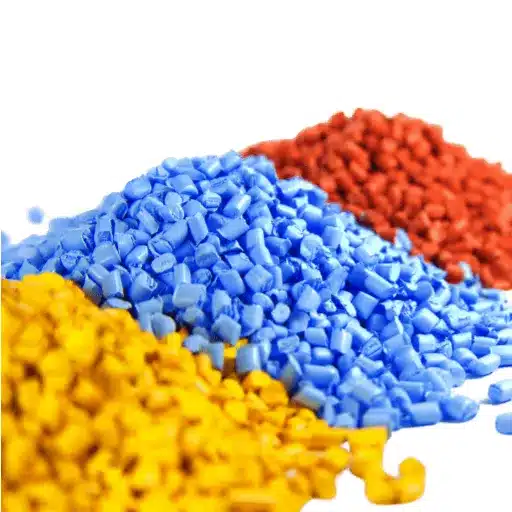
The answer is no. Two ABS pellets can look identical, same color, same shape, same apparent density, while having significantly different rubber particle sizes and SAN molecular weights. The structural differences only become obvious when tested through electron microscopy and mechanical testing and rheological testing. The verification process of COA together with the supplier qualification process needs to be performed because visual methods cannot determine the structural quality of ABS materials.
Conclusion
The structure of ABS polymer exists in a predetermined state because two-phase ABS graft copolymer systems produce its structure through controlled processes. The combination of rubber particle size and distribution and SAN matrix molecular weight and graft bond density determines impact strength and surface gloss and melt flow properties and heat resistance and plating adhesion. The two ABS grades with identical nominal compositions produce different material characteristics because their internal structures show microscopic structural differences.
Engineers and procurement managers must understand that the selection process for proper ABS grade requires them to identify which structural elements their specific application needs. For proper flow through thin-wall electronics housings designers need to use low molecular weight SAN materials. Automotive trim components require rubber particles with small and consistent size because chrome plating needs uniform etching results. Safety components need high rubber particle sizes together with increased butadiene content. Heat-resistant underhood parts need modified SAN chemistry to push the glass transition higher.
The next stage involves sourcing materials which leads to a need for structural consistency assessment. The production process of branded prime ABS from established manufacturers creates consistent morphology which manufacturers demonstrate through COA documentation across multiple production batches. The introduction of off-spec or unverified supply materials causes structural changes which prevent datasheet averages from showing actual material properties resulting in molding defects and plating failures and field performance problems that reduce production efficiency and damage customer trust.
At Yifuhui we provide general-purpose and high-impact and PC/ABS alloy resins from well-known manufacturers who provide manufacturer-authenticated COAs for each production batch and complete export documentation and technical support for grade selection based on your application structural needs. The minimum order quantity starts at 25 kg which serves as sufficient material for process validation and qualification testing before you make your production volume commitment.
Request an ABS Grade Recommendation for Your Application → Contact Yifuhui