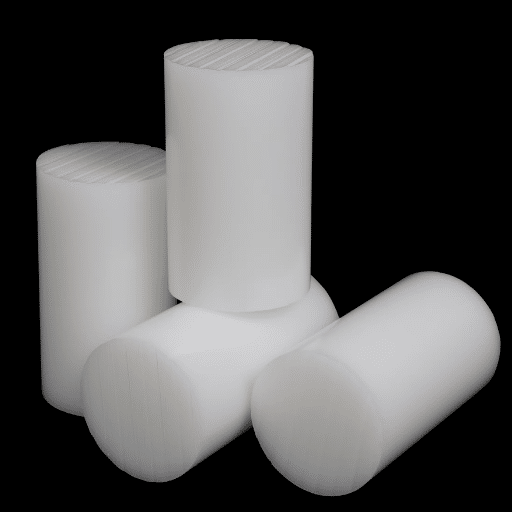




Your injection molding hopper contains polycarbonate granules which may consist of three different material types. The Munich procurement team discovered this information in 2023. They obtained a trial batch of optical-grade PC granules from an unverified trading company at a price 35% below market. The pellets showed uniformity and transparency. The parts exhibited extreme splay and gate yellowing and their impact strength measured 60% below specification. The lot contained no Certificate of Analysis and lacked both a lot number and supplier recourse. Their 500 kg trial became 500 kg of scrap, and a three-week delay in their LED lens qualification schedule.
People who search for polycarbonate granules face difficulties because they find numerous identical products which have different price tags. The global market for PC resin pellets contains three distinct quality tiers which identify all available materials. First-time importers from China especially struggle to identify product differences because they need to see a failed batch before they understand what happened.
The guide explains the actual nature of polycarbonate granules while describing three market quality tiers and showing which Covestro Makolon grades fit your specific application needs and how to check product authenticity before placing a production order. You will learn the technical specifications that separate reliable granules from risky ones, the drying and processing parameters that determine part quality, and the documentation you should demand from any supplier.
Need help matching a Covestro Makrolon grade to your application? Tell us your molding parameters and end-use requirements, and we will identify the right polycarbonate granule specification from our stocked inventory.
What Are Polycarbonate Granules?
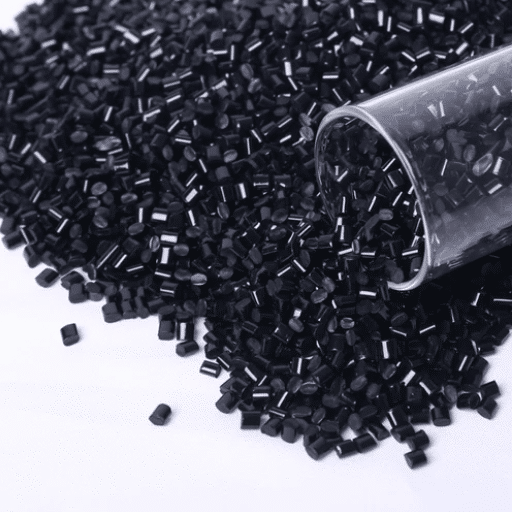
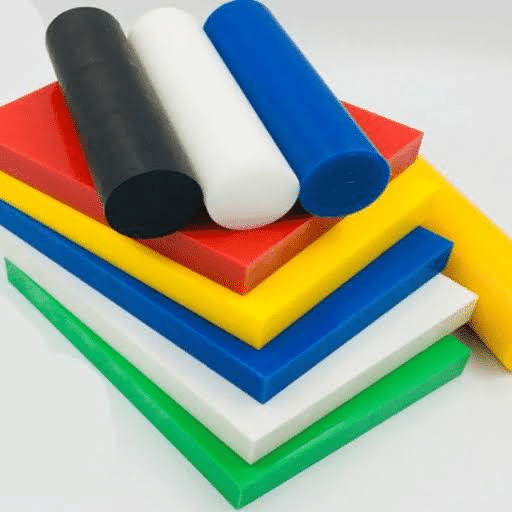
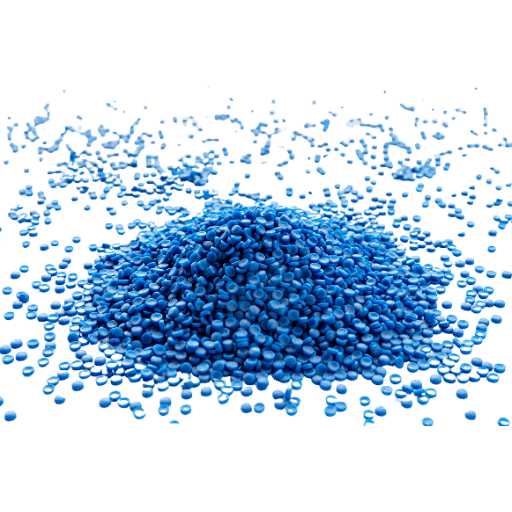
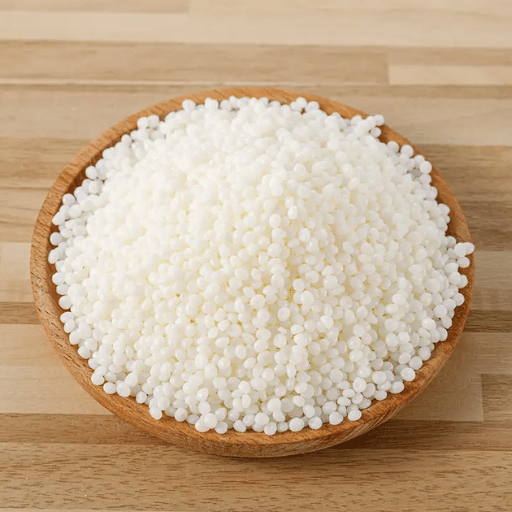
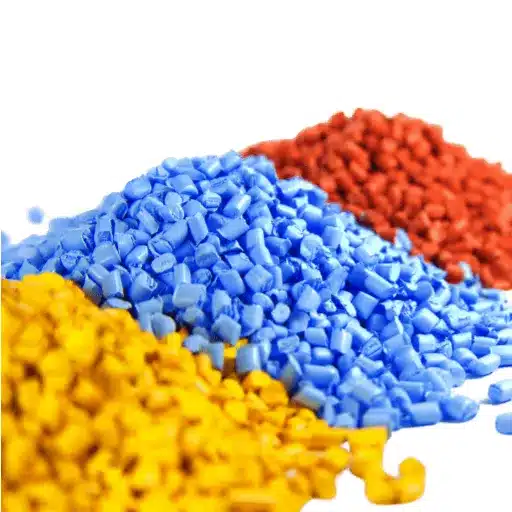
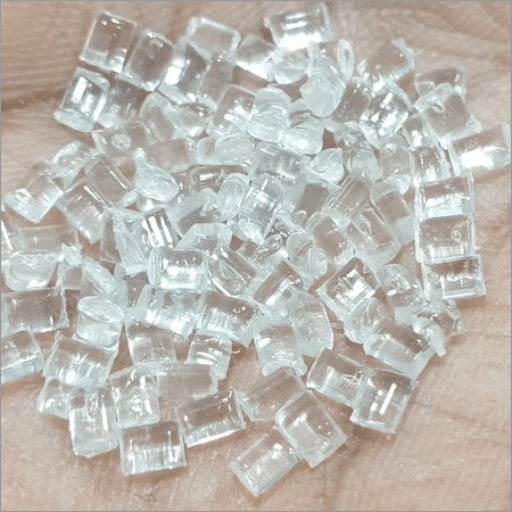
Polycarbonate granules are cylindrical or disc-shaped pellets of polycarbonate resin, which have dimensions of 2 to 4 millimeters for their diameter and 2 to 5 millimeters for their length. The industry uses these materials as the standard operational size for all injection molding, extrusion, and compounding processes which take place across the globe. Granules provide better performance than powder or flake products because they maintain constant feeding through hopper systems while their pneumatic conveyance generates minimal dust and their melting process occurs in predictable patterns within screw-barrel assemblies.
PC is an amorphous engineering thermoplastic with a glass transition temperature of approximately 147°C and no sharp crystalline melting point. This amorphous structure gives polycarbonate its hallmark optical clarity and high impact strength, but it also makes the material hygroscopic and sensitive to moisture during processing. In pellet form, PC granules present a convenient trade-off: manageable bulk density for material handling, but a surface-area-to-volume ratio that requires careful drying before melt processing.
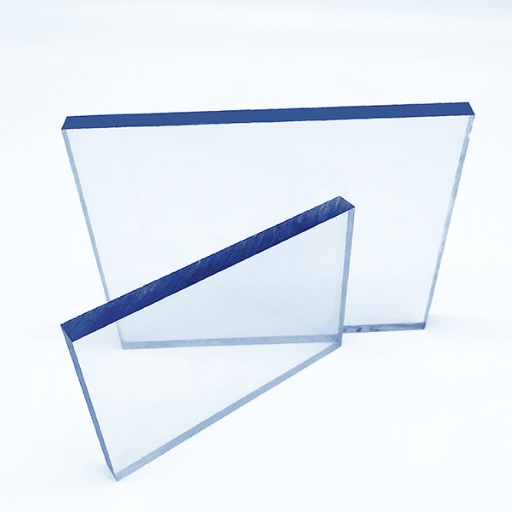
Manufacturers produce polycarbonate granules in three color options which include natural water-clear and black and custom colors. The manufacturers integrate their additive packages which include UV stabilizers for outdoor use and flame retardants for electronic devices and mold release agents for quicker production cycles and optical brighteners for lighting purposes. The additives exist as substances which do not function as surface coatings. The extrusion process compels all branded prime resin to maintain constant batch-to-batch quality because Covestro and other manufacturers face challenges with their modified compounds.
The Three Tiers of Polycarbonate Granules in the Market
The different listings for polycarbonate granules show various types of materials. The market creates three distinct tiers which require you to learn their differences as your first step to achieving better production results.
Tier 1: Virgin Branded Prime Resin
Tier 1 polycarbonate granules are produced by the original polymer manufacturer, Covestro, Sabic, Teijin, Mitsubishi, and sold through authorized distribution channels. Each production lot carries a manufacturer-issued Certificate of Analysis with measured properties traceable to that specific batch. The molecular weight distribution, MFI, and additive content fall within tight specification windows established by the manufacturer’s quality system.
The only suitable option for precision applications which require optical lenses and automotive lighting and medical device housings and electronics enclosures. Off-spec material in these categories does not just cause cosmetic defects. The situation leads to warranty claims and regulatory non-compliance and OEM audit failures.
Tier 2: Modified Compound Grades
The Tier 2 classification includes polycarbonate granules which regional compounders produce by purchasing PC base resin and creating products through their in-house manufacturing process of combining fillers and colorants and flame retardants and reinforcements. The manufacturers from China create suitable compounds which meet general-purpose requirements. The target has two main security problems which include both the batch-to-batch consistency and the security documentation. The compounder has the ability to switch base resin sources which he uses during production and he updates his additive percentages to achieve his cost objectives while running his production process without the required analytical equipment for confirming lot-to-lot identity.
The Tier 2 standard provides sufficient performance for non-critical consumer products which do not need either complete optical transparency or UL traceability. The lack of manufacturer-level COA documentation creates an unworkable verification problem for regulated or precision applications.
Tier 3: Reprocessed or Recycled Granules
Tier 3 material comes from reprocessing post-industrial and post-consumer polycarbonate waste through a re-melting and re-pelletizing process. The prices for this product range from 30 to 50 percent lower than the cost of virgin prime materials. The process results in severe tradeoffs which lead to degraded molecular weight because of thermal history and which render materials unsafe because of possible polymer contamination and which create unpredictable mechanical behavior. The reprocessed polycarbonate granules experience decreased impact strength and greater yellowing during molding and MFI drift which disrupts injection molding cycle times.
The Tier 3 standard satisfies cost-driven needs for temporary packaging and disposable fixtures and non-structural spacers which have no performance needs. The product creates a liability for all applications except for that specific case.
|
Property |
Virgin Branded Prime |
Modified Compound |
Reprocessed / Recycled |
|---|---|---|---|
|
Typical Price |
$$ |
$ |
$ |
|
Batch Consistency |
High |
Medium |
Low |
|
COA / Lot Traceability |
Full manufacturer |
Limited or generic |
None |
|
MFI Consistency |
±5% |
±10–20% |
±20%+ |
|
OEM / Regulatory Approval |
Yes |
Sometimes |
No |
|
Recommended For |
Production, regulated apps |
Non-critical consumer goods |
Cost-only, disposable uses |
Ready to validate quality before scaling? Order a 25 kg trial of certified Covestro Makrolon polycarbonate granules with full COA documentation, shipped from our Suzhou warehouse to your facility.
Covestro Makrolon Granule Grades and Their Applications
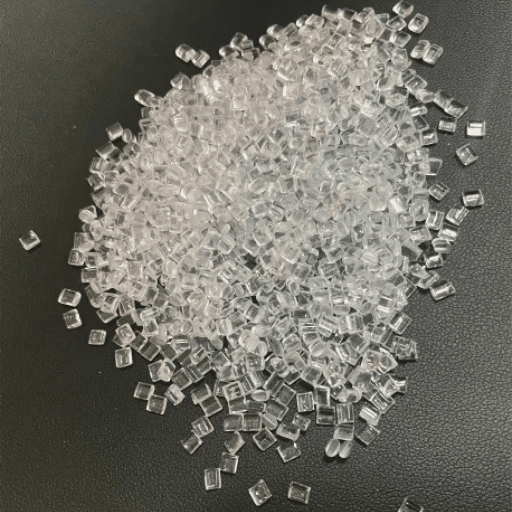
The engineers who need to designate polycarbonate granules for their specific applications will use “PC resin” to describe their requirements. The engineers need to select a specific grade of polycarbonate material. Covestro’s Makrolon product line represents the most commonly used branded PC material which manufacturing companies across the world select for their operations. The grade number determines whether the material succeeds or fails in your component.
General-Purpose Injection Molding: Makrolon 2805
The workhorse grade of polycarbonate granules for general purposes is Makrolon 2805. The material provides a unified combination of flow properties and strength and clarity for optical purposes with its MFI rating of 10 g/10 min at 300°C/1.2 kg. The grade applies to consumer goods housings and appliance parts and tool enclosures and structural components which need to withstand heavy impacts while remaining easy to manufacture. The default grade provides PC performance to buyers who want standard features without needing special additives.
UV-Stabilized Transparent: Makrolon 2407
The general-purpose Makrolon 2407 formulation introduces UV stabilization while maintaining 88 to 90 percent light transmission which optical applications require from polycarbonate. The particular combination finds its application in outdoor lighting housings and automotive taillight lenses and display covers and greenhouse panels. Standard PC materials undergo yellowing and become brittle through extended exposure to UV radiation. The manufacturer-level stabilizer package protects Makrolon 2407 from degradation because it does not require secondary coating application.
Elena, a product engineer at a Slovenian LED lighting manufacturer, switched to Makrolon 2407 from unbranded UV-stabilized PC because both materials showed different results in accelerated aging tests which she conducted for outdoor luminaire housings. The unbranded material developed surface crazing after 500 hours of QUV exposure. The Makrolon 2407 samples maintained their clear and impact-resistant properties until they reached 2000 hours of testing. The branded grade cost 15% more per kilogram. The avoidance of a field failure and warranty claim made the difference negligible.
Flame-Retardant UL94 V-0: Makrolon 6555 and 6557
The manufacturing process for electronics enclosures and battery housings and electrical junction boxes demands polycarbonate granules which have earned UL ratings for their flame resistance. The halogen-free flame-retardant grades of Makrolon 6555 and 6557 satisfy UL94 V-0 requirements at wall thicknesses between 1.5 millimeters and 2.0 millimeters. The product possesses glow-wire ignition temperature ratings which comply with safety specifications for appliances and consumer electronics.
The existing difference between 6555 and 6557 exists because 6557 provides better flow properties which enable its use in molding applications with thin walls while 6555 delivers slightly stronger stiffness levels. The two grades maintain the base polycarbonate impact strength which enables their use in any application that requires flammability compliance testing.
Specialty and Reinforced Grades: 8025, 8035, 8325, 9415
Reinforced grades provide structural support when standard polycarbonate granules fail to deliver the necessary dimensional stability and structural stiffness. The glass-fiber-reinforced Makrolon 8025 and 8035 and 8325 grades contain 10 to 30 percent glass material. Their properties enable them to function as structural brackets and precision frames and components designed to replace metal materials.
The high-viscosity and high-purity grade of Makrolon 9415 serves optical and medical applications which need tight control over molecular weight and outgassing properties. The distributors do not stock these grades because buyers need to verify their availability and current COA before scheduling production.
Yifuhui maintains a complete stock of Covestro Makrolon 2407 2805 6555 6557 RE6717 8025 8035 8325 and 9415 products which come with manufacturer-issued COA documentation that links to specific production lots.
Technical Specifications That Matter When Sourcing PC Granules
Buying polycarbonate granules by price alone ignores the technical parameters that determine whether your molding process runs smoothly or generates scrap. Your incoming inspection checklist should contain these specifications.
Melt Flow Index and Processing Window
MFI measures how easily a polymer flows when melted. The MFI values for polycarbonate granules range from 3 g/10 min at high viscosity structural grades to 25 g/10 min at high flow thin-wall grades which ISO 1133 specifies for 300°C/1.2 kg testing. The MFI value determines how injection molding functions because lower MFI values create higher injection pressure requirements and extended cycle times but result in superior mechanical outcomes. Higher MFI values make it easier to fill thin walls and complex shapes but they can lead to a decrease in impact strength.
A batch of polycarbonate granules with an MFI 20% below your process baseline will not fill the same cavity geometry at the same pressure. A batch 30% above baseline may flash at parting lines or degrade in the barrel from excessive shear. The verification of MFI consistency by COA is essential because it establishes the necessary quality standard.
Material Attracts Water From The Surrounding Environment.
Polycarbonate granules absorb moisture from ambient air. At 0.02% moisture or below, PC processes cleanly. At 0.05% or above, hydrolytic degradation during melting produces splay, silver streaks, and reduced molecular weight. The drying specification must be strictly followed because it requires processing at120°C for 3 to 4 hours in a desiccant dryer until the moisture content drops below 0.02%.
Suppliers who ship polycarbonate granules in inadequate packaging, torn bags, unsealed containers, or paper sacks without moisture barriers, deliver material that may already be partially saturated. Always inspect packaging integrity on receipt. If bags have been exposed to humidity during ocean transit, extend drying time or verify moisture content with a halogen moisture analyzer before loading the hopper.
Pellet Geometry and Bulk Density
Standard cylindrical pellets with a diameter of 2.5–3.5 mm and length of 2–5 mm feed consistently through vacuum conveyors and gravimetric dosing systems. The use of odd-shaped pellets which exceed size limits creates two problems for masterbatch blending because they createhopper throat blockages and lead to inaccurate material delivery. The bulk density of unfilled polycarbonate granules falls between 0.6 and 0.7 g/cm³ which means that a 25 kg bag of these granules will occupy 35 to 40 liters of space. This aspect holds significance for planning warehouse storage and determining hopper volume requirements.
Color, Clarity, and Additive Packages
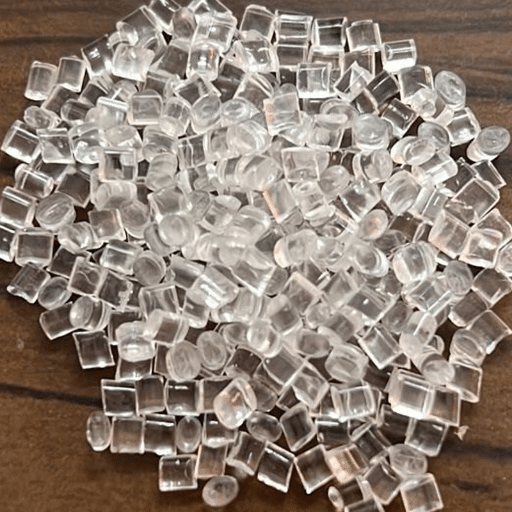
The natural-grade polycarbonate granules must exhibit water-clear transparency which extends to faint straw-colored material. The receipt of pellets with substantial yellowing indicates that the material underwent thermal degradation during pelletizing process or suffered heat damage while being transported. Black grades should display consistent coloration throughout the material while showing no signs of streaking or undispersed pigment. For optical applications, request a clarity sample before volume ordering. Different production lots which share the same grade number will demonstrate slight color differences that impact the appearance of visible components made from multiple mold cavities.
How to Verify Quality and Authenticity of PC Granules
The same authentication framework that applies to POM resin verification applies to polycarbonate granules. The core principle is simple: trust documentation first, physical inspection second, and price intuition never.
Request a Manufacturer-Issued Certificate of Analysis
The COA for branded polycarbonate granules needs to contain specific details which include:
- Material name and exact grade: “Covestro Makrolon 2805”, not “PC granules” or “polycarbonate resin”
- Manufacturer name and lot number
- Date of manufacture and test date
- The essential properties which need to be measured include MFI (ISO 1133, 300°C/1.2 kg) and density and tensile strength and impact strength for applicable materials and Vicat softening temperature and HDT
- The test results show whether the product meets the manufacturer’s specifications that apply to that particular grade
- The issuing authority comes from the manufacturer’s quality laboratory which does not include the distributor
The MFI value from the COA needs to be checked against Covestro’s published datasheet for Makrolon 2805 grade. The published MFI value for Makrolon 2805 equals approximately 10 g/10 min. A COA showing 7 g/10 min or 14 g/10 min requires explanation. The results may show a testing mistake or a lot that has been improperly labeled or material that does not meet the specified grade requirements.
Perform Physical Checks on Receipt
The physical inspection process can find defects which documentation fails to show even when a valid COA exists. Examine a representative sample from the received lot:
- All pellets should maintain similar size and shape throughout the pellet production process. The presence of excessive fines and dust together with irregular chunks indicates that the pelletizing process has produced low-quality pellets which contain material that has been degraded.
- Natural PC must show a clear to faint straw color as its color consistency. Natural material contains yellowing and cloudiness together with black specks which serve as rejection criteria.
- A small sample needs to be heated to 300°C inside a controlled environment for the purpose of testing its odor during the melting process. Virgin polycarbonate has a mild, characteristic odor. The presence of burnt acrid odors indicates that materials have undergone thermal degradation or contamination.
Independent testing of MFI and impact strength needs to occur at a certified laboratory for critical applications which require verification against the manufacturer’s datasheet. The cost of discovering a deviation during production volume testing remains negligible.
Red Flags When Evaluating Suppliers
- The market price of authentic branded prime polycarbonate granules remains stable between two established international price limits. The product price which falls below this established price range indicates that it contains either altered compound materials or recycled content or incorrectly identified items.
- The manufacturer quality laboratory controls all COA issuance for traceable certification which requires only the manufacturer to generate the quality certificate. A distributor who generates their own certificate without manufacturer lot reference is masking traceability.
- The grade descriptions need more exact information because “Optical PC” and “FR PC granules” require a grade number for proper identification. The production records require professional suppliers to use “Covestro Makrolon 2407” or “Makrolon 6555” as their specified materials.
- A supplier who holds actual stock can deliver a 1–2 kg sample which comes from the specific lot scheduled for delivery. The supplier demonstrates an intention to acquire products through immediate purchasing because they refuse to disclose their supplier source.
Sourcing Polycarbonate Granules from China
China serves as the primary international trading hub for engineering plastic resin while Suzhou operates as the main distribution center for BASF and Covestro and other international companies at the Shanghai Port. International buyers who purchase polycarbonate granules from China receive advantages through lower costs and access to grades that domestic markets currently face during back-order status. The key is working with a distributor who holds verified inventory, not a trading company who sources to order.
Minimum Order Quantities and Trial Orders
Customers need to purchase 1 ton (1,000 kg) of virgin branded prime polycarbonate granules when they place factory-direct orders. The minimum order quantity (MOQ) creates restrictions for material qualification buyers who need to develop products or produce small batches. Distributors who are authorized to sell products through their warehouses can present customers with lower minimum purchase requirements. At Yifuhui, our 25 kg MOQ applies across all Covestro Makrolon grades, making trial orders accessible for process validation and parts qualification without volume commitment.
Packaging, Shipping, and Logistics
Standard packaging for polycarbonate granules is 25 kg moisture-resistant bags, which usually consist of multi-layer paper-plastic composite material that contains a polyethylene liner. Pallet configurations vary: 40 bags per pallet (1,000 kg net) is common for export shipments. The supplier must use seaworthy pallet wrapping and moisture barriers for ocean freight shipments. PC material absorbs moisture from the air, and any container that experiences condensation problems will ruin the material before it arrives at your facility.
Port of Shanghai is one of the world’s highest-throughput container ports, which operates regular sailings to all major global destinations. The standard FOB Shanghai lead time from a Suzhou warehouse requires 3–5 business days to complete port loading operations. The shipping process requires an additional 20 to 35 days for European ports and 20 to 28 days for the US East Coast and 7 to 14 days for Southeast Asian destinations.
Documentation for Customs and QA
Every international shipment of polycarbonate granules should arrive with a complete documentation package:
- Commercial Invoice: Describes material by brand name, grade, and quantity, not generic “plastic resin”
- Packing List: Matches invoice; identifies package count, weights, and lot numbers
- Certificate of Analysis (COA): Manufacturer-issued, lot-specific
- Material Safety Data Sheet (MSDS): Required for customs clearance in most jurisdictions
- Compliance Certificates: RoHS, REACH, UL94, or FDA where applicable to the grade and destination market
The package deficiencies cause customs delays and result in failed quality audits and jeopardized regulatory compliance. A professional branded resin distributor prepares all documentation before shipment, not after delivery.
Conclusion
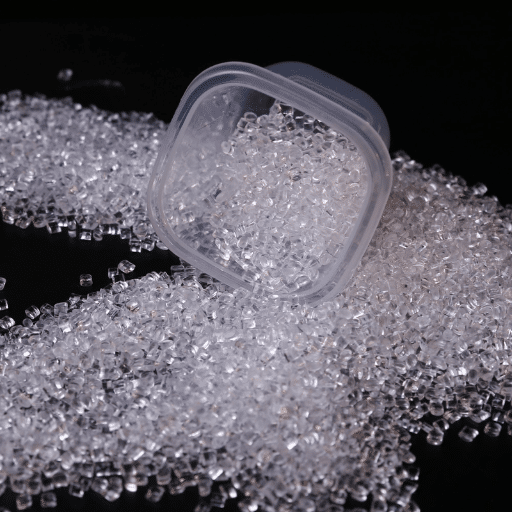
The industrial sector uses polycarbonate granules as its standard material for one of the most adaptable engineering thermoplastics that exists today. The difference between original branded primary materials and recycled products is extremely large because the selection of incorrect material grade results in production waste and product failures and audit failures which do not appear on the purchasing document.
The main points which need to be understood can be seen in the following way. Specify the exact grade by name: Makrolon 2805 for general purpose, 2407 for UV-stable optical, 6555 or 6557 for flame-retardant electronics, and reinforced grades when structural stiffness demands it. The Certificate of Analysis must be verified against the actual datasheet which the manufacturer has made available. The physical pellet quality needs to be checked when the shipment arrives. The distribution network needs to work with a distributor who maintains traceable inventory records instead of selling through a marketplace platform which shows low prices but lacks proper documentation.
The advantages of purchasing from China include two main benefits which provide buyers with access to competitively priced products and globally recognized product specifications and fast shipping services through the Port of Shanghai. The quality of suppliers serves as the unpredictable element. Select a business partner who offers manufacturer documentations and COA certifications and identifies particular product grades and provides you with small product samples which you can test before expanding your operations.
Request a quote for polycarbonate granules, response within 24 hours with grade recommendations, COA samples, and FOB Shanghai pricing.
Frequently Asked Questions
What is the difference between polycarbonate granules and polycarbonate resin?
The comparison between polycarbonate granules and polycarbonate resin shows that both terms describe identical substances which exist in different physical states. The complete material category includes all types of polycarbonate resin. Industrial applications use polycarbonate granules (or pellets) which exist as cylindrical pellets that injection molding systems and extruders require as feed material. When you want to purchase materials, you must provide both the material grade (for example Covestro Makrolon 2805) and the material form (granules or pellets) which you need to obtain process-ready materials.
How do I know if a COA for polycarbonate granules is genuine?
The distribution of a genuine COA occurs through the quality laboratory of a manufacturer which includes Covestro and Sabic and Teijin as their main facilities. The document contains both the complete grade designation and the complete lot identification together with all tested values which include MFI and density and mechanical attributes and a declaration about passing or failing based on the specifications established by the manufacturer. The MFI value on the COA needs to be compared with the value in the official datasheet. The traceability chain becomes incomplete if a supplier fails to present a COA which originates from the manufacturer.
Can I order polycarbonate granules in quantities smaller than 1 ton?
The minimum order requirement for factory-direct purchases from manufacturers stands at 1 ton. Distributors who have obtained authorization to distribute products from their warehouses can provide customers with lower minimum order requirements. Yifuhui provides Covestro Makrolon polycarbonate granules which customers can purchase starting at 25 kilograms for each grade, enabling them to test products and produce small quantities without needing to meet minimum volume requirements.
What drying conditions are required for polycarbonate granules before molding?
Polycarbonate granules need to undergo drying before they can enter the molding process. The maximum allowable moisture content for polycarbonate granules requires drying until the material reaches a level below 0.02% moisture content. The standard drying specification requires a desiccant dryer to maintain a temperature of 120°C for a duration between 3 to 4 hours. Deficient drying procedures create conditions which lead to hydrolytic degradation that produces splay and silver streaks while diminishing impact strength and yellowing of molded components.
What are the main differences between Covestro Makrolon 2805 and 2407?
Makrolon 2805 serves as a general-purpose injection-molding material which provides balanced flow and mechanical performance. The UV-stabilized transparent grade of Makrolon 2407 contains the same basic mechanical properties as other grades but provides better protection against outdoor weathering and UV light damage. Indoor structural components require 2805 as their material choice. 2407 functions as the ideal material for outdoor lighting fixtures display covers and any application which will receive sunlight exposure.
What is the typical price range for virgin branded polycarbonate granules?
The market price for virgin branded prime polycarbonate granules in 2026 ranges from 1.50 to 2.60 per kilogram based on general-purpose grades which customers purchase at bulk quantities. The price of flame-retardant UV-stabilized and reinforced grades exceeds standard pricing. Modified compounds and reprocessed material trade below this range but carry significant consistency and documentation risks.