



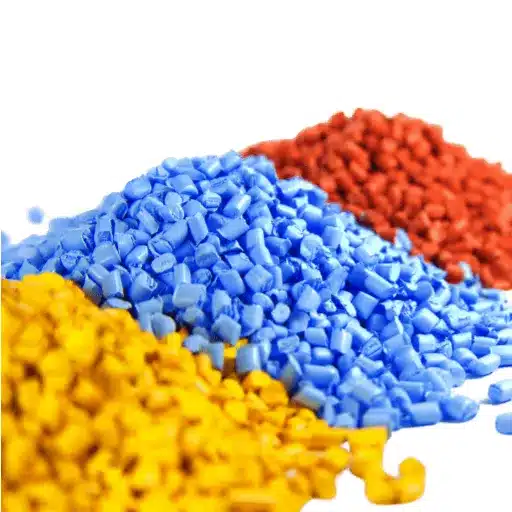


The Shenzhen connector manufacturer received a shipment of “PET material” in March which matched their normal order specifications. The two items showed identical features because both used the same white pellets and packaging and shared the same datasheet title. They injected the material into their injection molding machine which they operated at their regular 270°C barrel temperature until three hours later when their production line stopped working. The material had hydrolyzed in the melt phase which led to degradation into acetaldehyde and oligomers which blocked their hot runner system. The root cause of the problem did not stem from a processing mistake. The delivery of PET material contained an invisible specification error because they received bottle-grade PET with an intrinsic viscosity of 0.78 dL/g instead of engineering-grade PET which their tooling required at 0.92 dL/g. The human eye could not see the viscosity difference. The production cost reached $14,000 because of lost time and scrapped tooling.
The primary risk which you face when sourcing PET material for manufacturing needs which include injection-molded parts and electrical components and engineering applications arises from grade confusion. Most articles about PET material focus on recycling statistics, beverage packaging, or textile fibers. Very few studies address the specific requirements which engineers and procurement managers need to follow when they specify and process and verify engineering-grade PET resin with the same strictness they use for POM or PA66.
This guide explains PET material from a manufacturing perspective. The chemical elements of grade categories together with application suitability properties and the essential distinctions between bottle-grade and engineering-grade PET and methods for quality control of resin before production will be presented to you. Your application needs will determine which PET grade you need and the documentation requirements you need to request from your supplier.
What Is PET Material? Chemistry and Molecular Structure

PET material, polyethylene terephthalate, is a linear aromatic polyester produced by the condensation polymerization of ethylene glycol (EG) and either terephthalic acid (TPA) or dimethyl terephthalate (DMT). For a broader chemical and historical overview, see Britannica’s entry on polyethylene terephthalate. The repeating unit is -[COC6H4COOCH2CH2O]-, a chain of aromatic rings separated by ester linkages and ethylene segments.
PET material exhibits three fundamental features which result from its molecular architecture. The first characteristic of the material originates from its aromatic rings which establish chain rigidity that results in superior tensile strength and modulus compared to aliphatic polyesters. The second element of PET material establishes strong interchain forces which enable the material to function as an effective barrier against gaseous substances and moisture vapor through its ester linkages that create polar characteristics. The linear chain structure of PET material permits crystallization processes to occur through specific thermal conditions, which enables the material to exist as either amorphous or semi-crystalline structures that display completely different material characteristics.
The degree of polymerization, measured practically as intrinsic viscosity (IV), is the single most important quality parameter for PET material. IV establishes molecular weight through its measurement because higher IV values indicate that polymer chains become longer while the material develops higher melt strength and superior mechanical characteristics. Bottle-grade PET typically sits at 0.72–0.82 dL/g. Fiber-grade PET runs lower at 0.58–0.68 dL/g. Engineering-grade PET for injection molding and extrusion typically requires 0.80–1.00+ dL/g. The material processed by Shenzhen manufacturer showed different processing behavior when a supplier shipped the wrong IV grade because the two materials appeared identical.
PET Material Properties: Polyethylene Terephthalate Properties for Engineers
The properties of PET material and polyethylene terephthalate need to be studied through its dual nature as a material. Unreinforced, amorphous PET is clear, tough, and processable but limited in heat resistance. Crystallized PET conforms to opaque material status while displaying greater stiffness and heat resistance, although its processing into intricate designs proves challenging. The structural applications of glass-fiber reinforced PET grades compete against PA66 and PBT.
|
Property |
Unreinforced PET |
30% Glass-Fiber PET |
|---|---|---|
|
Tensile Strength |
55–80 MPa |
150–180 MPa |
|
Flexural Modulus |
2,000–3,000 MPa |
>9,000 MPa |
|
Glass Transition Temp (Tg) |
75–80°C |
75–80°C |
|
Melting Point |
250–260°C |
250–260°C |
|
Heat Deflection Temp |
65–70°C |
210–240°C |
|
Moisture Absorption |
0.1–0.2% |
0.1–0.2% |
|
Dielectric Strength |
15–20 kV/mm |
15–20 kV/mm |
The unreinforced standard PET material exhibits a tensile strength range of 55 to 80 MPa and a flexural modulus range of 2000 to 3000 MPa. The properties of polyethylene terephthalate enable it to match the performance level of unfilled PBT yet fall short of glass-filled PA66. The material shows moderate impact resistance which exceeds polystyrene but falls short of both polycarbonate and ABS.
The glass transition temperature (Tg) of PET material reaches between 75 and 80°C while its melting point ranges from 250 to 260°C. The melting point behaves differently between the two forms of PET because it appears as a sharp peak for crystalline PET while it shows a broad range for amorphous PET. The unreinforced PET material maintains its operational temperature range between 65 and 70 degrees Celsius. The heat deflection temperature under load for 30% glass-fiber reinforced PET reaches 210 to 240 degrees Celsius which leads to substantial improvements that permit its use in automotive and electrical applications.
The PET material shows outstanding resistance against water and alcohols and oils and aliphatic hydrocarbons and weak acids. The material suffers its greatest damage from strong alkalis and bases because the alkaline conditions cause hydrolysis of its ester linkages especially under high-temperature environments. PET functions effectively for beverage bottles because it handles acidic and neutral pH liquids yet fails to perform in caustic cleaning situations.
The low permeability of PET material to oxygen and carbon dioxide established its status as the primary material choice for carbonated beverage bottles. The engineering applications of this material show low moisture absorption which reaches about 0.1 to 0.2% saturation thus providing a moisture absorption rate that competes with PBT while remaining lower than PA66.
PET material demonstrates high dielectric strength which ranges from 15 to 20 kV/mm and it exhibits good volume resistivity. The material serves various electrical insulation functions including usage for coil bobbins and connector housings that require stability against electrical loads.
Need PET material specifications for an upcoming project? Request a grade recommendation, tell us your application requirements and our team will identify the right PET grade from our portfolio with full COA documentation.
Engineering-Grade vs. Bottle-Grade PET: The Critical Distinction

The global PET material market produces over 30 million metric tons annually. The majority of this material, which exceeds 70%, is used for manufacturing bottles and packaging products. Textile fibers receive another substantial portion of the remaining materials. The engineering-grade PET segment serves injection molders and extruders and component manufacturers but has a smaller volume than other segments because it requires higher specifications and more stringent quality testing procedures.
The differences are not merely marketing categories. They are processing-critical distinctions:
|
Grade Category |
Intrinsic Viscosity (IV) |
Primary Application |
Key Quality Parameter |
|---|---|---|---|
|
Bottle-grade PET |
0.72–0.82 dL/g |
Blow-molded bottles |
Low acetaldehyde, fast crystallization |
|
Fiber-grade PET |
0.58–0.68 dL/g |
Textile fibers |
Low oligomer content, spinning stability |
|
Engineering-grade PET |
0.80–1.00+ dL/g |
Injection molding, extrusion |
High melt strength, mechanical consistency |
The process of injection molding-engineering-grade material receives a negative impact because bottle-grade PET brings its lower molecular weight which leads to less melt strength and weak weld line performance and excessive drooling through the nozzle. The part may appear suitable after visual examination because it will not withstand mechanical stress and thermal cycling. The reverse error, which happens when manufacturers use high-IV engineering-grade PET for bottle production, occurs less frequently, yet it creates problems because excessive melt viscosity prevents proper parison control, which leads to inconsistent wall thickness.
In 2023, a medical device startup in Bangalore ordered PET material for thermoformed tray production. The supplier delivered bottle-grade resin which contained 0.76 dL/g IV. The trays maintained proper shape until they broke during autoclave sterilization at 121°C. The thermal stress tests showed that the material failed because its molecular weight fell below the necessary level to preserve structural integrity at elevated temperatures. The trays passed sterilization validation after we switched to engineering-grade PET which had 0.88 dL/g. The material change cost $200 more per ton. The failed validation batch had cost $8,000 in lost development time.
Modified and Reinforced PET Grades for Industrial Applications
Unreinforced PET material is pure which can be used for packaging and films as well as some engineering applications. Manufacturers provide special grades of modified material which extend the operational capabilities of PET for structural and high-temperature applications.
The most common engineering modification for glass-fiber reinforced PET uses 30 glass-fibers which give tensile strength between 150 and 180 MPa and flexural modulus that reaches 9000 MPa thus making the material three times stiffer than unreinforced versions. The temperature at which heat begins to deform objects reaches 220 to 240 degrees Celsius. These characteristics allow glass-filled PET to compete against glass-filled PA66 and PBT in applications for automotive and electrical connector components. The processing method results in two main effects which include decreased impact resistance and higher tool erosion during production operations.
Mineral-filled PET. Talc or mineral-filled grades improve dimensional stability and reduce warpage compared to unfilled PET. The company commonly uses these materials in large flat components which need precise surface tolerances throughout their entire surface area. The physical characteristics of these materials exist between the two categories of unreinforced materials and glass-reinforced materials.
Flame-retardant PET. Electrical enclosure and connector applications require UL94 V-0 rated grades. The products use flame retardant systems which contain either halogenated compounds or halogen-free materials. The selection process requires compliance with end-market regulations while RoHS and REACH standards must be fulfilled for products destined for the EU market.
Manufacturers create PETG which is an amorphous transparent impact-modified PET variant by substituting part of the ethylene glycol with cyclohexanedimethanol. The processing temperature for PETG stays below the PET processing temperature while the material needs no crystallization management and it delivers superior clarity. The product finds growing applications in medical device housings transparent sheets and 3D printing filament. The high-temperature applications of PETG face restrictions because of its low Tg which exists between 75 and 85 degrees Celsius.
PC/PET alloys. Blending polycarbonate with PET creates alloys that combine PET’s chemical resistance with PC’s impact strength and heat resistance. We stock Covestro Makrolon® polycarbonate grades for alloy and standalone applications, including flame-retardant and optical grades.
PET Material Applications in Manufacturing

The majority of PET material consumption happens through packaging but engineering applications generate the highest product value for resin suppliers and become the most demanding product requirements for customers.
The combination of dielectric strength and dimensional stability with low moisture absorption makes PET material suitable for coil bobbins and relay housings and motor laminations and LED reflectors and fuse holders. Glass-filled PET grades compete directly with PBT in connector housings where higher stiffness is required. The thermal stability of PET during reflow soldering establishes itself as the main factor for selecting SMT-compatible components.
PET material serves automotive functions through its application in lamp retainers and ignition system components and sensor housings and underhood electrical connectors. The continuous service temperature for underhood applications extends through heat-resistant grades which use modified copolymer chemistry. The material shows good resistance to automotive fluids and oils and coolants and fuels yet PBT and PA66 remain the preferred materials for fuel-contact components.
Industrial machinery. Pump housings, valve bodies, and precision gears use PET material where chemical resistance and dimensional stability matter. For gear applications, PET’s lower coefficient of friction compared to metals reduces lubrication requirements, though POM remains the dominant polymer for precision gears due to its superior wear characteristics. As a full-service engineering plastics supplier, Yifuhui stocks POM, PA66, PC, and PBT alongside engineering-grade PET for multi-material programs.
Films and sheets. Flexible electronics and solar panel backsheets and industrial insulation all use PET film which people commonly refer to as Mylar because it is a DuPont registered trademark. The market for medical trays and blister packaging and food containers depends on thermoformed PET sheet production. The specific requirements of this application demand different IV ranges and additive packages which differ from the properties of injection molding grades.
The material selection process faced Elena because she worked as a materials engineer for a German automotive Tier 2 supplier who needed to evaluate PET material for new headlamp retainer development. The team standard assessment provided him with two options which he needed to evaluate between PBT and PET because PET delivered more material savings. The team needed precise mold temperature control because PET required this for achieving 90°C underhood service crystallinity requirements. The decision to use PET instead of other materials saved costs but required the team to purchase new mold temperature control systems. The decision saved €0.18 per part across a 400,000-unit annual volume, a €72,000 annual material cost reduction that justified the tooling investment within the first production year.
PET vs. PBT: Choosing the Right Polyester
|
Characteristic |
PET Material |
PBT (BASF Ultradur®) |
|---|---|---|
|
Crystallization Speed |
Slower |
Faster |
|
Tensile Strength |
Higher |
Lower |
|
Impact Resistance |
Moderate |
Better |
|
Moisture Sensitivity (Processing) |
Higher |
Lower |
|
Mold Temperature |
120–140°C |
60–100°C |
|
Cycle Time |
Longer |
Shorter |
|
Relative Cost |
Lower |
Higher |
|
Best For |
Stiffness, barrier, cost |
Faster processing, OEM history |
The components PET material and PBT (polybutylene terephthalate) belong to the same chemical group as thermoplastic polyesters because their chemical structures match. The two substances share a processing method which includes injection molding and extrusion. The two materials exhibit excellent electrical performance along with their ability to withstand chemical exposure. The two materials can only be used in specific situations because their chemical composition includes one extra carbon atom in the glycol component.
PET material uses ethylene glycol which has two carbon atoms as its main chemical component. PBT uses butylene glycol (four carbon atoms). The tiny difference in structure creates major impacts on the following things:
Crystallization behavior. The PBT material reaches its crystallization point faster yet needs cooler temperatures to achieve that stage compared to PET material. The PBT material allows for easier processing during typical injection molding operations because it requires less precise control over mold temperature changes. The slower PET material crystallization process needs higher mold temperatures which range from 120 to 140 degrees Celsius and extended time periods to complete the crystallization in the final molded object.
Mechanical properties. The tensile strength and modulus of PET material exceed those of PBT material when both materials receive the same level of reinforcement. A 30% glass-filled PET grade will typically be stiffer than a 30% glass-filled PBT grade. PBT material demonstrates superior capacity to absorb energy from impacts and maintain strength at weak points.
Moisture sensitivity during processing. The two materials demand complete drying before their transformation into molten form. PET material demonstrates greater sensitivity to hydrolysis than PBT because moisture levels exceeding 0.02% at processing temperatures lead to instant loss of molecular weight. PBT requires drying to below 0.04% residual moisture but it can withstand higher moisture levels than this threshold.
Cost and availability. The market price of common PET material falls below that of comparable PBT materials because PET production dominates the packaging industry. Engineering-grade PET with IV and quality standards required for injection molding matches PBT pricing. The BASF Ultradur® PBT material has established itself in automotive and electrical applications, whereas engineering PET materials are still in the process of achieving that level of market entry.
When to choose PET material: Applications requiring maximum stiffness, lowest moisture absorption, or barrier properties. Cost-sensitive electrical components which require strict processing discipline should select this material.
When to choose PBT: Applications requiring faster cycle times, easier processing, or established OEM qualification history. Automotive electrical connectors are overwhelmingly PBT-specified due to decades of validation data.
At Yifuhui, we stock both engineering-grade PET material and BASF Ultradur® PBT grades. Our recommendation is based on your application requirements, not on which material we hold in larger inventory.
PET Injection Molding and Processing: Key Manufacturing Considerations

The injection process of PET requires exact handling, which leads to negative results when operators try to take shortcuts. The three essential processing aspects require control over drying, temperature management, and crystallization control.
The process of drying requires complete compliance. The material needs to reach a moisture level below 0.02% before it can proceed to melt processing. The drying process should follow the recommended conditions of 130 to 140 degrees Celsius for a duration of 4 to 6 hours, which should be conducted in a dehumidifying hopper dryer. The existence of undried PET causes hydrolysis in the extruder barrel, which results in IV reduction and the production of acetaldehyde that degrades taste in food-contact materials and causes odor problems and material degradation in engineering uses. The hydrolysis reaction is irreversible because IV decreases during the melt phase, and it cannot be restored to its original state.
The plastic processing requires the use of specific temperature settings, which determine temperature control for main processing operations in this industry. The processing of PET material requires melt temperatures between 270 and 290 degrees Celsius. The process accelerates when temperatures reach levels above 300 degrees Celsius, which leads to thermal materials degradation. The barrel time needs to decrease because heat-sensitive materials need special treatment throughout their time in the barrel. The hot runner systems require exact temperature control so that materials do not become stuck and lose their quality.
The mold temperature and crystallization process needs to be controlled during the PET injection molding procedure. The crystalline PET parts require mold temperatures between 120 and 140 degrees Celsius to achieve proper crystallization development throughout the cooling process. Amorphous PET parts, which include clear containers and films, use cold molds that maintain temperatures below 40 degrees Celsius to prevent crystallization. The choice of mold temperature determines the final product appearance because it controls whether the product will be transparent with toughness or it will become opaque with heat resistance. The decision stands as a main processing choice that remains permanent after the molding process ends.
Regrind limits the reprocessing of PET material, which leads to a decrease in its intrinsic viscosity after each recycling process. The properties of materials begin to degrade after regrind levels exceed 25 percent, which creates visible effects. For critical applications, virgin PET or carefully controlled regrind ratios are essential.
Sourcing from a PET Resin Supplier: Quality Verification and Documentation
China produces and consumes 70 percent of the global PET material. International buyers who seek reliable PET resin suppliers experience two situations where they can benefit from competitive prices and large product availability while facing the danger of unpredictable material quality and missing documentation and the need to confirm whether they received the correct product grade.
The verification framework for PET material follows the same principles as POM or PA66, with PET-specific parameters that demand attention. See our guide on how to verify authentic branded resin for a complete cross-material verification checklist:
The COA must state the IV measured for the specific lot. The engineering application requires testing the IV which should meet grade specifications that establish 0.80 dL/g as the minimum requirement for injection molding grades. The engineering-grade specification requires rejection when IV measurement falls below 0.78 dL/g.
Acetaldehyde content. The acetaldehyde (AA) levels for food-contact and sensitive odor applications must stay below specification limits which generally require levels to stay below 1 ppm for bottle-grade and engineering grades that include odor control.
Color values. PET material color is reported as L* (lightness), a* (red-green), and b* (yellow-blue) values. The manufacturer achieves consistent color batch-to-batch results because their production process remains stable. The significant b* shift shows that thermal degradation occurred during production.
Moisture content at shipment. The COA should confirm moisture content below 0.02% at time of packaging. The PET material absorbs moisture from humid air which makes packaging integrity and storage conditions between manufacture and shipment necessary for protection.
Raj received a certificate of analysis for a shipment of engineering-grade PET material which showed an intrinsic viscosity of 0.95 dL/g that met all specifications through his role as quality manager at a Mumbai plastics converter_company in 2024. The COA showed that the melt flow index (MFI) value exceeded the manufacturer’s published range for that grade by 40%. Raj flagged the discrepancy before unloading the container. The supplier investigated and discovered that the shipment contained 60% correct-grade material which had been mixed with 40% lower-IV off-grade material from a previous production run. The blended material would have entered production without MFI cross-checking which would have caused the same molding failure that affected the Shenzhen connector manufacturer. Raj’s verification habit which requires him to cross-reference two COA parameters against manufacturer specifications enabled him to prevent his company from experiencing a production line stoppage.
What to expect from your PET resin supplier:
Every Yifuhui shipment of PET material includes:
- Manufacturer-issued Certificate of Analysis (COA) with IV, MFI, acetaldehyde, and color values
- Material Safety Data Sheet (MSDS) for customs clearance and handling compliance
- Commercial invoice specifying grade, brand, and lot number
- Applicable compliance certificates (FDA, RoHS, REACH) for qualifying grades
As a PET resin supplier with stocked inventory in Suzhou, we ship trial quantities starting at 25 kg with FOB Shanghai as our standard export term. The shipping time to main international ports ranges between seven and fourteen days.
Do you want to check the PET material suitability for your application? Your equipment will undergo process validation when you request a 25 kg trial order which includes complete COA documentation before you decide to proceed with production volume.
Common Questions About PET Material

Is PET material safe for food contact?
Yes. PET is FDA-approved for food-contact applications under 21 CFR 177.1315. It is the dominant material for beverage bottles, food trays, and packaging films. For engineering applications in food-processing equipment, specify food-contact-compliant grades with appropriate documentation.
What is the difference between PET and PETG?
The two materials PET and PETG show different properties because PETG functions as glycol-modified PET which uses cyclohexanedimethanol (CHDM) to prevent crystallization. PETG maintains an amorphous state while manufacturing requires lower temperatures and the material provides better impact protection and visual transparency. The material exhibits reduced heat resistance when compared to crystalline PET which makes it unsuitable for use in high-temperature environments.
Is it possible to recycle PET material an unlimited number of times?
The mechanical recycling process for PET results in decreased IV levels because the material undergoes thermal and hydrolytic degradation during each recycling cycle. Recycled PET (rPET) serves as a common material in both fiber production and packaging solutions which do not need high IV specifications. Engineering applications that need stable mechanical properties should use either virgin PET or precisely matched rPET blends which include IV verification.
Why does PET material require such aggressive drying?
The hydrolysis of PET ester linkages occurs when the material reaches its melting point. Even trace moisture levels exceeding 0.02% cause chain scission which leads to molecular weight loss and structural integrity decline. This chemical restriction exists in all polyester materials as a basic property which prevents processing operations from proceeding smoothly.
What is the maximum continuous service temperature for PET parts?
Unreinforced crystalline PET maintains its strength within the temperature range of approximately 65 70 degrees Celsius. Amorphous PET maintains its strength within the temperature range of approximately 55 60 degrees Celsius. Glass-fiber reinforced PET maintains its strength between 120 140 degrees Celsius based on the reinforcement level and the heat stabilizer used. For short-term exposure, unreinforced PET can withstand 120 140 degrees Celsius without deformation.
How does PET material compare to POM for precision mechanical parts?
POM outperforms PET in three categories which include wear resistance and friction coefficient and fatigue resistance for gear and bearing applications. PET outperforms POM in three categories which include electrical insulation and barrier properties and chemical resistance to certain solvents. For precision mechanical parts under sustained load, POM is generally the preferred choice. For electrical and structural components, PET provides a competitive option because it delivers both stiffness and dielectric properties.
Conclusion
The manufacturing industry worldwide recognizes PET material as a highly adaptable engineering thermoplastic because its correct grade selection and proper drying or manufacturer documentation verification. The production process experiences a major disruption because bottle-grade PET shows an invisible difference of 0.76 dL/g while engineering-grade PET displays a visible difference of 0.92 dL/g. The processing of amorphous and crystalline PET requires a fundamental shift in mold design because it demands more than a basic parameter adjustment.
Engineers and procurement managers need to follow these basic steps for material selection because they should use PET material according to its grade because they need to confirm intrinsic viscosity through COA documentation and test mold temperature abilities before choosing between PET and PBT. The simplest solution for avoiding grade mismatches that affect your production line involves partnering with a certified PET resin supplier who delivers complete COA documentation. The material delivers outstanding performance characteristics at an economical price because it requires strict material discipline. The system creates production delays and parts failures because it operates on false assumptions.
Key points to remember:
- The intrinsic viscosity (IV) of PET material grade determines its grade classification instead of its visual characteristics.
- The production of injection molded products and structural components requires engineering-grade PET which has an intrinsic viscosity range of 0.80 to 1.00 dL/g.
- The requirement for drying to a moisture level below 0.02% stands as an essential obligation which cannot be compromised.
- Glass-fiber reinforced PET serves as a competing material against PA66 and PBT within the automotive and electrical fields.
- The process of COA verification combined with the comparison of IV and MFI values against manufacturer specifications protects your production line from grade mismatches which occur before production begins.
[Request a PET Material Quote from a Verified PET Resin Supplier]
Provide your component needs together with your temperature range and load capacity and chemical resistance and processing method and our team will determine which PET grade our engineering resin collection. All our resin recommendations come with complete manufacturer certification documentation which includes COA documents and MSDS sheets and relevant compliance certificates. The minimum order quantity for trial orders is 25 kg which we will ship from our Suzhou warehouse using FOB Shanghai export.


