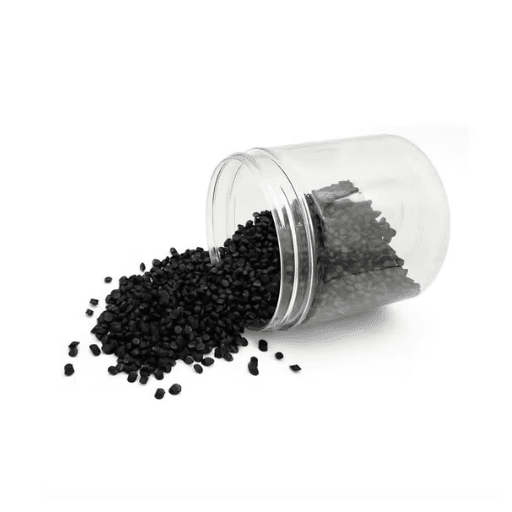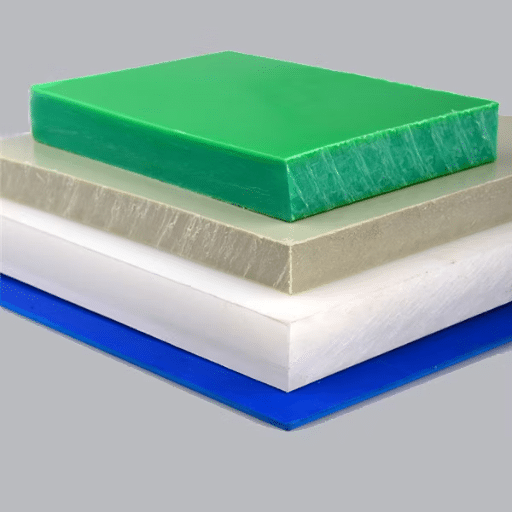

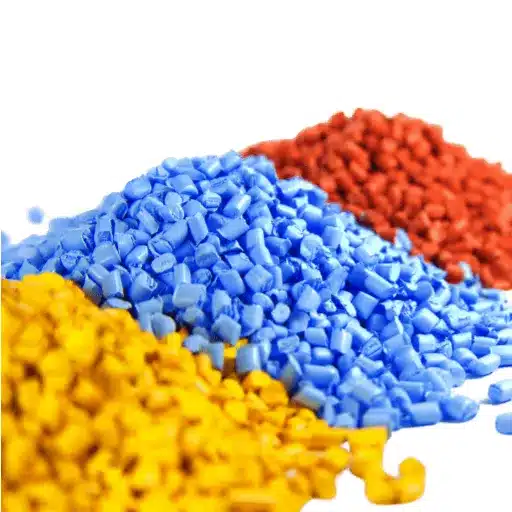
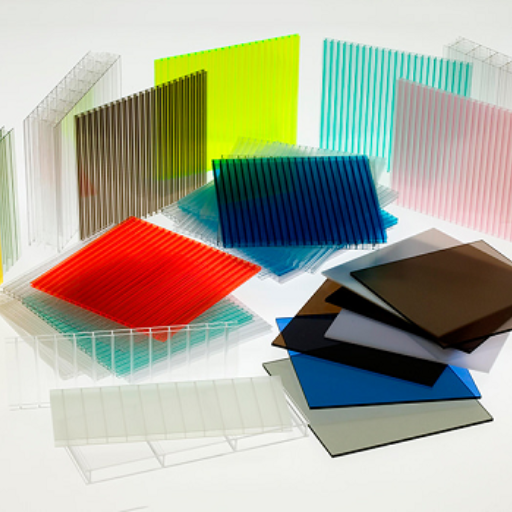



When the first production run of a sensor housing came back from the molder, the inspection team flagged every unit. The part had been specified in HDPE to hit a target cost, but at 1 to 3 percent mold shrinkage, each enclosure bowed past tolerance and the matte surface would not seat the gasket. A late swap to ABS fixed both issues, but pushed material cost up by about 30 percent. That trade-off is the essence of HDPE vs ABS: whichever material you choose, you’re accepting a specific set of trade-offs.
The surprise is that the same HDPE which warped a cosmetic enclosure is the technically correct, cheaper call for a chemical storage drum that would attack ABS within months. Most comparison content leans on ABS because it is stiffer and glossier. For outdoor, chemical-exposed, food-contact, and high-volume cost-driven parts, HDPE is often the smarter pick. The right answer depends on your application, not on which material “sounds” more premium.
This guide compares HDPE vs ABS on molecular structure, mechanical properties, chemical and UV resistance, cost, processing, and real-world applications. It closes with the sourcing details engineers rarely see in standard comparison articles: how to verify the resin you buy actually matches the specification sheet. If you are an engineer, product designer, or procurement manager weighing these two thermoplastics, you’ll leave with a clear decision framework and the right supplier questions to ask.
What Is HDPE?

High-density polyethylene (HDPE) is a semi-crystalline thermoplastic made by polymerizing ethylene with very little chain branching. The result is a tightly packed, linear structure with a density of 0.941–0.965 g/cm³ and crystallinity between 70% and 85%. That molecular regularity gives HDPE its signature combination of toughness, chemical resistance, and low moisture absorption.
HDPE carries recycling code #2 and is the workhorse of rigid packaging, blow-molded bottles, chemical drums, pipes, and industrial containers. It processes easily by injection molding, blow molding, extrusion, and rotational molding. The trade-off for its toughness is dimensional behavior: mold shrinkage of roughly 1 to 3 percent and a matte, waxy surface that resists paint and glue without surface treatment.
Key Characteristics of HDPE
- Excellent impact toughness and ductility, even at low temperatures
- Outstanding chemical resistance to acids, bases, alcohols, oils, and most solvents
- Good environmental stress crack resistance (ESCR) in properly formulated grades
- Low moisture absorption, around 0.01% or less
- Good UV resistance when specified with carbon black or UV stabilizers
- Limited continuous service temperature, roughly 60°C in standard grades
For a deeper look at the material, see our high-density polyethylene material guide.
What Is ABS?
Acrylonitrile butadiene styrene (ABS) is an amorphous terpolymer built from three monomers. Acrylonitrile contributes strength, stiffness, and chemical resistance. Butadiene adds toughness and low-temperature impact. Styrene delivers hardness, a smooth surface, and good melt flow.
That combination produces a material with a density around 1.04–1.12 g/cm³ and a glass transition temperature near 100–105°C.
Because ABS is amorphous, it has no sharp melting point and shrinks less than HDPE, typically 0.4 to 0.8 percent. Molded parts come out glossy, dimensionally stable, and easy to paint, plate, or bond. ABS is the default resin for consumer electronics enclosures, automotive interior trim, appliance panels, toys, and medical device housings.
Key Characteristics of ABS
- Higher tensile strength and stiffness than HDPE, with a smooth, glossy surface
- Excellent dimensional stability and tight-tolerance molding
- Good impact resistance from the butadiene phase, including at lower temperatures
- Moderate chemical resistance, with weaknesses to ketones, esters, and chlorinated solvents
- Poor UV resistance; prolonged sun exposure causes yellowing and embrittlement without stabilizers or coating
- Recycling code #7 (other), with limited mechanical recycling infrastructure
HDPE vs ABS: Key Differences
The difference between HDPE and ABS starts at the molecular level. HDPE is a linear, semi-crystalline polyolefin whose chains pack tightly into ordered regions. ABS is an amorphous terpolymer with no crystalline order. That single distinction drives nearly every performance difference you will measure.
Molecular Structure and Crystallinity
HDPE chains are essentially long runs of CH₂ units with minimal branching. They align into crystalline lamellae, which is why HDPE is stiff for its density and acts as a strong barrier to water and many chemicals.
ABS chains are disordered and glassy at room temperature. The styrene-acrylonitrile matrix provides rigidity, while dispersed butadiene rubber particles absorb impact energy. That amorphous character explains ABS’s low shrinkage and predictable molding behavior.
Density and Weight
HDPE is lighter at 0.941–0.965 g/cm³, while ABS sits near 1.04–1.12 g/cm³. For identical part geometry, an ABS part will weigh roughly 10 to 15 percent more than an HDPE part. That weight penalty matters in large parts and high-volume production, where it compounds into higher material and freight costs.
Mechanical Behavior
ABS is stronger and stiffer. Typical ABS grades offer tensile strength around 28–48 MPa and a flexural modulus near 2,000–2,500 MPa, roughly double HDPE’s stiffness. HDPE delivers tensile strength around 17.5–26 MPa but makes up for it with exceptional ductility: elongation at break above 400 percent, compared with roughly 20 percent for ABS. Under a sudden drop or impact, HDPE deforms and absorbs energy; ABS is more likely to crack if the part has a stress concentration.
Thermal Performance
This is where the two materials diverge in an unintuitive way. ABS has the higher heat deflection temperature, typically 85–99°C at 0.45 MPa, versus 60–88°C for HDPE. That makes ABS the better choice for parts that see warm environments, like appliance panels or underhood trim.
But HDPE’s crystalline structure gives it better low-temperature performance. ABS becomes brittle well above freezing, while HDPE keeps useful impact toughness down to roughly -30°C or lower, depending on grade.
Chemical and UV Resistance
HDPE wins on chemistry. It resists most acids, bases, alcohols, oils, and aqueous solutions, which is why detergent bottles, fuel cans, and chemical drums are made from it. Its known weaknesses are strong oxidizing acids and aromatic or halogenated hydrocarbons.
ABS is only moderately resistant. Ketones, esters, and chlorinated solvents will attack it, and prolonged contact with fuels or oils can cause crazing and cracking.
For outdoor service, the gap widens. HDPE with carbon black or UV stabilizers holds up for years in sun. Unstabilized ABS yellows, loses gloss, and becomes brittle after months of UV exposure. If a part lives outdoors, that single factor can disqualify ABS unless you add a protective coating or a UV-stabilized grade.
HDPE vs ABS: Properties Comparison

| Property | HDPE | ABS |
|---|---|---|
| Structure | Semi-crystalline (70–85%) | Amorphous |
| Density (g/cm³) | 0.941–0.965 | 1.04–1.12 |
| Tensile Strength, Yield (MPa) | 17.5–26 | 28–48 |
| Flexural Modulus (MPa) | 600–1,400 | 2,000–2,500 |
| Elongation at Break (%) | 400–700+ | 10–50 |
| Glass Transition Temp (°C) | -30 to -120 | ~100–105 |
| Melting Point (°C) | 126–139 | None (amorphous) |
| Heat Deflection Temp, 0.45 MPa (°C) | 60–88 | 85–99 |
| Continuous Service Temp (°C) | ~60 | 60–85 |
| Notched Izod Impact (J/m) | 100–1,000+ | 200–400 |
| Moisture Absorption (%) | <0.01 | 0.2–0.4 |
| Mold Shrinkage (%) | 1.0–3.0 | 0.4–0.8 |
| Surface Finish | Matte, waxy | Glossy, smooth |
| UV Resistance | Good (with stabilizers) | Poor (without coating) |
| Chemical Resistance | Excellent | Moderate |
| Recycling Code | #2 | #7 |
Values are typical ranges for unfilled injection-molding grades. Always validate against the manufacturer’s datasheet for the specific grade you’re sourcing, and note that impact values depend heavily on test method and notch geometry.
What the Numbers Mean for Part Design
When you see ABS’s higher flexural modulus, think thin-wall rigidity, snap-fit retention, and parts that must hold tolerance. When you see HDPE’s high elongation and impact values, think drop resistance, cold-chain durability, and parts that deform rather than crack under sudden load.
The shrinkage difference is the biggest trap for molders. HDPE’s wider, higher shrinkage range makes tight-tolerance features hard to hold, especially in parts with uneven wall thickness. ABS’s low, predictable shrinkage is why it dominates parts with close fits, threaded inserts, and cosmetic surfaces.
If dimensional accuracy or surface appearance is non-negotiable, ABS usually wins. If cost, chemical resistance, or impact toughness drives the decision, HDPE usually wins.
HDPE vs ABS: Applications
The right choice depends on the failure mode you can’t tolerate. HDPE and ABS both serve packaging, automotive, consumer goods, and industrial products, but each material wins in specific conditions.
When to Choose HDPE
- Chemical storage drums, tanks, and liners where long-term ESCR and chemical resistance are required
- Fuel cans and fluid reservoirs that face fuels, oils, and cold-temperature impact
- Bottles, bottle caps, and food containers where FDA food-contact grades and recycling code #2 matter
- Plastic crates, pallets, and totes exposed to cold-chain handling and rough drop impact
- Pipe and conduit for water, gas distribution, and drainage
- Outdoor furniture, playground equipment, and marine parts where UV-stabilized grades hold up in sun
When to Choose ABS
- Electronics housings and enclosures requiring a smooth, glossy finish and tight tolerances
- Automotive interior trim, dashboards, and control panels needing dimensional stability and paintability
- Appliance panels and visible consumer goods where appearance sells the product
- Toys, tool housings, and medical device enclosures needing strength, rigidity, and good surface quality
- Plating or paint-ready parts where ABS’s adhesion and finish options beat HDPE’s waxy surface
Industry-by-Industry Snapshot
In consumer electronics, ABS owns the enclosure. In industrial fluid handling, HDPE owns the tank. In automotive, ABS covers interior and exterior panels while HDPE lines fuel systems and reservoirs.
In packaging, HDPE dominates bottles and closures, while ABS appears where a molded, painted housing is needed. Neither material is universally better, and both earn their place by solving a specific constraint more economically than the other.
A useful test: hold the two failure modes side by side. A detergent drum made of ABS can crack after months of surfactant contact. A glossy phone case made of HDPE will look wrong on day one and hold tolerances poorly. Specify the material that fails the way you can tolerate, not the one that sounds more premium.
HDPE vs ABS: Cost and Processing

Resin Cost
HDPE is the cheaper resin. Prime HDPE typically trades in a range of roughly $1.10–1.80 per kilogram, while prime ABS sits at 1.80–3.50 per kilogram, often 20 to 35 percent higher depending on oil feedstock prices. Those numbers move with the market, so treat them as planning ranges, not fixed prices.
The cost gap extends beyond raw resin. ABS molds cost more because glossy cosmetic parts demand higher-grade steel and mirror polishing. ABS also runs hotter, typically 220–260°C melt temperature versus 180–230°C for HDPE, and longer cycles in many cases. HDPE’s faster cycles and lower energy use compound its material savings in high-volume production.
Total Cost of Ownership
For a short-run project under roughly 100,000 units, ABS carries a noticeably higher total cost of ownership. HDPE’s advantage grows with production volume and with outdoor or chemical service life, where its resistance translates into fewer field failures. ABS’s premium is only justified where cosmetics, dimensional accuracy, or paintability pay for themselves in the selling price.
Processing Considerations
Both materials mold well, but with different machine settings and design rules. HDPE demands careful gate and cooling design because its higher shrinkage can cause sink marks and warpage. ABS flows well and fills thin walls, making it forgiving for complex geometry, though it requires proper drying because absorbed moisture causes surface defects. HDPE absorbs almost no moisture and rarely needs drying before molding.
In 3D printing, ABS is a common filament with medium difficulty: it needs a heated bed, resists warping only in an enclosed chamber, and can be smoothed with acetone vapor. HDPE is difficult to print because of severe warping and poor bed adhesion, which is why it rarely appears as a hobbyist filament. For CNC machining, both cut cleanly, though HDPE’s lower melting point means it can gum up tooling without proper feeds and speeds.
How to Choose Between HDPE and ABS
Use this decision framework when both materials seem plausible for your part.
Choose HDPE When
- The part contacts chemicals, fuels, oils, or detergents
- Impact resistance at low temperature is critical
- The part lives outdoors and needs UV stability
- Food-contact compliance and recycling code #2 matter
- Cost per kilogram is a primary driver
- The part is blow-molded, rotational molded, or extruded into pipe or profile
Choose ABS When
- Surface finish, gloss, and paintability are important
- Dimensional accuracy and tight tolerances matter
- The part needs rigidity and strength in thin walls
- The design includes snap fits, threaded inserts, or close-tolerance fits
- The operating environment is warm but not chemically aggressive
- The process is injection molding into a complex, cosmetic part
Application Checklist
Before finalizing the resin, confirm these points:
- Maximum continuous operating temperature and peak temperature
- Minimum expected service temperature and impact requirements
- Chemical species and concentration the part will contact
- UV exposure and outdoor service life
- Surface finish, color, and paint/plating requirements
- Dimensional tolerance and shrinkage constraints
- Regulatory requirements such as FDA, UL94, or RoHS
- Target cost per part and total landed resin cost
And when neither material fits, say so. If the part needs flame retardancy plus high heat, look at PC or PC/ABS. If it needs precision and low friction under load, POM may be the right call. An honest material recommendation builds more trust than forcing a square peg into a round hole.
Sourcing HDPE and ABS Resin from China

Most online guides stop at the comparison table. For procurement managers buying resin internationally, the next question is how to source the material with confidence, especially when a supplier might be handling both HDPE and ABS.
Branded Prime vs. Off-Grade or Compound
Prime resin from recognized producers offers consistent MFI, density, and additive packages with full traceability. Off-grade or reprocessed material may meet a price target but often lacks the batch consistency that injection molding and blow molding demand. If your part is cosmetic ABS or stress-crack-sensitive HDPE, off-spec material will show up as field failures, not savings.
Certificate of Analysis Verification
Every resin shipment should include a Certificate of Analysis (COA) listing the grade name, lot number, density, MFI, tensile yield, and any compliance statements such as FDA, RoHS, or REACH. Cross-check the COA against the manufacturer’s published datasheet. If the MFI or density falls outside the published range for that grade, the material may be off-spec, blended, or mislabeled.
When Daniel, a procurement manager at a German appliance maker, consolidated his ABS enclosure resin and HDPE crate resin with one Suzhou supplier, he cut landed cost by 14 percent. The saving only held because the supplier shipped both materials with producer-issued COAs, matching lot numbers, and intact packaging. His previous supplier had delivered a photocopied COA with mismatched lot numbers, and he rejected the lot. Documentation consistency matters as much as resin price.
What Yifuhui Provides
As a Suzhou-based engineering plastics distributor located minutes from the Port of Shanghai, we supply both HDPE and ABS with the details that make international resin sourcing reliable:
- 25 kg MOQ for trial orders, so you can validate processing behavior before committing to container quantities
- Branded prime HDPE and ABS from established producers with batch traceability
- Full export documentation, including COA, MSDS, packing list, and commercial invoice
- FOB Shanghai and CIF options to match your freight and customs preferences
- Technical support to help match grade, MFI, and additive package to your process
Because we stock both materials, you can consolidate two purchase streams into one qualified supplier relationship, with dual quotes, one documentation workflow, and a single shipping consolidation.
To see how HDPE behaves against another common alternative, read our HDPE vs PVC comparison. For sourcing specifics, explore our HDPE resin supplier page and our ABS resin offering, or contact our technical team to discuss your application.
Conclusion
HDPE vs ABS is not a contest with one winner. It is a decision between a tough, chemical-resistant, low-cost semi-crystalline polyolefin and a stiff, glossy, dimensionally stable amorphous terpolymer.
Choose HDPE when chemical exposure, low-temperature impact, outdoor service, food contact, or cost drives the decision. Choose ABS when surface finish, dimensional accuracy, rigidity, or paintability matters more and the budget supports the premium. Then verify that the resin you buy matches the specification through a proper COA, and confirm the supplier can document batch traceability.
If you need help selecting the right HDPE or ABS grade, or if you want to compare quotes for both materials with full documentation, contact us. We stock certified HDPE and ABS resin from 25 kg trial quantities to full container loads, with FOB Shanghai shipping and batch-traceable COA documentation. To learn more about HDPE vs PP and HDPE Fuel Tanks, please refer to our accompanying guide.
Frequently Asked Questions

What is the main difference between HDPE and ABS?
HDPE is a semi-crystalline polyolefin with a linear, tightly packed structure that gives it toughness, chemical resistance, and low moisture absorption. ABS is an amorphous terpolymer of acrylonitrile, butadiene, and styrene that provides higher stiffness, a glossy surface, and better dimensional stability. HDPE costs less and resists chemicals and impact better; ABS looks better, molds to tighter tolerances, and handles warmer service temperatures.
Is HDPE stronger than ABS?
No. ABS is generally stronger and stiffer, with roughly double the flexural modulus and higher tensile strength. HDPE is tougher and more ductile, with far higher elongation at break and excellent impact energy absorption, especially at low temperatures. “Stronger” depends on whether you measure stiffness, tensile strength, or impact resistance.
Which is better for outdoor use, HDPE or ABS?
HDPE is better for long-term outdoor use when specified with carbon black or UV stabilizers. Unstabilized ABS yellows, loses gloss, and becomes brittle after months of sun exposure. If ABS is required for cosmetic reasons outdoors, it needs a UV-stabilized grade or a protective coating.
Can HDPE and ABS be recycled together?
No. HDPE carries recycling code #2 and has mature mechanical recycling infrastructure. ABS carries recycling code #7 (other) and has limited recycling channels. The two materials must be separated before reprocessing because they have different melt behaviors and incompatible properties.
Is HDPE or ABS better for food contact?
HDPE is the more common choice for food contact. FDA-compliant HDPE grades dominate milk jugs, food containers, and bottle caps, and HDPE’s recycling code #2 is widely accepted. Food-contact ABS grades exist, but ABS is less common for direct food packaging and more often used for housing and appliances.
Which is cheaper, HDPE or ABS?
HDPE is typically 20 to 35 percent cheaper per kilogram than ABS. Prime HDPE often trades around $1.10–1.80/kg versus $1.80–3.50/kg for prime ABS. The gap widens when you include ABS’s higher mold cost, longer cycles, and hotter processing temperatures.
How do I verify HDPE or ABS quality from a supplier’s COA?
Check that the grade name, lot number, density, MFI, tensile strength, and compliance statements on the COA match the manufacturer’s published datasheet. The COA should be issued by the resin producer or an authorized distributor with traceable lot documentation. Mismatched lot numbers or missing test data are red flags.
Does ABS absorb more moisture than HDPE?
Yes. ABS absorbs roughly 0.2 to 0.4 percent moisture and must be dried before molding to avoid surface defects like splay and blistering. HDPE absorbs almost no moisture, around 0.01 percent or less, and rarely needs pre-drying.