



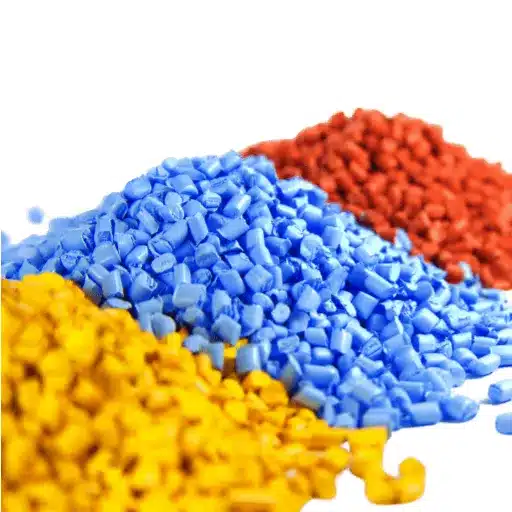


The production line for automotive seat adjusters failed its final qualification test because the required nylon gears expanded by two percent during the humid summer weather. The system experienced excessive backlash. The solution did not involve making a design modification. The company made a switch to POM copolymer which has a moisture absorption rate that stays below 0.2 percent.
You will encounter this decision when you design or source plastic gears. The datasheet displays POM PA66 PC PEEK as similar options, but actual performance between the materials varies under different load and temperature and humidity conditions. The selection of an incorrect resin results in noise production and wear problems and dimensional drift which no gear design can resolve.
The guide provides complete details about which engineering plastic needs to be chosen for your gear application. The study reveals POM and PA66 performance differences in actual gear testing, while it presents common use cases for branded resin grades and provides guidance on how to obtain certified material with essential production line documentation.
Want to skip ahead? Jump to the POM vs. PA66 comparison table or request a quote for gear-grade resin with COA.
Why Material Selection Is Critical for Plastic Gears

Plastic gears do not experience failures in the same way that metal gears experience failures. The primary failure mechanisms of polymer gear systems include wear and thermal distortion and moisture-based dimensional changes although fatigue cracks and pitting still occur. The material you choose determines which failure mode controls your design.
Plastic Gears Show Distinct Differences From Metal Gears.
Metals exhibit high modulus characteristics about their materials and they expand at low rates while they absorb no moisture. Plastics trade some stiffness for self-lubrication, damping, and cost efficiency. A steel gear might tolerate a poorly chosen alloy. A plastic gear will not tolerate a poorly chosen polymer.
POM exhibits a thermal expansion coefficient of approximately 100 µm/m/°C which equals ten times the expansion rate of steel. Designers must establish center distances and backlash specifications based on anticipated temperature variations. More importantly, nylon absorbs up to 2.5–9 percent moisture by weight, causing tooth profiles to swell and change mesh geometry. POM absorbs less than 0.2 percent. The single property determines which outcome will happen between silent operation for millions of cycles versus complete failure after one humid season.
The Three Dominant Failure Modes
- The process of wear and abrasion occurs when two surfaces of the material contact each other. The process of repeated tooth engagement generates friction which produces heat. Materials with low coefficient of friction and high PV limits exhibit extended durability because they withstand operational demands better.
- Thermal distortion. Plastics begin to soften when temperatures increase. Creep occurs at levels near the heat deflection temperature which results in hindrance of tooth accuracy maintenance.
- Moisture-driven dimensional drift. Gear bodies in unsealed gearboxes or humid conditions will experience moisture absorption which leads to gear body expansion. Backlash disappears. Noise and binding follow.
The Cost of Specifying the Wrong Resin Grade
Marcus, a design engineer at a Tier 2 automotive supplier in Stuttgart, specified PA66 for a power-window worm gear in 2023 because of its toughness and temperature resistance. He overlooked the door cavities which experienced humidity exposure during operation. The gears absorbed enough moisture after eighteen months that their backlash increased 0.15 mm. The window motors started to make chattering noises. The recall cost his customer more than the material savings ever returned.
The resin grade is not an afterthought. The resin grade serves as the essential element which establishes the complete design.
POM (Polyoxymethylene / Acetal) for Plastic Gears
The engineering plastic POM functions as the primary material choice for all precision gear applications. The material combines metal-equivalent stiffness properties with outstanding dimensional stability and exhibits its lowest friction coefficient range of 0.2 to 0.35 which applies to common thermoplastic materials.
Essential Properties Used for Gear Testing
- Tensile strength: 60–70 MPa
- Flexural modulus: 2.4–3.1 GPa
- Coefficient of friction: 0.2–0.35
- Moisture absorption: <0.2%
- Continuous service temperature: -40°C to +85°C (standard grades); up to 100–110°C for high-heat formulations
Gears depend on these numbers because low moisture absorption preserves tooth profile accuracy. The high stiffness property enables the system to maintain its contact pattern when exposed to load. The system achieves lower heat build-up because of its reduced friction which enables operation with minimal or no lubrication.
When to Choose POM for Gears
Specify POM when your application demands:
- Tight tolerances and low backlash in humid or wet environments
- Quiet, low-friction operation with minimal external lubrication
- Resistance to fuels, solvents, and automotive fluids
- Precision injection-molded gears with thin walls or complex tooth forms
POM Homopolymer vs. Copolymer for Gear Applications
The distinction between homopolymer and copolymer POM is one of the most common questions gear designers face.
POM homopolymer (e.g., DuPont Delrin) offers slightly higher tensile strength, greater surface hardness, and marginally lower friction. It is the go-to choice for high-load precision gears where every MPa of strength counts.
POM copolymer (e.g., BASF Ultraform, Celanese Hostaform, Polyplastics DURACON) delivers better thermal stability, superior resistance to hot water, and broader chemical resistance — especially to strong bases. For automotive underhood gears, fuel-system components, or any gear exposed to alkaline cleaners, copolymer is usually the safer choice.
Recommended Branded POM Grades for Gears
Yifuhui carries all the copolymer and homopolymer grades which global gear manufacturers demand. The following information shows which gear applications use this product.
- BASF Ultraform N2320 — High stiffness, general-purpose precision gears. The material shows excellent flow properties which enable thin-wall injection molding.
- Celanese Hostaform C27021 — Automotive gears maintain fuel and chemical resistance which includes E85 biofuel exposure.
- Polyplastics DURACON M90-44 — The material provides high flow capacity and superior moldability which enables production of complex gear shapes with precise dimensions.
- Kolon KOCETAL K300 — The material offers industrial automation and conveyor drive systems a budget-friendly solution that delivers strong performance.
- Formosa FORMOCON FM090 — The high flow grade enables the creation of detailed molded gears which require quick filling and excellent surface quality.
Need help matching a grade to your gear spec? Tell us your operating conditions and we will recommend the right branded grade from our multi-brand portfolio.
Nylon (PA66 / Polyamide) for Plastic Gears

PA66 stands as the second most popular gear polymer following POM. The material exhibits higher tensile strength together with better toughness and superior shock absorption properties. The material can withstand continuous temperature range of approximately 100 to 120 degrees Celsius for standard grades.
Key Properties for Gear Applications
- Tensile strength: 70–90 MPa
- Impact resistance: Superior to POM
- The friction coefficient ranges between 0.3 and 0.4 which increases through the addition of PTFE or oil additives.
- The material exhibits moisture absorption properties that range from 1.5 to 9.0 percent depending on the specific grade and conditioning process.
- The material can maintain continuous service at temperatures reaching approximately 120 degrees Celsius.
When to Choose PA66 for Gears
Specify PA66 when your application demands:
- Your application requires handling higher loads and experiencing shock loads together with resisting fatigue damage.
- Your application requires handling larger-diameter gears which must absorb energy during operation instead of achieving precise micron-level tolerances.
- Your application requires operating dry-running open systems which need their built-in lubricity functions to work properly.
- Your operation requires running at temperatures that exceed the standard limits of POM.
Moisture Absorption: The Critical Consideration
This property establishes PA66 as a better choice than POM for gear applications. Atmospheric moisture leads to nylon absorption which results in dimensional changes that create alterations in backlash and center distance. The sealed climate-controlled gearbox system allows for manageable operations. The open system which includes automotive door cavities creates potential for severe operational failures.
POM serves as the preferred material choice for designers who work on gear applications that operate in environments with changing humidity levels. PA66 serves as an outstanding material option when toughness requirements exceed standard tolerances for applications that have less stringent tolerance controls.
Glass-Filled PA66 for High-Load Gears
The combination of 30 percent glass fiber addition through PA66 GF30 results in greater material stiffness and improved creep resistance and enhanced load-bearing capabilities. The automotive industry uses glass-filled nylon to manufacture structural brackets while industrial power-transmission gears and high-cycle automation equipment also use this material.
Glass-filled materials become more abrasive when they come into contact with metal components such as pinions and shafts. The presence of a metal counter-gear in your gear train will result in increased wear on the metal component.
Recommended Branded PA66 Context
Yifuhui stocks branded PA66 grades including BASF Ultramid and UBE Nylon 1030B. For gear applications we typically recommend glass-filled Ultramid grades when load and temperature are the primary drivers and unfilled grades when some ductility and shock absorption are required.
POM vs. PA66: Which Plastic to Specify for Your Gear

The selection process for POM and PA66 materials depends on one essential question: What happens to the gear when humidity changes?
POM becomes the better option when gear requirements demand precise measurements which need to function in unsealed areas or high humidity conditions. The material PA66 becomes the preferred choice when gear components experience shock loads and elevated temperatures while operating in environments that permit greater dimensional variation.
|
Property |
POM (Acetal) |
PA66 (Nylon) |
|---|---|---|
|
Tensile strength |
60–70 MPa |
70–90 MPa |
|
Stiffness / rigidity |
Very high; excellent creep resistance |
High; can soften with moisture |
|
Impact / toughness |
Good; can be brittle under shock |
Superior; better for shock loads |
|
Moisture absorption |
<0.2% (exceptionally low) |
1.5–9.0% (causes swelling) |
|
Dimensional stability |
Excellent (best for tight tolerances) |
Moderate (must account for humidity) |
|
Coefficient of friction |
0.2–0.35 (excellent) |
0.3–0.4 (good) |
|
Max operating temp |
~90–100°C |
~100–120°C |
|
Chemical resistance |
Excellent vs. fuels and solvents |
Good vs. oils/fuels; weaker vs. acids |
|
Cost |
Higher raw material cost |
Generally lower, especially GF grades |
|
Best for gears |
Precision, humid environments, sealed gearboxes |
Shock-loaded, high-temp, large gears |
Quick decision matrix:
- Tight tolerances in humid conditions? Choose POM.
- Maximum strength and shock absorption? Choose PA66.
- Quiet operation with low friction needs minimal lubrication? Choose POM.
- Lowest cost for medium-load production? Choose PA66.
- Fuel or solvent exposure? Choose POM.
- Large-diameter gears with energy absorption needs? Choose PA66.
High-Performance and Specialty Gear Materials

Standard POM and PA66 fail to provide adequate protection for extreme operating environments. The two mainstay polymers require evaluation because both materials have better performance than the two main polymers used in this system.
PEEK for Extreme Temperature and Aerospace Gears
PEEK serves as the best material choice for aerospace gears because it protects against extreme temperatures.
PEEK (Polyetheretherketone) maintains its mechanical performance until reaching 250°C. The material provides exceptional chemical protection while exhibiting low wear and maintaining its high stiffness. The trade-off is cost — PEEK is roughly 10–20 times the price of POM or PA66.
You should use PEEK for aerospace actuators medical implant gears and chemical-processing equipment which must not experience failure.
Polycarbonate (PC) for Transparent and High-Impact Housings
PC excels in impact resistance and can be formulated for optical clarity. The material lacks the wear resistance of POM and PA66 which prevents its use as the primary gear material. Covestro Makrolon grades 2407 (high clarity) and 6555/6557 (flame-retardant V-0) serve as superior selections for gear housings and covers and transparent inspection windows in gear trains.
Glass-Filled and PTFE-Lubricated Grades
POM and PA66 can be strengthened through glass fiber reinforcement or PTFE/silicone blend applications which extend their wear lifespan. Glass fiber increases stiffness and creep resistance. PTFE reduces coefficient of friction even further.
When to upgrade:
- Systems need to operate at high speeds with continuous functions because thermal creep presents a threat to performance.
- Power transmission applications which experience high PV values need to operate with continuous functions.
- The system should operate for an extended period without needing maintenance.
Design and Manufacturing Considerations for Plastic Gears
The best material choice means nothing if the gear geometry and manufacturing process are not adapted to polymer behavior.
Injection Molding vs. CNC Machining
The primary manufacturing method for producing plastic gears in large quantities is known as injection molding. POM material achieves precise molding to tight tolerances while producing exceptional surface quality. The high flow of grades like Formosa FORMOCON FM090 or Polyplastics DURACON M90-44 makes them ideal for thin-wall gear geometries.
CNC machining is preferred for prototypes, low volumes, or gears requiring extremely tight tolerances that exceed typical molding capability. PA66 material requires sharp tools and proper fixturing to achieve optimal machining results while preventing overheating. POM machines cleanly with minimal burr formation.
Thermal Expansion and Backlash Design
Plastic gears expand roughly ten times as much as steel per degree Celsius. The designers need to create higher backlash values which they must maintain until the system reaches its highest temperature limit. KHK Gears recommends using modified Lewis formulas and wear safety factors specifically developed for polymer gear trains.
Lubrication Strategies
POM provides good lubricating properties but requires silicone or synthetic grease for its continuous operation at high speeds. The performance of PA66 gears improves through lubrication in high-cycle applications. The use of PTFE-filled or internally lubricated grades shows benefits for applications that cannot use external grease.
Sourcing Engineering Plastics for Gear Manufacturing

Selecting the right polymer is only half the battle. The process requires both genuine resin material and consistent batch production for the specific requirements of the project. A certified grade gear prototype performs perfectly until production begins because variations in melt flow index and moisture content of the bulk material.
Why Branded Prime Resin Matters for Gear Quality
Counterfeit or off-spec resin is a documented risk when sourcing from unverified suppliers. The molding process experiences dimensional changes when there is any shift in viscosity or filler content or molecular weight for precision gears. Established manufacturers need to provide branded prime resin as the solution which requires testing all resin batches through Certificate of Analysis (COA) verification.
How to Verify Resin Authenticity
Every shipment of branded resin should include:
- The Certificate of Analysis (COA) needs to display melt flow index and tensile strength data together with essential physical properties which match the manufacturer’s datasheet requirements.
- The Material Safety Data Sheet (MSDS) provides information for safe handling and meets regulatory requirements.
- The Batch traceability system connects the lot number to the manufacturer’s production record.
Yifuhui provides complete documentation for every order shipment. The company does not use alternative materials or change the labels of commodity resin to make it appear as branded products.
Trial Quantities for Gear Prototyping
Gear programs typically begin their operations at less than their maximum production capacity. Yifuhui offers a 25 kg minimum order quantity across our full POM and PA66 portfolio. You can conduct mold trials and qualification tests together with prototype builds using the certified grade that will be required for your production line without needing to purchase a full truckload.
Documentation for Automotive and Medical Qualifications
Regulated industries need their gear programs to have proper materials and complete requirements. Yifuhui provides:
- FDA-compliant POM and PTFE grades for food-contact and medical device gears
- RoHS and REACH compliance certificates for electronics and EU-market applications
- UL94 flame ratings for qualifying PC and ABS grades.
Lead Times and Logistics
The distance from our Suzhou warehouse to the Port of Shanghai takes only minutes to travel. The standard lead time for in-stock branded grades to major international ports ranges from 7 to 14 days based on the specific destination and Incoterm used. The company provides three different shipping options which include EXW, FOB Shanghai, and CIF terms.
Ready to source certified gear-grade resin? Request a quote — specify your application, target grade, and destination port, and we will respond with pricing, lead time, and COA availability within 24 hours.
Common Plastic Gear Applications by Industry

Automotive
The automotive industry uses plastic gears which operate power seat adjusters and HVAC actuators and power-window lifts and power-steering worm drives. POM copolymer proves superior because it absorbs minimal moisture and withstands fuel exposure. Celanese Hostaform C27021 is specifically specified for fuel-system gears exposed to E85 biofuel blends.
Electronics and Office Equipment
Printers and copiers and scanners use plastic gears which enable silent operation while processing documents at high speeds. Precision POM gears operate without lubrication because they need no separate lubrication systems to function correctly.
Industrial Automation
Both POM and PA66 materials serve conveyor systems and packaging machinery and robotic joints through their ability to adapt to different load and environmental conditions. Power-transmission stages commonly use glass-filled PA66 material. POM serves as the preferred material for precision indexing systems and pick-and-place systems.
Medical and Food-Contact
FDA-compliant grades with consistent dimensional stability are essential for dosing devices and diagnostic equipment and food-processing machinery. POM copolymer serves as the preferred material for medical gear trains which require repetitive operation.
Conclusion
The design team selected plastic gears. They intentionally selected plastic gears because their material properties control the wear duration and noise production and backlash stability and product durability.
Here is what to remember:
- POM dominates precision, low-friction, and humidity-sensitive gear applications because of its near-zero moisture absorption and excellent dimensional stability.
- PA66 provides superior toughness and shock-load capacity and elevated-temperature performance which requires designers to consider its moisture absorption characteristics.
- Branded grade selection matters. BASF Ultraform, Celanese Hostaform, Polyplastics DURACON, Kolon KOCETAL, and Formosa FORMOCON each bring specific flow, stiffness, and chemical-resistance profiles that map directly to gear use cases.
- Material selection requires equal attention to documentation processes which both display material information. A COA-verified, batch-traceable grade ensures your prototype and production material behave identically.
At Yifuhui, we supply the certified branded resins that gear manufacturers worldwide depend on — from 25 kg trial quantities to full container loads, with complete COA documentation and 7–14 day shipping from the Port of Shanghai.
Share your gear application with us. We will identify the right grade, confirm documentation requirements, and supply it with full traceability — from Suzhou to your production floor.


