



Search “acrylic” and you get sheets, signs, and laser-cutting shops. Search “PMMA” and you get datasheets, refractive indices, and polymer science. Neither search hands an injection molder the one thing they actually need: certified acrylic PMMA resin pellets with a verifiable grade specification and a COA that survives a quality audit.
That gap is where sourcing failures start. Elena, a procurement manager at a Portuguese automotive lighting supplier, spent three weeks qualifying a new PMMA source for headlamp lenses. Most supplier sites sold acrylic sheet or “Plexiglas panels.” The few that listed resin pellets offered no grade number, no MFI data, and no confirmation of virgin content.
Her first trial sample looked clear in the bag but molded cloudy lenses with visible flow lines. The COA, when it finally arrived, showed a melt flow index 40% above the datasheet spec for the grade she thought she had bought. That single mis-specified trial cost her team a month of qualification time.
This guide is written for engineers and procurement professionals who need acrylic PMMA resin pellets for injection molding, not sheets, and not fabrication services. You’ll learn how PMMA resin differs from semi-finished acrylic products, how to read MFI correctly so grade numbers actually mean something, which branded grades match which applications, how to verify optical quality before you commit, and what 2026 pricing looks like from China.
If you want the broader material picture first, our PMMA material guide covers properties, forms, and sourcing fundamentals. This article goes deeper on injection-molding grade selection and supplier verification.
What Is Acrylic PMMA Resin?
Acrylic PMMA resin is polymethyl methacrylate, a transparent thermoplastic synthesized from methyl methacrylate (MMA) monomer, supplied as pellets for injection molding and extrusion. “Acrylic” is the commercial and common name; “PMMA” is the chemical designation; “polyoxymethylene” is a different polymer entirely, so don’t confuse the two in a purchase order.
The distinction that matters for buyers is not terminology. It is product form.
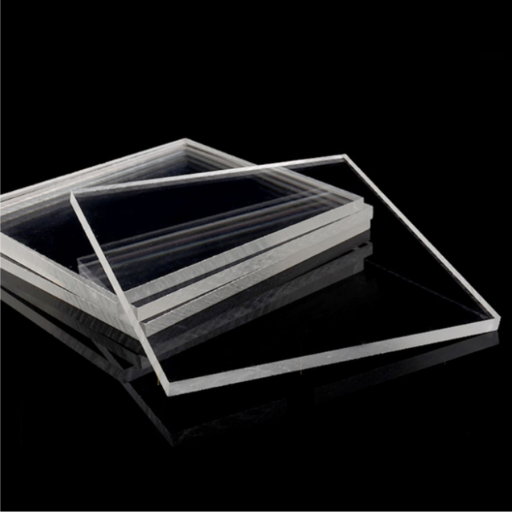
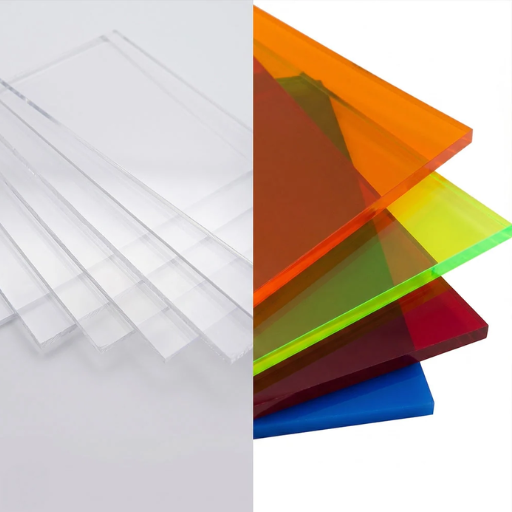
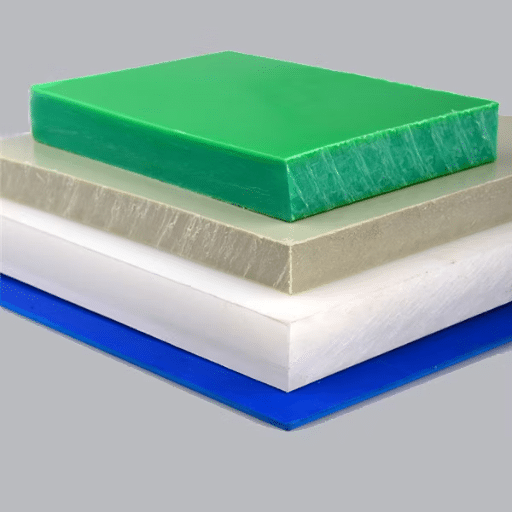
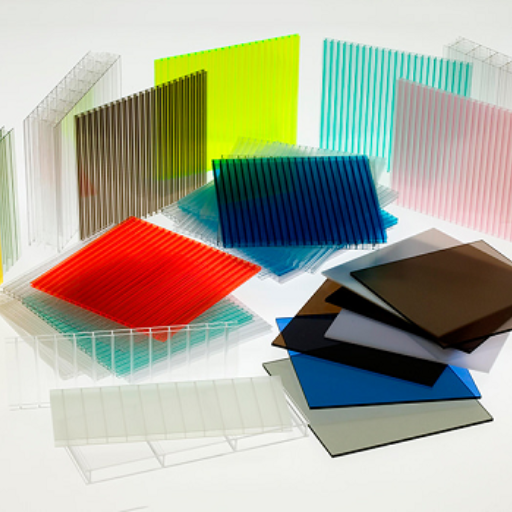
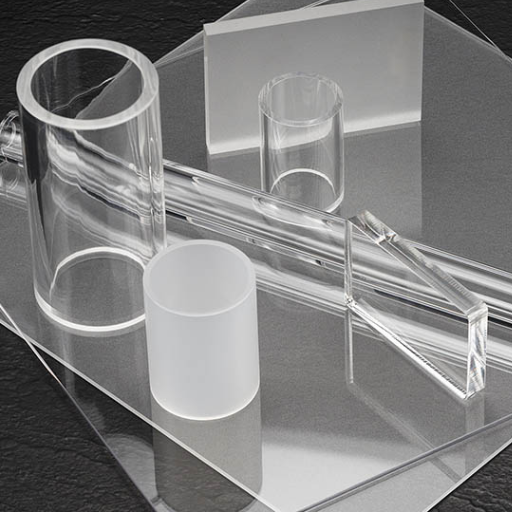
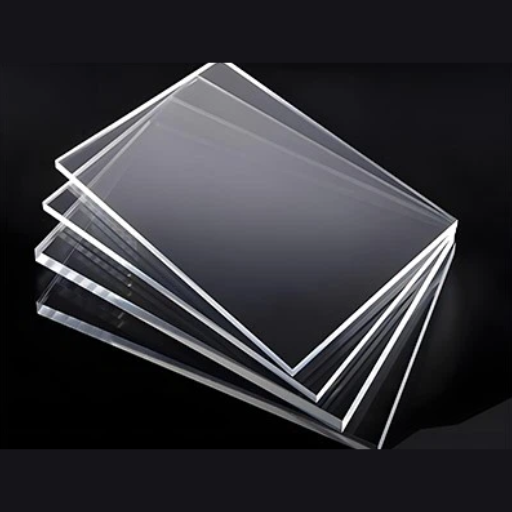
Acrylic PMMA is manufactured in three primary forms, and only one is relevant if you run an injection molding press. Cast acrylic sheet is polymerized in a batch process between glass plates, delivering the highest optical clarity and lowest internal stress, but it exists only as sheet for cutting, bending, and gluing. Extruded acrylic sheet is continuously pushed through a die, giving tighter thickness tolerances at lower cost with slightly more internal stress, and it also exists only as sheet for signage, glazing, and displays.
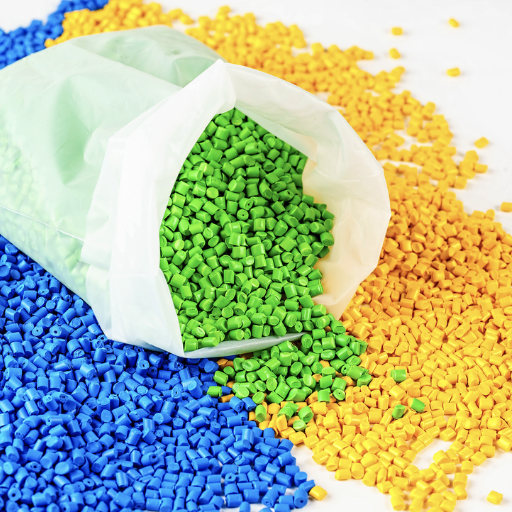
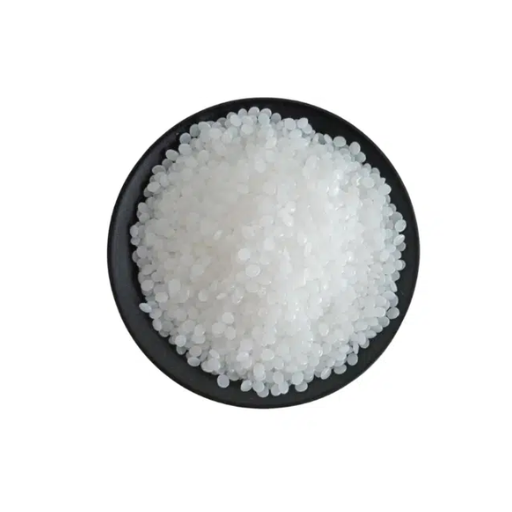
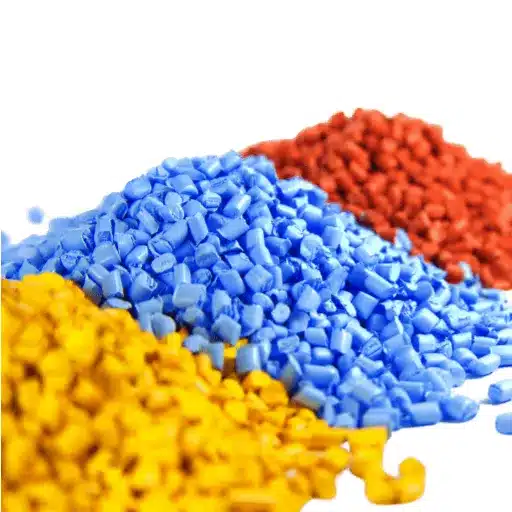
Injection molding and extrusion grade PMMA resin is the third form: pellets or granules that feed molding machines and extruders to produce lenses, light guides, medical components, and electronics housings. Pellet grades carry specific melt flow characteristics, thermal stabilizers, and processing aids that sheet grades do not.
At Yifuhui, we supply acrylic PMMA resin exclusively as pellets, in certified branded grades with manufacturer-issued COA documentation for every lot. Pellets, not sheet, and never a generic grade without a manufacturer name behind it.
Why Engineers Specify Acrylic PMMA Resin
PMMA holds a specific position among transparent thermoplastics. It isn’t the toughest, since polycarbonate beats it on impact. It isn’t the cheapest, since polystyrene and PETG undercut it. But when optical clarity, surface hardness, and long-term weatherability matter together, PMMA is the material engineers specify.
Optical Performance
PMMA transmits 92–93% of visible light, higher than polycarbonate at 88–90% and comparable to glass. Its refractive index of about 1.49 makes it well suited to precision lenses, light guides, and LED optics where minimal light loss and low distortion are critical. Unlike polycarbonate, which yellows without UV-stabilizer additives, PMMA holds its clarity through years of outdoor exposure.
Mechanical and Thermal Properties
Tensile strength runs 50–75 MPa depending on grade. Surface hardness measures M80–M100 on the Rockwell scale, the highest of any common transparent thermoplastic, which translates directly into better scratch resistance than polycarbonate. Density is 1.17–1.20 g/cm³, roughly half that of glass, which keeps PMMA central to automotive lightweighting programs.
Heat deflection temperature spans 80–105°C depending on formulation. For sustained operation above 90°C, heat-resistant grades extend the usable window. For context on where those numbers come from, see our guide to PMMA glass transition temperature, which explains why Tg sits near 105°C and how HDT differs from it.
Weather, Chemical, and Fire Performance
PMMA has inherent UV stability. It filters radiation below roughly 300–400 nm without a protective coating and does not yellow or embrittle after prolonged sun exposure, which is why automotive taillight lenses and outdoor signage have relied on acrylic for decades. Polycarbonate needs UV stabilizers and hard coats to match that longevity.
Chemically, PMMA resists aqueous detergents, dilute acids and alkalis, aliphatic hydrocarbons, and fats and oils. It is vulnerable to stress cracking in contact with ketones, esters, ethers, chlorinated hydrocarbons, and alcohols. Standard PMMA is also UL94 HB, so flame-retardant behavior must come from a specialty grade, not the base polymer. If your application involves solvent or chemical contact, tell us the specific media and we will confirm suitability or point you to a better-fit material.
Cast, Extruded, or Injection-Molding Grade? Which PMMA You Actually Need
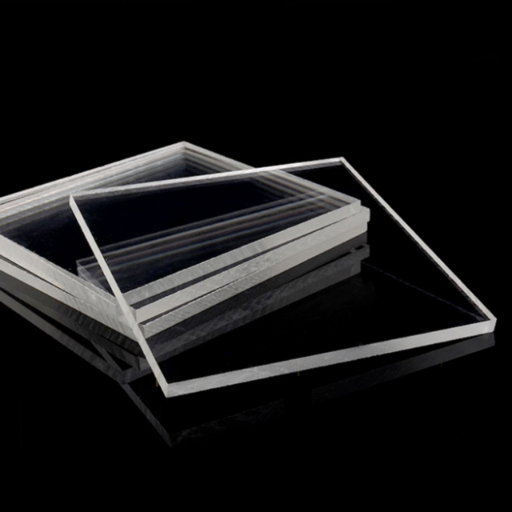
The table below maps the three forms to their supply chains and applications.
| Property | Cast Acrylic Sheet | Extruded Acrylic Sheet | Injection-Molding PMMA Resin |
|---|---|---|---|
| Light Transmission | 92–93% | 92% | 92–93% |
| Optical Clarity | Excellent | Very good | Excellent (grade-dependent) |
| Internal Stress | Low | Higher | Mold-dependent |
| Tensile Strength | 50–75 MPa | 50–70 MPa | 50–75 MPa |
| Heat Deflection | 80–100°C | 75–95°C | 80–105°C (grade-dependent) |
| Form Factor | Sheet only | Sheet/profile only | Pellets/granules |
| Primary Process | Cutting, bending, gluing | Cutting, thermoforming | Injection molding, extrusion |
| Best For | Aquariums, displays, optics | Signage, glazing, panels | Lenses, light guides, medical, electronics |
If your process is injection molding or extrusion, you need pellet-grade acrylic PMMA resin. Sheet stock cannot be fed into a standard molding machine, and pellet grades are formulated with the melt flow behavior and stabilizer packages that sheet grades do not require.
PMMA Injection Molding Grade Selection: Matching Melt Flow Index to Your Application
For a PMMA injection molding grade, the single most important selection parameter is the PMMA melt flow index (MFI), also called melt flow rate (MFR). MFI measures how easily the molten polymer flows, expressed in grams per 10 minutes under standard test conditions. The right MFI depends on your wall thickness, flow path length, and mold geometry.
Read the PMMA Melt Flow Index Correctly First
Here is the detail most supplier listings and even some datasheets leave out: PMMA MFI is reported at 230°C, but the applied load varies, usually 3.8 kg or 5 kg. A number measured at 230°C/3.8 kg is not comparable to one measured at 230°C/5 kg. The lighter load produces a lower number for the same polymer.
Always match the test condition before comparing two grades. If a supplier quotes “MFI 10” without stating the load and temperature, you have an incomplete specification, and your comparison is meaningless. MFI is tested to ASTM D1238 or ISO 1133, and the standard condition should appear alongside every value. If it doesn’t, ask for it.
Daniel, a process engineer at a Polish LED lighting manufacturer, learned this the hard way. Two suppliers quoted grades at “MFI 10.” He assumed they were equivalent. They were not.
One was measured at 230°C/3.8 kg, the other at 230°C/5 kg. The second flowed noticeably faster and filled his thin light-guide ribs with flash. Matching test conditions, not just the number, resolved the discrepancy.
High-Flow Grades (MFI ~10–14 g/10 min at 230°C/3.8 kg)
High-flow grades fill thin walls, long flow paths, and micro-features without short shots. They permit lower melt temperatures and faster cycles.
Typical applications: LED light guides, Fresnel lenses, thin-wall electronics housings, display bezels, light-pipe ribs.
Example grades: LG Chem IF850 (MFI 13), Mitsubishi Acrypet VH series, Trinseo PLEXIGLAS HFI7/HFI10, ALTUGLAS VM/VML.
Trade-off: Slightly lower mechanical strength than lower-MFI grades, acceptable for most thin-wall parts but worth validating for structural loads.
General-Purpose Grades (MFI ~4–6 g/10 min)
General-purpose grades balance flow against mechanical properties, making them the default for standard optical parts where neither extreme flow nor maximum strength dominates.
Typical applications: Standard lenses, display covers, signage faces, general optical components.
Example grades: Mitsubishi Acrypet MD series, ALTUGLAS V825T/V920T.
Processing note: These grades offer the widest processing window and forgive variable production conditions. Most first-time PMMA molders should start here.
Heat-Resistant Grades (MFI ~1.5–2.3 g/10 min, HDT above 95°C)
Standard PMMA softens above roughly 80–100°C. For sustained thermal exposure near LED heatsinks, underhood lighting, or high-temperature enclosures, heat-resistant grades extend the service window.
Typical applications: Lighting near heat sources, high-power LED fixtures, appliance components with thermal load.
Processing note: Heat-resistant grades need higher mold temperatures and slower cooling. Confirm your equipment can hold those mold temperatures consistently.
Impact-Modified Grades (MFI ~2–8 g/10 min)
Standard PMMA is brittle under high-impact loading. Impact-modified grades add elastomer to improve toughness at a small cost in clarity and surface hardness.
Typical applications: Appliance housings, transportation interiors, handheld enclosures, any part where drop resistance matters more than maximum optical purity.
Example grades: Mitsubishi Acrypet MF series, PLEXIGLAS DR/HFI.
Trade-off: Impact grades typically transmit 85–90% of light versus 92–93% for standard optical grades. Confirm the impact-versus-transmission balance before specifying one for an optical part.
Grade-Selection Table
| Grade Type | MFI (g/10 min) | Best For | Example Grades | Processing Note |
|---|---|---|---|---|
| High-Flow | ~10–14 @230°C/3.8 kg | Thin walls, micro-features, light guides | LG Chem IF850 (13), Acrypet VH, ALTUGLAS VM/VML, PLEXIGLAS HFI7/HFI10 | Lower melt temp, faster cycle |
| General-Purpose | ~4–6 @230°C/3.8 kg | Standard lenses, covers | Acrypet MD, ALTUGLAS V825T/V920T | Balanced properties |
| Heat-Resistant | ~1.5–2.3 | High-temp proximity, thick parts | PLEXIGLAS NTA-3, ALTUGLAS high-heat | Higher mold temp, slower cooling |
| Impact-Modified | ~2–8 | Consumer/appliance/auto interior | Acrypet MF, PLEXIGLAS DR/HFI | Slightly reduced clarity |
| Optical (low-flow) | ~1.6 @230°C/3.8 kg | Precision optical lenses | LG Chem HP02, Acrypet VH002 | Tight process control |
Values marked @230°C/3.8 kg are directly comparable with each other. Some suppliers report at 230°C/5 kg. Do not compare across different loads.
Choosing between PMMA and polycarbonate for an optical part? Our polycarbonate granules sourcing guide covers Covestro Makrolon grades for applications where impact resistance outranks scratch resistance.
Branded PMMA Grades Yifuhui Supplies
Generic “PMMA granules” listings carry real risk. Without a manufacturer brand and grade number, you have no verifiable specification to test against. Yifuhui stocks certified grades from recognized producers, each shipping with manufacturer-issued COA documentation.
LG Chem PMMA: IF850 (High-Flow Optical)
LG Chem’s IF850 is a fully specified high-flow grade widely used in Asian electronics and automotive supply chains. It is a practical match for molders moving to thinner-wall designs without changing equipment.
Documented properties include MFI 13 g/10 min at 230°C/3.8 kg, light transmittance 92% at 3.2 mm, haze below 0.5%, refractive index 1.49, Vicat softening near 92°C, HDT 88°C at 1.8 MPa, density 1.19 g/cm³, tensile strength 62 MPa, flexural strength 101 MPa, Rockwell M92, and notched Charpy impact around 1.5 kJ/m². Recommended drying is up to 80°C for 3–4 hours, with melt temperature 210–240°C and mold temperature 50–70°C. LG Chem grade data is published on SpecialChem/Omnexus.
Mitsubishi Chemical Acrypet™
Mitsubishi Chemical is one of the world’s largest PMMA producers, with deep automotive and electronics qualifications.
- Acrypet VH series: high-flow grades for thin-wall and complex optical parts
- Acrypet MD series: general-purpose optical grades, the standard choice for most molding
- Acrypet MF / MF001: high-flow, heat-resistant, and impact-capable grades for appliances and lighting
All Acrypet grades ship with manufacturer COA including MFI, light transmittance, and yellowness index data.
Trinseo PLEXIGLAS® and ALTUGLAS™
PLEXIGLAS and ALTUGLAS are among the most recognized PMMA brands in Europe and North America. Trinseo’s impact and high-flow lineup includes PLEXIGLAS DR, DRM2, HFI7, HFI10, MI7, and SG7/SG10, while the ALTUGLAS family includes V040, V825T, V920T/V920, VM, and VML.
If your specification names a specific PLEXIGLAS or ALTUGLAS grade, share the number with us. We will identify the closest match in our stocked portfolio and confirm property equivalence against manufacturer datasheets.
Regional and Value Grades
We also work with regional producers whose grades map well to cost-sensitive programs: Zhenjiang Chi Mei ACRYREX® CM-205/207/211 (CM211 for high-flow electronics work), Wanhua ACRYPLAS® SF06L, and Shuangxiang “Double Elephant” SX301/304/306 for optical extrusion. As with every grade we supply, the value grades we quote come with a COA per lot.
Stock of specific grades changes. Tell us the specification and we’ll confirm current availability before you build it into a purchase order.
Application-Specific PMMA Grade Recommendations
The right acrylic PMMA grade depends on more than clarity. Operating temperature, chemical exposure, wall thickness, and regulatory needs all narrow the field.
| Application | Recommended Grade | Critical Requirement |
|---|---|---|
| Automotive lighting (headlamp, taillight lenses) | General-purpose optical (Acrypet MD); heat-resistant near underhood lighting | Lot-to-lot optical consistency; COA with transmission, haze, and yellowness index per lot |
| Electronics and display components | High-flow (LG Chem IF850, Acrypet VH) for thin-wall bezels; general-purpose for covers | RoHS and REACH declarations for the exact grade |
| Medical and optical devices | Virgin optical grade with ISO 10993 or USP Class VI | 100% virgin resin and lot traceability to manufacturer batch records |
| LED lighting and light guides | General-purpose optical, haze below 1% | Mold design drives transmission: weld lines, gate location, surface finish |
| Consumer and appliance housings | Impact-modified (Acrypet MF or equivalent) | Accept 85–90% transmission in exchange for toughness |
Automotive lighting is the most demanding case. A lens must transmit light with minimal haze and distortion after years of road salt, direct sun, and cycling from -40°C to 85°C. OEM optical tolerances are tight, so every production lot has to match the qualification lot.
Need a grade recommendation for a specific part? Send us your wall thickness, optical spec, and operating temperature, and we’ll map them to a certified grade. Request a quote, response within 24 hours.
Processing Acrylic PMMA Resin: Drying, Temperatures, and Shrinkage
Even a correct grade will produce defective parts if processing is wrong. PMMA is more forgiving than some engineering plastics, but it has specific requirements that molders must respect.
Drying
PMMA is hygroscopic. Pellets absorb moisture from ambient air, and if molded wet, that moisture vaporizes in the barrel and creates splay marks, bubbles, and silver streaks that ruin optical surfaces.
Recommended drying: 80–100°C for 2–6 hours depending on grade and part, targeting residual moisture below 0.04%. Some high-clarity grades specify a lower ceiling to prevent pellet sticking; LG Chem IF850, for example, calls for up to 80°C for 3–4 hours. Desiccant dryers are strongly preferred over hot-air dryers for PMMA.
Consequence of poor drying: splay marks, reduced transmission, visible surface defects, and in severe cases hydrolytic degradation that lowers molecular weight and mechanical properties.
Melt and Mold Temperatures
Melt temperature: 210–280°C, grade-dependent. High-flow grades run at the lower end; heat-resistant and general-purpose grades need more heat. IF850 processes at 210–240°C.
Mold temperature: 35–90°C. Higher mold temperatures (70–90°C) improve surface gloss and reduce residual stress for optical parts. Lower mold temperatures permit faster cycles for non-optical components.
Shrinkage and Mold Design
Shrinkage: 0.2–0.6%, grade-dependent. PMMA has lower and more predictable shrinkage than crystalline polymers like POM or PA66, which simplifies mold design, but the allowance still matters.
For optical parts, use polished mold surfaces because any texture transfers directly to the part. Avoid gating onto optical faces; edge, submarine, or fan gates at the perimeter yield better optical results than direct sprue gating. Adequate venting prevents burn marks from trapped air. Annealing at 70–80°C for 2–4 hours relieves residual stress in demanding optical parts.
How to Verify Acrylic PMMA Resin Quality Before Production
The sourcing risk in PMMA is rarely a completely fake material. It is the wrong grade, recycled content sold as virgin, or off-spec material whose optical properties drift from the datasheet.
The Risk of Off-Spec or Recycled PMMA
Recycled PMMA can look perfectly clear as pellets. The problems show up after molding: reduced transmission, higher haze, yellowing under UV, and inconsistent melt behavior. For optical work, the distance between virgin and recycled material is the distance between a qualified part and a production rejection.
Raj, a quality engineer at an Indian electronics manufacturer, received his first PMMA trial from an unverified supplier. The pellets were transparent and the price was 15% below market. His test mold filled acceptably, but the light guide plates transmitted only 84% of light, well below the 92% his specification required.
The COA arrived two days after the material and contained no optical property data at all. The supplier later admitted the resin held 30% recycled content. Raj re-qualified with a virgin grade from Yifuhui at 25 kg MOQ and hit 92.5% transmission on the first shot.
What to Check on the Certificate of Analysis
A valid PMMA COA should include:
- Light transmittance: above 92% for optical grades; premium grades may specify above 92.5%
- Haze: below 1% for premium optical work; values above 2% indicate impurities or degradation
- Yellowness index (YI): compare against the manufacturer datasheet, since even small increases signal thermal degradation or recycled content
- Melt flow index: must fall within the manufacturer-published spec for the grade, at the stated test load and temperature
- Virgin content confirmation: for optical and medical work, the COA should confirm 100% virgin resin
- Lot number: traceable back to the manufacturer batch
Cross-Reference the COA Against the Datasheet
Every value on the COA should be checked against the manufacturer’s published datasheet for that exact grade. If the transmission, haze, or MFI deviates beyond normal test variation, pause. If the supplier cannot produce the datasheet for comparison, that is itself a signal to stop and re-qualify.
Verify Authorized-Distributor Status
Authorized distributors hold traceable supply relationships with manufacturers and receive genuine branded material with original lot documentation. Ask for evidence: distributor agreements, manufacturer references, or historical purchase records. A supplier who responds defensively to that question is a red flag, not a partner.
Qualify with a Trial Order
Yifuhui’s 25 kg MOQ exists for exactly this stage. A 25 kg trial supports process validation, initial part qualification, and optical verification on molded components. Test mold a small batch under your standard conditions, then measure transmission and haze on the actual parts, not just the pellets.
Documentation for Regulated Applications
For automotive, medical, and food-contact work, confirm that compliance certificates match the exact grade ordered. FDA, RoHS, REACH, and UL94 status is grade-specific, not material-family generic. A COA without the accompanying compliance documentation leaves your regulatory review incomplete.
Sourcing Acrylic PMMA Resin from China: What to Look For

If you need a PMMA resin supplier in China your quality system can audit, the checklist below is the place to start. The China-based PMMA market includes genuine branded distributors, compounders of modified material, and traders sourcing from unspecified channels. Knowing how to tell them apart protects both your schedule and your quality system.
Specify Grade, Not “Clear Acrylic”
“LG Chem IF850” or “Acrypet MD001” gives your supplier and your QC team a verifiable specification. “Clear PMMA granules” gives you nothing. Generic descriptions on purchase orders and invoices create documentation gaps that complicate supplier audits and OEM qualifications.
Packaging and Handling
PMMA pellets are hygroscopic and absorb moisture in transit. Standard packaging is 25 kg bags with moisture-barrier liners. Confirm packaging integrity on arrival, because punctured or poorly sealed bags can take on enough moisture to require re-drying or, in severe cases, render the material unusable for optical work. Yifuhui ships in manufacturer-original packaging with the full export file: commercial invoice, packing list, COA, MSDS, and applicable compliance certificates.
Trade Terms and Logistics
Standard terms from Suzhou are FOB Shanghai, with CIF and EXW available by arrangement. Our typical lead time from the Suzhou warehouse to major international ports is 7–14 days depending on destination. Acrylic PMMA resin (PMMA) carries HS code 39061000, and CAS number 25188-98-1, both useful when you brief your customs broker.
A Note on China’s Position in the PMMA Market
China holds the largest share of global PMMA capacity by a wide margin. Röhm leads globally, followed by Trinseo and Mitsubishi Chemical, while major Chinese producers include Wanhua, Zhenjiang Chi Mei, and Shuangxiang. For buyers, that capacity means competitive pricing and generally reliable availability, but it also means the market is crowded with listings of widely varying quality. The brand and grade number on your specification are what separate a genuine supply chain from a spot purchase.
Sourcing a different transparent engineering plastic too? We also supply Covestro Makrolon polycarbonate and ABS resin from the same Suzhou base, which lets you consolidate documentation and shipping across materials.
Acrylic PMMA Resin Price Context (2026)
Prices move with feedstock and capacity, so treat every figure below as a dated range rather than a fixed quote.
China domestic market: PMMA particles traded around CNY 14,000–16,200 per ton (roughly CNY 14–16.2 per kg) through much of 2026, with a pronounced rally of about 11.5% month-over-month in September 2026 driven by higher acetone and MMA costs and plant turnarounds that held the operating rate near 47–54% .
Export and FOB China: general-purpose material has clustered around US$1.81–2.23 per kg, with most offers near US$2.10–2.15 per kg for grades such as Chimei ACRYREX CM-211.
Branded optical premiums: recognized optical grades cost more. Mitsubishi VH001 has quoted near CNY 16.0–16.8 per kg, Mitsubishi IH830 near CNY 19–22 per kg, and Mitsubishi Acrypet MF001 around US$2,450–2,900 per ton.
What drives the numbers: MMA feedstock is the dominant variable cost, so prices track MMA and the upstream acetone curve. Grade matters too, since general-purpose, optical, and medical specifications sit at different points on the curve. With demand soft into Q4 2026, most forecasts point to a range-bound near-term market.
Market direction is one input among several, and it should not override grade fit. A cheaper grade that fails optical qualification costs more in rework than a correctly specified premium grade costs per kilogram.
Frequently Asked Questions
Is PMMA the same as acrylic resin?
Yes, in nearly all industrial contexts. PMMA (polymethyl methacrylate) is the chemical name and acrylic is the commercial name for the same transparent thermoplastic. For a full explanation, see our PMMA vs acrylic comparison.
What MFI grade of PMMA do I need for thin-wall molding?
For wall thickness below about 1.5 mm or complex geometry with long flow paths, specify a high-flow grade in the MFI 10–14 g/10 min range measured at 230°C/3.8 kg. Examples include LG Chem IF850 and Mitsubishi Acrypet VH.
How do I compare PMMA MFI values between suppliers?
Match the test conditions first. PMMA MFI is reported at 230°C but at different loads, typically 3.8 kg or 5 kg, and values are not comparable across loads. Only compare numbers measured under identical temperature and load.
What should a PMMA Certificate of Analysis include?
Brand and grade, lot number, manufacturer, and measured properties including MFI (with test conditions), light transmittance, haze, and yellowness index. For regulated applications, add compliance certificates for the exact grade ordered.
What is the minimum order quantity for acrylic PMMA resin from China?
Yifuhui offers a 25 kg MOQ across our PMMA grades, which supports qualification trials without a production-volume commitment.
How much does acrylic PMMA resin cost in 2026?
General-purpose Chinese material has traded around US$1.81–2.23 per kg FOB, with branded optical grades at a premium. Treat these as dated ranges, since MMA feedstock and capacity utilization move prices month to month.
Conclusion
Acrylic PMMA resin delivers unmatched optical clarity, inherent UV stability, and the best surface hardness of any transparent thermoplastic. For injection molding, success comes down to four decisions: pick the right grade, specify a verifiable brand, process it correctly, and qualify the supplier before you scale.
Key takeaways:
- Resin pellets for injection molding are a different product category from acrylic sheet. Specify pellet grade, not sheet form.
- MFI is the primary grade-selection parameter, but it only means something with its test conditions. Compare grades at matching temperature and load.
- Virgin resin with verified optical properties is non-negotiable for automotive, medical, and precision optical work.
- A complete COA, cross-referenced against the manufacturer datasheet, is your first line of defense against off-spec or recycled material.
- A 25 kg trial order lets you qualify material truthfully before committing to volume.
Tell us your part requirements, wall thickness, optical specs, and operating temperature, and we’ll recommend the certified acrylic PMMA grade and supply it with full COA documentation. Get your PMMA quote, response within 24 hours. To learn more about PMMA Melting Point: Does Acrylic Actually Melt? (°C and °F), please refer to our accompanying guide.