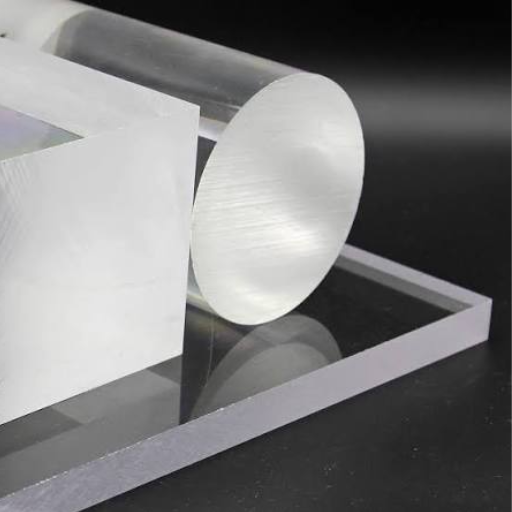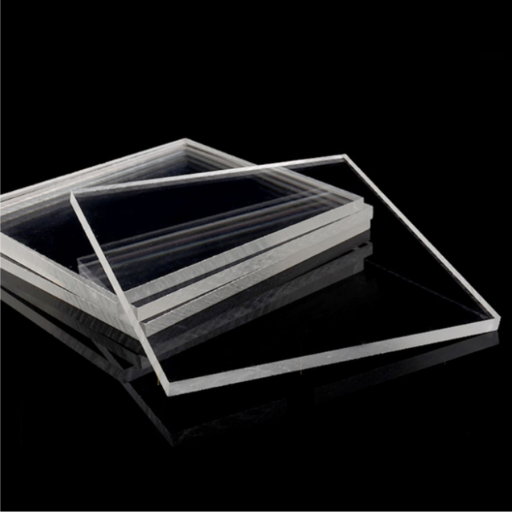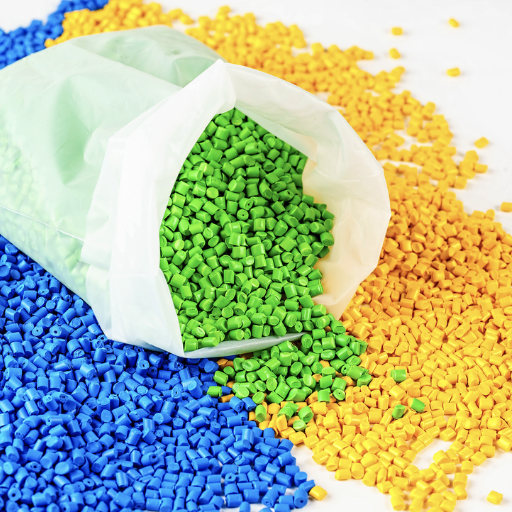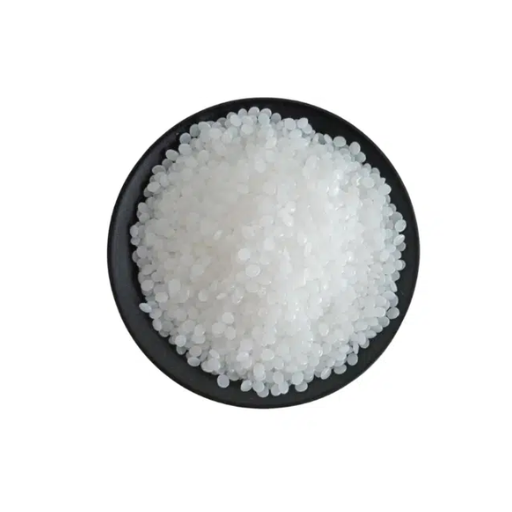

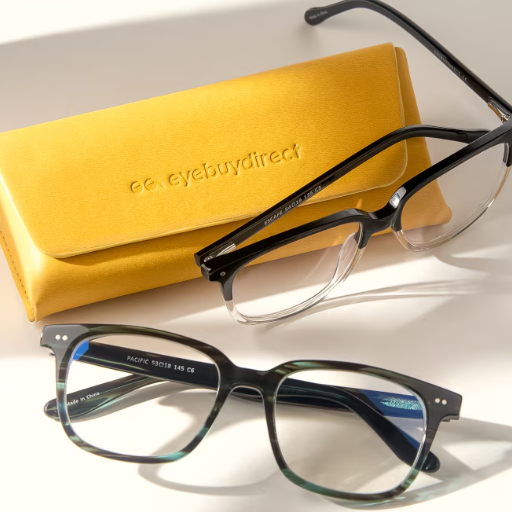
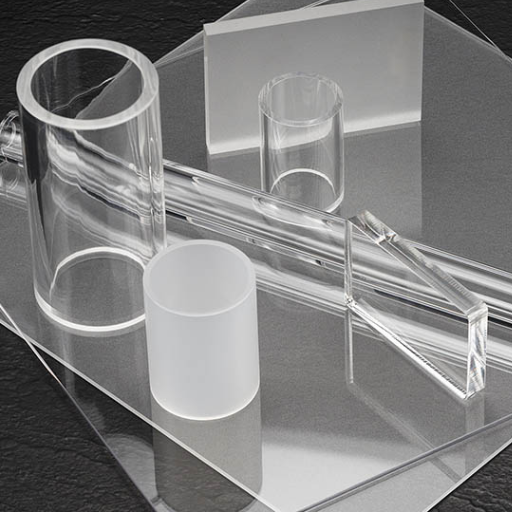



Put a sheet of acrylic next to a sheet of polycarbonate and you cannot tell them apart. Both are clear, both are glossy, and both get specified for the same jobs, from machine guards to car lights. Then one shatters under a dropped tool while the other shrugs it off, and you find out which one you actually needed.
That gap is the whole point of the PMMA vs polycarbonate decision. PMMA, better known as acrylic, is the clearer, harder, more UV-stable material. Polycarbonate, or PC, is the one that takes a hit without breaking.
Getting the choice wrong does not just cost a part. It costs warranty claims, customer trust, and a redesign you did not budget for.
This guide gives you the head-to-head numbers engineers actually spec against, a decision matrix, and the failure modes that separate a good choice from a costly one. Along the way we will cover the branded grades we stock, from Covestro Makrolon to Mitsubishi Acrypet, and how to verify what you buy. If you already know your application and just need a certified grade, request a quote and our technical team responds within 24 hours.
At a Glance: PMMA vs Polycarbonate Property Comparison
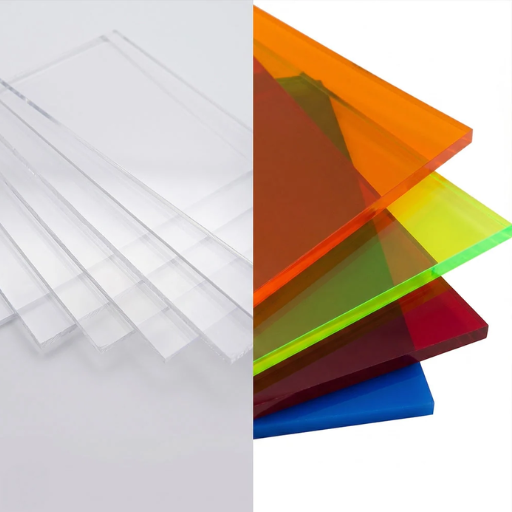
Here is the acrylic vs polycarbonate comparison most pages skip, with real values instead of adjectives. Every number comes from a standard test, so you can put it straight into a specification.
| Property | PMMA (Acrylic) | Polycarbonate (PC) | Test Standard |
|---|---|---|---|
| Light transmission | 92 to 93% | 88 to 90% | ASTM D1003 |
| Refractive index | ~1.49 | ~1.585 | ASTM D542 |
| Notched Izod impact | ~0.3 to 0.4 ft-lb/in (brittle) | ~12 to 18 ft-lb/in (very tough) | ASTM D256 |
| Tensile strength | 50 to 75 MPa | 60 to 75 MPa | ASTM D638 |
| Flexural modulus | ~3.2 GPa | ~2.3 to 2.4 GPa | ASTM D790 |
| Rockwell hardness | M80 to M100 | ~M70 | ASTM D785 |
| Scratch resistance | Excellent | Poor (needs a hard coat) | Taber / pencil |
| HDT at 1.8 MPa | 95 to 103 °C | 125 to 138 °C | ASTM D648 |
| Glass transition (Tg) | ~105 °C | ~147 °C | ASTM D3418 |
| Density | 1.17 to 1.20 g/cm³ | 1.19 to 1.22 g/cm³ | ASTM D792 |
| UV / weather stability | Excellent (inherent) | Poor without stabilization | QUV / ASTM G154 |
| Flammability | HB (combustible) | V-0 available (FR grades) | UL94 |
| Chemical resistance | Good, attacked by ketones and esters | Fair, prone to stress cracking | immersion |
| Relative cost | Lower | Higher | market |
The one-line verdict sits right on the table. If impact and heat drive your design, choose polycarbonate. If clarity, scratch resistance, and UV stability drive it, choose PMMA. Cost usually falls PMMA’s way, but only until the part needs a hard coat to survive outdoors.
For a deeper single-material reference, our polycarbonate properties guide covers PC on its own, and our PMMA material guide does the same for acrylic.
What Are PMMA and Polycarbonate?
PMMA, or polymethyl methacrylate, is an amorphous transparent thermoplastic made from methyl methacrylate monomer. Acrylic and PMMA are the same polymer; “acrylic” is the commercial name and PMMA is the chemical one. Its bulky side groups keep the chains from packing into crystals, which is exactly why it is so clear.
Polycarbonate is also amorphous, but it is built around bisphenol-A and carbonate linkages. Those linkages give the chain a toughness that PMMA simply does not have. One material is a stiff, hard glass; the other is a stiff, hard glass that bends before it breaks.
That molecular difference is not academic. It explains why acrylic dominates light guides and polycarbonate dominates safety glazing, and it is the thread that runs through every comparison that follows. The Wikipedia entry on poly(methyl methacrylate) is a useful reference for the chemistry, though it will not help you pick a grade.
Optical Properties: Clarity, Haze, and Refractive Index
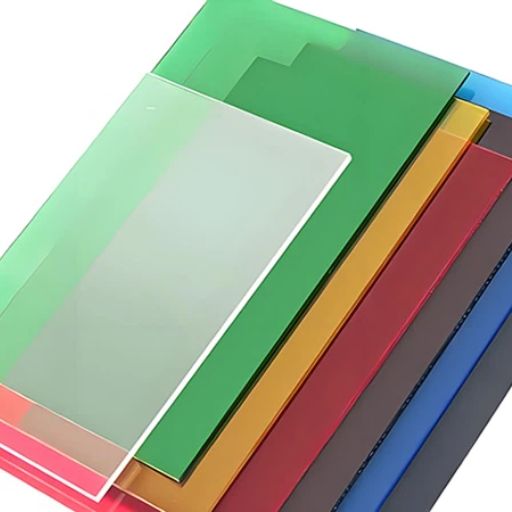
PMMA is the clearer of the two. Its light transmission runs 92 to 93%, against 88 to 90% for standard polycarbonate. Both beat glass on transmission, but acrylic wins on purity, and that margin matters in lenses, light guides, and display covers where every lost photon shows up as inefficiency.
Refractive index is the other optical separator. PMMA sits near 1.49 and PC near 1.585. For a simple window, that difference is invisible.
For a precision lens or a light guide, it changes the optical design. If you are building optics, you design around the index you choose, and you cannot swap one material for the other without redoing the math.
Haze and yellowness index (YI) complete the picture. Premium optical grades of both materials hold haze under 1% and a low YI at the start of life. The difference appears over time. Acrylic stays clear, while unstabilized polycarbonate drifts toward yellow.
For applications where optical performance is the whole point, acrylic is usually the answer.
Specifying an optical part? We stock optical-grade PMMA and PC with documented light transmission, haze, and YI values. Request a spec-matched quote and we will respond within 24 hours.
Impact Resistance: The Biggest Gap Between PMMA and PC
If you remember one number from this article, make it this one. A notched Izod test on PMMA gives roughly 0.3 to 0.4 ft-lb/in. The same test on polycarbonate gives 12 to 18 ft-lb/in.
That is not a small edge. On acrylic vs polycarbonate strength, polycarbonate is roughly 30 to 60 times tougher in an impact test, and the behavior differs as much as the number. Acrylic fails by shattering into sharp fragments. Polycarbonate yields, deforms, and stays in one piece.
This single property decides a long list of applications. Machine guards, riot shields, safety glazing, helmet visors, and protective eyewear are all polycarbonate, because a part that cracks under a strike fails the one test that matters. Acrylic does not appear in those roles for the same reason.
There is a middle option worth knowing. Impact-modified PMMA grades lift toughness well above standard acrylic, at the cost of some clarity and surface hardness. They suit interior trim and safety covers where a slight haze is acceptable, but they are still not in polycarbonate’s league for high-energy impact.
For the full test picture on the tough material, see our polycarbonate impact resistance breakdown.
Surface Hardness, Scratch Resistance, and Weathering
Scratch Resistance
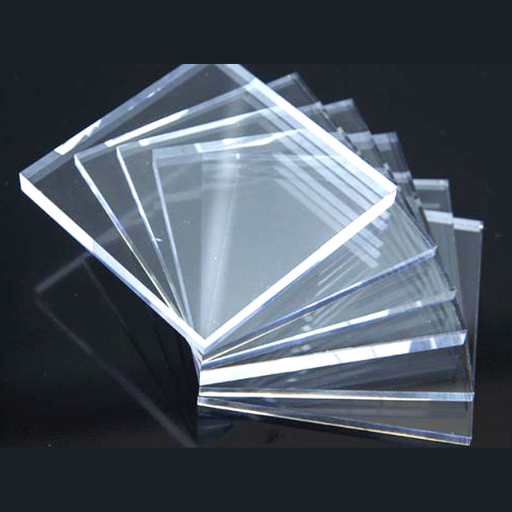
Acrylic is the hardest common transparent thermoplastic. Rockwell hardness runs M80 to M100 for PMMA against roughly M70 for polycarbonate, and the shop-floor consequence is easy to see. Drag a set of keys across both and PMMA takes a light mark while PC takes a visible scratch.
This is why display covers, touch surfaces, and signage front panels favor acrylic. It is also why exposed polycarbonate usually gets a hard coat. A bare PC window can haze and scratch within a season of outdoor handling, and the coating is not a luxury in those roles. It is the price of admission.
UV and Weather Resistance
Acrylic’s second big advantage is its natural UV stability. PMMA filters UV below roughly 300 to 400 nm on its own, so it does not need an additive package to survive sunlight. Outdoor signage and skylights in acrylic hold their clarity for years without turning yellow.
Polycarbonate is the opposite story. UV exposure degrades bare PC and shows up as yellowing, hazing, and embrittlement. The fix is a UV-stabilized grade, and Covestro’s Makrolon RE6717 is a good example for automotive lighting. The fix works, but it is a deliberate specification, not a default.
Put the two together and the outdoor rule is simple. Acrylic for long-lived clarity in the sun. Polycarbonate only outdoors with a UV-stabilized grade or a protective coating, and preferably both.
Thermal Properties: HDT, Tg, and Service Temperature
Heat is where polycarbonate pulls clearly ahead. The heat deflection temperature at 1.8 MPa runs 125 to 138 °C for PC against 95 to 103 °C for PMMA. The glass transition temperatures separate even further, at about 147 °C for PC and about 105 °C for acrylic.
Those gaps drive real decisions. A continuous service ceiling of 115 to 125 °C for polycarbonate is what makes it the default for electrical enclosures, automotive lighting sub-assemblies, and EV components. Acrylic’s practical service ceiling sits near 65 to 80 °C, which is fine for interiors and ambient duty and inadequate for anything near a heat source.
One practical trap sits inside the PMMA number. Its 105 °C Tg is not a service limit. Optical and aesthetic parts derate further than structural ones, because a slightly warped or hazy part fails even when it has not broken. Design acrylic with margin below Tg, not up against it.
Where a transparent part has to run hot, the honest guidance is to specify polycarbonate or a heat-resistant PMMA grade. We cover the crossover in our engineering plastic temperature guide if you are mapping several materials at once.
Chemical Resistance and Environmental Stress Cracking
Neither material is chemically inert, but they fail in different ways, and polycarbonate’s failure mode is the more dangerous one.
PMMA resists dilute acids, dilute alkalis, alcohols, aliphatic hydrocarbons, and mineral oils. It is attacked by ketones, esters, chlorinated hydrocarbons, ethers, and aromatics, which show up as crazing and surface damage.
Polycarbonate resists dilute acids, alcohols, and some oils. It is vulnerable to strong alkalis, ketones, esters, and chlorinated solvents. The critical difference is environmental stress cracking, or ESC. Under load, and in contact with a hostile solvent, PC can crack and fail far below its normal strength.
ESC is the reason a polycarbonate part that passes every static test can still shatter in service. It is the reason design guides tell you to keep PC away from certain cleaning agents and mold releases, and to avoid sharp notches that concentrate stress. Acrylic has its own solvent sensitivity, but it does not carry the same load-and-solvent trap.
When the chemical environment is aggressive, neither material may be right. For those cases, a fluoropolymer such as PTFE is the safer conversation.
Flammability and Fire Performance
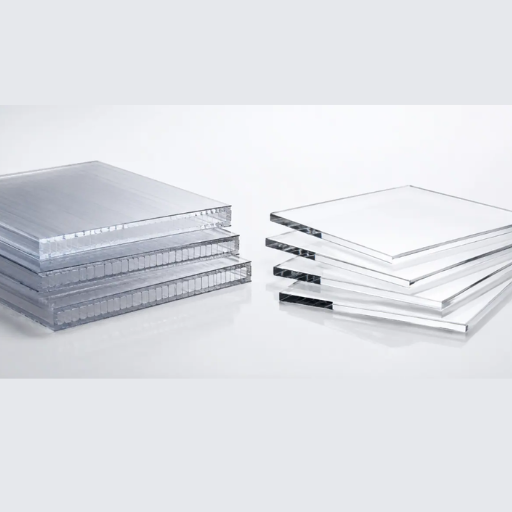
Fire behavior is another clear split. Standard PMMA is combustible and rates UL94 HB. It burns, and it can drip. That single line removes acrylic from many electrical and enclosure roles before the discussion starts.
Polycarbonate is inherently better. Base PC is self-extinguishing, and flame-retardant grades reach UL94 V-0. Covestro’s Makrolon 6555 and 6557 are the grades we stock for that purpose, and they are the reason PC shows up in electronics housings and EV battery components where a flame rating is mandatory.
If a part carries a fire requirement, check it before you fall in love with the optics. A beautiful acrylic cover that cannot pass UL94 V-0 is not a solution, no matter how well it transmits light.
Processing and Manufacturing Comparison
The two materials behave similarly under injection molding but at different setpoints, and those differences carry into cycle time and part cost.
| Parameter | PMMA | Polycarbonate |
|---|---|---|
| Melt temperature | 210 to 270 °C | 280 to 320 °C |
| Mold temperature | 60 to 90 °C | 80 to 120 °C |
| Drying | 80 to 90 °C, 2 to 4 h | 120 °C, 3 to 4 h |
| Moisture target | under 0.04% | under 0.02% |
| Mold shrinkage | 0.2 to 0.6% | 0.5 to 0.8% |
Acrylic runs cooler, which means lower energy use and faster cooling. It also machines and polishes beautifully, which is why it dominates optical fabrication. Polycarbonate fights back. It needs hotter tools, hotter drying, and a longer cooling cycle, and it galls and stress-cracks during machining unless you anneal it first.
Both materials are hygroscopic, so drying is not optional for either one. Wet resin flashes to steam at the gate, and the result is splay marks, bubbles, and haze that fails optical inspection. The difference is that PC wants a hotter, longer dry because its moisture target is tighter.
Consider a light-guide run at a components molder in Penang. The first production batch came out with faint silver streaks and measurable haze that failed the customer’s optical spec, yet every barrel temperature was on target.
The culprit was a hot-air dryer set to 60 °C overnight. The acrylic had never dried properly. A switch to a desiccant dryer at 85 °C for three hours cleared the streaks on the next shift.
That story repeats with polycarbonate, only the numbers move up. Under-dried PC behaves the same way, and the fix is the same principle: dry to spec, not to habit.
Applications: When to Choose PMMA vs Polycarbonate
The decision usually falls out of the priority order, so start there. Read the list below for PMMA, then in reverse for polycarbonate vs acrylic, where impact takes the top slot.
Choose PMMA When
- Optical clarity leads, as in light guides, lenses, and display covers
- Scratch and UV resistance matter, as in outdoor signage and skylights
- Lower cost and cooler processing fit the project
- Impact loads are light and temperatures stay moderate
Choose Polycarbonate When
- Impact resistance is non-negotiable, as in machine guards and safety glazing
- Sustained heat is involved, as in electrical enclosures and automotive lighting
- Flammability calls for UL94 V-0
- Transparency can accept a hard coat for abrasion
When Neither Is Ideal
Sometimes the answer is neither pure material. A PC/ABS alloy handles enclosures that need toughness with easier molding. Glass-filled or specialty grades cover structural transparency. And when the chemical environment attacks both, a fluoropolymer is the honest recommendation.
A quick way to run the decision is a weighted matrix. Rate your application from 1 to 5 on clarity, impact, scratch, UV, heat, fire, and chemical exposure. Weight each row by how much it matters.
The material with the higher score usually wins, and the losing rows tell you where you will need a coating or a grade upgrade. For a broader cross-material view, our transparent plastics comparison puts PMMA and PC alongside PET, PS, and transparent ABS.
Branded Grades We Supply
Material family only gets you halfway. The grade sets the melt flow, the UV package, the flame rating, and the optical consistency, so “clear acrylic” and “clear PC” are not specifications.
Polycarbonate: Covestro Makrolon
- Makrolon 2407, high-flow optical grade for lenses and light covers
- Makrolon 2805, general-purpose engineering PC
- Makrolon 6555 and 6557, UL94 V-0 flame-retardant grades for electronics and EV parts
- Makrolon RE6717, UV-stabilized grade for automotive lighting
- Additional grades, 8025, 8035, 8325, and 9415 cover glass-filled and specialty needs
You can see the full PC range on our Covestro Makrolon polycarbonate page.
PMMA: Mitsubishi Acrypet, LG Chem, Trinseo ALTUGLAS
- Mitsubishi Acrypet, VH series for high-flow molding, MD for general optical, MF for impact-modified
- LG Chem IF850, high-flow grade for thin-wall optical parts
- Trinseo ALTUGLAS and Röhm PLEXIGLAS, reference alternatives for optical and lighting work
Why the Grade Number Matters
A customer once specified “transparent PC” for a lighting lens and received a general-purpose grade with no UV package. It looked right in the sample and yellowed within months outdoors. The correct grade, a UV-stabilized optical PC, would have cost a few percent more and passed without drama.
The grade designation is not a detail. It is the specification.
Sourcing PMMA and PC Resin from China
Both materials are available from a single supplier, and consolidating them saves more than freight. One supplier means one documentation package, one quality standard, and one point of contact when something needs an answer.
The verification step is the same for either resin. Request the Certificate of Analysis and cross-check it against the manufacturer datasheet.
For optical work, confirm light transmission, haze, and yellowness index. For processing, confirm melt flow rate sits in grade. For fire-rated parts, confirm the UL94 rating matches the grade you ordered.
Watch for the red flags that separate branded prime resin from commodity compound. Off-spec melt flow, drifting color, recycled content hiding in “virgin” optical grades, and missing lot traceability all point to a supplier you cannot rely on. A COA is only as good as the brand behind it.
We supply branded prime resin with lot traceability, not relabeled compound. Our Suzhou warehouse sits minutes from the Port of Shanghai, so standard lead time runs 7 to 14 days depending on destination, with FOB Shanghai as the usual term and a 25 kg minimum order for qualification.
That small minimum matters. Order 25 kg from the same lot your production material will come from, run your own checks against the COA, and confirm the grade before you commit to volume.
Comparing quotes from two or three suppliers? Send us the grade and the application and we will match it with a certified lot, a COA, and a 24-hour response. Get my quote.
Failure Modes and Design Pitfalls
Knowing how each material fails is the fastest way to avoid the failure.
Acrylic fails by brittle fracture, especially at low temperature, and by solvent crazing when it meets ketones or esters. It also softens near its HDT, so a part that is fine at 25 °C can creep in a warm enclosure.
Polycarbonate fails by environmental stress cracking under load, by UV yellowing when unstabilized, and by notch sensitivity, where a sharp corner concentrates stress until the part cracks. It also hazes over time from scratches on exposed surfaces.
A few habits prevent most of these. Radius your corners to kill stress concentration, anneal machined PC before it sees service, hard-coat any exposed polycarbonate, and keep both materials away from the solvents that attack them. None of these are exotic. They are the difference between a part that lasts and a warranty claim.
Frequently Asked Questions
Is polycarbonate stronger than acrylic?
Yes, by a wide margin in impact. Polycarbonate is roughly 30 to 60 times tougher than acrylic in a notched Izod test, which is why it dominates safety glazing and guards while acrylic does not.
Is acrylic or polycarbonate clearer?
Acrylic. PMMA transmits 92 to 93% of visible light against 88 to 90% for polycarbonate, and it holds that clarity outdoors without yellowing.
Can polycarbonate replace acrylic, or the reverse?
Sometimes, but not freely. Polycarbonate can cover most acrylic window jobs if you accept the scratch trade-off and add a hard coat. Acrylic cannot cover polycarbonate’s impact jobs, because it shatters where PC survives.
Which is better for outdoor use, PMMA or polycarbonate?
PMMA, unless impact protection matters more than clarity. Acrylic is inherently UV-stable and stays clear for years. Polycarbonate needs a UV-stabilized grade to avoid yellowing and embrittlement.
Is polycarbonate more expensive than acrylic?
Generally yes. On polycarbonate vs acrylic cost, PC resin typically costs more per kilogram, and it molds at higher temperatures with longer cycles, which adds processing cost on top of the resin price.
Which is better for automotive lighting, PMMA or polycarbonate?
It depends on the light. Taillight covers often use acrylic for UV-stable clarity and hardness. Headlamp lenses usually use UV-stabilized, hard-coated polycarbonate for impact resistance against road debris.
How do I verify PMMA or PC resin quality from a Chinese supplier?
Request the COA and match it to the manufacturer datasheet. Check light transmission, haze, yellowness index, and melt flow for optical grades, confirm any UL94 rating, and require lot traceability. Then qualify with a 25 kg sample before scaling.
Conclusion
The PMMA vs polycarbonate choice comes down to four properties, and you already know which ones matter for your part. Acrylic wins on clarity, scratch resistance, UV stability, and cost. Polycarbonate wins on impact, heat, and flame retardancy.
Everything else is nuance. Grade selection carries as much weight as the material family, because the melt flow, the UV package, and the fire rating live in the grade number, not in the word “clear.” The failure modes are predictable, and a radius, an anneal, or a hard coat prevents most of them.
We supply branded prime PMMA and polycarbonate with full COA documentation, including Covestro Makrolon and Mitsubishi Acrypet, from a 25 kg minimum order with FOB Shanghai pricing and 7 to 14 day lead times.
Tell us your application conditions, the light transmission you need, the impact it must survive, and the temperature it will see, and we will recommend the right grade for the job. If your part runs hotter or takes more of a hit than acrylic can handle, we will say so and point you to polycarbonate instead.
Request a quote for certified PMMA and PC resin and get a recommendation backed by real datasheets, plus every batch documented with a Certificate of Analysis.