
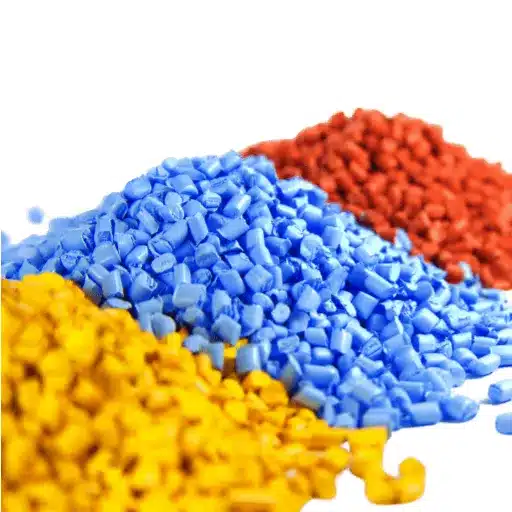
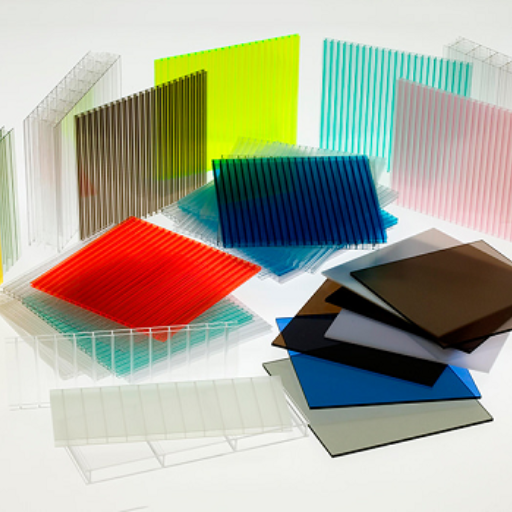

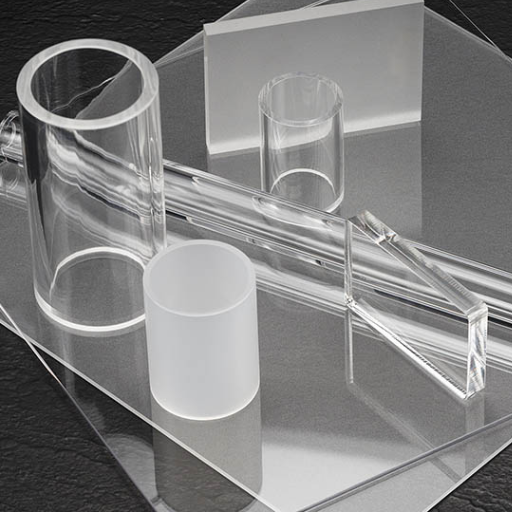



Search for “what temperature does plastic melt” and you’ll get a confident number, usually somewhere near 200 °C. It’s wrong for almost every plastic in your home, and it’s been repeated so often that it has become the industry’s most copied mistake.
Here’s the uncomfortable truth. There is no single melting point for plastic, because “plastic” is a category, not a material. The plastics you actually meet, the milk jug in the fridge and the bottle in your car and the bracket in your 3D printer, melt anywhere from roughly 100 °C to over 340 °C. Several of them don’t melt at all in the ordinary sense. They soften.
This guide answers the question the way you asked it, with the everyday plastics, the 3D-printing filaments, and the “will it melt if I…” scenarios you’re actually worried about. Every temperature comes in both Celsius and Fahrenheit. By the end you’ll know what temperature plastic melts at, why your hot car and dishwasher don’t melt anything despite feeling dangerous, and when the number you need isn’t the melting point at all.
We supply engineering plastics from Suzhou, near the Port of Shanghai, and we answer this question for buyers every week. Ask our technical team and we respond within 24 hours.
What Temperature Does Plastic Melt? The Direct Answer
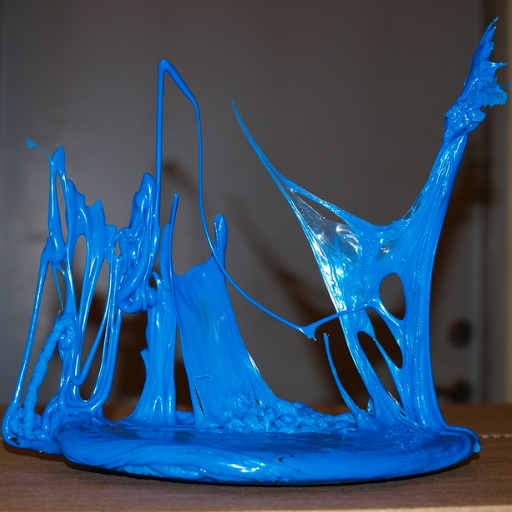
Thermoplastics melt across a range from roughly 100 °C (212 °F) to over 340 °C (644 °F) depending on the resin. Semi-crystalline plastics such as HDPE, PP and PET have a true melting point (Tm), where their crystal structure breaks down. Amorphous plastics such as PVC, PS, ABS and PC have no true melting point and soften gradually instead. So there is no single answer for “plastic.”
That’s the whole question. The rest of this section is the table you came for.
| Plastic | Common use | Type | Melting point °C | Melting point °F |
|---|---|---|---|---|
| LDPE | Bags, film, squeeze bottles | Semi-crystalline | 105–115 | 221–239 |
| HDPE | Milk jugs, shampoo bottles, pipe | Semi-crystalline | 125–137 | 257–279 |
| PP | Food containers, bottle caps, hinges | Semi-crystalline | 160–170 | 320–338 |
| PLA | 3D-print filament, compostable cups | Semi-crystalline | 150–180 | 302–356 |
| PET | Beverage bottles, food trays | Semi-crystalline | 245–260 | 473–500 |
| PS | Foam cups, packaging, CD cases | Amorphous | No true Tm, softens ~100 | Softens ~212 |
| PVC | Pipes, window frames, cable | Amorphous | No true Tm, softens 80–100 | Softens 176–212 |
| ABS | Housings, LEGO bricks, car trim | Amorphous | No true Tm, Tg ~105 | Tg ~221 |
| PC | Safety glasses, glazing, helmets | Amorphous | No true Tm, Tg ~147 | Tg ~297 |
Read the “Type” column before the temperature column. It explains why half of this table gives you a range and half gives you a confession. That difference is the single most useful thing you can know about plastic, so let’s deal with it properly.
These are typical values for unmodified grades, and they line up with established reference data such as MatMake’s polymer melting point tables and the Polymer Science Learning Center. Always confirm the exact number against the grade datasheet.
If you want the full engineering version of this table, with mold and drying temperatures for a dozen more resins, our plastic melting point chart carries the numbers a molder uses.
Why There Is No Single Melting Point for Plastic
Ice has a melting point. So does copper. Plastic is different, and the reason comes down to structure. We cover that structure in depth in Does Plastic Have a Melting Point? Amorphous vs Semi-Crystalline Plastics Explained, but here’s the short version.
Semi-Crystalline Plastics Have a True Melting Point
Some plastics arrange part of their molecular chains into ordered, repeating patterns called crystals. When you heat them, those crystals break down at one specific temperature and the material absorbs a burst of energy. Scientists measure that burst with a technique called differential scanning calorimetry (DSC), the method defined under ASTM D3418 and ISO 11357. The peak of the burst is the melting point.
HDPE, LDPE, PP, PET, PLA, nylon and acetal all behave this way. Their melting point is a real, sharp, measurable number, and it stays remarkably consistent from one test to the next.
Amorphous Plastics Soften Instead of Melting
Other plastics never form those ordered crystals. Their chains stay disordered, like a bowl of cooked spaghetti. With no crystal structure to break down, there is no melting point, so they don’t melt the way ice does. They soften gradually as they get hotter, going from rigid to rubbery to soft over a wide temperature range.
PVC, polystyrene (PS), ABS and polycarbonate (PC) all belong to this group. So does acrylic, the clear sheet behind most displays and signs. If that’s the material you’re working with, PMMA Melting Point: Does Acrylic Actually Melt? (°C and °F) explains how it behaves as it heats up. When a chart tells you “ABS melts at 130–160 °C,” it’s describing a softening range, not a melting point. The distinction sounds academic until you watch it decide an application.
Elena found that out the hard way. She ran a small bakery in Leeds and started reheating her lunch in a clear plastic takeout container labeled “heat resistant.” It survived months of microwave use. Then one Sunday she slid the same container into the oven at 180 °C to warm a helping of lasagna, reasoning that if it handled the microwave it could handle the oven. Two minutes later the container had slumped into a clear puddle around her food.
The container wasn’t mislabeled. It had no melting point to exceed and no melting point to protect it. It was amorphous, and 180 °C was well past the temperature where it turned soft. “Heat resistant” and “won’t melt” are different promises, and only one of them was ever made.
Melting Is Not the Same as Softening
This is the idea worth carrying with you. Melting happens at one temperature. Softening happens across a range, and that range shifts depending on how much load you put on the plastic and how long you leave it there.
A plastic shelf that holds a heavy box at 60 °C all summer may sag, even though it is nowhere near the temperature that would melt it. That’s creep, and it’s why the melting point is a terrible proxy for how hot a part can safely run. Engineers use two other numbers for that: heat deflection temperature (HDT), and continuous service temperature. If you want to understand the gap, our guide to heat deflection temperature vs melting point walks through it with a real failed part as the example.
Everyday Plastics: What Temperature Do They Melt At?

Now the practical part. Here’s the melting or softening temperature of the plastics you handle every day, mapped to the objects they become.
| Everyday object | Typical plastic | Melting or softening temperature |
|---|---|---|
| Milk jug, detergent bottle | HDPE | 125–137 °C (257–279 °F) |
| Grocery bag, cling film | LDPE | 105–115 °C (221–239 °F) |
| Yogurt tub, bottle cap | PP | 160–170 °C (320–338 °F) |
| Water bottle, soda bottle | PET | 245–260 °C (473–500 °F) |
| Foam coffee cup, packing peanuts | PS | No true Tm, softens above ~100 °C (212 °F) |
| Drain pipe, window frame | PVC | No true Tm, softens around 80–100 °C (176–212 °F) |
Two of these rows deserve a second look. Polystyrene and PVC are amorphous, so the “melting points” you see for foam cups and drain pipes in most consumer tables are softening temperatures, not melting points. And the PET in a water bottle is a special case: it’s cooled so fast during molding that it never crystallizes, which is why a bottle stays tough and clear but softens in hot water while a crystallized PET tray holds its shape.
The practical takeaway for the kitchen and the garage is simple. Nothing on this list will melt from normal household heat. The failures you’ve seen, a warped container, a sagging shelf, a deformed bottle, are softening and creep, not melting.
3D-Printing Filaments: Nozzle Temperature Is Not Melting Point
This is the most common confusion in the entire field, and it trips up experienced makers, not just beginners.
Every filament guide lists a nozzle temperature. PLA prints at 190–230 °C. ABS prints at 220–260 °C. Nylon prints at 240–300 °C. It’s tempting to read those numbers as “the temperature this plastic melts at.” They aren’t.
Nozzle temperature is the temperature your printer heats the plastic to so it flows well enough to be extruded, and it sits 40 to 90 °C above the resin’s actual melting point.
| Filament | Typical nozzle temperature | Actual melting point |
|---|---|---|
| PLA | 190–230 °C | ~150–180 °C |
| PETG | 220–260 °C | ~245–260 °C, crystallized PET |
| ABS | 220–260 °C | No true Tm, Tg ~105 °C |
| Nylon (PA6 / PA66) | 240–300 °C | 215–265 °C depending on grade |
| Polycarbonate (PC) | 270–310 °C | No true Tm, Tg ~147 °C |
Those two numbers answer the questions makers type most. What temperature does PLA melt at? Roughly 150–180 °C, even though you print it at 190–230 °C. What temperature does ABS melt at? It has no melting point at all; it softens above a glass transition near 105 °C, even though you print it at 220–260 °C.
Devon, who prints functional parts for a bicycle shop in Portland, reached exactly the wrong conclusion from this table. He saw that his ABS profile ran at 240 °C and his PC profile at 280 °C, and reasoned that ABS must be the tougher, more heat-resistant plastic, since it “melted” at the lower number. Why else would PC demand so much more heat?
The opposite is true. ABS has no melting point and a glass transition temperature near 105 °C; PC has no melting point and a glass transition near 147 °C. A printed ABS bracket bolted beside a warm motor will sag long before the PC one does.
Devon had read a printing temperature and treated it as a material limit. The nozzle number tells you how to print. It tells you nothing about how the part behaves once it has cooled.
Will It Melt? Boiling Water, Hot Cars, Dishwashers, Ovens, and Microwaves
Everyday questions usually hide a scenario. Here are the five that come up most, answered directly.
Boiling water (100 °C / 212 °F)
Nothing on the common-plastics list melts in boiling water. HDPE, PP, PET and PVC all melt or soften above 100 °C, though LDPE sits close enough to its softening range that thin film can deform. If a plastic container warps in boiling water, it is softening, not melting.
A hot car (60–80 °C / 140–176 °F)
This is the scenario people fear most and the one that least deserves the fear. A car interior on a summer day reaches 60–80 °C, which is far below the melting point of every common plastic.
That heat is more than enough to soften and warp parts, especially amorphous ones near their glass transition temperature, and to make adhesive-mounted trim and dash components creep out of place. But a hot car does not melt plastic. If something failed in your car last summer, softening and creep are the culprits.
A dishwasher (60–75 °C / 140–167 °F)
The bottom rack runs hotter than the top, climbing toward the mid-60s °C during the drying cycle. That’s below every melting point but close enough to the softening range of PP and PS that thin or poorly designed containers warp. This is why “dishwasher safe” containers so often carry a “top rack only” note. The top rack is cooler, and for a plastic near its softening range, twenty degrees matters.
An oven (up to 250 °C / 482 °F and beyond)
Here the answer changes. An oven gets hot enough to melt or decompose most plastics, and it does so with food nearby. A container that merely softened in a microwave can collapse or release fumes in an oven.
Only use containers explicitly rated oven-safe, and never heat unidentified plastic. This is general information, not safety advice for a specific product. When in doubt, leave the plastic out.
A microwave
Microwaves heat food, not plastic directly, so the plastic reaches high temperatures only by conduction from the food. This is why microwave-safe containers are tested at the food’s actual temperature, not at 100 °C, and why greasy or sugary foods get hotter than water and can push a container past its comfort zone. Stick to containers labeled microwave-safe, and treat the label as a ceiling, not a suggestion.
What Temperature Does Plastic Melt in Celsius and Fahrenheit?
Half the world speculates in Celsius and half in Fahrenheit, and a specification that crosses that line is where rounding errors enter. Use one conversion and keep it consistent:
°F = (°C × 1.8) + 32
Here are the reference points you’ll actually hit, side by side.
| °C | °F | What melts or happens here |
|---|---|---|
| 60 | 140 | A hot car, upper end (softening, not melting) |
| 100 | 212 | Boiling water |
| 105 | 221 | Tg of ABS, and of PLA’s amorphous regions |
| 130 | 266 | Melting point of HDPE |
| 147 | 297 | Tg of polycarbonate |
| 165 | 329 | Melting point of POM (acetal) copolymer |
| 180 | 356 | Oven set point, common baking temperature |
| 260 | 500 | Melting point of PA66 (nylon 66) |
| 343 | 649 | Melting point of PEEK |
Two of these rows make the softening-versus-melting point for you. Line three, 105 °C, is the glass transition temperature of ABS, which is a softening threshold and not a melting point, even though plenty of charts present it as one. Line five, 147 °C, is the same kind of threshold for polycarbonate. Neither plastic “melts” at those temperatures; both stop behaving like a rigid solid.
Engineering Plastics: A Quick Reference
Beyond the bottles and containers, there’s a category of plastics chosen precisely because they hold up under heat, load and chemicals. If your question is heading toward a real specification, these are the numbers that matter.
| Plastic | Melting point °C (°F) | Why engineers pick it |
|---|---|---|
| POM (acetal) | 160–175 (320–347) | Precision gears and bearings, low friction |
| PA66 (nylon 66) | 255–265 (491–509) | Highest Tm of the common engineering resins; under-hood parts |
| PC (polycarbonate) | No Tm, Tg ~147 (297) | Clarity plus toughness; warm enclosures |
| ABS | No Tm, Tg ~105 (221) | Cheap, tough housings and enclosures |
| PPS | 275–290 (527–554) | High heat, often glass-filled |
| PTFE | ~327 (621) | Extreme chemical resistance; sintered, not molded |
| PEEK | ~343 (649) | The top of the common range |
Notice how few of these are “just a melting point.” POM’s story is its sharp Tm and its narrow processing window. PC’s story is a glass transition, because it has no melting point at all. If you’re weighing PC for a warm or load-bearing part, Polycarbonate Melting Point: Does PC Actually Melt? (°C and °F) breaks down what happens to it at each temperature. PA66’s story is thermal headroom that lets it hold its shape under load past 200 °C. If you’re choosing a material rather than satisfying curiosity, the material family is only the start.
Each of these has a deeper article, so you can go as far as your application needs:
- POM melting point and POM resin for precision gears and bearings
- ABS melting temperature for housings and enclosures
- HDPE melting point by grade for the widest grade-to-grade spread in common plastics
- PA66 melting point for the highest Tm of the common engineering resins
- Polycarbonate glass transition temperature for clarity plus toughness in warm service
How Melting Temperature Guides Grade Selection and Sourcing
Here’s where the melting point earns its keep commercially, and where a single number does more work than any table.
The melting point belongs to the grade, not the plastic family. “POM” doesn’t have one melting point. A specific grade of POM does, and a different grade from the same manufacturer can melt several degrees apart because of comonomer ratio, nucleating agents or glass-fiber loading. If you specify by family name alone, you haven’t specified anything a molder can run with confidence.
Nadia, a quality engineer at a contract molder, learned it from a lot that looked correct on paper. The incoming resin’s melting point matched the qualified grade, so it passed the first check. What had drifted was the melt flow index, the single most sensitive indicator of a genuine lot, and it ran wide enough to change how the material filled the tool.
The first production run produced short shots and flash in the same batch. Nadia spent two days re-tuning the machine before testing the resin instead. The melting point her supplier quoted was real. It just wasn’t the number that mattered.
That’s why a melting point chart and a certificate of analysis (COA) belong in the same conversation. When a lot arrives, check the grade designation against the manufacturer’s name, the melt flow index, the density, and the lot number, and confirm the Tm and HDT where the manufacturer reports them. If a supplier can’t provide lot-traceable documentation, their melting point is a claim, not a specification.
We hold certified inventory of branded engineering resins in Suzhou, with a manufacturer-issued COA on every lot, branded prime and compounded grades, a 25 kg minimum order so small buyers can qualify a grade without a container commitment, and FOB Shanghai pricing with a standard 7 to 14 day lead time to major ports. If you’re selecting against a thermal requirement, send us the service temperature and the load, and we’ll tell you which number governs your part, and whether a different material is the better answer. Request a quote and we respond within 24 hours.
Frequently Asked Questions
What temperature does plastic melt in Fahrenheit?
It depends on the plastic. LDPE melts at 221–239 °F, HDPE at 257–279 °F, PP at 320–338 °F, PLA at 302–356 °F, PET at 473–500 °F and PC has no melting point at all. Convert any Celsius value with °F = (°C × 1.8) + 32.
At what temperature does plastic melt?
Thermoplastics melt across roughly 100 °C (212 °F) to over 340 °C (644 °F). Semi-crystalline plastics such as HDPE, PP and PET have a true melting point. Amorphous plastics such as PVC, PS, ABS and PC have none and soften gradually instead.
Does plastic melt in boiling water?
No, not the common plastics. Boiling water is 100 °C (212 °F), and HDPE, PP, PET and PVC all melt or soften above that. Thin LDPE film can deform because it sits near its softening range, but that is softening, not melting.
Does plastic melt in the microwave?
Not directly. Microwaves heat the food, and the plastic warms by conduction from it. Only use containers labeled microwave-safe, since greasy or sugary foods reach temperatures that can push a container past its design limit.
Will plastic melt in a hot car?
No. A car interior reaches 60–80 °C (140–176 °F), far below the melting point of every common plastic. That heat can warp and soften parts, especially amorphous ones near their glass transition temperature, so failures in hot cars are softening and creep, not melting.
What temperature does PLA melt at?
PLA has a true melting point of roughly 150–180 °C (302–356 °F), depending on grade. Your 3D printer runs the nozzle at 190–230 °C, which is a processing temperature well above PLA’s melting point, not the same thing.
What temperature does ABS melt at?
ABS has no true melting point. It’s amorphous, with a glass transition temperature of about 105 °C (221 °F), and it softens progressively above that. Charts quoting “ABS: 130–160 °C” are reporting a softening range or a molding window, not a melting point.
What temperature does plastic melt at for recycling?
Most recycling of thermoplastics is really re-melting, not melting from scratch. PET and HDPE reprocess in the range of 240–280 °C (464–536 °F) and 180–280 °C (356–536 °F) respectively. Thermosets are the exception: they’re crosslinked and cannot be re-melted at any temperature.
Does all plastic have a melting point?
No. Only semi-crystalline plastics have a true melting point. Amorphous plastics soften instead, and thermosets such as epoxy and silicone decompose rather than melt, which is why they can’t be recycled by melting.
Does plastic melt in an oven?
Yes. An oven reaches 180–250 °C (356–482 °F), hot enough to melt or decompose most plastics. Only use containers explicitly rated oven-safe, and never heat unidentified plastic.
Conclusion: Read the Number, Then Read the Grade
Five things worth keeping from this guide.
The reason “what temperature does plastic melt” has no single answer is that plastics span roughly 100 °C to over 340 °C. Only semi-crystalline plastics melt at one specific temperature; amorphous plastics such as PVC, PS, ABS and PC soften across a range instead.
The heat you worry about, a hot car, a dishwasher, boiling water, sits well below every melting point but close enough to the softening range to warp and creep your parts. And the “melting temperature” on a 3D-printing profile is a nozzle setting, 40 to 90 °C above the real number.
Most importantly, the melting point belongs to a specific grade, and it is not the number that decides whether a part survives. Heat deflection temperature and continuous service temperature are what govern a loaded part in service.
Use the table to understand. Use the datasheet to specify. Use the certificate of analysis to confirm what actually arrived. If you’d like a certified grade with full thermal documentation, request a quote and we’ll send the datasheets that match your application. Branded prime resin, COA on every lot, 25 kg minimum order, FOB Shanghai, response within 24 hours.