




Ask an engineer for the highest melting point plastic and most will answer without hesitating: PTFE, the white fluoropolymer better known as Teflon, melting at around 327 °C. It’s a good answer. It’s also not quite right, and the more important point is that the highest melting point is rarely the number that decides whether a hot part survives.
PEEK melts higher, at roughly 343 °C. But the real surprise comes later. PTFE has one of the highest melting points of any common plastic, yet it starts to deform under load at only about 60 to 70 °C. Meanwhile the materials with the very highest service temperatures, polybenzimidazole and polyimide, do not have a usable melting point at all.
This guide answers “which plastic has the highest melting point” the straightforward way, with a ranked table. Then it does the more useful thing: it re-ranks the same materials by the numbers that actually govern a hot, loaded part. By the end you’ll know the real high-temperature league table, why PTFE tops one ranking and sinks in another, and how to specify a grade that won’t fail in service.
We supply engineering plastics from Suzhou, near the Port of Shanghai, and we field this question from automotive and electronics buyers every week. Ask our technical team and we respond within 24 hours.
Which Plastic Has the Highest Melting Point? The Direct Answer
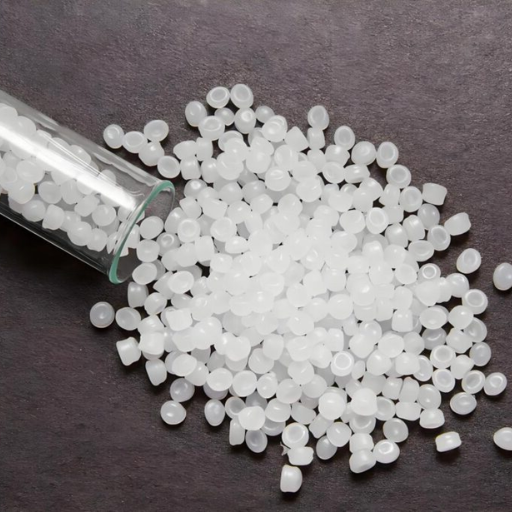
Among widely used thermoplastics, PEEK melts highest at about 343 °C, followed by PTFE at about 327 °C and PPS at about 280 °C. But the highest melting point is not automatically the best high-temperature material. PTFE melts at 327 °C yet deforms under modest load by about 60 to 70 °C. For a hot, loaded part, rank materials by heat deflection temperature or continuous service temperature instead.
That paragraph is the honest answer in four sentences. The catch is the last two. Melting point tells you when a plastic turns to liquid. It says nothing about whether a part holding a load stays rigid at half that temperature.
That gap is why this topic rewards a little patience. If you only want the number, take PEEK at 343 °C and move on. If you are choosing a material for a real application, the ranking below matters more than the headline figure.
The Highest Melting Point Plastics, Ranked
Here is the high-temperature plastics league table, ordered by melting point. This is the table answer engines and readers lift for “highest melting point plastic,” so read it in full.
| Rank | Material | Class | Tm (°C) | Tg (°C) | HDT 1.8 MPa (°C) | Continuous use (°C) | Melt-processable? |
|---|---|---|---|---|---|---|---|
| 1 | PEEK (polyether ether ketone) | Semi-crystalline | ~343 | ~143 | ~150–160 (unfilled) | ~250 | Yes |
| 2 | PTFE (polytetrafluoroethylene) | Semi-crystalline | ~327 | ~ −97 (amorphous region) | ~60–70 | ~260 | No (sintered) |
| 3 | PPS (polyphenylene sulfide) | Semi-crystalline | ~280–285 | ~85–90 | ~100–115 (unfilled); ~260 GF40 | ~200–220 | Yes |
| 4 | LCP (liquid crystal polymer) | Semi-crystalline, anisotropic | ~280–350 | n/a | ~180–270 | ~240–260 | Yes |
| 5 | PA46 / PA6T / PA9T (high-temp nylons) | Semi-crystalline | ~290–325 | n/a | ~180–280 (glass-filled) | ~150–200 | Yes |
| n/a | PEI (polyetherimide, Ultem) | Amorphous | none | ~217 | ~200 | ~170 | Yes |
| n/a | PES / PSU (sulfone polymers) | Amorphous | none | ~185–225 | ~180–205 | ~150–180 | Yes |
| n/a | PAI (polyamide-imide, Torlon) | Amorphous | none | ~275–285 | ~280 (glass-filled) | ~250–260 | Limited |
| n/a | PI (polyimide, Vespel) | Amorphous / thermoset | none | ~360–410 | ~360+ | ~260–300 | No (sintered) |
| n/a | PBI (polybenzimidazole, Celazole) | Amorphous | none | ~425 | ~435 | ~310 (peak) | No (sintered) |
These are typical datasheet values for unfilled grades. Every number moves with grade, filler and reinforcement level, so confirm against the specific datasheet. Values cross-check with MatWeb’s materials database and manufacturer datasheets such as Victrex PEEK.
Now read the table again, this time down the columns instead of the rows. The order changes completely depending on which number you rank by.
Ranked by melting point (Tm): PEEK, PTFE, then PPS. The three semi-crystalline leaders.
Ranked by heat deflection temperature (HDT at 1.8 MPa): PBI (~435 °C) and PI (~360 °C) jump to the top. PTFE, the number two by melting point, falls to the bottom of the table at ~60–70 °C.
Ranked by continuous service temperature: PBI (~310 °C), then PEEK and PI (~250–300 °C). The materials with “no melting point” win.
Ranked by injection-moldability: PPS, LCP and PEI rise. PTFE, PI and PBI disappear entirely, because they are not melted at all.
That last column is the one most “highest melting point” lists omit. It is also the one that decides whether a material is even an option for your process.
Want the melting points and processing temperatures for a dozen more resins, including the ones you can actually mold? Our plastic melting point chart is the chart a molder keeps on the wall.
Why the Highest Melting Point Plastic Isn’t the Best High-Temperature Material
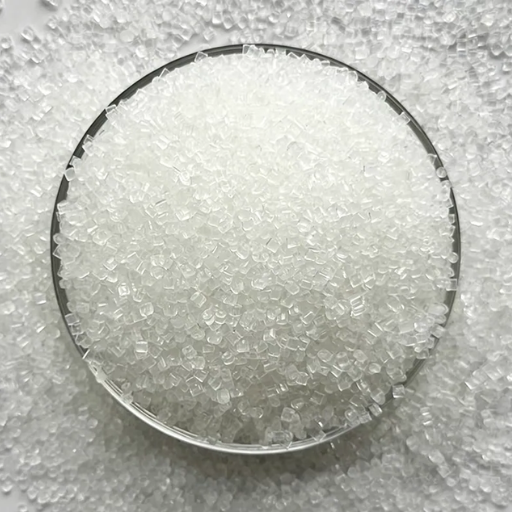
Here is the fact that no “highest melting point” list states clearly, and it is worth more than the ranking itself.
PTFE melts at about 327 °C. It also has an HDT of only about 60 to 70 °C at 1.8 MPa. That means a PTFE part carrying a load can bow or creep at a temperature where you’d never expect trouble, far below the number that earned it second place on the ranking.
PTFE is an outstanding material for chemical seals, linings and electrical insulation. It’s soft, and softness under load is a different problem from melting.
Daniel learned this on a project two winters ago. He was sourcing a seal seat for a heat exchanger and asked his supplier for the “highest melting point plastic” to be safe. They shipped PTFE.
The seat was rated to 260 °C and the process ran at 120 °C, so it looked bulletproof on paper. Eight months in, the seats were permanently deformed and leaking, because the load on them had compressed the PTFE into a new shape at a temperature well under its melting point. The material hadn’t melted. It had given up under pressure, which is what a low HDT predicts.
PEEK is the mirror image. It melts at 343 °C and it also carries a high HDT and a high continuous service temperature. That’s why PEEK sits near the top of every column and why it’s the gold standard where heat and load meet.
A high melting point that comes with high stiffness is genuinely useful. A high melting point on its own is a marketing line.
So hold three numbers in mind, not one:
- Tm (melting point), when the crystals melt and the plastic becomes a liquid. Measured by DSC.
- Tg and HDT, when the plastic starts to soften and deform under load. Tg is where amorphous regions loosen; HDT is the temperature at which a loaded specimen deflects a set amount.
- Continuous service temperature (RTI), the temperature the material can live at for years, not minutes.
For a loaded part in a hot place, the second and third numbers govern. The first one mostly governs whether you can melt and mold it. If that distinction is new to you, our guide to heat deflection temperature vs melting point walks through it with a failed part as the example.
Do the Highest Melting Point Plastics Actually Melt?
Look again at the bottom half of the ranking table. PBI, PI and several others list “none” in the Tm column. That’s not a data gap. It’s the physics.
PTFE, PBI and PI are excellent for heat, and they aren’t really melted. Their melt viscosity is so high, in PTFE’s case roughly ten billion times that of a flowing thermoplastic, that they won’t flow in the normal sense. You can’t injection-mold them. Instead they are compression-molded and sintered, or processed from solution, which is closer to how ceramics are shaped than how plastic pellets are melted.
The sulfones and polyetherimide are different again. PEI, PES and PSU are amorphous, so they have no true melting point. They soften through their glass transition and are molded just above it. PAI sits in between: processable, but at the edge of what a melt can tolerate.
For a full explanation of why some plastics melt at a single temperature and others only soften, see does plastic have a melting point. The short version: semi-crystalline plastics have crystals that melt, and amorphous plastics don’t. “Highest melting point” and “melt-processable” are two different lists, and only one of them describes materials you can feed into a molding machine.
High-Temperature Plastic Profiles: Tm, Service Limits and Applications
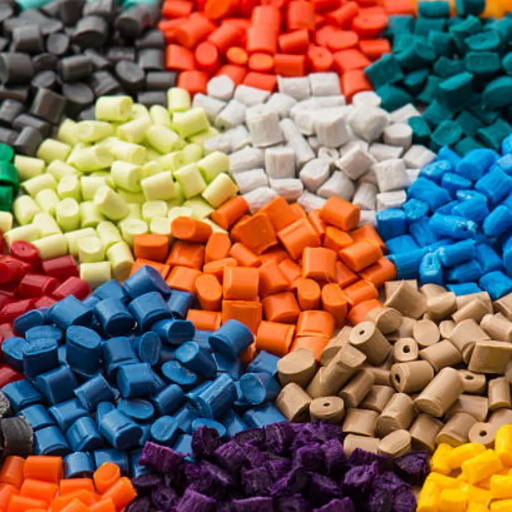
Here is each material in the ranking with its numbers and where it earns its place. Values are typical for unfilled grades.
PEEK, the all-round high-temperature champion
The PEEK melting point is about 343 °C. Its glass transition sits near 143 °C, and it runs continuously at around 250 °C. It’s one of the few thermoplastics that is high on the melting-point ranking and high on stiffness, chemical resistance and fatigue life at the same time.
PEEK appears in aircraft components, medical implants, downhole oilfield tools and demanding automotive parts. If your application is hot and loaded and your budget allows it, PEEK is usually the benchmark grade.
PTFE, the highest melting fluoropolymer, but soft
The PTFE melting point is about 327 °C, and PTFE is unsurpassed for chemical inertness and low friction, which is why it lines chemical reactors and seals aggressive fluids. Its continuous service temperature is a respectable 260 °C. The catch is its stiffness.
With an HDT of only about 60 to 70 °C at 1.8 MPa, PTFE creeps under load and wears quickly, a trait that makes more sense once you understand why PTFE is soft despite its high melting point, which our PTFE hardness guide covers in detail. Use it for seals and linings, not load-bearing structure.
PPS, the moldable high-temperature workhorse
The PPS melting point is about 280–285 °C, and, unlike PTFE, PPS is fully injection-moldable. Its unfilled HDT is modest at roughly 100–115 °C, but add 40% glass fiber and that number climbs to about 260 °C.
That combination, high heat plus real moldability, is why PPS dominates surface-mount electronics connectors, automotive underhood parts and chemical-process pump components. It’s the practical answer for most buyers who search for a high-temperature plastic.
LCP, high heat plus thin-wall flow
Liquid crystal polymers melt across a wide grade-dependent range, roughly 280 to 350 °C, and hold an HDT of about 180–270 °C. Their special talent is flowing into very thin walls while staying rigid, which makes them a favorite for miniature SMT connectors and precision electronic parts.
PA46, PA6T and PA9T, the high-temperature nylons
High-temperature polyamides melt in the 290–325 °C range and, when glass-filled, reach HDT values of 180–280 °C. They compete with PPS and LCP in connectors and underhood components. For the standard engineering nylon used just below this tier, see PA66 melting point and its glass-filled connector grades.
PEI, PES, PSU, PAI, PI and PBI, the amorphous high-temperature family
None of these has a true melting point. They are ranked by glass transition and service temperature instead. PEI (Ultem) is the accessible one, with a Tg near 217 °C and molding behavior similar to polycarbonate. If you want to see how that comparison plays out, our guide to polycarbonate melting point and whether PC actually melts explains how this classic amorphous plastic softens through its glass transition instead of melting.
PAI and PI push into the 250–300 °C service range for aerospace and semiconductor tooling. PBI sits alone at the top, with a Tg around 425 °C and the highest HDT of any thermoplastic, which is why it appears in semiconductor and aerospace applications where even PEEK is not enough.
Want to see how these stack against the resins most projects actually use? Compare the high-temperature tiers with everyday engineering plastics in our engineering plastic temperature guide. For a closer look at one of the most common of those everyday resins, our POM melting point guide to acetal processing and grades shows how a semi-crystalline engineering plastic’s melting point shapes its molding window and grade choice.
Choosing the Right High-Temperature Plastic
The ranking above only becomes a selection tool once you match the material to the number your application actually stresses. Here is the rule we give buyers.
Rank by the number that matches the job:
- Load-bearing, short term, specify by HDT, and always state the load. An HDT quoted at 0.45 MPa is a different claim than one at 1.8 MPa.
- Long-term hot service, specify by continuous service temperature or RTI. Melting point is irrelevant here, and a short-term HDT should never be extrapolated to a multi-year life.
- Processing or moldability, specify by melting point and melt viscosity. This is the one place the “highest melting point” ranking is the right list, and it is why PPS and LCP beat PTFE and PBI for volume production.
- Thin-wall electronics, specify by flow and heat together. LCP, PPS and PEI are the usual winners.
One working rule saves most projects: specify at least 10 to 20 °C below the governing limit, and treat softening and melting as two different questions. If you are weighing those two numbers directly, softening point vs melting point resolves the confusion in one page.
How to Source High-Temperature Grades Without Getting Burned
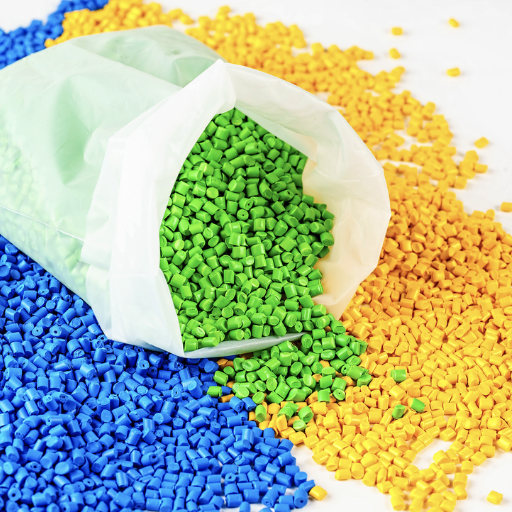
High-temperature resins are expensive, and the expensive ones get counterfeited or quietly downgraded. PPS sold as GF40 that is really GF20 will still pass a visual check and fail in the reflow oven. A “PEEK” grade that is blended or reground shifts its HDT and its Tm off the datasheet baseline. The melting point on the box is only as trustworthy as the resin inside it.
Priya ran into the cheaper version of this last year at an electronics contract manufacturer. A supplier quoted a competitive price on PPS for a connector that had to survive 260 °C lead-free reflow. It worked for most of a production run, then a batch began cracking in the oven.
The cause was the filler content. The resin was a lower-glass grade than the one the application was specified to, so its HDT landed well below the reflow peak. The base polymer was PPS. The number that mattered had been quietly reduced.
This is why the certificate of analysis matters as much as the datasheet. When you buy high-temperature grades, check the COA for:
- Grade and lot or batch number, so the material is traceable to a manufacturer.
- Tm by DSC, the melting point measured against the standard method described under ASTM D3418.
- HDT with its test load, so you know whether the number is 0.45 MPa or 1.8 MPa.
- Filler or glass content, the single biggest lever on HDT in PPS, PA and LCP grades.
- MFI and density, the quickest cross-check that the resin matches the datasheet.
If you’d like the datasheets that match your operating temperature before you commit to a purchase, ask our technical team which grades fit and we’ll send them the same day.
We supply branded prime high-temperature resin with traceable lots and a COA on every batch: PPS and PTFE from established producers, plus PA66 for high-temperature nylons and PTFE resin for chemical and electrical applications. Standard terms are a 25 kg minimum order, FOB Shanghai, 7 to 14 day lead time, with a response to technical questions within 24 hours.
Frequently Asked Questions
What plastic has the highest melting point?
Among widely used thermoplastics, PEEK has the highest melting point at about 343 °C, followed by PTFE at about 327 °C and PPS at about 280 °C. If you include every specialized polymer, a thermoplastic polyimide can edge slightly higher, and PBI has the highest service temperature of all but no usable melting point.
Is PTFE or PEEK the highest melting point plastic?
PEEK. PEEK melts at roughly 343 °C, ahead of PTFE at about 327 °C. PTFE is often named first because it is more widely known, but PEEK melts higher. The more important difference is stiffness: PEEK holds its shape under load at high temperature, while PTFE deforms under load by only about 60 to 70 °C.
What plastic can withstand the highest temperature?
If “withstand” means hold a load for years, PBI leads, with a continuous service temperature near 310 °C and the highest heat deflection temperature of any thermoplastic. PEEK and polyimide follow in the 250–300 °C range. Rank by continuous service temperature, not melting point, when the part must survive long-term heat.
Does PPS melt, and what is its melting point?
Yes. PPS has a true melting point of about 280–285 °C and is fully injection-moldable, which is why it is the standard high-temperature engineering plastic for connectors and underhood parts. Its heat deflection temperature rises from about 100–115 °C unfilled to about 260 °C at 40% glass fill.
Does PTFE have a melting point? Does PBI?
PTFE has a true melting point of about 327 °C, but its melt viscosity is so high that it is sintered rather than melted in processing. PBI, PI and the sulfone polymers have no true melting point; they are amorphous and soften through their glass transition instead.
Which high-temperature plastic is best for a load-bearing hot part?
Usually PEEK, or a glass-filled PPS or PA for less extreme temperatures. Rank candidates by heat deflection temperature at 1.8 MPa and by continuous service temperature, not by melting point, because a high melting point alone does not keep a loaded part rigid.
What is the highest melting point plastic that can be injection molded?
PEEK, at about 343 °C, is the highest-melting plastic commonly injection-molded. PTFE and PBI are outstanding in other ways but cannot be injection-molded at all, so they drop out of this particular ranking.
What is the highest melting point plastic in Fahrenheit?
PEEK’s melting point of about 343 °C corresponds to roughly 649 °F. PTFE comes in near 621 °F (327 °C) and PPS near 536–545 °F (280–285 °C).
Conclusion: Rank by the Number That Matches Your Part
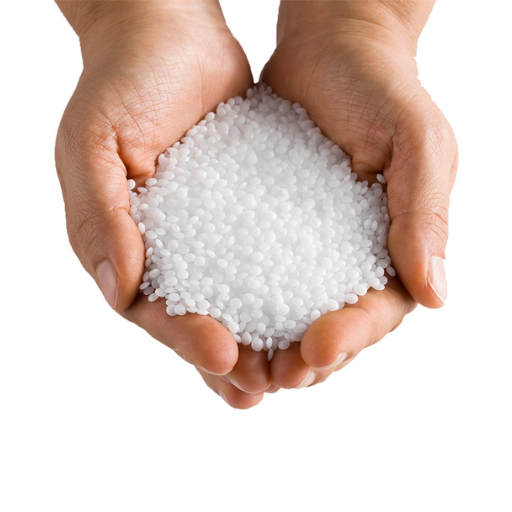
Four things worth keeping from this guide.
The highest melting point plastic is PEEK at about 343 °C, ahead of PTFE at about 327 °C and PPS at about 280 °C. That much answers the literal question.
But the ranking is not the same as the answer to your real problem. PTFE sits second by melting point and near last by stiffness, deforming under load at around 60 to 70 °C. The materials with the highest service temperatures, PBI and polyimide, have no usable melting point at all. Only PEEK is high on every column at once.
So use melting point to understand, use heat deflection temperature and continuous service temperature to specify, and use the certificate of analysis to confirm what actually arrived in the bag.
If you’re sourcing a PPS, PTFE or PEEK grade for a hot application, request a quote for branded prime high-temperature resin with the melting point, HDT and COA documentation to match your specification. Twenty-five kilogram minimum order, FOB Shanghai, and a technical reply within 24 hours.