




Three quotes for the same BASF Ultraform POM resin landed in one buyer’s inbox in September: US$1,810, US$1,740 and US$1,530 per tonne. All three came back against the same N2320 0038 AT enquiry.
The lowest quote named N2320 0032, a designation BASF does not make. The middle quote said only “N2320”, with no suffix at all. None of the three could say whether the lot came from Korea or Europe.
You already know Ultraform POM is a copolymer. What the quote usually skips is that the suffix sets the formulation, AT sets the plant, and the plant sets the duty rate at your border. That gap is the test any BASF Ultraform POM resin supplier should pass.
This guide decodes the grade, gives verified values, explains AT, and shows which China anti-dumping rate applies. If you are sourcing rather than specifying, the POM resin product page carries the stocked range and quote form.
Buyer examples in this article are composites based on typical enquiries, not individual customer records.
What Ultraform POM Is, and What It Is Not
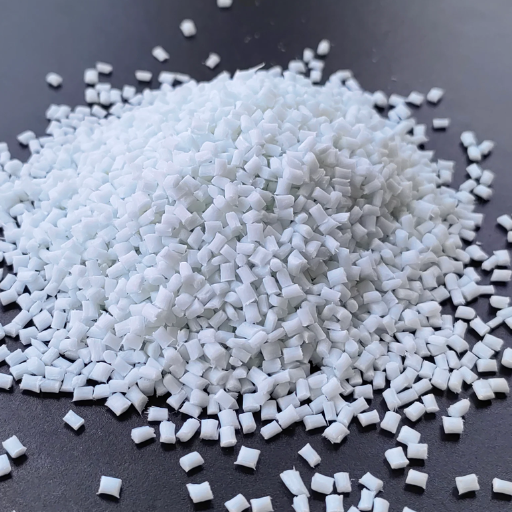
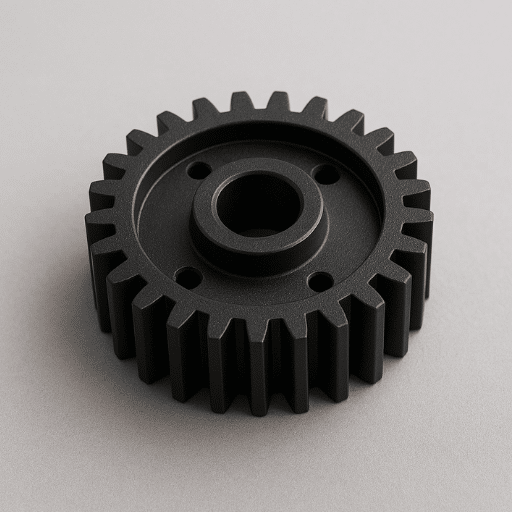
Ultraform is BASF’s trade name for polyoxymethylene copolymer, written POM-C or acetal copolymer. It isn’t a homopolymer, and it isn’t a synonym for POM in general.
Ultraform sits in the copolymer family, alongside Celanese Hostaform and Polyplastics DURACON, which is why buyers quote those brands against each other. The one case where copolymer loses is sustained dry load: POM-H is stiffer there, and the POM homopolymer vs copolymer guide covers that switch.
Two ownership facts are worth stating, because both are misreported online. Ultraform is a BASF brand, not a Celanese brand. And since 1 October 2023, BASF’s European direct sales of POM have been handled by ALBIS and Ultrapolymers, while the brand and R&D stay with BASF .
The brand owner and the invoice counterparty may be different companies. In Europe, the BASF Ultraform distributor named in that release is ALBIS or Ultrapolymers. Elsewhere, the seller may be a trader with no channel relationship at all.
Suzhou Yifuhui New Material Co., Ltd. supplies engineering resins from Suzhou, China. We aren’t BASF and we don’t manufacture POM. Ultraform® is a registered trademark of BASF SE, used here to identify the material.
How to Read a BASF Ultraform Grade Code
An Ultraform designation is a compressed specification. Read it left to right: flow class, base composition, then additive package.
| Element | What it tells you | Examples | Common misreading |
|---|---|---|---|
| First letter | Flow class, low to high: H, N, S, W | H4320, N2320, S2320, W2320 | W is not extrusion. H is the extrusion class. |
| Four digits | Base polymer composition, not a melt index | 2320 unfilled, 2200 glass fibre, 2720 mineral, 2640 impact-modified | “2320” is not an MVR value. |
| Trailing digits | Additive or formulation variant | 003, 0035, 0038 | These are not a flow ladder. All three measure MVR 7.5. |
| G | Glass fibre | G43 = 20%, G53 = 25% | The digits are series codes, not percentages. |
| M | Mineral filler | M63 = 30%, M210 = 10% | M63 is not 63% mineral. |
| Z | TPU impact modifier | Z2, Z4, Z6, Z9 | Higher Z means more modifier, lower stiffness, higher impact. |
| AT | Korean plant, “Alternative Technology” | N2320 0038 AT | Not a colour, not a grade upgrade. |
| LEV, PRO, BMB | Low emission, medical, biomass-balanced | N2320 0035 LEV, N2320 003 PRO | Separate qualification packages, not flow classes. |
The flow ladder is the part buyers get wrong most often. H grades are the highest-viscosity, highest-molecular-weight materials, used for extrusion and thick walls; N is the standard injection class; S is easy-flow; W is very high flow, for thin walls and long flow paths.
W2320 003 has an MVR of 25 cm³/10 min at 190 °C and 2.16 kg, roughly three times the N2320 value. An extrusion buyer who orders W2320 gets sag and dimensional drift at the die. An injection buyer who orders H4320 gets short shots and high injection pressure.
A thin-wall moulder in Pune learned that the expensive way. A trader sold her W2320 as the extrusion grade for a 2 mm profile, and she ordered two tonnes on that basis. The material flowed so freely that the profile sagged coming out of the die.
H4320 was the grade she needed. The reorder cost her a month of production and a customer audit she had to explain twice.
Three designations that do not exist
N2630, N2320 0032 and W2320 0038 are not BASF designations. They appear in distributor listings, in copied tables, and in some supplier catalogues. If a quote names one of them, ask for the manufacturer datasheet with that exact designation before you pay a deposit.
The real neighbours are Ultraform N2640 Z2 for impact-modified standard flow and Ultraform N2320 003 for the unfilled reference grade. If a seller cannot explain the difference, the quote is not ready to compare.
BASF Ultraform POM Grades: Verified Values and Selection
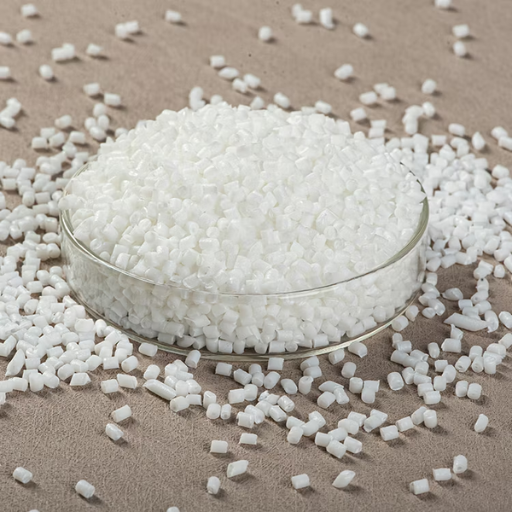
Ultraform N2320 runs at MVR 7.5 cm³/10 min and density 1.41 g/cm³; W2320 003 runs at 25. The table below lists typical Ultraform datasheet values for the grades that appear most often in enquiries. MVR is ISO 1133 at 190 °C and 2.16 kg unless noted, and densities are nominal.
These are typical values from the BASF/ALBIS Ultraform product range brochure (September 2025) and the per-grade datasheets, not purchase specifications. Datasheet editions differ, and the current manufacturer document for the exact grade governs.
| Grade | Family | MVR (cm³/10 min) | Density (g/cm³) | Modulus / HDT | Typical use |
|---|---|---|---|---|---|
| N2320 0038 AT | Standard POM-C | 7.5 | 1.41 | 2,600 MPa / 95 °C | General injection, walls over 1.5 mm |
| N2320 0035 | Standard, higher impact | 7.5 | 1.40 | 2,450 MPa / 100 °C | General injection where toughness matters |
| N2320 003 | Standard reference | 7.5 | 1.41 | 2,700 MPa / 100 °C | Baseline unfilled grade |
| S2320 003 | Easy flow | 11 | 1.41 | n/a | Thin walls, long flow paths |
| W2320 003 | Very high flow | 25 | 1.41 | 2,850 MPa / 100 °C | Hard-to-fill thin walls, multi-cavity |
| H4320 | Extrusion, high molecular weight | 2.2 | 1.40 | n/a | Rod, sheet, profile |
| N2200 G43 | 20% glass fibre | 4.0 | 1.55 | n/a | Structural parts needing stiffness |
| N2200 G53 | 25% glass fibre | 4.0 | 1.58 | n/a | High-load structural parts |
| N2720 M63 | 30% mineral | 3.8 | 1.65 | HDT A 140 °C | Precision parts, low warpage |
| N2720 M210 | 10% mineral | 7.0 | 1.49 | n/a | Precision parts, moderate warpage control |
| N2640 Z2 | TPU impact-modified | 7.0 | 1.38 | Charpy 15 kJ/m² | Clips, snap-fits, latches |
| N2640 Z4 | TPU impact-modified | 5.5 | 1.36 | Charpy 20 kJ/m² | Higher-impact clips and housings |
| N2640 Z6 | TPU impact-modified | 6.0 | 1.33 | Charpy 20 kJ/m² | Maximum impact, lowest stiffness |
| N2644 Z9 | TPU, high modifier | 12 | 1.28 | n/a | Damping and soft-touch parts |
| N2320 U03 | UV-stabilised | 7.5 | 1.41 | n/a | Outdoor and light-exposed parts |
| N2320 0035 LEV | Low-emission | 7.5 | 1.39 | n/a | Automotive interior, low odour |
| N2320 FC Aqua UN | Food and drinking water | 7.5 | 1.40 | n/a | Food-contact parts |
| N2320 003 PRO | Medical | 7.5 | 1.40 | n/a | Medical devices, regulated applications |
Read the MVR column first. It is the column that predicts whether the tool fills, and the one a quote with no suffix is hiding.
Two notes on edition drift. The 2025 brochure gives notched Charpy values of 15, 20 and 20 kJ/m² for Z2, Z4 and Z6; earlier editions give 11 for Z2 and 15 for Z4. For W2320, some databases show MVR 26, but that record belongs to W2320 0035, a separate legacy grade. Densities move by ±0.01 between editions, so do not read a 0.01 difference as a grade difference.
Choosing a family by part requirement
- Walls over 1.5 mm, general duty: start at N2320 003 and move to 0035 only if an impact test fails.
- Thin wall or a long flow path: S2320 003 first, W2320 003 only when S still shorts.
- A part that flexes in service, such as a clip, latch or snap-fit: N2640 Z2, moving to Z4 only when the impact target rises.
- Structural stiffness: N2200 G43 or G53, with a hardened barrel and screw.
- Outdoor exposure: N2320 U03, because standard grades are not UV-stabilised.
If you are still comparing Ultraform against other brands at grade level, the POM injection molding grade guide sets out the same decision across brands.
Processing window
| Parameter | Standard and high flow | Impact-modified | Glass-filled | Extrusion |
|---|---|---|---|---|
| Melt temperature | 190-230 °C; start up at 180 °C if needed | 190-215 °C | 190-230 °C | 175-180 °C |
| Mould temperature | 60-90 °C; 90-120 °C for precision | 60-80 °C | 60-120 °C | Not applicable |
| Drying | 100-110 °C for about 3 hours | 100 °C for 3 hours | 100 °C for 3 hours | 100 °C for 3 hours |
| Maximum moisture | 0.15-0.20% | 0.15-0.20% | 0.15-0.20% | 0.15-0.20% |
| Shrinkage | 2.0-2.3% | 1.6-1.9% | 0.7/1.4% (GF25) | About 2.2% |
BASF’s grade tables give 190-230 °C for injection grades; 230 °C is the ceiling, above which formaldehyde evolution rises. That narrow window is why residence time matters as much as temperature. Purge with polyethylene or polypropylene before shutdown, not with PVC or a high-temperature resin.
Regrind is workable at 10-15% for general parts and up to 30% for clean, closed-loop scrap, provided the part does not carry a food-contact or medical qualification.
Where BASF Ultraform Is Made: What AT Means for Origin and Duty
The AT suffix in an Ultraform grade identifies material made at BASF’s Korean plant, operated by KOLON BASF innoPOM, a 50:50 joint venture in Gimcheon that started commercial production in October 2018 with 70,000 tonnes per year of capacity. It isn’t a colour or a performance upgrade.
BASF announced in 2016 that POM production in Ludwigshafen would stop once the Korean plant started. The 2018 release confirms Korean production but gives no German shutdown date. Treat the European exit as announced, and confirm origin per lot rather than inferring it from a grade code.
A marketplace label proves nothing. The COA producer field does. Listings that say “BASF GERMANY” on an AT grade are seller claims, and some are stale. The documents that settle the question are the Certificate of Origin and the producer named on the Certificate of Analysis and the anti-dumping declaration.
Origin also sets the duty: EU-produced POM copolymer faces 34.5%, Kolon-made Korean material 6.2%, and other Korean producers 30.4%. That changes the landed cost.
China’s 2025 Ultraform anti-dumping measure
China’s Ministry of Commerce imposed final anti-dumping duties on POM copolymer from the EU, the United States, Taiwan and Japan under Announcement No. 25 of 2025, effective 19 May 2025 for five years. The product scope is POM copolymer under HS codes 39071010 and 39071090.
| Origin | Producer | Duty rate |
|---|---|---|
| EU | Celanese Production Germany and all other EU companies | 34.5% |
| US | Ticona Polymers and all other US companies | 74.9% |
| Taiwan | Polyplastics Taiwan | 3.8% |
| Taiwan | Formosa Plastics | 4.0% |
| Taiwan | All other Taiwan companies | 32.6% |
| Japan | Polyplastics | 35.5% |
| Japan | Asahi Kasei | 24.5% |
| Japan | All other Japan companies | 35.5% |
The notice expressly excludes homopolymer POM and modified POM from scope. The term “modified POM” is not defined in the notice, so glass-filled, mineral-filled and impact-modified grades may fall inside the exclusion. Obtain a written classification view before you quote a landed cost on one.
The separate Korea measure
Korean POM copolymer is covered by a separate measure, first imposed by Announcement No. 61 of 2017 and continued after an expiry review by Announcement No. 38 of 2023. The current five-year period runs from 24 October 2023.
| Origin | Producer | Duty rate |
|---|---|---|
| Korea | Korea Engineering Plastics | 30.0% |
| Korea | Kolon Plastics | 6.2% |
| Korea | All other Korean companies | 30.4% |
| Thailand | Thai POM | 18.5% |
| Thailand | All other Thai companies | 34.9% |
| Malaysia | Polyplastics Asia Pacific | 8.0% |
| Malaysia | All other Malaysian companies | 9.5% |
KOLON BASF innoPOM is not named in either notice. Pending a specific rate or a broker’s ruling, the residual rate for other Korean companies, 30.4%, is the prudent assumption for material produced by the joint venture. The producer and exporter named on the declaration set the rate, not the brand on the bag.
Company names have moved since the notice. Kolon Plastics’ 6.2% rate passed to Kolon ENP in 2024, and to Kolon Industries under MOFCOM Announcement No. 22 of 2026, effective 5 June 2026. Kolon Industries inherited the 6.2%, while shipments declared under the old KOLON ENP name fell to the 30.4% residual.
Which rate applies to your lot
| What the documents say | Likely treatment | What to verify |
|---|---|---|
| EU origin, BASF or another EU producer | 34.5% | Producer named on COA and AD declaration |
| Korean origin, Kolon Industries (successor to Kolon ENP, formerly Kolon Plastics) | 6.2% | Declaration must name Kolon Industries; goods declared under Kolon ENP or Kolon Plastics fall to 30.4% |
| Korean origin, KOLON BASF innoPOM or another Korean company | 30.4% residual unless a specific rate applies | Broker’s view on the AD declaration line |
| Glass-filled, mineral-filled or impact-modified grade | Possible modified-POM exclusion, not defined | Written classification view before quoting landed cost |
| Goods entering a bonded zone or processing trade | Dedicated ledger rules under Announcement No. 83 of 2025 | Broker confirmation; no simple duty drawback |
Duty treatment depends on origin, producer and end use as declared at import. This section is a sourcing guide, not legal or customs advice. Confirm the position with your broker before you commit to a landed cost.
Send us the grade and destination, and we will confirm the origin documents before you quote duty →
COA, TDS and Authorization: What a BASF Ultraform POM Resin Supplier Must Prove
A branded resin order is a document set as much as a material order. For an Ultraform lot, the package should contain:
- Certificate of Analysis with the lot number, the grade designation and the tested properties.
- Technical datasheet for the exact grade and edition.
- Safety data sheet in the destination language where required.
- Certificate of Origin naming the country of origin.
- Anti-dumping declaration naming the producer and exporter.
- Packing list matching bag labels to the lot.
Verification is straightforward if you do it in order. Compare the COA melt flow and density against the datasheet at the same test condition. Check that the lot number on the COA matches the bag label. Check the producer name on the COA, not the trader’s letterhead.
If the COA reports MVR at 220 °C and 10 kg, ask for the 190 °C and 2.16 kg value before comparing it to anything.
One caution on compliance language. UL94 HB at 1.6 mm is documented for standard grades, but a Yellow Card file number for the exact grade and colour must be confirmed, not assumed. Food contact is grade-specific: the FC Aqua and PRO grades carry the explicit citations, and standard grades do not. 21 CFR 177.2470 covers POM copolymer as a class of formulations, not every grade a seller stocks.
On authorization: we supply BASF Ultraform grades through established channels. We don’t describe ourselves as an authorized distributor unless we can produce a current letter for the specific brand and region. If your qualification process requires an authorization letter, tell us at enquiry and we’ll confirm exactly what documentation we can provide.
Ask for the letter before you qualify us. If we cannot provide one for your brand and region, we will say so at enquiry rather than after the purchase order. Yifuhui is an independent supplier with no corporate affiliation to BASF SE or KOLON BASF innoPOM.
Ultraform POM Price, MOQ and Lead Time
Ultraform price spreads widely because four variables move independently: grade suffix, origin, duty position and lot size. A 0038 AT lot from Korea and an EU-produced lot of the same nominal grade are not the same landed cost, even before the anti-dumping rate is applied.
On 3 November 2026, plas.com listings showed N2320 0038 AT described as “BASF KOREA” at US$1,810 per tonne FOB Shenzhen, with competing traders between US$1,530 and US$1,740. An S2320 003 lot labelled “BASF GERMANY” was listed at US$3,120 per tonne FOB Guangzhou. These are single-lot observations, not a market index, and the origin labels are unverified.
For our supply, 25 kg trial quantities are available for qualification. Where a grade is in stock it typically ships in 7-14 days from Suzhou; grades we do not hold are quoted as indent, usually 30-45 days. We quote EXW Suzhou, FOB Shanghai or CIF destination. Our Suzhou warehouse sits in the same export corridor as the Port of Shanghai, so FOB loading is routine.
Our POM resin price guide explains the cost structure, and the bulk POM resin guide covers container economics.
Frequently Asked Questions
Is Ultraform a homopolymer or a copolymer?
Ultraform is BASF’s POM copolymer brand, POM-C, not a homopolymer. It is the family most often quoted against Celanese Hostaform when a specification calls for copolymer. If your specification calls for POM-H instead, the reference brand is Delrin, now a separate company spun off from Celanese in 2024.
What does AT mean on an Ultraform grade?
AT identifies material from BASF’s Korean plant, operated by the KOLON BASF innoPOM joint venture in Gimcheon. It is not a colour code or a performance upgrade. Origin should still be confirmed on the Certificate of Origin for each lot, because the duty rate depends on it.
What is the difference between Ultraform N2320 003, 0035 and 0038?
They share the same base polymer and the same MVR of 7.5. The suffixes denote formulation variants: 003 is the reference grade, 0035 offers higher impact, and 0038 is a mould-release variant. Ask which of the three the COA was written against before you compare prices.
Is Ultraform W2320 an extrusion grade?
No. W2320 is a very-high-flow injection moulding grade with an MVR of 25. The extrusion grade is H4320, with H2320 004 available where still supplied. A buyer who orders W2320 for profile extrusion will usually see sagging or dimensional problems.
Does China’s anti-dumping duty apply to Ultraform?
It depends on origin and producer. EU-origin POM copolymer faces 34.5%. Korean material from Kolon Industries faces 6.2%, while other Korean producers face a 30.4% residual rate. KOLON BASF innoPOM is not named in either notice, so confirm the treatment with your broker.
Which Ultraform grades are food-contact approved?
The food-contact grades are designated by BASF, such as N2320 FC Aqua UN. They carry explicit FDA 21 CFR 177.2470 and EU 10/2011 references. Standard N2320 is not a food-contact grade simply because the base polymer appears in the regulation.
Can you supply a 25 kg trial of a specific grade?
Yes, for stocked grades. Tell us the grade, the application and the destination, and we will confirm availability, price and the COA format before shipment. Indent grades may carry a higher minimum depending on the manufacturer’s packing unit.
What documents come with an Ultraform lot?
A COA with the lot number, the grade TDS, the SDS, the Certificate of Origin, the anti-dumping declaration and a packing list. Ask for the producer name on the COA, not just the trader’s name on the invoice.
What is the Ultraform price per kg?
Ultraform price is quoted per lot, not per brand. Observed listings on 3 November 2026 put N2320 0038 AT between US$1,530 and US$1,810 per tonne FOB China, depending on origin and suffix. Treat those as spot observations, not a market index, and price the landed cost after duty.
Do you sell Ultraform under BASF’s authorization?
We supply Ultraform through established channels and will confirm the documentation we can provide for the specific brand and region. We do not claim authorized distributor status without a current letter. Tell us what your qualification process requires, and we will answer before you qualify us.
Choosing a BASF Ultraform POM Resin Supplier
Four questions separate a supplier from a trader: which grade suffix you are buying, where the lot was produced, which duty rate applies at your border, and which documents will prove all three.
If the answer to any of those is vague, the price is not comparable. The cheapest quote in the comparison above was for a grade that does not exist. The middle quote carried no suffix, so there was no way to tell 003 from 0035 from 0038. Only the US$1,810 quote named 0038 AT and could be checked against a datasheet and a Certificate of Origin.
Send us the grade or the application, the quantity, the destination port and any regulatory requirement. You will get pricing, lead time for the grade you name, COA availability and a written statement of which origin documents we can supply within one business day, or a straight answer on what we cannot confirm.
For the generic version of these questions, covering MOQ, Incoterms and lead times across the full range, see our POM resin supplier hub.
Request a 25 kg Ultraform trial with the COA and origin documents →