





Picture a procurement manager comparing three quotes for 18 tonnes of POM copolymer. One is FOB Shanghai, one is CIF Rotterdam, one is priced per 25 kg bag.
She chooses the CIF quote because it looks complete. The container arrives, the freight is paid, and the import duty isn’t. Her landed cost finishes above budget, and the FOB quote she rejected turns out to have been the cheaper route all along.
Bulk POM resin buying is decided by quantity, packaging, Incoterm and documentation, not by the per-kilogram number on page one. Whether you buy POM resin bulk or one pallet, the resin is the easy part. The terms are where budgets move. This guide covers the five quantity tiers, how container loading works, which Incoterm pays for what, and the documents that should arrive with the resin.
Send your grade, quantity and destination port for a comparable quote →
What Counts as a Bulk POM Resin Order?
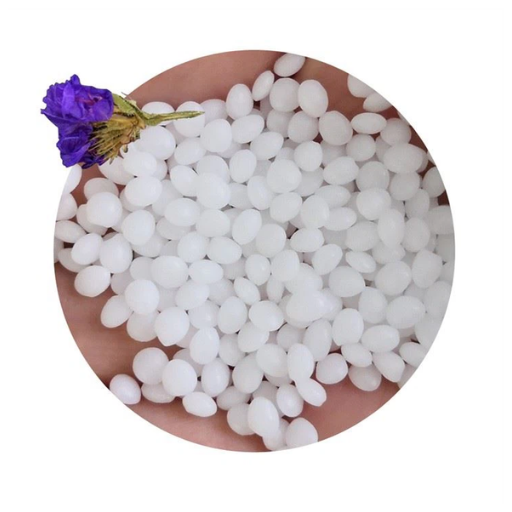
Bulk means different things to different suppliers. A marketplace seller may call 25 kg bulk because it’s more than a sample. A factory-direct producer may call 20 tonnes bulk because that’s the smallest economic run. Neither definition helps a buyer planning a first order.
The practical definition is what changes at each tier, and the handling equipment changes with it. If your line moves from bags to silo or gaylord feed, the bulk plastic pellets for injection molding guide covers the equipment side.
| Tier | Typical quantity | Packaging | What changes |
|---|---|---|---|
| Trial | 25 kg | One or two 25 kg bags | You can test the grade without committing to inventory |
| Pallet | 500 kg to 1 t | 20 to 40 bags on one pallet | Freight becomes a line item; pallet handling starts to matter |
| Tonne | 1 t to 5 t | 40 bags or one 1,000 kg jumbo bag | Volume pricing becomes possible; documentation becomes formal |
| Part container | 5 t to 16 t | Palletized or floor-loaded | You share a container or book a partial load |
| Full container | 16 t to 26 t | 20ft or 40ft, palletized or floor-loaded | Freight economics dominate the landed cost |
The first tier matters most for a new programme. A 25 kg trial lets you run the material through your process, compare the Certificate of Analysis against the datasheet, and decide whether the grade behaves as specified. Starting at 20 tonnes is a gamble.
We supply branded POM resin from 25 kg, with no ceiling on volume. That entry point is unusual in a market where one-tonne minimums are common and full-container minimums aren’t rare.
POM Resin Packaging: Bags, Jumbo Bags and Pallets
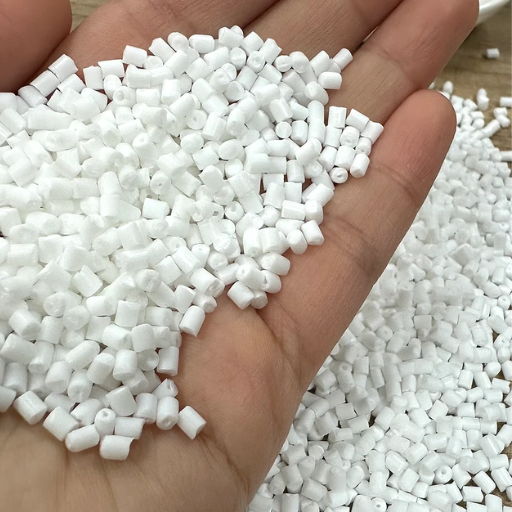
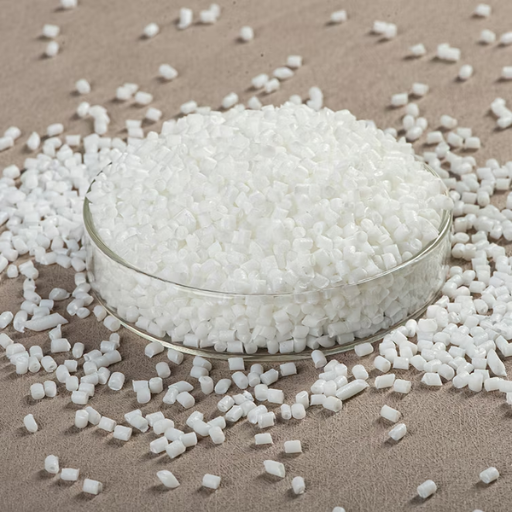
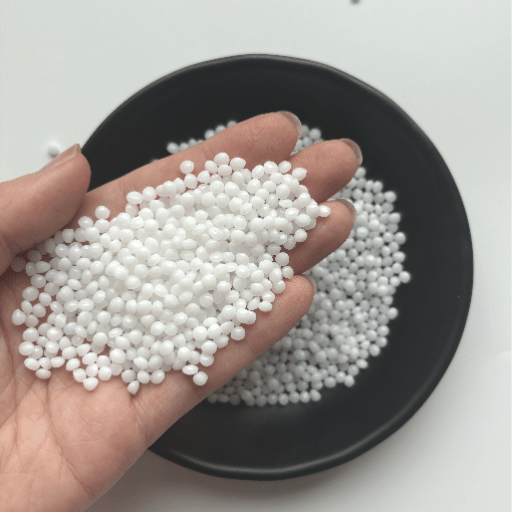
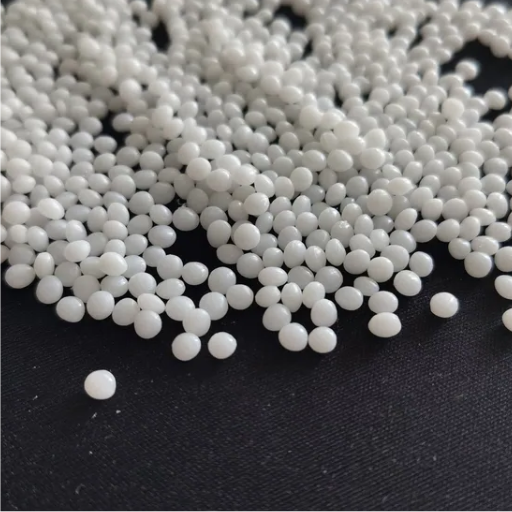
POM ships as pellets in moisture-barrier bags. The bag isn’t a detail. It protects the resin from moisture pick-up before processing, and it decides how the shipment is handled at every stage.
Our standard unit is a 25 kg bag. Forty bags make a tonne. Bags are usually palletized for export, though floor loading is possible. A 1,000 kg jumbo bag cuts handling and bag count, but it needs discharge equipment at the destination.
| Format | Unit weight | Units per pallet | Best for |
|---|---|---|---|
| 25 kg bag | 25 kg | 25 or 40 bags, depending on pallet | Trials, mixed grades, destinations without bulk handling |
| 25 kg bag, floor-loaded | 25 kg | Not applicable | Full containers where cube matters more than handling |
| 1,000 kg jumbo bag | 1,000 kg | One per pallet | Single-grade production orders, bulk handling available |
| Custom packaging | Quoted | Quoted | Larger volumes with a specific handling requirement |
Two details belong in every quote. The bag weight and type, because “one bag” means nothing without it. And the pallet configuration, because 25 bags of 25 kg is 625 kg, while 40 bags is 1,000 kg. That difference changes the container count.
Ask for both in writing. A supplier who quotes per bag without a bag weight has given you a number you can’t compare.
How Many Tonnes of POM Resin Fit in a Container Load?
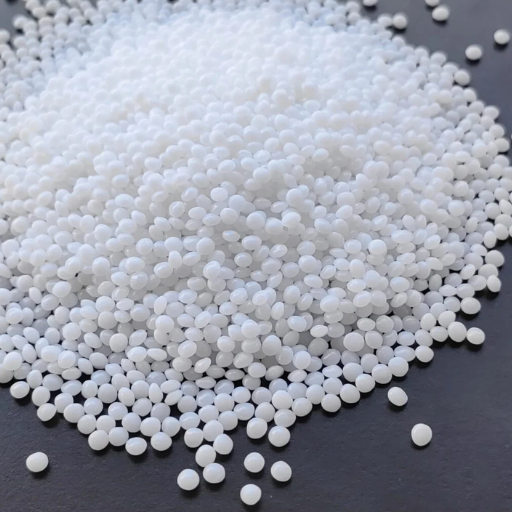
A 20ft container holds about 12.5 tonnes of POM resin on 625 kg pallets, or 18 to 20 tonnes floor-loaded. A 40ft holds about 24 tonnes palletized or 25 to 26 tonnes floor-loaded.
Those are practical figures, not the container’s own limits. A 20ft has about 33 cubic metres of internal volume and a maximum payload around 25 tonnes, and a 40ft has about 68 cubic metres and a payload around 27.6 tonnes. Bagged POM usually hits weight or handling limits before it fills the box.
| Container | Palletized, 1 t pallets | Palletized, 625 kg pallets | Floor-loaded bags | Practical note |
|---|---|---|---|---|
| 20ft GP | About 16 t | About 12.5 t | About 18 to 20 t | Road limits at destination can bind before the container does |
| 40ft GP | About 24 t | About 24 to 25 t | About 25 to 26 t | Weight-limited before volume-limited for dense bagged resin |
| 40ft HQ | About 24 to 25 t | About 24 to 25 t | About 25 to 26 t | Extra height helps palletized loads more than floor-loaded loads |
These figures assume 25 kg bags, standard pallets and a carrier that permits the payload. Bag dimensions, pallet size, stack height and destination axle limits all move the result. Confirm the plan with your forwarder before you book.
This is where a common confusion starts. A supplier page may say a 20ft holds about 12.5 tonnes. That isn’t wrong. It’s 20 pallets at 625 kg each, double-stacked on ten floor positions.
A 40ft takes roughly 40 of those pallets, or 25 tonnes, and destination road limits usually hold the practical load at 24 to 25 tonnes. A floor-loaded 20ft can hold 18 to 20 tonnes, and a floor-loaded 40ft can hold 25 to 26 tonnes. The number without its configuration is the problem, not the arithmetic.
If you’re comparing a Chinese quote with a local distributor quote, ask both for the loading plan in tonnes and pallets. The supplier with the clearer answer usually has loaded the material.
Tell us your destination port and we’ll confirm the loading plan for your grade and packaging →
How Bulk POM Resin Pricing Works
Four variables move a bulk POM resin quote: grade and brand, volume tier, Incoterm, and date.
Grade matters because POM isn’t one material. A commodity copolymer and a named automotive grade can sit far apart on price, and the gap buys lot consistency, documentation and a specification an OEM will accept without requalification.
Volume matters because a 25 kg trial, a 500 kg pallet and a 20-tonne container carry different handling and freight costs. The Incoterm matters because FOB and CIF include different services. The date matters because POM prices move with feedstock and producer announcements.
We quote POM resin wholesale pricing against your specification rather than publishing a list price. A range covering every grade and destination wouldn’t apply to your order. For the dated market picture, our POM resin price guide tracks dealer quotes, grade spreads and cost drivers.
Ask for a quote that states grade, brand, quantity, packaging, Incoterm, named port, currency, validity period and payment route. A quote missing any of those is a starting point, not a comparison.
POM Resin MOQ and the Trial-to-Bulk Sequence
A bulk order should begin with a trial, and the trial should come from the same production lot as the order that follows. That sequence is the difference between qualifying a material and hoping.
- Define the specification. Grade, brand, colour, filler, melt flow index and any compliance requirement. “POM resin” isn’t a specification. “Celanese Hostaform C27021, natural, FDA, 25 kg bags” is.
- Request the trial quantity. A 25 kg trial is enough for most process checks.
- Review the COA against the datasheet. Check the grade name, lot format, measured MFI, density, tensile strength, moisture and the pass or fail statement.
- Run the trial on your equipment. Pellets that look right can still short-shot, warp or run at the wrong cycle time.
- Approve the grade and the lot. Record the lot number. It’s the reference for the production order.
- Place the bulk order against the approved lot. Ask for the same lot, or one with a COA inside the same specification window.
A common version of this goes wrong at the COA. A molder qualifies a connector housing, the trial COA shows an MFI of 11 g/10 min against a datasheet range of 8 to 10, and the supplier calls it normal variation.
The molder runs the pellets anyway and measures a cycle time 14% longer than baseline. The trial costs a week. The 5-tonne order would have cost a production run.
A supplier who resists a trial, or can’t tie the trial lot to the production lot, is telling you how the bulk order will be documented.
Request a 25 kg trial with the matching COA →
Incoterms: Who Pays for What
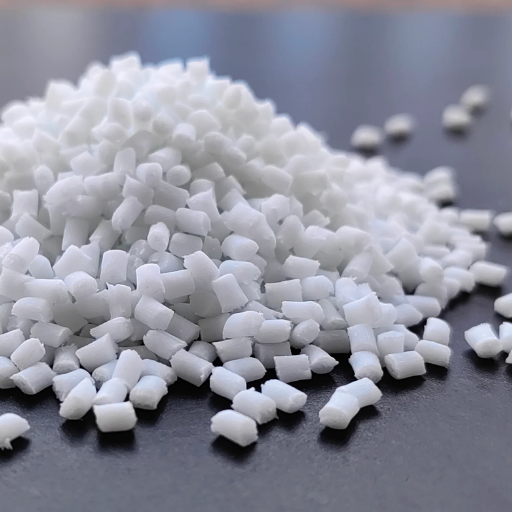
Incoterms are three letters that decide which costs and risks sit with the seller and which sit with you. Most disputes come from assuming one includes more than it does.
| Cost or risk | EXW Suzhou | FOB Shanghai | CIF destination port | DAP destination |
|---|---|---|---|---|
| Export packing | Buyer | Seller | Seller | Seller |
| Inland haulage to port | Buyer | Seller | Seller | Seller |
| Export clearance | Buyer | Seller | Seller | Seller |
| Loading on vessel | Buyer | Seller | Seller | Seller |
| Ocean freight | Buyer | Buyer | Seller | Seller |
| Marine insurance | Buyer | Buyer | Seller, minimum cover | Seller |
| Import clearance | Buyer | Buyer | Buyer | Seller |
| Import duty and VAT | Buyer | Buyer | Buyer | Buyer, unless DDP |
| Risk transfers | At seller’s premises | When cargo is on board | When cargo is on board | At the named destination |
EXW puts almost everything on the buyer. FOB Shanghai is the standard export term: the seller clears export and loads the vessel, and the buyer pays freight and everything after it. CIF adds freight and minimum insurance to the destination port. It doesn’t add import clearance, duty or inland delivery.
That last point catches first-time importers. CIF feels door-to-door because the seller arranges the ship. It isn’t. The buyer still clears the goods and pays the duty.
For POM resin, FOB Shanghai is our standard export term, with EXW Suzhou and CIF destination port available. If you need DAP or DDP, ask before you order. Those terms put the seller into your customs process.
Payment Terms and First-Order Protection
Payment is a negotiation, not a catalogue item. The route should match the order size and the relationship.
The two routes buyers ask about most are T/T and L/C at sight. A T/T order usually runs with a deposit and a balance before shipment or against the bill of lading copy. An L/C at sight suits larger first orders where both sides want a bank in the middle. Documents against payment is sometimes available for established buyers.
We set the route out in the proforma invoice: deposit percentage, balance trigger and the documents released against payment. Ask for those details before you send money. A supplier who wants full payment to a personal account, or won’t name the grade, quantity and Incoterm in the proforma, has given you a reason to slow down.
For a first bulk order, ask for three protections:
- A proforma invoice naming grade, quantity, packaging, Incoterm and port.
- A COA tied to the shipping lot.
- A pre-shipment inspection or loading photos before the balance is released.
None is unusual. All three are cheaper than a rejected container.
Export Documentation for a Bulk Shipment
A bulk POM shipment carries a document set. The resin isn’t the only thing customs and your QA team will ask for.
| Document | Issued by | What it does |
|---|---|---|
| Commercial invoice | Seller | States value, terms and Incoterm |
| Packing list | Seller | Shows bag and pallet count, net and gross weight |
| Bill of lading | Carrier or forwarder | Title document and release of cargo |
| Certificate of origin | Chamber of commerce or CCPIT | Establishes origin for duty and trade measures |
| Certificate of Analysis | Manufacturer or seller | Gives lot-specific property values |
| Technical data sheet | Manufacturer | States the grade specification |
| Safety data sheet | Manufacturer | 16-section format; flags formaldehyde as a thermal-decomposition product |
| Insurance certificate | Insurer | Evidence of CIF cover, where applicable |
Your customs broker will want the invoice, packing list, bill of lading and certificate of origin. Your QA team will want the COA, TDS and SDS. The COA should carry the grade, lot number, date of manufacture, measured values, test methods and a pass or fail statement against the manufacturer’s specification.
POM copolymer and homopolymer have separate US food-contact regulations: 21 CFR 177.2470 for copolymer and 21 CFR 177.2480 for homopolymer. Only grades the manufacturer designates for food contact carry that status. The polymer as a class doesn’t. In the EU, the framework is Regulation (EU) No 10/2011, and a REACH declaration typically references Article 33 and the current ECHA candidate list.
Lead Times and Shipping Schedules
Lead time has two parts: time to the port, and time on the water. Quotes often mention only the first.
Stock grades ship from our Suzhou warehouse in 7 to 14 days to major ports, depending on destination and Incoterm. Indent grades are quoted individually because lead time depends on manufacturer stock. Production orders are quoted case by case; typical runs are 30 to 45 days. Ocean transit then depends on lane, carrier and season.
Work backwards from the date you need resin at the line. Add transit, clearance and a buffer for port congestion. If the grade is OEM-specified, add the time to approve a substitute if the first lot fails.
The same gap appears on a 6-tonne order of DURACON M90-44. The supplier quotes 10 days. That’s time to the port, not to the warehouse.
Door to door the shipment takes 31 days, against 21 days of safety stock. A planner who has been through it holds six weeks of cover on imported grades and four on domestic ones. The extra inventory costs less than the line stoppage did.
Landed Cost: The Five Lines Between Quote and Warehouse
A per-kilogram price is one line of a landed cost. The other four decide whether the order fits the budget.
- FOB value. The resin and export packing, cleared for export.
- Ocean freight. Priced per container or per tonne, and sensitive to how full the container is.
- Insurance. A small percentage of the CIF value, and worth having on a first order.
- Import duty and trade measures. Determined by your broker against the HS line, origin and any measures in force in your market.
- Inland haulage and handling. From the port to your warehouse, including pallet or liftgate charges.
POM resin in primary forms sits under HS 3907.10. The MFN base duty rate is typically 6.5% in the US and EU, but the landed rate can include trade measures that change by origin and date. Check the current line in the HTSUS or TARIC with your broker; that’s the rate that applies to your entry. We provide the invoice, packing list, certificate of origin and COA; we don’t quote your duty.
One direction trap is worth stating plainly. China’s 2025 anti-dumping duties on POM copolymer apply to resin imported into China from the US, EU, Japan and Taiwan. They don’t apply to a buyer in the US, Europe, India or Southeast Asia importing China-origin resin into their own market.
The MOFCOM announcement sets out the rates and scope. If you’re buying from us for export, that section is context, not your landed cost.
For a worked FOB example and dated freight references, see our POM resin price guide. It tracks market inputs; it doesn’t replace your broker’s duty determination.
Bulk Order Checklist and Red Flags
Ask ten questions in writing, and compare the answers side by side.
- What is the grade, brand and lot number?
- What is the bag weight and pallet configuration?
- What is the MOQ, and is the trial drawn from the production lot?
- What is the price basis: FOB, CIF, EXW or DAP?
- Which port is named?
- What is the lead time to the port, and what is the transit time?
- What payment route and deposit are required?
- Which documents ship with the order?
- What happens if the COA falls outside the datasheet range?
- Who is the manufacturer, and can the lot be traced to it?
Red flags are easy to spot once you know them:
- A quote that mixes MOQ units, such as 25 kg on one line and one bag on another without a bag weight.
- A price per bag that can’t be reconciled with the price per kilogram.
- A COA issued by the trading company rather than the manufacturer.
- A shipment that mixes several lots under one certificate.
- A named brand with no grade number.
- A lead time that stops at the port.
None of those proves fraud. Each one means you can’t verify the order, and verification is the buyer’s job.
Why Buy Bulk POM Resin From Yifuhui
We’re a Suzhou-based supplier of branded engineering resins, next to the Port of Shanghai, with our own import and export licence. Our POM portfolio covers BASF Ultraform®, Celanese Hostaform® and Amcel®, Polyplastics DURACON®, Kolon KOCETAL® and Formosa FORMOCON®.
The terms that matter for a bulk order are the ones we put in writing: a 25 kg entry point, a COA on every batch, a stated lead time, EXW, FOB Shanghai or CIF, and a documented export package. If your specification names a grade, we’ll match it exactly and tell you what we can prove about the lot.
For grade-level detail, see our POM resin supplier guide and the POM material guide.
Frequently Asked Questions
What is the MOQ for bulk POM resin?
We supply from 25 kg, with no ceiling on volume. Marketplace sellers often quote a one-tonne minimum, and some producers sell only full containers. A 25 kg trial is enough to qualify a grade before you commit to a production order.
How many tonnes of POM resin fit in a 20ft container?
A palletized load of 1-tonne pallets runs about 16 tonnes. A 625 kg pallet configuration runs about 12.5 tonnes. Floor-loaded bags can reach about 18 to 20 tonnes. Confirm the loading plan with your forwarder.
What is the difference between FOB and CIF for POM resin?
FOB Shanghai means the seller clears export and loads the vessel; the buyer pays ocean freight, insurance, import clearance and duty. CIF adds freight and minimum insurance to the destination port, but not import clearance or duty.
What payment terms apply to a first bulk order?
The route is set out in the proforma invoice. T/T with a deposit and a balance, or an L/C at sight for larger orders, are the two routes buyers ask about most.
What documents ship with a bulk POM order?
Commercial invoice, packing list, bill of lading, certificate of origin, COA, TDS, SDS and, where applicable, an insurance certificate. Your broker needs the first four; your QA team needs the COA, TDS and SDS.
How long does a bulk POM order take?
Stock grades ship in 7 to 14 days to major ports. Production orders are quoted case by case; typical runs are 30 to 45 days. Add ocean transit and clearance.
Can I get a sample before a bulk order?
Yes. A 25 kg trial is the standard starting point, drawn from the same lot as the production order where possible, with the matching COA.
Is POM resin the same as acetal?
Yes. POM resin, acetal resin and polyoxymethylene are three names for the same polymer. POM is the abbreviation, acetal is the common name in trade, and polyoxymethylene is the chemical name. Delrin is a brand of homopolymer POM, not a separate material; our POM versus Delrin comparison covers the difference.
The Next Step Is a Specification, Not a Catalogue
Bulk POM resin is a commodity on the surface and a documentation exercise underneath. Grade, packaging, Incoterm, payment route and documents decide what the resin costs at your warehouse. The per-kilogram number is only the first line.
Send the grade or application, quantity, packaging and destination port. We’ll return pricing, lead time, COA availability and a loading plan you can compare with any other quote. If you’re still choosing a grade, send the operating conditions instead: temperature, chemical exposure, load and any regulatory requirement.