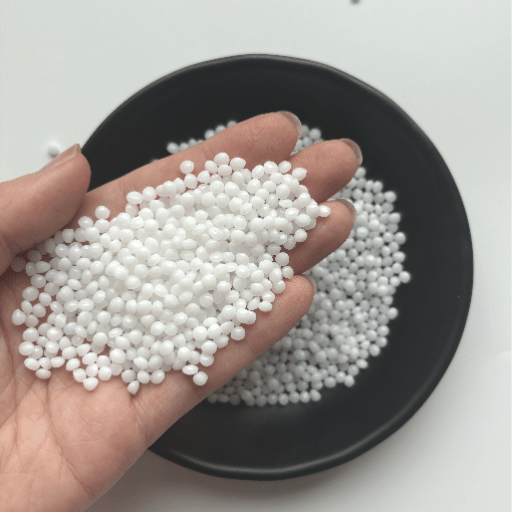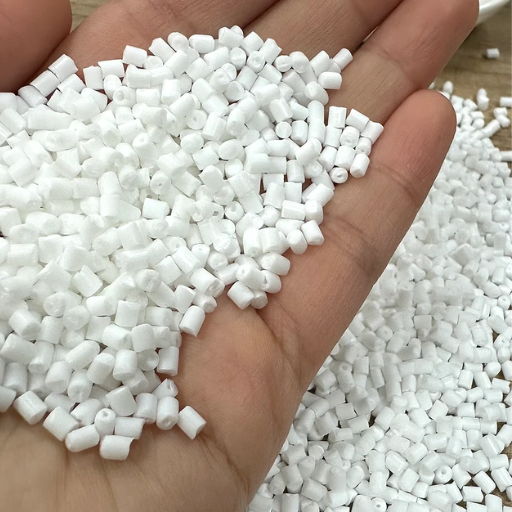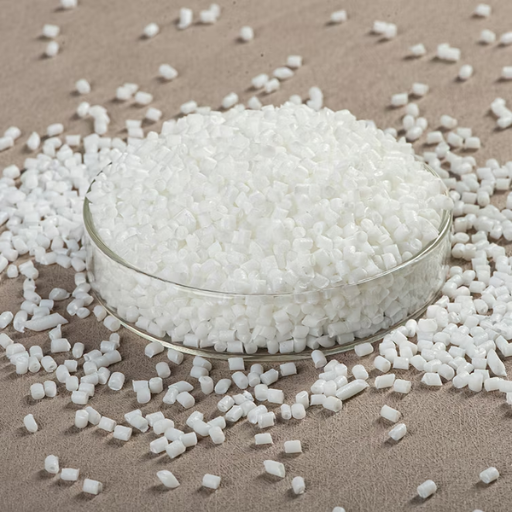


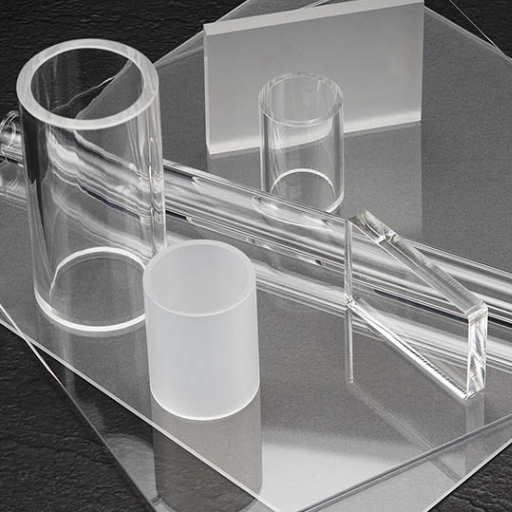



Two suppliers sent datasheets for the same gear. Both said POM. One quoted 78 MPa on a high-strength homopolymer grade, the other 66 MPa on a standard copolymer grade. Both were telling the truth.
One sheet was for a homopolymer, the other for a copolymer. If one of them said Delrin, it was the homopolymer. The names look interchangeable, the datasheets look similar, and the price difference is real.
But the two materials fail in different conditions and reward different designs. Treating them as one material is how a part that passed its prototype test cracks in service six months later.
This guide compares POM homopolymer vs copolymer on chemistry, numbers and application. It covers the four conditions that reverse the usual ranking, the grades behind the brand names, and the checks that tell you which family you actually received. If you already know the part and need the resin, send the application details and our team will recommend a POM-H or POM-C grade with a Certificate of Analysis.
Acetal Homopolymer vs Copolymer: What’s the Difference?
POM is polyoxymethylene. The same material is sold as acetal, polyacetal and polyformaldehyde. The names describe the polymer, not a grade or a brand.
The short answer: POM-H is built from one monomer and forms a highly regular, crystalline chain. POM-C adds a comonomer that interrupts the chain, lowers crystallinity and stabilises the chain ends. POM-H is stiffer and stronger; POM-C is tougher, more hydrolysis-resistant and easier to process.
The mechanism is straightforward. POM-H is polymerised from a single formaldehyde-derived monomer, so its chain packs into dense crystals. POM-C adds a small amount of 1,3-dioxolane, sometimes ethylene oxide, which interrupts the regular chain and stabilises the chain ends against unzipping. That structural difference is the source of almost every property difference in this article.
The comonomer content is small. Wikipedia puts it at roughly 1 to 1.5 mole percent of the repeating units, which is about 2 to 3 percent by weight; some sources quote 2 to 5 percent depending on the grade and the basis. The exact figure matters less than the direction: less regularity means lower crystallinity, and lower crystallinity changes stiffness, creep, impact, hydrolysis and processing all at once.
For the broader material picture, our complete POM material guide covers grades, properties and processing across the whole family.
The three field scenarios in this guide are composites drawn from common failure patterns; the names are changed.
Priya, a process engineer at a pump maker in Pune, learned this the expensive way. Her team approved a POM-H impeller because that grade’s datasheet showed 78 MPa and the prototype passed a 500-hour bench test in dry air. In service, the pump ran on 70 °C water.
Eighteen months later, impellers were cracking at the hub. Nobody had misrepresented the material. The team had selected it for the wrong environment. The switch to POM-C cost less than the warranty claims.
Why crystallinity is the master variable
Crystallinity is the fraction of the polymer that is ordered rather than amorphous. POM-H’s regular chain crystallises readily. POM-C’s comonomer blocks disrupt that order.
Higher crystallinity makes a material stiffer, stronger, harder and more resistant to creep and fatigue. It also makes it less ductile (lower elongation at break), more prone to internal voids in thick sections, and less tolerant of hot water and chemicals. Notched impact can still favour POM-H, depending on the test and grade. Lower crystallinity trades some of that stiffness for toughness, hydrolysis resistance and a wider processing window.
That is the whole trade-off in one paragraph. Everything else is detail.
The two chain-end chemistries matter too
POM-H is stabilised by capping its otherwise unstable hemiacetal ends as acetate esters. Those caps can be hydrolysed in hot water, regenerating hemiacetal ends that unzip and release formaldehyde.
In POM-C, the unstable ends are removed until a comonomer unit becomes the chain end, and those units stop the unzipping from propagating. This is why POM-C is described as thermally more stable and easier to process, and why it holds up better in hot water. It is also why POM-H demands tighter control of melt temperature and residence time.
For the polymer background, Wikipedia’s polyoxymethylene entry is a reasonable starting point. For the grade-level data, use a manufacturer datasheet, not a generic chart.
POM Homopolymer vs Copolymer: The Numbers Side by Side
The table below uses one controlled data set: standard unfilled Acetron™ and Ertacetal™ grades from Mitsubishi Chemical Advanced Materials, tested to ISO methods. It is not a universal POM constant. A Delrin 500P sheet, a Hostaform C27021 sheet and an Acetron H sheet will all differ.
| Property | POM-H | POM-C | Standard | What it changes |
|---|---|---|---|---|
| Density | 1.43 g/cm³ | 1.41 g/cm³ | ISO 1183-1 | Part weight and cost per volume |
| Crystallinity | Higher | Lower | n/a | The master variable behind the rest |
| Melting point | 180 °C | 165 °C | ISO 11357 | Processing window, not a service limit |
| HDT at 1.8 MPa | 110 °C | 100 °C | ISO 75-1/-2, Method A | Short-term heat resistance under load |
| Tensile strength | 78 MPa | 66 MPa | ISO 527 | Roughly 18% higher in this grade pair |
| Tensile modulus | 3,700 MPa* | 3,000 MPa | ISO 527 | Stiffness; confirm on the grade datasheet |
| Elongation at break | 24% | 40% | ISO 527 | Ductility before fracture |
| Flexural modulus | 3,450 MPa | 2,660 MPa | ISO 178 | Bending stiffness |
| Notched Charpy | 10 kJ/m² | 8 kJ/m² | ISO 179-1/1eA | Impact resistance, notched |
| Rockwell M | 88 (ISO) / 89 (ASTM) | 84 (ISO) / 88 (ASTM) | ISO 2039-2 / ASTM D785 | Surface hardness |
| CLTE, 23–60 °C | 95 µm/(m·K) | 110 µm/(m·K) | ISO | Dimensional stability |
| Hydrolysis resistance | to 60 °C | to 85 °C | n/a | Hot-water and steam service |
| pH resistance | 4–9 | 4–13 | n/a | Acid and alkali service |
*MCAM’s source page prints the POM-H tensile modulus as “3,7000 MPa”. The 3,700 MPa above is the obvious correction, but it is higher than the flexural modulus in the same table, which is unusual; confirm it on the specific grade datasheet before specifying.
Read the direction, not the decimal. In this data set POM-H is stiffer, stronger, harder and more dimensionally stable. The modulus row deserves a second check on the specific grade: published tensile and flexural moduli vary, and the two are not interchangeable. POM-C stretches further, resists hot water and a wider pH range, and has a lower melting point that gives processors more room.
The same material can read very differently on another datasheet
A second controlled source shows how much the grade and the test programme matter. Curbell Plastics publishes ASTM data for its acetal stock shapes: tensile strength of 10,000 psi (about 69 MPa) for homopolymer against 9,800 psi (about 68 MPa) for copolymer, and notched Izod of 1.5 against 1.0 ft-lb/in. That is a much smaller tensile gap than MCAM’s 78 vs 66 MPa.
Both tables are honest. They describe different grades, different standards and different test conditions. The lesson is not that one source is wrong. The lesson is that “POM-H is stronger” is a direction, not a number you can copy from a chart.
Hardness: M94, M88 and why the standard matters
The number most buyers recognize is Rockwell M94 for Delrin sheet on ASTM D785. Copolymer usually reads M80 to M88. In MCAM’s data the same materials read M88 vs M84 on the ISO scale and M89 vs M88 on the ASTM scale. Grade and standard both move the apparent gap.
That’s why a drawing that says “hardness 94” without a scale or a method isn’t a specification. Write “Rockwell M, ASTM D785, minimum M88” instead. Our POM hardness guide explains the scales and the conversion traps.
Melting point: 175 vs 165 is real, but it is not the service ceiling
POM-H melts around 175 to 180 °C, depending on grade and test method. POM-C melts around 165 °C. The gap is real and it is why POM-H can run at a slightly higher service temperature in the short term.
It isn’t a license to run POM-H hotter in service. Continuous service temperature is governed by oxidation and hydrolysis, not by melting point. In practice both families are rated somewhere around 90 to 110 °C in air, and the exact figure depends on the grade and the standard. Our POM melting point guide covers the full thermal picture.
Impact is not one number
The simple story says copolymer is tougher. The controlled data is more interesting. MCAM’s notched Charpy values favor POM-H (10 vs 8 kJ/m²), while elongation at break favors POM-C (40% vs 24%). Curbell’s notched Izod favors POM-H (1.5 vs 1.0 ft-lb/in).
Impact depends on the test, the notch, the temperature, the specimen thickness and the grade. A material can have high elongation and still notch-sensitive behavior. Don’t specify “tougher” without a test method and a service temperature.
What the Differences Mean in a Real Part

Marcus runs maintenance at a conveyor manufacturer in Ohio. His team replaced steel guide rails with POM-H because the rails wore less and the line ran quieter. That worked for two years, until the plant added a caustic washdown cycle. The POM-H rails began to craze and crack within four months.
A POM-C rail, same geometry, has run for three years. POM-H wasn’t a bad choice. The operating envelope changed, and the material didn’t.
Stiffness, creep and fatigue: homopolymer’s home ground
POM-H’s higher crystallinity gives it higher stiffness and better resistance to creep under sustained load. MCAM’s comparison puts POM-H about 10 percent higher in load before creep. For a gear, a bushing or a wear strip that runs dry and holds a tight tolerance, that is the property that decides the design.
Impact and snap-fits: copolymer’s advantage
POM-C’s 40 percent elongation at break gives it more room to deform before it fractures. That matters for snap-fits, living hinges, clips and parts that see repeated assembly or shock. The advantage is not unlimited: POM-C is still a semi-crystalline engineering plastic, and a sharp notch will still start a crack.
Wear and friction: homopolymer usually, but the counterface decides
POM-H is generally the better wear choice against steel in dry running. Its higher crystallinity and hardness reduce wear volume. But wear is a system property.
The counterface material, surface finish, load, speed, lubrication and temperature can reverse the ranking. A POM-H part that wears well against polished steel can wear badly against a rough or dissimilar counterface.
Hydrolysis and chemicals: copolymer’s structural advantage
POM-C resists hot water to about 85 °C, against about 60 °C for POM-H. It also handles a wider pH range, roughly 4 to 13 against 4 to 9. If the part sees hot water, steam, caustic cleaning or mild acids, POM-C is the default.
Chlorine is the exception that proves the rule. Even POM-C is not immune to chlorinated water; Wikipedia notes that 1 to 3 ppm chlorine in potable water can cause environmental stress cracking in POM. Specify the water chemistry, not just the temperature.
Processing and thick walls: copolymer is more forgiving
POM-H’s high crystallinity makes it more prone to centre-line porosity in thick sections. POM-C has lower centre-line porosity, which is why it is usually the safer starting choice for thick-wall machined parts and pressure-tight components. POM-H also has a narrower processing window: it needs higher melt temperatures and leaves less margin at the top of the range.
Shrinkage and dimensional stability
Unfilled POM shrinks about 1.8 to 2.5 percent linearly, with homopolymer at the higher end. POM-C’s lower crystallinity gives it slightly lower and more predictable shrinkage. Neither number is a substitute for a mold-flow analysis on the actual grade, and neither is a reason to skip one. Put the shrinkage range, the mold temperature and the annealing condition on the drawing.
Where the POM Homopolymer vs Copolymer Ranking Flips
This is the section most comparison pages skip. The default ranking is not the whole story.
Lena specifies components for a food-processing line in the Netherlands. A POM-H star wheel passed every mechanical test, then failed after six weeks of daily caustic cleaning at 75 °C. The crack looked mechanical. The root cause was chemical attack at the chain ends.
A POM-C star wheel, same geometry and same load, has run for two years. The mechanical datasheet would never have predicted the difference.
| Condition | Winner | Why | What to specify |
|---|---|---|---|
| Glass-filled (GF20/GF30) | POM-C | Copolymer is routinely chemically coupled to glass, so the glass reinforces it. In homopolymer, coupling is not practical, so glass acts more like a filler. | Coupled GF-POM-C, and the grade datasheet |
| Hot water, steam or chlorinated cleaning | POM-C | Hydrolysis to 85 °C vs 60 °C; pH 4–13 vs 4–9 | POM-C, plus the cleaning-agent chemistry |
| Thick walls or pressure-tight machined parts | POM-C | Lower centre-line porosity | POM-C, or stress-relieved POM-H with a porosity check |
| Repeated impact, snap-fits, low temperature | POM-C (usually) | Higher elongation at break and better retained toughness | POM-C, plus a notched-impact spec at the service temperature |
| Dry, high-load, tight-tolerance, wear | POM-H | Higher crystallinity, stiffness, creep and fatigue resistance | POM-H, plus load, speed, counterface and lubrication |
Glass-filled grades reverse the strength ranking
The strongest version of the flip comes from Michael Sepe’s Plastics Technology column. With 20 percent glass fiber, copolymer tensile strength rises by about 60 percent and modulus by about 2.5 times.
Homopolymer modulus also rises, but its tensile strength can fall, because homopolymer chemistry makes coupling impractical and the glass acts more like a filler. Glass-filled POM-H grades exist, but the strength gain is much smaller. Glass-filled copolymer can therefore be stiffer and stronger than glass-filled homopolymer.
If your application needs glass, don’t assume the homopolymer advantage carries over. Check the coupled GF-POM-C grade.
Hot water is not a temperature problem, it is a chemistry problem
A POM-H part can survive 80 °C in dry air and fail at 80 °C in water. Hydrolysis attacks the chain ends, and POM-H’s acetate caps are more vulnerable. In POM-C, the comonomer unit at the chain end stops the unzipping from propagating. The 85 °C vs 60 °C limit in the table is a useful planning number, not a guarantee; the actual limit depends on the grade, the water chemistry and the stress.
Thick walls expose the porosity difference
A 60 mm POM-H block can look perfect on the outside and leak at the centre. The cause is centre-line porosity, a known consequence of the way homopolymer crystallises and shrinks in thick sections. POM-C has lower porosity. If the part is thick and pressure-tight, start with POM-C or specify a stress-relieved, porosity-checked POM-H.
Application Decision Matrix

Use this as a starting point, then verify the grade with the resin supplier.
| Application | First choice | Runner-up | Why | Watch-out |
|---|---|---|---|---|
| Precision gears, dry running | POM-H | POM-C | Stiffness, creep and fatigue resistance; low friction | Heat build-up at high speed |
| Bushings, wear pads, slide rails | POM-H | POM-C | Wear resistance and rigidity | Counterface and lubrication decide the wear ranking |
| Snap-fits, living hinges, clips | POM-C | POM-H | Higher elongation at break | Notch sensitivity and fatigue life |
| Fuel-system components | POM-C | POM-H | Hydrolysis and fuel/chemical resistance | Permeation and static discharge |
| Hot-water valves, pumps, plumbing | POM-C | None | Hydrolysis to 85 °C; pH 4–13 | Chlorine and chloramine |
| Food-processing parts | POM-C or POM-H, grade-specific | None | FDA 21 CFR 177.2470 or 177.2480 | “Food safe” is a grade and regulation claim |
| Medical and laboratory | POM-C, USP Class VI grade | POM-H | Lower porosity, better chemical resistance | Sterilisation method |
| CNC-machined prototypes | POM-H rod | POM-C rod | Stiffness and machinability | Centre-line porosity in thick rod |
| Outdoor or UV exposure | UV-stabilised POM-C | UV-stabilised POM-H | Both degrade in UV; the stabiliser decides | Black or UV grade only |
| ESD or antistatic | Conductive POM-C | None | The additive package provides the property | Surface-resistivity spec |
| High-load structural | POM-H | GF-POM-C | Unfilled stiffness, or glass coupling | Creep under sustained load |
Two rows deserve emphasis. Food contact is not a family property: FDA 21 CFR 177.2470 covers POM copolymer and 177.2480 covers POM homopolymer, and the specific grade still has to meet the regulation. ESD is not a family property either: the conductive additive, not the base resin, does the work.
Grades and Brands: Which Family Is Which
Most commodity acetal is copolymer. Most of the famous homopolymer names are specialty grades. Our POM material grades page covers how the families are classified and where each is typically used.
| Brand | Current owner | Family | Representative unfilled grades |
|---|---|---|---|
| Delrin® | Delrin USA, LLC (TJC-majority-owned) | POM-H | 100P, 500P, 900P, 150, 511P, 527 UV, 570 |
| Tenac™ | Asahi Kasei | POM-H | Tenac homopolymer series |
| Celcon® | Celanese | POM-C | M90, M25, M270 |
| Hostaform® | Celanese | POM-C | C27021, C9021, C13031, C2521 |
| DURACON® | Polyplastics | POM-C | M90-44, M25-44, M270-44 |
| Ultraform® | BASF | POM-C | N2320, W2320, H2320 |
| KOCETAL® | Kolon Industries | POM-C | K300, K700 |
| FORMOCON® | Formosa Plastics | POM-C | FM090, FM270UV |
| Iupital™ | Mitsubishi Gas Chemical (MGC) | POM-C | F20-03, F30-03 |
| Kepital® | Korea Engineering Plastics | POM-C | F20-03 |
The modified families sit on top of these baselines: glass-filled, lubricated or PTFE-modified, UV-stabilised, impact-modified, antistatic or conductive, low-VOC, food-contact and medical grades. The base family still sets the starting properties; the additive package sets the application performance.
If you’re choosing between the two families for a specific part, our POM-H and POM-C grades page lists what we stock and the documentation that ships with each lot.
Delrin vs Acetal: Is Delrin a Homopolymer?
Yes. Delrin is a POM homopolymer, which is why it is stiffer and harder than Celcon, Hostaform and DURACON. “Acetal” is the family name, so Delrin vs acetal is really Delrin vs the copolymer brands.
Many pages still call Delrin a DuPont product. That is out of date. DuPont sold 80.1 percent of the Delrin business to TJC LP, retained a minority stake, and the business now operates as Delrin USA, LLC. Celanese’s 2022 acquisition of DuPont’s Mobility & Materials business excluded Delrin.
The correction matters for procurement. If a supplier’s documentation still names DuPont as the manufacturer, ask for the current lot paperwork. If a page calls Delrin a Celanese brand, treat the rest of its grade data with caution.
Processing and Machining Differences

Injection molding
POM-C typically runs at about 182 to 210 °C, grade-dependent; Celanese’s preferred range for Celcon and Hostaform is 182 to 199 °C. POM-H needs more heat: 210 to 220 °C is typical, and the melt should stay below 230 °C. Mold temperatures are commonly 80 to 100 °C, with grade-specific windows running up to about 120 °C; the exact window belongs to the grade datasheet.
POM-H’s narrower window is the practical difference. It has less tolerance for hot spots and high melt temperatures, though Delrin rates standard POM-H as thermally stable for more than 30 minutes at 215 °C. Both families release formaldehyde when they degrade; POM-C is simply more thermally stable. That is why processors watch melt temperature and residence time for either family. Our POM injection molding guide covers the process settings.
Shrinkage, annealing and thick walls
Unfilled POM shrinks about 1.8 to 2.5 percent linearly, with homopolymer at the higher end. Thick sections shrink more and are more likely to develop voids. Annealing after machining relieves stress and reduces the risk of dimensional drift. Both families can be annealed, POM-H at about 160 °C; Delrin notes that most applications do not require it.
CNC machining
POM-H machines well, but thick rod can carry centre-line porosity. If the part is machined from 50 or 60 mm stock and must hold pressure, specify POM-C or a stress-relieved, porosity-checked POM-H. Our POM CNC machining guide covers the tooling and stress-relief details.
Regrind and weld lines
Both families tolerate clean, uniform regrind; a 3:1 virgin-to-regrind ratio is common, and Delrin’s own testing reports good property retention at higher ratios. The limits are contamination, degraded or discolored regrind, moisture and fines, not the base family. Weld lines are preferential failure sites and can retain only 80 to 90 percent of nominal strength when venting is poor.
Chemical Resistance, Food Contact and Regulatory Status
Acids, bases, hot water and fuels
POM-H is rated for roughly pH 4 to 9; POM-C for roughly pH 4 to 13. Both resist fuels, oils, greases and many solvents. Neither is suitable for strong acids, strong bases, phenols, cresols or halogens. Hot water is the dividing line: POM-C to about 85 °C, POM-H to about 60 °C.
Food contact is a grade and a regulation, not a family
The two FDA food-contact sections are often confused. 21 CFR 177.2470 covers polyoxymethylene copolymer. 21 CFR 177.2480 covers polyoxymethylene homopolymer. Both exist, and both require the specific grade to comply with the section’s conditions. “POM is FDA approved” is not a statement you can make about the family.
In the EU, Commission Regulation (EU) No 10/2011 governs plastic food-contact materials. Drinking-water certifications (NSF/ANSI 61, WRAS, KTW) and medical classifications (USP Class VI) are also grade-specific. Ask for the certificate that names the grade, not the family.
What “food safe” actually means
A food-contact claim should answer four questions: which regulation, which grade, which conditions of use, and which document proves it. If a supplier can’t answer all four, the claim is marketing, not compliance.
Cost, Supply and How to Verify What You Received
Is homopolymer more expensive?
Usually, yes. POM-H is produced by fewer suppliers, and the Delrin business is a specialty operation rather than a commodity copolymer plant. The premium varies by grade, volume and region. Don’t treat a single price as a market constant.
The only dated public reference in the sources reviewed is Wikipedia’s October 2023 bulk POM range: about US $3.26/kg in the US, $2.81/kg in Europe, $2.58/kg in China, $2.30/kg in Southeast Asia and $1.68/kg in the Middle East. That is generic POM, not a POM-H vs POM-C differential. For current, grade-specific pricing, use our POM price guide.
Supply and lead times
Copolymer is the broad market: Celanese, Polyplastics, BASF, Kolon, Formosa and Mitsubishi Gas Chemical all supply it. Homopolymer is narrower: Delrin and Tenac dominate. If the design can use POM-C, the supply base is deeper and the lead time is usually shorter.
How to verify what you received
| Check | What it proves | Limit |
|---|---|---|
| COA and TDS | Grade, lot and declared properties | Supplier-provided; verify the lot and the standard |
| Density, ISO 1183 | 1.43 vs 1.41 g/cm³ is consistent with POM-H vs POM-C | Small gap; filled grades blur it |
| DSC melting point, ISO 11357 | About 180 °C vs 165 °C is the clearest family signal | Filled grades can shift the peak |
| FTIR | Confirms the polymer family | Does not quantify the comonomer |
| Triethanolamine test | Hot TEA dissolves POM-H faster than POM-C | Qualitative laboratory check |
| Lot traceability | Brand and grade authenticity | Requires a documented chain |
Five questions to ask a supplier
- Which family is this grade, POM-H or POM-C?
- What is the manufacturer, grade code and lot number?
- Which test standard and conditions are behind the datasheet values?
- Can you provide a COA for this lot, not just a generic TDS?
- What is the recommended melt temperature, mold temperature and annealing condition?
If the answers are vague, the grade is vague. Our POM resin supplier guide covers the full vetting process.
Frequently Asked Questions

Which is better, POM homopolymer vs copolymer?
There’s no universal winner. POM-H wins on stiffness, creep, fatigue and dry wear. POM-C wins on hydrolysis, chemical range, thick-wall soundness and glass-filled strength. The part’s environment decides, not the family’s reputation.
Is acetal homopolymer vs copolymer the same as POM-H vs POM-C?
Yes. Acetal homopolymer is POM-H, and acetal copolymer is POM-C. The two naming pairs describe the same materials.
Is POM the same as acetal?
Yes. POM, polyoxymethylene, polyacetal, acetal and polyformaldehyde all refer to the same polymer family. “Acetal” is the common trade name; “POM” is the abbreviation.
Is Delrin a homopolymer or copolymer?
Delrin is a homopolymer, POM-H. Celcon, Hostaform, DURACON and Ultraform are copolymers. The brand name tells you the family only if you know the brand.
Are Celcon, Hostaform and DURACON homopolymers or copolymers?
All three are copolymers, POM-C. So are Ultraform, KOCETAL, FORMOCON, Iupital and Kepital. Delrin and Tenac are the main homopolymer brands.
What are the disadvantages of acetal copolymer?
POM-C is less stiff and has lower tensile strength than POM-H in unfilled grades. It creeps more under sustained load and has a lower melting point. It is also notch-sensitive, so sharp corners still need a radius.
What are the advantages of acetal homopolymer?
POM-H is stiffer, stronger, harder and more resistant to creep and fatigue. It holds tolerances better and wears better against steel in dry running. The trade-offs are lower hydrolysis resistance, a narrower processing window and more centre-line porosity in thick sections.
Which is stronger, acetal homopolymer or copolymer?
The comparison is sometimes written acetal copolymer vs homopolymer, with the same meaning. In the default unfilled grades, homopolymer is stiffer and has higher tensile strength. But the gap depends on the grade: one controlled data set shows 78 vs 66 MPa, another shows 69 vs 68 MPa. With glass fiber, copolymer can be the stronger material because it couples to glass.
Which is better for gears, POM-H or POM-C?
For dry-running precision gears, POM-H is usually the first choice because of its stiffness, creep resistance and fatigue life. For gears that see hot water, caustic cleaning or repeated shock, POM-C is usually better. The load, speed, counterface and lubrication decide the final answer.
Is acetal copolymer food safe?
Only a specific grade is food safe, and only under a specific regulation. FDA 21 CFR 177.2470 covers POM copolymer; 21 CFR 177.2480 covers POM homopolymer. Ask for the certificate that names the grade and the conditions of use.
Is acetal homopolymer toxic?
POM is not considered toxic in its finished form, and food-contact grades are regulated. The processing risk is different: POM degrades by formaldehyde elimination when overheated, so keep the melt below about 230 °C and control residence time. Good ventilation matters either way. Do not confuse the finished material with the degradation products.
Which machines better, POM-H or POM-C?
Both machine well. POM-H is stiffer and can hold tighter tolerances, but thick POM-H rod is more prone to centre-line porosity. POM-C machines more predictably in thick sections. For pressure-tight parts, start with POM-C.
Is POM-H more expensive than POM-C?
Usually, yes, because fewer suppliers produce it and the volumes are smaller. The premium varies by grade, volume and region. Ask for a grade-specific quote rather than assuming a fixed percentage.
The Decision Rule
The POM homopolymer vs copolymer decision comes down to the service environment, not the datasheet headline.
If the part runs dry, carries a steady load and needs stiffness, start with POM-H. If it sees hot water, caustic cleaning, repeated impact or a thick wall, start with POM-C. If it is glass-filled, do not assume the homopolymer advantage carries over; check the coupled copolymer grade.
Then verify. Ask for the grade code, the lot-specific COA and the test standard behind every number. The family name is the start of the decision, not the end of it.
We supply branded prime POM from BASF, Celanese, Polyplastics, Kolon and Formosa, with POM-H and POM-C grades available from stock and a Certificate of Analysis on every lot. Send your application, operating temperature, chemical exposure and wall thickness, and our technical team will recommend a grade and quote it. Request a POM grade recommendation.