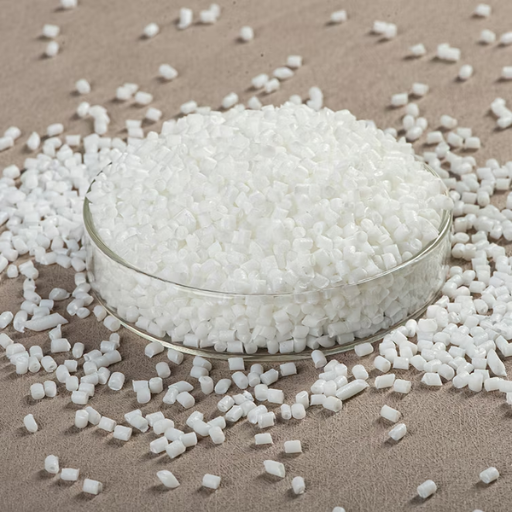


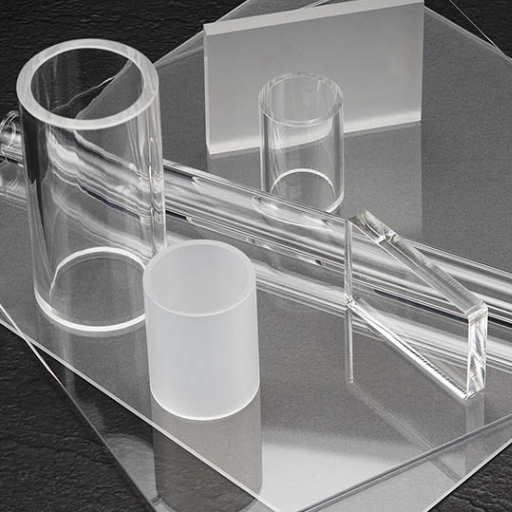



A POM resin price is not one number. On 27 October 2026, the same Delrin 100P homopolymer grade was quoted at CNY 43,500 per tonne in Ningbo and CNY 46,500 per tonne in Shanghai. Same day, same currency, same published dealer table.
That gap is not a pricing error. It is the difference between two delivery bases, and it is the first thing to understand before you compare any two POM quotes. Buyers who skip it end up negotiating a number that was never comparable in the first place.
You already know POM is a copolymer or homopolymer engineering resin with a branded market sitting underneath a commodity-looking one. What this guide adds is the part most price pages omit: dated figures, the grade and brand behind each one, the cost drivers moving them, and the arithmetic that turns a Chinese domestic quote into something you can hold against an FOB or CIF offer.
Request a POM price quote with your grade, quantity and destination port →
POM Resin Price per kg in 2026: The Current Range
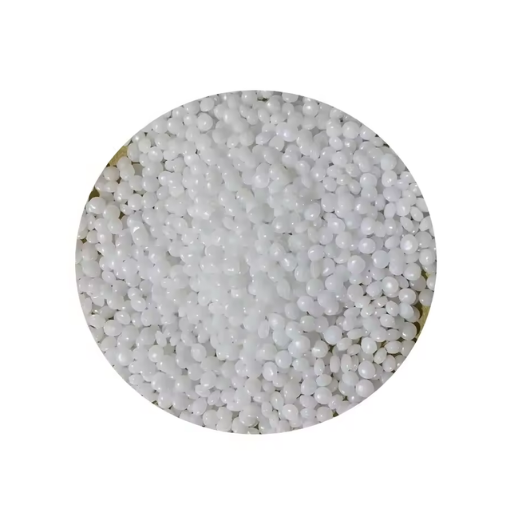
POM price per kg in China in late October 2026 ran from about USD 1.28 for general-purpose copolymer to USD 2.48 for branded-prime copolymer, and up to USD 6.98 for Delrin homopolymer. In CNY per tonne, that is roughly 8,500–12,000 for domestic copolymer, 12,000–16,500 for branded prime, and 35,000–46,500 for homopolymer, converted at CNY 6.6626 per USD.
The national mainstream market average was CNY 12,645.65 per tonne on 28 October 2026, up 0.42% from CNY 12,592.39 a week earlier. That average blends grades and regions, so treat it as a market thermometer, not a quote.
Context helps here. Wikipedia’s polyoxymethylene entry, which ranks first for this query, still carries an October 2023 bulk price table: China USD 2.58/kg, Southeast Asia 2.30, Europe 2.81, US 3.26. Those figures are three years old and uncited, but they show the direction. Chinese copolymer has fallen by roughly a third to a half since, which is why a quote near USD 1.60/kg is normal today and would have looked like a bargain in 2023.
| Tier | Example grade (origin) | CNY per tonne | USD per kg* |
|---|---|---|---|
| Commodity domestic copolymer | Yankuang Lunan M270 | 8,500 | 1.28 |
| Commodity domestic copolymer | Shenhua Ningxia MC90 | 9,400–9,600 | 1.41–1.44 |
| Domestic mainstream copolymer | Tangshan Zhonghao K90 | 9,200–9,400 | 1.38–1.41 |
| Domestic mainstream copolymer | Yuntianhua M90 | 11,800–12,000 | 1.77–1.80 |
| Branded-prime copolymer | Formosa FM090 | 12,000 | 1.80 |
| Branded-prime copolymer | Celanese C9021 | 12,500–14,100 | 1.88–2.12 |
| Branded-prime copolymer | Korea Engineering F20-02 | 13,200–13,500 | 1.98–2.03 |
| Branded-prime copolymer | Kolon KOCETAL K300 | 14,500 | 2.18 |
| Branded-prime copolymer | Polyplastics DURACON M90-44 | 14,100–15,600 | 2.12–2.34 |
| Branded-prime copolymer | Asahi Kasei 4520 | 16,500 | 2.48 |
| Glass-filled copolymer | Yuntianhua M90 + 10% GF | 12,800 | 1.92 |
| Glass-filled copolymer | Korea Engineering TS-22H | 22,500 | 3.38 |
| Homopolymer | Delrin 500P | 35,000–37,000 | 5.25–5.55 |
| Homopolymer | Delrin 100P | 43,500–46,500 | 6.53–6.98 |
| Homopolymer, specialty | Delrin 500CL | 58,000 | 8.71 |
Dealer quotes dated 27–28 October 2026, tax-inclusive, delivered or ex-works as published, converted at CNY 6.6626/USD. This is a domestic-equivalent figure, not an FOB price.
Why the Same Grade Quotes Differently in Two Cities
Look again at Celanese C9021: CNY 12,500 in Shanghai, CNY 14,100 in Suzhou. Delrin 100P: CNY 43,500 in Ningbo, CNY 46,500 in Shanghai. The polymer is identical. The basis is not.
Four things move a domestic Chinese quote by several hundred yuan per tonne without any change in the resin:
- Delivery city. Inland freight changes the landed cost.
- Payment terms. Cash versus credit changes the financing cost embedded in the price.
- Trader stock position. A trader holding inventory is more motivated than one who has to buy to fill your order.
- Invoice treatment. A quote with a 13% VAT invoice and one without are not the same price, even when the resin is.
This is why a buyer who collects three quotes from three traders and picks the lowest number is not comparing suppliers. They are comparing three different bases. Fix the basis first, then compare the price.
What the CNY Price Becomes in USD
The conversion is simple. Divide the CNY per-tonne price by 6.6626, then by 1,000. CNY 12,500 per tonne becomes USD 1.88/kg.
But that is not an export price. Chinese domestic quotes include 13% VAT. Export offers normally strip it, and the exporter handles the rebate separately. Remove the VAT and the same CNY 12,500 quote becomes CNY 11,062 per tonne, or USD 1.66/kg before export packing, inland haulage to Shanghai, and customs clearance.
That difference, roughly 11.5%, is the single most common arithmetic error in POM price comparisons. A buyer who converts a VAT-inclusive domestic quote straight to USD and treats it as FOB will overpay, or will reject a fair offer as too expensive.
Consider Marek, a procurement manager at a Polish injection molder. He collected three quotes for five tonnes of POM copolymer: one at EUR 2.05/kg, one at EUR 2.40/kg, and one at EUR 1.85/kg. The cheapest looked like an easy win.
It was quoted EXW Suzhou, without a manufacturer COA, and with a price valid for three days. The EUR 2.40 offer was CIF Gdansk, included a lot-specific COA, and held for 30 days. On a landed, documented basis the two were within 4% of each other. Marek re-quoted all three on CIF terms before deciding.
The POM Prices Buyers Confuse: List, Increase, Contract, Spot
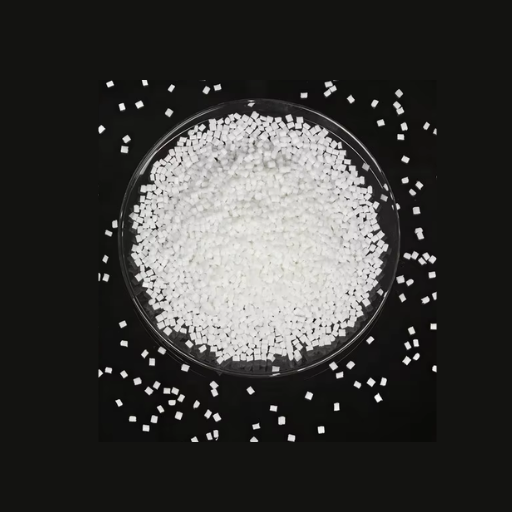
Four different instruments circulate under the label “POM resin price”. They are not interchangeable, and most published comparisons mix them without saying so.
A list price is the producer’s published number. It is rarely public and rarely what anyone pays.
An announced increase is a letter telling customers that prices will rise by a stated amount from a stated date. It is not a selling price.
A contract price is agreed between buyer and seller for a volume and a period. It can lag the market by weeks or months.
A spot price is what a dealer will sell today, for delivery in a defined window. The SunSirs table above is spot.
There is a fifth instrument, the index assessment, such as the proprietary series published by Expert Market Research. An index is a modelled number built from a basket. It is useful for direction, not for settling an invoice.
What the Celanese October 2026 Increase Actually Means
Celanese announced a POM increase of USD 0.30/kg in Asia on 24 September 2026, effective for shipments from 8 October 2026, as reported by Economic Observer. The company also raised UHMW-PE in the same round. At CNY 6.6626/USD, USD 0.30/kg is roughly CNY 2,000 per tonne.
That is a meaningful move against a domestic copolymer quote near CNY 12,500. It is also not a price. It is an instruction to the market about direction, and individual grades and contracts can move by more or less than the headline amount.
Celanese disclosed the Asia amount. The European and Americas amounts for that round were not published in any source we could verify. Any page that quotes a specific EUR/kg figure for that announcement is quoting something it cannot show you.
Why an Increase Is Not a Selling Price
A price increase letter tells you where the producer wants the market to go. Whether it sticks depends on whether buyers accept it. In late October 2026, Chinese POM demand was weak, transaction follow-through was poor, and deals were being negotiated case by case. Producers were pushing increases into a market that was not chasing material.
The practical rule: never budget from an announced increase. Budget from a dated spot or contract quote, and treat the increase as a risk factor on the next re-quote.
What Drives POM Resin Price in 2026
Methanol Is More Than Half the Cost
Methanol is the dominant input to POM through formaldehyde and trioxane, accounting for more than 65% of raw-material cost. China’s methanol spot benchmark reached CNY 4,000 per tonne on 29 October 2026, after averaging CNY 3,955 per tonne on 10 October, up 87.9% year on year.
That feedstock move explains why POM producers are pushing prices up even while demand is soft. It also explains why the increase is not fully passing through. In the week of 16 October 2026, the industry’s apparent margin was negative CNY 859 per tonne, with capacity utilisation at 87.70%. A producer losing money on every tonne has limited room to cut, and limited pricing power to raise.
Chinese Capacity Is the Ceiling
China’s planned POM capacity totals about 1.51 million tonnes per year against apparent consumption of roughly 0.86–0.95 million tonnes. Effective capacity is around 0.78 million tonnes.
That imbalance is why the 2025 price collapse happened. Yuntianhua’s realised POM price averaged CNY 11,566 per tonne in 2024, CNY 9,710 in 2025, and CNY 9,255 in the first quarter of 2026. The market bottomed, then recovered through the second half of 2026 on cost push, not demand pull.
New capacity is still coming. Lihuayi’s 80,000-tonne plant completed main construction in July 2026. Xinjiang Xinye’s 60,000-tonne second phase was scheduled for start-up by end-2026.
Yankuang Lunan’s 140,000-tonne project and Ningxia Coal’s 120,000-tonne project are under construction. Yuntianhua plans a further 100,000 tonnes, with construction starting December 2026.
Anti-Dumping Duties Reshape the Import Price
China’s anti-dumping duties on copolymer POM from the United States, the European Union, Taiwan and Japan took effect on 19 May 2025 for five years. The rates are steep: 74.9% for US origin, 34.5% for EU origin, 35.5% for Japan, and 3.8% or 32.6% for Taiwan depending on the producer.
The duty explains why imported copolymer from Japan, Taiwan or Europe carries a premium that has nothing to do with polymer quality. It also explains a distinction buyers miss. Delrin homopolymer sits outside the copolymer scope, so it faces only the standard import duty; its three-to-five-times premium over domestic copolymer comes from chemistry and brand position, not from anti-dumping. A buyer comparing a Japanese or Taiwanese copolymer grade against a Chinese domestic grade is partly comparing two duty regimes.
The duty is not static. In August 2026, MOFCOM transferred Polyplastics’ rate to its successor Daicel after a corporate demerger. Check the producer name on the invoice against the current MOFCOM notice before assuming the duty treatment.
Freight and Exchange Rate Set the Landed Number
The Shanghai Containerized Freight Index stood at 3,681.34 on 23 October 2026. Shanghai to the US West Coast was USD 7,521 per FEU, the US East Coast USD 10,388, and Europe USD 2,351 per TEU.
On a 20-tonne container, USD 7,521 per FEU is about USD 0.38/kg of ocean freight before inland handling. That is a material share of a USD 1.80/kg resin price, and it is why CIF and FOB quotes for the same material can look like different markets.
The exchange rate matters too. USD/CNY was 6.6626 on 29 October 2026, roughly 6% stronger for the yuan than late 2024. A stronger yuan raises the USD cost of a given CNY price, which is one reason Chinese sellers are pushing USD-denominated increases.
For US-bound cargo there is one more layer. Section 301 tariffs apply to many Chinese-origin plastics on top of the standard rate, so a CIF Long Beach price is not a landed US cost. Ask for the HTS line and the duty treatment before comparing a US quote with a Chinese one.
The base rate is the same on both sides of the Atlantic: the EU and the US each apply 6.5% MFN duty to POM under HS 3907.10. Anti-dumping and Section 301 measures sit on top of that, which is why the same FOB Shanghai price lands at three different numbers in Rotterdam, Los Angeles and Ho Chi Minh City.
Branded Prime, Domestic Chinese, and Homopolymer: What the Spread Buys
Homopolymer Is a Different Market
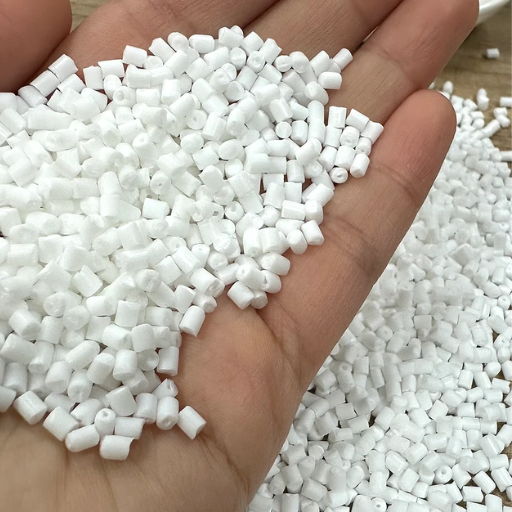
POM homopolymer and copolymer are not two grades of the same product. Homopolymer is polymerised from anhydrous formaldehyde, giving a more regular, more crystalline chain. It is stiffer, harder, and better under sustained dry load. Copolymer introduces a comonomer, usually 1,3-dioxolane, which improves chemical and thermal stability and widens the processing window.
The Delrin price reflects both the polymer and the duty. Delrin 100P at CNY 43,500–46,500 per tonne is homopolymer, imported, and outside China’s copolymer anti-dumping scope. Domestic copolymer at CNY 8,500–12,000 is a different chemistry, a different supply chain, and a different duty position. Comparing them on price alone tells you nothing useful.
If your application runs dry, under load, and needs to hold tolerance, homopolymer may be the right specification. If it touches hot water, fuel, or alkaline chemistry, copolymer is usually the safer choice. The Delrin vs acetal comparison covers the property trade-offs in detail, and POM material vs Delrin covers the grade-level differences.
When the Branded Premium Pays
On the same day, mainstream domestic copolymer at CNY 11,900 sat 1–39% below the branded ladder of CNY 12,000–16,500. Measured against the cheapest commodity grade at CNY 8,500, the branded premium reaches 40–90%. The premium buys four things: lot-to-lot consistency, a manufacturer-issued COA, an OEM-recognised grade code, and an additive package documented over long-term testing.
For a molder running a high-cavity tool, a melt flow index that drifts by a few points between lots costs more in rejects and rework than the resin premium. For an automotive Tier 1 supplier, an OEM material specification that names Hostaform C27021 or DURACON M90-44 is not substitutable without requalification, regardless of price.
For an unregulated part with no OEM constraint, domestic general-purpose copolymer at CNY 8,500–9,600 is a legitimate choice. The mistake is assuming the branded grade and the domestic grade are the same product at different markups. They are not.
Glass-Filled Is Not One Tier
“Glass-filled POM” spans a wide range. Yuntianhua’s M90 with 10% glass fibre quoted CNY 12,800 per tonne, barely above unfilled domestic copolymer. Korea Engineering’s TS-22H, an imported reinforced grade, quoted CNY 22,500 per tonne.
The difference is glass content, coupling chemistry, and origin. A buyer who specifies “GF POM” without stating the percentage and the brand is inviting quotes for two different materials.
Priya, an engineer at a Vietnamese connector manufacturer, learned this on a re-quote. Three suppliers responded to her “POM GF30” inquiry with prices spanning 40%.
One was a domestic 10% glass grade, one was an imported 30% grade, and one was a 30% grade with a different coupling system. All three were technically “glass-filled POM”. Only one matched her drawing.
POM Resin Price by Region: What Is Verifiable and What Is Not
Public, dated, transaction-level POM resin price data exists for China. For Europe, the United States, India and Southeast Asia, the free public record is much thinner than most price pages admit. Polyoxymethylene price data and POM price data are the same series; only the search term differs.
The best available regional series is a proprietary index. Its Q2 2026 assessments were USD 2,370 per tonne globally, USD 2,035 for China, USD 2,480 for the US, USD 2,620 for Germany and USD 2,345 for Japan.
| Market | Q2 2026 (USD per tonne) | USD per kg |
|---|---|---|
| Global average | 2,370 | 2.37 |
| China | 2,035 | 2.04 |
| United States | 2,480 | 2.48 |
| Germany | 2,620 | 2.62 |
| Japan | 2,345 | 2.35 |
Source: Expert Market Research polyacetal price index. Proprietary assessment, not a transaction price. Its China figure sits above the domestic spot prints in this article because the baskets differ.
Three cautions follow from that table.
First, an index is a model, not an invoice. The methodology is not public, the dataset is paywalled, and the China figure does not reconcile to the CNY quotes above. Use it for direction and regional ranking, not for settling a price.
Second, the European and US figures are index assessments. No free, dated, per-tonne POM transaction price for those markets was retrievable from ICIS, Platts, ChemAnalyst, ChemOrbis, EUWID or Polymerupdate. Their assessments sit behind subscriptions. A page that quotes a European distributor price without a source is guessing.
Third, China is the only market where you can see brand, grade code, delivery city and date in the same table. That is an unusual advantage for a buyer sourcing from China, and it is the reason this guide leans on Chinese dealer data rather than a global average.
One independent check is worth adding. China’s September 2026 POM imports averaged about USD 1,997 per tonne, computed from customs volume and value. That sits close to the domestic numbers above, which suggests the dealer table is tracking real transaction levels rather than asking prices.
How to Get a POM Resin Price Quote You Can Compare
Step 1: Specify the Grade Completely
State the brand, the grade code, the polymer family (homopolymer or copolymer), the filler type and percentage, the melt flow index, the colour, and any compliance requirement (FDA food contact, UL94, RoHS, REACH). “POM resin” is not a specification. “Celanese Hostaform C27021, natural, FDA, 25 kg bags” is.
Step 2: Fix the Quantity and Packaging
A 25 kg trial, a 500 kg pallet and a 20-tonne container are three different prices. Packaging matters too: 25 kg bags, 1,000 kg jumbo bags and bulk containers carry different handling costs. State the quantity and the packaging you need, not just the annual volume.
Step 3: Name the Incoterm and the Port
EXW, FOB Shanghai and CIF destination are not comparable. FOB includes export clearance and loading; CIF adds ocean freight and insurance; EXW leaves everything to you. Name the term and the port in the inquiry, and require every supplier to quote on the same basis.
Step 4: Demand a Price Basis and a Validity Window
Ask whether the price is spot or contract, which shipment window it covers, and how long it holds. A three-day validity on a methanol-driven market is not the same offer as a 30-day validity. Ask what triggers a re-quote: methanol, formaldehyde, FX, or freight.
Step 5: Request the COA Before You Order
Ask for a lot-specific COA issued by the manufacturer, not the trader. Cross-check the melt flow index and density against the manufacturer’s published datasheet. If the COA is supplier-generated, or the grade code does not exist in the manufacturer’s portfolio, stop. If you are choosing between suppliers rather than grades, the POM resin supplier guide covers qualification and documentation.
The Arithmetic Behind an FOB Indication
Here is how a domestic quote becomes an export indication, using Yuntianhua M90 at CNY 11,900 per tonne.
Remove 13% VAT: CNY 11,900 ÷ 1.13 = CNY 10,531 per tonne. Convert at 6.6626: USD 1,581 per tonne, or USD 1.58/kg. Add export packing, inland haulage to Shanghai and clearance. Depending on packaging and volume, that lands around USD 1,620–1,680 per tonne FOB Shanghai.
That is arithmetic, not a quote. It shows you the shape of the number and the two adjustments most buyers miss. A supplier’s actual FOB offer will include their margin, their packaging cost and their view of the next shipment window.
Red Flags in a POM Quote
A price 30–40% below the market deserves a question, not a celebration. The same goes for any quote that shows one of these:
- No manufacturer-issued COA, only a trader’s certificate
- No grade code that exists in the producer’s portfolio
- No shipment window or validity date
- A unit that shifts between per-kg, per-bag and per-piece
Marketplace listings that show a number without a unit are not prices. They are placeholders.
POM Resin Price Outlook: Q4 2026 and 2027
Near term, the market is flat to firm, and most POM price forecasts for 2027 turn on cost and capacity rather than on demand. The national average moved within a CNY 12,592–12,646 band in the eight days to 28 October 2026. Methanol at CNY 4,000 per tonne sets a high cost floor. Weak demand and negative producer margins cap how far increases can run.
The balance is uncomfortable for everyone. Producers need higher prices to cover methanol. Buyers are not chasing material. Announced increases are being tested in a soft market, and some will not stick in full.
Into 2027, the capacity wave is the ceiling on commodity copolymer. Lihuayi, Xinjiang Xinye, Yankuang Lunan and Ningxia Coal add meaningful tonnage against sub-1-million-tonne demand. Commodity domestic copolymer is the segment most exposed.
Branded prime and glass-filled specialty grades are tighter. Chinese supply of qualified specialty grades is still thin, import substitution is slower, and the anti-dumping regime keeps imported copolymer expensive. That is where a buyer is more likely to see firm pricing and longer lead times.
Three variables are worth watching: methanol and Iranian supply, Chinese capacity start-ups, and any change to the anti-dumping rates. Each can move the number faster than demand can.
For procurement, the practical response is short validity windows, index-linked or re-quote clauses on volume contracts, and a qualified second source before you need one. Chasing the bottom in a cost-push market usually costs more in supply risk than it saves on resin.
Conclusion
POM resin price in late 2026 runs from about USD 1.28/kg for commodity domestic copolymer in China to USD 2.48/kg for branded-prime copolymer, and up to USD 6.98/kg for Delrin homopolymer. Those ranges are not a quality ladder. They are different chemistries, duty positions, brands and delivery bases.
Three things separate a good POM purchase from an expensive one. Compare on a fixed basis: same grade, same quantity, same Incoterm, same shipment window. Separate the four price instruments: list, announced increase, contract and spot. And verify the grade with a manufacturer-issued COA before you commit.
If you want a number you can actually use, send us the grade, the quantity, the packaging and the destination port. We will quote FOB Shanghai or CIF against a named shipment window, with the COA and the documentation package attached.
Request a POM resin price quote, response within 24 hours →
Frequently Asked Questions
How much does POM resin cost per kg in 2026?
In late October 2026, general-purpose copolymer in China traded at about USD 1.28–1.80/kg for domestic material and USD 1.80–2.48/kg for branded prime, converted from CNY at 6.6626. Delrin homopolymer ran at USD 5.25–6.98/kg. These are domestic Chinese dealer prices including VAT, not FOB prices.
What is the POM price per tonne?
The same numbers per tonne: roughly CNY 8,500–12,000 for domestic copolymer, CNY 12,000–16,500 for branded-prime copolymer, and CNY 35,000–46,500 for Delrin homopolymer. The national mainstream average was CNY 12,645.65 per tonne on 28 October 2026.
Why is Delrin so much more expensive than generic POM?
Three reasons: it is homopolymer rather than copolymer, so it is a different polymer with a costlier production route; it is imported, so it carries freight and the standard import duty; and it is sold as a branded specialty rather than a commodity. Part of the multiple is chemistry, part is brand position.
Is POM the same as acetal?
Yes, in engineering plastics, POM, polyoxymethylene and acetal all refer to the same polymer family. The caution is that “acetal” also describes a class of chemical compounds, including acetaldehyde diethyl acetal, which is a fragrance ingredient priced per gram, not per tonne. If you are searching for acetal price per kg, make sure you are looking at the engineering resin.
What is the price difference between POM-H and POM-C?
In China in October 2026, homopolymer (Delrin 100P) quoted CNY 43,500–46,500 per tonne against CNY 12,000–16,500 for branded copolymer. The gap reflects a different polymer, a different production route and a branded specialty position. Do not read it as a pure property premium.
What drives POM resin price?
Methanol is the largest input, at more than 65% of raw-material cost. Chinese capacity and demand set the floor and ceiling, while anti-dumping duties change the import price. Freight and the USD/CNY rate set the landed number, and grade, brand and documentation set the spread within each market.
Will POM prices rise in 2027?
Commodity copolymer faces a capacity wave that caps upside. Branded prime and glass-filled specialty grades are tighter. The near-term direction depends more on methanol and Chinese capacity start-ups than on demand, which was weak in late 2026. Plan for a firm cost floor and continued spread between commodity and specialty.
How do I get a comparable POM quote from China?
Specify the brand, grade code, polymer family, filler content, MFI, colour and compliance. State the quantity, packaging, Incoterm and destination port. Ask for a lot-specific manufacturer COA and a validity window. Then compare every offer on that same basis.
What is the minimum order quantity for POM resin?
Industry norms vary. Marketplace listings often quote one-tonne minimums, and some producers sell only full containers. Yifuhui supplies branded POM grades from 25 kg, which lets you qualify a grade before committing to a production volume. Ask for the MOQ and the packaging unit in writing.