




Consider a buyer comparing three quotes for five tonnes of POM copolymer. The cheapest sat materially below the other two, and it came from a POM resin supplier they had not used before. They placed the order.
The material that arrived ran a melt flow index several points above the grade they had specified. Parts short-shot. The Certificate of Analysis had been issued by the trading company rather than the manufacturer, so there was nothing to compare it against and nobody to appeal to.
That gap, between what a POM quotation claims and what a POM shipment proves, is what this page is about.
You already know the material. POM is a commodity-looking resin with a branded market underneath it, and most supplier pages give a buyer no way to tell the two apart. What follows is the grade list, the documentation, the commercial terms, and the verification steps, stated plainly enough that you can hold two suppliers side by side and see the difference.
Request a grade recommendation for your application →
POM Resin Grades We Supply
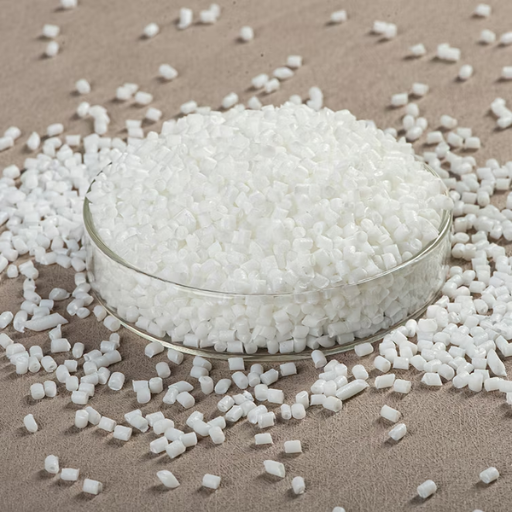
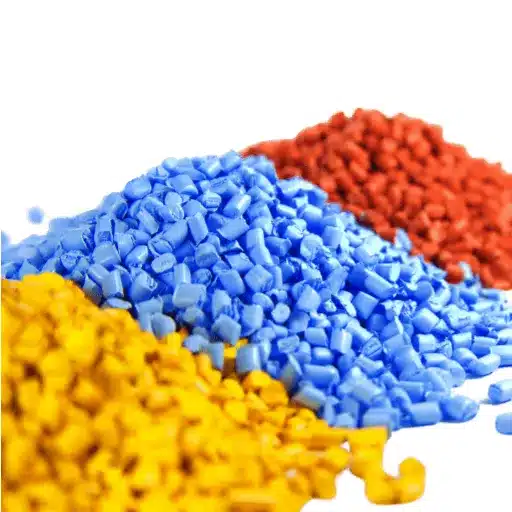
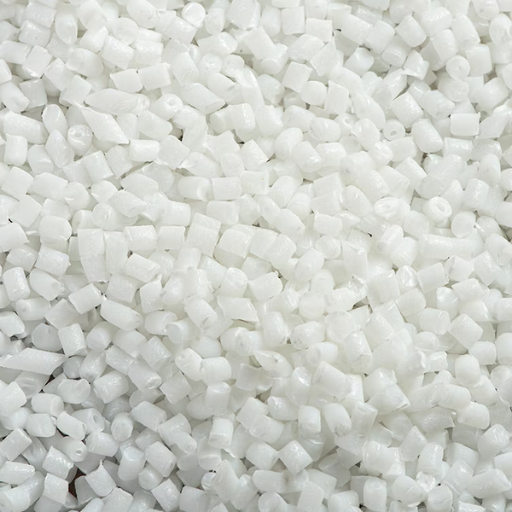
We supply POM in both homopolymer (POM-H) and copolymer (POM-C) form, as virgin prime pellets in 25 kg bags or 1,000 kg jumbo bags, from stock in Suzhou. The five branded manufacturers listed below all produce copolymer grades; tell us the homopolymer grade you need and we will confirm availability and the source brand at quotation.
| Brand | Example grades | Type | Typical application |
|---|---|---|---|
| BASF Ultraform® | N2320 (injection molding), W2320 (extrusion) | Copolymer | General injection molding, structural parts |
| Celanese Hostaform® | C27021 | Copolymer | Fuel system components, chemical resistance |
| Celanese Amcel® | KP25, KP30, CE66 | Copolymer | Food contact, high-flow thin wall |
| Polyplastics DURACON® | M90-44 | Copolymer | Standard molding, Japanese OEM supply chains |
| Kolon KOCETAL® | K300 | Copolymer | High rigidity, thin-wall molding |
| Formosa FORMOCON® | FM090, FM270UV, FM130UV | Copolymer | High-flow molding, UV-stabilized outdoor parts |
Every grade in that table is a copolymer. That matters more than most buyers expect, and confusing the two families is the single most common specification error we see.
Homopolymer (POM-H) versus copolymer (POM-C)
POM homopolymer is polymerized from anhydrous formaldehyde. The chain is highly regular and highly crystalline, which is where its extra stiffness and surface hardness come from. POM copolymer introduces a comonomer, usually 1,3-dioxolane, into the chain. That disrupts the crystallinity slightly and buys back chemical and thermal stability.
The practical consequence is simple. If your part runs dry, under sustained load, and needs to hold tolerance, homopolymer has the edge. If it touches hot water, fuel, or alkaline chemistry, copolymer is the safer specification and the one most processors prefer anyway because its processing window is wider.
Delrin® is the reference homopolymer brand. It was DuPont’s for decades and now sits with the independent Delrin company following the 2023 divestiture. It is a brand name, not a synonym for POM, and not a Celanese product.
For a fuller treatment of the two families, see our POM material guide.
Forms and packaging
Standard shipment is virgin pellet in 25 kg moisture-barrier bags, palletized at roughly 25 bags per pallet, or 1,000 kg jumbo bags. A 20ft container loads around 12.5 tonnes bagged. If your process needs a specific format, say so at quotation: it affects both freight economics and moisture pick-up in transit.
POM Resin Properties and Grade Selection
The numbers below are typical for unfilled injection-molding grades. They are starting points for specification, not a substitute for the manufacturer datasheet for the exact grade you intend to run.
| Property | POM-H | POM-C | Test method |
|---|---|---|---|
| Density | ~1.42 g/cm³ | ~1.41 g/cm³ | ISO 1183 / ASTM D792 |
| Tensile strength | 70-80 MPa | 60-70 MPa | ISO 527 / ASTM D638 |
| Flexural modulus | ~2,900 MPa | ~2,600 MPa | ISO 178 / ASTM D790 |
| Continuous service temp (air) | up to ~90 °C | up to ~100 °C | Manufacturer TDS |
| Hydrolysis resistance | up to ~60 °C | up to ~85 °C | Manufacturer TDS |
| Chemical resistance (pH) | 4-9 | 4-13 | Industry guidance |
| Melting point | ~175 °C | ~165 °C | DSC |
| Water absorption, 24 h | ~0.2% | ~0.2% | ISO 62 / ASTM D570 |
| Coefficient of friction | 0.2-0.35 | 0.2-0.35 | Manufacturer TDS |
Matching grade to part
Gears, cams and bushings under continuous load in dry conditions are homopolymer territory. Fuel caps, sender units, filler necks and pump impellers are copolymer, and Celanese Hostaform® C27021 is the grade most often named in automotive fuel specifications. Connectors and switch components want dimensional stability plus whatever flame rating the housing standard demands, which usually pushes you to a filled or FR grade rather than a standard one. Food-contact parts need a manufacturer-designated food grade, not a general-purpose grade with a compliance letter bolted on.
The mistake we see most often is specifying by brand reputation rather than grade number. Two grades from one manufacturer can differ more than two grades from different manufacturers. If your OEM specification names a grade, match it exactly; substitution means requalification.
Documentation Every POM Resin Supplier Should Provide
This is the section most supplier pages skip, and the one that decides whether your QA department can sign off.
The Certificate of Analysis
Every batch ships with a COA issued against the manufacturer’s lot record. It should carry:
- the brand and grade name
- the lot number and date of manufacture
- measured values for melt flow index, density, tensile strength and moisture, with the test method stated for each
- a pass or fail statement against the manufacturer’s published specification
Read it in this order. Check that the grade name is a real grade in that manufacturer’s portfolio. Check that the lot number format matches their convention. Then compare the measured MFI against the datasheet range for the grade.
A COA showing 12 g/10 min against a grade specified at 9 g/10 min isn’t normal lot variation. It is the fastest way to catch a substitution.
TDS, SDS and compliance documents
A grade-specific technical data sheet accompanies every grade. The safety data sheet is the standard 16-section format and, for POM specifically, it should flag formaldehyde as a thermal-decomposition product, because that is the material’s real processing hazard. A POM SDS that says only “non-hazardous” and stops there is incomplete.
Compliance documentation is available for qualifying grades: FDA food-contact status, RoHS, REACH, and flammability data. Three precision points matter here, because they are where supplier pages usually overreach.
- FDA food contact is regulated per polymer type. POM copolymer falls under 21 CFR 177.2470, POM homopolymer under 21 CFR 177.2480. Only manufacturer-designated food grades carry this status. The polymer as a class doesn’t.
- REACH compliance means a Declaration of Conformity referencing Article 33 and the current ECHA candidate list. An undated blanket “REACH compliant” letter isn’t a declaration.
- UL94 HB isn’t a certification. It’s a horizontal-burn rating. Third-party recognition comes from a UL Yellow Card with a file number you can look up. Most standard POM grades are HB, and we won’t describe a POM grade as “UL94 certified” without that file number.
Ask for a sample COA and TDS for the grade you are considering →
Prime, Off-Grade, or Regrind: How We Protect You From Substitution
There are three material classes in this market, and the price gap between them is why counterfeit risk exists.
- Prime: virgin, first-quality resin from the manufacturer.
- Off-grade: failed prime specification on a cosmetic or minor property measure. Legitimate when it is labelled as such, and sold at a discount.
- Regrind: scrap or trim ground and reprocessed. Shorter polymer chains mean a higher MFI, weaker mechanicals and inconsistent processing.
The failure mode usually isn’t outright fraud. It is silent substitution, where off-grade or regrind is sold at a prime price with a COA whose values were measured on a different lot.
Lot traceability is the defence. The lot number on the bag label should match the lot on the COA, which should match a manufacturer production record. If a shipment arrives with several lots mixed and one COA covering all of them, that is a documentation failure regardless of what the material turns out to be.
We supply prime branded resin and do not relabel commodity material as a branded grade. Where your qualification process requires a brand authorization letter, tell us at inquiry and we will confirm exactly what documentation we can provide for that brand. We would rather tell you what we can prove.
MOQ, Lead Time, and Incoterms
This is the part of a supplier conversation that usually takes three emails. Here it is in one table.
| Term | What we offer |
|---|---|
| Minimum order quantity | 25 kg, across the portfolio, with no ceiling on volume |
| Trial and sample orders | 25 kg, from the same lot as your production order, with the matching COA |
| Lead time, stock grades | 7-14 days from Suzhou warehouse to major international ports, depending on destination and Incoterm |
| Lead time, indent grades | Quoted at inquiry, because it depends on manufacturer stock |
| Incoterms | EXW Suzhou, FOB Shanghai, CIF destination port |
| Response time | Within 24 hours of inquiry |
The 25 kg minimum is the term buyers comment on most. Most distributors set a floor at 500 kg or several tonnes, and factory-direct sellers typically quote a one-tonne minimum. If you’re qualifying a material for a new programme, 25 kg is enough to run a trial and compare the COA against your process baseline. You don’t commit to inventory you may never use.
FOB Shanghai is our standard export term. CIF is usually the easier starting point for a first order because it removes freight and insurance from your to-do list, and you can move to FOB once you have a forwarder you trust.
POM Resin Applications by Industry
Automotive. Fuel system components, seatbelt mechanisms, door latches, window lift components, gears and clips. The requirement here is usually traceability as much as performance, because Tier 1 and Tier 2 suppliers are audited on material records.
Electronics and electrical. Connector housings, switch components, insulators and precision parts where dimensional stability and low moisture absorption matter. RoHS and REACH declarations are typically mandatory, not optional.
Industrial. Bearings, bushings, conveyor components, pump parts and wear components where the 0.2-0.35 friction coefficient replaces lubrication. Our POM hardness and wear guide goes deeper on the mechanical side.
Medical and food contact. Only where the specific grade is designated for it. This is a grade-level claim every time, and a supplier who says “our POM is food grade” without naming the grade has told you nothing.
POM Resin Price: What Moves It
POM pricing isn’t a single number, and any POM resin supplier who quotes one without asking about grade and volume is guessing.
Four things move it:
- Grade and brand premium. The gap between a commodity copolymer and a named automotive grade can be substantial.
- Volume tier.
- Incoterm and destination.
- Duty, which since May 2025 has become a real variable for imported copolymer in some markets.
We quote against your specification rather than publishing a list price, because a range covering every grade helps nobody.
2025 Anti-Dumping Duties on POM Copolymer: What Buyers Should Know
In May 2025, China’s Ministry of Commerce concluded an anti-dumping investigation into POM copolymer and imposed duties for five years. Almost no English-language supplier page explains what that means for a buyer.
Scope, stated precisely: these duties apply to POM copolymer imported into China. They don’t apply to a buyer in the United States, Europe, India or Southeast Asia importing China-origin resin into their own market. If you are buying from us for export, this section is context, not your landed cost.
The rates, per MOFCOM Announcement No. 25 of 2025, effective 19 May 2025:
| Origin | Company | Duty rate |
|---|---|---|
| United States | Ticona Polymers | 74.9% |
| United States | All other US companies | 74.9% |
| EU | Celanese Production Germany | 34.5% |
| EU | All other EU companies | 34.5% |
| Japan | Polyplastics | 35.5% |
| Japan | Asahi Kasei | 24.5% |
| Japan | All other Japanese companies | 35.5% |
| Taiwan | Polyplastics (Taiwan) | 3.8% |
| Taiwan | Formosa Plastics | 4.0% |
| Taiwan | All other Taiwanese companies | 32.6% |
Two things follow. Homopolymer and modified POM sit outside the scope, so this is a copolymer question. And the same brand can carry a very different landed cost depending on which plant polymerized it, which is why origin documentation is now a procurement issue rather than a customs formality.
If you import into China and need to know how a specific grade is treated, China customs determines that on the basis of the polymerization plant, not the brand. We will tell you what we know and flag what we cannot confirm.
Choosing a POM Resin Supplier: Why Yifuhui
We are a Suzhou-based supplier of branded engineering resins, operating next to the Port of Shanghai with our own import and export licence rather than through a third-party agent. Our POM portfolio covers BASF Ultraform®, Celanese Hostaform® and Amcel®, Polyplastics DURACON®, Kolon KOCETAL® and Formosa FORMOCON®, alongside twelve other material families if your programme needs more than acetal.
What matters more is narrower. It is the 25 kg minimum, the COA on every batch, a stated lead time, and a team that will tell you which grade fits your application instead of which grade is in stock. Read more about how we work.
Frequently Asked Questions
What is the difference between POM, acetal and polyoxymethylene?
They are the same material. Polyoxymethylene is the formal chemical name, POM is the standard abbreviation, and acetal is the common industry term, particularly in North America. One page can serve all three because they describe one polymer.
Is POM the same as Delrin?
No. Delrin® is a brand of acetal homopolymer, originally DuPont’s and now owned by the independent Delrin company. POM is the material family. Every Delrin grade is POM; almost no POM is Delrin.
What is the MOQ for POM resin?
25 kg across our portfolio, with no upper limit. Trial quantities come from the same lot as your production order and include the matching COA.
Can I get a sample before a bulk order?
Yes. A 25 kg trial is the standard way to start, and we recommend running it through your actual process rather than just inspecting the pellets. Compare the COA values against the datasheet before you scale.
What documentation comes with each shipment?
COA per batch, grade-specific TDS, 16-section SDS, commercial invoice and packing list. Compliance documents, including FDA, RoHS, REACH and flammability data, are available for qualifying grades.
How do I verify a COA is genuine?
Check that the grade name exists in the manufacturer’s portfolio, that the lot number format matches their convention, and that measured values sit inside the published datasheet range. For high-stakes orders, the manufacturer’s regional technical team can confirm a lot number against their production records.
What is the lead time from China?
7-14 days from our Suzhou warehouse to major international ports for stock grades, depending on destination and Incoterm. Indent grades are quoted individually.
Which POM grade is food-contact compliant?
Only grades the manufacturer designates for food contact. For copolymer that means a grade covered by 21 CFR 177.2470, for homopolymer 21 CFR 177.2480. Ask for the grade-specific compliance letter, not a general statement about the material.
Is POM resin FDA approved?
Specific grades are regulated for food contact under 21 CFR 177.2470 and 177.2480. The polymer as a class is not “approved,” and any supplier who answers that question at the polymer level rather than the grade level is not giving you a usable answer.
How much does POM resin cost per kg?
It depends on grade, brand, volume and destination, and it moves with feedstock. We quote against your specification rather than publishing a range that would not apply to your order.
Do you ship FOB Shanghai?
Yes. FOB Shanghai is our standard export term, with CIF and EXW Suzhou also available.
What is the difference between POM homopolymer and copolymer?
Homopolymer is stiffer, harder and better under sustained dry load. Copolymer is more chemically and thermally stable, has a wider processing window, and is what most injection molders specify.
Request a POM Grade Quote
The useful next step is specific rather than general. Choosing a POM resin supplier should start with a specification, not a catalogue. Tell us the grade or application, the quantity, and the destination port, and you will get pricing, lead time, and COA availability within 24 hours.
If you are still choosing between grades, send the operating conditions instead: temperature range, chemical exposure, load profile, processing method, and any regulatory requirement. We will recommend a grade and explain why, including when the answer is a material outside the POM family.
Grade data in this page reflects manufacturer-published typical values and is indicative only. Confirm properties against the current datasheet for the specific grade and lot before specifying. Anti-dumping duty rates are quoted from MOFCOM Announcement No. 25 of 2025 and apply to imports into China.