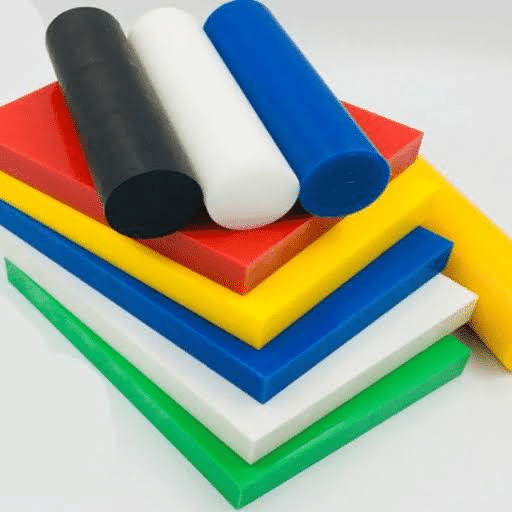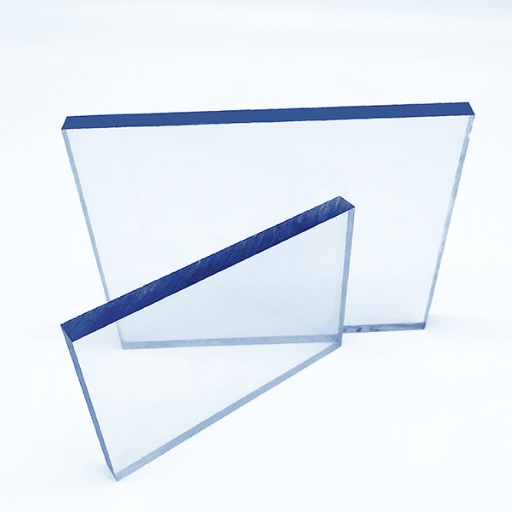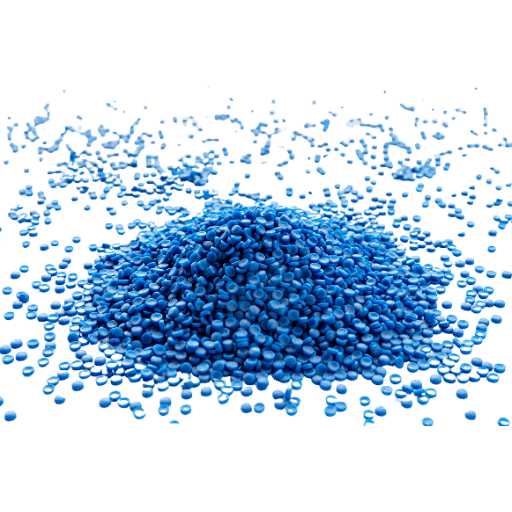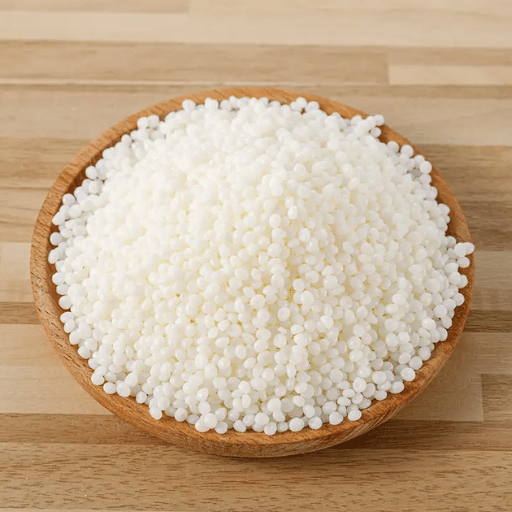





Two bags of POM pellets can look identical and behave nothing alike in the barrel. One is a prime branded grade with a documented melt flow index. The other is an off-spec lot sold cheap, and the moment it hits your screw the process you spent weeks validating starts drifting: fill times change, splay appears, and a faint acrid smell tells you the melt is closer to degrading than you think. Processing temperature is where resin quality shows up first.
A molder sets four machine-critical numbers for every engineering plastic processing temperature window: melt temperature, mold temperature, the barrel-zone profile, and the drying condition before pellets ever reach the hopper. Those numbers vary by material, by grade family, and by the consistency of the resin itself. Most online charts give one or two of them. Almost none tell you what to do about a resin that won’t hold the window your process was validated on.
This guide compares processing temperatures for POM, PA66, PC, ABS, PMMA, HDPE, PP, PBT, and PPS, with a consolidated injection-molding chart, dedicated barrel-zone and drying tables, and the degradation warnings that keep parts and operators safe, then carries the same logic into extrusion and blow molding. We are Suzhou Yifuhui, an engineering plastics supplier in China. Need a grade matched to your line? Request a resin quote and our technical team responds within 24 hours.
What Is Engineering Plastic Processing Temperature?

“Processing temperature” is not one number. It’s a set of setpoints, and each controls something different:
- Melt temperature: the actual temperature of the melt at the nozzle. It sets viscosity, fill behavior, and how close you sit to the degradation ceiling.
- Mold temperature: the cavity-surface temperature that controls cooling, crystallinity in semi-crystalline resins, and final shrinkage and warpage.
- Barrel-zone profile: the rear-to-front gradient you enter on the machine, normally several zones plus the nozzle, that progressively melts and homogenizes the pellets.
- Drying: the pre-processing moisture step. Hygroscopic resins like PC, PA66, and PET absorb water from air, and that water destroys them in the barrel if it is not removed first.
- Residence time: how long the melt sits in the barrel before thermal degradation starts, even at a technically correct temperature.
These setpoints sit inside a larger thermal framework of glass transition temperature (Tg), melting point (Tm), and heat deflection temperature (HDT). For that background, see our engineering plastic temperature guide. Here we focus on the machine settings a processor actually dials in.
Engineering Plastic Processing Temperature Chart for Injection Molding
The table below is the plastic melt and mold temperature chart molders reach for first. Treat every value as a starting point, never gospel: melt and mold windows are properties of a grade, not just a polymer family, so verify against the specific grade datasheet. Measured thermal values follow DSC per ASTM D3418 or ISO 11357, and melt flow index follows ASTM D1238 or ISO 1133. For a wider cross-check across commodity plastics, Fox Mold publishes a widely used injection molding melt and mold temperature chart.
| Material | Melt temperature (°C) | Mold temperature (°C) | Processing and degradation notes |
|---|---|---|---|
| POM copolymer (acetal) | 180-210 | 60-120 | Keep the nozzle 5-10 °C below the front zone. Never exceed roughly 230 °C; decomposition releases formaldehyde. Short residence. |
| POM homopolymer | 190-230 | 60-120 | Higher strength, tighter window than copolymer. Same roughly 230 °C ceiling and formaldehyde hazard. |
| PA66 (nylon 66) | 260-300 | 60-100 | Dry first. About 5 min max residence near 280 °C; degradation accelerates above 300-310 °C. |
| PA6 | 240-280 | 60-100 | Dry first. Similar residence limits to PA66, about 20 °C cooler across the window. |
| PC (polycarbonate) | 280-320 | 80-120 | Viscous melt needs heat, but stay below roughly 320 °C to avoid molecular-weight loss and yellowing. Dry to under 0.02%. |
| PMMA (acrylic) | 210-270 | 60-90 | Depolymerizes above about 270 °C with monomer odor. Dry before molding. |
| ABS | 200-260 | 40-80 | Rubber phase degrades above roughly 260 °C, causing yellowing and impact loss. 40-60 °C gives matte, 70-80 °C gloss. |
| HDPE | 180-280 | 20-95 | Wide, forgiving window. Lower melt end for blow molding and thin-wall flow control. |
| PP | 190-290 | 20-80 | Wide, forgiving window. Non-hygroscopic. |
| PBT | 220-275 | 60-80 | Hydrolysis-sensitive. Dry to under about 0.03%. Short residence preferred. |
| PPS | 300-350+ | 120-160+ | High-temperature semi-crystalline resin. Long residence degrades it. |
The pattern behind the numbers is crystallinity. Amorphous plastics such as ABS, PC, and PMMA have no true melting point; they soften continuously through Tg, so their “melt” is a low-viscosity flow state. Semi-crystalline plastics such as POM, PA66, HDPE, and PP melt at a sharp Tm and re-crystallize on cooling, so they need a mold warm enough to crystallize at a controlled rate or the part keeps growing after ejection. Our guide to the glass transition temperature of HDPE explains that behavior from the polyolefin side.
What Is the Processing Temperature of POM (Acetal)?
POM copolymer processes at roughly 180 to 210 °C melt, homopolymer at about 190 to 230 °C, with a mold of 60 to 120 °C, ideally 80 to 100 °C for surface and crystallinity. The hard rule is the ceiling: never run acetal above about 230 °C, because decomposition releases formaldehyde gas and creates a barrel-pressure hazard. For POM-specific setpoints by grade, see our POM melting temperature and processing guide.
What Is the Processing Temperature of PA66 (Nylon 66)?
PA66 processes at roughly 260 to 300 °C melt with a 60 to 100 °C mold, and it must be dried to under 0.1 to 0.2% moisture or it hydrolyzes in the barrel. Residence near the top of the window is short, about 5 minutes maximum around 280 °C. The full material breakdown, including glass-reinforced grades, is in our PA66 melting point and processing guide.
What Is the Processing Temperature of Polycarbonate?
Polycarbonate processes at roughly 280 to 320 °C melt with an 80 to 120 °C mold, and transparent or optical parts generally want 100 to 120 °C to avoid molded-in stress and haze. PC must be dried to under 0.02% moisture with a desiccant dryer, because water causes hydrolysis, splay, and brittle parts. The governing glass transition is covered in our PC glass transition temperature article.
Barrel Temperature Settings by Engineering Plastic

The barrel-zone profile is the rear-to-front gradient you enter on the machine. For most engineering plastics it rises from the rear feed zone, where pellets are still solid, to the front, so the melt is homogenized by the nozzle. Heat-sensitive resins flatten that gradient deliberately.
- POM: run a low, flat gradient, roughly 170 to 180 °C rear rising gently to 190 to 200 °C front, with the nozzle 5 to 10 °C below the front zone. POM needs little shear heat, so an aggressive rear zone or hot nozzle invites decomposition. Stay under roughly 230 °C in every zone.
- PA66: the gradient sits much higher, about 260 to 280 °C rear to 280 to 295 °C front, because the melt is viscous and the crystalline melting point demands it. Fill fast and keep residence short; sitting near 280 °C for much more than about 5 minutes degrades the polymer. Purge thoroughly on shutdown.
- PC: a viscous melt needs heat to flow, typically 280 to 300 °C rising to 300 to 320 °C front, but the ceiling above about 320 °C is real. Beyond it, molecular weight drops, parts yellow, and properties fall off.
- ABS: run roughly 200 to 240 °C rising to 220 to 250 °C front. The rubber phase is the weak link; past about 260 °C it degrades, yellowing the part and cutting impact strength. See our ABS melting temperature guide for the full window.
- HDPE and PP: the forgiving pair. HDPE commonly runs 180 to 220 °C rising toward 240 °C, PP a little warmer, with wide latitude. Zone precision matters less than it does for the heat-sensitive and hygroscopic families. To learn more about HDPE Melting Point: Grade-by-Grade Guide for Processing and Sourcing, please click to refer to our accompanying guide.
Nozzle control deserves its own note. A nozzle too hot makes a heat-sensitive resin drool or decompose between shots; one too cold blocks with frozen polymer. For narrow-window resins such as POM, keeping the nozzle a few degrees below the front zone is standard.
Mold Temperature by Engineering Plastic: What It Controls
Mold temperature decides what a part becomes after ejection, not just how it fills. For semi-crystalline materials, the mold is where crystallization happens. Too cold, and the polymer freezes before it crystallizes properly, so the part continues to shrink and grow after ejection.
That is why PA66 wants an 80 to 100 °C mold and why running it below about 60 °C produces parts that look fine at the press and move overnight. POM shows the same logic with its 80 to 120 °C recommendation. The HDPE injection molding guide covers the semi-crystalline trade-off from the polyolefin side.
Amorphous materials play by different rules. PC and PMMA use warm molds, 80 to 120 °C, not for crystallinity but to slow cooling enough that molded-in stress and surface defects don’t form. Transparent PC is the classic case: drop the mold below about 100 °C and you get haze and stress concentrations that crack in service. ABS uses mold temperature as a cosmetic lever, 40 to 60 °C for matte, 70 to 80 °C for gloss.
There is a real cost tension. A hot mold lengthens the cooling part of the cycle, and cycle time is money. The goal is not the hottest mold, but the coldest mold that still meets the crystallinity, dimension, and appearance requirements of the part. That trade-off is where a resin supplier should help you reason, rather than sell around.
Drying Engineering Plastics Before Processing

Drying is the most neglected processing variable, and the ranked chart pages rarely cover it. Hygroscopic plastics absorb moisture into the pellet itself. When a wet hygroscopic resin is melted, the water flashes to steam inside the barrel and hydrolyzes the polymer chain.
The visible results are splay marks, silver streaks, bubbles, and brittle parts. The invisible result is a permanent molecular-weight loss that passes inspection today and fails in service later.
| Material | Hygroscopic? | Drying temperature (°C) | Drying time (h) | Target moisture | Dryer type |
|---|---|---|---|---|---|
| PC | Yes | 120 | 3-4 | Under 0.02% | Desiccant, dew point at or below -40 °C |
| PA66 | Yes | 80-90 | 4-6 | Under 0.1-0.2% | Desiccant or hopper dryer |
| PA6 | Yes | 80-90 | 4-6 | Under 0.1-0.2% | Desiccant or hopper dryer |
| PET | Yes | 120-140 | 4-6 | Under 0.02% | Desiccant dryer |
| PBT | Yes | About 120 | 3-4 | Under 0.02-0.05% | Desiccant dryer |
| PMMA | Yes, moderate | 80 | 2-4 | Under 0.04% | Hopper dryer |
| ABS | Yes, moderate | 80 | 2-4 | Under 0.1% | Hopper dryer |
| POM | Essentially no | 80-90 if surface-moist only | 1-3 maximum | Rarely critical | Hot air is fine; do not over-dry |
| HDPE, PP | No | Not normally required | – | – | Dry only if condensation is visible |
For a dedicated reference on the drying half of the process, Kehui Mold’s guide to drying conditions for plastics is a solid engineering-side source, and Kruger Industries’ injection moulding temperature chart likewise combines melt, mould, and drying setpoints. Neither addresses residence-time limits, which is why the table below goes further.
Three rules matter most. First, PC needs a true desiccant dryer with a dew point at or below -40 °C; a hot-air dryer cannot reach the 0.02% target that keeps PC from hydrolyzing. Second, nylon is non-negotiable: run PA66 or PA6 wet and you get splay, flash, and brittle pins.
Third, over-drying is also damage. POM is not hygroscopic and only needs a gentle 80 to 90 °C pass for 1 to 3 hours if pellets are surface-moist; leaving it in a hot hopper for hours yellows it and starts the same decomposition chemistry as a too-hot barrel. For the POM pre-dry callout in full, see our POM preheating temperature guide.
A Tier 2 shop outside Guadalajara that molds PA66-GF30 connector housings learned this the hard way. Their process was stable for a year on prime branded nylon until the desiccant dryer lost its dew point and nobody noticed for a week. Parts started flashing at the same clamp tonnage, thin pins short-shot intermittently, and rejects climbed past 8%.
After the dryer was serviced and the resin dried to spec, the process returned to normal within a shift. The machine had not changed. The moisture content had, and moisture is a processing variable just like barrel temperature.
Five signs your resin was processed wet:
- Splay or silver streaks radiating from the gate
- Bubbles or voids in thick sections
- Parts that are brittle or crack under light load
- An acrid, steamy odor at the vent or purge
- Flash or short shots at unchanged settings, a viscosity shift
Processing Temperature Beyond Injection Molding
The same thermal logic applies when plastic leaves the injection press. Extrusion sets barrel-zone profiles too, then adds die zones that control the profile leaving the machine. HDPE, the most extruded polyolefin, runs barrel zones of roughly 160 to 220 °C and a die around 190 to 250 °C depending on profile and throughput; PP extrudes warmer, with melts around 200 to 260 °C. PA6 and PA66 extrude higher still and must be dried first.
PC and ABS extrude near their molding melt temperatures but with slower screws and lower shear to avoid overheating. For the zone-by-zone detail on the most common extrusion resin, see our HDPE extrusion guide.
Blow molding is a melt-strength problem. The parison must hang under its own weight without sagging, which pushes processors to the low end of a material’s melt range. HDPE blow-molding grades run at the low end of the 180 to 280 °C window so the parison holds its shape, with cool molds to set the container wall; PP behaves similarly. Our HDPE blow molding guide covers parison control and container-grade selection.
The right temperature also depends on the grade, not just the polymer. High-flow grades are engineered to fill thin walls, so they run cooler and at lower pressure. Glass-fiber-reinforced grades are more viscous and need hotter melt and warmer molds to fill without fiber wash. Flame-retardant V-0 grades are heat-sensitive, so they want the low end of the melt range and short residence to protect the additive package.
Heat-stabilized PA66 tolerates longer residence than a standard grade. If you buy “POM” or “nylon 66” without a grade, you haven’t actually specified a processing window at all.
Why Processing Consistency Depends on Resin Quality

Everything above assumes the resin in the hopper matches the resin your process was validated on. Off-spec resin and regrind change the melt flow index, and MFI is the processing fingerprint of a resin. It tells you how easily the polymer flows at a set temperature and load, per ASTM D1238 or ISO 1133.
A process validated on prime resin with an MFI of, say, 9 g/10 min assumes that flow. An off-spec lot with an MFI of 14 g/10 min flows faster, fills differently, and can flash at the same clamp tonnage or short-shot a thin section that cools before the cavity packs. Regrind is worse, because it has already been heat-cycled once and carries degraded polymer into the fresh melt.
Counterfeit “branded” resin fails here first. A processor we know in Monterrey qualified a thin-wall PC part on Covestro Makrolon, then chased a lower price with a spot-market lot sold as “equivalent polycarbonate.” The first run looked acceptable; the second, from a different blended batch, short-shot every other cavity, and the parts that filled showed splay from moisture and a viscosity the COA never documented. The nominal saving disappeared in rework, downtime, and a week of re-validation. When a buyer changes resin sources, the processing window changes with it, whether anyone notices or not.
What to Check on a Certificate of Analysis
The Certificate of Analysis (COA) is how you protect a validated process at the receiving dock. Three values matter most to a processing engineer:
- MFI (ASTM D1238 / ISO 1133): the flow fingerprint. Cross-reference it against the manufacturer’s published datasheet range for the grade. Outside the range, the lot will not process like the last lot.
- Density and melting-point baseline: confirm the lot matches the grade’s published specification, so the melt window you validated still applies.
- Lot number and traceability: the COA must tie the measured values to one production lot. Lot-to-lot variation within a branded prime grade from a reputable manufacturer is very small; large swings between reorders mean the supply stream has changed.
When a buyer changes resin sources, the processing window changes with it. If a specific lot won’t hold your window, the problem may be the resin, not the machine.
How Yifuhui Supplies Processing-Consistent Resin
We are a branded prime resin distributor, which means we sell the grades whose windows are documented and whose lots are traceable. POM ships as BASF Ultraform, Celanese Hostaform, or Polyplastics DURACON; PA66 as BASF Ultramid; PC as Covestro Makrolon. Every shipment carries a manufacturer-issued COA with the MFI and lot number your process records depend on, plus MSDS and full export documentation. Our Suzhou warehouse sits minutes from the Port of Shanghai, standard export is FOB Shanghai, and the minimum order is 25 kg, so you can validate a lot on your own line before committing to volume.
Need a grade that will hold your validated window batch after batch? Contact our technical team with your material family, part geometry, and process setpoints, and we will recommend a branded prime grade with COA-documented MFI, from 25 kg, with a response within 24 hours.
Frequently Asked Questions

What temperature should engineering plastics be processed at?
There is no single number. As a starting range, semi-crystalline resins process above their melting point: POM around 180 to 230 °C, PA66 around 260 to 300 °C, HDPE around 180 to 280 °C. Amorphous resins like PC and PMMA process at 280 to 320 °C and 210 to 270 °C. Every window also has a mold temperature and, for hygroscopic resins, a drying requirement. Verify against the grade datasheet.
Why does POM decompose above 230 °C?
Above roughly 230 °C the POM backbone begins to unzip and release formaldehyde gas. This is a safety hazard, because pressure builds inside the barrel, and a quality problem, because the degraded melt causes splay, odor, and mold corrosion. Manufacturer processing guides treat the roughly 230 °C ceiling as a hard limit for acetal.
Does nylon 66 need drying before injection molding?
Yes, unconditionally. PA66 is hygroscopic and absorbs moisture into the pellet. Melt it wet and the water hydrolyzes the polymer, causing splay, flash, and brittle parts. Dry PA66 at 80 to 90 °C for 4 to 6 hours to under 0.1 to 0.2% moisture before processing.
What is the drying temperature and time for polycarbonate?
Dry PC at about 120 °C for 3 to 4 hours to under 0.02% moisture, using a desiccant dryer with a dew point at or below -40 °C. A hot-air dryer cannot reach the target, and running PC wet causes hydrolysis, splay, and a permanent loss of impact strength.
What is the difference between melt temperature and mold temperature?
Melt temperature is the temperature of the molten polymer, set by the barrel zones; it controls flow and fill. Mold temperature is the cavity-surface temperature that controls cooling, crystallinity, shrinkage, and surface finish. The same melt temperature with a different mold temperature can produce parts with different dimensions, strength, and appearance.
What happens if you process plastic at too high a temperature?
The polymer degrades. Every resin has a ceiling: POM releases formaldehyde above roughly 230 °C, PC loses molecular weight and yellows above about 320 °C, PA66 degrades above 300 to 310 °C with longer exposure, and ABS loses impact strength as its rubber phase breaks down above about 260 °C. Degraded melt makes discolored, brittle parts, and the damage can’t be reversed.
Can I process POM and PVC on the same machine?
Not consecutively without a thorough purge. PVC degrades to corrosive hydrochloric acid and POM to formaldehyde, and the chemistries are incompatible if one contaminates the other. Use a compatible purging compound and run a full barrel clean between materials, especially when switching between heat-sensitive resins.
What does MFI have to do with processing temperature?
MFI measures how easily the melted resin flows at a set temperature and load, per ASTM D1238 or ISO 1133, and it tells you where a grade sits inside its window. A higher-MFI lot flows faster and can flash; a lower-MFI lot flows stiff and can short-shot. Batch-to-batch MFI consistency is what keeps a validated temperature and pressure profile stable run after run.
Conclusion
Engineering plastic processing temperature reduces to four machine-critical numbers, melt temperature, mold temperature, the barrel-zone profile, and the drying condition, plus one factor every chart ignores: whether the resin in the hopper is actually the grade you validated. Run POM under its roughly 230 °C ceiling, dry PC and PA66 to their moisture targets, warm the mold enough for crystallinity in semi-crystalline materials, keep residence short in the heat-sensitive families, and most processing failures never happen. Then protect that process by sourcing resin whose MFI and lot traceability are documented, because a validated process depends on consistent resin as much as on correct setpoints.
At Yifuhui, we supply branded prime POM, PA66, and PC with a Certificate of Analysis on every batch, so the window you validate on a 25 kg sample is the window your production lots hold. Request a quote for branded prime resin with COA-documented MFI, minimum order 25 kg, FOB Shanghai, response within 24 hours.