




The difference between a paint job that peels in six months and one that lasts six years on ABS plastic comes down to surface energy. Specifically, whether your substrate sits above or below 35 mN/m when the primer hits it.
Most guides on how to paint ABS plastic treat it like generic plastic. That is a mistake. ABS has a glass transition temperature around 105°C, a surface energy range of roughly 35–42 mN/m, and a well-documented vulnerability to solvent attack. Treat it generically, and you get fish-eye, crazing, or adhesion failure. Treat it with the respect an engineering thermoplastic deserves, and the finish rivals anything on metal or fiberglass.
If you are reading this, you have probably already watched paint lift off an ABS part, or you want to learn how to paint ABS plastic correctly the first time. In this guide, you will learn the exact five-step process that professional finishers use: clean and degrease, sand to profile, prime for adhesion, apply the paint, then clear-coat and cure. We will also cover paint-type compatibility, failure-mode recovery, and how the resin grade you start with affects the finish you end up with.
Can You Paint ABS Plastic? Short Answer

Yes. ABS plastic takes paint very well, provided you prepare the surface correctly and choose a paint chemistry compatible with acrylonitrile butadiene styrene.
ABS is an amorphous thermoplastic, which means it lacks the crystalline structure that makes materials like HDPE or polypropylene so difficult to coat. Its moderate surface energy allows primers and adhesion promoters to wet the surface effectively. Most automotive interior trim, consumer electronics housings, and 3D-printed props are examples of painting ABS plastic successfully.
However, there are situations where painting ABS is not the right solution. Parts exposed to sustained UV without a UV-stable clear coat will chalk and fade. Components operating above 80°C for extended periods may experience softening beneath the paint film. And if your application demands a Class-A automotive finish on a high-volume production line, in-mold coloring or plating may outperform painting on a cost-per-part basis.
For a full compatibility breakdown, including surface energy charts, solvent-risk matrices, and when to consider alternatives, read our dedicated guide: Can You Paint ABS Plastic?
Why ABS Plastic Is Hard to Paint
ABS is not inherently difficult to paint. The difficulty arises from what happens to ABS before it reaches your spray booth.
Surface Energy and Gloss
Bare ABS carries a surface energy of approximately 35–42 mN/m. That sits right at the threshold where many coatings struggle to wet and bond. Compare that to PVC at ~39 mN/m or HDPE at ~31 mN/m, and you see why ABS paints more easily than polyethylene but still demands more attention than PVC. The glossy surface of injection-molded ABS parts compounds the problem. A high-gloss finish gives the coating less mechanical tooth to grip.
Mold Release Residue
Injection-molded ABS parts ship with residual mold release on the surface. Silicone-based release agents are particularly stubborn. They create an invisible barrier between the substrate and your primer. Skip the degreasing step, and you are essentially painting over a layer of lubricant.
When the finishing team at Meridian Automotive in Detroit started seeing adhesion failures on a new ABS bumper program, their paint supplier suspected solvent incompatibility. A materials lab test revealed the real cause: silicone mold release residue at 0.3 µg/cm², invisible to the eye, but enough to reduce adhesion strength by 60%. A switch to an alkaline degreaser followed by an isopropyl alcohol wipe solved the issue completely. The rework rate dropped from 18% to under 2% in one production cycle.
Solvent Sensitivity
The butadiene rubber phase in ABS makes it tough and impact-resistant. It also makes ABS vulnerable to solvent attack. Acetone, methyl ethyl ketone (MEK), and certain aggressive paint thinners can craze or stress-crack the substrate. You need to know which solvents are safe for cleaning and which will destroy the part before the primer ever touches it.
Grade Variation
Not all ABS is created equal. High-impact grades contain higher butadiene content and may have a slightly lower surface energy. Plating-grade ABS is formulated with an etchable surface for electroless nickel and chrome, it profiles more aggressively and may require a different primer chemistry. Recycled or regrind blends can have inconsistent surface properties that make repeatable finishing difficult.
Materials and Tools Checklist
Before you open a paint can, assemble the following:
Cleaning and Degreasing
- Isopropyl alcohol (IPA), 90% or higher
- Alkaline degreaser or plastic-safe pre-paint cleaner
- Lint-free microfiber cloths
- Nitrile gloves
Abrasives
- Wet/dry sandpaper: 320, 400, and 600 grit
- Gray scuff pads (fine grade)
- Tack cloth
Primers and Adhesion Promoters
- Plastic-specific primer or adhesion promoter (chlorinated polyolefin-based)
- Self-etching primer (for high-gloss or plating-grade ABS)
- All-in-one paint/primer (acceptable for low-wear decorative parts only)
Paint
- Acrylic enamel, urethane, or lacquer formulated for plastics
- Spray can or HVLP spray gun, depending on part size
- Compatible hardener and reducer if using two-component systems
Clear Coat
- UV-stable clear coat for exterior parts
- Flexible additive for automotive trim or bumpers
PPE and Environment
- NIOSH-approved respirator with organic vapor cartridges
- Spray booth or well-ventilated workspace
- Temperature and humidity control (ideally 20–25°C, 40–60% RH)
Step 1: Clean and Degrease Before Painting ABS Plastic
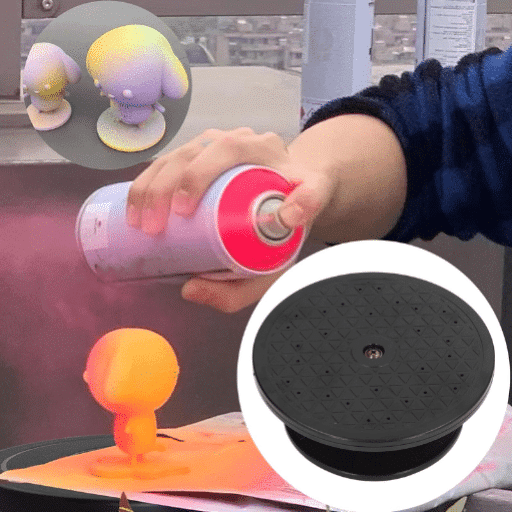
Paint failure on ABS starts here more than any other step. Contamination is the enemy.
Begin with an alkaline degreaser or a dedicated plastic pre-paint cleaner. Spray the part liberally and wipe with a clean microfiber cloth. Do not let the degreaser dry on the surface, it can leave a film. Follow immediately with an isopropyl alcohol wipe using a fresh cloth. IPA at 90% or higher evaporates quickly and carries away residual oils without attacking the ABS substrate.
Critical warning: Do not use acetone, MEK, or toluene for cleaning ABS. These solvents dissolve the butadiene rubber phase and will cause crazing, a network of micro-cracks that ruins the part and provides no foundation for paint.
After cleaning, handle the part only with gloved hands. Skin oils transfer instantly and will cause fish-eye in the primer coat. Allow the part to air-dry for 10–15 minutes in a dust-free environment before proceeding to sanding.
For a deeper look at how surface energy, contamination, and primer chemistry interact on ABS, read our technical guide on paint adhesion on ABS plastic.
Step 2: Sand to Profile
ABS needs mechanical tooth for the primer to grip. Glossy as-molded surfaces will not hold paint without profiling.
Start with 320-grit wet/dry sandpaper. Wet-sand the entire surface using light, even pressure. You are not trying to remove material, you are creating a uniform matte finish with microscopic scratches. Move to 400 grit, then finish with 600 grit for a smoother base that still provides mechanical adhesion.
For spray-can finishes or light-duty decorative parts, a gray scuff pad can replace paper sanding. For automotive or marine applications where the finish will see UV, moisture, and flex, use the full grit progression.
Grit Selection by Paint Type
| Paint Type | Recommended Profile | Grit Progression |
|---|---|---|
| Spray can (aerosol) | Light tooth | 400–600 grit |
| Acrylic enamel | Moderate tooth | 320–400 grit |
| Urethane (2K) | Aggressive tooth | 320 grit, scuff pad |
| Lacquer | Fine tooth | 400–600 grit |
Blow off dust with clean, oil-free compressed air. Finish with a tack cloth to remove every particle. One speck of dust under the primer becomes a bump in the topcoat.
If you are wondering whether sanding is optional, the answer is usually no. Read our guide on when you can skip primer and sanding on ABS for the rare exceptions.
Step 3: Prime for ABS
Selecting the right primer for ABS plastic is non-negotiable for most applications. Primer bridges the gap between the plastic substrate and the paint film, providing both chemical adhesion and a uniform surface for color.
Adhesion Promoters vs. Plastic Primers
Adhesion promoters containing chlorinated polyolefins (CPO) chemically modify the ABS surface, increasing its polarity and creating bonds that mechanical sanding alone cannot achieve. Adhesion testing per ASTM D3359 typically shows ratings above 4B on properly prepared ABS with CPO promoters. They are the gold standard for automotive and industrial ABS finishing.
Plastic-specific primers, such as those in the Rust-Oleum 2X Plastic line or SEM Plastic Adhesion Promoter, combine a binder system with adhesion-enhancing chemistry. They are easier to apply and more forgiving for DIY users.
Self-etching primers contain mild acid that micro-etches the surface. They work well on plating-grade ABS or heavily filled grades but can be overkill for standard high-impact ABS.
Application Technique
Apply primer in thin, even coats. Two light coats are better than one heavy coat. A heavy primer layer traps solvents, extends cure time, and increases the risk of solvent popping or blistering.
- Spray can: Hold 20–25 cm from the surface. Apply a tack coat first, a light dusting that provides anchor points for the full coat. Wait 10 minutes, then apply a medium wet coat.
- HVLP gun: 1.3–1.4 mm tip, 23–28 PSI at the cap. Two medium coats with a 10–15 minute flash time between coats.
Allow the primer to cure for at least 30 minutes before sanding with 600-grit wet paper. This step, called “guide coating,” reveals any remaining imperfections. Scuff the primer lightly, wipe with IPA, and you are ready for color.
For a product-level comparison of adhesion promoters and primers, see our full primer for ABS plastic guide to the best options.
Step 4: Apply the Best Paint for ABS Plastic
With a clean, primed, and profiled surface, the paint stage becomes straightforward. The hard work is already done.
Paint Chemistry Selection
Choosing the best paint for ABS plastic depends on the end-use environment:
- Acrylic enamel: Good durability, easy application, moderate cost. Best for general-purpose parts, signage, and consumer goods.
- Urethane (2K): Excellent chemical resistance, UV stability, and hardness. Best for automotive trim, marine parts, and high-wear applications. Requires proper respiration, isocyanates are hazardous.
- Lacquer: Fast drying, easy to polish, but lower durability. Best for show pieces and indoor decorative items.
- Epoxy: Extreme chemical resistance but poor UV stability without a topcoat. Best for industrial equipment and chemical-processing components.
Spray Technique
Apply paint in thin, overlapping passes. Each coat should be just wet enough to flow out but not so heavy that it sags. For most ABS applications:
- Tack coat: A light mist covering the entire surface. Wait 10 minutes.
- Medium coat: A full wet coat with 50% overlap between passes. Wait 10–15 minutes.
- Final coat: Another medium coat to achieve uniform color and gloss.
Spray can tips: Shake the can vigorously for 2 minutes before you spray paint ABS plastic. Test spray on cardboard first to verify fan pattern. Maintain consistent distance and speed. Multiple thin coats beat one heavy coat every time.
Recoat windows: Observe the manufacturer’s recoat window. Spray enamels typically allow recoating within 30 minutes or after 24 hours, the “tack-free” zone in between can cause solvent-lock and blistering.
For paint-specific product recommendations and adhesion test data, see our guide to the best paint for ABS plastic. If you are using spray cans exclusively, our best spray paint for ABS plastic guide covers Krylon Fusion, Rust-Oleum 2X, and SEM bumper paints in detail.
Step 5: Clear Coat and Cure
Clear coat protects the color layer from UV, abrasion, and chemical exposure when you paint ABS plastic for outdoor use. On exterior ABS parts, it is mandatory. On interior decorative pieces, it is optional but recommended for longevity.
Clear Coat Application
Apply clear coat using the same technique as the color coat: two medium passes with a 10–15 minute flash time. Use a UV-stable formulation for outdoor parts. For automotive bumpers and trim, add a flex agent to the clear coat. ABS flexes with temperature changes and road vibration. A rigid clear coat will crack.
Cure Schedule
Cure happens in stages. Understand the difference:
- Dust-free: 15–30 minutes. The surface is dry to the touch but still vulnerable.
- Tack-free: 1–4 hours. You can handle the part carefully.
- Ready for assembly: 24–48 hours. The paint film has hardened enough for gentle use.
- Full chemical cure: 7 days. The coating has reached maximum hardness, solvent resistance, and adhesion strength.
Do not install or stress the part before the 24-hour mark. Do not expose it to chemicals, fuel, or aggressive cleaning agents before the 7-day full cure.
Paint Types Compatibility Table
Not every paint bonds to ABS with equal strength. Use this matrix to select the right chemistry for your application.
| Paint Type | Adhesion to ABS | Durability | Flexibility | Needs Primer? | Best For |
|---|---|---|---|---|---|
| Acrylic Enamel | Good | Moderate | Good | Yes | General-purpose parts, hobby projects |
| Acrylic Lacquer | Fair | Low | Poor | Yes | Show pieces, indoor decorative items |
| Urethane (2K) | Excellent | Excellent | Good | Yes | Automotive trim, marine, high-wear |
| Epoxy | Excellent | Excellent | Poor | Yes | Industrial equipment, chemical exposure |
| Spray Can (Plastic-Specific) | Good | Moderate | Good | No* | Quick repairs, small parts, prototypes |
*Plastic-specific spray cans like Krylon Fusion All-in-One contain integrated adhesion promoters. Standard spray paints still require a dedicated primer.
Water-Based Acrylics and Hobby Paints
Water-based acrylics, including Citadel, Vallejo, and Tamiya, adhere well to primed ABS but have lower durability than solvent-based systems. They work beautifully for miniatures, props, and cosplay pieces where handling is gentle. Always seal water-based acrylics with a clear coat to prevent chipping.
For a deep dive on acrylic paint specifically, read our guide: Will Acrylic Paint Stick to ABS Plastic?
Common Failure Modes and Fixes
Even with perfect prep, things can go wrong when you paint ABS plastic. Here is how to diagnose and recover.
Fish-Eye
Fish-eye appears as small circular craters in the wet paint. The cause is almost always surface contamination, silicone, oil, or wax. Prevention is the only real cure. If fish-eye appears, stop painting. Allow the coat to dry, sand with 600 grit, degrease aggressively, and re-prime.
Crazing
Crazing is a network of micro-cracks in the ABS substrate, visible beneath the paint. It is caused by solvent attack, usually from applying a paint or cleaner with an incompatible solvent system. ABS cannot tolerate acetone, MEK, or strong aromatic thinners. If crazing occurs, the part is often unrecoverable. Strip the paint and start over on a fresh part.
Peeling
Peeling indicates adhesion failure. The paint lifts from the substrate in sheets or flakes. Causes include inadequate sanding, contaminated surface, wrong primer, or painting outside the recoat window. To fix, strip the failed coating, re-profile with 320 grit, re-clean with IPA, and re-prime.
Blushing
Blushing is a milky or cloudy appearance in the clear coat, caused by moisture in the air reacting with the solvents during flash-off. It happens most often in high-humidity conditions. Prevention: keep humidity below 60% during application. Fix: apply a mist coat of reducer or blending solvent to re-dissolve the film and allow it to flow out.
Solvent Popping
Solvent popping appears as small bubbles or pinholes in the cured paint. Trapped solvent vapor escapes after the surface has skinned over. Causes: coats too heavy, insufficient flash time, or painting in direct sunlight. Fix: sand smooth after full cure, re-prime, and reapply with thinner coats.
For detailed stripping and recovery procedures, see our guide: How to Remove Paint from ABS Plastic.
Use-Case Specific Guidance
ABS appears in wildly different applications. The finishing protocol for painting ABS plastic varies accordingly.
3D-Printed ABS Parts
3D-printed ABS carries layer lines that telegraph through paint. Before priming, smooth the surface. Acetone vapor smoothing dissolves the outer layer and fuses layer lines, but it requires careful control because acetone attacks ABS aggressively. An alternative is filler primer: a high-build primer that fills layer lines and sands smooth.
After smoothing, profile with 400 grit, prime, and paint. For cosplay and prop-making, water-based acrylics sealed with a clear coat deliver excellent detail and color range.
For the full workflow, see our guide: How to Paint 3D-Printed ABS Parts.
ABS Pipe (Plumbing, DWV, Drain Lines)
Black ABS pipe degrades in UV light. Painting exposed ABS pipe in basements or on exterior runs serves both cosmetic and protective functions. Use an exterior-grade latex paint with a plastic-compatible primer. Oil-based paints adhere well but are increasingly restricted by VOC regulations. Check local plumbing codes before painting pipe that carries potable water or vent lines, some jurisdictions have specific requirements.
Read our dedicated guide: How to Paint ABS Pipe.
Automotive Trim, Bumpers, and Body Kits
Automotive ABS parts flex, vibrate, and endure thermal cycling. Standard paint will chip and crack. Use an automotive urethane system with a flex additive in both the color and clear coats. SEM Bumper Paint is a popular single-stage option for trim and bumper covers. For OEM color matching, use a base-coat/clear-coat system mixed to the manufacturer’s paint code.
For automotive-specific techniques, see: Painting ABS Car Trim and Bumpers.
Cross-Material Notes: ABS vs. PVC vs. PC vs. HDPE
ABS is not your only option for paintable plastics when painting ABS plastic is not the right fit. Engineers and product designers often choose between several candidates.
| Property | ABS | PVC | PC | HDPE |
|---|---|---|---|---|
| Surface Energy (mN/m) | 35–42 | ~39 | ~42 | ~31 |
| Paintability | Excellent | Good | Good | Poor |
| Recommended Primer | Plastic primer / CPO | PVC primer | Plastic primer | Flame treatment + primer |
| Flexibility | Good | Moderate | Poor | Excellent |
| UV Resistance (unpainted) | Poor | Good | Moderate | Good |
| Typical Application | Automotive trim, enclosures, toys | Pipe, signage, flooring | Lenses, shields, electronics | Tanks, containers, liners |
PVC paints well but requires a PVC-specific primer. Polycarbonate has higher surface energy than ABS but is prone to solvent stress-cracking, use only plastic-safe primers. HDPE is notoriously difficult to paint without flame or plasma surface treatment.
For a closer look at how the two most common plastics stack up, read our comparison: Paint ABS vs PVC — Which Plastic Takes Paint Better?
Frequently Asked Questions About Painting ABS Plastic
What paint sticks to ABS plastic?
Acrylic enamel, urethane, lacquer, and epoxy all adhere to ABS when the surface is properly primed. Plastic-specific spray cans with integrated adhesion promoters work without a separate primer. Water-based acrylics require a primer and a protective clear coat for durability.
Do you need to sand ABS before painting?
For any finish that will see handling, UV, or moisture, yes. Sanding creates mechanical tooth that the primer grips. The exception is all-in-one plastic spray paints on low-wear decorative items, but even then, a light scuff improves durability.
Can you spray paint ABS plastic without primer?
Only if you use a spray can specifically formulated for plastics, such as Krylon Fusion All-in-One or Rust-Oleum Plastic Primer + Paint. Standard spray paints will peel without a dedicated primer or adhesion promoter.
Will acrylic paint stick to ABS?
Yes, but only if the ABS is primed first. Water-based acrylics have poor adhesion to bare plastic. Seal acrylic paint with a clear coat to prevent chipping. For hobby and miniature applications, primer + acrylic + varnish is the standard protocol.
How do you prep ABS plastic for paint?
Clean with an alkaline degreaser, wipe with isopropyl alcohol, wet-sand with 320–600 grit depending on the paint type, blow off dust, tack-cloth the surface, then apply primer. Do not use acetone or MEK for cleaning.
Can you paint ABS pipe with latex paint?
Yes. Exterior-grade latex paint over a plastic-compatible primer works well on ABS pipe. It protects against UV degradation and improves aesthetics in exposed installations. Verify local plumbing codes first.
Does Rust-Oleum work on ABS plastic?
Rust-Oleum 2X Ultra Cover Paint + Primer and Rust-Oleum Plastic Primer both work on ABS. Standard Rust-Oleum enamel without a plastic primer will likely peel. Always verify the label specifies “plastic” or “multi-surface” compatibility.
How long does paint last on ABS plastic?
With proper prep, primer, and a UV-stable clear coat, paint on ABS lasts 5–10 years outdoors and indefinitely indoors. Without a clear coat, expect fading and chalking within 2–3 years of sun exposure.
Can you paint ABS without sanding?
Technically yes, if you use an adhesion promoter on a clean surface. The finish will be less durable and more prone to chipping. For anything beyond a temporary decorative piece, sanding is strongly recommended.
What primer for ABS plastic 3D prints?
Use a high-build filler primer to fill layer lines, then sand smooth before applying a standard plastic primer. Dupli-Color Filler Primer and SEM High-Build Primer are common choices in the maker community.
Sourcing Paint-Grade ABS Resin
Once you know how to paint ABS plastic, the next variable is the resin grade you start with. The finish on your ABS part is only as good as the substrate beneath it. High-impact ABS grades with consistent melt flow and low gel content produce smoother molded surfaces that require less sanding and profiling. Plating-grade ABS is formulated specifically for finishing operations and delivers superior adhesion with standard primers.
At Yifuhui, we supply injection-molding-grade ABS resins from globally recognized manufacturers. Every batch ships with a Certificate of Analysis (COA), material safety data sheet (MSDS), and full lot traceability. Whether you are running a finishing operation, producing painted enclosures, or developing a new product line, we can recommend the right ABS grade for your paint system and processing conditions.
Request a Quote for Paint-Grade ABS Resin, Response Within 24 Hours
Conclusion
Learning how to paint ABS plastic is not about buying the most expensive paint. It is about respecting the material. Clean the surface aggressively. Profile it with the right grit. Choose a primer that matches the paint chemistry. Apply thin, patient coats. Allow the full cure schedule.
Get the prep right, and ABS rewards you with a finish that rivals metal. Rush the prep, and you will be stripping and starting over.
Here is the five-step framework to remember:
- Clean and degrease, remove mold release, oils, and contamination with alkaline cleaner followed by isopropyl alcohol.
- Sand to profile, use 320–600 grit to create mechanical tooth without damaging the substrate.
- Prime for adhesion, apply a plastic-specific primer or chlorinated polyolefin adhesion promoter.
- Apply the paint, thin, overlapping coats within the manufacturer’s recoat window.
- Clear coat and cure, protect with UV-stable clear coat and allow 7 days for full chemical cure.
If you are sourcing ABS resin for a finishing operation, the grade you choose at the pellet stage determines the work you do at the spray booth. High-quality, consistent ABS reduces prep time, improves adhesion, and cuts rework. Contact our team to discuss which ABS grade matches your paint system and production requirements.