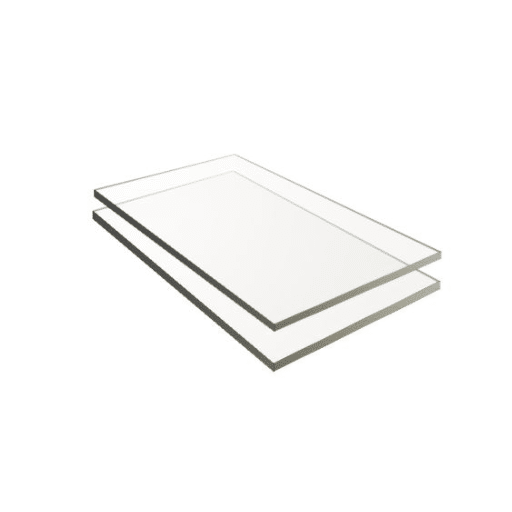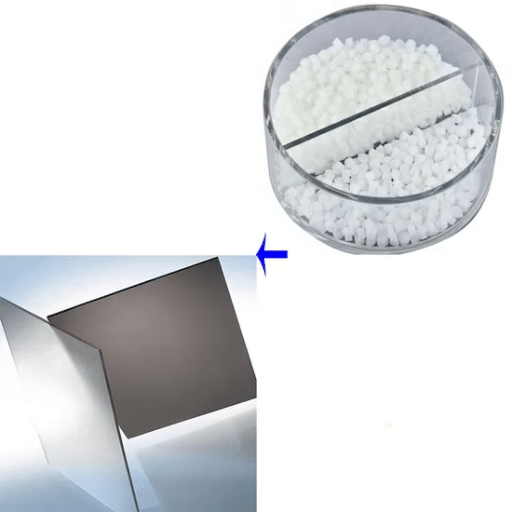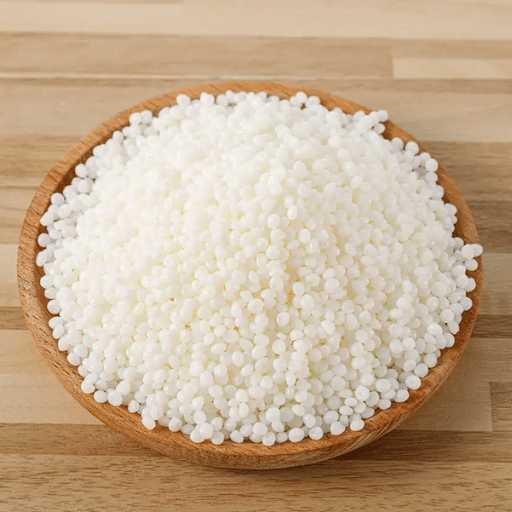



Polycarbonate is around 250 times more resistant to impact than glass at the same thickness limit. Yet one simple mistake in design, such as allowing a wall section over 6 mm to be of an inappropriate grade, can reduce the notched Izod strength of the polycarbonate by over 80%. This disparity between catalog limitations and actual performances is the starting point for many of polycarbonate’s component failures. It is also a major impetus for thinking the simple statement, “PC is tough,” is an extremely oversimplified synopsis of the capabilities of engineering plastics.
Should you wish to specify polycarbonate for your safety cettings, electric enclosure vehicles, real car battery cases, or any consumer product that has been drop tested, this guide will give you an insight into figures that matter, the distinctions between the grades Covestro connotates in small print on the first sheet of a datasheet, along with the very acts of trade that will secure that the purchase of resin into your hoppers corresponds to the impact rating that your engineering team validated.
Detailed Impact Testing: What is impact resistance when it comes to tests in polycarbonate, how major grades of Makrolon® compare on this point, where pc performance falls apart (and how to design around it), and how to confirm that the COA with the shipment proves what you’re actually getting.
What Is Polycarbonate Impact Resistance?
Polycarbonate’s property of impact resistances is of its capacity to absorb energy in a very fast manner safely without fracturing. Typically it will be specified as the notched Izod impact that result from 600–900 J/m or notched Charpy impact per ISO 179 from 65–90 kJ/m². Unnotched test specimens almost universally fail with a “no break,” which means that no breakout was initiated under the usual impact test method.
In the world of global automotive requirements and measurements, PC got to be ranked by two test standards. The primary reference, backed by ASTM, is provided as the acceptable North American standard in ft-lbs/perinch or Joules per meter, which is a measure of the notched bar struck by the pendulum energy. This is so because, in both tests, the struck side is that of the notched bar, meaning that, for any one given grade, it could have two wholly differing number diametrically opposite numbers, depending on the basis of their laboratory practice with the changes made therefrom.
The dramatic failure of polycarbonate is its ductile nature. As for acrylic or general-purpose styrene, these materials just break and shatter only under impact. PC, on the other hand, yields and fails to deform before it absorbs the energy it requires to develop a crack, thanks to its perfect ductile behavior. Energy is absorbed so easily that a 6 mm sheet of PC fares well against impacts that’d break a 12 mm tempered glass pane twice as heavy as the PC. To learn more about the properties of polycarbonate, please read: Polycarbonate Properties: Complete Technical Guide for Engineers and Buyers
Polycarbonate Impact Strength: The Numbers That Matter
For most general-purpose injection-molding grades, Covestro Makrolon® 2407 and 2805 are standard examples, datasheets list:
- Notched Izod (ASTM D256, 23°C): 600–900 J/m
- Notched Charpy (ISO 179, 23°C): 65–90 kJ/m²
- Unnotched Charpy (ISO 179, 23°C): “no break”, the bar bends but does not fracture
- Notched Izod at −30°C: typically 100–150 J/m (the drop reflects the ductile-to-brittle transition approaching)
- Tensile elongation at break: 100–130%, confirming the ductile deformation pattern
The safety factor comes at a conservative level, however. A sharp notch that focuses stress at a point is 0.25 mm. This is exactly the geometry which polycarbonate hates the most. The unnotched figures are what PC would truly sustain in a long section, taking the hit but not yielding to breaking.
And that’s where the trouble begins. When Marcus, an industrial designer working on a smart-home hub enclosure, chose to go with Makrolon® 2807 because of its 850 J/m notched Izod, the first prototype made it through the 1.5 m drop test without issue. The production version, with the same internal rib profile modified for stiffness and added by tooling, failed at 0.6 m. This rib was essentially a concentrator of stress, a man-made notch that turned the material from “ductile, no break” to “brittle at the rib.” Applying a 0.5 mm fillet on the same rib eradicated such failure.
How Polycarbonate Compares to Other Engineering Plastics

The “PC is tough” headline holds up well against most engineering thermoplastics, but the picture differs by test condition:
|
Material |
Notched Izod (J/m, 23°C) |
Unnotched Behavior |
Ductile-to-Brittle Transition |
|---|---|---|---|
|
Polycarbonate (PC) |
600–900 |
No break |
~−20°C (unmodified) |
|
PC/ABS alloy |
400–600 |
Ductile |
Higher than PC alone |
|
ABS (high-impact) |
200–400 |
Tough |
~0°C to −20°C |
|
PMMA (acrylic) |
16–32 |
Brittle |
Brittle at all service temps |
|
POM copolymer |
70–80 |
Tough but lower |
Brittle below 0°C |
|
PA66 (dry, unfilled) |
50–60 |
Notch-sensitive |
Moisture-dependent |
|
PA66 GF30 |
90–120 |
Stiff, lower toughness |
Filler-dominated |
The toughest engineering thermoplastics consist of the unfilled group of polycarbonates, the chief among them being PC–with one major exception: the glass fiber reinforced PC grades (Makrolon® 8025, 8035, 8325) deliver much stiffer products at the cost of cutting down on toughness. Introducing 10–30% glass fiber reduces notched Izod from around 800 J/m to 90–120 J/m. Design glass GFs for stiffness, not impact. For more information on the comparison between polycarbonate and ABS, please read: Polycarbonate vs ABS: Complete Material Selection and Sourcing Guide
Why Polycarbonate Is So Tough
Polycarbonate’s chemistry is bisphenol-A based, with carbonate linkages along the backbone. Two structural features deliver the impact properties:
- Amorphous, not crystalline: Unlike POM or PA66, PC has no semi-crystalline regions to act as failure initiation points. The amorphous structure deforms uniformly under stress.
- High glass transition temperature (~145°C) with a rigid main chain: The backbone resists segmental motion at room temperature but yields cooperatively under impact, dissipating energy as molecular deformation rather than fracture.
This is why the in-mold residual stress can strongly influence the tougher impact behavior of PC. Parts molded with residual stress, then used in certain organic solvents, such as printing inks or mold residue or some formulations of adhesive, can show environmental stress cracking, probably well-respected brittle failure in a material supposed to be ductile. Hence one is forewarned to mention this to any designers specifying PC for a chemical-exposure part.
Factors That Reduce Polycarbonate Impact Resistance
Five conditions reliably cut PC impact performance, and each has a design or specification fix.
Notch Sensitivity
Internal sharp corners, sudden changes of section, and witness lines from the tools act as mini notched Izod samples. A polycarbonate part with two 0.1 mm radii at the stress-bearing junctions would fail at a fraction of the impact rating of the bulk material. Therefore, the design rule could be: half a millimeter minimum radius on that internal strength transition, and even more is better.
Temperature
Standard polycarbonate long retains meaningfully toughened properties starting at approximately +120°C and reaching insanity halfway at −20°C. Once the brittle is dashed in, noted impact loses value suddenly. For applications below v −20°C, such as outdoor electronics cabinets used under cold conditions, EV battery housings, automotive headlamp lenses that would experience winter test schedules, one would have to specify an impact-modified grade e.g. Makrolon® 8325, or a low-temperature dedicated grade.
Wall Thickness
The material’s notched Izod is shockingly thickness dependent and often confuses designers. For an average 3-mm wall thickness (e.g., a trigger guard), notched values generally correspond to the datasheets. At above a 6-mm wall section, some grades will drop down into a thickness-induced brittle region with notched Izod values decreasing to 100 to 150 J/m. To avoid obtaining an impact curve for thickness-dependent values listed for a particular grade, please indicate to the manufacturer that a recommended thickness-dependent impact curve should be provided. Covestro will provide one for Makrolon® upon request.
Chemical Exposure and Environmental Stress Cracking
Accepting the part in environmental stress cracking are numerous compounds such as aromatic and chlorinated solvents, some alcohols, alkaline cleaners, and adhesives under conditions of tensile stress for PC. Although the part survives the initial assembly, it may take months of service to develop cracks. When contacts with solvent or adhesive are involved, compatibility needs to be verified while the compliant parts are under actual stress, not just standalone material coupons.
UV and Long-Term Aging
Unmodified polycarbonate begins to yellow after UV exposure, and its impact strength is diminished. A notched Izod value of 30–50% lower than its initial value would result from 12–24 months of outdoor exposure. For outdoor use, a grade with desirably stabilized UV effectiveness should be identified, such as Covestro’s Makrolon® RE6717, now co-extruded with a UV-absorbing surface layer to improve impact performance in sunlight.
Makrolon® Polycarbonate Grades by Impact Performance
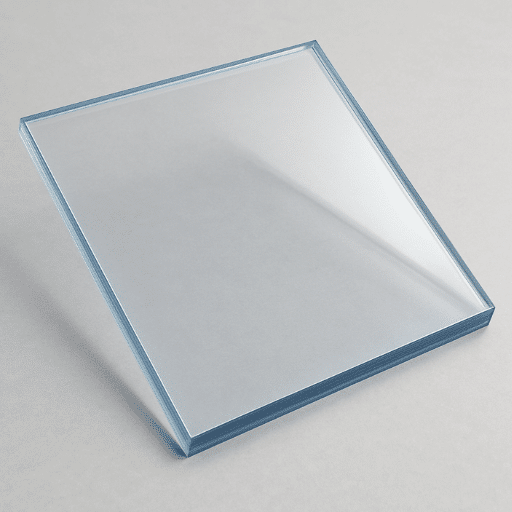
Covestro, the brain behind the development of polycarbonates (Bayer, 1953), also stands among the top global manufacturers. MIS sold n numbers of grade-in-use grades, most of them from our Suzhou stock:
- Makrolon® 2407: The General-Purpose Injection Molding Grade with Optical Clarity. Approximately 850 J/m on the notched Izod. The regular choice for those transparent components, lighting diffusers, machine guards.
- Makrolon® 2805: High-flow injection-grade, thin-wall mold capable with comparable impact to 2407, flash to make MFR just right for the more complex geometries out there. Most common in consumer-electronics applicatioms.
- Makrolon® 6555: Flame-retardant V-0 (UL94, V-0 at 1.5 mm), approximately 700 J/m notched Izod. If both impact strength and flame rating are required, these are always used in automotive battery enclosures and electronic housings for the global market.
- Makrolon® 6557: Same as 6555, only different flame-retardant additive packages are used. Selected when 6555 flame retardant is in disagreement with certain downstream regulatory requirements.
- UV-stabilized, weatherable Makrolon® RE6717 is useful in outdoor applications. It is based on impact retention after sunlight exposure rather than at-peak as-molded values.
- Makrolon® 8025, 8035, 8325, and others glass-fiber-reinforced grades (10–30% GF). These are used when stiffness is the driver of the application, and cases such as gear housings, structural brackets are required principally in impact.
- Makrolon® 9415, which is a special high-impact grade intended for applications where toughness is the primary design driver.
When Lin, an EV partied engineer in Stuttgart, needed a battery lid material that could withstand a cold soak test with −30°C temperature and comply with a UL94 V-0 flame rating, the front-of-pile material specification settled at Makrolon® 6555 with a minimum wall thickness of 1.5 mm and a minimum radius of stress relief of 1 mm. Yifuhui supplied 6555 material housed in Suzhou and handed a manufacturer COA sheet that contained the notched Izod, MFR, and flame test data unique to that batch, which was the mainstay the OEM’s qualification team needed to approve them as a supplier.
Real-World Applications Where PC Impact Resistance Matters
Specifying polycarbonate for a range of high-stakes applications is a result of the material’s impact capabilities:
- Automotive: Headlamp lenses (clarity and impact), inner structural clips, EV battery covers (impact + fire retardant), lightweight glazing replacements
- Electronics: Laptop and tablet housing, smartphone frames, server and network equipment housing, electrical connector bodies (FR grades)
- Safety Equipment: Machine guards, eye protection lenses, riot shields, helmet visors, energy-absorbing layers in laminated bullet-resistant glazing systems (PC is not a finished ballistic solution by itself, but in a multilayer composite)
- Medical devices: Sterilizable housings tolerant of gamma ray and steam sterilization cycles
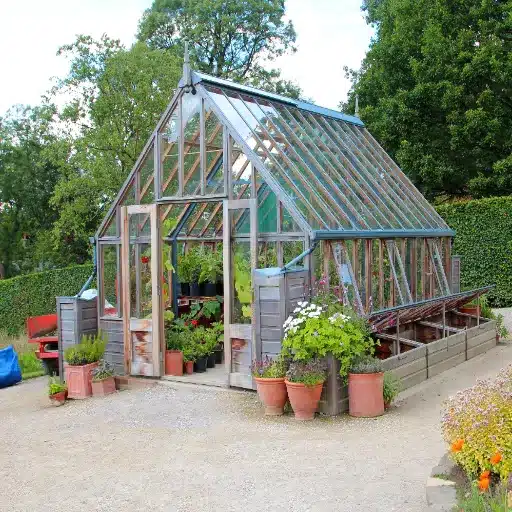
- Construction and Architecture: Skylights, sound barriers, security glazing panels, greenhouse panels — wherever there is a choice between glass-based weight reduction and added tolerance between the glass and the reality
The scenario is identical in every methacrylate industry: an OEM nominates a grade with its own Makrolon® brand name, and production requires that grade specifically as documented with a COA. Substitution of some related; never re-qualified grade with similar physiology acceptable but very seldom in regulated supply chains.
How to Verify Impact Performance Before You Buy
A Certificate of Analysis (COA) issued by the manufacturer is the document that turns datasheet promises into supply-chain reality. For polycarbonate, a complete COA should list:
- Material name and grade (e. g., “Covestro Makrolon® 6555”)
- Lot or batch number traceable to manufacturer production records
- Melt flow rate (MFR), the primary indicator of resin chain length and processing behavior
- Density (typically 1.20 g/cm³ for unfilled PC)
- Notched Izod or Charpy impact value for the lot, where the grade datasheet specifies impact as a controlled property
- Pass/fail statement against the manufacturer’s published specification
The COA values need to be checked against Covestro’s official Makrolon® datasheet for that particular grade. The typical pattern of product variation between production runs shows that small differences in results actually represent standard operational behavior. The material should not be used for production tooling until the supplier answers questions about an MFR shift that exceeds 2 units from its standard specification.
For procurement teams that have been burned by off-spec resin from unverified Chinese suppliers, this verification step is the difference between confident sourcing and field failures.
Sourcing Impact-Resistant Polycarbonate Resin from Yifuhui
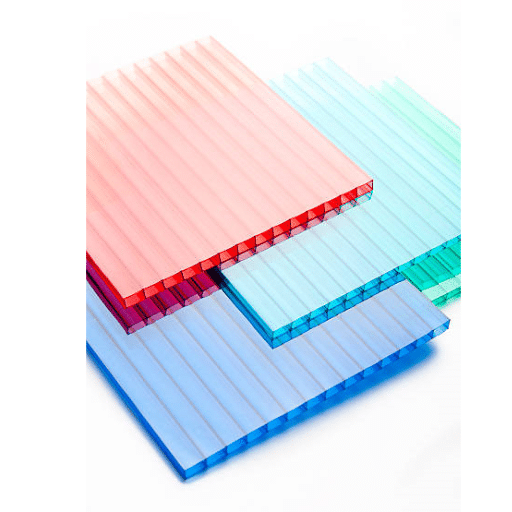
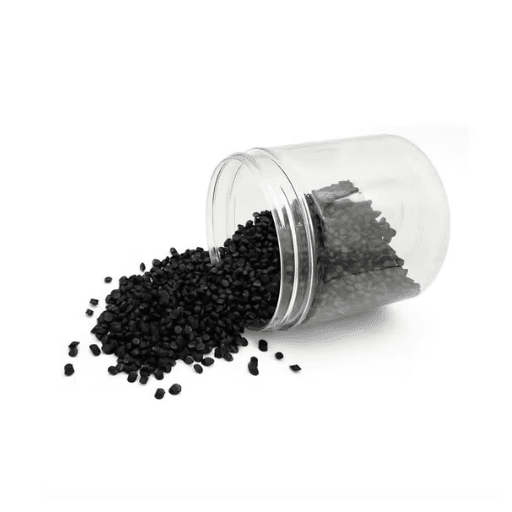
Yifuhui stocks the Covestro Makrolon® portfolio, including impact-critical grades 2407, 2805, 6555, 6557, RE6717, 8025, 8035, 8325, and 9415, in our Suzhou warehouse, minutes from the Port of Shanghai. Every shipment includes:
- Manufacturer-issued Certificate of Analysis (COA) traceable to the Covestro production lot
- Material Safety Data Sheet (MSDS) and applicable compliance certificates (UL94, RoHS, REACH, FDA where the grade qualifies)
- Commercial invoice and packing list specifying brand and grade by name, not generic “PC resin”
- 25 kg minimum order quantity, FOB Shanghai or CIF destination port
Standard lead time to major international ports runs 7–14 days from our warehouse. First-time orders require us to ship from the same lot which your production material will use, so your qualification testing will match your actual production supply for testing purposes.
Polycarbonate Impact Resistance FAQ
How impact-resistant is polycarbonate compared to glass?
The impact resistance of polycarbonate exceeds that of glass by 250 times when both materials have the same thickness while polycarbonate weighs 50 percent less because its density is 1.20 g/cm³ compared to soda-lime glass which has a density of 2.5 g/cm³. The combination of these properties leads to its use in safety glazing and machine guards and lightweighting glass replacements.
What is the Izod impact strength of polycarbonate?
Standard unfilled injection-molding grades of polycarbonate (Makrolon® 2407, 2805, and similar) deliver notched Izod values of 600–900 J/m (ASTM D256) at 23°C. “No break” results appear with unnotched specimens. Glass-filled grades drop to 90–120 J/m as stiffness replaces toughness.
Does polycarbonate become brittle in the cold?
Standard polycarbonate enters its ductile-to-brittle transition around −20°C. Impact-modified or low-temperature grades extend useful service below −40°C. For automotive and outdoor electronics applications, confirm the cold-temperature notched Izod value with the manufacturer, not just the room-temperature figure.
Is polycarbonate stronger than acrylic?
Polycarbonate shows 15 to 30 times better impact resistance than acrylic (PMMA) according to its notched Izod test results while it performs better than actual drop tests. PMMA offers better optical clarity, scratch resistance, and UV stability without coatings, but it shatters where PC deforms.
Which Makrolon® grade has the highest impact resistance?
Among the most commonly specified Makrolon® grades, 9415 sits at the high end of impact performance for unfilled PC. For applications combining impact with flame retardancy, Makrolon® 6555 retains the bulk of standard PC impact performance while meeting UL94 V-0.
Can polycarbonate stop a bullet?
A standalone polycarbonate sheet is not a finished ballistic solution. PC serves as the energy-absorbing component in laminated bullet-resistant glazing systems which also include glass and other materials. The ballistic performance of the system depends on its rating rather than the performance of the PC layer.
Specify Polycarbonate with Confidence
The property of polycarbonate impact resistance serves as the basis for PC specifications which apply to safety glazing, EV battery covers, electronics housings and numerous critical applications. The headline numbers, 600–900 J/m notched Izod, “no break” unnotched, 250× glass, are real. The conditions which reduce them to 50 percent operational capacity include notch geometry cold temperature and wall thickness above 5 mm and solvent exposure and UV aging. To learn more about transparent polycarbonate, please read: Transparent Polycarbonate: Optical Properties, Grade Selection, and Sourcing Guide
The path from datasheet to reliable production part runs through three steps. The first step requires design teams to work with polycarbonate’s notch sensitivity and thickness behavior while they create their designs. The second step requires you to select the appropriate Makrolon® grade for your environment which includes 2407 and 2805 for general use and 6555 for impact-plus-FR and RE6717 for outdoor use and 9415 for high-impact specialty applications. The third step requires you to confirm your production lot through a manufacturer-issued Certificate of Analysis which connects the resin in your hopper to the impact rating your engineering team achieved during validation.
You need to provide your application details along with your operating temperature specifications and wall thickness measurements and regulatory requirements and processing method which will help us select the appropriate Makrolon® grade from our Suzhou inventory.
[Request a Quote for Covestro Makrolon® Polycarbonate → 25 kg MOQ, COA Included, FOB Shanghai]