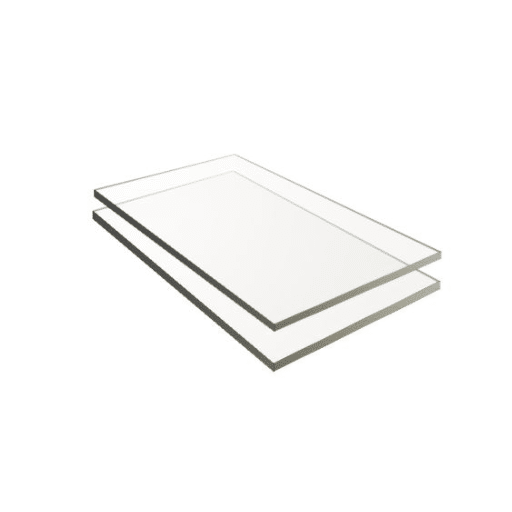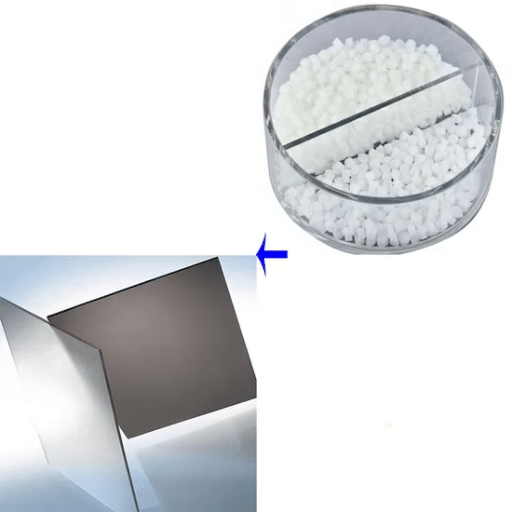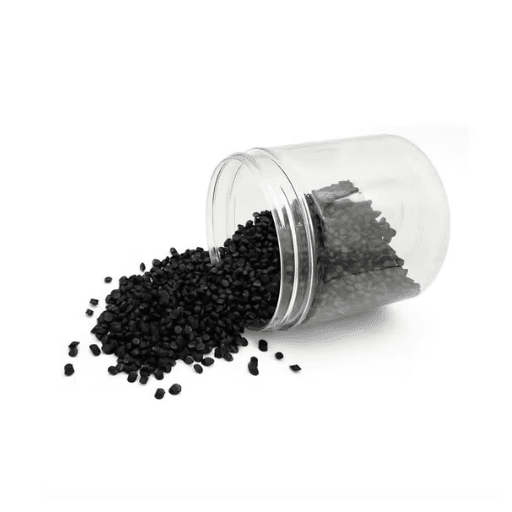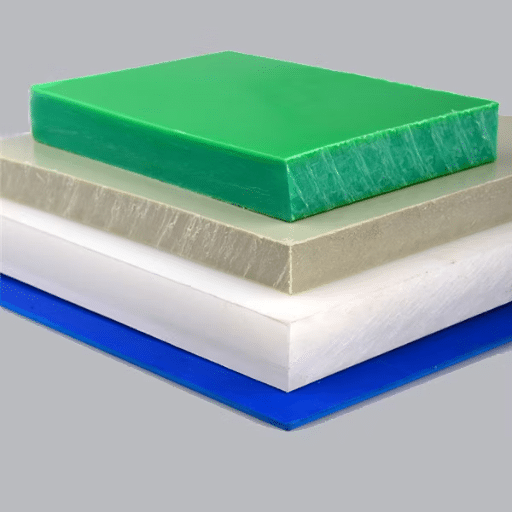

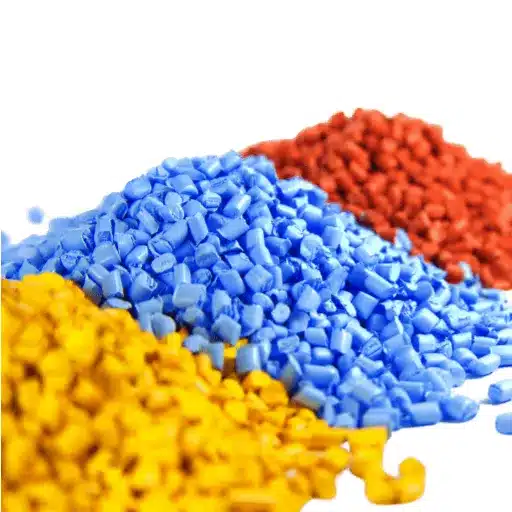
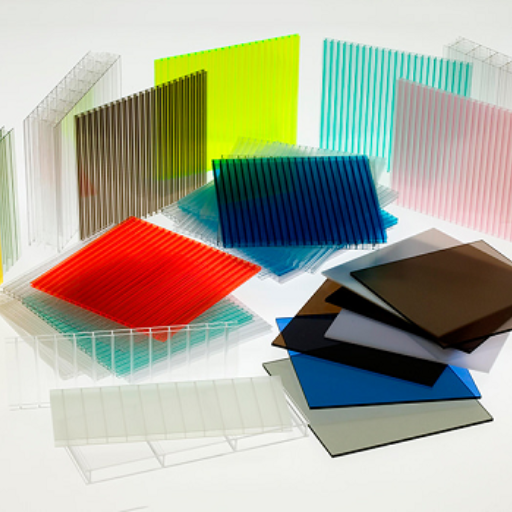
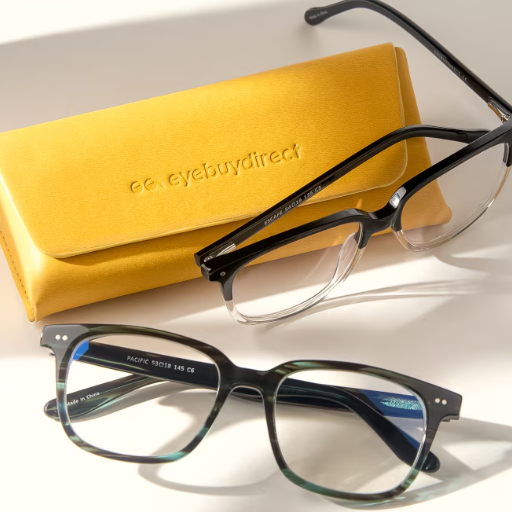
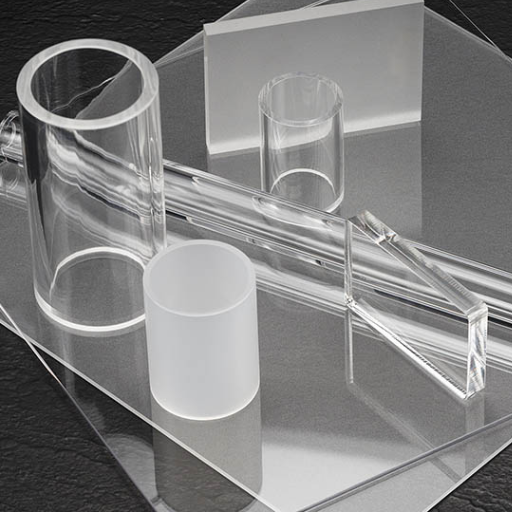



A headlamp lens, immerging within six months’ exposure to highway conditions, that yellows. A display cover that scatters light and obscures the UI beneath it. An LED housing that cracks under thermal cycling because the material was never designed for the junction heat. In all these instances, the error was a wrong transparent grade of polycarbonate – or of an unverified supplier – that defeats carefully engineered optical design specifications.
This glaring question for manufacturers and material suppliers is how to fill the persistent void. Suppliers readily claim to possess “crystal clear” PC resins, but quantitative transparency figures light transmission, haze, yellowing index, and long-term UV stability remain a great unknown among PC grades. A general-purpose transparent PC and optical-grade PC are not of the same ilk; specifying the less desirable, inept version in the appn is likely a design error that becomes evident only after parts have come forth in the production line or have outlived in the field.
This guide is all about the optical properties that really matter when choosing a transparent polycarbonate material. Understand what is the difference between a general-purpose grade and a precision optical grade, see which Makrolon grades from Covestro are likely to be employed in engineering applications, and learn how to see your optical quality confirmed on the certificate of analysis supplied by your manufacturer before you make the commitment to production.
When clarity is a big issue for your specific application, then the materials grade is just as important as the materials family.
Want to identify the right transparent PC grade for your application? Tell us your optical requirements and we’ll recommend a certified Makrolon grade from our stock.
What Is Transparent Polycarbonate?
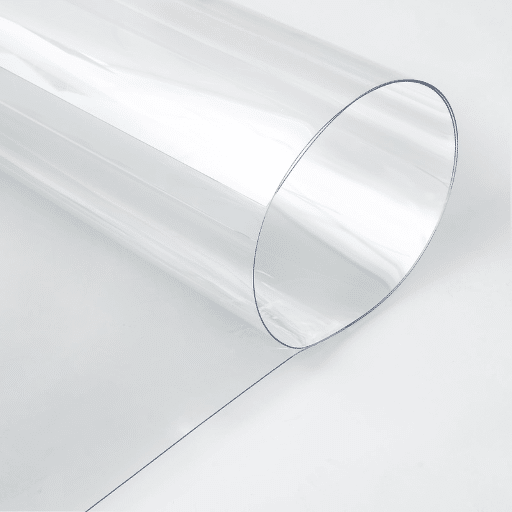
Amorphous transparent polycarbonate with visible light transmission in the region of 87-90%, clear and possibly among its greatest properties where its relative impact strength lighter by about 250 times than that of glass of the same thickness. Its transparency is attributed to the amorphous molecular structure of bisphenol A polycarbonate — the polymer chains have not crystallized into structures that scatter light; thus, the visible wavelengths can pass through with minimal interference.
Several key optical properties determine the transparent grade of PC useful in particular applications:
- Light transmission indicates the percentage of the incident visible light that passes through the material. General-purpose transparent PC can achieve an 87-90% level of light transmission; precision optical grades can achieve 88-91%.
- Hazing refers to the percentage of transmitted light deviating from that of the original beam due to forward scattering; standard transparent PC grade would have a 1-3% level of haze according to ASTM D1003. Ultra-low haze optical grades can have grades less than 0.5%.
- It grabs the attention of refractive index: PC refractive index is about 1.584 higher than PMMA (~1.49) and glass (~1.52), and it contributes to lens design, light guide efficiency, and anti-reflection coating thoughts.
- Yellowing index (YI): This compares color change towards the yellow side. Typical PC grade possesses a YI of 1.0 to 3.0, which is unacceptable. An optical grade has a YI maybe below 1.0.
The key difference is this: As applied to any PC grade that transmits visible light, “transparent” denotes to opt-optical does work from the material side of life, one Reddit-compatible with the phrase optical grade meaning: has been manu-factured and QC-ed to minimize haze, control refractive index consistency, and maintain clarity under thermal and UV stress. For precision lenses, LED optics, and automotive lighting, that distinction is the difference between a part that performs and a part that fails validation.
Optical Properties That Define Transparent Polycarbonate Performance
Light Transmission and the PMMA Tradeoff
Generally transparent polycarbonate allows the transmission of 87%-90% visible light. The precision optical grades generally have more than 91% of the light coming through. This is similar to glass, where 90-92% usually pass through, but falls slightly short of PMMA acrylic, whose performance is in the range of 92-93%.
The tradeoff is structural. PC delivers approximately 10 times the impact strength of PMMA. For safety glazing, automotive headlamp lenses, and machine guards, that toughness justifies the modest transmission penalty. For display covers and signage where impact is not a concern, PMMA’s superior clarity may be the better choice. For a full material comparison, see our transparent plastics selection guide.
Haze and Clarity Control
Haze is the malignant nemesis of optical performance. Normally, the haze level of any transparent PC part, even when showing quite high light transmission, may be just as much as nothing. Most of the standard injection-molding grades like Makrolon 2805 have a haze of 1–3%, fine on the whole for ordinary enclosures and safety guards.
For precision optics, haze is fixed at such low levels that it tends to be as low as 0.5% or lower; Makrolon LED2045 and LED2245 are just two of many examples. These grades are developed using higher-purity resin with a considerable ability to maintain the process within a tight window and ensuring that no stray scattering mechanisms interfere with the flow of light. The fairly significant advantages derived from high transmission and low haze for light guides, collimators, and camera windows cannot be overstated. Scattered light increases system losses in illumination systems and degrades image quality in sensor optics.
Refractive Index and Optical Design
PC has a significantly higher refractive index of ~1.584 than PMMA and glass. This has some direct implications for optical engineers designing lenses and light guides:
- Higher refractive index enable more compact lens geometries through greater light bending from interface
- Also, steeper Fresnel reflections at air-material boundaries would mean the necessity of anti-reflective coatings.
- With shear-induced molecular orientation, induced birefringence of the different refractiveness depending on the polarization orientation may occur in the injection-molded PC parts. One can minimize these adverse effects by process optimization when seeking precision optical grades.
Yellowness Index and Long-Term Stability
Under extended exposure to UV and heat, standard transparent polycarbonate yellows. Photo-oxidation of the carbonate linkages in the polymer backbone creates chromophores that absorb blue light, shifting the material toward yellow.
Specified grades can incorporate UV-stabilizers in grades like Makrolon 2407 and RE6717 so as to remove or additionally screen UV radiation before it penetrates to the polymer backbone. Such incorporation translates into markedly reduced yellowing over the course of time. In the context of outdoor applications — automotive lighting, exterior displays, architectural glazing — UV stabilization is not afforded as an added advantage. It is obligatory.
Transparent PC Grades: General Purpose vs. Precision Optical
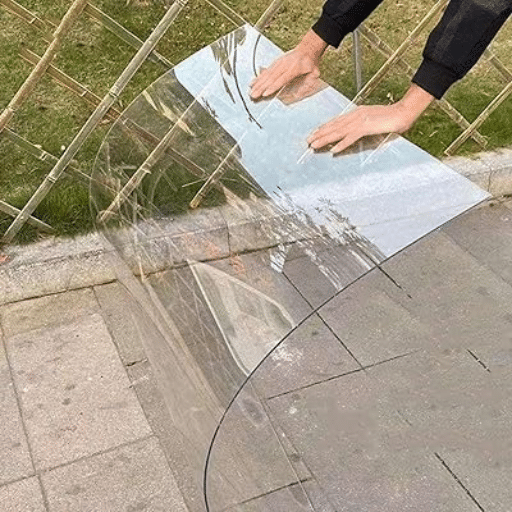
Not all transparent polycarbonate is manufactured to the same optical standard. Covestro organizes its Makrolon portfolio into general-purpose transparent grades and precision optical grades, with measurable differences in purity, haze control, and application validation. For our full portfolio of Covestro Makrolon polycarbonate resin grades, including transparent and specialty variants, see our PC resin supplier page.
General-Purpose Transparent Grades: Makrolon 2407 and 2805
Makrolon 2407 would be classified as low-grade viscosity UV-stabilized, easy-release without UV-stabilized grades and with light transmission of about 87-88% (4mm thick). MVR is about 19 cm³ per 10 min (300°C/1.2 kg) and is therefore well suited for thin-walled parts and complex mold geometries. The UV stabilization makes it an immediate choice for outdoor transparent applications: outdoor lighting housings, safety glazing, machine guards and exterior automotive trim.
Measuring closer to ISO 10.0 Makrolon 2805 would be of a much moderate viscosity grade-technical general-use type of grade with like optical transmission put with no UV stabilization. Indoor transparent parts will do best with this type of grade such as consumer electronics housings, display covers, medical devices, and appliance parts. For applications that does not place them under UV exposure, 2805 provides superior processibility and mechanical balance at lower cost than stabilized grades.
Here, these two grades are transparent and have no optical texturization. The ratio of ~1–2 xha is a hint and the birefringence is enough for structural see-through elements but did not prove beneficial as either optic glass one.
Precision Optical Grades: LED2045, LED2245, AL2447, AL2647
Covestro offers dedicated optical grades for applications demanding optimal performance:
Makrolon LED2045 and LED2245 have been developed to suit LED lighting and optical systems. These materials have proven approximately 6% higher levels of light transmission efficiency than a standard clear grade over demanding optical path. The main virtues are low birefringence to stand for homogeneous light propagation, high purity to own minimum haze, and thermal stability to nurture optical properties against aplenty elevated temperatures customary for LED junction environments.
Makrolon AL2447 and AL2647 have both entered road-worthy automotive headlamp lens grades as per ECE/AMECA regulations. These materials combine optical polish with impact resistance and UV resistance, which both are very much important for various applications-from all those of stone-chip screen to UV stability and headlight shroud frontal footage. These materials are essentially proofed for use against automotive underhood and frontline-lighting thermal, chemical, and mechanical stresses.
If a very precise optical PC is the requirement, even general-purpose grades are not effective substitutes. Conclusion: the manufacturing process for optical grades comprising tighter purity control, special additive packages, and application-specific validation breathes a dimension of performance that the standard grades’ deterministic uniforms cannot duplicate.
Application-Specific Grade Selection Guide
The judgment of Elena (the lighting engineer at an automotive company) completely seemed good when she stuck to Makrolon 2805 rather securely for the LED rear lamp prototype. Her justification was its transparent nature, availability, and reasonable cost.
But during the 85°C cyclic thermal test, marked lens haze appeared after 200 hours. There was an 8% reduction in LED optics’ efficiency. The mesh story was how 2805 lacked the thermal stability and low birefringence inherent in LED2045, the latter finally adopted for production by the OEM. As a consequence, the prototype was six weeks late due to a setback for my team.
The lesson learnt: transparent polycarbonate doesn’t behave the same with respect to application. There is the necessity of matching grade with environmental and optical loads developed.
Automotive Lighting: Headlamps, Taillights, and Sensors
Recommended grades: AL2447/2647 for headlamp lenses; 2407 for exterior trim and sensor covers.
Headlamp light transmission needs to meet a suitable optical standard for ECE/AMECA, yet still stand-up to stone-chip impact and the thermal stress from a halogen bulb or array of high-powered LEDs. The AL2447 can deliver the ideal mix of optical clairvoyance, scratch resistance, impact resistance, and persistence in UV. Type 2407, even for outdoor parts beyond lenses, is appreciated for its optical performance. These include parking sensors, camera covers, and decorative trim.
In the automotive industrial supply chain, it is imperative to ascertain uniformity in the product from lot to lot. In the reference case of headlamp lenses, a mold is set up for a particular refractive index and transmission profile. Variation in the online character of the optical properties will shift the beam pattern and jeopardize acceptance as such. This is where the Certificate Of Analysis (COA) of the optical property is enforced as a default requirement in automotive procurement.
LED Lighting and Optics
Recommended grades: LED2045/2245 for light guides and collimators; 2407 for diffused panel covers.
LED grade MMDA 2045 and 2245, with low birefringence and high purity, are best suited for use in precision LED optics. The standard transparent polymer (PC) possesses problems with haze and birefringence that are unfortunate, resulting in lower optical efficiency through long light paths. With optical grades, 6% higher efficiency, it is either direct increased lumen output or reduced power consumption.
2407 will be more than satisfactory and cost-effective for applications involving panel covers and diffusers, where uniform light distribution is desired rather than precise beam control.
Safety Glazing and Machine Guards
Recommended grades: Makrolon 2407 or 2805.
Mechanical and technological advantages of polycarbonate are best developed as long as the impact resistance is maintained at high levels. The notched Izod impact strength of the standard material is about 800–900 J/m — almost 250 times that of glass. Polycarbonate is greatly useful in protecting screens, machine shields, and safety glazing materials. The high precision of optics is secondary. All that is required is that the part should be clear and in keeping with the safety standard for impact resistance.
Polycarbonate could easily scratch, so that in any application where it would be subjected to wear, consideration would be given to specifying a hard-coated material or even a hard-coated post-molding. Polycarbonate scratches more readily than its acrylic counterpart, and safety glazing remains largely uncoated, leaving the glass degraded after some time.
Medical Devices and Pharmaceutical Equipment
Recommended grades: Medical-grade PC (Makrolon 2458, 2858) for sterilizable housings; 2805 for non-sterile fluid monitoring.
Medical instrument casings require stable, transparent materials withstanding color change or haze alterations upon sterilization treatments-using autoclaving, gamma irradiation, or EtO processes. Med PC grades have been biocompatibility- and sterilization-test validated. For low-cost applications requiring sterilization and fluid-level monitoring windows, as well as noninvasive instrument housings, 2805 seems to provide enough clarity.
Note that the regulatory second normal regarding medical applications necessitates “beyond standard” COA documentation; make sure you have your supplier provide test records on biocompatibility and sterilization for the exact grade requested.
Electronics and Display Covers
Recommended grades: 2805 for indoor consumer electronics; 2407 for outdoor displays.
Transparent housing of consumer electronics — remote controls, appliance panels, instrument feet — usually focus on cost, mold-making ability and modest clarity, rather than optical precision. It seeks to achieve this balance. For outdoor digital signage, kiosk displays, and exterior control panels, 2407 UV stabilizes against yellowing and embrittlement that would reduce service life.
Optical Quality Verification: What to Check on a COA
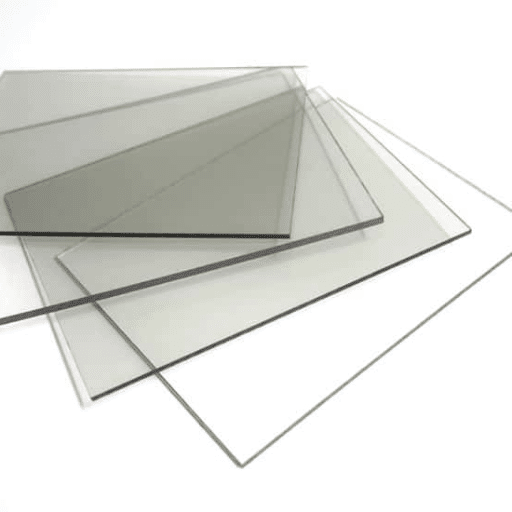
When Raj an operational engineer at a UK electronics maker, got his first shipment of “optical-grade” transparent polycarbonate from a new Chinese supplier, it looked transparent. The molded parts also appear transparent.
But his incoming inspection lab measured a light transmission rate of 84%- three percentage points shy of 87%, the datasheet specification from the producer for the grade claimed. The haze figure of 4.2% is more than 1.8% above the standard from the datasheet. The supplier had shipped modified compound prime-marked as Makrolon. The entire lot was rejected by Raj, who began his qualification process afresh on the supplier.
So anybody requiring optical applications must have more than visual clarity: it is the COA that shall confirm the measurable optical properties against the manufacturer’s specifications.
Light Transmittance and Haze
A valid COA for transparent or optical-grade PC should list:
- Light transmission at specified thickness (typically 4 mm for injection-molding grades)
- Haze percentage per ASTM D1003
Typical targets are more than 87% transmission for the general optical transparent PC; the greater than 89% for the optical grades; less than 1% haze for precision optical grades. Always compare COA values against the relevant datasheets of the manufacturer instead of a generic PC grade.
Color and Yellowness Index
COA should list YI initially. For optical grades of polycarbonate, the level of YI can be expected to be less than 1; whereas for general transparent grades, the range of YI 1.0–2.0 is typical. Values higher than 3.0 suggest degraded or off-grade goods even if the pellets are acceptable visually.
Refractive Index and Batch Consistency
No general-purpose grades give refractive indices on COAs. However, optical grades will heavily annotate this.
The most important test is the lot-to-lot consistency test. If your first production lot was at 88.5% transmission and the next one comes in at 85.2%, you should not allow this for optical applications. Covestro brand prime resin is maintained under stringent lot-to-lot control. Inappropriate customization is not advised along with repellet mating material.
Need help reading a COA for optical PC? Request a sample COA from our Makrolon inventory and we’ll walk you through the verification process.
Processing Considerations for Optical Parts
Even the best grade of transparent polycarbonate can produce bad optical results if the processing parameters are wrong. PC has got two serious drawbacks-its unique hygroscopic and shear-sensitive nature, which can deleteriously affect optical quality in molded parts.
Drying Protocol
PC absorbs moisture from the atmosphere. Inadequate drying prior to processing causes splay, silver streaks, and bubbling, affecting light scatter and increasing effective haze. The standard drying procedure at 120°C over 3–4 h to aim to achieve moisture below 0.02%. For optical parts in which surface quality is of paramount importance, these processors increase drying times to 4–5 h use dry-air desiccant dryers rather than hot-air ovens.
Melt Processing and Mold Design
Recommended melt temperature for transparent PC is 280–320°C. Mold temperature should run 80–120°C. Higher mold temperatures improve surface gloss and reduce flow-line visibility, both important for optical appearance. Understanding polycarbonate thermal properties and glass transition temperature helps explain why these temperature ranges matter for optical part stability.
Because shear heating during injection can cause the molecular chains of PC polymers to degrade, which causes yellowing and reduce transmission, PC being melted at the proper place or at some other place and injected. Make the computer work! Apply a moderate injection rate that retains a balance between the pressures of mold and melt temperatures. If you want to minimize birefringence — which is represented by a multicolored, along-the-Rainbow “mat” when viewed from a polarizing lens — keep the wall thickness even right through the molded part and make the cavitees sing; that is, keep the paths where the melt cools down balanced.
Scratch Resistance and Hard Coating
Scratches occur more easily on transparent PC compared to PMMA. Specify hard-coated PC for high-contact applications, including safety glazing, display covers, and consumer electronics, or post-mold an acrylic-based or silicone-based hard coat. Hard coatings restore surface durability to the range of PMMA, while preserving impact strength of PC. We consider hard coatings, also for optical lenses, to improve chemical resistance to fingerprints and cleaning solvents(rest.).
Sourcing Certified Transparent Polycarbonate from China

The market for transparent polycarbonate materials in China is characterized by three types of ingredients: virgin branded prime resin manufactured by major suppliers like Covestro, modified compounds from lesser-known regional blenders, and reprocessed/recycled material. For optical applications, only virgin branded prime resin can provide the continuity between lots required for production validation.
The market has seen a potentially significant threat in counterfeit or mislabeled material. If a clear PC supplier offers a 30% discount below market price for prime Makrolon, you can almost bet on the probability that this supplier is not supplying genuine prime Makrolon. It may pass a quick visual inspection for optical properties, but it is unlikely to pass actual laboratory testing.
How to Verify Before You Buy
- Specify the candidate resin grade simply as “Makrolon 2407”, not as “translucent PC” or “optical-grade PC” – a more detailed grade allows you to pinpoint particular failure options.
- Require the COA prior to the purchase: Once you already have the COA in your mailbox, then get in touch with your supplier to confirm that indeed they do have the material and talk extensively to them about the formats of the documentation. Test your data against that of Covestro’s reference characteristics for transmission, haze, and YI.
- Test miners’ traceability: You may rely on the manufacturer to trace lots using the lot number, which should be referenced on a COA, not the supplier’s batch number, which may change. Covestro’s website has a support page where lot numbers can be verified.
- Book a small initiation order for review of optical quality: Using the resin, mold a pilot run and measure transmission and haze for the actual molded parts. As the COA values reflect the resin pellets, everything else in your process and part geometry play a decisive role in the actual optical outcome.
Documentation for Regulated Applications
Additional compliance paperwork is essential when it comes to automotive lighting, medical instruments, and food-contact applications beyond the standard COA. Please ensure your supplier will hereby present:
- For automotive optical grades, ECE/AMECA approval letters
- FDA documentation for medical and food-contact grade applications
- RoHS and REACH compliance documentation for electronics intended for the EU market
- Test reports on UL94 flame rating for the flame retardant grades
Yifuhui stocks Covestro Makrolon transparent and optical grades — 2407, 2805, and specialty optical grades — complete with manufacturer COAs. MOQ: 5 kg; Suzhou warehouse is walking distance to Shanghai port, EXW Suzhou terms, and delivery.
Request a Quote for Transparent Polycarbonate
Tell us your application, optical requirements, and target grade. We’ll confirm availability, provide a sample COA, and respond within 24 hours.
Conclusion
Polycarbonate transparent was made available in a variety of versions in place of the single material once holy. On one side are general-purpose transparent strengths, good enough for structure-type visibility, and then the other: high-precision optical elements polished to a level near that of lens-quality performance demanded by exacting light paths. Making any mistake when choosing an incorrect grade or working with other non-certified vendors on the material could result in very costly field failures; these take longer still to diagnose and even longer to implement if the specification had been right the very first pass. To learn more about Polycarbonate Impact Resistance, please click to refer to our accompanying guide: Polycarbonate Impact Resistance: Properties, Grades, and How to Specify the Right Resin
As mentioned:
- The general-purpose transparent grade of PC (Makrolon 2407, 2805) is workable for certain safety glazing, enclosures, and non-precision clear parts yet would be unsuitable for LED optics and automotive headlight lenses.
- The precision optical grades (LED2045, LED2245, AL2447) display low birefringence, low haze, and much improved dimensional stability which are indispensable to systems precision optical operations.
- Check optical properties against the COA right before production. While transmission, haze, and YI values have to be matching up with those from the grade’s technical data sheet.
- Purchase verified parts from distributors with traceable inventory. The cost of authenticity checks prior to placing orders is minimal compared to the loss caused by rejecting optical parts.
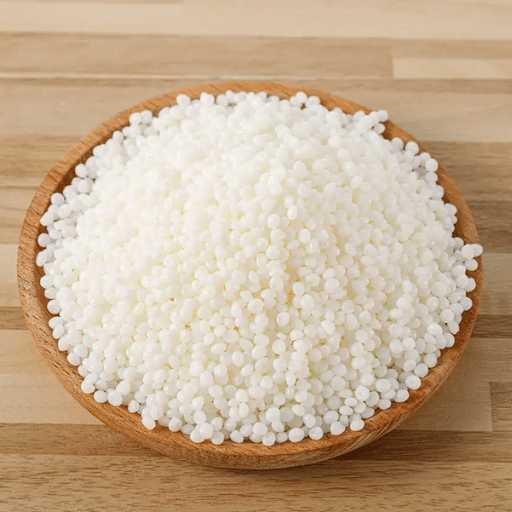
For a deeper dive into polycarbonate’s full mechanical, thermal, and electrical property profile, see our complete polycarbonate properties guide. For procurement guidance on pellet-form PC resin, drying requirements, and granule quality verification, see our polycarbonate granules sourcing guide.
Frequently Asked Questions
What is the light transmission of transparent polycarbonate?
General-purpose transparent PC has light transmission of 87-90% of visible light, while higher light transmission can be achieved by precision optical grades up to 88-91%. This is just a tad less than PMMA acrylic (92-93%) but far beyond the range for most of the other transparent engineering plastics. The big advantage of PC is that it is impact-resistant: around 250 times of what is for glass and 10 times that of PMMA.
How is an optical-grade PC different from standard transparent PC?
Optical-grade PC is produced with much stricter purity control, with haze values targeted below 0.5%, and an optimal additive package to minimize light scattering. For LED optics, camera windows, and precision lenses, optical-grade polycarbonate is a must. Normal PC (Makrolon 2407, 2805) with haze values of 1-3% is intended for common structural optical transparency. Standard grades are suitable for safety glazing enclosures.
Will transparent polycarbonate yellow with age?
Standard transparent PC yellows under prolonged UV and thermal exposure due to photo-oxidation of the carbonate backbone. UV-stabilised grades like Makrolon 2407 and RE6717 incorporate additives that absorb UV radiation and significantly decelerate the yellowing. On application(s) for outdoor purposes, UV stabilization is a must. For indoor applications without light exposure, yellowing is minimal over typical product lifetimes.
Which transparent PC grade is for LED lighting?
Makrolon LED2045 and LED2245 have been designed especially for LED optics and light guides. Each of them renders up to around 6 % more optical efficiency than clear standard versions on long light paths, which have low birefringence and good thermal stability against even LED junction temperatures. For LED panel covers and diffusers where beam precision is not required, Makrolon 2407 is typically sufficient.
What is the procedure to verify the optical properties of Makrolon PC resins in COA?
Ask for a COA that shows the lot’s light transmission, haze (D1003), and yellowness index, and check these values against Covestro’s published datasheet for that specific grade. For optical applications, the COA must also refer to a manufacturer’s lot number — as a minimum — so that the actual records of Covestro about production could be accessible.
May we order transparent polycarbonate for trial quantities?
Yes, for that purpose, Yifuhui stocks any transparent grade of Makrolon with a minimum quality assurance MOQ of 25 kg. All trial quantities have the same manufacturer’s COA and paperwork that any large delivery would. This would allow a complete optical validation to be given before a purchase order for largescale production is placed.
Which Incoterms do Yifuhui offer with transparent PC exports?
We offer EXW (Suzhou), FOB Shanghai, and CIF destination port as export terms. These export terms give buyers the possibility of choosing ocean freight carriers for them and ensure that we look after taking care of all export documentation and port delivery. For first-time buyers, CIF becomes the simpler option of killing two birds with one stone as it carries the cost of freight and insurance to the destination port.