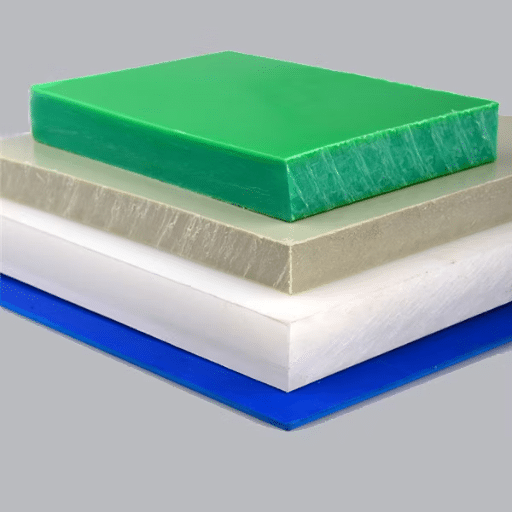




Two clear acrylic parts can leave the same warehouse, pass the same visual check, and still behave like two different materials on the line. One holds its shape inside a warm enclosure. The other creeps. One survives a dropped package; the other splits at a seam.
The polymer name is identical. The property values behind the grade number are not.
That’s why PMMA properties matter more than most buyers expect. Polymethyl methacrylate, the material everyone calls acrylic, delivers a specific combination of clarity, hardness, and weather resistance that no other transparent thermoplastic matches. It also carries real limits on impact, heat, and solvents that the same property sheet warns you about, if you know which lines to read.
This reference lays out the PMMA properties that engineers actually specify against. You will get the optical, mechanical, thermal, electrical, and chemical values with their ASTM and ISO test methods, a plain-language note on what each number means for your part, how those values shift across grade bands, and how to verify the numbers on a Certificate of Analysis before you commit to a purchase. If you already know your application and just need a certified grade, request a quote and our team replies within 24 hours. For the broader material overview, from forms to sourcing, start with our PMMA material guide.
PMMA Properties at a Glance
The table below is the fastest way to see what PMMA does. Every row comes from a standard test, so you can drop it straight into a specification, and the last column translates the number into a design consequence.
| Category | Property | Typical PMMA Value | Test Method | What It Means |
|---|---|---|---|---|
| Optical | Light transmission | 92 to 93% | ASTM D1003 | Highest of any polymer, close to glass |
| Optical | Refractive index | ~1.49 | ASTM D542 | Design constant for lenses and light guides |
| Optical | Haze | under 2% (under 1% optical) | ASTM D1003 | Low scatter, critical for light guides |
| Mechanical | Tensile strength | 50 to 77 MPa | ASTM D638 / ISO 527 | Moderate structural capacity |
| Mechanical | Tensile modulus | 2.9 to 3.2 GPa | ASTM D638 / ISO 527 | Rigid and stiff, minimal flex |
| Mechanical | Flexural strength | ~110 MPa | ASTM D790 / ISO 178 | Good bending resistance |
| Mechanical | Rockwell hardness | M80 to M100 | ASTM D785 | Hardest common thermoplastic, scratch-resistant |
| Mechanical | Notched Izod impact | ~15 to 74 J/m (notch-sensitive) | ASTM D256 / ISO 180 | Brittle, not for impact loads |
| Thermal | Glass transition (Tg) | ~105 °C | ASTM D3418 | The real thermal ceiling |
| Thermal | Heat deflection temp | 75 to 100 °C at 0.45 MPa | ASTM D648 / ISO 75 | Load-bearing heat limit |
| Thermal | Continuous service | ~65 to 95 °C | n/a | Practical use range |
| Thermal | Thermal conductivity | ~0.19 W/m·K | ASTM C177 | Insulating, not conducting |
| Physical | Density | 1.17 to 1.20 g/cm³ | ASTM D792 | About half the weight of glass |
| Physical | Water absorption | ~0.3 to 0.4% in 24 h | ASTM D570 | Hygroscopic, must be dried before molding |
| Chemical | Flammability | UL94 HB | UL94 | Combustible, oxygen index ~17% |
| Chemical | UV and weather | under 5% yellowing after 5,000 h QUV-A | QUV-A | Outdoor clarity without coating |
| Electrical | Dielectric strength | ~15 to 20 kV/mm | ASTM D149 | Good insulator |
| Process | Melt flow index | ~4 to 14 g/10 min | ASTM D1238 / ISO 1133 | Grade-selection variable |
Values are typical literature ranges. Confirm the grade-specific numbers against the manufacturer datasheet before you specify, because the spread between grades is wider than the spread between materials.
What Are the Key Properties of PMMA?
PMMA is an amorphous transparent thermoplastic with 92 to 93% light transmission, Rockwell M80 to M100 surface hardness, tensile strength of 50 to 77 MPa, a glass transition temperature near 105 °C, and a density of 1.17 to 1.20 g/cm³. It combines glass-like clarity with the highest surface hardness of any common thermoplastic.
That single paragraph answers the search query, but it also hides the part that matters. The word “typical” is doing a lot of work, and the grade you pick moves every one of those numbers.
Optical Properties of PMMA
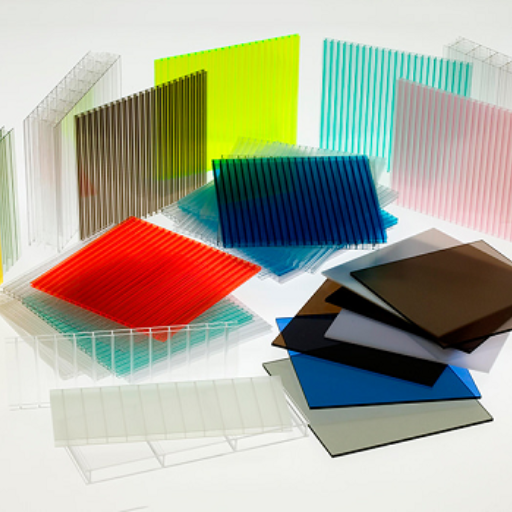
PMMA transmits 92 to 93% of visible light, the highest of any transparent thermoplastic and within a few points of glass at 93 to 95%. Haze sits under 2% in standard grades and under 1% in optical grades. The refractive index runs near 1.49.
Those numbers frame the design. A lens, a light guide, or a display cover is optical equipment, and the grade sets the transmission, the haze, and the color you start from. The refractive index isn’t a marketing figure either. It’s the constant you feed into the optical model that decides how a light ray bends at each surface.
The buyer’s question is different from the designer’s. For a buyer, transmission, haze, and yellowness index are line items to confirm on a Certificate of Analysis, because a batch that is 2% hazier than spec can fail an optical inspection even when the material is genuinely PMMA. Optical-grade PMMA sets tighter haze and color limits than general-purpose grades, and that difference is what separates a passing light guide from a rejected one.
Mechanical Properties of PMMA
PMMA is the hardest common transparent thermoplastic, and its mechanical profile reflects that. It’s stiff, strong in compression and flexure, and it holds a polished surface better than most polymers. It’s also brittle, and that single property drives more design decisions than any other.
| Property | Value | Test Method |
|---|---|---|
| Tensile strength | 50 to 77 MPa | ASTM D638 / ISO 527 |
| Tensile modulus | 2.9 to 3.2 GPa | ASTM D638 / ISO 527 |
| Flexural strength | ~110 MPa | ASTM D790 / ISO 178 |
| Flexural modulus | ~3.2 GPa | ASTM D790 / ISO 178 |
| Rockwell hardness | M80 to M100 | ASTM D785 |
| Elongation at break | ~4 to 5% | ASTM D638 |
| Notched Izod impact | ~15 to 74 J/m | ASTM D256 / ISO 180 |
Tensile strength lands between 50 and 77 MPa, and the modulus near 3 GPa tells you PMMA barely stretches before it reaches its limit. Elongation at break of only 4 to 5% confirms what the modulus implies: this is a rigid, glassy material, not a ductile one.
Rockwell hardness of M80 to M100 is the headline strength of PMMA. No other common transparent plastic scores as high, which is why acrylic resists scratches that haze polycarbonate within months. That hardness is exactly why PMMA machines and polishes to an optical finish so cleanly, and it is what lets a hard-coated acrylic surface take handling that would mark a softer plastic.
The weakness is impact. Notched Izod values are low, and PMMA is notch-sensitive, meaning a sharp corner or a molded-in gate mark concentrates stress and starts a crack. PMMA fails by brittle fracture with sharp edges.
This is the single reason it doesn’t appear in safety glazing or machine guards, and why a part that must absorb a hit is a polycarbonate conversation from the start. We ran the full comparison in PMMA vs polycarbonate.
Designing an optical or transparent part? Tell us the transmission, hardness, and impact conditions your application needs, and we will match a certified PMMA grade against real datasheet values. Request a spec-matched quote and we respond within 24 hours.
Thermal Properties of PMMA
PMMA is amorphous, so it has no true melting point. Instead it softens gradually as it crosses its glass transition temperature of about 105 °C, and its heat deflection temperature runs 75 to 100 °C depending on grade. Continuous service typically stays between 65 and 95 °C.
| Property | Value | Test Method |
|---|---|---|
| Glass transition (Tg) | ~105 °C | ASTM D3418 |
| Heat deflection temperature | 75 to 100 °C at 0.45 MPa | ASTM D648 / ISO 75 |
| Vicat softening | ~90 °C | ASTM D1525 / ISO 306 |
| Continuous service | ~65 to 95 °C | n/a |
| Thermal conductivity | ~0.19 W/m·K | ASTM C177 |
| Coefficient of thermal expansion | ~76 µm/m·K | ASTM D696 |
This is where beginners get caught. A part can look fine at room temperature and then creep, warp, or lose dimensional accuracy in a warm enclosure, because there’s no sharp melting line to warn you. The transition, not the “melting point,” is the real thermal ceiling. We unpacked the softening behavior and the transition itself in PMMA glass transition temperature.
Two secondary numbers matter for precision work. A thermal conductivity near 0.19 W/m·K marks PMMA as an insulator, useful for parts that must not conduct heat. A coefficient of thermal expansion near 76 µm/m·K tells you a meter-long acrylic part grows about 0.076 mm for every degree of warming, which is the figure a design engineer needs when tolerances are tight.
Electrical and Insulating Properties of PMMA
Property references usually skip this block for PMMA, which is a gap for anyone building an electronic or optical assembly. PMMA is a good electrical insulator, with dielectric strength in the range of 15 to 20 kV/mm and volume resistivity around 10¹⁵ to 10¹⁶ Ω·cm.
| Property | Value | Test Method |
|---|---|---|
| Dielectric strength | ~15 to 20 kV/mm | ASTM D149 |
| Volume resistivity | ~10¹⁵ to 10¹⁶ Ω·cm | ASTM D257 |
| Dielectric constant | ~2.7 to 3.5 | ASTM D150 |
For a transparent cover that also insulates, or an optical component near low-voltage electronics, that combination is useful. The caveat is temperature. Dielectric performance is measured at moderate conditions, and it degrades as the part approaches its thermal ceiling, so confirm grade-specific values for anything running warm.
Chemical Resistance and Environmental Properties
Chemically, PMMA resists dilute acids, dilute alkalis, alcohols in limited exposure, aliphatic hydrocarbons, and mineral oils. It is attacked by ketones, esters, chlorinated hydrocarbons, ethers, and aromatics, which show up as crazing, clouding, and eventually surface failure.
| Chemical Group | Example | PMMA Resistance |
|---|---|---|
| Dilute acids | Vinegar, dilute sulfuric acid | Good |
| Dilute alkalis | Dilute sodium hydroxide | Good |
| Alcohols | Ethanol, methanol | Limited |
| Aliphatic hydrocarbons | Kerosene, gasoline | Good |
| Mineral oils and greases | Motor oil | Good |
| Ketones | Acetone, MEK | Poor (dissolves) |
| Esters | Ethyl acetate | Poor (dissolves) |
| Chlorinated hydrocarbons | Methylene chloride | Poor (dissolves) |
| Aromatics | Toluene, benzene | Poor (swells and crazes) |
That solvent list is why the sign industry welds acrylic edges with a solvent-based cement, and why you never clean an acrylic window with acetone. Under load, a weaker solvent can still trigger environmental stress cracking, so a part in continuous contact with a chemical warrants testing rather than a datasheet glance.
Three more environmental properties round out the picture. Water absorption is about 0.3 to 0.4% in 24 hours, which marks PMMA as hygroscopic and makes drying mandatory before molding. UV resistance is inherent, with under 5% yellowing after 5,000 hours of QUV-A exposure and no additive package required. Flammability rates UL94 HB, with an oxygen index near 17%, which means standard PMMA burns and does not belong anywhere a flame rating is mandatory.
Physical Properties: Density and Weight
PMMA density runs 1.17 to 1.20 g/cm³, roughly half the weight of glass. That lightness is a genuine engineering advantage. In automotive glazing it cuts component weight by an estimated 40 to 50%, which matters for fuel economy and for the range of an electric vehicle. Specific gravity sits near 1.19, and that figure drives the weight-saving math for glazing and large panels where every kilogram counts.
How PMMA Properties Vary by Grade
Every number above is a range for a reason. PMMA ships in grade bands, and the grade you specify shifts the property set. Melt flow index is the fastest way to sort them, because it predicts how the material behaves in a thin wall, a long flow path, or a thick part.
| Grade Band | MFI (g/10 min) | Key Property Shift | Example Grades |
|---|---|---|---|
| High-flow | ~10 to 14 | Lower melt viscosity, slightly lower heat resistance | LG Chem IF850, Acrypet VH |
| General-purpose | ~4 to 6 | Balanced optical and mechanical baseline | Acrypet MD, ALTUGLAS VS |
| Heat-resistant | ~1.5 to 2.3 | Higher heat deflection temperature, slower processing | PLEXIGLAS NTA-3 |
| Impact-modified | ~2 to 8 | Higher notched impact, slight clarity loss | Acrypet MF, PLEXIGLAS NTA-5 |
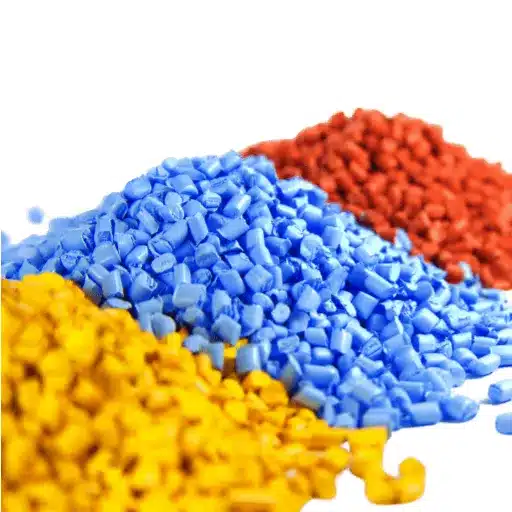
High-flow grades fill thin walls and long flow paths before the material freezes, at the cost of some heat resistance. Heat-resistant grades push the heat deflection temperature above 95 °C but need higher mold temperatures and slower cooling. Impact-modified grades blend in rubbery particles to raise notched impact well above standard acrylic, trading a little clarity and surface hardness for toughness.
Choosing between these bands is where a mis-specified grade turns into rework, and it is the decision most buyers get wrong. We went deeper on grade selection and sourcing in our acrylic PMMA resin sourcing guide.
Verifying PMMA Properties on a Certificate of Analysis
Once you know which property values your part needs, sourcing becomes a documentation exercise. Two suppliers quoting the same grade at different prices are not offering the same thing, and the difference is almost always in the paperwork.
For PMMA, the Certificate of Analysis should show light transmission, haze, yellowness index, and melt flow, each cross-checked against the manufacturer’s published datasheet. It should be issued by the manufacturer against a specific production lot, not generated by the supplier from their own records. Off-spec melt flow, color or yellowness index drift between lots, recycled content hiding inside “virgin” optical grades, and missing lot traceability all point to a supply stream you cannot rely on.
A medical device buyer in Germany learned why the COA matters more than the price. Their first order came from a low-cost trader who supplied a supplier-issued certificate instead of a manufacturer one. The light transmission tested fine, but the yellowness index drifted over two later lots, and the buyer could not trace either lot back to a manufacturer record for their device history file. They moved to a distributor who issued manufacturer COAs per lot, paid a few percent more, and stopped spending engineering hours on incoming disputes.
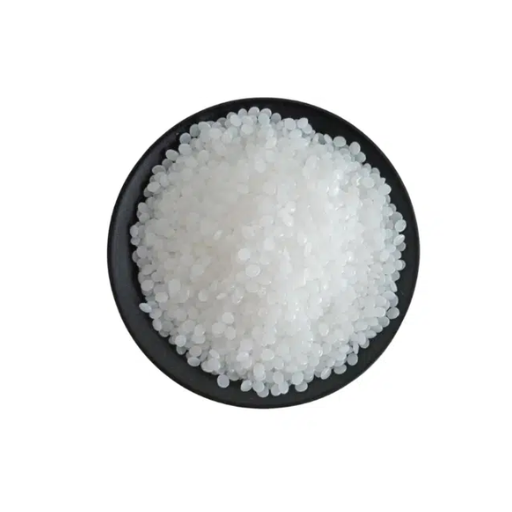
We supply branded prime PMMA with lot traceability and manufacturer-issued COA, including Mitsubishi Acrypet, LG Chem IF850, and Trinseo ALTUGLAS grades, from a 25 kg minimum order with standard FOB Shanghai and 7 to 14 day lead time. The small minimum is deliberate. Order 25 kg from the same lot your production material will come from, run your own checks against the COA, and confirm the grade before you commit to volume.
Frequently Asked Questions
What are the key properties of PMMA?
92 to 93% light transmission, refractive index near 1.49, tensile strength of 50 to 77 MPa, Rockwell hardness of M80 to M100, heat deflection temperature of 75 to 100 °C, glass transition near 105 °C, and density of 1.17 to 1.20 g/cm³. It is UV-stable and rates UL94 HB for flammability.
What is the tensile strength of PMMA?
Tensile strength typically falls between 50 and 77 MPa, with a tensile modulus of 2.9 to 3.2 GPa and elongation at break of only 4 to 5%. The material is rigid and strong in compression, but it stretches very little before reaching its limit.
Is PMMA stronger than glass?
PMMA is more impact-resistant than ordinary glass and weighs about half as much at equal thickness, which is why it replaces glass in glazing and covers. Glass remains harder and more heat-resistant. PMMA is also far less prone to shattering, though it can still fracture brittly under a sharp impact.
Is PMMA UV resistant?
Yes. PMMA filters UV below roughly 300 to 400 nm on its own, so it needs no additive package to survive sunlight. Test data puts yellowing under 5% after 5,000 hours of QUV-A exposure, which is why outdoor signage and skylights in acrylic hold their clarity for years.
Is PMMA a good electrical insulator?
Yes. Dielectric strength runs about 15 to 20 kV/mm with volume resistivity around 10¹⁵ to 10¹⁶ Ω·cm. That makes PMMA suitable for transparent covers and optical parts near low-voltage electronics, though dielectric values degrade as the part approaches its thermal ceiling.
What are the properties of PMMA vs polycarbonate?
PMMA is clearer, harder, more UV-stable, and cheaper. Polycarbonate is far tougher in impact, more heat-resistant, and available with UL94 V-0 flame ratings. Choose PMMA when clarity, scratch resistance, and weathering lead; choose polycarbonate when impact and heat lead. Our PMMA vs polycarbonate guide covers the full comparison.
How do I verify PMMA properties from a supplier?
Specify the brand and grade, request a manufacturer-issued Certificate of Analysis, cross-check light transmission, haze, yellowness index, and melt flow against the datasheet, confirm lot traceability, and qualify with a 25 kg sample from the production lot before scaling to volume.
Conclusion
PMMA properties describe one of the best-balanced transparent thermoplastics available, and also one of the most misunderstood. The material leads on clarity, hardness, and weather resistance. It trails on impact, heat, and solvent resistance. Every one of those values lives in the grade number, not in the words “clear acrylic.”
The rule that saves the most money is the one buyers skip. Read the property sheet by grade, match every number to your application, and verify the values on the COA against the manufacturer datasheet before the first bag is opened. A quote that undercuts the market by a third is a prompt for investigation, not a reason to celebrate.
We supply branded prime PMMA with full Certificate of Analysis documentation, with a 25 kg minimum order, FOB Shanghai pricing, and 7 to 14 day lead times.
Tell us the properties your part must meet, the transmission, the hardness, the service temperature, and the chemical exposure, and we will recommend the right PMMA grade for the job. If your part runs hotter or takes more of a hit than acrylic allows, we will say so and point you to polycarbonate or a heat-resistant grade instead.
Request a quote for certified PMMA resin and get a recommendation backed by real datasheets, with every batch documented and traceable to the manufacturer lot. To learn more about PMMA Melting Point: Does Acrylic Actually Melt? (°C and °F), please refer to our accompanying guide.