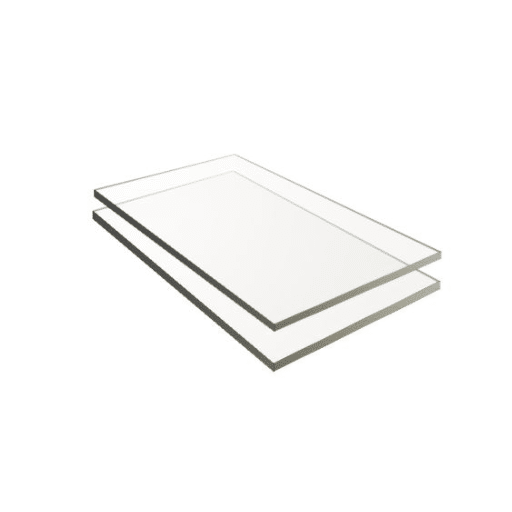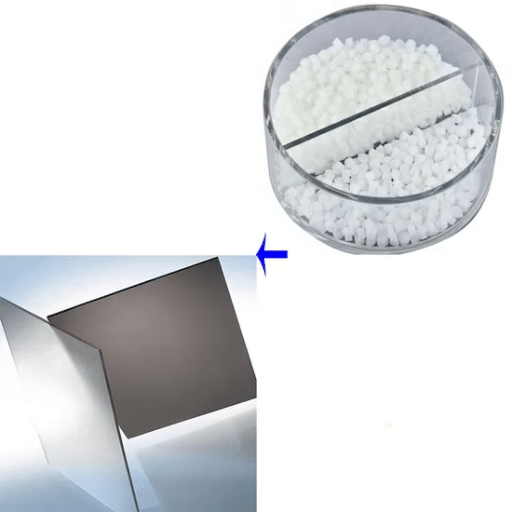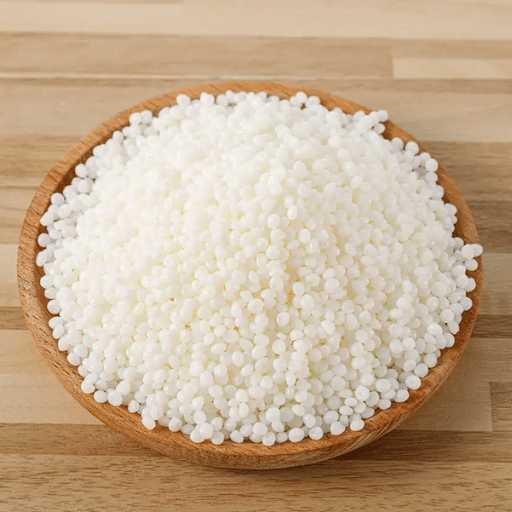


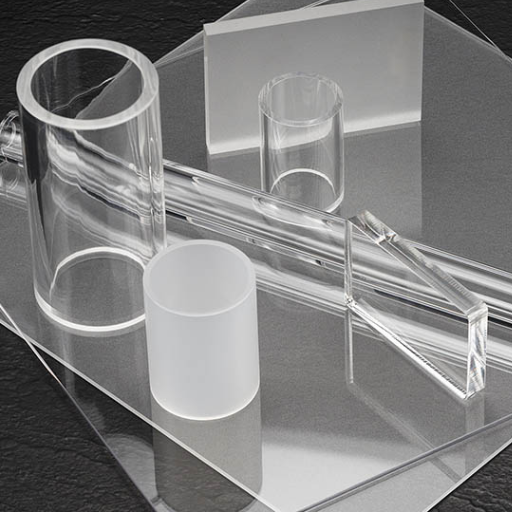



In March, Marcus, a quality engineer, took delivery of the 500 kg load of clear polycarbonate resin for a new LED lens project. The Certificate of Analysis cited the density as 1.31 g/cm^3, while the grade on Marcus’s datasheet was 1.20 g/cm^3. The 9% difference becomes very important; it seems light, but it really was a very big difference, reading it was glass-reinforced PC and not unfilled, optical class resin with which Marcus’ mold was designed. Wrong density might have altered the shot weight, which would then change cavity behavior in filling. The lenses would have internal stress patterns that failed optical testing. Marcus caught it because, first, he looked at density-the quickest-to verify on a COA, one that most suppliers do not even think to expect buyers to check.
Probably you’ve seen that standard reference value for polycarbonate (1.20 g/cm³) a hundred times over. But this number alone is just the tip of the iceberg. The density is centralized around 1.20 g/cm³ for the unfilled general-purpose grade. In the case of flame-retardant grades, it slides up and down slightly. However, glass-filled grades range from 1.34 to 1.43 g/cm³. High-heat copolymers can go down below 1.18 g/cm³. In other words, in mold filling simulations, when procurementpeople are checking in raw materials, and when designers are calculating weight, the exact density of the precise grade in your hopper is what truly counts, not the general theoretical value.
This guide basically offers grade-specific information on density which is usually absent in the typically general guides. The figures presented on Covestro Makrolon grades are very precise, how the density of the reinforced types is in concordance with temperature, what standards that joint ASTM or ISO in control of measurement. These data inform the users on how to make the fastest quality control check of the resin received either as a first-time material user or as a check against a supplier’s handling. This set of information must fill the void between “just about 1.20” and the exact number is required by your application.
Need a specific Makrolon grade with guaranteed density specifications? Request a quote, 25 kg trial orders available with full COA documentation.
What Is the Density of Polycarbonate?
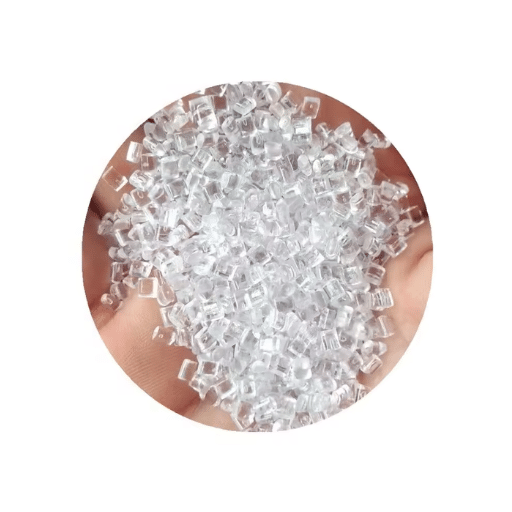
Standard Unfilled Polycarbonate Density
In unfilled polycarbonates, for the standard grades, density is 1.20 g/cm³, which equals 1,200 kg/m³. In most structures of engineering texts and manufacturer’s data sheets, the given value remains somewhat a nominal figure, although narrower—usually between 1.19 and 1.22 g/cm³—subject to particular grade additives, weight distribution, and each manufacturing lot variation.
Specific gravity of unfilled polycarbonate comes in near 1.20 (dimensionless), thereby implying that the density of PC is denser than water at 20 percent, using 4°C as the reference. This value can be employed for problems in buoyancy and fluid, as well as in fast density estimations in the field setting, especially when no precision balance is at hand.
For practical engineering work, here is the complete conversion reference:
|
Unit |
Standard Unfilled PC |
Glass-Filled 30% PC |
|---|---|---|
|
g/cm³ |
1.20 |
~1.43 |
|
kg/m³ |
1,200 |
~1,430 |
|
lb/ft³ |
74.9 |
~89.3 |
|
lb/in³ |
0.0433 |
~0.0517 |
Why the “Standard” Value Can Mislead
The value of 1.20 g/cm³ is perfect for general-purpose grades such as Covestro Makrolon 2805 and 2407. But for a flame-retardant electronics grade, a glass-reinforced structural grade, or an extra-heat variant, this standard value could mislead your calculations by 5%–20%. The sections listed below will demonstrate exactly how density shifts all along the Makrolon grade portfolio.
Polycarbonate Density by Covestro Makrolon Grade
That is not the case for all polycarbonate grades. The Makrolon array includes unfilled general polymers, UV-stabilized optical grades, halogen-free flame retardant versions, and glass-fiber reinforced structural grades with specific densities affecting processability, weight of parts, and material costs.
General-Purpose and Optical Grades
|
Grade |
Density (g/cm³) |
Density (kg/m³) |
Key Characteristic |
Typical Application |
|---|---|---|---|---|
|
Makrolon 2805 |
1.20 |
1,200 |
General-purpose injection molding |
Consumer goods, housings, structural components |
|
Makrolon 2407 |
1.20 |
1,200 |
UV-stabilized, high transparency |
Outdoor lighting, automotive lenses, display covers |
|
Makrolon 2405 |
1.20 |
1,200 |
General-purpose, slightly modified |
Industrial components, lighting diffusers |
|
Makrolon RE6717 |
1.20 |
1,200 |
Specialty grade |
OEM-specific optical and electronics applications |
While mainly for general and optical grades, the sameness of the two seems deliberate at the moment. Covestro bases these with virtually the same base polycarbonate resin matrix and adds an additive package (ultraviolet stabilizers, mold releases, anti-static agents) at investible levels, that is, door broad density in any appreciable way. Instances in which molders could switch between Makrolon 2407 and 2805 while using the same under 1.20 g/cm3 reference for their calculations of shot weights; and injection cavity fill simulation could essentially be sustained under the same conditions.
Flame-Retardant Grades
|
Grade |
Density (g/cm³) |
Density (kg/m³) |
UL94 Rating |
Typical Application |
|---|---|---|---|---|
|
Makrolon 6555 |
1.20 |
1,200 |
V-0 at 1.5 mm |
Electronics enclosures, electrical housings |
|
Makrolon 6557 |
1.20 |
1,200 |
V-0 at 1.5 mm, improved flow |
Thin-wall electrical components, connectors |
Makrolon 6555 and 6557 remain true to the pioneering technology that uses phosphorous-based flame retardants within a halogen-free matrix. The functional form in these chemicals smoothly evolves into the polymer matrix without any significant addition to the mass of the macromolecular matrix. The key selling proposition of these materials is that it offers a unique gap to electronics manufacturers producing weight-sensitive handheld devices who switch from some other developed FR ABS, putatively with a specific gravity of merely 1.1, defending thin UL94 V-0 compliance without the penalty in density by mineral-filled FR systems that would bind almost all other polymers in the family.
Glass-Fiber-Reinforced Grades
|
Grade |
Density (g/cm³) |
Density (kg/m³) |
Glass Fiber Content |
Primary Application |
|---|---|---|---|---|
|
Makrolon 8025 |
~1.34 |
~1,340 |
20% |
Structural brackets, pump housings |
|
Makrolon 8035 |
~1.43 |
~1,430 |
30% |
High-stiffness automotive and industrial components |
|
Makrolon 8325 |
~1.34 |
~1,340 |
20%, improved impact |
Dimensional stability with toughness retention |
|
Makrolon 9415 |
~1.25 |
~1,250 |
10%, flame-retardant |
Precision electrical with structural requirements |
This is the point where the low-density polymer matrix density abruptly deviates from the normal 1.20 g/cm³ baseline. Glass fiber’s density is about 2.55 g/cm³, more than two-fold that of polycarbonate. Therefore, with 20% or 30% glass fiber by weight, depending upon whether one needs to replace a polymer of lower density, the density of the composite will increase.
This was a crucial density difference for the Tier 2 automotive supplier, where the procurement manager Sarah decided. The housing component should have a certain amount of stiffness for maintaining engagement under clamp load, but moreover, every gram was crucial to keep an eye on the overall assembly weight target. POM, at 1.41 g/cm³, would have carried the assembly over budget. PC/ABS at 1.12 g/cm³ was too flexible. Makrolon 8025 at 1.34 g/cm³ was a good compromise where 20% glass fiber was added to the stiffness requirement and brought down the weight by 47 grams per part versus a comparable POM design. At 200,000 units annually, this weight savings meant some actual freight savings and a slightly lighter finished product.
Why Reinforced PC Density Matters for Processing
The density increase in glass-filled grades affects more than part weight. In injection molding:
- Shot weight calculations must use the higher density value, using 1.20 g/cm³ for Makrolon 8035 would underfill the cavity by approximately 16%
- Screw recovery rates change because the same screw stroke delivers more mass per rotation
- Hopper capacity planning requires adjustment, a hopper sized for unfilled PC will hold less mass when loaded with 30% glass-filled granules
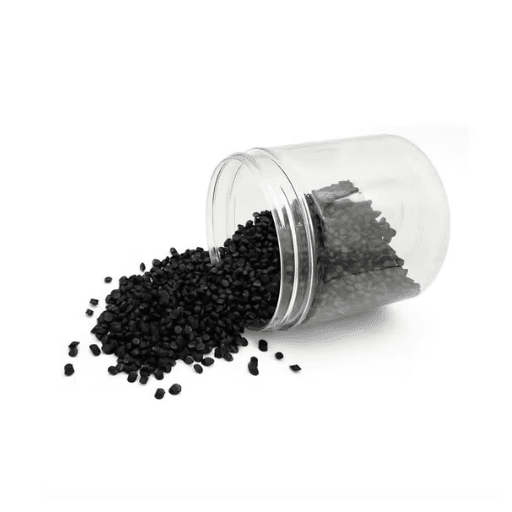
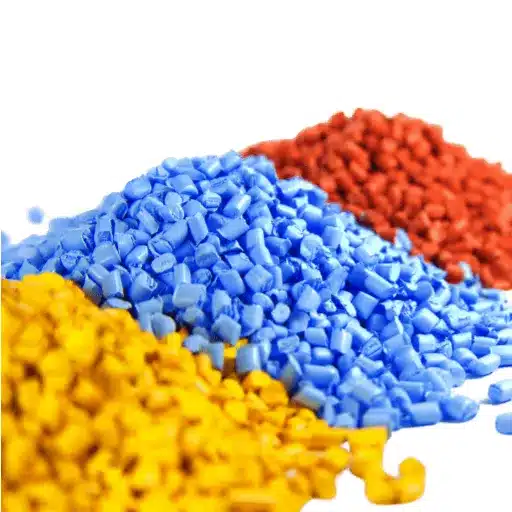
Yifuhui stocks Covestro Makrolon grades from 2407 through 9415 with full COA documentation listing measured density per lot. View our PC resin grade portfolio and request a COA sample.
How Polycarbonate Density Compares to Other Engineering Plastics
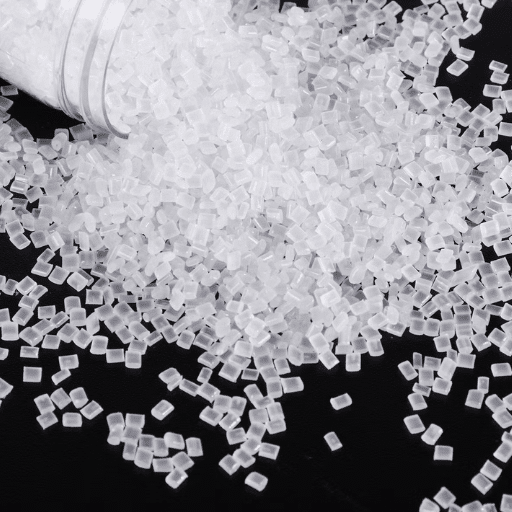
Engineering and materials scientists laboring over the development of lighter-weight, stronger, and lower cost structural material have identified a material balance that is stringently dependent upon variation in density, in which we can incorporate a polycarbonate alternative, the scope of which carries a density index often creating interplay complexity and making heads turn for the latest manifestations of industrial engineering to be inducted into a space research program.
Engineering Plastics Density Comparison Table
|
Material |
Density (g/cm³) |
Structure |
Relative Weight vs. PC |
|---|---|---|---|
|
Polypropylene (PP) |
0.90–0.91 |
Semi-crystalline |
24% lighter |
|
ABS |
1.04–1.07 |
Amorphous |
11% lighter |
|
PA66 (Nylon 66) |
1.14–1.15 |
Semi-crystalline |
4% lighter |
|
PMMA (Acrylic) |
1.17–1.20 |
Amorphous |
Near-equivalent |
|
Polycarbonate (PC) |
1.20 |
Amorphous |
Baseline |
|
PBT |
1.30–1.32 |
Semi-crystalline |
9% heavier |
|
POM (Acetal) |
1.41–1.42 |
Semi-crystalline |
18% heavier |
|
PPS |
1.35 |
Semi-crystalline |
13% heavier |
|
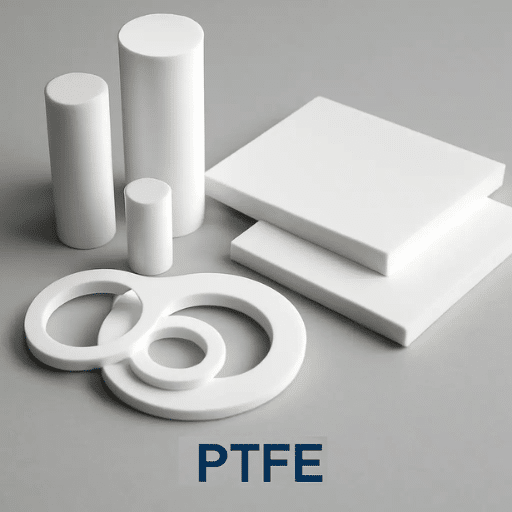
PTFE |
2.14–2.20 |
Semi-crystalline |
79% heavier |
When Density Drives Material Selection
All those who know about “lightweighting” in the automotive industry know that if components on the headlamp lenses and other glazing parts are made from PC (1.20 g/cm³) instead of glass (2.5 g/cm³), the optical properties of the reference glass composite reviews would remain virtually unfazed; and there would be a reduction of up to 52 percent in the component being considered. This is why polycarbonate is an intrinsic material in automotive lighting applications, the higher impact resistance of PC at 1.20 g/cm³ being mostly beneficial.
Cost-per-volume considerations: Resin is bought by the kilogram, but parts are structured on their volume basis. For where a component is packaged in a 50-cm³ envelope, that calls for 60 grams of PC at 1.20 g/cm³, as opposed to 70.5 grams of POM at 1.41 g/cm³. Such an 17.5% mass difference can instantly determine part costs with the conventions of price quoted by the typical engineering resins, lest incurring an efficiency penalty.
Handheld electronics: For portable device casings, weight is sacrosanct. PC at 1.20 g/cm³ represents a happy middle ground: lighter than POM or PPS but lighter than ABS or PP and yet providing the transparency and impact resistance that the lighter materials cannot provide.
Buoyancy and Fluid Handling: The PC, with a specific gravity of 1.20, is a substance that does not sink but sinks slowly in water. Specific applications call for more predictable and control buoyancy under submerged conditions, e.g., pump housings, underwater connectors, or fluid level sensors. Indeed, it fits better than materials that have more extreme specific gravity.
Factors That Affect Polycarbonate Density
Fillers and Reinforcements
Glass fiber is often the density modifier in PC. As referenced in the table, 0% GF filler creates density to be around 1.34 gr/cm3, whereas 30% load pushes the value to about 1.43 gr/cm3. The relationship between these parameters is not merely one of a straight line, since both fiber packing density and orientation play crucial roles in the ultimate composite density.
Other compounds, like minerals (primarily talc or mica), are capable of effecting some density increment in the inventive PC technology. But their use is less often crucial with the standard Makrolon grades in contrast to the custom compounded PC formulations.
Flame Retardants and Additives
Phosphorus-based halogen-free flame retardants were used in Makrolon 6555 and 6557 FR. In the functional loading range, it almost doesn’t influence the bulk density. Some brominated FR systems invariably encountered problems in terms of increased density. It can be meaningful for electronics designers to end up with UL94 V0 without the penalty of density.
Blending and Alloying
The intermediate phase between densities of the two base polymers, typically about 1.10 to 1.15 g/cm³, is created in PC/ABS blends depending upon blend ratio. By following this pattern, PC/PBT blends create, if applied. If your stream is a polycarbonate alloy rather than standard PC, clarify the real blend ratio with the supplier as densities can be shifted by 5–8% relative to the ductile change in the distribution.
Temperature Dependence
The density of polycarbonate decreases with temperature. This change in density is a response to thermally-induced molecular expansion. Thus, the thermal coefficient of linear expansion for PC is approximately 6-7×10^-5°C. Industrial estimations for the density are:
- At 23 degrees C: 1.20 g/cm³
- At the mold temperature of 100 degrees C: it is about 1.18 g/cm³
- At the melt temperature of 280 degrees C: it is about 0.98-1.02 g/cm³
The correct melt density is vital to injection molders. Filling simulations and shot size estimations should be based on melt density, not solid density, by which we can calculate how much material the screw must recover to fill the mold completely. The shot volume of around 15-18% of the overestimate would be seen using the 280 degrees C melt calculation with 1.20 gm/cm³ room-temperature value.
How Density Is Measured: ASTM and ISO Standards

ASTM D792, Density and Specific Gravity of Plastics by Displacement
ASTM D792 is a density measurement standard test for plastics that is prevalent in North America. It consists of two methods:
- Method A (Immersion): The sample is weighed in air, then weighed while immersed in [the] water. Comparing these two weights, the density can be calculated correctly already. Again, this is the most commonly used method observed with regard to the accurate determination of sample density to an uncertain measurement in the range of around ±0.001 g/cm³.
- Method B (Liquid Pyknometer): A more accurate method involves the use of a calibrated glass pyknometer and a liquid whose density is known. This method is used less than method A, mainly for research-grade measurements, or if needed for any special regulatory reasons where a good degree of precision is necessary.
ISO 1183, Plastics: Methods for Determining Density of Non-Cellular Plastics
ISO 1183 is used within a network of suppliers throughout Europe and Asia. It has basically the same three methods:
- Method A: immersion method very similar to ASTM D792 Method A
- Method B: Liquid Pyknometer Method
- Method C: density gradient column titration, the most precise when measuring small differences in density between samples
Covestro typically reports density values for Makrolon data sheets using Method A of ISO 1183 or the use of ASTM D792 standards. Concerning the inter-comparison of the Certificate of Analysis with the datasheet of the manufacturer, the test method shall need to overlap. A density obtained using ISO 1183 is almost similar as one obtained using ASTM D792, the difference being only ±0.002 g/cm³ for homogenous PC pellets when normal lot-to-lot variation is accounted for.
How to Verify Density on a Certificate of Analysis
The fastest item for the COA to check is density, and is known as the one with the biggest spread. Verified under the following three steps:
- Confirm the test method: The method used to measure density is reported on the COA, usually in the presentable form as “measured according to ASTM D792” or ISO 1183. If no method is listed, request clarification.
- Check against the manufacturer’s published specification: Look for the manufacturer’s official datasheet for the exact grade (say, Covestro Makrolon 2805) to find the density specification range. For unfilled grade, this is typically given as 1.19 to 1.22g/cm³. For reinforced grades, the range is wider at roughly ±/0.03g/cm³.
- Establish tolerance limits: For most unfilled grades, measured values that are within ±0.02g/cm3 of the manufacturer’s average specification are acceptable. A deviation exceeding 5% from this figure would indicate a specimen that was not the requested grade, was contaminated, or comes from the wrong lot as named on the COA.
Every Yifuhui shipment of Covestro Makrolon includes a manufacturer-issued COA with measured density values traceable to the production lot. Request a sample COA to see the documentation format before you order.
Density in Procurement and Logistics
Why Density Matters for Material Costing
Engineering thermoplastics are sold with costs per weight, but when goods/products are designed in volume, the cost per cm³ must be considered.
Calculate molding quantity : For a PC having a molding volume of 85 cm³:
- At, 1.20 g/cm³: resin weight required = 102 g
- At, 1.41 g/cm³: resin weight required = 119.9 g
- At, 1.05 g/cm³: resin weight required = 89.3 g
If PC costs $2.40/kg against the $2.20/kg for POM, indeed, plastic parts will take into consideration upon applied-load and in actual essence, using higher-cost rated materials, relatively lower material costs could be encountered. Keeping this in view, density-adjusted costing is an absolute necessity for accurate should-cost analysis.
Bulk Density vs. True Pellet Density
There is an important logistics and hopper design-amending distinction:
- True (close) density: around 1.20 g/cm³ for empty PC, and that is the density of the solid polymer itself
- Bulk (bulk) density: between 0.60 and 0.70 g/cm³ for the density of pellets with the air voids, among them
Bulk density is groundwater along with its present ambiguity for hoppers, shipping containers, or Gaylord boxes. A hopper built to true density would only hold half of the designated mass. It is bulk density from which you make container-loading estimates.
Container Loading and Freight Planning
Standard 25 kilogram bags of polycarbonate granules weigh 60 bags per pallet stack and occupy 20-20-foot containers. True dense grades with greater density do not necessarily mean higher payload in the container, for with bag geometry and pallet supply, weight rather than volume is a limiting factor. Nonetheless, higher-density grades during bulk feedtanker or silo truck deliveries simply increase mass per unit volume delivered, a bonus for those large buyers who have been sitting down and pitting freight contracts.
Polycarbonate Density in Common Applications
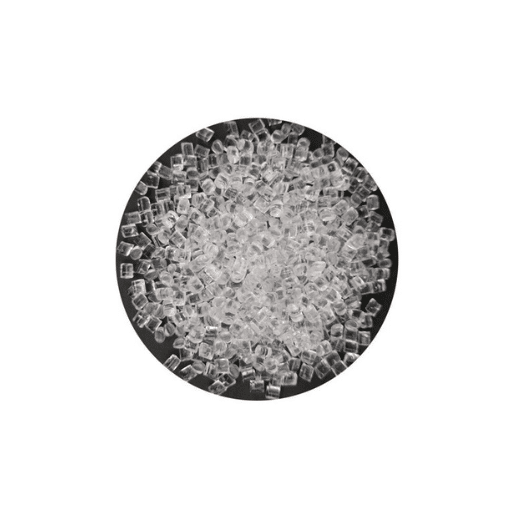
Automotive Lighting and Glazing
The light guides of the headlamp’s lenses, taillight bezels, and panoramic roof panels depend upon the unique combination of optical clarity and impact resistance obtained with polycarbonate. At 1.20 g/cm-3, polycarbonate can save 52% of the weight over glass (2.5 g/cm-3) for the same optical aperture. Makrolon 2407, the UV-stabilized transparent grade with standard 1.20 g/cm-3, is gaining acceptance among the exterior automotive lighting fraternity, as it is not prone to yellowing from sun exposure.
Electronic EnclosuresActor
Frames for laptops, screen rims, and charger bodies nearly all contract myriads of flame retardant PC with excellent dielectric characteristics and UL94 V-0 approval. Makrolon 6555 at 1.20 g/cm-3 is an FR compliant material and does not carry a weight penalty compared to metal or results in weight gains in the use of mineral systems in other polymers. For electronic devices that are handheld shipping and user experience are highly sensitive to each gram touched, this FR performance enriched by density is a critical specifier.
Medical equipment and Food-Contact Devices
Polycarbonate grades under FDA compliance for medical device housings, sterilization trays, and food-processing equipment follow the standard density of 1.20 g/cm³. The density itself does not change with regulatory compliance, it is more of how much the additive packages for FDA grades are loaded with. Usually, these additives are loaded at levels that ensure that the bulk density is within the standard range. This predictability is valuable to teams that are concerned with quality; if a PC lot intended for food contact is measured in at a density of 1.3 g/cm³, it is out of spec indeed; in all likelihood, the wrong grade was supplied altogether.
Structural Components (Reinforced PC)
When stiffness and dimensional stability are more important than minimum weight, glass-reinforced materials trade-in increased density for mechanical performance gains. Recording a density of 1.43 g/cm³, Makrolon 8035 has flexural modulus values approximately three times greater than those of unfilled PC, which justifies the 19%-density increase for precision pump housings, brackets and connector bodies, where deflection under load is unacceptable.
Frequently Asked Questions
Does polycarbonate specific gravity always come as 1.20 g/cm³?
No, it does not. The general-purpose (unfilled) and optical grades always come as 1.20 g/cm³, but for the glass-reinforced type, it can be from 1.25 to 1.43 g/cm³ depending on fiber content. Always double-check the data sheet of the grade of interest before using the density value for engineering calculations.
What is the difference between polycarbonate density and specific gravity?
Specific gravity is the density of polycarbonate to the density of water at 4°C. Since water at 4°C has a density of 1.00 g/cm₃, specific gravity for PC is numerically equal to its density in g/cm³ (approximately 1.20) but is dimensionless. Specific gravity is useful for quick field comparisons and buoyancy estimates.
Is the density of polycarbonate affected by temperature?
Yes, Polycarbonate expands like every other material when heated, and density decreases. At melt processing temperatures of 260 to 320°C, the density of polycarbonate drops to 0.98 to 1.02 g/cm³. Therefore, mold filling calculations should consider the density of the melt, not the solid at room temperature. To learn more about Polycarbonate Heat Deflection Temperature, please refer to our accompanying guide: Polycarbonate Heat Deflection Temperature: HDT Values, Grades & Selection Guide
What is the impact of glass fiber on the density of the polycarbonate?
The bulk density of glass fiber is approximately 2.55 g/cm³, which, compared with the PC matrix, puts this density really high. When 20% per weight of glass fiber is added to PC, the composite becomes something like 1.34 g/cm³, and at 30% per weight, 1.43 g/cm³. This figure has to be taken into account for shot weights and costing of a part.
What Makrolon grade has the lowest density?
The densities (1.20 g/cm³) of the standard-gauged and optical-grade (Makrolon 2805, 2407, 2405) and the flame-retardant-grade (6555, 6557) are equal. However, some high-temperature grades with modified co-monomer content might be a slightly lower, floating somewhere around 1.18–1.19 g/cm³, depending upon formulation.
Can I determine the polycarbonate density from a certificate of analysis (COA)?
Yes, and one should take the step to do so. The proper Certificate of Analysis should specify the measured density in question and the test protocol (ASTM D792 or ISO 1183). Compare the number against the density specifications in the manufacturer’s datasheet. According to ASTM D792, the deviations are found to be usually ±0.02 g/cm³ from the nominal value for the unfilled grades. Deviations higher than that may necessitate further investigation.
Is Polycarbonate Heavier Than Acrylic (PMMA)?
Comparing the two options, one-point-two grams per cubic centimeter gives a density that is almost the same or a little heavier than PMMA, which runs around one-point-one-seven to one-point-two-zero, depending on the rating. Therefore, for most applications, density has too little meaning, and the choice is made more on impact resistance and temperature than on the difference.
How do I check the shot weight for glass-filled PC?
Please use the density from the datasheet for a particular grade and not the 1.20 g/cc generic one. Therefore, take cavity volume and multiply by out-of-grade 30% GF 1.43 g/cm^3, say, 100 cm^3, and multiply 100 by 1.43 g/cm^3 so your shot weight in that particular case would be 143 gm. If you go with 1.20 g/cm^3, it would confirm an inaccurate under-prediction of shot weight by about 16%, which would result in audibly short shots or need adjusting the process.
Conclusion
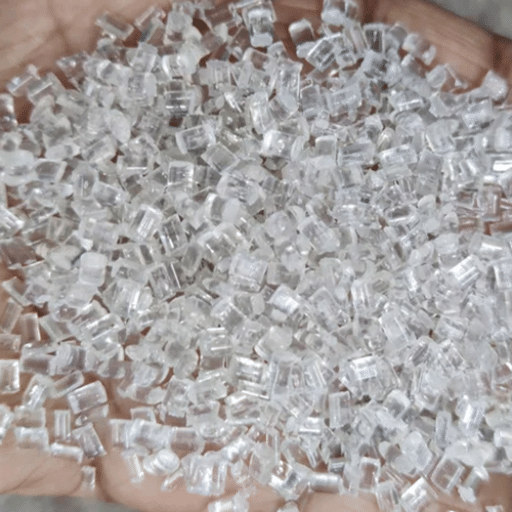
The density of polycarbonate is not a particular figure; it is a property contingent on grades, being 1.20 g/cm³ for standard unfilled grades to 1.43 g/cm³ for 30% glass-reinforced structural grades. Such a distinction affects mold simulations, shot weights calculations, and part cost estimations for engineers and serves concurrently as the fastest checkpoint for material verification between that on the certificate of analysis for procurement and quality teams.
A brief summary of the above would be:
- Every unfilled grade of PC (Makrolon 2805, 2407, 6555) weighs 1.20 g/cm³, and this can serve as a general quantity for design considerations, but ensure that the right grade is chosen before proceeding to productions.
- The same is valid for the glass composite grades, with density increasing linearly along with fiber contents: 20% GF ≈ 1.34 g/cm³, and 30% GF ≈ 1.43 g/cm³….
- The density goes down at the mold filling stage with the temperature higher than its melt temperature, so take about 1.00 g/cm³ for mold filling simulations, not the solid density at room temperature.
- Please ensure either ASTM D792 or ISO 1183 is used; this will required that your COA state which method was chosen on which the result was based.
- Any measured density result of a COA departing by more than ±5% from that earlier publication requires attention.”
If you are working on a new project in which you require polycarbonate for a certain end use, you must have the exact grade density of the material and should not rely on any estimate. Choose the grade, check the COA, and compare all measured values to the manufacturer’s published datasheet. To learn more about Polycarbonate Properties, please click to refer to our accompanying guide: Polycarbonate Properties: Complete Technical Guide for Engineers and Buyers
Are you ready to order Covestro Makrolon polycarbonate with guaranteed grade-specific density measurement and full COA documents? Request a quote while 25 kg trial orders are available for clienteles intending to conduct a system qualification test. We will respond to you in less than 24 hours.