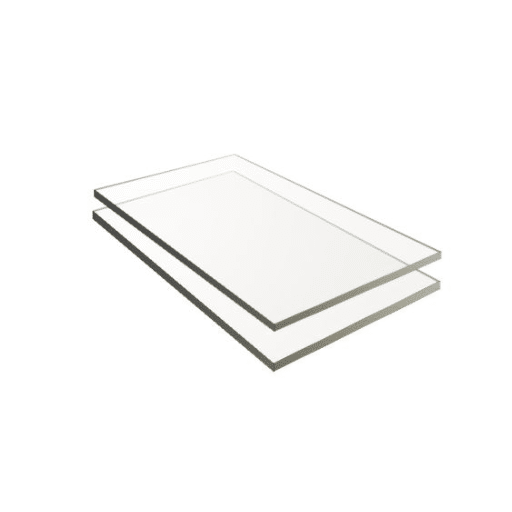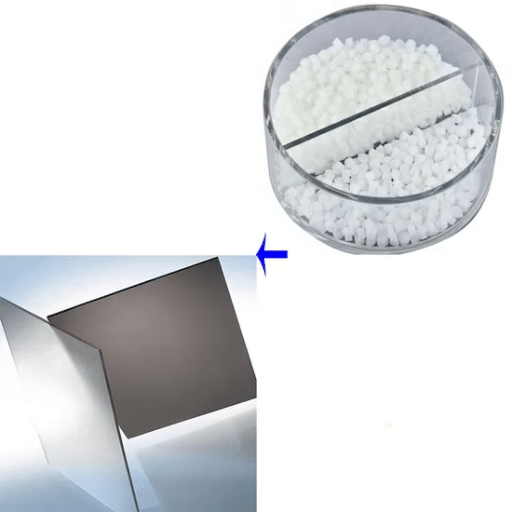

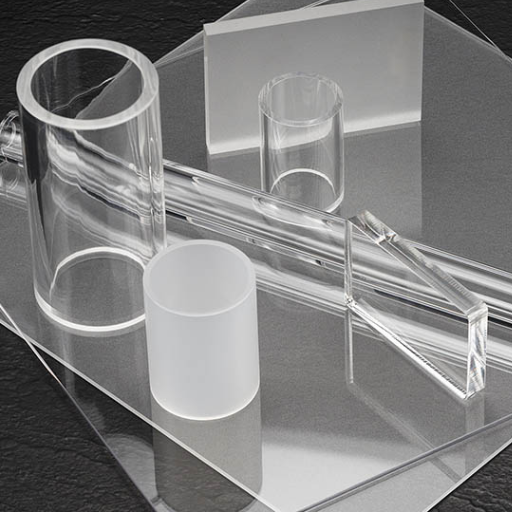



Chen Wei, who works as a product engineer at an electronics company in Shenzhen, discovered through practical experience that transparent plastics require specific materials for different uses. The team selected standard PMMA acrylic material to create a protective machine guard. The material appeared ideal for assembly because it displayed complete transparency and machining capabilities and had low production costs.
A forklift accident occurred three weeks after production started when the vehicle accidentally hit the guard during its routine material handling operation. The acrylic material broke into sharp pieces that spread across the entire production area. The polycarbonate guard would have maintained its original shape while it sustained impact damage. The incorrect choice of transparent plastic material resulted in Chen’s company experiencing six days of operational shutdowns and needing to complete an entire production cycle and perform a new safety evaluation.
If you are specifying transparent plastics for an industrial application, you have probably faced the same problem. As a Suzhou-based engineering plastics distributor, Yifuhui sees this specification challenge across hundreds of projects annually.
The market offers numerous materials which claim to provide clear or optical grade properties however their light transmission percentages and impact resistance and UV stability and chemical resistance exhibit significant differences across different materials. The operational performance of production systems depends on the certified branded grade which operates smoothly whereas unverified substitutes create operational disruptions. This guide compares the six transparent plastics that matter for industrial applications. The study will demonstrate how polycarbonate PMMA PET ABS polystyrene and advanced optical polymers perform in actual engineering environments. The study will show which branded grades provide certified optical and mechanical properties. The study will teach you how to assess transparent resin quality before it goes into your injection molding process.
What Are Transparent Plastics?
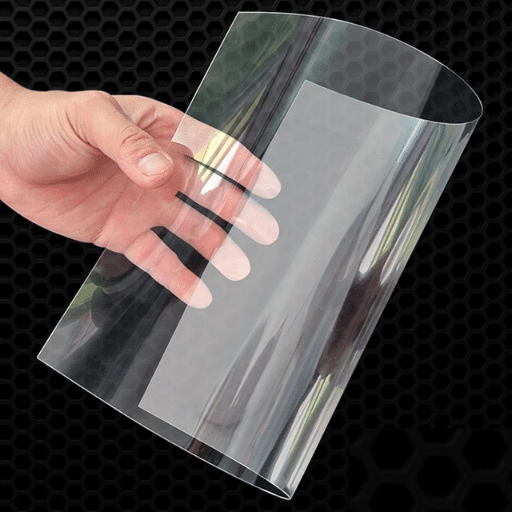
Any polymer qualifies as a transparent plastic material when it transmits more than 80% of visible light, which enables its use as a glass substitute in applications that require lightweight materials with high impact resistance and moldable properties. The term describes a wide range of materials that includes basic polystyrene and advanced polycarbonate materials and specialized cyclic olefin copolymers.
The optical performance of optical grade plastic materials exceeds that of standard clear products because these advanced plastics maintain their optical performance together with their mechanical and thermal and regulatory requirements. Transparent resin materials must meet engineering specifications that demand more than 88 percent light transmission and less than 1 percent haze.
A food container needs transparency plus FDA compliance. Machine guards require transparent materials that can withstand impacts. An automotive headlamp lens needs transparency plus UV stability and heat resistance.
Engineers assess the following key optical properties:
- Light transmission: the percentage of incident light that passes through the material
- Haze: the percentage of transmitted light that deviates from the incident beam by forward scattering
- Yellowness index (YI): a measure of color shift toward yellow, critical for aesthetic and optical precision applications
- Refractive index: the ratio of light speed in vacuum to light speed in the material, relevant for lens design
Most industrial applications use light transmission and haze as their main specification requirements. Premium optical grades target >88% transmission with
Polycarbonate vs Acrylic: How to Choose the Right Clear Engineering Plastic
Engineers begin their assessment process for see-through plastic materials by evaluating which of two materials, polycarbonate and acrylic, they should use. The two materials display completely opposite behavior because one material permits full impact transmission while the other material allows complete visual transparency. Chen Wei’s story showed that selecting the wrong choice leads to total production halt.
The PMMA vs PC decision usually comes down to a single question: can your part tolerate brittleness if it gains maximum clarity? The answer requires that polycarbonate becomes the sole practical option. PMMA outshines all other options when users prioritize perfect optical performance together with scratch protection instead of impact resistance.
Engineers who design safety-critical applications and optical-critical parts typically select PC and PMMA as their primary engineering plastic materials. The search for a material that combines both necessary functions ends when you consider PETG, transparent ABS, and advanced optical polymers.
|
Property |
Polycarbonate (PC) |
PMMA (Acrylic) |
|---|---|---|
|
Light Transmission |
88–90% |
92–93% |
|
Impact Strength |
Excellent (250x glass) |
Low/Brittle |
|
Heat Resistance |
~135°C |
80–100°C |
|
Scratch Resistance |
Poor |
Excellent |
|
UV Stability |
Good (stabilized) |
Excellent |
|
Relative Cost |
High |
Low |
|
Best For |
Safety glazing, machine guards |
Displays, lenses, signage |
Types of Transparent Plastics: The Six Engineers Actually Specify
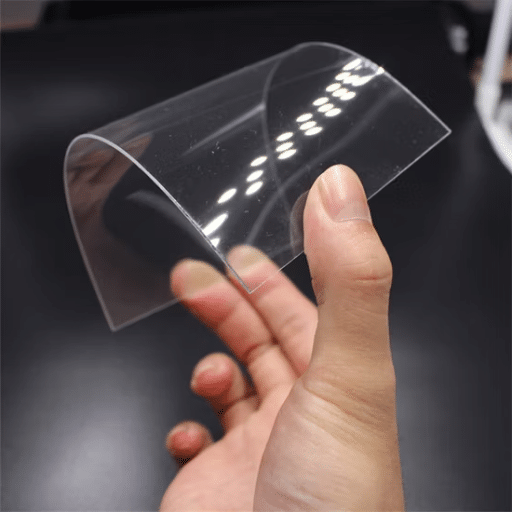
Polycarbonate (PC) — Impact-Resistant Optical Workhorse
The most flexible transparent engineering plastic which meets safety needs of critical applications is polycarbonate. Its impact strength exceeds glass by 250 times and acrylic by 30 to 60 times. The property establishes PC as the primary material for machine guards and safety glazing and automotive lighting and protective eyewear.
Key optical and mechanical properties:
- Light transmission: 88–90% for optical grades
- Heat deflection temperature: approximately 135°C under load (For the relationship between HDT and glass transition temperature, see our technical deep dive.)
- Notched Izod impact: 60–80 kJ/m² (unfilled grades)
- Density: 1.20 g/cm³
- Refractive index: 1.585
The boundaries of personal computers function as vital elements of system operation. The material shows higher scratch resistance when compared to PMMA. The material shows vulnerability to stress cracking which occurs from exposure to ketones and esters and strong alkalis. The standard grades of the material will develop yellowing after extended ultraviolet radiation exposure when no protective coatings or stabilizers are used.
For injection molders, the branded grade matters. Covestro Makrolon 2407 is the UV-stabilized transparent grade specified for outdoor lighting and automotive lens applications. Makrolon 2805 is the general-purpose transparent plastic for injection molding workhorse. Yifuhui stocks certified Covestro Makrolon polycarbonate grades with full COA documentation and lot traceability. See our complete guide to sourcing polycarbonate granules for qualification checklists and supplier verification steps.
For electronics enclosures requiring flame retardancy, Makrolon 6555 and 6557 carry UL94 V-0 ratings. Yifuhui stocks certified Covestro Makrolon grades with full COA documentation and lot traceability.
If your application demands impact resistance above all else, PC resin is the starting point. Specify the grade precisely, because optical properties, UV stability, and flame ratings vary significantly within the PC family.
Need help matching a Covestro Makrolon grade to your application? Tell us your operating temperature, chemical exposure, and regulatory requirements, and we will identify the right grade from our stocked inventory.
PMMA (Acrylic) — Maximum Optical Clarity
PMMA, commonly called acrylic, transmits 92–93% of visible light. The material exceeds the light transmission capabilities of both glass and all other common transparent plastics. PMMA serves as the primary optical solution when absolute optical clarity needs to be achieved.
Key optical and mechanical properties:
- Light transmission: 92–93%
- Surface hardness: significantly higher than PC, giving superior scratch resistance
- Heat deflection temperature: 80–100°C (lower than PC)
- Notched Izod impact: 1–2 kJ/m² (brittle compared to PC)
- Density: 1.19 g/cm³
- Refractive index: 1.49
- Transparent plastic UV resistance: excellent inherent resistance to yellowing outdoors
The primary engineering constraint of PMMA comes from its tendency to break easily under pressure. The material will break when it experiences sudden impacts and when stress builds up at the points where fasteners connect. The material begins to lose its strength at temperatures that fall below PC level which makes it unsuitable for use in environments that operate at elevated temperatures. The three brands of PMMA include Mitsubishi Chemical ACRYPET and Trinseo ALTUGLAS and Röhm PLEXIGLAS. The companies produce optical grade plastic materials that have precisely measured haze and transmission properties which they use to manufacture lenses and display products and lighting systems. Yifuhui maintains a stock of high-clarity PMMA resin optical grade China supply which meets certified property requirements for optical and lighting applications.
PMMA provides superior performance to all other materials for displays and signage and aquariums and light fixtures because it delivers better optical quality and surface durability than any other material while lacking impact resistance.
PET and PETG — Chemical-Resistant Food-Safe Option
The material PET (polyethylene terephthalate) together with its modified form PETG exists in between the two materials PC and PMMA. The material PETG shows superior impact protection compared to acrylic while providing simpler thermoforming capabilities than polycarbonate and possessing superior chemical protection than both materials.
The main characteristics include:
- Light transmission shows 87% transmission for PETG
- The heat deflection temperature ranges from 70 to 80 degrees Celsius which is lower than the values for both PC and PMMA.
- The material shows excellent chemical resistance against acids and alkalis and common sanitizers.
- The FDA-approved BPA-free grades of the product offer multiple food contact options.
- The material enables thermoforming without the need for pre-drying while it can create intricate curved shapes.
The lower heat resistance of PETG restricts its use to temperatures that remain under 80 degrees Celsius. The material shows lower impact strength than PC which makes it unsuitable for components that require safety performance. The material PETG serves as the best option for food display cases and medical packaging and chemical processing equipment and light diffusers.
Standard PET in semi-crystalline form is less transparent than PETG and is most commonly used for bottles and thin films. When engineers refer to “transparent PET” for rigid sheet or molding applications, they usually mean PETG or amorphous PET grades. See our full overview of PET material properties for mechanical and thermal data.
Yifuhui supplies food-contact and medical-grade PET with compliance documentation for regulatory review.
Transparent ABS — Electronics and Consumer Goods
Transparent ABS delivers 80–85% light transmission with the easy processability and cost structure that made ABS one of the most widely specified plastics in electronics and consumer goods.
Key properties:
- Light transmission: 80–85% (transparent grades)
- Impact resistance: moderate, superior to PMMA and GPPS
- Heat deflection: 85–100°C
- Processing: excellent flow characteristics for thin-wall injection molding
- Surface finish: accepts plating, painting, and coatings (Refer to our ABS plastic coating and plating guide for process parameters and adhesion best practices.)
Transparent ABS does not match PC or PMMA for optical clarity. The material requires stabilizers to protect its performance during extended outdoor use under ultraviolet light. Transparent ABS serves as the practical specification for electronics enclosures and consumer appliance housings and cosmetic packaging and toys which require moderate clarity plus impact resistance plus low production costs.
Yifuhui stocks general-purpose and high-impact transparent ABS resin grades for injection molding applications.
Polystyrene (GPPS) and SAN — Low-Cost Clarity
The most economical clear plastic material for non-structural uses can be obtained through general-purpose polystyrene and styrene-acrylonitrile.
Key properties:
- Light transmission: 88–90%
- Impact resistance: very low (brittle)
- Chemical resistance: poor against solvents and oils
- UV stability: degrades quickly outdoors
- Cost: lowest among transparent engineering plastics
GPPS serves the purpose of developing economical packaging solutions which include disposable containers and CD cases and indoor display components and any other applications which require minimal mechanical strength. SAN improves chemical resistance and toughness slightly over GPPS but remains a low-performance transparent material.
These transparent plastics provide effective solutions for non-structural applications which require cost efficiency. For anything requiring durability, impact resistance, or regulatory compliance, specify PC, PMMA, or PETG instead.
Advanced Optical Polymers
Specialty polymers function in specialized high-performance markets which extend beyond six commonly used transparent plastic materials.
- Cyclic olefin copolymers (COC) provide ultra-low birefringence and water absorption properties which enable their use in precision optics and microfluidics and advanced electronics.
- Polymethylpentene (PMP / TPX) represents the least dense plastic material because it has a density of 0.83 g/cm³ and displays transparency that reaches into the ultraviolet spectrum.
- Optical-grade PET (OKP-4) provides a refractive index that exceeds 1.6 for applications which require precise photonic measurements.
Most distributors do not stock these materials because they are not common products. Yifuhui can source specialty optical polymer grades on request for applications where standard PC or PMMA cannot meet specification requirements.
Transparent Plastics Comparison: PC vs PMMA vs PETG vs ABS
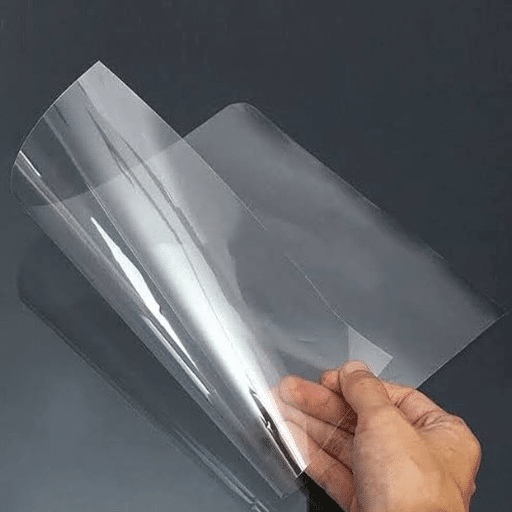
The table below summarizes how these transparent plastics compare across the properties that matter most. The table serves as an initial screening tool for evaluating the PMMA and PC material selection and other material assessment.
|
Property |
Polycarbonate (PC) |
PMMA (Acrylic) |
PETG |
Transparent ABS |
GPPS |
|---|---|---|---|---|---|
|
Light Transmission |
88–90% |
92–93% |
~87% |
80–85% |
88–90% |
|
Impact Strength |
Excellent |
Low/Brittle |
Good |
Moderate |
Very Low |
|
HDT (°C) |
~135 |
80–100 |
70–80 |
85–100 |
70–85 |
|
Scratch Resistance |
Poor |
Excellent |
Fair |
Moderate |
Poor |
|
UV Stability |
Good (stabilized) |
Excellent |
Moderate |
Poor |
Poor |
|
Chemical Resistance |
Fair |
Good |
Excellent |
Moderate |
Poor |
|
Relative Cost |
High |
Low |
Medium |
Low |
Lowest |
|
FDA Food Contact |
Grade-dependent |
Grade-dependent |
Yes (common) |
Limited |
No |
Use this table as a first-pass filter. Then refine your selection using the application-specific guidance below.
Application-Specific Selection Guide: Matching the Transparent Plastic to Your Project
Automotive Lighting and Glazing
For headlamp lenses, specify UV-stabilized PC. Road debris impact at highway speeds demands polycarbonate’s impact resistance. Covestro Makrolon 2407 is the grade most widely specified for automotive lighting due to its combination of optical clarity and UV stabilization.
PMMA serves as the primary material choice used in manufacturing taillight covers and decorative lighting fixtures. The acrylic material provides superior optical clarity which enables better light visibility while rear lighting components lack front impact danger that applies to headlamps. Automotive OEMs typically specify branded grades by name in their material standards. The process needs requalification when someone replaces an existing transparent plastic with another transparent plastic or when they switch from one brand to another brand.
Electronics and Electrical Enclosures
Consumer electronics with transparent or translucent housings — remote controls, router cases, appliance panels — typically use transparent ABS. The material provides easy molding to create thin wall structures while enabling decorative surface application and maintaining low cost visual accessibility.
For industrial electronics requiring flame retardancy, specify UL94 V-0 rated PC. Makrolon 6555 and 6557 provide transparent flame-retardant performance for enclosures where safety standards mandate self-extinguishing materials.
Medical Devices and Pharmaceutical Packaging
Medical device housings which require protection from both autoclave and gamma sterilization need clear plastic material which medical-grade PC. The material maintains its optical and mechanical properties through multiple sterilization cycles.
Pharmaceutical blister packaging and medical trays use transparent plastic material which PETG provides as their main option. The material can be shaped through thermal processing at low temperatures without needing pre-drying and it meets FDA standards for contact with pharmaceutical products.
Medical applications require complete adherence to regulatory standards without any exceptions. Customers must obtain FDA compliance letters and USP Class VI documentation and ISO 10933 biocompatibility data at the grade level before they can make orders.
Food Processing and Packaging Equipment
PETG resists the acids, alkalis, and sanitizers used in commercial food service. That chemical resistance, combined with FDA food contact regulations for plastics compliance and easy thermoforming, makes it the standard for food display cases, sneeze guards, and processing equipment covers.
The food processing equipment requires high-temperature operation for its ovens and warming trays and steam-exposed components and therefore requires PC material as the optimal solution. The material, which has a heat deflection temperature of 135°C, exceeds the operational limits of PETG.
Display, Signage, and Architectural Glazing
Outdoor signage requires UV-stable materials which will maintain their original color and material properties during outdoor use. PMMA serves as the primary material for outdoor signs and skylights and architectural glazing products which need protection against long-term weathering. The use of PC serves as the sole effective material solution for safety glazing and machine guards and riot shields. The particular transparent plastic material shows superior performance because it can absorb more impact energy than any other transparent plastic material.
LED Lighting and Optical Components
The design requirements for light guides and precision lenses demand that they achieve maximum light transmission while maintaining their ability to handle minimal light loss. The optical-grade PMMA material shows superior light transmission capabilities through its thickness compared to both PC and PETG materials. The LED light guides and diffusers and optical lenses require PMMA material which must be sourced from an approved optical-grade manufacturer.
Impact-protective light panel covers for diffusers need transparent materials that deliver both optical performance and physical strength. The light-diffusing PC grades match performance requirements for transparent plastics while providing protection against impacts which makes them suitable for light panel covers and diffusers.
Elena Vasquez who works as a procurement manager at an automotive lighting supplier in Barcelona discovered a specification error that would have resulted in her company losing EUR 48000. The supplier provided a quotation for “transparent polycarbonate” which Elena used as the basis to purchase materials for a headlamp lens project. Elena requested the COA before approving the purchase order.
The document described a PC material grade which functions as a general-purpose material but lacks UV protection and shows an 84% light transmission capacity which falls short of the 88% requirement needed by her customer. She rejected the lot and specified Covestro Makrolon 2407 instead. The corrected grade passed optical validation on the first molding trial. A single COA review stopped a production process while it also avoided a customer complaint.
Transparent Plastic Quality Verification: What to Check on a COA
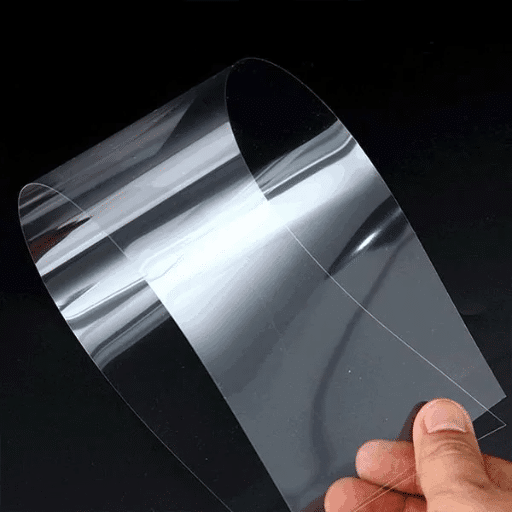
For transparent plastics, the Certificate of Analysis serves as more than a basic quality requirement. The document establishes that the material has met optical requirements, which must be fulfilled before production can start.
Light Transmittance and Haze
Request COA values for both properties. The optical PC grades must reach transmission levels above 88% while maintaining haze levels below 1%. The PMMA optical grades must achieve transmission levels above 92%. The values need to be checked against the manufacturer’s published datasheet for the specific grade. A COA that shows 84% transmission results in grade rejection because the standard requires 89% transmission.
Color and Yellowness Index
Even minimal YI changes impact how materials look and they show when resin has started to degrade or when incorrect additives have been used. The COA YI value needs to be compared against the manufacturer’s nominal specification. The material shows major differences because it does not meet specifications and its grade has been incorrectly labeled.
Batch Consistency
When specifying transparent plastics for automotive lighting, medical optics, and other precision applications, lot-to-lot consistency matters as much as absolute values. The manufacturers Covestro, Mitsubishi Chemical, and Trinseo keep their branded prime resin products under strict lot-to-lot control.
The modified compounds and reprocessed material will show a batch-to-batch variation of 10 to 20 percent. If your process was validated on one lot, the next lot must match closely enough that your molding parameters do not require adjustment.
How to Source Certified Transparent Plastics from China
The Risk of Off-Spec Optical Material
The appearance of fake or inferior transparent plastics which seem clear to human vision fails to meet optical and mechanical and regulatory standards. The reprocessed PC pellet maintains its transparent appearance despite its molecular weight reduction. The material fails to provide the required impact strength and heat resistance which the transparent plastics demand from it.
Optical applications face higher risks because of this situation. The bag of pellets shows no visible signs of yellowing or haze increase or refractive index shift until these defects become obvious in the molded lens or display cover.
Verify Before You Buy
Specify the exact grade by brand and number. “Transparent PC” is not a specification. “Covestro Makrolon 2407” is. A qualified polycarbonate transparent granules supplier should always provide the manufacturer-issued COA with optical property data before you place any order. Cross-reference transmission, haze, and YI values against the manufacturer’s published datasheet.
If your supplier cannot provide a manufacturer-issued COA, or if the COA lacks optical property data, treat that as a supply chain red flag.
Trial Orders for Material Qualification
The minimum order requirement of 25 kilograms from Yifuhui enables companies to test all transparent plastics used in injection molding. The process involves ordering a test batch which will then be used to create test molds and measure the optical characteristics of the final products. The transmission and haze values of a molded part will show slight variations from the pellet COA values because processing conditions affect the results. Use verified branded material to create your process baseline which will serve as the standard for evaluating all upcoming product shipments.
After you finish testing your transparent plastic material for production qualification you should proceed to test. Start with a 25 kg trial order of certified Covestro Makrolon PC, optical-grade PMMA, or FDA-compliant PET. Every trial shipment includes complete COA documentation which enables your qualification test to match your production supply with exact accuracy.
Documentation for Regulated Applications
The production of transparent plastics requires specific compliance documents which differ for medical applications and food-contact applications and automotive applications. The certificates must include the precise grade number which you ordered not the material family. A “PC FDA compliance” letter is not sufficient. The “Covestro Makrolon 2407 FDA compliance certificate” meets all requirements.
At his previous job, Danish product designer Marcus Lindberg ordered transparent ABS from one supplier and transparent PC from another supplier when he needed transparent plastics. The project required two supplier relationships and two COA formats and two documentation workflows which created additional work for the team.
He reduced his material qualification time from three weeks to one week when he stopped using multiple suppliers and started working with one Suzhou distributor. One contact. One documentation standard. One logistics process. The procurement team sends all inquiries about transparent plastics to one supplier who provides ABS and PC and PMMA materials.
Conclusion
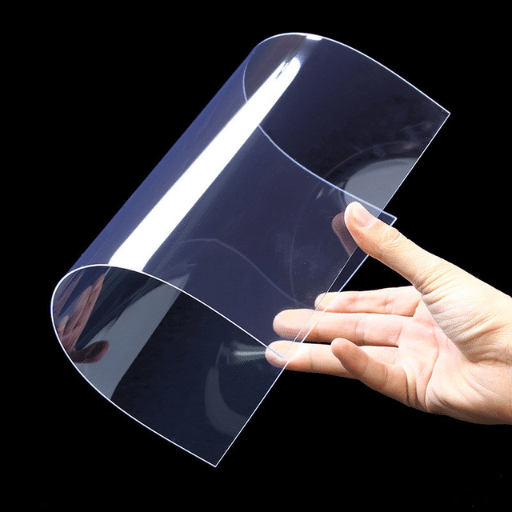
The characteristics of transparent plastics make them unsuitable for substitution. The polycarbonate vs acrylic choice alone can determine whether a part survives impact or fails validation. Polycarbonate shows its best performance in situations that require protection against impacts and resistance to high temperatures. PMMA provides superior optical performance and better protection against surface damage. PETG leads for chemical resistance and food-contact compliance.
Transparent ABS provides an affordable solution which manufacturers can easily shape into products for electronics and consumer markets. The key to successful specification is precision at the grade level. “Clear plastic” is not an engineering specification.
“Covestro Makrolon 2407 UV-stabilized PC” or “optical-grade PMMA with >92% transmission” is. Verify optical properties on the manufacturer-issued COA before production. And source from a polycarbonate resin supplier who holds certified branded inventory with lot traceability.
Yifuhui stocks transparent grades across polycarbonate, PMMA, PET, and ABS — all with manufacturer COA documentation, available from 25 kg, and shipped from Suzhou via Port of Shanghai. For structural components requiring heat and chemical resistance, we also supply certified PA66 resin grades. Tell us your application requirements, and we will identify the certified grade that matches your optical, mechanical, and regulatory needs.
[Request a Transparent Plastic Grade Recommendation — Response Within 24 Hours]
Frequently Asked Questions About Transparent Plastics
Is PMMA the same as acrylic?
The answer to whether PMMA and acrylic are identical is affirmative. The chemical name of acrylic which is one of the most common transparent plastics exists as PMMA which stands for polymethyl methacrylate. Common trade names include Plexiglas, Perspex, Lucite, and Acrylite. The materials all belong to the same family of polymers.
Which transparent plastic is the strongest?
Polycarbonate has the highest impact strength among common transparent plastics. It absorbs roughly 250 times more impact energy than glass and 30 to 60 times more than acrylic.
Is outdoor use of PMMA possible?
Yes. PMMA demonstrates excellent protection against ultraviolet light because it contains UV-stable properties which prevent yellowing. For outdoor signage and architectural glazing, PMMA is often preferred over PC. The outdoor grade UV-stabilized PC materials exist for use in outdoor environments.
What is the difference between PET and PETG?
The standard semi-crystalline form of PET serves as the main material for manufacturing bottles and thin films. PETG (glycol-modified PET) exists as an amorphous material which maintains its transparent appearance throughout thick sections because of superior thermoforming capabilities. Engineers use the term “transparent PET” when they refer to PETG as the preferred material for their rigid design specifications.
What steps should I take to confirm optical attributes before I purchase transparent plastic material?
The COA document which manufacturers provide should be requested to check light transmission values and haze measurements and yellowing index values against the manufacturer’s published data sheet. The customer should purchase a 25 kg trial lot to create mold test parts which will enable them to assess the optical features of finished components.
Does Yifuhui stock optical-grade transparent plastics?
Yifuhui maintains inventory of Covestro Makrolon polycarbonate grades and high-clarity PMMA and FDA-compliant PET and transparent ABS products which all come with manufacturer COA documentation and can be purchased starting from 25 kg minimum order.