

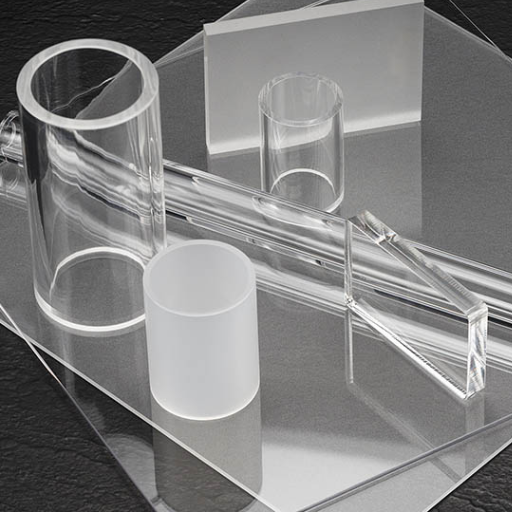



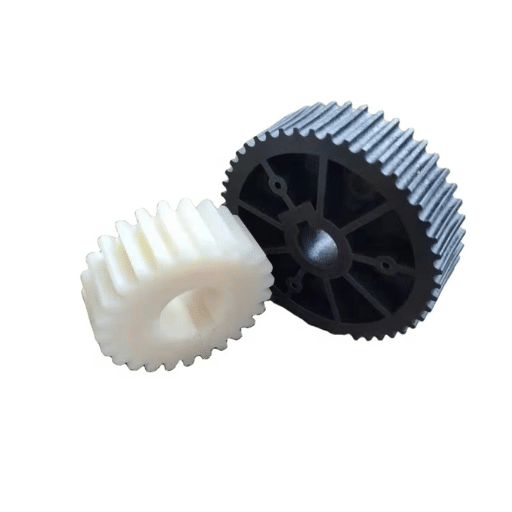
A fine POM gear, Erik Voss machine-milled one Tuesday afternoon. Its tolerances were within the upper limits, its finish distinctly glossy, and its chips clear and brittle. He unclamped the piece, placing it on the inspection station, and left for the day. With the coming of Wednesday morning, it turned out the gear had strained in some way and all mesh dimensions swiftly started moving out by 0.15 mm. The problem was absolutely not his speeds or his feeds, but a matter of internal stresses left locked in the material until there was no more clamping force.
Precision, with care and precision, is commensurately rewarded in POM CNC machining against the latitudes of carelessness. The material machines like heaven once thermal behavior is taken care of, along with the crystalline structure and between the homopolymer and copolymer grades. Correct and pay attention to those prime factors, and POM will become one of the easier-to-predict engineering plastics in your workplace. Incorrectly applied, however, it will impose tensile warping along with burrs and melt lines regardless of how good your machine tool may be.
This guide covers the full POM CNC machining workflow. You will learn how to select the right grade for your application, set cutting parameters that prevent heat buildup, choose tooling geometry that shears instead of rubs, and manage the post-machining stress release that catches most shops off guard. We will also map how specific branded grades, BASF Ultraform, Celanese Hostaform, Polyplastics DURACON, behave differently on the machine, because not all POM cuts the same way. For a broader overview of POM material properties and grade families, see our complete POM material guide.
Need a specific grade recommendation before you program your next job? Tell us your application requirements and we will identify the right branded POM grade from our portfolio, with full COA documentation.
What Is POM and Why Machine It?
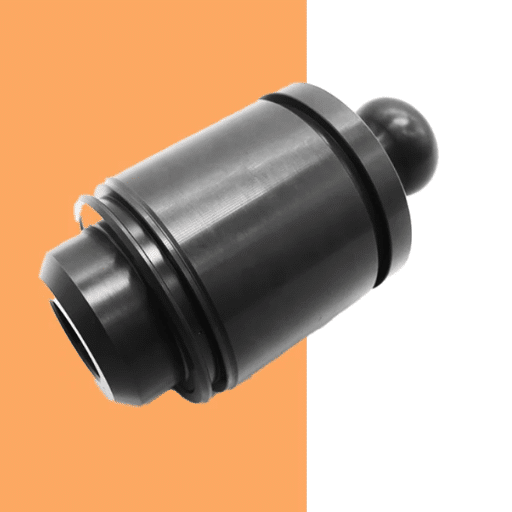
POM, or polyoxymethylene, is a semi-crystalline engineering thermoplastic known in the trade as acetal. DuPont’s brand name Delrin is often used interchangeably for the homopolymer grade, though technically Delrin refers only to DuPont’s POM-H product line. The material combines high stiffness, low friction, excellent dimensional stability, and very low moisture absorption, properties that make it a frequent replacement for metal in precision mechanical components.
With reasons practical to machinists and engineers, POM CNC machining has persistently been preferred over injection molding. CNC machining of POM has made complete economic sense when the prototype volume does not justify the tooling. Some parts may probably be overly complex and too large for molding. A tolerance may be too tight for materials expected to withstand feasible part temperature and injection temperature before cooling onto the tolerance required even after secondary machining. Or is the application beyond what could be molded by POM for that many pieces that justify mold costs?
The key properties that make POM attractive for machining operations include:
- Low coefficient of friction: 0.20 to 0.35, self-lubrication in slide-type applications
- Unwavering stiffness: flexural modulus of 2,500 to 2,900 MPa, same as some aluminum alloys when compared on the basis of weight volume
- Absolutely stable dimensions: water uptake of circa 0.2 to 0.5%, as opposed to 2 to 3% for nylon
- Well-behaved fatigues: it just punishes Situations, whose stress loads are withstood by millions of cycles. ApplyResources_
- Broad chemical resistance: holds against fuels, oils, greases and solvents depending on the grade.
- Excellent machinability: clean, continuous chips are made when the cutting edge is sharp and very little burring is formed.
Pom material processing by CNC machines is widely used in automotive, electronics, medical device, and industrial machinery sectors. Gear parts, bearings, bushings, valve bodies, pump housings, conveyors are a few examples of typical machined parts, with precission insulators among them.
POM-H vs. POM-C: Which Grade Machines Better?
First step in any POM CNC machining project is the grade selection. POM falls into two main families; homopolymer (POM-H) and copolymer (POM-C) which machine differently enough that the choice would affect your entire workflow.
POM-H (Homopolymer / Delrin)
POM-H has a highly regular crystalline molecular structure. This gives it higher tensile strength (70-85 MPa), high stiffness, and excellent fatigue strength compared to the copolymer grades. It also machines with a finer surface finish and tighter tolerances in dry, controlled environments.
The main cutting problem with POM-H is the centerline porosity. During the extrusion of rod and sheet stock, the outer layer cools faster than the core. This differential cooling creates internal voids or density reduction down the centerline of thick sections. The center of large-diameter rods may typically be from 5 to 7% less dense than the outer layer.
This is where Delrin plastic machining is most critical. Thin sections generally present no porosity problems. However, if you are drilling deep holes, machining thick cross-sections, or making parts that require absolute airtight integrity or pressure containment-there check valve bodies machined from polyacetal POM-Martensite rod-that core porosity may ruin you. Without fail, there are trouble spots with acetal type POM because of porosity buildup as a result. Machine POM-C or acetal copolymer material until Delrin processes can be modified to suit the kind of job you will be doing in the future.
POM-C (Copolymer / Acetal)
POM-C is manufactured by copolymerization of trioxane with comonomer breaking perfect crystalline regularity of the homopolymer. It has slightly reduced tensile strength at 60-70 MPa and elastic modulus as compared to the homopolymer, but a wide mutability appeared in thermal stabilities, hydrolysis resistance, and, critically for machining, the solid but non-porous internal structure.
For a POM CNC machining application, the POM-C provides a few definite advantages: POM-C acetal CNC machining often might be the cheaper and also safer choice for such requirements as:
- No centerline porosity: Safety in deep-hole drilling, and in pressure parts & medical components
- Better heat dissipation during cutting: a wide scope of processing conditions, the resistant capability to smearing
- Superior acid and alkali-resistance: a pH in the range of 4-13 as that for POM-H exhibiting pH in the range of 4-9
- Less costly: typically 10-20% less costly than homopolymer grades
When to Choose Each for Machining
|
Machining Consideration |
POM-H (Homopolymer) |
POM-C (Copolymer) |
|---|---|---|
|
Tensile Strength |
70-85 MPa |
60-70 MPa |
|
Surface Finish |
Excellent, very smooth |
Very good, slightly softer finish |
|
Centerline Porosity |
Present in thick stock |
Absent, solid throughout |
|
Deep-Hole Drilling |
Risk of exposing voids |
Safe and predictable |
|
Chemical Exposure |
Limited (pH 4-9) |
Broad (pH 4-13) |
|
Heat Dissipation |
Requires tighter control |
More forgiving |
|
Cost |
Higher |
10-20% lower |
|
Typical Applications |
Precision gears, structural brackets, dry bearings |
Valves, manifolds, pump housings, medical parts |
Select POM-H for those situations where high stiffness is needed along with the best surface finish while no critical part geometry reveals thick stock centerlines. Select POM-C for the production of thick sections, deep holes drilling, or subject to some hostile environment of chemicals, moisture, or pressure.
Not sure which grade fits your part geometry and operating environment? Share your application details with us and we will recommend the appropriate POM-H or POM-C grade from our stocked portfolio, BASF Ultraform, Celanese Hostaform, Polyplastics DURACON, and more.
How Branded POM Grades Behave on the Machine
There is a marked tendency among POM machining guides that would like the reader to believe that all POM are more or less the same. They’re not. The melt flow index, additive package content, and stabilization chemistry found among commercial products can offer distinct differences in chip formation (akin to crystalline structure), surface finish, and thrust-wear of the tool.
BASF Ultraform N2320
N2320 is BASF’s general-purpose POM-C grade offering geared to injection molding, but it is also commonly available in extruded rod and sheet forms for machining. The grade gives an approximately 9 g/10 min melt flow rate according to ISO 1133 under a load of 190°C/2.16 kg, on the medium-flow side. While this grade produces excellent surface finish and exceptionally clean chips which have no worse chip-breaking ability, and it may handle diverse parameters fairly predictably in a process of machine work, it stands as a relatively safer general default choice for the POM CNC machining works of any and all kind.
Celanese Hostaform C27021
Celanese C27021 is a fuel-system-validated POM-C grade. This resin is one of the preferred materials for automotive OEM material specifications. It is characterized by a stabilization package that is optimized for chemical resistance to the most aggressive fuel blends. Many essentially this means just some different chip morphology compared to normal grades, i.e., the chips may be a little more fragile due to the additive package. Prior to production, feed rates or parameters should be tested on the machine. The material machines nicely, but some adjustments in the aggressive high parameters developed for a POM-C grade will be needed.
Polyplastics DURACON M90-44
M90-44 is the standard grade in Polyplastics’ DURACON line and the high-grade POM-C resin for the automotive supply chain in Japan and South Korea. M90-44 has an intermediate MFI compared to the N2320 and then machines in a very similar parameter window. People who have turned DURACON M90-44 say it provides particularly clean threads and fine-pitch gear teeth, making it preferred for the production of precision threaded components and fine-module gears.
Kolon KOCETAL K300
K300, aside from the thin-wall injection molding of Kolon’s high-rigidity, can also be used as a machining stock. Its higher viscosity combines well in manufacturing while turning, as it allows the creation of slightly longer chips or continuous chips. Standard two- or three-flute carbide tools with a positive rake can handle milling of the material. In the case of thin-wall machined components, its superior rigidity gives better axis stability.
Formosa FORMOCON FM090 und FM130
FM090 is Formosa’s standard POM-C grade, a most cost-competitive material with wide use in general industry. FM130 promises an intermediate-high-viscosity grade and is also an alternative in terms of milling operations. Both grades can be machined in the same way as other standard POM-C grades. Formosa also makes grades that are infused with UV stabilizer packages (FM270UV, FM130UV) for applications exposed to sunlight; the UV stabilization does not meaningfully change machinability, but surface finish requirements should be checked on some samples before accepting particular steel requirements for immediate cosmetic work.
Takeaway
In all likelihood, specific Applications for POM-C CNC machining would show any of those branded grades functioning well within the same range of machining parameters. The differences would be seen at the edges: efficient formation of threading, easy chip-breaking, better uniformity in tolerances over very long production runs. If you have an OEM specification specifying a brand and grade, then go for it; otherwise, base your selection on supplier reliability and reputation along with security of COA documentation, not on slight machining differences.For most POM CNC machining applications, any of these branded POM-C grades will machine satisfactorily within the same parameter window. The differences appear at the margins: thread quality, chip breaking behavior, and tolerance consistency over long production runs. If your application has an OEM specification that names a brand and grade, match it exactly. If not, select based on supply chain reliability and COA documentation rather than marginal machining differences.
Cutting Parameters for POM CNC Machining
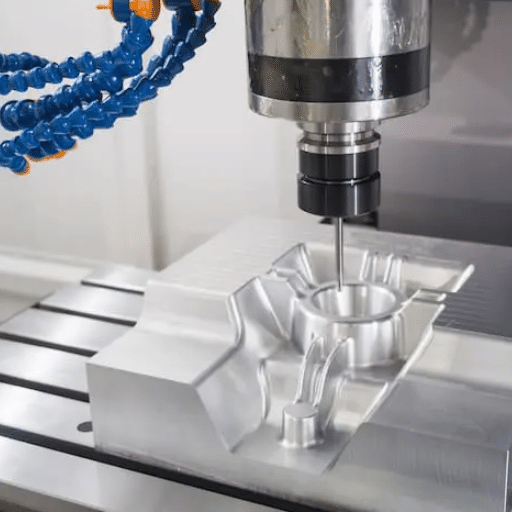
Polyoxymethylene, or POM, is not metal, and does not machine like that of metals. Quick formation of thick chips pulling the heat away from the cut zone is the objective with POM machining parameters. While any cut-to-cut contact with invariable spindle speed is being coolly heated up, the rising temperature for such POM cannot entirely settle down with insignificant thermal conductivity underneath; henceforth, the plastic melts, leaving behind smudged surfaces and misaligned parts in turn.
Surface Speeds and Cutting Speeds RPM
A conservative range for milling is 150 m/min to a capstone of 300 m/min for the cutting speeds (roughly 500 to 1,000 feet per minute). A range of 200 to 400 m/min works well for turning. High-speed finishes with modern VMCs can reach cutting speeds of 400 to 700 m/min for entry-level programmed finishing cuts (if the conditions facilitate it).
Spindle speed is dependent on the tool diameter. At a cutting speed of 250 m/min, a 6 mm tool would be run with the spindle RPM at about 13,000. By contrast, for the 12 mm tool spinning away with the same cutting speed of 250 Som3, it would be rotated at 6,600 RPM. Always gauge spindle RPM based on the cutting speed rather than at a “generic” RPM value.
Feedrates and Chiploads
Chipload per tooth is the most critical element for preventing heat buildup. Aggressive feeds must be given to the tool so that it is cutting material rather than rubbing it.
|
Operation |
Chip Load per Tooth |
Feed per Revolution (Turning) |
|---|---|---|
|
Roughing |
0.05-0.15 mm/tooth |
0.1-0.3 mm/rev |
|
Finishing |
0.02-0.05 mm/tooth |
0.05-0.15 mm/rev |
Some of the moisture is given off. From cutting chips, for example, it may be noticed that the tool rubs or rubs the piece, so in carrying out procedures, a reasonable solution to increase a safe amount in the feed rate or to cut some spindle speed. A long sort of chips, i.e., “birds’ nests”, shows that the tool is not performing chip breakage, so either initiate a chip break return at this point or do this as part of the feed increase plan-propelling the chips away from the tool.
Depth-of-Cut and Tactical Approach
For roughing operations, an optimum depth-of-cut can be up to half the diameter of the tool or may vary among 2-5 mm for typical end mills. Multiple passes are much better than one single deep cut since the heat would then be dissipated temporarily, and the stress relief of the tool part is suppressed and diminished. A lot closer to finish, cut-depth values should lie in-between 0.2 to 0.5 mm–these measures ensure dimensional correctness while effectively prohibiting any body-device surface rub.
Roughing toolpath hopes for 40% to 60% of the diameter of the cutter with the remaining 5 to 10% expected in finishing along with smoother presentations.
Quick Reference: POM CNC Machining Parameters
|
Parameter |
Conservative Start |
Aggressive / High-Speed |
|---|---|---|
|
Surface Speed (Milling) |
150-300 m/min |
400-700 m/min |
|
Chip Load (Roughing) |
0.05-0.10 mm/tooth |
0.10-0.15 mm/tooth |
|
Chip Load (Finishing) |
0.02-0.03 mm/tooth |
0.03-0.05 mm/tooth |
|
DOC Roughing |
2-3 mm |
Up to 50% tool diameter |
|
DOC Finishing |
0.2-0.3 mm |
0.3-0.5 mm |
|
Stepover Roughing |
50% tool diameter |
60% tool diameter |
|
Stepover Finishing |
5% tool diameter |
10% tool diameter |
Tool Selection and Geometry
Whole tool conditions are more important for POM CNC machining than for any other commonly processed engineering plastic. A dull tool generates frictional heat, which indeed is the nemesis of the dimensional accuracy of POM.
Tool Material
For mass production work, preferably use solid carbide. Carbide keeps the cutting edge for much longer than HSS-necessary really-and kind of does not let the edge go blunt-to the demands of POM. HSS is okay for prototypes and short-run jobs, but expect more frequent tool changes.
For large-scale, high POM CNC machining production, DLC coated or diamond-coated tools are recommended. The coating dramatically extends edge life primarily by reducing friction at the cut zone. This is particularly valuable for thin-wall or tight-tolerance parts where even minor thermal drift affects dimensions.
Tool Geometry
|
Feature |
Recommendation |
|---|---|
|
Flutes |
2-3 for general milling; 1 flute for deep slotting and chip evacuation |
|
Rake Angle |
0° to +10° positive to reduce cutting forces |
|
Clearance Angle |
10° to 15° to prevent rubbing on finished walls |
|
Helix Angle |
30° to 45° for smooth chip evacuation |
|
Edge Radius |
0.005-0.010 mm for finishing; slightly larger for roughing |
A sharp-edged tool is mandatory. A cutter that has gone 10 hours cutting aluminum will be blunt when subjected to POM, as it should be. Period. minimize radius. If your recognition is, don’t push on a dull edge anymore. They have a flat, cloudy, white side. That is a dead, visual indication that rubbing has taken over from cutting.
Workholding, Stress Management, and the Two-Pass Method
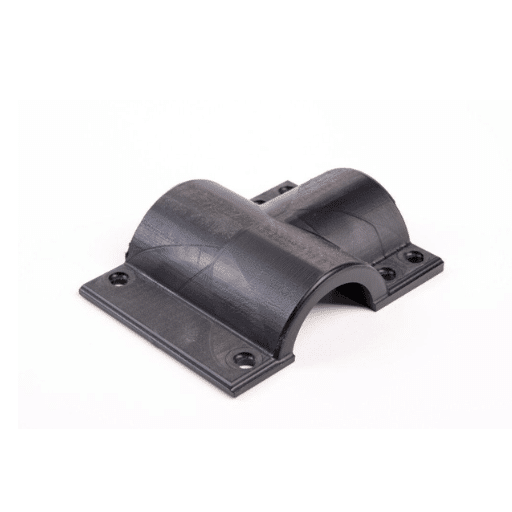
POM is not a metal and cannot take a hard-metal approach to clamping-Excessive force only deforms POM elastically, a springy condition seizes the clamping action after release, and heating while cutting exacerbates postmachine warping, starting several hours from the machining process.
Best Practices for Fixing
A soft jaw, vacuum fixture, or mate with a customized jaw track that follows the part geometry. Flat parallel vise jaws may potentially slip or distort the part. Tighten the clamp to a torque of around 5 to 10 N·m for in a 100-mm vise, light pressure applied with two fingers. The part should still wobble just a little even when light pressure is applied.
Use a vacuum fixture for thin plates because it is more efficient. Consider using a compliant silicone gaskets to even out holding forces. Double-sided tape is good for low-pressure operations. Please clean any residue immediately with isopropyl alcohol after machining.
One of a Kinds.
Machine: At opposite faces in equilibrium, shape likewise symmetrical features. While subtracting material from one face, take off the same amount from the opposite face before proceeding to the next step. In this way, internal stress will be released and any distortion will be kept to a minimum.
The Two-Pass Method: Rough, Rest, Finish
This is possibly the biggest thing that tight-tolerance POM machining could do.
Step 1: Rough it: Machine all faces to within 0.5 to 1.0 mm of final dimension. Do not worry about maintaining ultraprecise tolerances in this pass. The point isn’t to hold tight tolerances but to allow bulk material to be removed and release internal stresses.
Step 2: Stress relieve: Take it out of the fixture and let it rest at room temperature for 24 hours. Some critical parts should be anealed immediately at 150-160°C, holding for 30 minutes per 10mm thickness and then cool slowly to 1-2°C per minute within the oven.
Step 3: Finishing cutting: Fixate serially with minimum force, obtaining the final dimensions within the last cut. The component will now have stabilized stresses, so tabled final dimensions will hold through any further feed passes.
While working on seat machining for valves through POM CNC machining, the manufacturer got so impressed that coming up with the same reversing step convenience of machining, which is to cut a ‘to size spec’, he has developed opposite steps to rough to +0.8 mm and then rest one day and finish cut size, which looks incredible; rejection rates dropped from 30% to 1.5%. Talking about cutting the only variable out was the rest period in between roughing and the finishing cut.
Coolant, Chip Evacuation, and Heat Control
POM’s low thermal conductivity means cut heat stays at the cut zone. Your coolant strategy is not about lubrication; rather, it is about removing heat and clearing chips before they get recut.
Cooling Agent
Flood coolant with 5 to 8% soluble oil emulsion is best for most POM CNC machining operations. It would stabilize the temperature of the workpiece, flush chips rapidly, and prevent localized heating that causes smearing on the surface.
During the initial few passes of light finishing, compressed air blast is acceptable and finds favor in shops where the goal is to keep the workpiece clean from coolant contamination. The air must be directed toward the tool tip with enough volume to pull the chips away.
Do not do dry roughing in heavy machining. Dry cutting in material removal can easily push the average cut temperature to above 180°C, the threshold beyond which the material begins to degrade and release formaldehyde, an angular problem affecting not only the quality of part but also workplace safety itself.
Chipbreaking and Chip Clearance
In heavy pocketing applications, program the chip breaking per 2mm cycle. When drilling with peck drilling at a 2–3 mm depth, POM chips, especially POM-H chips, may be long and stringy and, should they curl and tangle around the tool, will tend to gel and weld to the cutting edges.
Direct the coolant nozzles so that they strike the tool tip and flush the chips out of the cut zone. The reason for poor surface finish in the POM CNC machining process is recutting chips.
Tolerances, Surface Finish, and Post-Machining

Due to appropriate control of POM processing, amazing dimensional accuracies and surface qualities can be achieved.
Achievable Tolerances
POM has a standard tolerance in protective mould materials, which is ±0.10mm. Stable geometries can hit the tight tolerances of ±0.02 to ±0.05 mm, in case sharp tools are used, examples: care in setting the part in the stiffest possible jig, fine cuts-. Walls thinner than 2.0 mm; slots above 30.0 mm deep; and intricate 3D surfaces may go up to the upper limit of this tolerance range owing to deflection and thermal drift.
Surface Finish
POM creates an incredibly fine finish suitable for processing without post-processing methods. A suitable tool can be set with sharp carbide tools to cut under certain purpose guidelines to get a rough surface treatment for Ra no higher than 0.4 µm; however, the surface also is likely to show burn marks if the tool is blunt or generating too much heat.
Deburring and Polishing.
The process of burring is useful. POM can produce sharp feather edges that are both a handling hazard and a stress concentrator. Thus, burr removal with a sharp blade, fine file, or deburrer is a good investment. For better looking work or for those applications that require a high level of accuracy, light polishing or buffing could actually enhance the levels of surface polish and smoothness.
Allow machined parts to cool down gradually. Extreme changes in temperature, such as taking a hot part directly from the machine to cold air or water, can produce thermal stress that will cause it to warp or twist after all of the precision machine work you actually did.
Applications: Where Machined POM Excels
Industries processing in POM CNC machining are those where precision-machined parts must provide metallic-type performance while still weighing plastic and featuring corrosion resistance. Acetal CNC machining finds wide use in automotive and medical device supply chains.
Automotive
POM gears, bearings, and bushings are used everywhere within vehicle interiors and fuel systems. Applications include window lift gears, seat gear assemblies, roof drives, and impellers on fuel pumps. The resistance to automotive fuels and oils, in addition to its fatigue life, make the material indispensable for the modern, fuel-efficient vehicles.
Electronics and Electrical
Precision gears in printers, scanners, and cameras require dimensional stability and low noise characteristic of POM. Connector housings, switch parts, and insulating components can benefit from the elevated dielectric and low creep properties that POM possesses under load.
Industrial Machinery
Conveyor rollers, sprockets, guide rails, valve bodies, and pump housings are frequently machined from POM rod and sheet. The material’s self-lubrication leads to lower maintenance needs in sliding and rotating components.
Mandatory Medical and Food Contact
For spares used in medical instrument parts, drug delivery system components, or food production mechanisms, FDA-appropriated POM-C grades are utilized. Low moisture uptake and sterilization cycle withstand-ability are the pivotal properties when considering applications. The complete lack of voids in POM-C materials is of utmost significance due to the central-axis and porosity (which could house bacterias or downgrade sterility in POM-H).
Common POM CNC Machining Problems and How to Fix Them
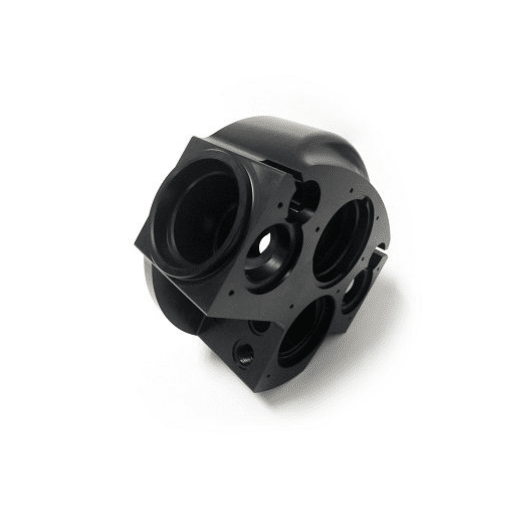
|
Problem |
Likely Cause |
Solution |
|---|---|---|
|
Surface smearing or melting |
Heat buildup; speed too high or feed too low |
Reduce spindle speed or increase feed rate; add flood coolant or air blast |
|
Burrs and poor surface finish |
Dull tool or incorrect geometry |
Replace or sharpen tool; verify positive rake angle and sharp edge radius |
|
Part warps after unclamping |
Excessive clamping force or residual stress |
Use soft jaws or vacuum fixture; implement rough/finish cycle with 24-hour rest |
|
Chipping or cracking during cut |
Impact from dull tool or residual stress in stock |
Use sharp tools; pre-anneal stock if needed; reduce depth of cut |
|
Centerline porosity exposed |
POM-H stock with internal voids |
Switch to POM-C for thick sections; inspect stock before machining deep holes |
|
Long stringy chips wrapping tool |
Insufficient chip breaking |
Increase feed rate; add chip-breaking cycle; switch to single-flute tool for slotting |
|
Tolerance drift during long runs |
Tool wear or thermal expansion |
Replace tools at scheduled intervals; use flood coolant for temperature stability |
Most POM CNC machining problems trace back to one root cause: heat. If you control temperature at the cut zone, you prevent the majority of defects listed above.
Sourcing Stock for POM CNC Machining
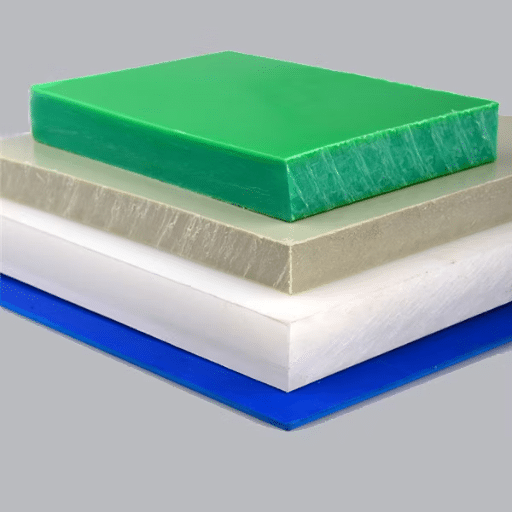
Achieving product quality needs source quality. It has never been acceptable for a POM rod or sheet to have marginal characteristics or to include artificial elements because of the quality loss in the machining process.existent or contaminated not storing POM rod and sheets properly. No doubt these features will drastically reduce machinability.
Some Things to Look For in Your POM Stock
Demand by grade and product name and avoid generic terms like POM rod and acetal stock—specify brand names: “BASF Ultraform N2320 rod” or “Celanese Hostaform C27021 sheet.” This protects you from stock substitutions producing a part with different machinability characteristics or end-property values.
Test the melt flow index (MFI) of your stock; this data always forms part of the manufacturer’s technical data sheet. MFI is by far the most likely of the physical properties to guarantee adherence to the grade specification. Any MFI deviation of 10% from nominal indicates that either incorrect grade or the batch is off-spec.
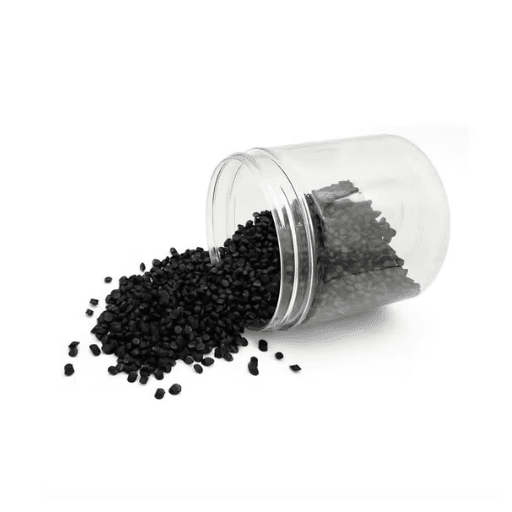
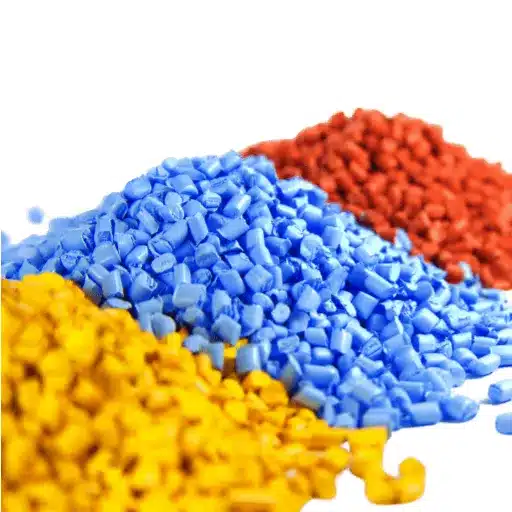
Inspect True-C for color by mass reflectance. A high-quality copolymer will typically be one-color clear or opaque white without yellowing, discoloration, and visible inclusions. All copolymers in black and color should have uniform distributed pigmentation without streaking.
Which COA-Handling Says About Machining Stock
A manufacturer’s Certificate of Analysis (COA) acts as proof of quality for the particular stock lot compared to standard grades. This certificate comprises all the geometric quantities, including MFI, density, and some key mechanical properties based on the manufacturer’s quality standard. For the machinist or fabrication house, it gives an extraordinary confidence in respect to how the material properties are changing the chip formation and dimensional stability.
A part sold for use in any automotive, medical, or food-contact service must now require COA documentation as a traceable approach—it will likely be called for by the quality audits of the buyer.
The Risk of Generic or Unverified Stock
Typically unchecked Chinese trading enterprises stock commodity POM-grade materials under a copyrighted brand figment, minus physical traceability of documentation. If you machine it into a simple non-critical part, the material will suffice; this will not fulfill the application requirements of mechanical properties. In the face of uncertainty, generic stocks are not worth the price savings for precision parts under loading, in chemical exposure, or in regulated circumstances. Verified branded stock must be the long-term choice for machining where usage of polyoxymethylene is critical.
At Yifuhui, we stock certified POM rod and sheet in BASF Ultraform, Celanese Hostaform, Polyplastics DURACON, Kolon KOCETAL, and Formosa FORMOCON grades. Every shipment includes the manufacturer-issued COA, MSDS, and applicable compliance certificates. Our 25 kg minimum order makes branded-grade stock accessible for prototype and low-volume production machining.
Request a quote for certified POM machining stock, specify your grade, form, and quantity, and we will confirm availability, lead time, and documentation within 24 hours.
Conclusion
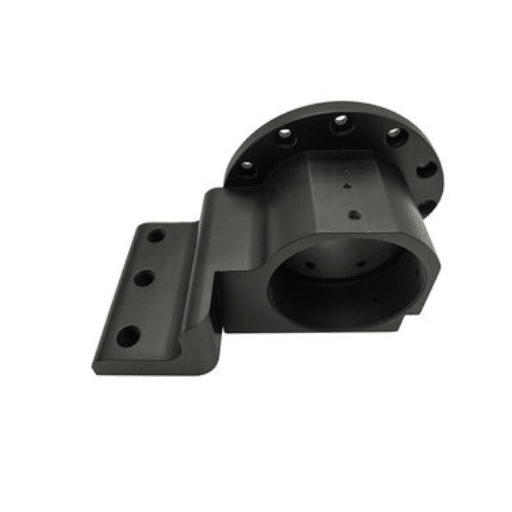
By taking the appropriate approach, POM CNC machining can be very rewarding in precision plastic manufacturing; executed correctly according to the discipline, this process essentially boils down to three basic guidelines for distinguishing between successful jobs and wide amounts of scrap.
Opt for the right grade. Though POM-H promises good material stiffness and exceptional surface finish, there is a certain porosity in thick sections. POM-C is an alternative, marginally cheaper to process but also offering void-free reliability, better chemical resistance, and a wider machining window. One should not adjust the application but rather match the material.
Use sharp tools with rather aggressive feeds. Dull tools and timid feeds bring heat generation; heat, in turn, destroys the dimensionality of POM. Single-point carbide tools with positive rake profiles should be replaced well before they wear out. These should be employed with the chip loads needed for clean cutting.
Control the stresses during the entire process. Mild fixturing, symmetrical machining strategies, and rough-rest-finish in two passes are the means of frustrating the wood’s annoying habit of warping. The 24-hour rest period between roughing and finishing is simply an insurance against rejection.
The global POM market now exceeds USD 3.6 billion annually, with precision machined components representing a growing share driven by automotive lightweighting, medical device miniaturization, and industrial automation. Shops that master POM CNC machining, and understand the full range of POM machining parameters across branded grades, position themselves to capture work in all three sectors.
Ready to machine your next POM project with certified, traceable stock? Contact Yifuhui with your grade requirement, part specifications, and quantity, we will confirm availability, provide the COA documentation you need, and ship from our Suzhou warehouse to your facility via Port of Shanghai.
Frequently Asked Questions
The best cooling solution for machining POM is?
For most operations, the best choice is flood cooling, with soluble oil emulsions at a 5% to 8% concentration. It keeps the correct temperature under control and properly flushes chips. A blast of compressed air will suffice for light de-greasing. No dry, heavy roughing because it will heat up the cutting zone and damage the material.
Is it possible to achieve tight tolerances while machining POM?
Yes. Standard tolerances are ±0.1 mm. Tighter tolerance may be kept, for example ±0.02 to ±0.05 mm, and that depends upon the tool that is selected for machining good fixturing. An obvious stumbling block to this is the material’s stress release warpage, not the material itself.
How can I prevent POM from warping after machining?
Use a two-step plan: first, machine rough to a size of 0.5 to 1.0 mm less than the final size, let it remain for 24 hours to relieve internal stresses, and then commence final machining operations. Make sure to use a clamping pressure that is gentle so as not to introduce additional spring effect (like soft jaws or vacuum fixtures). Equally critical is to machine the balanced set of features in a balanced sequence.
Can I say that machining POM means to be the best?
Delrin (POM-H) produces a higher-quality surface finish and higher stiffness, but in thicker walls it gets centerline porosity. Acetal Copolymer (POM-C) has no voids, is chemically more resistant and is generally more forgiving of machining. Yet again it depends on the geometry of the part and the necessity of the application as to whether or not one material maybe superior to the other.
How do I achieve the correct spindle speed for machining POM?
POM CNC machining RPM specific to one material and operation is insufficient because it should be based on surface speed. For milling 150-300 m/min to begin may be the choice for surface speed. This is about 8,000-16,000 RPM for a 6 mm end mill. Adjust according to chip formation-horrible, powdery chips mean you are rubbing, then change feed or RPM.
Where do I purchase certified rod and sheet POM for machining?
Supporting a distributor products are a must if you want to verify integrity. Not so much information has been posted about fake or unverified goods with off-spec properties. These products are known for being labeled as counterfeits or left without any traceable documentation. Nevertheless, starting from a minimum of 25 kg, Yifuhui stands behind the BASF Ultraform, Celanese Hostaform, Polyplastics DURACON grade certifications by having total COA.