




The acetal rod of 12 mm diameter looked lovely from outside. It was white, smooth, and precisely grounded to size. But the inside was not so pretty. When a machinist at a German pump factory parted the rod for making valve seats, a spongy core was visible in the cross-section, center-line-through-porosity that rendered the part unusable for any application demanding sealing integrity. The supplier had dispatched homopolymer POM rod without any sort of warning, therefore leaving the buyer in ignorance of the one limitation that any engineer with some experience in the field knows: acetal-homopolymer rods are strong in mechanical properties only at the cost of an inborn vulnerabilty of the structure that copolymer applications don’t face.
It is a fact that polyformaldehyde homopolymer rod has been specified. From the point of view of machinability, wear resistance, and dimensional stability, it is the plastic that ranks among the engineering plastics available in stock shape form and is one of the common resins wrongly specified several times. Engineers and purchasing agents who gain an understanding of when POM homopolymer rod is justified, when a copolymer rod would be a safer choice, and which resin grades guarantee extruded stocks for filling up the most consistent way will be able to make less costly mistakes and quicker qualification decisions.
In this guide, the practical aspects of POM homopolymer rod are discussed and opportunities for application and limitations are matched with real-life scenarios. For every purchaser, the highly significant center-line porosity problem is discussed, and thus the performers of the branded resin grades — BASF Ultraform, Celanese Hostaform, Polyplastics DURACON—supplied premium acetal shapes of rod form are explained. Be it sourcing rod for CNC machining, evaluating extruded stock for a production line, or selecting POM resin for the extrusion of rods, you will be leaving with a set of clear criteria on choosing the right material.
What Is Polyoxymethylene Homopolymer Rod?
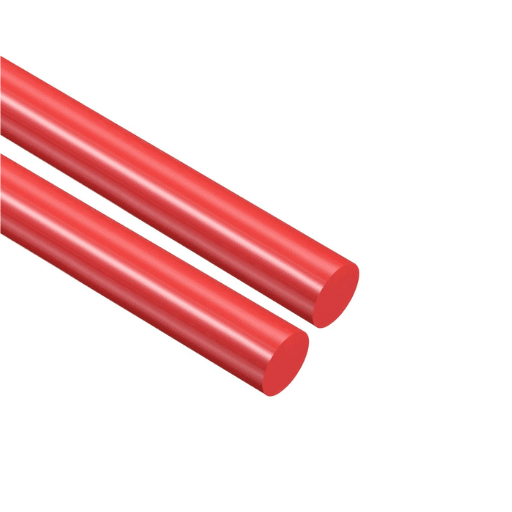
Polyoxymethylene homopolymer rod is also called POM-H rod, acetal homopolymer rod or Delrin rod manufactured and supplied by DuPont. It is a semi-crystalline material that can be extruded into the stock. Extruded shapes like round rod, billet, tubular rondelle etc. are desired for precision machining. Anhydrous formaldehyde polymerized into highly linear chains of (-CH2O-)2 gives a regular molecular chain. This crystalline regularity is responsible for the outstanding performance profile of POM-H: much higher strength, stiffness and surface hardness compared to its copolymer counterpart.
DuPont Delrin is a widely-used brand in homopolymer which is usually supplied as finished bodies instead of resin used for injection molding. Some of the other homopolymers that are used for rod manufacture are Ensinger TECAFORM AD (based on Delrin 150) series, Roechling Sustarin H, and Mitsubishi Chemical Acetron.
It is essential to distinguish POM homopolymer rods from POM copolymer rods. It may look the same, machine the same, and have applications in common, yet the molecular structures are different with relevance to the performance in hot water, alkaline environments, and sections which allow for quite efficient machining as per the conditions. This is the basis for a correct specification.
[Need help selecting the right POM grade for your application? Tell us your operating conditions and we’ll identify the appropriate branded resin — from 25 kg trial orders to full container loads.]
Key Properties of POM Homopolymer Rod
The POM homopolymer rod combines properties making it the preferred stock shape for precision mechanical components in dry control. This is considered by the comprehensive APT on the basis of key advantages versus copolymer rods in the area of mechanical and tribological properties as well as an unenviable list of disadvantages versus homopolymer rod in the area of thermal and chemical stability.
Mechanical Properties
POM-H rods exhibit tensile strength typically in the range of 66–79 MPa, about 10–15% higher than counterparts made of POM copolymer. The flexural modulus lies around 2.8–3.6 GPa, again light-years ahead of the copolymeric versions for stiffness when any load is applied. Compressive strength improves in roughly the same manner, favoring the homopolymer rod for bushings, thrust-washer applications, and structural spacers where deformation resistance is required.
Another putative mitigation would be its hardness. Shelf wear is given a better chance to prolong the life of POM-H, showing hardness measured in Shore D87–89 and Rockwell M94–95. This contrast in hardness over a largely softer surface allows easing rather than seizing, in a case of mating surface engendering friction, but tolerances retain their dimension strictly in wear service.
The fatigue resistance is high-capacity. POM homopolymer rod under- goes cyclic loading conditions that would degrade alternative materials much faster, contributing to its routine use in spring-loaded clips, snap-fit assemblies, and cyclic mechanical components.
Thermal Properties
POM homopolymer rod has a melting point between 175 and 182 degrees centigrade, higher than POM copolymer’s range of 160 to 175 degrees. The heat deflection temperature at 1.8 MPa is approximately 124 to 136 degrees centigrade, according to certain test standards. A long-term continuous service temperature in dry air typically hovers around 85 to 90 degrees centigrade, but intermittent exposures are likely to be as high as 150 degrees centigrade.
The coefficient of linear thermal expansion (CLTE) in the longitudinal direction for POM-H is approximately 12-13 x 10^-5 / K. This low CLTE vis-à-vis solid PA66 or even polypropylene favors dimensional stability, thus making POM rod a potential candidate for precision machined components.
Tribological Properties
Under dry conditions, the POM homopolymer rod has a kinetic coefficient of friction between 0.20 and 0.25 when mated with steel. These self-lubricating properties, along with excellent abrasion resistance, make them the standard bearings, bushings, slide pads, and wear strips where lubrication is not provided from outside. The specified bearing material may be filled with PTFE to lower its kinetic coefficient of friction to an additional degree toward 0.12–0.15 for uses with this consideration.
Chemical Resistance
For high chemical resistance, POM-homopolymer rod is generally resistant to aliphatic hydrocarbons, oils, fuels, and most organic solvents. In particular, it has excellent resistance to gasoline-like fuels, diesel fuel, and ethanol fuel blends. But the chemical resistance of this class of materials is limited. Strong acids, strong bases, and oxidizing chemicals are attacking it. POM-H suspends 4–9 in terms of pH resistance, which is proportionally poor if it is compared with the copolymer. Extended exposure to hot water in excess of 60°C is considered a hydrolytic degradation. Thus, heat exposure with hot water or steam will negatively affect POM-homopolymer.
POM Homopolymer Rod vs. Copolymer Rod: The Critical Differences
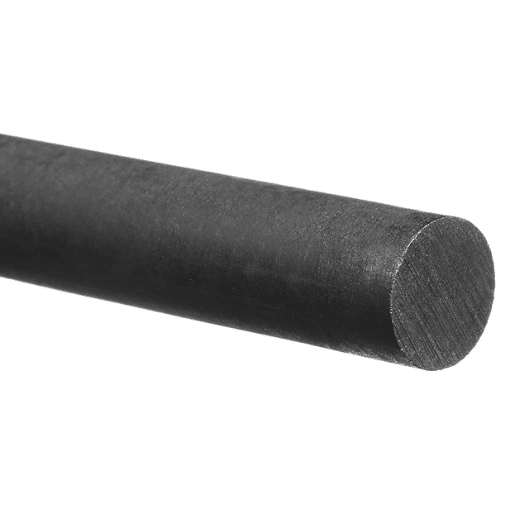
Choosing between homopolymer and copolymer rod comes down to understanding which properties your application actually needs. The following comparison table summarizes the practical differences that drive specification decisions.
|
Property |
POM Homopolymer Rod (POM-H) |
POM Copolymer Rod (POM-C) |
|---|---|---|
|
Tensile Strength |
66–79 MPa |
60–70 MPa |
|
Flexural Modulus |
2,800–3,600 MPa |
2,500–2,800 MPa |
|
Melting Point |
175–182°C |
160–175°C |
|
Continuous Service Temp (Dry) |
Up to 90°C |
Up to 100°C |
|
Hydrolysis Resistance |
Up to ~60°C |
Up to ~85°C |
|
Chemical Resistance (pH) |
4–9 |
4–13 |
|
Centerline Porosity |
Higher |
Lower |
|
Surface Hardness |
Higher (Shore D 83–85) |
Slightly lower |
|
Cost |
Higher (premium grades) |
Lower |
|
Common Brands |
Delrin, TECAFORM AD, Sustarin H, Acetron |
Hostaform, Ultraform, DURACON, KOCETAL, FORMOCON |
While sourcing white acetal rod for machined insulin pen components at a Swiss medical device firm, the procurement manager, Marcus, chose homopolymer rod due to higher stiffness. The quality team firmly rejected the first lot due to the exposure of centerline porosity in the cross-section during the machining process—a typical breeding ground for bacteria and a sure spoilage of product sterility. Regarding the stability of the matter, this was immediately stopped later by collectively accepting the negligible difference in stiffness that distinguished copolymer rod. The moral: Homopolymer is not for an unfit application that may only stress its many technical strengths.
Centerline Porosity: The Hidden Flaw in Homopolymer Rod
One of the most important products when it comes to the limitation of POM homopolymer rod is its centerline porosity-the issue that is most likely to elicit unsought problems in production, for that matter. It is not a defect due to the manufacturing process, as such, but instead is a direct result of the polymerization chemistry of the homopolymer.
What Causes Centerline Porosity
Formaldehyde gas is a byproduct forming during the thermal decomposition of the melt in the extrusion of POM homopolymer rods and, in a thick-walled extrusion, gets entrapped in the exact center of the rod, while the surface is the first to cool and solidify, blocking its path to surface exhausting. Thus is born the final product of a porous, gas-filled, striped middle with a rod; a corening, to be frank about it.
Rod porosity is most aggressive regarding core diameter. Rods larger than 20 mm diameter also appear to exhibit minimally enhanced porosity as the gas can escape before the skin solidifies. Rods of larger diameter may present with associated porosity, thus threatening structural integrity.
Why It Matters
What kind of problems arises when centerline porosity is generated?
1. Structural weakness: The core porosity leads to the weakening of the effective cross-section. The load is directed perpendicular to the whole diameter in certain applications. Porosity can reduce the strength from 10–20% compared to nominal properties from standard test specimens devoid of porosity.
2. Leakage: In fluid-engineering components like valve seats, pump pistons, and manifolds, centerline porosity tends to establish continuous channels from the bore to the outside diameter. No care in machining can remain steadfast to the sealing mechanism.
3. Bacterial harborage: Certain porous {surfaces_ coatings} harbor organic matter and microorganisms in voids in food contact and medical applications, which cannot be cleaned or sterilized effectively. This is why centerline porosity is questionable hence most applications which are FDA compliant, medical, and food largely prefer to specify copolymer rod which provides vastly decreased roughness created by centerline porosity.
How to Detect and Manage It
Considering the central porosity design along with rod-diameter fix in place is primary. If an application requires a thick section, then boring out the center interface during milling will remove the porous core, or alternatively, opt for a copolymer rod. Thinning walls on parts machined from smaller-diameter rods do not major much on porous issues.
Investing in high-quality homopolymer rods from places like Ensinger and Roechling, as well as many unmentioned major distributors are capable of issuing center porosity data in selected diameter ranges when they are consulted. When you are sourcing material from any supplier, assertively ask them directly: “What is your stance on the centerline porosity at this diameter, or do you keep test data?” If a supplier cannot address this question, to put it plainly, they do not know engineering materials.
Applications: Where POM Homopolymer Rod Excels

POM homopolymeric rod has dominated in certain applications where mechanical properties hold greater importance over chemical and thermal limitations.
Precision Gear and Power Transmission Components
The high fatigue resistance, stiffness, and surface hardness of POM-H rod make this the favored stock shape for machined gears, cams, sprockets, and pulleys typically operating at sustained mechanical loads. Lesser coefficient of friction causes reduced wear of mating metal surfaces, thereby increasing service intervals of some types of gearboxes and drive mechanisms. For high-speed applications, any PTFE-filled homopolymers rod will also reduce friction and eliminate the need for external lubrication.
Bearings, Bushings, and Engineered Wear Components.
POM homopolymer is the best rod given its low friction, high abrasion resistance, and dimensional stability under load for plain bearings, thrust washers, slider pads, and conveyor rollers. With an absorption rate of just 0.25%, this translates to POM not changing dimensions or swells in damp or wet conditions, unlike nylon, thereby causing swelling or changes in bearing clearances over time.
Automotive Mechanical Components
In automotive applications, POM homopolymer rod is specified for seatbelt pawl mechanisms, door handle return springs, window lift slider components, and fuel system actuator linkages, where dry-running wear resistance and fatigue life assume critical importance. Fuel system components having direct fuel immersion also use copolymer grades mainly for their broader chemical resistance, while replacing homopolymer rod for rigidity on mechanical structure components in one and the same vehicle.
Electronics and Electrical Insulators
POM homopolymer machines into rod with a clean finish to very tight tolerances and thus aids in making good dielectrics, also preferable for precision insulators, connector housings, or switch components where dimensional accuracy and structural integrity are of real concern between them and high-temperature performance.
Industrial Machinery and Equipment.
Some of the industrial machinery that could be made from POM homopolymer rod are impellers for pumps, stems for valves, timing screws, spacers for conveyor belts, and dies for forming. POM has great machinability: chips are clean, and secondary finishing is minimized, with the result that high-volume CNC production is so easily supported.
[Sourcing POM resin for rod extrusion or stock shape production? We stock BASF Ultraform, Celanese Hostaform, and Polyplastics DURACON grades with full COA documentation — minimum order from 25 kg.]
Machining POM Homopolymer Rod: Best Practices
One of the greatest practical benefits of POM homopolymer rod is its outstanding machinability-easy turning, milling, drilling, tapping, and gear-cutting; with few modifications, it works well on equipment commonly used with metals. However, some process specific points need special consideration for tartane action.
Recommended Cutting Parameters
POM-H machines optimally with sharp HSS or carbide tools. Turning cutting speeds between 150 and 300 m/min and milling cutting speeds between 100 and 200 m/min are popular starting points. Feed rates vary from moderate to aggressive-light feed can make the tool rub instead of cut, generating heat that could deteriorate surface finish. The depth of cut is typically at the convenience of the machine capacity, not because of the material objections. POM chips are formed clean and predictable.
Coolant is recommended for deep hole drilling, thread cutting, or ongoing high-speed machining, and for some operations, though not necessarily required. This coolant would be either water-soluble or compressed air. Heavy oil-based coolants are not important and create problems for cleaning subsequent to machining.
Achievable Tolerances
On manually controlled lathe-s and mills, standard machining tolerances within ±0.05 are reliable. For those very diligent and cautious, with a sharp tooling setup, tools in good condition, and a more or less a temperature-controlled shop, tight tolerances of ±0.01 to 0.02 mm can be maintained. The fact that POM-H has very little thermal expansion and equally low moisture absorption values renders it rather dimensionally stable for production during machining as well as post-machining if compared to polyamide or polypropylene.
Surface Finish And Post-Processing
The as-machined surface of POM Homopolymer rod is rather smooth and shiny and necessitates minimal post-processing. In critical applications requiring minimum friction, an hour or two of wet or dry abrasive tumbling over most applications should lead to further surface smoothing. If there is a need for it in application-aesthetics, POM-H can be brought to a mirror-like-polish.
POM’s low surface energy is difficult during adhesive bonding. It might be a better choice to use snap-fit design or ultrasonic welding or mechanical fastening. For processes of joining-insufficient adhesion in spite of necessity-to activate surfaces by means of corona treatment, plasma treatment, or special adhesion promoters is crucial.
From Resin to Rod: The Extrusion Supply Chain Behind Stock Shapes
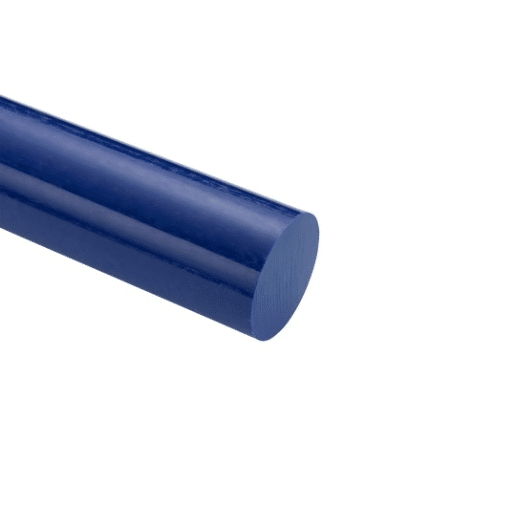
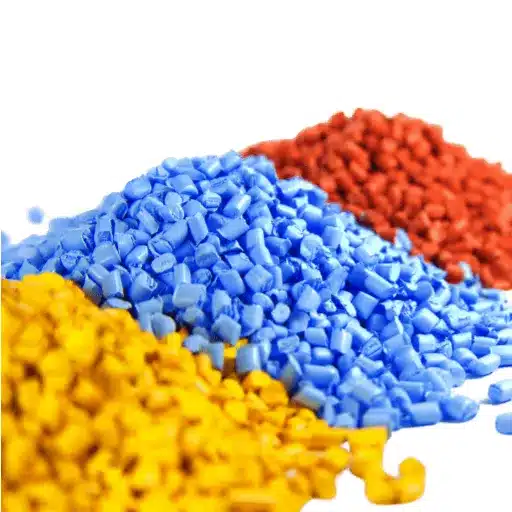
Every rod of extruded POM starts its life as resin pellets. The quality of the final rod depends fundamentally on the choice of the resin grade for extrusion; its consistency, profile of porosity, mechanical properties, and uniformity among batches. The significance of the resin grade is not the connection always seen, but, trustingly, the one that buyers of stock shape should understand.
Which Resin Grades Produce Premium Rod Stock
Homopolymer extrusion is comprised mostly of high-purity homopolymer resin that has fine control over its melt flow index and molecular weight distribution. For POM copolymer rod, which is the primary acetal stock, extruded copolymer alloys are used due to their wider processing window and lower porosity. The most common name-brand grades used for extrusion are:
- BASF Ultraform N2320: Standard grades — for injection molding and extrusion; standard MFI strictness helps maintain consistency in every batch
- Celanese Hostaform standard grade: One of the most commonly used standard-grade materials for extruding rod and sheet in the European supply chain-careful extrusion
- Polyplastics DURACON M90-44: The reference grade for extrusion in Asia, providing consistent lots and batch quality
Should the resin being used in the extrusion remain unknown at a rod supplier, non-traceable supply is signaled. Engineering market extruders specifically opt for the branding and grading system as per their customers, whose end-customers then rely on the consistent qualities of the materials supplied for defined processes of manufacturing.
Why Prime Branded Resin Matters for Rod Consistency
Non-branded generic POM compounds generally tend to vary more in terms of MFI, have broader molecular weight distribution, and do not maintain uniformity in terms of the additives that are mixed in with them. This translates directly into:
- Different consistency of extrusion pressures and line speeds, causing different tube diameters
- Higher centerline porosity due to all-around less stable melt conditions
- Prediction variations in mechanical properties between batches, amounting to a handicap for downstream secondary machining
- Certain visual differences in color and surface with changes in lots
In the interests of quality assurance, it is crucial for extruders and stock shape manufacturers to use branded prime resins for their catagory to obtain a material-specific Certificate of Analysis that explicitly states the quality specifications of the material. The COA normally provides values of melt flow index, resin density, and some mechanical properties of the material as reference values against which the extruder could cross-check his/her base line.
[At Yifuhui, we supply branded POM resin pellets — BASF Ultraform, Celanese Hostaform, Polyplastics DURACON, Kolon KOCETAL, Formosa FORMOCON — with full manufacturer COA and batch traceability. Minimum order 25 kg, FOB Shanghai.]
Grade Selection and Sourcing Considerations
To choose the right POM rod for a certain application, one should make sure that material properties meet the operational criteria and that the supplier can consistently provide the required quality with proper documentation.
Selection Checklist for POM Rod Buyers
Before placing a rod order, confirm the following:
- Operating environment: Dry and controlled with no chemical exposure → homopolymer rod is appropriate. Wet, chemical-exposed, or hot-water-contact → specify copolymer rod.
- Part geometry: Thick sections requiring machining to full depth → copolymer rod avoids centerline porosity issues.
- Sealing requirements: Any hermetic or fluid-sealing function → copolymer rod is strongly preferred.
- Regulatory requirements: FDA food contact, medical device, or pharmaceutical use → specify copolymer rod with documented compliance; verify the grade specifically, not just the material family.
- Temperature exposure: Continuous operation above 80°C in humid conditions → copolymer only. Dry conditions up to 90°C → homopolymer viable.
- UV exposure: Outdoor or prolonged sunlight exposure → specify black grade or UV-stabilized variant regardless of homopolymer or copolymer selection.
Documentation Requirements
It stands to reason that a good rod stock provider should include some material documentation to support receiving inspection and quality systems compliance:
- A Certificate of Analysis or Material Test Report reflecting properties by batch
- Datasheet from the manufacturer of the basic-grade resin used in extrusion
- Compliance declarations when necessary (FDA, RoHS, REACH)
- Dimensional inspection reports showing diameter tolerances and straightness
For those buyers wishing to source rod stock for their qualified production processes, documentations stand mandatorily, not as a mere option — they are one of the requirements for ISO 9001, IATF 16949, and also medical device quality systems.
Global Supply Chain Context
Having been valued at USD 6.28 billion in 2024, acetal rod market is expected to be around USD 9.68 billion by 2032, growing at an annual average rate of 5.8 percent. North America, Europe, and the Asia-Pacific reign as the important consumption regions. Key players of the world market remain Ensinger, Roche (Germany), Mitsubishi Chemical (Japan), and a network of regional extruders and their distributors.
Regarding sourcing from China, there is rod stock available from domestic extruders made by imported branded resin or locally produced materials. The main qualification criterion is always the same, no matter where in the world extrusions are taking place: in which resin grade was said rod extruded; and can the supplier provide evidence in written form for this?
Conclusion: Making the Right POM Rod Decision
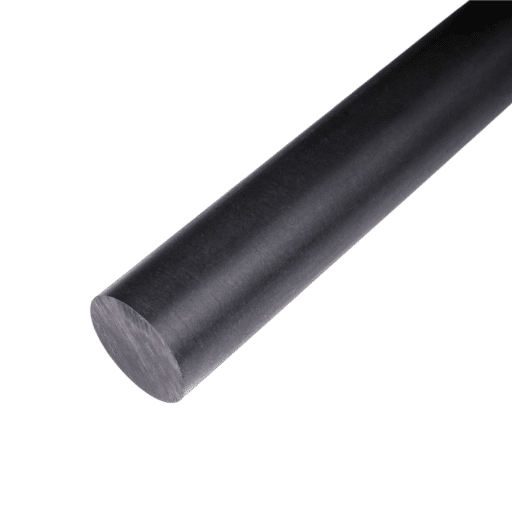
Highlighting never-before-seen superior advantages in the family of acetals are the high strength, rigidity, and wear resistance in the Polyoxy-methylene homopolymer rod, only if these limits of superiority are respected in the optimum. But if line porosity, restriction of hot water resistance, and restricted chemical compatibility limits the choice of its use to gear applications only, homopolymer rod should not be taken as a universal answer but rather as the optimal choice for dry operating structural precision mechanical components where fatigue resistance and dimensional stability come to play.
For sealing up the backfill and exposure to extreme hot water temperatures, POM copolymer rod would be a technically ‘better solution.’ Tradable assets of lower line porosity for a higher trade-in with chemical resistance and excellent hydrolysis stability make a more than equitable trade. AssemblyDescription: MainAxisAlignment in more than 90 per cent of actual-use scenarios is the mechanical setback accompanying this property.
Any extruded rod, homopolymer or copolymer, is going to be only as good as the original resin grade from which it was extruded. Prime resins found under established brand names bring with them all the needed features of consistency, documentation, and traceability for a professional supply chain. If you use rod to create a finished machined part or in extrusion for further processing, the choice to specify by brand and resin grade and to insist on the supply of Certificate of Analysis basic documentation will remain a crucial factor separating reliable production from potential failure.
Key points are:
- The homopolymer rod of POM has an additional 10-15% strength and stiffness on copolymer rod.
- Centerline porosity is a homopolymer drawback and should therefore not be present in sealants and medical-grade applications.
- Copolymer rods are the moisture encountered in chemical exposure, hot water use, and machining of thicker sections.
- The quality of the rods supplied has to be kept in perspective because of the unique properties of materials and extrusion moldability-not necessarily a rod processing factor. A COA-documented prime resin is practically always a paper-grade requirement.
- Machinability is excellent when using a CNC machine with good sharp tooling and rather aggressive feeds.
[Request a POM grade recommendation for your rod extrusion or machining application. Tell us your specifications — operating conditions, diameter requirements, and compliance needs — and we’ll identify the right branded resin grade from our portfolio.]
Frequently Asked Questions
Is Delrin Rod the Same as POM Homopolymer Rod?
Delrin, a brand name for Acetal Homopolymer created by DuPont, is the closest relative of POM homopolymer produced under DuPont specifications. Other homopolymer rod brands contain TECAFORM AD from Ensinger, Sustarin H from Roechling, and generic extruded homopolymer grades. These all have the same base chemistry but display minor formulation differences in their stabilization packages.
Can I use POM homopolymer rod in food-contact applications?
For FDA-compliant grades of POM homopolymer rod can be found, yet in all cases, food-contact applications prefer copolymer rod due to the high porosity in the center. This porosity tends to harbor bacteria in pockets that are difficult to clean and sterilize. If food contact is necessary, specify FDA-compliant documented copolymer rod grades, do not just rely on the material family.
What is the difference between natural and black POM Rod?
The natural (white) POM rod is the standard unfilled grade with no colorant additives. When including carbon black pigment, POM rods are black. Properties of the two (black and natural grades) are very much the same, but black grade resists UV-induced degradation that would cause natural POM to become brittle over time in sunlight.
Would you please explain how the POM bar may be constituted of either homopolymer or copolymer?
The least ambiguous hint would come from the supplier’s documentation. Respectable suppliers would explicitly denote “POM homopolymer” or “POM copolymer” and, ideally, mention the base resin grade. A DSC (Differential Scanning Calorimetry) test would also be capable of discriminating by the melting point: a homopolymer should melt at 175 – 182°C; for a copolymer, the temperature should be 160 – 175°C. For shop-floor identification, the homopolymer rod will feel slightly harder when machined than the copolymer rod and it machines more Brittle.
Is a POM rod permissible for welding or bonding?
POM rod can be welded, while proper bonding to the base polymer is not practically feasible. This is mainly because welding necessitates an additional amount of heat when a stimulating working process is performed. The possibility of welding a POM rod would be through heat-welding equipment, vibration welding machine, or ultrasonic welding for copolymer grades. Homopolymer rod is more complex with welding due to the reduced processing window. Both types have native surfaces with very low energy to allow for easy adhesion. Screws, snap-fit designs, or hot-plate welding provide the most efficient join methods.
What diameter tolerances are standard for an extruded POM rod?
The standard commercial tolerance for an extruded POM rod ranges between ±0.1 and ±0.3 mm depending on the diameter; this means that precision-ground rods — which are typically available for MD up to around 50 OD — resolve to the extent of ±0.02 to ±0.05 mm precision. In the case of tight press fits or reduced bearing clearances, the customer should consider ordering precision-ground rods or make provisions for finishing.