



Marcus spent six hours prepping a batch of ABS motorcycle fairings for a custom paint job. He sanded every edge, wiped every surface with lacquer thinner, and laid down two coats of the same metal primer he used on steel frames. Within three weeks, the finish was spider-webbing and flaking at the panel edges. The lacquer thinner had crazed the plastic. The metal primer had never bonded to the styrenic surface. The entire job had to be stripped and restarted.
If you have ever painted ABS plastic, you have probably faced a version of this problem. ABS is paintable — more so than polypropylene or polyethylene — but it is not forgiving. The wrong primer, or the right primer applied over the wrong prep, will fail.
This guide answers the questions that actually matter. Do you need a primer for ABS plastic? Which type should you use — adhesion promoter, self-etching primer, or a dedicated plastic primer? And how do you apply it so the finish lasts? We will cover six products that work, explain the chemistry that drives adhesion, and walk through a step-by-step procedure you can follow on a garage workbench or a production line.
Need a paint recommendation after priming? See our guide to the best paint for ABS plastic for tested topcoat picks.
Do You Need a Primer for ABS Plastic?

The honest answer: it depends on your paint and your application. If you want a quick verdict tailored to your situation, our companion guide on does ABS need primer gives a straight answer for DIY, automotive, and production use.
You can skip primer if you are using an all-in-one spray paint formulated for plastic, such as Krylon Fusion All-In-One or Rust-Oleum Specialty Plastic. These products contain built-in adhesion promoters that bond directly to clean ABS without a separate primer layer. For light-duty indoor projects — decor pieces, hobby models, or cosmetic touch-ups — this is usually sufficient.
You need a dedicated primer or adhesion promoter in three situations:
- Automotive or exterior applications where the part flexes, vibrates, or faces UV and moisture exposure
- Two-component (2K) urethane or lacquer topcoats that require a compatible base layer
- Production-line finishing where paint failure means warranty claims and rework costs
If you are painting over 3D-printed ABS, an adhesion promoter is strongly recommended. Layer lines and residual oils from the print process create weak points that all-in-one paints cannot bridge reliably.
Primer for ABS Plastic: At-a-Glance Comparison
| Primer / Product | Type | Best For | Standalone or Layer? | Dry Time | Price Tier |
|---|---|---|---|---|---|
| SEM Plastic Adhesion Promoter | Solvent-based promoter | Automotive trim, hard plastics | Standalone or under 2K primer | 5–10 min | $$ |
| Bulldog Adhesion Promoter | Universal promoter | General repair, multi-material projects | Standalone or under primer | 10–15 min | $$ |
| KBS Fusion SEP | Self-etching primer | Rigid ABS, PC, acrylic | Direct to plastic | 20–30 min | $$ |
| Rust-Oleum Specialty Plastic Primer | 1K plastic primer | DIY, indoor hobby projects | Direct to clean ABS | 20 min | $ |
| Tamiya Fine Surface Primer | 1K lacquer primer | Hobby models, miniatures, 3D prints | Direct to sanded ABS | 20 min | $$ |
| U-POL 2K High Build Primer | Two-component urethane | Automotive, industrial, outdoor | Over adhesion promoter | 30–60 min | $$$ |
Use this table as a quick decision reference. The sections below explain when each type is the right choice and why.
Why ABS Plastic Needs the Right Primer
ABS is a terpolymer: acrylonitrile provides chemical resistance and thermal stability, butadiene delivers impact toughness, and styrene gives rigidity and a glossy surface finish. This combination makes ABS one of the most paintable engineering plastics, but it also creates specific vulnerabilities.
The surface energy of ABS is approximately 42 mN/m. That is high enough for paints to wet and bond without flame or corona treatment — polypropylene, at roughly 30 mN/m, is not so forgiving. However, the butadiene rubber phase in ABS is sensitive to aggressive solvents. Lacquer thinner, acetone, and MEK will craze or dissolve the surface rather than prepare it. Many painters learn this the hard way.
Mold release agents, machining oils, and even fingerprints leave hydrophobic residues that repel primer. Sanding solves part of this problem by creating mechanical “key” points, but it does not address chemical bonding. A primer formulated for plastics contains resins and solvents that micro-etch the surface and create a bridge between the ABS substrate and the topcoat. If you want to go deeper on the chemistry behind these bonds, our detailed breakdown of paint adhesion on ABS plastic covers the surface science, primer selection, and industrial solutions in full.
Metal primers fail on ABS for two reasons. First, they are optimized for ferrous adhesion through corrosion inhibition, not for styrenic plastics. Second, their solvent systems are often too aggressive for the butadiene phase. The primer may look fine when wet and fail catastrophically days later.
Types of Primers for ABS Plastic
Plastic Adhesion Promoters
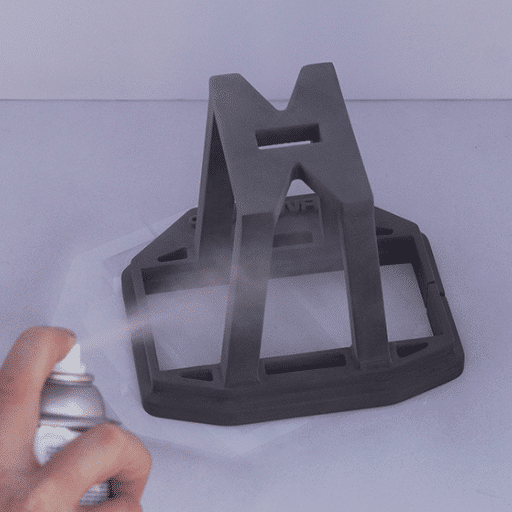
Adhesion promoters are solvent-based liquids that chemically alter the plastic surface on a microscopic level. They slightly swell the substrate, allowing the primer resins to penetrate and lock in place. On ABS, they are the gold standard for applications where the finish must survive flexing, vibration, or temperature cycling.
Best for: automotive interior trim, bumper inserts, motorcycle fairings, any ABS part that will see mechanical stress or outdoor exposure.
The two most widely used products in this category are SEM Plastic Adhesion Promoter and Bulldog Adhesion Promoter. SEM is the OEM repair standard — specified in service manuals for Ford, GM, and Toyota interior trim. Bulldog is a transparent universal agent that works across ABS, polycarbonate, nylon, and polyurethane, making it the preferred choice when a project involves multiple plastic types.
Self-Etching Primers (SEP)
Self-etching primers contain a mild acid that bites into smooth, non-porous surfaces. They were originally developed for aluminum and galvanized steel, but formulations like KBS Fusion SEP have been adapted specifically for hard plastics including ABS, polycarbonate, and acrylic.
Best for: rigid ABS parts that will not flex significantly — electronics housings, appliance panels, display bezels.
SEP creates a strong mechanical and chemical bond without requiring a separate adhesion promoter. The trade-off is that it is less forgiving on thin or stressed parts. Test on scrap before applying to a finished component.
1K Plastic Primers
Single-component spray primers are the most accessible option. They are pre-mixed, require no catalyst, and dry by solvent evaporation. Products like Rust-Oleum Specialty Plastic Primer and Tamiya Fine Surface Primer fall into this category.
Best for: DIY projects, hobby models, light-duty indoor applications, and situations where convenience matters more than extreme durability.
Rust-Oleum Specialty Plastic Primer bonds aggressively with minimal prep on clean ABS. Tamiya Fine Surface Primer is the standard in model-building circles for its fine atomization and ability to fill minor surface imperfections on 3D-printed parts. Both are lacquer-based, so they should not be used under incompatible topcoats without checking manufacturer data sheets.
2K Urethane High-Build Primers
Two-component catalyzed primers offer maximum durability, fill, and chemical resistance. They are mandatory for automotive refinish, marine, and industrial applications. The catalyst triggers cross-linking, producing a film that is far tougher than any 1K product.
Best for: automotive exteriors, outdoor enclosures, production-line finishing, any application where the coating must last years under harsh conditions.
On ABS, a 2K primer should never be applied directly. Always use a plastic adhesion promoter first. The aggressive solvents in some 2K systems can attack the butadiene phase if they contact raw ABS. U-POL High Build Primer is a widely used option that blocks well over SEM or Bulldog.
The 6 Best Primers for ABS Plastic
SEM Plastic Adhesion Promoter — Best for Automotive ABS
SEM Products has been the automotive refinish standard for decades. Their Plastic Adhesion Promoter is specified in OEM repair manuals for interior trim, bumper covers, and mirror housings because it survives the flex and temperature cycling that ABS automotive parts endure.
What it is: A solvent-based adhesion promoter that micro-etches ABS and creates a chemical bonding layer.
Best for: car door panels, dashboards, motorcycle fairings, ABS bumper inserts, and any part that flexes or vibrates.
Limitations: Must be topcoated within the manufacturer’s recommended window. It is not a standalone finish — it is a bonding layer.
Verdict: If you are painting ABS that will live on a vehicle, start here. No other product has the same track record in OEM repair environments.
Bulldog Adhesion Promoter — Best All-Round Bonding Agent
Bulldog is a transparent, universal adhesion promoter that works across a wide range of plastics. It does not require the same brand-matched topcoat protocol that some automotive systems demand, which makes it the go-to for custom shops and mixed-material projects.
What it is: A clear solvent-based promoter for ABS, PC, PA, PUR, PVC, and other low-energy plastics.
Best for: general repair, custom fabrication, and projects where you are priming multiple plastic types at once.
Limitations: Slightly longer dry time than SEM. Overspray on adjacent painted surfaces should be avoided.
Verdict: The most versatile adhesion promoter on this list. If you keep one promoter in your shop, Bulldog is the rational choice.
KBS Fusion SEP Self-Etching Primer — Best for Hard Plastics
KBS Coatings developed their Fusion SEP specifically for rigid hard plastics that other primers struggle to grip. It combines the etching action of an SEP with a resin system formulated for smooth non-porous surfaces.
What it is: A self-etching primer in aerosol and liquid formats, designed for ABS, polycarbonate, and acrylic.
Best for: rigid electronics housings, appliance panels, display bezels, and any ABS part that will not see significant flex.
Limitations: Less suitable for thin or stressed ABS parts. The etching action can weaken very thin sections.
Verdict: Excellent for industrial and electronics applications where rigidity is the dominant design constraint.
Rust-Oleum Specialty Plastic Primer — Best Budget Pick
For light-duty projects where cost and convenience matter, Rust-Oleum Specialty Plastic Primer is the most accessible option. It requires minimal prep and bonds well to clean ABS without sanding in many cases.
What it is: A 1K acrylic-enamel spray primer formulated for plastic substrates.
Best for: indoor decor, hobby projects, costume pieces, and prototypes that will not face heavy wear.
Limitations: Thinner film than premium options. Needs two coats minimum. Poor performance under extreme heat or UV exposure beyond two to three years.
Verdict: The right choice when the project does not justify a $50 adhesion-promoter-plus-2K system. Do not use it for automotive or outdoor work.
Tamiya Fine Surface Primer — Best for Hobby and Models
Tamiya’s Fine Surface Primer is the standard in scale modeling, Gundam building, and miniature painting for a reason. It atomizes finely, adheres aggressively to styrenic plastics, and provides a uniform base for detailed paintwork.
What it is: A lacquer-based spray primer in white, grey, and pink variants, optimized for model plastics including ABS.
Best for: scale models, action figures, 3D-printed ABS prototypes, and any project where surface detail must be preserved.
Limitations: Lacquer solvents can craze thin or stressed ABS parts. Always test on scrap. Smaller can size means higher per-ounce cost than hardware-store primers.
Verdict: If you are painting detailed ABS models or 3D prints, Tamiya is worth the premium. For large flat panels, a hardware-store primer is more economical. Priming a printed part brings its own challenges, from layer lines to residual oils — our step-by-step walkthrough on how to paint 3D-printed ABS parts shows you how to take a print from layer lines to a smooth finish.
U-POL 2K High Build Primer — Best for Automotive and Industrial
U-POL’s 2K high-build system is designed for professional refinish environments where maximum durability and fill are non-negotiable. It blocks sanding scratches, fills minor imperfections, and creates a rock-solid base for basecoat and clearcoat.
What it is: A two-component catalyzed urethane primer requiring mixing with hardener before application.
Best for: automotive exteriors, off-road parts, marine applications, and production-line finishing.
Limitations: Must be applied over an adhesion promoter on ABS. Requires proper PPE, spray equipment, and controlled booth conditions. Not a DIY brush-on product.
Verdict: Mandatory for any ABS part that will face UV, moisture, chemicals, or abrasion. Do not skip the adhesion-promoter layer underneath.
How to Prime ABS Plastic: Step-by-Step
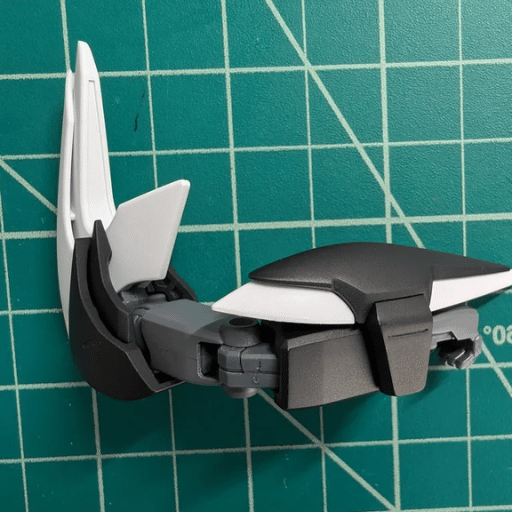
Follow this procedure for consistent adhesion on any ABS surface.
Step 1: Clean thoroughly. Wash with mild detergent and warm water to remove dirt and grease. Follow with isopropyl alcohol (70% or higher) on a lint-free cloth. Do not use lacquer thinner, acetone, or MEK — they will craze the butadiene phase in ABS.
Step 2: Light sanding. Use 220 to 400 grit sandpaper to remove gloss and create mechanical key points. Wet sanding with 400 grit reduces dust and heat buildup. The goal is a uniformly matte surface, not deep scratches.
Step 3: Tack cloth. Wipe away all dust with a tack cloth or compressed air. Any particle left on the surface will become a bump in the finish.
Step 4: Apply adhesion promoter (if required). For automotive, industrial, or 2K topcoat systems, spray a thin, even coat of SEM, Bulldog, or equivalent. Hold the can 8 to 12 inches away. Allow 5 to 15 minutes of flash time before the next layer.
Step 5: Apply primer. Use 1 to 2 light coats rather than one heavy coat. Heavy coats run, sag, and trap solvent that weakens adhesion. Maintain consistent spray distance and overlap each pass by 50%.
Step 6: Allow proper cure time. Follow the manufacturer’s technical data sheet. Typical flash times range from 10 minutes for adhesion promoters to 30 to 60 minutes for 2K primers before sanding or topcoating.
Step 7: Sand primer if needed. For high-gloss finishes, lightly sand the cured primer with 600 to 800 grit wet paper before applying the topcoat. This removes any dust nibs and creates an even smoother base.
For the complete painting procedure including topcoat selection and troubleshooting, see our how to paint ABS plastic guide.
Common Mistakes When Priming ABS Plastic
The most frequent failures are avoidable.
Using metal primer on ABS. Metal primers are formulated for corrosion inhibition and ferrous adhesion. They do not bond to styrenic plastics and their solvent systems may attack the substrate.
Cleaning with lacquer thinner or acetone. These solvents dissolve the butadiene rubber phase in ABS, causing crazing — a network of fine cracks that ruins the surface and guarantees paint failure.
Skipping sanding on glossy molded surfaces. Fresh-from-the-mold ABS has a glossy skin that repels primer. Even adhesion promoters perform better on a matte, mechanically keyed surface.
Applying one heavy coat. Thick primer layers trap solvent, extend cure time, and increase the risk of solvent attack on the plastic. Two light coats always outperform one heavy coat.
Ignoring topcoat compatibility. A lacquer primer under a 2K urethane topcoat, or vice versa, can lift, wrinkle, or delaminate. Check the technical data sheets for both products before pairing them.
Primer and Topcoat Compatibility Guide
| Primer Base | Compatible Topcoats | Incompatible / Caution |
|---|---|---|
| Adhesion promoter | Acrylic enamel, urethane, base coat | None noted — universal bridge layer |
| 1K lacquer primer | Lacquer, acrylic enamel | Some 2K urethanes — verify TDS |
| 2K urethane primer | 2K urethane base and clear | Solvent-heavy lacquers — test first |
| Self-etching primer | Acrylic enamel, urethane | Uncatalyzed lacquer — may lift |
Always test your primer-topcoat combination on a scrap piece of the same ABS before committing to the finished part. Temperature, humidity, and film thickness all affect compatibility.
A Note for Manufacturers Sourcing ABS Resin
If you are specifying ABS for parts that will be painted in production, the resin grade matters as much as the primer. Not all ABS is created equal for coating applications.
Plating-grade ABS is formulated with a matte surface texture that promotes adhesion and is commonly specified for parts that will receive both paint and vacuum-metallized finishes. Low-mold-release grades reduce the surface contamination that causes primer failure on automated coating lines. ABS/PC alloys offer higher heat deflection temperatures, allowing more aggressive bake cycles that accelerate primer cure without substrate distortion.
At Yifuhui, we supply branded ABS resin with full Certificate of Analysis documentation and can advise on grade selection for painted-component applications. Whether you need a general-purpose ABS for consumer goods or a specialty grade for automotive interior trim, we stock options starting at 25 kg MOQ.
Request a quote on paintable-grade ABS resin — response within 24 hours.
Frequently Asked Questions
Can you use regular metal primer on ABS plastic?
No. Metal primers are formulated for ferrous substrates and corrosion inhibition. They lack the resin chemistry to bond to styrenic plastics, and their solvent systems may attack the butadiene phase in ABS. Always use a primer specifically labeled for plastic or automotive multi-substrate use.
What happens if you don’t prime ABS before painting?
If you are using an all-in-one paint formulated for plastic — such as Krylon Fusion — you may get acceptable results on clean, lightly sanded ABS for indoor use. For automotive, outdoor, or high-wear applications, skipping primer almost guarantees peeling, chipping, or flaking within weeks to months.
Is lacquer thinner safe on ABS plastic?
No. Lacquer thinner, acetone, and MEK all dissolve or craze ABS. The butadiene rubber phase is particularly vulnerable. Use isopropyl alcohol (70% or higher) for cleaning and degreasing ABS before priming.
How long should primer dry on ABS before painting?
Dry times vary by product. Adhesion promoters typically flash in 5 to 10 minutes. 1K plastic primers need 15 to 30 minutes. 2K urethane primers require 30 to 60 minutes before sanding or topcoating. Always follow the manufacturer’s technical data sheet — temperature and humidity affect cure speed.
Can you bake primer on ABS to speed curing?
Caution is required. Standard ABS has a heat deflection temperature of 80 to 100 °C at 1.8 MPa. Force-curing above 80 °C can warp or distort the part. If accelerated cure is necessary, use a low-temperature bake cycle (40 to 60 °C) and verify the specific ABS grade’s thermal limits first.
What is the difference between an adhesion promoter and a primer?
An adhesion promoter is a thin solvent-based layer that chemically prepares the plastic surface for bonding. A primer is a thicker film-building layer that provides fill, color uniformity, and a mechanical base for the topcoat. On ABS, an adhesion promoter is often used as a first layer, followed by a primer, followed by the topcoat. Some all-in-one products combine these functions.
Do 3D-printed ABS parts need primer?
Yes, strongly recommended. FDM 3D-printed ABS has layer lines and may retain oils from the printing process. A primer — particularly a fine-surface primer like Tamiya — fills minor layer lines and creates a uniform base. Sanding before priming is essential on printed parts.
Conclusion
Choosing the right primer for ABS plastic is not about buying the most expensive product on the shelf. It is about matching the primer chemistry to the application demands.
For automotive trim and parts that flex, use SEM Plastic Adhesion Promoter or Bulldog as a bonding layer. For rigid electronics housings and appliance panels, KBS Fusion SEP provides strong adhesion without a separate promoter. For hobby models and 3D-printed parts, Tamiya Fine Surface Primer preserves detail while creating a paint-ready base. For outdoor and industrial work, U-POL 2K High Build over an adhesion promoter is the only rational choice. And for light-duty DIY projects, Rust-Oleum Specialty Plastic Primer gets the job done without breaking the budget.
The common thread across every successful application is prep. Clean with isopropyl alcohol, not lacquer thinner. Sand to a matte finish. Apply thin, even coats. And respect the cure times on the technical data sheet.
Ready to paint? Read our guide to the best paint for ABS plastic for topcoat recommendations that pair with each primer type. If you are sourcing ABS resin for production, contact our team for grade-specific guidance — 25 kg trial orders are available with full COA documentation.