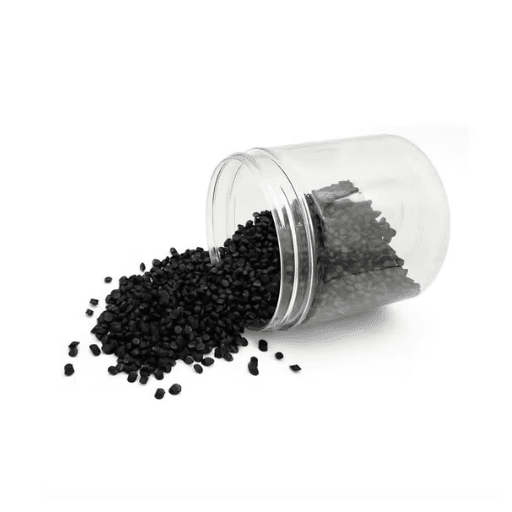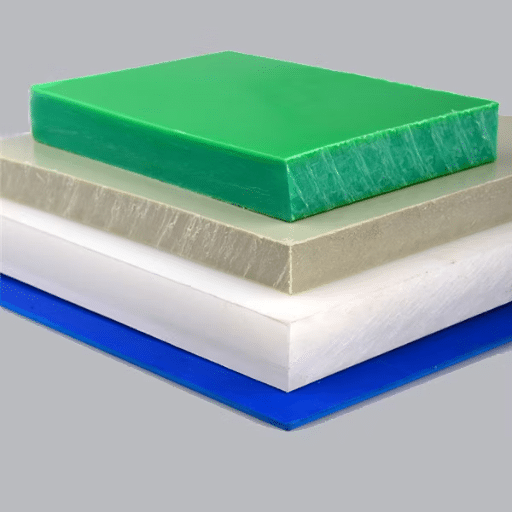

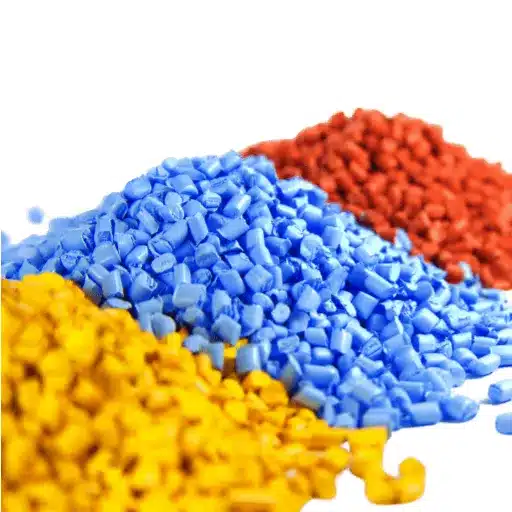



Every bottle of water, jug of detergent, and jar of medication depends on a closure that seals on the first application torque, survives thousands of open-close cycles, and clears strict food-contact rules. Most of those closures are molded from a single workhorse polymer: high-flow, injection-molding-grade high-density polyethylene (HDPE).
Specifying HDPE caps and closures isn’t the same as buying commodity HDPE for pipe or film. Closure molders balance high melt flow for fast cycles, stiffness for thread definition under torque, environmental stress crack resistance (ESCR) for surfactant and detergent contact, and certified organoleptics for food and beverage use. Procurement teams must verify that every lot runs the same in a 48-cavity mold today as it did last quarter, because a two-point MFR swing can translate into warped caps, failed tamper bands, and scrapped production.
This guide covers what makes cap-grade HDPE different: resin grade requirements, branded examples with published values, an HDPE vs. PP decision framework, and the two molding processes that dominate the industry. It also covers seal and tamper-evident or tethered closure design, FDA and EU food-contact compliance, mid-2026 market context, and how to verify cap-grade HDPE via Certificate of Analysis (COA) before you commit to volume supply.
Want the short version? Skip to the grade selection checklist and the COA verification section. The rest of this guide gives you the technical depth you’ll need to defend those decisions internally.
Why HDPE for Caps and Closures
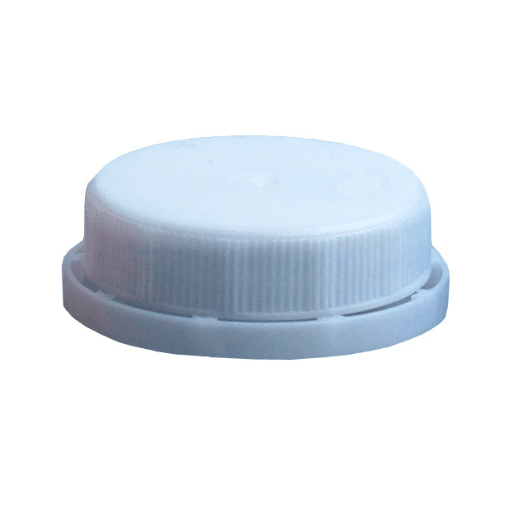
The Packaging Workhorse
HDPE is one of the two dominant thermoplastics for caps and closures, alongside polypropylene. Industry data puts thermoplastics at roughly 75% of all cap materials, with screw closures accounting for about 68% of closure types and beverages the leading end-use segment at roughly 45% of demand.
Cap-grade HDPE is specified by its melt flow rate, and it is almost always a high-flow grade. Typical closures run at an MFR of 4.5 to 22 g/10 min measured at 190°C under a 2.16 kg load. That is a deliberate choice: higher-flow resin fills thin thread walls and supports sub-4-second cycle times in high-cavity molds.
Density sits around 0.95 to 0.96 g/cm³. That range delivers enough stiffness to hold thread and tamper-evident geometry without adding unnecessary weight to each cap.
What HDPE Brings to a Closure
- Low-temperature impact strength. HDPE retains toughness down to roughly -100°C. Milk jugs, water bottles, and frozen or deep-freeze products stay intact through cold chains where polypropylene embrittles below about 0°C.
- Moisture barrier. HDPE forms a denser water-vapor barrier than PP, which makes it the standard for dry pharmaceuticals and hygroscopic powders where moisture ingress is unacceptable.
- Linerless seal capability. HDPE’s flexibility lets it compress against the bottle finish and form a hermetic seal without a separate liner. That lowers cost and simplifies recycling.
- Process efficiency. A lower melt temperature (about 130°C vs. roughly 160°C for PP) and faster cooling translate into sub-4-second cycles with roughly 10 to 15% lower electricity consumption per cap.
- Chemical resistance. HDPE resists water, most acids and bases, and many solvents. Engineered cap grades add ESCR for the detergents, surfactants, and oils a closure meets in service.
- Recyclability. Mono-material HDPE closures sort cleanly with HDPE bottles and are APR-preferred for caps and closures.
For a broader look at the material itself, see our high-density polyethylene material guide, which covers properties, grades, and processing across applications.
Where HDPE Is Not the Answer
Honesty about limitations is part of the job. HDPE is not the right closure material in three common situations:
- Living-hinge flip tops. PP’s fatigue resistance is far superior. A flip-top closure that opens and closes thousands of times should be molded in PP.
- Hot-fill products above roughly 90°C. Sauces, syrups, and hot juices deform HDPE. PP’s higher heat deflection temperature wins here.
- Premium clarity or high gloss. HDPE is naturally milky and opaque. If the closure needs to look like glass, PP or another polymer is the better fit.
If your application needs those properties, be honest with yourself early. Choosing PP for a living-hinge closure is not a compromise; it is correct material selection.
HDPE Cap Resin Grade Requirements
Critical Properties for Closures
- Melt Flow Rate (MFR). Cap grades run 4.5 to 22 g/10 min at 190°C/2.16 kg. High-flow grades fill thin threads and support high-cavity molds with sub-4-second cycles. Lower-flow grades trade speed for toughness.
- Environmental Stress Crack Resistance (ESCR). Target at least 400 to 600 hours by ASTM D1693 (100% Igepal, Condition B). Detergent, surfactant, and chemical closures need this, and carbonated soft-drink (CSD) caps under internal pressure need the highest available values.
- Stiffness / flexural modulus. Around 1,000 to 1,300 MPa holds thread and tamper-evident band geometry under application torque.
- Organoleptics. Low odor and taste transfer, certified for food and beverage contact. A cap that imparts off-flavor to water or milk fails in the market regardless of its mechanical performance.
- Dimensional stability / low warpage. A narrow molecular weight distribution minimizes shrinkage and warpage in thin-wall closures, which is essential for high-cavity tooling.
- Additive package. Slip agents, antistats, pigments, and antioxidants are selected per application. Color consistency matters when brand owners match caps to bottle colors.
Key Property Snapshot
| Property | Cap/Closure Grade Range | Test Standard | Notes |
|---|---|---|---|
| Density | 0.95-0.96 g/cm³ | ASTM D792 / ISO 1183 | Typical 0.951-0.957 for caps |
| Melt Flow Rate (MFR) | 4.5-22 g/10 min (190°C/2.16 kg) | ASTM D1238 | High flow = fast cycles, thin walls |
| ESCR | ≥400-600+ h (100% Igepal) | ASTM D1693 Cond. B | Critical for detergent/CSD contact |
| Flexural modulus | ~1,000-1,300 MPa | ISO 178 | Thread definition under torque |
| Tensile yield strength | ~23-30 MPa | ASTM D638 / ISO 527 | Mechanical robustness |
| Notched Izod impact | ~50-90 J/m (some grades) | ASTM D256 | Low-temperature toughness |
| Brittleness temperature | ≤ -100°C (HDPE) | ASTM D746 | Cold-chain products |
| Melting point | ~126-134°C | DSC | Lower than PP (~160°C) |
| Recommended melt temperature | 190-275°C (typical 200-250°C) | — | Lower than PP (220-260°C) |
One trap deserves emphasis. Cap grades are specified by MFR at 190°C/2.16 kg. Compare against injection-molding MFI, not blow-molding HLMI, which is measured at 21.6 kg and is typically several times higher. Mixing those two test conditions is the industry’s most common specification error.
Branded HDPE Cap and Closure Grade Examples
| Grade | Supplier | Density (g/cm³) | MFR (g/10 min) | Key Feature | Target Application |
|---|---|---|---|---|---|
| Lumicene® M5220 family | TotalEnergies | ~0.952 | — | Bimodal; ~10% cycle-time cut, 15% lower energy | CSD caps (pressure retention) |
| HD 6081 / HD 6082 | TotalEnergies | — | — | ESCR ~2x market reference; certified organoleptics | Still water / CSD caps |
| HDPE 6042 | TotalEnergies | — | — | Tethered-cap design; SUP-compliant, mono-material | Tethered caps (EU) |
| HDPE CC2056 | SABIC | 0.956 | 20 | Narrow MWD, low warpage, high gloss, fast cycles | Caps/closures, thin-wall |
| HDPE CC3054 | SABIC | — | — | Copolymer, high flow, low warpage | Caps/closures |
| HDPE M1053 | SABIC | — | — | Tough, good ESCR, low notch sensitivity | Caps, closures, pails |
| ALCUDIA® 6020LS | REPSOL | — | — | Bimodal; rigidity + impact + ESCR + organoleptics | Water & CSD caps |
| SCLAIR® 2707 | NOVA Chemicals | 0.951 | 6.0 | Stiffness/impact balance, excellent ESCR, FDA | Specialty caps, thread protectors |
| SURPASS® CCs757-A | NOVA Chemicals | 0.957 | 7 | Bimodal octene copolymer; organoleptics + ESCR | Lightweight still/sparkling water caps |
| H567J | SCG Chemicals | 0.952 | 1.0 | ESCR >600 h, slip agent, FDA & EU | Beverage caps (injection & compression) |
| H555J | SCG Chemicals | 0.953 | 1.8 | Good processability, organoleptics, FDA & EU | Beverage caps |
| IA59 | Braskem | 0.960 | 7.3 | Excellent mechanical properties | Dairy, juice, tea, isotonics |
| HA7260 / IA58 | Braskem | — | 20 / 22 | High flow, lightweight thin-wall designs | High-speed thin-wall closures |
| Hostalen ACP 5331H | LyondellBasell | 0.953 | 2.1 | Injection + compression processable, organoleptics | Food/non-food caps, tube shoulders |
| EVERCAP™ DMDA-1241 | Dow | — | — | PP drop-in replacement; low shrinkage, balance | Dispensing closures, fitments |
| rPE 57525 | TotalEnergies | — | — | 50% mechanically recycled PCR + booster | Non-food-contact caps (recycled) |
| TAISOX® 9040 | Formosa | 0.953 | 4.0 | High rigidity, strength, ESCR; FDA 21 CFR 177.1520 | Bottle caps, high-toughness parts |
Availability varies by region and import channel. Verify current stock and grade status with your supplier before specifying.
Grade Selection Checklist
- Define the closure type and end use: CSD, still water, dairy/juice, detergent/chemical, pharmaceutical, or tethered.
- Confirm the molding process. Injection molding wants higher MFR for 48-cavity molds; continuous compression molding tolerates lower-MFR grades.
- Verify ESCR (≥400-600 h preferred) for surfactant, detergent, and CSD pressure exposure.
- Confirm MFR for your target cycle time and wall thickness, within the 4.5-22 g/10 min range.
- Check stiffness and flexural modulus for thread definition under application torque.
- Specify organoleptic and food-contact compliance (FDA 21 CFR 177.1520, EU 10/2011) where the product demands it.
- Determine whether tethered-cap design compliance under the EU Single-Use Plastics Directive is required.
- Confirm dimensional stability and low warpage for high-cavity tooling.
- Review the additive package (slip, antistat, UV, pigment) and color consistency.
- Request a manufacturer COA with lot-specific density, MFR, and ESCR values.
For the ESCR science behind step 3, see our HDPE chemical resistance and ESCR guide.
HDPE vs. PP for Caps and Closures

Quick Comparison Table
| Factor | HDPE | PP |
|---|---|---|
| Melting point | ~130°C | ~160°C |
| Low-temperature impact | Excellent (to -100°C) | Brittle below ~0°C |
| Living hinge | Poor | Excellent (flip-top closures) |
| Thread definition under torque | Good | Superior (more rigid) |
| ESCR vs. surfactants/detergents | Good (engineered grades) | Superior |
| Hot-fill (>90°C) | Not suitable | Suitable |
| Clarity / gloss | Milky, opaque | Can be clear / high gloss |
| Moisture barrier | Better (dry pharma) | Lower |
| Linerless seal | Often possible | Typically requires liner |
| Cycle time / energy | Faster (~10-15% less energy) | Slower, hotter |
| Cost | Generally lower | Fluctuates more with oil/naphtha |
| Resin code | #2 | #5 |
When to Choose Which
Choose HDPE for milk jugs, water bottles, detergents, household and industrial chemicals, frozen or deep-freeze products, dry pharmaceuticals, and linerless cap designs where cost, impact resistance, and moisture barrier matter most.
Choose PP for flip-top and living-hinge closures, carbonated beverages needing maximum thread rigidity, hot-fill products such as sauces, syrups, and juices, pharmaceutical caps, and any closure requiring clarity or a premium gloss finish.
Both materials are recyclable and APR-preferred for closures. The cleanest approach is a mono-material cap that matches its bottle family, so the cap sorts with the bottle at the recovery facility. For a general material comparison beyond closures, see our HDPE vs. PP guide.
A Quick Way to Decide
Still unsure? Ask two questions. Does the product face cold, moisture, or aggressive chemicals? Lean HDPE. Does it need a hinge, hot-fill tolerance, or a clear finish? Lean PP.
When both criteria pull in different directions, run a test on the actual closure design with the shortlisted grades.
How HDPE Caps and Closures Are Made
Injection Molding
Injection molding is the dominant process for cap-grade HDPE. Melted resin is injected into a high-cavity mold, commonly 48 cavities for a 28 mm cap weighing around 2.8 g. Melt temperature typically runs 190 to 275°C, and cycle times sit under 4 to 6 seconds.
Two factors matter most in injection molding closures: flowability and demolding. Bimodal HDPE cap grades show long spiral flow, which fills thin threads reliably, and excellent dimensional stability, which makes demolding clean. Careful packing based on part-weight and dimensional studies prevents sink marks and warpage. Note that hold time after gate freeze cannot pack the cavity, so packing pressure must be established early in the cycle.
Most cap-grade HDPE does not require routine predrying, because HDPE absorbs very little moisture. That removes a process variable that complicates other engineering thermoplastics.
For full process parameters, defect tables, and mold design guidance, see our HDPE injection molding process guide.
Continuous Compression Molding
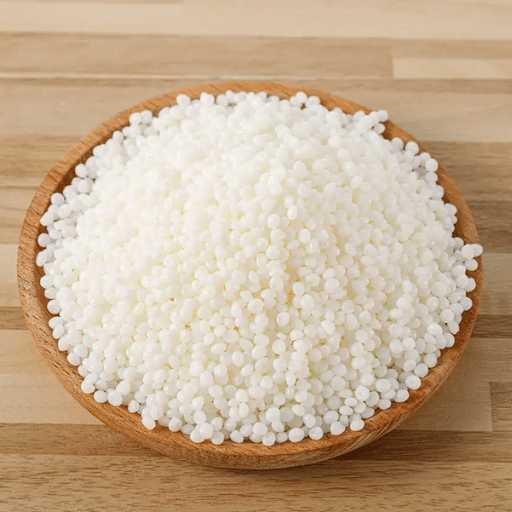
Continuous compression molding (CCM) is the other major process, and it dominates high-volume water and CSD closures. Pre-dosed HDPE pellets melt against the mold face and are compressed into shape. There is no sprue or runner, so there is no scrap from the feed system.
Grades like LyondellBasell Hostalen ACP 5331H are explicitly designed for both injection and compression molding, which gives molders flexibility when tooling changes. The advantages of compression molding are lower energy consumption, minimal flash, and excellent dimensional consistency. Cycle times can rival injection molding for thin-wall caps.
Key Process Notes
- Uniform wall thickness, generous radii on threads and snaps, and adequate draft prevent sink, warpage, and ejection stress.
- Establish packing with part-weight and dimensional studies; holding pressure after gate freeze does nothing.
- Run the same lot-to-lot MFR discipline in the process as you do in sourcing. A high-cavity mold amplifies resin variation.
For the blow-molded containers these caps seal, see our HDPE blow molding guide. The two processes are distinct: bottles are blow molded, closures are injection or compression molded.
Seal Design, Tamper-Evident & Child-Resistant Closures
Linerless Seals
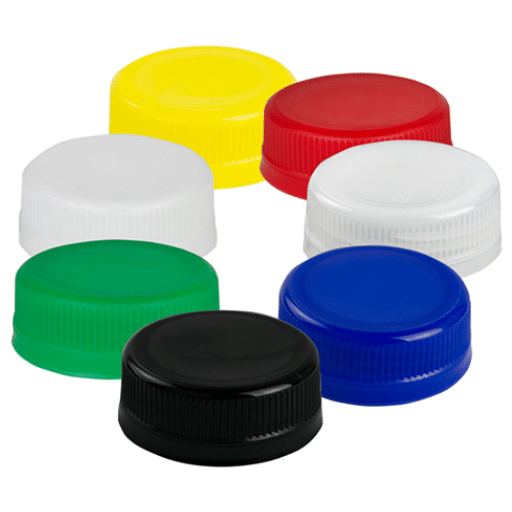
A linerless cap eliminates the separate foam or pulp liner found in many older designs. HDPE’s flexibility lets the cap compress against the bottle finish to form a hermetic seal. The thread and sealing-surface geometry, not the material alone, determine whether the seal holds under internal pressure and repeated opening.
Linerless designs lower cost per cap and simplify recycling by removing a mixed-material component from the closure.
Tamper-Evident Bands
Breakaway tamper-evident bands rely on material toughness and controlled thinning at the band hinge. HDPE’s ductility supports clean band fracture on first opening. Lot-to-lot MFR consistency is critical here: a band that is too brittle snaps during shipping, and one that is too tough fails to break cleanly on opening. Both outcomes trigger consumer complaints and retailer returns.
Child-Resistant Closures (CRCs)
Push-and-turn and squeeze-and-turn CRC designs require high stiffness and dimensional accuracy. The lug geometry that blocks or enables opening must hold its shape through repeated use, which is why cap-grade HDPE with a high flexural modulus is preferred for CRC applications.
Tethered Caps and the EU Single-Use Plastics Directive
Since July 3, 2024, single-use plastic beverage containers of 3 liters or less sold in the EU must have caps that remain attached to the container during use. The requirement comes from Article 6(1) of the Single-Use Plastics Directive (EU) 2019/904, with harmonised test methods set out in Commission Implementing Decision (EU) 2023/1060. Exemptions cover liquid food for special medical purposes and non-beverage liquid foods such as soups, purees, and yogurt.
The shift has pushed the industry toward mono-material HDPE tether designs. A tethered cap that stays HDPE, with the tether molded from the same resin as the cap body, preserves recyclability by avoiding polymer mixing with the bottle. TotalEnergies’ HDPE 6042 is one grade engineered specifically for this application, and packaging suppliers such as Amcor have applied mono-material HDPE tethered caps to mineral-water bottles in 2026.
Two practical notes for buyers. First, the directive is due for evaluation by July 3, 2027, which will assess usability, safety, and effectiveness, so the design landscape may shift again.
Second, recyclability depends on density separation. HDPE caps on HDPE bottles sort together. HDPE or PP caps on PET bottles complicate float-sink sorting and can cross-contaminate PET streams, which is one reason the industry is converging on bottle-and-cap polymer matching.
Food Contact and Regulatory Compliance
Standards That Apply to HDPE Caps
- FDA 21 CFR 177.1520 covers olefin polymers for food contact. Most cap-grade HDPE resins are compliant.
- EU Regulation (EC) No 10/2011 governs plastic materials and articles intended for food contact in the EU market.
- Organoleptic certification confirms low odor and taste transfer, which matters for beverages, dairy, and food.
- RoHS and REACH compliance is required for EU market access, and your documentation should state it explicitly.
- Recycled content changes the compliance picture. PCR cap grades such as TotalEnergies rPE 57525 (50% mechanically recycled) are intended for non-food-contact applications. Food-contact rHDPE requires separate regulatory approvals, for example from EFSA.
For the broader question of whether HDPE is safe for food use, see our is HDPE food safe article, which covers food-contact grades and certification across applications.
What Documentation to Request
Ask for grade-specific declarations, not family-level statements. Confirm the producer, full grade designation, colorant, additive package, allowable regrind, and traceability. Request FDA and EU migration statements, the MSDS, and a COA for every lot.
Caps and Closures Market in 2026
Mid-2026 Market Snapshot
Market researchers disagree on the exact size of the plastic caps and closures market, because they use different definitions and methodologies. Cite the firm rather than presenting a single number.
- Wedbush/Accwire estimates roughly USD 47.5 billion in 2026, reaching about USD 67.0 billion by 2036, a CAGR near 3.5%.
- Research and Markets puts the market at about USD 57.16 billion in 2026, growing to roughly USD 77.17 billion by 2030, a faster 7.8% CAGR.
- Global Info Research offers a lower-bound estimate of about USD 15.9 billion in 2025, rising to USD 21.5 billion by 2032, with roughly 1,414 billion units produced in 2024 at an average of about USD 10.4 per thousand units.
Behind the numbers, the structural drivers are consistent: single-use beverage growth, EU tethered-cap compliance, sustainability and mono-material recyclability, lightweighting, and the rise of e-commerce dispensing closures.
What It Means for Resin Buyers
Strong demand growth in the beverage segment keeps cap-grade HDPE in tight supply during seasonal peaks. An indicative August 2026 benchmark for China-origin cap-grade HDPE is roughly USD 900 to 1,100 per metric ton, with branded prime imports from TotalEnergies, SABIC, and LyondellBasell carrying a premium justified by documented consistency.
Buyers who treat cap-grade HDPE as a commodity and buy purely on price are the ones who get burned when a low-cost lot shows up with an off-spec MFR and a 48-cavity mold starts producing warped caps. The savings from a cheaper lot rarely cover a single production line stoppage.
Sourcing Cap-Grade HDPE Resin
Branded Prime vs. Generic or Compound Grades
The difference between branded prime cap-grade HDPE and generic or compound grades is not marketing. It is consistency. Branded prime resin from manufacturers such as TotalEnergies, SABIC, LyondellBasell, REPSOL, NOVA Chemicals, SCG, Braskem, and Dow comes with manufacturer-controlled MFR and density distributions, a published COA, and full batch traceability.
At Suzhou Yifuhui we stock branded prime cap-grade HDPE across these manufacturers; see our certified HDPE resin from China page for current grades and sourcing terms.
Generic grades and local compounds can save money on paper. In a high-cavity closure mold, lot-to-lot MFR and density swings cause thread distortion, warpage, tamper-band failures, and dimensional drift. The scrap and rework from those failures typically exceed the branded premium.
How to Verify Cap-Grade HDPE via COA
A Certificate of Analysis is your only reliable proof that the resin in a given lot matches the grade you specified. Check these fields against the manufacturer’s published datasheet:
- Grade designation, exactly as the manufacturer writes it.
- Density per ASTM D792.
- MFR at 190°C/2.16 kg, not 21.6 kg.
- ESCR per ASTM D1693, the property that matters most for detergent and CSD closure service.
- Flexural modulus for thread-definition performance.
- Food-contact compliance statements.
- Additive package and colorant identification.
Three red flags should stop a purchase. First, a generic grade designation such as “cap HDPE” with no brand and grade number. Second, a COA generated by the supplier rather than issued on the manufacturer’s letterhead. Third, an MFR reported at 21.6 kg that looks suspiciously good, because it was measured at the wrong test condition.
For a deeper look at qualifying suppliers and logistics when buying from China, see our how to source HDPE from China guide.
A Sourcing Decision in Practice
Here is how the discipline plays out in a real plant. When Priya’s packaging team qualified a new cap-grade HDPE for a detergent closure line, the quoted price was 8% below her incumbent supply. The COA showed an MFR within the mid-range of the incumbent grade, so the commercial team approved it.
On the first production run, a 32-cavity mold produced caps that cracked during the ESCR test after contact with the surfactant blend. The “equivalent” grade had a COA that listed no ESCR value at all, and the supplier could not produce a manufacturer document.
The rework, line downtime, and retesting cost more than the 8% savings would have covered in two years of supply. She went back to branded prime, and the line has not failed since.
The lesson isn’t that all non-branded resin is bad. It is that cap-grade HDPE must be verified against the manufacturer datasheet before it touches a closure mold. A COA without a manufacturer origin isn’t evidence.
Conclusion
Specifying HDPE caps and closures comes down to a handful of decisions. Select a high-flow injection-molding-grade HDPE with an MFR of 4.5 to 22 g/10 min, stiffness for thread definition, ESCR of at least 400 to 600 hours for surfactant and pressure contact, and certified organoleptics for food and beverage use.
Balance HDPE vs. PP by application, because HDPE wins on cold impact, moisture barrier, and linerless sealing while PP wins on living hinges, hot-fill, thread rigidity, and clarity. Design for tamper-evident, child-resistant, and tethered requirements, and meet the EU SUP Directive where your products ship into Europe. Finally, verify every lot with a manufacturer-issued COA.
At Suzhou Yifuhui New Material Co., Ltd., we supply branded prime cap-grade HDPE from TotalEnergies, SABIC, LyondellBasell, REPSOL, NOVA Chemicals, SCG, Braskem, and Dow, with manufacturer-issued COA documentation for every batch. Our minimum order is 25 kg for trials, and we ship FOB Shanghai from a warehouse adjacent to the Port of Shanghai.
Request a quote for certified cap-grade HDPE, whether you need CSD and still-water closure grades, tethered-cap resin, or recycled-content options. Send us your target MFR, ESCR, and compliance requirements, and our technical team will match the right branded grade for your closure mold. Contact our technical team for a quote and COA sample within 24 hours.
Frequently Asked Questions
What are HDPE caps and closures made of?
HDPE caps and closures are molded from high-flow injection-molding-grade high-density polyethylene with a density of roughly 0.95 to 0.96 g/cm³ and an MFR of 4.5 to 22 g/10 min at 190°C/2.16 kg. Cap grades are typically bimodal copolymers engineered for fast cycles, stiffness, ESCR, and food-contact organoleptics, and they are produced by injection molding or continuous compression molding.
Why use HDPE for caps and closures instead of PP?
Choose HDPE for low-temperature impact down to -100°C, moisture barrier for dry pharmaceuticals, linerless sealing, and cost and cycle-time efficiency. Choose PP for living-hinge flip tops, hot-fill products, maximum thread rigidity, and premium clarity. Both are recyclable and APR-preferred for closures.
What MFR should HDPE cap resin have?
Cap-grade HDPE typically has an MFR of 4.5 to 22 g/10 min at 190°C/2.16 kg. Higher-flow grades fill thin threads and run fast cycles in high-cavity molds; lower-flow grades trade speed for toughness. Always compare at 2.16 kg. Blow-molding grades are specified at 21.6 kg and are not interchangeable.
What ESCR does HDPE cap resin need?
Detergent, surfactant, and chemical closures, plus carbonated soft-drink caps under internal pressure, typically need ESCR of at least 400 to 600 hours per ASTM D1693 with 100% Igepal. Grades such as SCG H567J, with an ESCR above 600 hours, are engineered specifically for beverage closures.
Are HDPE caps food safe?
Yes. Most cap-grade HDPE complies with FDA 21 CFR 177.1520 and EU Regulation (EC) No 10/2011 for food contact, with certified organoleptic properties for low odor and taste transfer. Request grade-specific declarations and a COA for every lot.
What are tethered caps and why do they matter?
Since July 3, 2024, the EU Single-Use Plastics Directive (2019/904) requires caps on single-use beverage containers of 3 liters or less to remain attached during use. Mono-material HDPE tethered designs, such as TotalEnergies HDPE 6042, meet the requirement while preserving recyclability. The directive is due for evaluation by July 2027.
How do I verify that HDPE resin matches the cap grade I specified?
Request a Certificate of Analysis issued on the manufacturer’s letterhead for each lot. Verify grade designation, density per ASTM D792, MFR at 190°C/2.16 kg, and ESCR per ASTM D1693 against the manufacturer’s published datasheet. Reject supplier-generated internal COAs without manufacturer documentation, and confirm the MFR was reported at 2.16 kg, not 21.6 kg.