
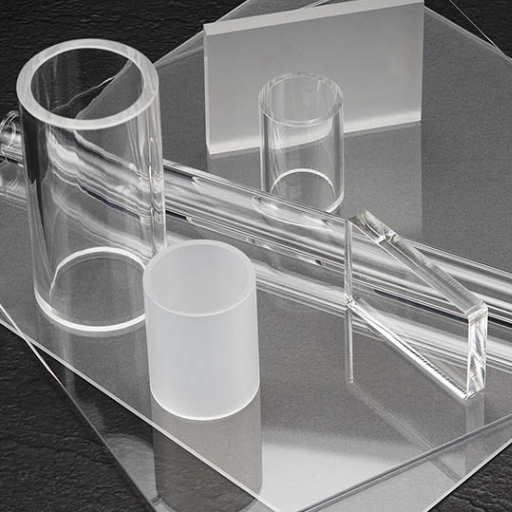



PMMA and acrylic are the same plastic. The interesting part is the four places that sentence is false.
If you’ve spent an afternoon comparing two datasheets that look identical, you’re not missing something. You’re looking at one polymer with two names, sold by people who use the names differently. The confusion is real, but it is linguistic, not chemical.
This guide answers the PMMA vs acrylic question in one sentence, then spends the rest on where the names diverge and what changes a purchase decision: the terminology ladder, the cast-versus-extruded tolerance math, the comparison with polycarbonate and glass that most readers wanted, and a specification checklist you can put on a purchase order.
One disclosure before we start: Yifuhui supplies PMMA resin pellets, not sheet stock. We have no reason to steer you toward a more expensive sheet product, and where the evidence favors a material we do not sell, we say so.
The short answer: PMMA is acrylic
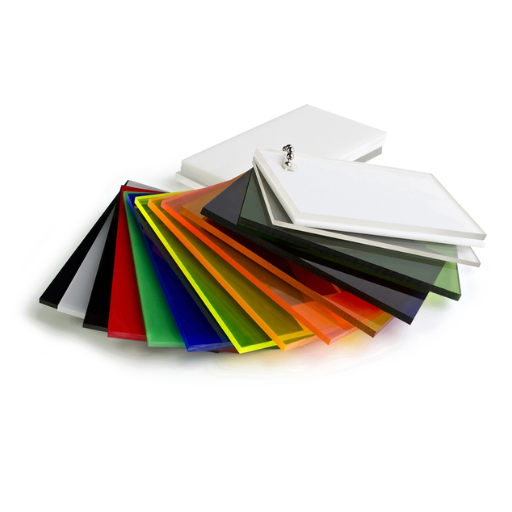
PMMA and acrylic are the same material. PMMA stands for poly(methyl methacrylate), the chemical name of the polymer. Acrylic is the common name used across the plastics trade. Plexiglas, Perspex, Lucite, Optix and Acrylite are brand names for that same polymer, not different plastics.
That paragraph is the answer. Everything after it is qualification. The two word orders, PMMA vs acrylic and acrylic vs PMMA, describe the same polymer.
The chemistry is straightforward. Methyl methacrylate, usually shortened to MMA, is a liquid ester. Polymerize it, and you get a solid, transparent thermoplastic: poly(methyl methacrylate).
The plastics industry calls that solid acrylic. A datasheet calls it PMMA. A shop sign calls it acrylic. A purchase order may call it Plexiglas.
Acrylic is a thermoplastic, not a thermoset. It softens when heated and can be reshaped, which is why it can be thermoformed, extruded and injection molded.
| Term | What it actually is | Who tends to use it |
|---|---|---|
| PMMA | Poly(methyl methacrylate), the polymer | Resin buyers, engineers, datasheets |
| Acrylic | The common trade name for PMMA | Sheet buyers, fabricators, consumers |
| MMA | Methyl methacrylate, the liquid monomer | Chemists, resin producers |
| Plexiglas, Perspex, Lucite, Optix, Acrylite, Altuglas | Brand names for PMMA | Specifiers who name a brand |
| Cast, extruded, continuous cast | Sheet process routes, not different polymers | Fabricators and sheet buyers |
| Acrylic paint, acrylic fiber | Different polymers entirely | Painters and textile buyers |
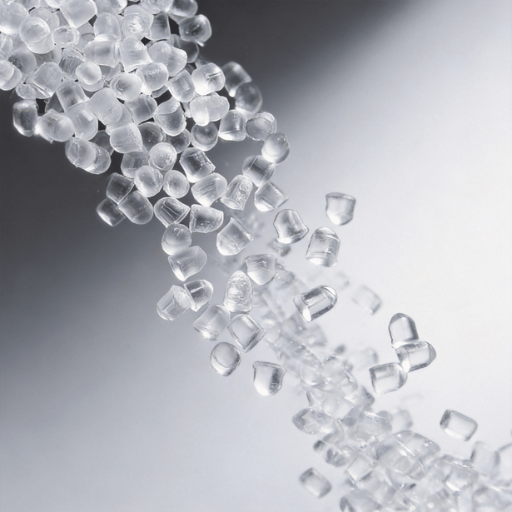
If you are buying resin rather than sheet, the practical question is grade and melt flow, not the label. The PMMA granules we stock are listed by grade, and the PMMA properties reference covers the numbers behind them.
Why two names exist
The duplication is historical, regional and commercial, in that order.
Otto Röhm began working on acrylic polymers in the early 1900s, and the material reached the market as Plexiglas in the 1930s. ICI launched Perspex in the same decade, and DuPont followed with Lucite. Each company sold the same polymer under its own trademark, and each trademark became a generic word in its home market. When a brand name becomes the category name, the chemical name has to do the technical work.
Regional usage reinforced the split. North American sheet buyers say acrylic. European and Asian resin buyers say PMMA, or acrylic glass.
In Chinese, the same material appears as acrylic and organic glass. A Chinese supplier quoting “PMMA granules” and a US fabricator ordering “acrylic sheet” are describing the same polymer.
Product form seals the habit. Sheet sellers speak in thicknesses, colors and masking; resin suppliers speak in grades, melt flow index and certificates of analysis. The vocabulary follows the supply chain, not the chemistry.
The practical rule: if a document says PMMA, read it as the polymer. If a shop says acrylic, assume PMMA until you have a reason to doubt it — usually the form or the grade, not the identity.
The four times “acrylic” does not mean PMMA
The sentence “acrylic means PMMA” is true in the plastics trade. It is false in four specific contexts, and each one has commercial consequences.
1. MMA is the monomer, PMMA is the polymer
Methyl methacrylate is a volatile, flammable liquid and a skin and respiratory sensitizer. PMMA is the solid polymer made from it. A “PMMA vs MMA” search is not a comparison of two plastics. It is a question about a raw material and its finished product.
This matters on a safety data sheet. Residual MMA monomer can remain in a poorly cured sheet or an under-dried pellet, and that is one reason reputable suppliers publish residual monomer limits. Don’t treat the two names as interchangeable in a handling document.
2. PMA is a different polymer
Poly(methyl acrylate), or PMA, is the acrylate analogue of PMMA. It lacks the alpha-methyl group that makes PMMA hard, stiff and transparent. PMA is soft and rubbery, with a glass transition temperature around 10°C rather than PMMA’s 105°C.
PMA is useful as a binder, a coating component or an impact modifier. It isn’t a structural clear plastic, and it is not what a fabricator means by acrylic sheet. If a technical document says PMA, read it as a different material.
3. Acrylic paint and acrylic fiber are not PMMA
Acrylic paint is a pigment dispersed in an acrylic copolymer emulsion, often based on methyl methacrylate and butyl acrylate. It dries to a film. It is not PMMA sheet, and painting a PMMA panel with acrylic paint is a coating decision, not a material substitution.
Acrylic fiber is polyacrylonitrile, usually abbreviated PAN, with at least 85% acrylonitrile content. It has nothing to do with PMMA beyond sharing a loose family name.
4. In dentistry, the two words name different products
This is the only context where a genuine “vs” exists. Conventional heat-cured denture acrylic is a PMMA/MMA dough processed in a dental laboratory. CAD/CAM PMMA is an industrially polymerized, highly cross-linked PMMA disc milled to shape.
The polymer family is the same. The residual monomer, porosity, flexural strength and surface finish are not.
Milled PMMA typically reports flexural strength in the 120 to 146 MPa range, higher than heat-cured acrylic. The residual monomer story is less clear: a 2017 study that measured monomer release from four CAD/CAM systems found no significant difference from conventional heat-cured dentures, because all of them released very little. Reviews also note that conventional acrylic can retain an advantage in fracture toughness, so the choice is not one-sided. Our guide to PMMA in dentistry covers that decision in detail; it is a different buyer from the industrial resin customer.
| Phrase | Is it PMMA? | What it actually is |
|---|---|---|
| PMMA | Yes | Poly(methyl methacrylate) |
| Acrylic sheet | Usually yes | PMMA homopolymer, cast or extruded |
| Acrylic resin, industrial | Usually, for molding and extrusion | PMMA pellets or compound; coating and adhesive “acrylic resin” is a different copolymer |
| Acrylic paint | No | Acrylic copolymer emulsion |
| Acrylic fiber | No | Polyacrylonitrile (PAN) |
| Dental “acrylic” | Sometimes | PMMA or a cross-linked methacrylate resin |
| CAD/CAM PMMA | Yes, different process | Industrially polymerized PMMA disc |
| PMA | No | Poly(methyl acrylate) |
| MMA | No | The monomer |
Why PMMA vs acrylic is the wrong comparison: cast vs extruded
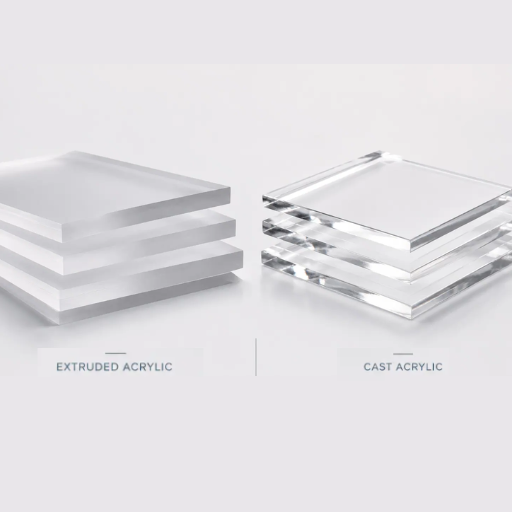
PMMA vs acrylic is the wrong comparison. Cast vs extruded is the comparison that changes a purchase order, and the PMMA vs acrylic sheet question resolves to the same distinction: same polymer, different process.
Both products are PMMA. Both transmit about 92% of visible light at 3 mm. Both have a density near 1.19 g/cm³. The differences come from how the sheet is made, and the largest one is thickness tolerance.
Cast sheet is made by pouring partly polymerized MMA syrup between glass plates and curing it slowly, often over 12 to 48 hours. Extruded sheet is made by melting PMMA pellets and pushing them through a die between calibrated rollers. Cast sheet achieves a higher average molecular weight and better optical uniformity. Extruded sheet is faster, cheaper per square meter and holds thickness more tightly.
The standard numbers make the trade-off concrete:
| Nominal 3 mm sheet | Standard | Allowed variation | Actual thickness window |
|---|---|---|---|
| Cast | ISO 7823-1 | ±0.70 mm | 2.30 to 3.70 mm |
| Extruded | ISO 7823-2 | ±0.15 mm | 2.85 to 3.15 mm |
The cast formula is ±(0.4 + 0.1 × nominal thickness) mm. The extruded allowance is ±5% from 3 mm up to the standard’s 20 mm ceiling, and ±10% below 3 mm. At 3 mm, the cast window is nearly five times wider.
That matters when the sheet has to fit a frame, sit flush in a display, or hold a consistent gap.
Picture a display fabricator setting six 3 mm cast panels into an aluminum frame with a 1 mm shadow gap. At the top of the tolerance band, a panel measures 3.70 mm and the gap closes. The same drawing in extruded sheet holds 3.15 mm. The drawing did not change; the process did.
Thermoforming changes the final dimensions anyway, so tolerance matters less there. The wider cast window also explains part of the price gap: cast is not just a different process, it is a process that tolerates more variation.
Our cast vs extruded acrylic guide covers fabrication behavior, molecular weight and cost per finished part. The point here is narrower: the two products share a polymer and differ in process. Neither is “more acrylic” than the other.
PMMA vs polycarbonate vs glass: the comparison you probably wanted
Most people who search for PMMA vs acrylic are trying to choose between clear materials. The useful comparison is PMMA against the materials it competes with, not against itself.
| Property | PMMA (acrylic) | Polycarbonate | Soda-lime glass |
|---|---|---|---|
| Density | 1.19 g/cm³ | 1.20 g/cm³ | 2.4 to 2.5 g/cm³ |
| Light transmission, 3 mm | 92% | 88 to 90% | 90 to 92% |
| Notched Izod impact | 15 to 25 J/m | 600 to 900 J/m | Not applicable |
| Rockwell hardness | M90 to M100 | M70 | Harder than both |
| Glass transition temperature | 105°C | 147°C | About 550°C softening |
| Heat deflection at 1.82 MPa | 85 to 100°C | 125 to 130°C | Not applicable |
| Maximum continuous service | 65 to 80°C | 115 to 120°C | Above 200°C |
| Coefficient of linear expansion | 7 × 10⁻⁵ /K | 6.5 to 7 × 10⁻⁵ /K | 0.9 × 10⁻⁵ /K |
| UV and weathering | UV-absorbing grades hold for years; unstabilized grades yellow slowly | Yellows; needs a UV-stable grade or coating | Excellent |
| Relative cost | 1.0 | 1.3 to 1.6 | 0.3 to 0.5 |
Sources: PLEXIGLAS GS/XT technical information and Trinseo ALTUGLAS datasheets. Values are typical ranges for standard grades; modified grades differ.
Three decision rules follow from that table.
Clarity, scratch resistance and UV stability point to PMMA. Its transmission and surface hardness are both higher than polycarbonate’s. UV performance comes from the additive package, not the polymer: UV-absorbing grades hold color outdoors for years, unstabilized PMMA yellows slowly, and polycarbonate yellows faster. Polycarbonate also needs a hard coat to match the scratch performance.
Impact and heat point to polycarbonate. The notched Izod gap is an order of magnitude, not a margin. A PMMA part that must survive a blow, a dropped tool or a temperature above roughly 80°C is the wrong part, no matter how clear it is.
Weight and break behavior point to PMMA over glass. PMMA is roughly half the density of glass and about eight times its thermal expansion. It cracks rather than shattering into dangerous shards, but it still cracks. Large panels need expansion gaps, and thick panels need proper support.
For lens and light-guide work, the optical-grade PMMA guide covers transmission, haze and yellowness index. Parts that meet solvents, fuels or aggressive cleaning agents need a separate check: the PMMA chemical resistance guide covers what attacks PMMA and what does not.
Our PMMA vs polycarbonate comparison covers the full head-to-head. The short version: the two are interchangeable only in the middle, where clarity matters more than impact.
If you are weighing PMMA against polycarbonate for a specific part, send us the application, the service temperature and the impact requirement. We will tell you which material fits, even when the answer is polycarbonate.
Where “PMMA” gets misused in the sheet trade
The most expensive naming problem is not philosophical. It is a sheet sold as PMMA that contains polystyrene.
PS sheet can look like acrylic at a glance. It is lighter, cheaper and less UV-stable, and it yellows within months outdoors. A blended PMMA/PS sheet sits in between and is harder to spot. If you are buying unbranded sheet from a new supplier, a price that is 30% below the market is a reason to test, not a bargain.
| Test | PMMA | Polystyrene | Limit |
|---|---|---|---|
| Burn test | Sweet, fruity methacrylate odor; little soot | Styrene odor; sooty smoke | Do it outdoors; screening only |
| Acetone drop | Softens and crazes slowly | Dissolves quickly | Use an offcut |
| Outdoor exposure | Stable for years | Yellows within months | Slow |
| Density | About 1.19 g/cm³ | About 1.05 g/cm³ | Water alone will not separate them; use a salt solution or density column |
| FTIR | Definitive | Definitive | The only conclusive test |
The field tests are screening tools. If the order value justifies it, ask for an FTIR report or send a coupon to a lab. A supplier who cannot provide a certificate of analysis and a grade designation is asking you to trust the label.
Specifying PMMA resin or sheet
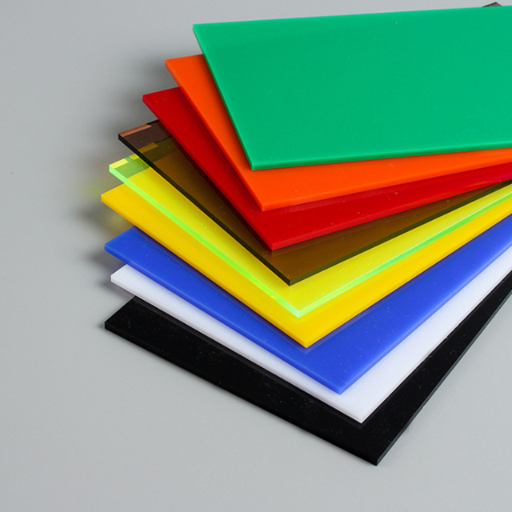
The label on the box does not tell you what you are buying. The specification does.
For resin pellets, put these on the purchase order:
- Grade or brand, and the manufacturer’s grade code
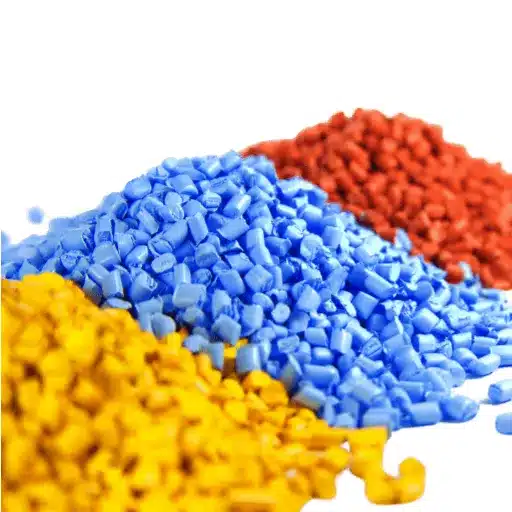
- Melt flow index and intended process
- Color, including whether clear or opaque
- UV package, if the part will be outdoors
- Food-contact or medical statement, if applicable
- Packaging: 25 kg bag, 1,000 kg pallet, or bulk
- Certificate of analysis and safety data sheet with each lot
For sheet, specify:
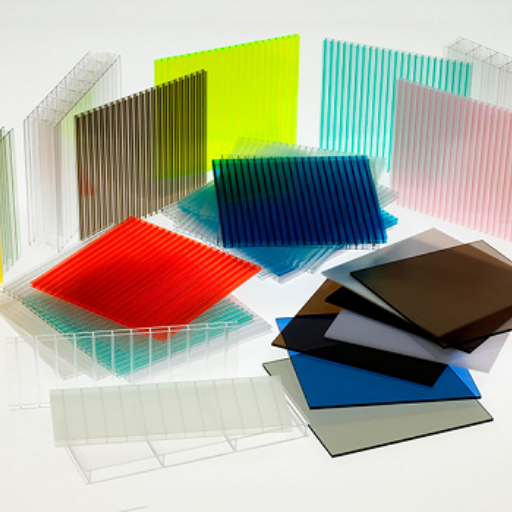
- Form: cell cast, continuous cast or extruded
- Nominal thickness and the tolerance standard, not just the number
- Sheet size and quantity
- Masking: polyethylene or paper
- UV grade and color
- Whether the sheet will be thermoformed, bonded or machined
Processing windows for injection-molding grades are narrow enough to matter:
| Parameter | Typical range |
|---|---|
| Drying | 80 to 100°C for 2 to 4 hours |
| Melt temperature | 220 to 250°C |
| Mold temperature | 60 to 90°C |
| Shrinkage | 0.3 to 0.6% |
| Thermoforming | 150 to 170°C |
PMMA is hygroscopic. Moisture that is not removed before molding shows up as silver streaks and haze in the finished part, which is why the drying step isn’t optional.
A procurement manager moving a lens program from machined sheet to injection molding often discovers that the sheet grade has no melt flow data at all. The fix is not a better sheet; it is a pellet grade specified by MFI. If you are moving from sheet fabrication to injection molding, the material question changes from “which sheet” to “which melt flow grade,” and the PMMA resin grade guide covers that transition.
FAQ
Is PMMA the same as acrylic?
Yes. PMMA is the chemical name for the polymer; acrylic is the common trade name. They’re the same material.
Is acrylic plastic the same as PMMA?
In the sheet and molding trade, yes. In coatings, adhesives and textile supply, “acrylic” can mean a different copolymer entirely.
What is the difference between PMMA and acrylic?
There’s no difference at the polymer level. The meaningful differences are in product form: cast versus extruded sheet, and sheet versus injection-molding pellets.
Is Plexiglas the same as acrylic?
Plexiglas is a brand of PMMA, not a separate material; the common misspelling is “plexiglass.” Perspex, Lucite, Optix, Acrylite and Altuglas are also brands.
Are Perspex and Lucite the same as acrylic?
Yes. Perspex and Lucite are brand names for PMMA. The polymer is the same; the trademarks differ by region and owner.
Which is better, PMMA or acrylic?
Neither is better, because the comparison does not exist at the polymer level. The real choice is between PMMA and another material such as polycarbonate, or between cast and extruded sheet.
Is PMMA stronger than acrylic?
The question can’t be answered because the materials are identical. PMMA is harder and more scratch-resistant than polycarbonate, but far less impact-resistant.
Is acrylic a thermoplastic?
Yes. PMMA softens when heated and can be thermoformed, extruded and injection molded. It isn’t a thermoset.
Is acrylic the same as plastic?
Acrylic is one type of plastic. “Plastic” is the category; PMMA is a specific transparent engineering thermoplastic within it.
Is PMMA food safe?
Food-contact suitability depends on the grade and the regulatory statement, not the polymer name alone. Ask for an FDA or EU 10/2011 declaration for the specific grade.
Can PMMA be recycled?
Yes, mechanically, and PMMA can also be depolymerized back to MMA. Recycling economics depend on collection and contamination, so confirm the route with your supplier.
Conclusion
PMMA vs acrylic is a naming question, not a materials question. The polymer is the same. The useful distinctions sit around it: cast versus extruded sheet, sheet versus pellets, PMMA versus polycarbonate, and the four contexts where “acrylic” means something else.
If you take one thing from this article, take the tolerance number. At 3 mm, cast sheet can vary by ±0.70 mm and extruded by ±0.15 mm. That single difference explains more purchase decisions than any property table.
If you are sourcing resin, send us the grade, the process and the application. We will confirm the melt flow, the documentation and the lead time, and we will tell you if a different material fits better. Request a PMMA quote or ask our technical team to review your specification.