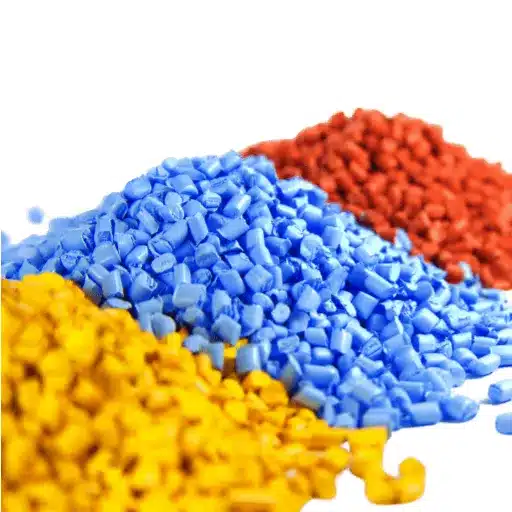




A 250 mm municipal water main installed in 1985 was expected to last 50 years. Today, that same high-density polyethylene (HDPE) line is still in service with no corrosion loss, no joint leaks, and no internal scaling. The reason is simple: HDPE pipe resists the degradation mechanisms that ruin metal and concrete infrastructure.
If you specify or procure pipe materials, you already know HDPE is widely used. The harder question is which HDPE grade matches each HDPE pipe application. PE80, PE100, PE100-RC, and PE4710 aren’t interchangeable. Density, MFI, slow-crack-growth resistance, and certification requirements all shift with the project.
This guide maps HDPE pipe applications to the grades and properties that matter, then shows how to source certified pipe-grade resin that meets ISO 4427, ASTM D3035, and NSF/ANSI 61 baselines.
Why HDPE Is Specified for Pipe Systems
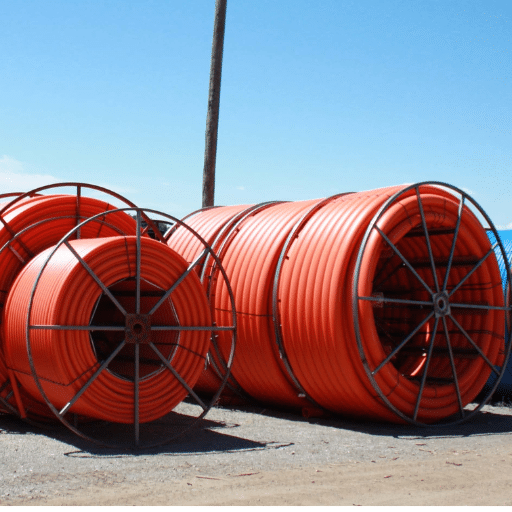
HDPE dominates buried infrastructure because it combines mechanical durability with chemical inertness. For pipe-grade material, four properties matter most:
- High strength-to-density ratio. HDPE delivers structural performance at roughly one-eighth the weight of steel, reducing handling and installation cost.
- Flexibility and fatigue resistance. HDPE pipe can be bent to 20–25 times its outside diameter without kinking, which simplifies trench layout and allows it to absorb ground movement.
- Excellent chemical resistance. HDPE resists most acids, bases, salts, and aqueous chemicals, the primary cause of corrosion in metal pipe.
- Fusion-welded joints. Butt fusion and electrofusion create monolithic, leak-free joint systems. Properly installed fusion joints have an effectively zero leakage rate.
Together, these properties address the main failure modes that ruin other pipe materials.
Pipe-grade HDPE isn’t the same as general-purpose HDPE. Pipe grades typically have a density of 0.945 g/cm³ or higher. PE100 commonly falls in the 0.949–0.955 g/cm³ range. They also use lower MFI for extrusion stability. Additive packages improve environmental stress cracking resistance (ESCR) and slow-crack-growth resistance.
Want the full material picture? See our high density polyethylene material guide for mechanical, thermal, and chemical property data across all HDPE grades. For property ranges specific to pipe-grade resin, our HDPE properties guide covers the values that drive these HDPE pipe applications.
HDPE Pipe Grades and Their Applications
The grade name tells you the material’s long-term strength baseline. Choosing the wrong grade can mean over-engineering the wall thickness, under-specifying pressure capacity, or failing an installation method requirement.
PE80 Pipe Grade
PE80 has a Minimum Required Strength (MRS) of 8 MPa at 20°C over 50 years. It was the standard for early polyethylene pipe systems. It remains common in low-pressure irrigation, legacy water systems, and some low-pressure gas lines.
PE80 requires thicker walls than PE100 for the same pressure rating, so it’s less material-efficient for new high-pressure designs.
PE100 Pipe Grade
PE100, the most common HDPE pipe grade for high-pressure systems, has an MRS of 10 MPa. That gives it 25% higher long-term strength than PE80. This allows thinner walls for the same pressure class. Material cost and weight both drop.
PE100 pipe applications include:
- Municipal potable water transmission and distribution
- Natural gas distribution networks
- Sewer force mains and pumping stations
- Industrial process piping at moderate pressures
PE100 is now the default specification for most new buried pressure pipe systems worldwide.
PE100-RC (Crack Resistant)
PE100-RC builds on PE100 with enhanced slow-crack-growth resistance. This matters when the pipe will experience point loading, scratches, or constrained installation conditions. Crack resistance is the key benefit.
PE100-RC pipe applications include:
- Trenchless installation by horizontal directional drilling
- No-sand bedding installations where surround material contains fines
- Rehabilitation liners pulled through existing host pipes
- Locations with known soil movement or settlement risk
PE4710 (North American Standard)
PE4710 is the North American pipe-grade designation, emphasizing higher density and slow-crack-growth resistance. The “47” means a hydrostatic design basis of 1,600 psi; the “10” rates slow-crack-growth resistance. PE4710 is specified under ASTM D3035 and AWWA C901/C906 for water and gas distribution in the United States and Canada. Matching the grade to the HDPE pipe application ensures the resin meets both performance and certification requirements.
| Grade | MRS / Design Basis | Typical Applications | Key Advantage |
|---|---|---|---|
| PE80 | 8 MPa | Irrigation, legacy water, low-pressure drainage | Lower cost for non-critical systems |
| PE100 | 10 MPa | Municipal water, gas, sewer force mains | Thinner walls, higher pressure rating |
| PE100-RC | 10 MPa + enhanced SCG | Trenchless, no-sand bedding, rehabilitation | Better slow-crack-growth resistance |
| PE4710 | 1,600 psi HDB | North American water and gas distribution | Meets ASTM/AWWA standards |
HDPE Pipe Applications by Industry
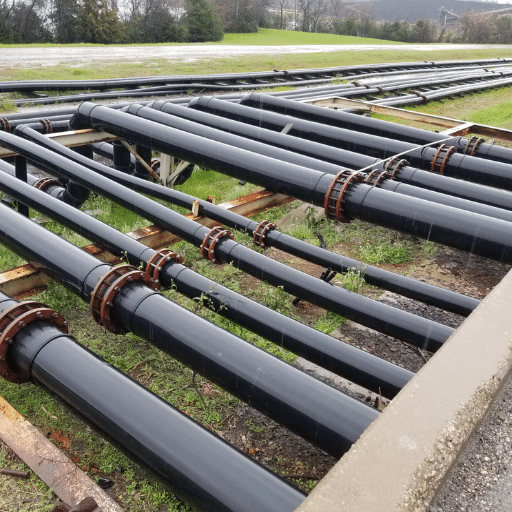
HDPE pipe applications fall into eight major categories. In each case, the grade and standard depend on pressure, chemical exposure, installation method, and regulatory requirements.
Municipal Water Supply and Distribution
HDPE water pipe applications include potable water transmission mains, distribution networks, and service connections. PE100 and PE100-RC are preferred because they allow higher operating pressures and longer trenchless pulls.
For potable water, the resin must meet regulatory approval such as NSF/ANSI 61 in North America or WRAS approval in the UK. The COA should confirm the grade is listed for potable-water contact.
When we work with water-project buyers, we check three things first: operating pressure, required standard (ISO 4427, ASTM D3035, or AS/NZS 4130), and potable-water certification. If any of those are missing from the supplier documentation, the resin can’t be used for the project.
Wastewater and Sewer Systems
Gravity sewer lines, force mains, and pumping station discharge lines all use HDPE. The key advantage here is corrosion resistance. Sewer environments generate hydrogen sulfide (H₂S), which converts to biogenic sulfuric acid on pipe crowns. Concrete and metal pipes degrade; HDPE doesn’t.
PE100 is standard for sewer force mains. Gravity lines may use PE80 or structured-wall HDPE profiles depending on loading and burial depth.
Stormwater and Drainage
HDPE drainage pipe is widely used for highway edge drains, sports-field drainage, culverts, retention systems, and landfill leachate collection. Corrugated HDPE pipe is common in low-head drainage because it combines flexibility with high ring stiffness.
For outdoor drainage, black UV-stabilized HDPE is standard. Carbon black at 2–3% acts as both a UV stabilizer and a processing aid.
Natural Gas Distribution
HDPE gas pipe systems use PE80 or PE100 depending on national standards and operating pressure. In Europe, PE100 is increasingly specified for medium-pressure networks. In North America, PE2406 and PE4710 grades dominate under ASTM D2513.
The critical requirement for gas pipe is joint integrity. Fusion-welded HDPE joints eliminate the mechanical leak paths present in threaded or gasketed systems.
Mining and Slurry Transport
HDPE pipe for mining handles some of the most aggressive service conditions: abrasive tailings slurry, process water, and mine dewatering. HDPE’s abrasion resistance and flexibility make it suitable for above-ground and buried slurry lines. Steel pipe would erode rapidly under the same conditions.
Mining applications often use PE100 with thicker walls or higher SDR ratings to withstand slurry abrasion and external loads. Flanged and stub-end connections allow sections to be rotated or replaced as wear occurs.
Industrial and Chemical Process Piping
HDPE pipe chemical resistance makes it suitable for acid, caustic, and salt transfer lines in chemical plants, metal finishing facilities, and wastewater treatment plants. It handles hydrochloric acid, sulfuric acid up to moderate concentrations, sodium hydroxide, and many aqueous salts.
HDPE isn’t suitable for aromatic hydrocarbons, chlorinated solvents, ketones, or strong oxidizers. For those chemicals, PTFE, PFA, or PVDF may be the better choice.
Need the chemical compatibility details? Our HDPE chemical resistance chart covers specific acids, bases, solvents, and concentration limits.
Agriculture and Irrigation
HDPE is the standard material for agricultural drip irrigation, sprinkler laterals, and main distribution lines. Black UV-stabilized PE80 or PE100 is used because it survives decades of outdoor exposure.
Small-diameter HDPE tubes for drip irrigation typically use higher-MFI extrusion grades that allow thin-wall production. Larger main lines use standard pipe-grade HDPE.
Geothermal and Marine Applications
HDPE’s flexibility and corrosion resistance extend its use into ground-source heat exchangers, submarine outfalls, and lake intake lines. In marine environments, HDPE resists saltwater corrosion and biofouling better than metal alternatives.
For geothermal systems, the grade must handle the specific glycol or brine mixture. It also needs to match the operating temperature of the closed loop.
HDPE Pipe Fittings and Joining Methods
The pipe material is only half of the system. HDPE pipe fittings and joints determine whether HDPE pipe applications perform as designed.
- Butt fusion. Used for joining straight pipe sections and creating continuous runs. The joint becomes as strong as the pipe wall when properly fused.
- Electrofusion. Uses embedded heating wires in fittings to create controlled fusion joints. Preferred for saddles, elbows, tees, and repair connections.
- Socket fusion. Common for smaller-diameter pipe and fittings.
- Mechanical couplings and flanges. Used for transitions to valves, pumps, and other materials.
Fitting-grade HDPE should match the pipe grade in density and MFI. Mismatched grades can create weak fusion zones or process instability. When sourcing resin for pipe and fittings from the same supplier, request matching lot documentation for both.
HDPE Pipe vs. Alternative Materials
Understanding where HDPE wins and where it doesn’t helps buyers and engineers choose the right HDPE pipe applications for each project.
HDPE Pipe vs PVC: When to Choose Each
PVC is rigid, lower cost per meter for small diameters, and widely available. HDPE is more flexible, has better impact resistance at low temperatures, and creates leak-free fusion joints. For large-diameter pressure pipe and trenchless installation, HDPE is usually the better choice. For small non-pressure drainage, PVC often wins on cost.
HDPE vs. Ductile Iron and Steel
Metal pipes have higher pressure and temperature capacity, but they corrode, require cathodic protection in aggressive soils, and use gasketed or mechanical joints that can leak. HDPE eliminates corrosion and joint leakage but has lower maximum operating temperature and pressure.
HDPE vs. Concrete Pipe
Concrete pipe is stiff and strong in compression but vulnerable to chemical attack, abrasion, and joint leakage. HDPE is lighter, more chemically resistant, and easier to install in poor soil conditions.
| Material | Best For | Limitations |
|---|---|---|
| HDPE | Water, gas, sewer, mining slurry, chemical transfer | Lower temperature and pressure limits than metal |
| PVC | Small drainage, irrigation, low-cost non-pressure | Brittle at low temperatures; solvent joints |
| Ductile iron | High-pressure water, fire mains | Corrosion; heavy; gasketed joints |
| Steel | Very high pressure, elevated temperature | Corrosion; welding and coating required |
| Concrete | Large gravity sewer, culverts | Chemical attack; joint leakage; heavy |
Sourcing Pipe-Grade HDPE Resin from China
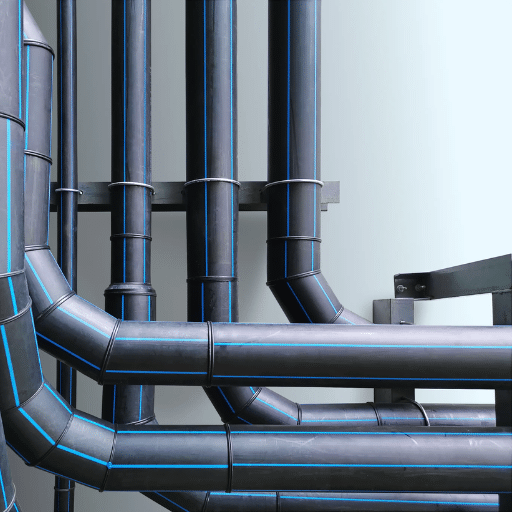
For pipe extruders and project procurement teams sourcing resin for HDPE pipe applications, the grade specification is where performance starts. Not all HDPE labeled “pipe grade” meets the same baseline.
Branded Prime vs. Compound Grades
Branded prime resins from recognized manufacturers, such as SABIC, Dow, LyondellBasell, ExxonMobil, Borealis, and Formosa, publish consistent property baselines and batch documentation. Unverified compounds may vary in density, MFI, additive packages, and long-term performance.
If you’re extruding pipe for a certified project, prime resin is usually the safer route. Compound grades may be acceptable for non-critical drainage or irrigation, but verify with your customer first.
Standards and Certifications to Verify
Confirm the resin matches the pipe standard required by your project:
- ISO 4427, international water supply
- ASTM D3035, North American PE pipe
- AS/NZS 4130, Australia/New Zealand
- EN 12201, European water supply
- NSF/ANSI 61, North American potable water
- WRAS, UK potable water
What to Check on the COA
A Certificate of Analysis for pipe-grade HDPE should include:
- Grade designation and manufacturer
- Density and MFI values within specification
- ESCR value, if relevant for the application
- Compliance statements for potable water or other approvals
- Lot or batch number for traceability
If a supplier can’t provide a manufacturer-issued COA with lot traceability, that’s a signal to pause and qualify the source before committing to a production order.
Yifuhui Supply Advantage
At Yifuhui, we supply branded prime HDPE pipe-grade resin with full manufacturer COA documentation. Our standard export package includes the Certificate of Analysis, MSDS, commercial invoice, and packing list. MOQ starts at 25 kg for trial orders, and we ship FOB Shanghai or CIF to major international ports.
If you’re unsure whether PE80, PE100, or PE100-RC fits your pipe extrusion project, send us the standard and application details. We’ll identify the right grade from our stocked portfolio. To gain a deeper understanding of HDPE Supplier China: How to Source Certified Resin Without the Guesswork, please refer to our accompanying guide.
Conclusion
HDPE pipe applications cover water, gas, sewer, drainage, mining, agriculture, and industrial chemical transfer. The right grade depends on pressure, installation method, chemical environment, and certification requirements:
- PE80 for low-pressure irrigation and legacy systems
- PE100 for municipal water, gas, and sewer force mains
- PE100-RC for trenchless, no-sand bedding, and rehabilitation work
- PE4710 for North American ASTM/AWWA projects
No grade performs well if the resin doesn’t match the specification. Verify density, MFI, compliance statements, and lot traceability on every COA before production. To learn more about HDPE Melting Point, please click to refer to our accompanying guide.
Ready to source certified pipe-grade HDPE resin? Request a quote for HDPE pipe-grade resin with full COA documentation, 25 kg minimum order, FOB Shanghai, response within 24 hours.
Frequently Asked Questions
What is HDPE pipe used for?
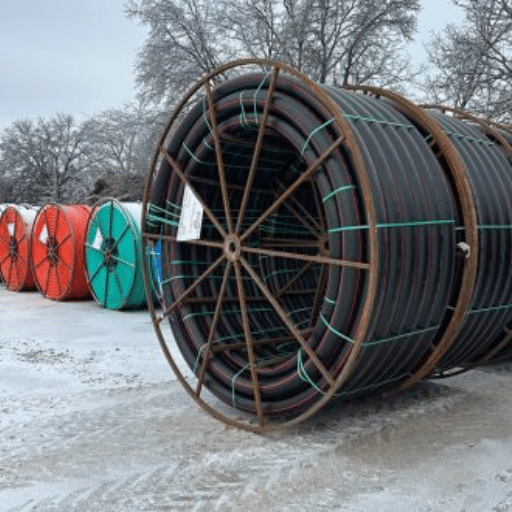
Common HDPE pipe uses include municipal water supply, sewer and wastewater systems, stormwater drainage, natural gas distribution, mining slurry transport, industrial chemical piping, agricultural irrigation, and geothermal heat exchangers. HDPE pipe applications cover water, gas, sewer, drainage, mining, agriculture, and industrial chemical transfer.
What is the difference between PE80 and PE100 pipe?
PE80 has a Minimum Required Strength of 8 MPa; PE100 has an MRS of 10 MPa. PE100 allows thinner walls for the same pressure rating, making it the preferred choice for high-pressure water and gas systems.
Is HDPE pipe safe for drinking water?
Yes, when the resin is certified for potable-water contact. Look for NSF/ANSI 61, WRAS, or equivalent approval on the grade and COA.
How long does HDPE pipe last?
Buried HDPE pipe systems are designed for 50–100 years of service, depending on installation quality, operating conditions, and grade selection.
Can HDPE pipe be used for gas lines?
Yes. PE80 and PE100 are both used for natural gas distribution, depending on pressure class and national standard. Fusion joints provide leak-free gas-tight connections.
What is PE100-RC pipe used for?
PE100-RC is used where slow-crack-growth resistance is critical, such as trenchless directional drilling, no-sand bedding, and pipe rehabilitation liners.
Is HDPE pipe better than PVC?
HDPE is better for large-diameter pressure pipe, trenchless installation, and applications requiring flexibility and fusion-jointed leak protection. PVC is often more cost-effective for small non-pressure drainage.
What grade of HDPE is used for water pipes?
Most new municipal water pipes use PE100 or PE100-RC. Legacy systems may use PE80. North American projects often specify PE4710 under ASTM D3035.
How do I verify pipe-grade HDPE quality from a supplier’s COA?
Check that the COA lists the manufacturer and grade, confirms density and MFI within specification, includes relevant compliance statements (NSF, WRAS, etc.), and provides a lot number for traceability.