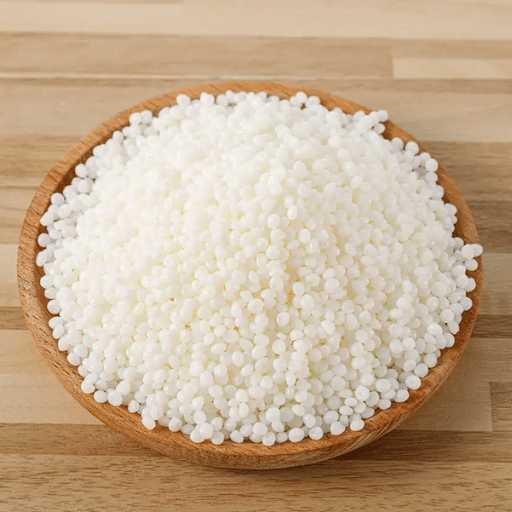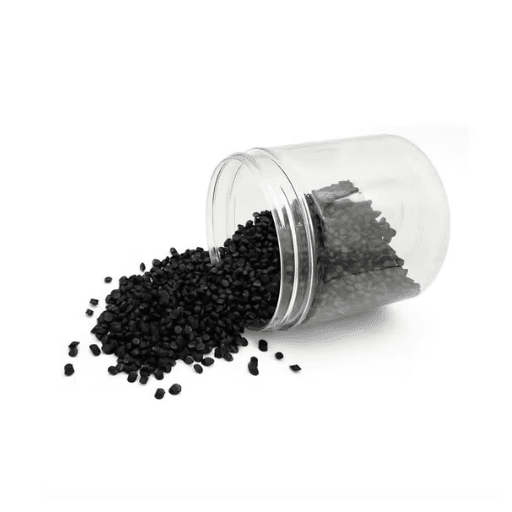

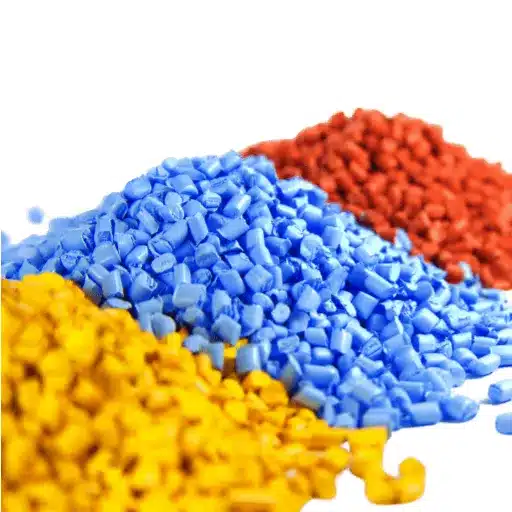



A procurement manager in Germany once rejected an entire container of film-grade resin because the supplier had shipped HDPE instead of LDPE. The mistake cost six weeks of production. The two materials look almost identical as pellets, but they behave completely differently on the line.
If you’re comparing HDPE vs LDPE for a new product, you already know the choice matters. Density, stiffness, melting point, and processing behavior all swing in opposite directions once you move from high-density to low-density polyethylene. This guide gives you the property data, application mapping, and sourcing guidance you need to specify the right material with confidence.
Here’s what we’ll cover: the molecular reason the two materials differ, a side-by-side property comparison, real application examples, processing notes, recycling codes, a decision framework, and what to verify when you source either resin from a supplier.
Why HDPE and LDPE Behave So Differently
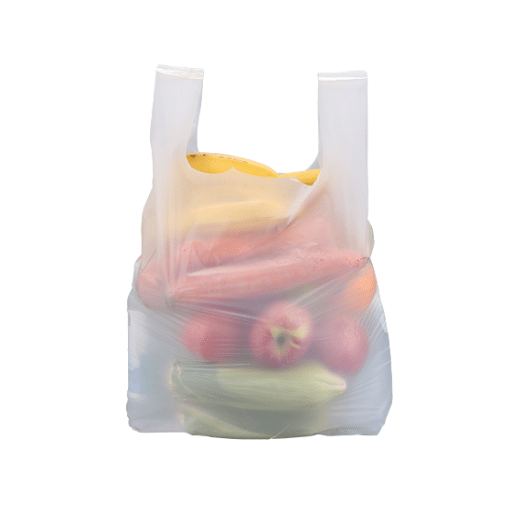
Both materials are polyethylene, which means both are made from ethylene monomers. The difference is in the chain structure.
HDPE has mostly linear polymer chains with very few branches. Those straight chains pack tightly together, so the material becomes denser, more crystalline, and stiffer. LDPE has highly branched chains that can’t pack closely, so the material stays lower in density, lower in crystallinity, and much more flexible.
That single structural difference drives almost every property gap you’ll see in the comparison table below. It explains why HDPE wins on rigidity and chemical resistance, while LDPE wins on flexibility and clarity.
Need certified polyethylene resin with full documentation? Request a quote for HDPE or LDPE resin — Yifuhui ships branded prime grades from Suzhou with COA, MSDS, and full export paperwork.
What Is HDPE?
HDPE stands for high-density polyethylene. Its density range is 0.941–0.965 g/cm³ (ASTM D792), and its crystallinity sits at roughly 70–85%.
The tight chain packing gives HDPE a stiff, hard feel. It is opaque to translucent, has a higher tensile strength than LDPE, and resists most acids, bases, and solvents. HDPE also has excellent moisture barrier properties and very low water absorption, usually below 0.01% after 24 hours.
Common HDPE applications include water and gas pipes, milk jugs and detergent bottles, chemical drums, recycling bins, crates, fuel tanks, geomembranes, and toys. If you want a deeper look at how this material is made, graded, and specified, our complete guide to high-density polyethylene walks through everything from feedstock to finished part.
Key HDPE Specifications
| Property | Typical Range | Test Method |
|---|---|---|
| Density | 0.941–0.965 g/cm³ | ASTM D792 |
| Crystallinity | 70–85% | — |
| Tensile Strength at Yield | 20–45 MPa | ASTM D638 |
| Flexural Modulus | 0.8–1.4 GPa | ASTM D790 |
| Melting Point | 120–137°C | DSC |
| Heat Deflection Temperature (0.45 MPa) | 70–100°C | ASTM D648 |
| Mold Shrinkage | 1.5–4.0% | — |
| Shore D Hardness | 60–70 | ASTM D2240 |
| Water Absorption (24h) | <0.01% | ASTM D570 |
For engineers who need to dig further into each of these values and what they mean in practice, this technical guide to HDPE properties breaks down mechanical, thermal, and barrier data in detail.
One limitation to keep in mind: HDPE is more prone to environmental stress cracking than many engineers expect. If your application involves sustained contact with detergents, solvents, or surface-active agents, choose an enhanced ESCR grade rather than a standard HDPE.
What Is LDPE?
LDPE stands for low-density polyethylene. Its density range is 0.910–0.940 g/cm³, and its crystallinity is only 40–55%.
The branched chain structure prevents tight packing. That gives LDPE its soft, flexible, pliable feel. It can elongate over 300% before breaking, which makes it ideal for films, bags, and squeeze bottles. LDPE is also more transparent than HDPE, though it is not crystal clear like polycarbonate or PET.
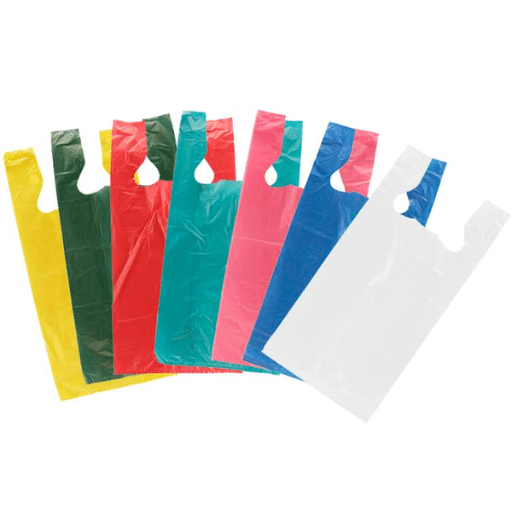
Common LDPE applications include plastic grocery bags, trash bags, stretch and shrink films, bread bags, squeeze bottles, cable and wire insulation, coatings for paper cartons, flexible tubing, and greenhouse films.
Key LDPE Specifications
| Property | Typical Range | Test Method |
|---|---|---|
| Density | 0.910–0.940 g/cm³ | ASTM D792 |
| Crystallinity | 40–55% | — |
| Tensile Strength at Yield | 8–25 MPa | ASTM D638 |
| Elongation at Break | 200–600% | ASTM D638 |
| Melting Point | 105–115°C | DSC |
| Heat Deflection Temperature (0.45 MPa) | 40–60°C | ASTM D648 |
| Mold Shrinkage | 1.5–3.0% | — |
| Shore D Hardness | 40–50 | ASTM D2240 |
| Water Absorption (24h) | <0.01% | ASTM D570 |
LDPE’s lower melting point and easier flow make it forgiving on older or lower-pressure equipment. The trade-off is lower rigidity, lower heat resistance, and poorer puncture resistance compared with HDPE.
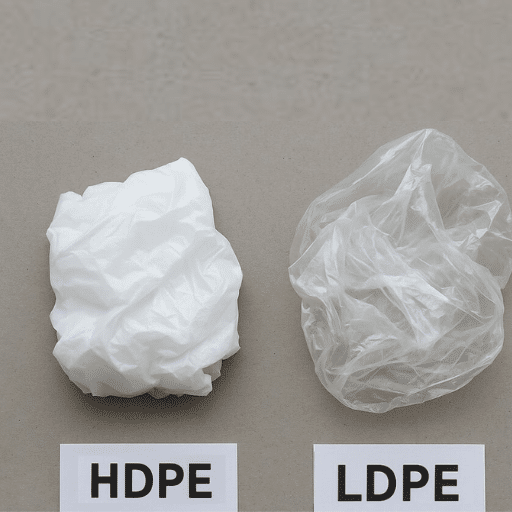
HDPE vs LDPE Properties Comparison
| Property | HDPE | LDPE | Winner |
|---|---|---|---|
| Density | 0.941–0.965 g/cm³ | 0.910–0.940 g/cm³ | HDPE (higher) |
| Crystallinity | 70–85% | 40–55% | HDPE |
| Tensile Strength | 20–45 MPa | 8–25 MPa | HDPE |
| Flexibility | Stiff, rigid | Soft, pliable | LDPE |
| Elongation at Break | Lower | 200–600% | LDPE |
| Melting Point | 120–137°C | 105–115°C | HDPE |
| Heat Resistance | Better | Lower | HDPE |
| Clarity | Opaque to translucent | More transparent | LDPE |
| Chemical Resistance | Excellent | Good | HDPE |
| Moisture Barrier | Excellent | Good | HDPE |
| Puncture Resistance | Moderate to good | Poor | HDPE |
| UV Resistance | Good with stabilizers | Lower | HDPE |
| Mold Shrinkage | 1.5–4.0% | 1.5–3.0% | LDPE (lower) |
| Ease of Processing | Requires higher temps | Easier flow | LDPE |
| Cost | Often lower per kg for rigid grades | Slightly higher | Varies |
The easiest way to remember the split: HDPE gives you structure and durability; LDPE gives you flexibility and formability.
When Maria, a product engineer at a packaging company in Poland, switched her squeeze-bottle line from HDPE to LDPE, she solved two problems at once. The bottles stopped cracking during drop tests, and the lower processing temperature cut cycle energy by roughly 8%. The change only worked because her design didn’t need the rigidity HDPE provided.
HDPE vs LDPE Applications
Choose HDPE When You Need
- Structural rigidity and load-bearing strength
- Higher temperature resistance
- Excellent chemical resistance for containers and pipes
- Low moisture absorption and vapor permeability
- Durability in outdoor or buried applications
HDPE dominates in water and gas distribution pipes, chemical storage tanks, milk and detergent bottles, recycling bins, pallets, crates, fuel tanks, geomembranes, and playground equipment. If pressure piping is your end use, it helps to match the resin to the service conditions first — this HDPE pipe applications grade selection guide for water, gas, and industry walks through the right grade for each duty. When chemical exposure is a key concern, it pays to review a detailed HDPE chemical resistance compatibility chart before you commit to a grade for tanks, drums, or piping.
Choose LDPE When You Need
- Flexibility and softness
- Good clarity or transparency
- Easy heat-sealing for films
- High elongation and impact absorption
- Low-temperature toughness
LDPE dominates in plastic films and bags, squeeze bottles, cable insulation, coatings, stretch wrap, and flexible tubing.
Industry-by-Industry Breakdown
Packaging: HDPE for rigid bottles and caps; LDPE for films, bags, and squeezable containers.
Construction: HDPE for pipes, geomembranes, and vapor barriers; LDPE for protective films and damp-proof membranes.
Automotive: HDPE for fuel tanks, interior panels, and underbody shields; LDPE for wire insulation and flexible ducts.
Electrical: LDPE for cable and wire insulation because of flexibility; HDPE for rigid conduit.
Agriculture: HDPE for irrigation pipes and pond liners; LDPE for greenhouse films and mulch films.
HDPE vs LDPE Processing and Manufacturing
Injection Molding
HDPE injection molding grades typically run at melt temperatures of 180–240°C. The material shrinks more than LDPE, so mold design and cooling need more attention. Warping can be an issue if wall thickness varies. For a full breakdown of the settings behind these numbers, this HDPE injection molding guide to processing parameters, grade selection, and defect troubleshooting shows how to dial in temperatures and avoid warping.
LDPE injection molding runs at lower melt temperatures, roughly 160–240°C. It flows more easily into thin walls and complex shapes. Shrinkage is lower and more predictable, which simplifies tooling.
Extrusion and Blow Molding
HDPE extrusion grades cover pipe, sheet, profile, and blow-molded bottles. Blow molding HDPE requires careful parison control to avoid wall thickness variation. Pipe grades must meet long-term hydrostatic strength standards such as PE80 or PE100.
LDPE extrusion is dominated by film. Blown film lines run LDPE at lower pressures and temperatures than HDPE film grades. The result is a softer, more flexible film with better tear propagation resistance.
Melt Flow Index
Melt Flow Index (MFI) is the single most useful number for matching a polyethylene grade to a process. HDPE blow molding and pipe grades often have MFI values below 1.0 g/10 min. HDPE injection molding grades range from 8 to 50 g/10 min. LDPE film grades typically run 0.2–2.0 g/10 min, while injection grades run 2–20 g/10 min.
If you buy the wrong MFI, your line will fight you even if the base polymer is correct. Always cross-check the MFI on the supplier’s Certificate of Analysis against the manufacturer datasheet for the named grade. Because melting behavior shifts noticeably from one grade to the next, this grade-by-grade guide to HDPE melting point is a useful reference when you’re dialing in processing temperatures.
HDPE vs LDPE Recycling and Sustainability
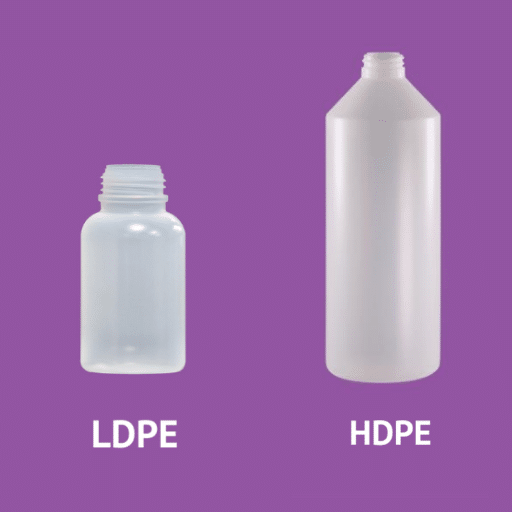
HDPE carries resin identification code #2. LDPE carries code #4. Both are thermoplastics, so they can be melted and reprocessed, but their recycling paths differ.
HDPE is one of the most widely recycled plastics. Milk jugs, detergent bottles, and pipe scrap have established collection and reprocessing streams in most developed markets. Recycled HDPE is common in lumber, drainage pipe, and non-food containers.
LDPE recycling is growing, especially for stretch wrap and commercial film, but flexible films can clog sorting machinery. Many curbside programs still do not accept LDPE film, so collection rates are lower.
Neither HDPE nor LDPE is compostable. Both are derived from petroleum feedstocks. The most sustainable path for either material is mechanical recycling into secondary products, not downcycling to landfill.
How to Choose Between HDPE and LDPE
Use this checklist when you’re deciding between the two materials:
- Mechanical load: Does the part need to carry weight or resist bending? Choose HDPE.
- Temperature: Will the part see sustained temperatures above 80°C? Choose HDPE.
- Chemical exposure: Will it contact acids, bases, fuels, or detergents? HDPE usually wins, but check ESCR requirements.
- Flexibility: Does the part need to bend, fold, or squeeze repeatedly? Choose LDPE.
- Clarity: Does the application need see-through packaging? LDPE is better, though neither is truly optical.
- Sealing: Does the package need heat-sealing? LDPE seals more easily.
- Process: Are you running film or blow molding at lower pressures? LDPE is more forgiving.
- Cost target: For rigid containers, HDPE is often the lower-cost option. For films, LDPE may be competitive.
When a Dutch irrigation equipment buyer named Peter switched from LDPE to HDPE pipe, he did it because the trench installation required pressure rating and stiffness. The LDPE pipe he had trialed deformed under soil load at 60°C. HDPE pipe with PE100 rating solved the issue. The opposite choice would have failed.
Sourcing HDPE and LDPE Resin from China
Branded Prime vs. Compound Grades
Not all polyethylene is the same. Branded prime resins from manufacturers like SABIC, LyondellBasell, ExxonMobil, Formosa, and Sinopec are produced under controlled conditions with consistent MFI and density ranges. Modified or compound grades can vary lot to lot, which creates risk if your process is tuned to a narrow window.
For production-critical parts, specify a branded prime grade and require a Certificate of Analysis that matches the manufacturer’s published datasheet.
What to Verify on a COA
A reliable Certificate of Analysis for HDPE or LDPE should include:
- Material grade and manufacturer name
- Batch or lot number
- Density (g/cm³)
- Melt Flow Index (g/10 min)
- Tensile strength at yield (MPa)
- Compliance statements (RoHS, REACH, FDA where applicable)
If the COA is missing grade-specific data or is generated by the trader rather than the manufacturer, treat it as a red flag.
Why Buyers Source from Yifuhui
Yifuhui stocks branded prime polyethylene resins from globally recognized manufacturers. Every shipment includes the full documentation package: Certificate of Analysis, Material Safety Data Sheet, commercial invoice, packing list, and applicable compliance certificates. Our 25 kg minimum order makes trial quantities accessible, and our Suzhou warehouse ships through the Port of Shanghai on EXW, FOB, or CIF terms.
If you’re evaluating HDPE vs LDPE for a new project, tell us your application details, operating temperature, load, chemical contact, forming method, and regulatory requirements, and we’ll identify the right branded grade from our portfolio.
Ready to compare resin options? Contact our team for grade recommendations, COA samples, and a firm quote with lead time.
Conclusion
The HDPE vs LDPE decision always comes back to density and chain structure. HDPE’s linear chains pack tightly, giving you stiffness, strength, higher heat resistance, and excellent chemical resistance. LDPE’s branched chains stay loose, giving you flexibility, clarity, easy sealing, and forgiving processing.
For pipes, rigid containers, fuel tanks, and structural parts, HDPE is usually the right call. For films, bags, squeeze bottles, cable insulation, and flexible components, LDPE is the better fit.
No matter which material you choose, the real risk in sourcing isn’t the polymer family. It’s whether the grade you receive matches the specifications your process depends on. Work with a supplier that provides manufacturer-traceable COAs, branded prime resins, and clear export documentation. That’s the difference between a reliable production run and a six-week delay.
Start with a verified sample. Request a quote for HDPE or LDPE resin — 25 kg minimum order, full COA, FOB Shanghai.
Frequently Asked Questions
What is the main difference between HDPE and LDPE?
HDPE has linear polymer chains with minimal branching, giving it higher density, stiffness, and chemical resistance. LDPE has highly branched chains, giving it lower density, more flexibility, and better clarity.
Is HDPE stronger than LDPE?
Yes. HDPE tensile strength at yield is typically 20–45 MPa, while LDPE tensile strength is 8–25 MPa.
Which is more flexible, HDPE or LDPE?
LDPE is much more flexible. It can elongate 200–600% before breaking, while HDPE is stiff and rigid.
Can HDPE and LDPE be recycled together?
They are not typically recycled together because their different densities and melt behaviors contaminate each other. HDPE is code #2; LDPE is code #4.
Is HDPE or LDPE better for food contact?
Both can be food-contact compliant if produced under FDA or equivalent regulations. LDPE is common for food films and bread bags; HDPE is common for milk jugs and food containers.
What is the density difference between HDPE and LDPE?
HDPE density is 0.941–0.965 g/cm³. LDPE density is 0.910–0.940 g/cm³. The gap of roughly 0.03 g/cm³ is enough to change processing behavior and mechanical performance significantly.
How do I verify HDPE or LDPE quality from a supplier’s COA?
Check that the COA includes the manufacturer grade name, lot number, density, MFI, tensile strength, and compliance statements. Cross-reference those values against the manufacturer’s official datasheet.