




A 10,000-liter HDPE storage tank that performed flawlessly for eight years under dilute sulfuric acid suddenly began weeping at the lower shell welds. The investigation found the root cause was not a defect in the polyethylene but a change in chemistry: the operator had begun rinsing process equipment with acetone to speed turnaround, then draining the rinse into the same tank. The acetone permeated the HDPE over months, softened the material, and accelerated stress cracking along internal weld seams.
The tank was chemically resistant to the acid it was designed for, but not to the solvent introduced later. That single change turned a reliable tank into a failure risk; it is exactly why HDPE chemical resistance must be checked for every chemical in the system, not just the main product.
Stories like this are why HDPE chemical resistance is one of the most searched topics among process engineers, procurement managers, and anyone specifying plastic components for aggressive environments. HDPE is widely considered one of the most chemically inert commodity polymers, yet “chemical resistant” does not mean “resistant to everything.” The difference between a successful 20-year installation and a premature failure often comes down to understanding which chemicals HDPE tolerates well, which chemicals attack it, and how temperature and concentration change the answer.
This guide gives you a practical HDPE chemical resistance chart, explains the science behind HDPE’s compatibility profile, and shows how grade selection and supplier verification affect real-world performance. Whether you are specifying pipe, geomembranes, bottles, tanks, or machined components, you will finish this article with a clearer basis for your material decision.
Need certified HDPE resin for a chemical-service application? Yifuhui supplies branded prime HDPE grades with full manufacturer COA documentation, starting from a 25 kg minimum order with FOB Shanghai export. Request a quote for your application →
What Makes HDPE Chemically Resistant?
High-density polyethylene (HDPE) is a non-polar, saturated hydrocarbon polymer. Its molecular chains are largely linear with minimal branching, allowing the polymer to pack tightly into a crystalline structure. Typical HDPE has a density of 0.941–0.965 g/cm³ and crystallinity in the range of 70–80%. That dense, crystalline structure is the source of HDPE’s excellent chemical resistance.
Polar chemicals such as water, acids, bases, and salts have difficulty penetrating the non-polar HDPE matrix. Because HDPE contains no reactive functional groups like esters, amides, or halogens, there are no sites for hydrolysis or ionic attack by most aqueous chemicals. The result is broad HDPE chemical compatibility with dilute and moderately concentrated acids, alkalis, alcohols, and many aqueous salt solutions.
However, the same non-polar character makes HDPE vulnerable to non-polar organic chemicals. Hydrocarbons, aromatic solvents, chlorinated solvents, and ketones can diffuse into the polymer, causing swelling, softening, loss of mechanical strength, and environmental stress cracking. In those environments, HDPE is not the right choice regardless of grade.
HDPE vs. Other Polyolefins for Chemical Service
Compared to low-density polyethylene (LDPE) and linear low-density polyethylene (LLDPE), HDPE’s higher density and crystallinity give it lower permeability and better polyethylene chemical resistance overall. LDPE and LLDPE have more branching and lower crystallinity, leaving more free volume for chemicals to penetrate. For demanding chemical applications, HDPE is generally preferred.
Polypropylene (PP) is often compared with HDPE because both are polyolefins. HDPE typically outperforms PP in resistance to strong acids and bases at ambient temperature, while PP handles higher temperatures and some organic solvents better. For a deeper comparison, our article on HDPE vs. LDPE vs. LLDPE material selection explains how density, crystallinity, and branching influence performance. If you are weighing polyethylene grades against one another, our HDPE vs LDPE: Material Selection Guide for Engineers and Buyers explains how density, crystallinity, and branching influence performance.
HDPE Chemical Resistance Chart

The chart below summarizes HDPE compatibility with common industrial chemicals at approximately 20°C. Ratings are general guidelines based on industry references and manufacturer data. Always confirm compatibility for your specific grade, concentration, and operating temperature.
| Chemical | Concentration | HDPE Rating | Notes |
|---|---|---|---|
| Hydrochloric acid | All common concentrations | E | Excellent at ambient; compatible up to 60°C in many pipe specifications |
| Sulfuric acid | ≤50% | E | Widely used in mining and water treatment |
| Sulfuric acid | 70–98% | F/N | Strong oxidizer risk increases with concentration and temperature |
| Nitric acid | ≤40% | G | Acceptable for short-term or mild exposure |
| Nitric acid | >50–70% | N | Strong oxidizer attacks polyethylene |
| Phosphoric acid | All common concentrations | E | Common in fertilizer and food processing |
| Acetic acid | ≤50% | E | Widely compatible |
| Acetic acid | Glacial | G/F | Mixed ratings; swelling possible with prolonged contact |
| Citric acid | All common concentrations | E | Food-grade safe |
| Hydrofluoric acid | ≤48% | E | HDPE is often preferred over glass or metal |
| Sodium hydroxide | All common concentrations | E | Caustic soda, lye, excellent compatibility |
| Potassium hydroxide | All common concentrations | E | Strong bases cause no degradation |
| Ammonium hydroxide | ≤30% | E | Cleaning and laboratory applications |
| Calcium hydroxide (lime slurry) | Saturated | E | Common in water treatment |
| Hydrogen peroxide | ≤30% | E | Sanitation and bleaching applications |
| Sodium hypochlorite (bleach) | ≤15% | E | Standard bleach-bottle material |
| Ethanol/isopropanol | ≤100% | E/G | Common storage compatibility |
| Methanol | ≤100% | G | Generally stable |
| Ethylene glycol/propylene glycol | All common concentrations | E | Coolants and heat-transfer fluids |
| Hexane/heptane / aliphatic hydrocarbons | — | G | Some swelling possible over long exposure |
| Diesel fuel/gasoline / kerosene | — | G/F | Aromatic content affects swelling and permeation |
| Benzene/toluene / xylene | — | N | Aromatics plasticize and swell HDPE |
| Acetone | — | N | Ketones attack HDPE |
| Methyl ethyl ketone (MEK) / MIBK | — | N | Not recommended for continuous contact |
| Methylene chloride | — | N | Chlorinated solvent causes severe swelling and softening |
| Chloroform / carbon tetrachloride / TCE | — | N/F | Chlorinated solvents generally avoided |
| Tetrahydrofuran (THF) | — | F/N | Can attack HDPE, especially at elevated temperature |
| Diethyl ether | — | N | Not recommended |
Rating key: E = Excellent (continuous contact, little or no effect); G = Good (intermittent or mild conditions acceptable); F = Fair (limited exposure, monitor closely); N = Not recommended (swelling, degradation, or safety risk likely).
Factors That Affect HDPE Chemical Resistance
Compatibility charts are a starting point. Four variables determine whether HDPE performs well in your specific environment.
Temperature
Higher temperatures accelerate chemical diffusion into HDPE and reduce the polymer’s mechanical strength. A chemical rated “excellent” at 20°C may become “fair” or “not recommended” at 60°C. For chemical-service applications, HDPE is typically limited to continuous temperatures of approximately 60–80°C, with short-term exposure up to around 100°C. Above those ranges, even compatible chemicals can cause accelerated aging or deformation.
Concentration
Dilute acids and bases are generally safe for HDPE. Concentrated oxidizing acids such as nitric acid and fuming sulfuric acid are not. The same acid can shift from excellent to problematic as concentration rises. Always specify the exact concentration range when requesting a compatibility opinion.
Exposure Time and Mechanical Stress
Intermittent splash exposure is not the same as continuous immersion. Even marginally compatible chemicals may be acceptable for brief contact but problematic over months or years. Mechanical stress compounds the issue. Surfactants, detergents, and some hydrocarbons can act as environmental stress-cracking agents, causing brittle fracture in stressed HDPE parts even when gross swelling is not visible.
Material Grade and Additives
Not all HDPE is identical for chemical service. Pipe grades PE80 and PE100 differ primarily in mechanical properties, but PE100’s higher density and improved slow-crack growth resistance also give it an edge in aggressive environments. PE100-RC (resistant to cracks) is used where point loading or contaminated soils add mechanical stress.
UV-stabilized and carbon-black grades are needed for outdoor geomembrane and pipe applications. Antioxidant packages improve long-term performance in hot water or oxidizing environments.
HDPE Chemical Resistance by Application
HDPE Pipe and Tubing
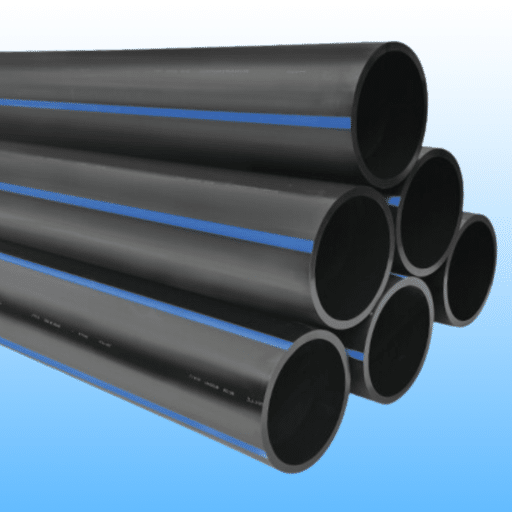
HDPE pipe chemical resistance makes HDPE pipe widely used for water distribution, wastewater conveyance, chemical transfer, mining slurry, oil and gas produced water, and landfill leachate collection. Its chemical resistance profile covers most acids, bases, salts, and many aqueous solutions encountered in municipal and industrial service.
Limitations in pipe applications include exposure to aromatic hydrocarbons, chlorinated solvents, and strong oxidizers. In contaminated soils, hydrocarbon permeation can occur even without visible pipe damage. For critical installations, pipe-grade compatibility should be verified against ISO/TR 10358 or the pipe manufacturer’s specific chemical resistance table. To match the right pipe grade to your service conditions, our HDPE Pipe Applications: Grade Selection Guide for Water, Gas, and Industry walks through grade choices for water, gas, and industrial systems.
HDPE Containers and Bottles
HDPE is the dominant material for bleach bottles, detergent containers, acid carboys, and chemical drums. It resists sodium hypochlorite, hydrochloric acid, caustic soda, and many household and industrial cleaners. Blow-molded containers for surfactant-based products require enhanced environmental stress crack resistance (ESCR) grades because surfactants accelerate cracking under the internal stress of the container wall.
Container designers should also consider closure and gasket compatibility. A chemically resistant HDPE bottle can still fail if the liner or cap material is incompatible with the contents. If your containers will hold food or beverages, our guide on Is HDPE Food Safe? A Guide to FDA-Compliant Food-Grade HDPE covers the compliance requirements you should confirm before specifying a grade.
HDPE Geomembranes and Liners
HDPE geomembrane chemical resistance helps make HDPE geomembranes the default material for landfill liners, mining heap-leach pads, tailings ponds, wastewater lagoons, and secondary containment. The combination of chemical resistance, very low permeability, and long service life makes HDPE suitable for aggressive leachate and process water.
Site-specific leachate testing is standard practice for geomembrane projects. ASTM D5322 immersion testing evaluates the effects of actual site chemistry on HDPE properties. Generic charts are useful for screening, but final specification should be supported by project-specific test data.
HDPE Industrial Components
Machined HDPE tanks, fittings, valves, and pump housings handle acids, bases, and slurries across chemical processing, electroplating, and semiconductor ancillary systems. Where aggressive solvents are present, machined HDPE parts may need to be replaced with PTFE, PFA, PVDF, or stainless steel depending on the chemical and temperature.
Chemicals That HDPE Cannot Resist
HDPE has clear limitations, and HDPE solvent resistance is the most commonly misunderstood. The following chemical classes are generally unsuitable for continuous HDPE contact:
- Strong oxidizing acids: concentrated nitric acid above 50–70%, fuming sulfuric acid (oleum), hot chromic acid in some concentrations
- Aromatic hydrocarbons: benzene, toluene, xylene
- Chlorinated solvents: methylene chloride, chloroform, carbon tetrachloride, trichloroethylene, perchloroethylene
- Ketones: acetone, methyl ethyl ketone (MEK), methyl isobutyl ketone (MIBK)
- Some ethers: diethyl ether, tetrahydrofuran (THF) at elevated temperature
- Oils and greases with high aromatic content: can swell HDPE over time
Better Material Alternatives
When HDPE is not suitable, consider these alternatives:
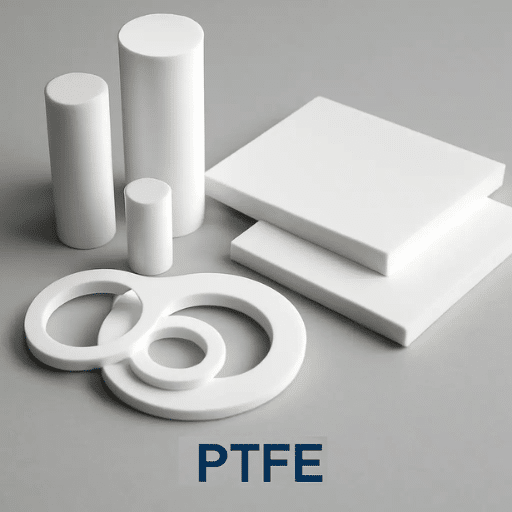
- PTFE or PFA: Near-universal chemical resistance and high-temperature capability. PTFE handles virtually all acids, bases, solvents, and oxidizers up to approximately 260°C. PFA offers similar chemical resistance with melt-processability. Yifuhui supplies PTFE and PFA resins for seals, linings, and high-purity applications.
- PP: Handles higher service temperatures than HDPE and resists many solvents better. PP is often used for hot-water and chemical-tank applications where HDPE’s temperature limit is restrictive.
- PVC or CPVC: Cost-effective for some acid and base applications, but solvent compatibility is limited and plasticizer leaching must be considered.
- PVDF or stainless steel: Required for aggressive oxidizers, high temperatures, or environments where polymer permeation is unacceptable.
Sourcing HDPE for Chemical-Service Applications
For chemical-service applications, resin quality and grade traceability matter as much as the chemical resistance chart. Off-spec HDPE with incorrect density, MFI, or additive package can fail in an environment where a properly specified grade would last for years.
Branded Prime vs. Compound Grades
Branded prime HDPE from manufacturers such as SABIC, Dow, LyondellBasell, Borealis, ExxonMobil, and Formosa Plastics is produced to consistent specifications with published chemical resistance baselines. Unverified compound or regrind material may have variable density, inconsistent additive packages, and no traceable test data.
For critical chemical applications, specify prime HDPE from a recognized manufacturer and request a Certificate of Analysis (COA) for each lot. If you are new to international sourcing, our guide on how to import engineering plastics from China walks through documentation, logistics, and supplier verification.
What to Check on the COA
A valid HDPE Certificate of Analysis (COA) should include:
- Grade designation and manufacturer
- Density and melt flow index (MFI)
- Tensile strength or other mechanical properties where applicable
- ESCR value for blow-molded or stressed components
- Compliance statements for FDA, RoHS, or REACH where required
- Lot or batch number for traceability
Cross-check the COA values against the manufacturer’s published datasheet. Significant deviations in density or MFI can indicate off-spec or blended material.
Documentation Package from Yifuhui
Every Yifuhui shipment of HDPE includes a complete export documentation package: Certificate of Analysis (COA), Material Safety Data Sheet (MSDS), commercial invoice, and packing list. Regulatory compliance certificates are available for qualifying grades. Orders start from 25 kg, and standard export terms include FOB Shanghai.
Request HDPE resin documentation for your chemical application →
Real-World Example: Landfill Leachate Liner Selection
The environmental engineering team at a landfill expansion in Southeast Asia needed a liner system for a new leachate pond. Initial screening showed HDPE as compatible with the expected leachate chemistry, primarily organic acids, ammonia, chloride salts, and trace metals at near-ambient temperature.
Rather than relying on generic compatibility charts alone, the team submitted actual leachate samples for ASTM D5322 immersion testing against a 2.0 mm HDPE geomembrane. After 120 days at the expected operating temperature, the tested samples showed no significant change in tensile properties, no surface cracking, and no measurable weight loss. The project specified a PE100-RC grade geomembrane for added confidence against installation damage and long-term stress cracking.
This example illustrates the right way to use HDPE chemical resistance data: start with the chart, confirm with project-specific testing when the consequences of failure are high, and specify a grade matched to both chemical and mechanical demands.
Frequently Asked Questions
Is HDPE chemically resistant to acids and bases?
Yes. HDPE acid resistance is excellent for most dilute and moderately concentrated inorganic and organic acids, including hydrochloric acid, sulfuric acid up to approximately 50%, phosphoric acid, acetic acid, and citric acid. It also resists strong bases such as sodium hydroxide, potassium hydroxide, and ammonium hydroxide at all common concentrations.
What chemicals are not compatible with HDPE?
HDPE is generally not recommended for continuous contact with concentrated oxidizing acids (nitric acid above 50–70%, fuming sulfuric acid), aromatic hydrocarbons (benzene, toluene, xylene), chlorinated solvents (methylene chloride, chloroform, TCE), and ketones (acetone, MEK, MIBK). These chemicals can swell, soften, or crack HDPE.
Can HDPE hold gasoline or diesel fuel?
HDPE can swell and lose mechanical strength with prolonged contact with gasoline, diesel, or kerosene, particularly if the fuel contains aromatic compounds. Short-term or intermittent contact may be acceptable, but HDPE is generally not recommended for long-term fuel storage unless specifically rated for the fuel type.
Is HDPE better than PP for chemical resistance?
HDPE typically outperforms PP for strong acids and bases at ambient temperature and has lower water absorption. PP handles higher temperatures and resists some organic solvents better than HDPE. The better choice depends on the specific chemical, concentration, and operating temperature.
What is the temperature limit for HDPE chemical resistance?
HDPE chemical service is generally limited to continuous temperatures of approximately 60–80°C, with short-term exposure up to around 100°C. Chemical resistance decreases as temperature increases, so always verify compatibility at the actual operating temperature.
What is the difference between PE80 and PE100 chemical resistance?
PE80 and PE100 are both HDPE pipe grades. PE100 has higher density, higher minimum required strength (MRS 10 MPa vs. 8 MPa), and better slow-crack growth resistance. These properties give PE100 a slight edge in aggressive chemical environments and long-term stress-cracking resistance, although the fundamental chemical compatibility is similar.
How do I verify HDPE chemical resistance claims from a supplier?
Request a manufacturer-issued Certificate of Analysis for the specific lot and cross-check density, MFI, and ESCR values against the manufacturer’s published datasheet. For solvent exposure, ask specifically for HDPE solvent resistance data or immersion test reports. For critical applications, conduct project-specific immersion testing or ask for prior test reports. A supplier who cannot provide manufacturer documentation is a significant risk for chemical-service applications.
Conclusion
HDPE chemical resistance is one of the material’s strongest selling points, but it is not unlimited. HDPE excels against acids, bases, salts, alcohols, and many aqueous chemicals, making it the default choice for pipes, geomembranes, chemical containers, and industrial liners. It fails against aromatics, chlorinated solvents, ketones, and strong oxidizers, where PTFE, PFA, PP, PVDF, or metals become the better option.
Real-world performance depends on more than the polymer family. Grade selection, temperature, concentration, mechanical stress, and supplier verification all determine whether an HDPE component lasts for decades or fails prematurely. For critical chemical-service applications, start with a compatibility chart, confirm with grade-specific data, and source from a supplier who can document every lot.
At Yifuhui, we supply branded prime HDPE resins with full manufacturer COA documentation, MSDS, and export paperwork. Orders start at 25 kg, with FOB Shanghai as our standard export term. Request a quote for certified HDPE resin — tell us your chemical environment, grade, and quantity, and we will respond within 24 hours.