




Marcus Chen, a procurement manager at a Malaysian pipe extrusion company, nearly approved a 20-ton HDPE order last year based on a supplier’s generic datasheet alone. The COA arrived only after payment, and the Melt Flow Index was 1.8 g/10 min, well outside the 0.2–0.4 g/10 min range his PE100 pipe grade required. The lot was unusable.
His facility lost three weeks of production schedule and had to air-freight emergency material from another source.
His mistake was assuming that all HDPE labeled “high-density polyethylene” performs the same. It does not. HDPE properties vary significantly by grade, manufacturer, and compounding quality. For engineers and procurement managers, the numbers on a datasheet only matter if the material that arrives matches them.
This guide covers HDPE mechanical, thermal, and chemical properties with real specification ranges. It also explains what to verify when sourcing high density polyethylene resin, so your production material performs exactly as your design assumes.
Want to source certified HDPE with full COA documentation? Request a quote for verified HDPE resin with 25 kg minimum order and FOB Shanghai shipping.
HDPE Properties at a Glance

The table below summarizes the key HDPE properties engineers and buyers reference most often. These ranges are representative of prime, unfilled grades; specific values vary by MFI, density, and manufacturer.
| Property | Typical Range | Test Method |
|---|---|---|
| Density | 0.941–0.965 g/cm³ | ASTM D792 |
| Tensile strength at yield | 20–37 MPa | ASTM D638 |
| Flexural modulus | 0.8–1.4 GPa | ASTM D790 |
| Melting point | 120–140°C | DSC / ISO 3146 |
| Heat deflection temp (0.45 MPa) | 70–100°C | ASTM D648 |
| Continuous service temperature | -50°C to +80°C | — |
| Shore D hardness | 60–70 | ASTM D2240 |
| Notched Izod impact | 20–100+ J/m | ASTM D256 |
| Water absorption (24h) | <0.01% | ASTM D570 |
| Dielectric strength | 20–30 kV/mm | ASTM D149 |
| Melt Flow Index (MFI) | 0.2–50 g/10 min | ASTM D1238 / ISO 1133 |
These values explain why HDPE dominates rigid packaging, pressure pipe, chemical containers, and geomembranes. They also explain why grade selection matters: an injection-molding grade with MFI 30 g/10 min will not perform like a PE100 pipe grade with MFI 0.3 g/10 min, even though both are called HDPE.
What Is HDPE? Structure and Classification
High-density polyethylene (HDPE) is a thermoplastic polymer produced from ethylene via catalytic polymerization. The “high density” designation refers to its crystalline structure: HDPE contains minimal branching along the polymer chain, allowing molecules to pack tightly together. This crystallinity gives HDPE its characteristic stiffness, chemical resistance, and relatively high melting point compared to other polyethylene families.
Typical HDPE density range: 0.941–0.965 g/cm³ (ASTM D792). This is the defining property that separates HDPE from low-density polyethylene (LDPE), which typically falls between 0.910–0.940 g/cm³.
HDPE Grade Categories
HDPE is not a single material. It is a family of grades optimized for specific processing methods and end-use requirements:
- Injection molding grades: Higher Melt Flow Index (MFI), typically 8–50 g/10 min, for complex part geometries
- Extrusion grades: Lower MFI, typically 0.2–8 g/10 min, for pipes, sheets, and profiles
- Blow molding grades: Moderate MFI, 0.2–1.5 g/10 min, for bottles and containers
- Film grades: Specialized for thin-wall packaging applications
- PE80 and PE100 pipe grades: Engineered for pressure piping with specific slow-crack-growth resistance and long-term hydrostatic strength
For procurement, the critical point is this: “HDPE” on a purchase order is not specific enough. You need the grade classification, the MFI range, and the manufacturer’s datasheet to ensure the HDPE properties match your process requirements.
HDPE Mechanical Properties

HDPE’s mechanical properties make it one of the most versatile commodity thermoplastics. The strength-to-density ratio is particularly favorable: HDPE delivers meaningful structural performance at roughly one-eighth the density of steel.
Tensile Strength and Stiffness
Typical HDPE tensile strength: 20–37 MPa at yield (ASTM D638). Higher-density grades and those with narrower molecular weight distribution tend toward the upper end of this range.
Flexural modulus: 0.8–1.4 GPa. This stiffness level is sufficient for self-supporting containers, structural pipe, and industrial tanks. It is lower than engineering plastics like POM (~2.6 GPa) or PA66 (~2.8 GPa), but adequate for applications where cost and chemical resistance take priority over rigidity.
Impact Resistance
HDPE maintains good toughness across a wide temperature range, including sub-zero conditions. This is why it dominates in applications like fuel tanks, chemical drums, and outdoor furniture. Unnotched Izod impact values are typically very high, though notched impact resistance decreases as density and crystallinity increase.
Hardness and Abrasion Resistance
Shore D hardness: 60–70. HDPE resists abrasion better than LDPE and many softer thermoplastics, which contributes to its use in liners, chutes, and conveyor components.
Creep and Environmental Stress Cracking
Here is where HDPE’s limitations matter. Under sustained mechanical load, HDPE creeps, it deforms slowly over time. Design engineers must account for this in load-bearing applications. More critically, HDPE is susceptible to environmental stress cracking (ESC): when exposed to certain surfactants, oils, or detergents under mechanical stress, HDPE can fail prematurely by brittle cracking.
This is not a flaw in the material. It is a known behavior that grade selection must address. PE100 pipe grades and certain blow-molding grades are specifically formulated with enhanced stress-crack resistance (ESCR) for this reason.
HDPE Thermal Properties
Melting Point and Crystallization
HDPE melting point: 120–140°C, with typical peak crystallization temperatures around 130°C. The exact value depends on molecular weight and density: higher-density grades with greater crystallinity melt at the upper end of this range. Because the melting behavior shifts noticeably from one grade to the next, it pays to know exactly where your grade sits, our grade-by-grade guide to HDPE melting point breaks down the values processors and buyers should plan around.
Heat Deflection Temperature
HDT at 0.45 MPa: 70–100°C
HDT at 1.82 MPa: 40–80°C
These values are adequate for many ambient and moderate-temperature applications but rule HDPE out for sustained high-temperature service. For comparison, POM copolymer handles 100°C continuous service, and PA66 with glass fiber reinforcement operates well above 150°C.
Continuous Service Temperature
Recommended continuous service temperature: -50°C to 60°C for general-purpose grades. Specialized stabilized grades may extend this slightly, but HDPE is not a high-temperature material. Designers should build in margin if parts will experience intermittent heat exposure.
Thermal Expansion
Coefficient of linear thermal expansion (CLTE): 100–150 × 10⁻⁶ /°C. This is relatively high compared to metals and to more crystalline engineering plastics. In precision-fit assemblies, thermal expansion must be factored into tolerance design.
HDPE Chemical Resistance
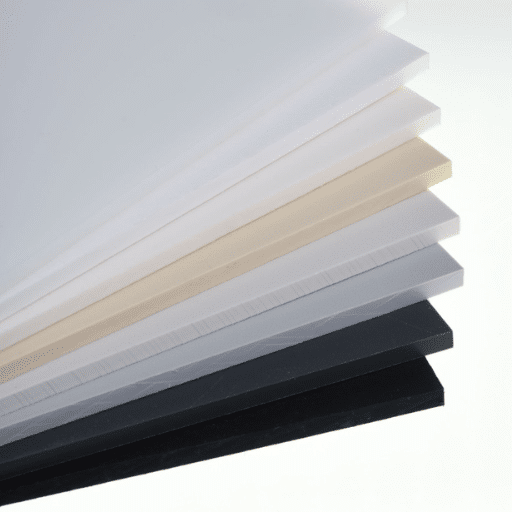
HDPE’s chemical resistance is one of its strongest properties. The saturated hydrocarbon backbone resists attack from a wide range of chemicals at room temperature.
Resistance to Acids, Bases, and Solvents
- Strong acids: Excellent resistance to dilute and concentrated sulfuric, hydrochloric, and nitric acids at ambient temperature
- Bases: Excellent resistance to caustic soda, ammonia, and alkaline solutions
- Alcohols and glycols: Generally excellent
- Oils and greases: Good to excellent resistance to aliphatic hydrocarbons and mineral oils
- Aromatic solvents and chlorinated hydrocarbons: Poor resistance, swelling and softening occur
- Oxidizing agents: Limited resistance to strong oxidizers at elevated temperatures
If you need to check a specific chemical against a specific concentration and temperature, our HDPE chemical resistance compatibility chart and application guide covers the industrial pairings in far more detail.
Environmental Stress Cracking Resistance (ESCR)
ESCR measures a material’s ability to resist brittle cracking under mechanical stress in the presence of surface-active agents. Standard HDPE has moderate ESCR. For critical applications, detergent bottles, chemical containers, and pipe systems, specify a grade with enhanced ESCR testing (ASTM D1693 or similar protocols).
Moisture and Permeability
Water absorption (24h): <0.01%. HDPE is an excellent moisture barrier, which is why it dominates in milk bottles, food packaging, and geomembranes for pond liners. Gas permeability is low for water vapor but higher for oxygen and carbon dioxide compared to materials like PET or EVOH.
HDPE Electrical and Optical Properties
Dielectric Properties
HDPE is an excellent electrical insulator:
- Dielectric strength: 20–30 kV/mm
- Volume resistivity: >10¹⁵ Ω·cm
- Dielectric constant: 2.3–2.4
These properties make HDPE suitable for cable jacketing and electrical insulation applications where flexibility, moisture resistance, and chemical inertness are required.
Optical Properties
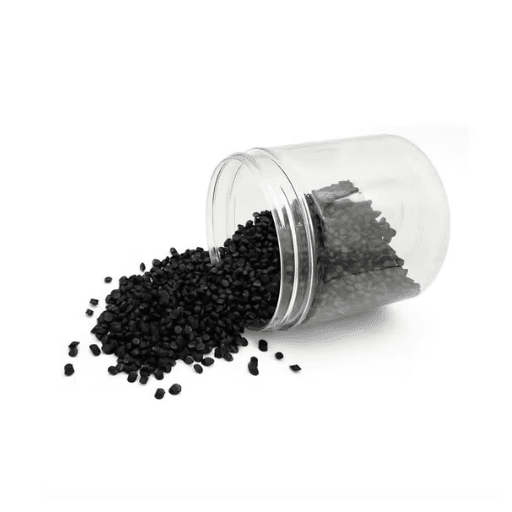
HDPE is translucent to opaque in its natural state, with a milky or waxy appearance. It is not a transparent material. For applications requiring optical clarity, polycarbonate (PC), PMMA, or PET are the appropriate choices. HDPE’s opacity is actually an advantage in UV-stabilized outdoor applications, as the polymer matrix can be compounded with carbon black or other stabilizers for long-term weathering resistance.
HDPE Processing Properties
Melt Flow Index (MFI)
MFI is the most important processing parameter for HDPE grade selection. It indicates how easily the material flows when molten:
| Application | Typical MFI Range (g/10 min) |
|---|---|
| PE100 pressure pipe extrusion | 0.2–0.4 |
| General blow molding | 0.2–1.5 |
| General extrusion | 0.4–8 |
| Injection molding (general) | 8–20 |
| Thin-wall injection molding | 20–50 |
Using a grade with the wrong MFI for your process causes problems. Too low an MFI for injection molding leads to incomplete cavity fill, high injection pressures, and part warpage. Too high an MFI for pipe extrusion results in poor melt strength and sagging during cooling. If injection molding is your process, our HDPE injection molding guide walks through processing parameters, grade selection, and defect troubleshooting in practical detail.
Shrinkage and Dimensional Stability
Mold shrinkage: 1.5–4.0%. This relatively high shrinkage is driven by HDPE’s crystallization behavior as it cools. Mold design must account for this, particularly in thick-section parts where differential cooling can cause internal stresses and warpage.
Processing Temperature
Typical melt processing temperature: 180–240°C. HDPE has a wide processing window, which makes it forgiving for most extrusion and molding operations. However, prolonged exposure above 270°C causes thermal degradation, resulting in discoloration, odor, and reduced mechanical properties.
HDPE vs. LDPE and LLDPE: Property Comparison
Engineers often choose between HDPE, LDPE, and linear low-density polyethylene (LLDPE) for similar applications. The decision comes down to the tradeoff between stiffness, processability, and impact resistance.
| Property | HDPE | LDPE | LLDPE |
|---|---|---|---|
| Density (g/cm³) | 0.941–0.965 | 0.910–0.940 | 0.915–0.925 |
| Tensile Strength (MPa) | 20–37 | 8–12 | 20–28 |
| Flexural Modulus (GPa) | 0.8–1.4 | 0.1–0.3 | 0.2–0.4 |
| Melting Point (°C) | 120–140 | 105–115 | 120–125 |
| Transparency | Translucent/Opaque | Transparent/Translucent | Translucent/Opaque |
| Chemical Resistance | Excellent | Good | Good |
| Typical Applications | Pipes, containers, crates, liners | Film, squeeze bottles, coatings | Stretch film, heavy-duty bags |
When to choose HDPE: When stiffness, chemical resistance, and structural integrity matter more than flexibility or clarity. HDPE is the standard for rigid containers, pressure pipe, and structural industrial parts.
When to choose LDPE: When flexibility, transparency, or ease of heat sealing are the priority, packaging film and flexible tubing are classic LDPE applications.
When to choose LLDPE: When you need toughness and puncture resistance in film applications, often as a blend with LDPE.
Still weighing the two for a specific part? Our HDPE vs LDPE material selection guide compares them side by side to help engineers and buyers land on the right choice.
HDPE Properties in 2026: Market Context
In June 2026, HDPE resin prices showed significant regional divergence. According to IMARC Group pricing data, HDPE was trading at approximately USD 1,023/MT in China, USD 1,194/MT in the USA, and USD 991/MT in Germany. Asia remained softer on ample domestic supply, while European and American markets firmed on feedstock costs and maintenance-driven tightness.
What does this mean for HDPE property verification? When regional price spreads widen, the incentive to blend off-spec, recycled, or mislabeled material into supply chains increases. A procurement team buying “HDPE” at 20% below the prevailing market rate for the specified grade should treat the discount as a signal to verify, not a reason to celebrate.
The physical properties on a datasheet are only meaningful if the material that arrives matches them. In a market with divergent pricing, COA verification becomes even more important than in stable periods.
Sourcing HDPE: Ensuring Properties Match Specifications
The HDPE properties in this guide are representative of well-manufactured, prime-grade HDPE. But not every supplier delivers material that matches its datasheet. For international buyers sourcing from China, verification is essential.
Why Branded Prime Resin Matters
HDPE is produced by major global petrochemical manufacturers including SABIC, LyondellBasell, INEOS, Dow, and various Asian producers. Branded prime resin from these manufacturers undergoes consistent quality control, with narrow lot-to-lot variation in MFI, density, and mechanical properties.
By contrast, compound-grade or off-brand HDPE from secondary sources can show significant property drift between batches. For a pipe extruder running a PE100 certification, even a small density shift can affect hydrostatic strength test results. For an injection molder, MFI variation changes cycle times and part dimensions.
How to Read an HDPE Certificate of Analysis (COA)
A valid manufacturer-issued COA for HDPE should include:
- Material name and grade designation
- Manufacturer name and lot number
- MFI value with test conditions (typically 190°C/2.16 kg per ISO 1133 or ASTM D1238)
- Density measurement
- Tensile strength at yield
- Applicable compliance statements (FDA, RoHS, REACH)
Cross-reference the MFI and density values against the manufacturer’s published datasheet. Values outside the specified range should trigger a supplier query before the material enters production.
Red Flags in Unverified HDPE Supply
- No manufacturer-issued COA: A supplier-generated certificate lacks traceability to production records
- Missing grade designation: “HDPE granules” without a specific grade or MFI range is not a professional material description
- Price significantly below market: Prime HDPE has a globally traded price. Deep discounts often signal off-spec, recycled content, or mislabeled material
- Inconsistent lot-to-lot MFI: If your reorders show MFI swings of 20% or more between lots, your supplier is not sourcing from a consistent prime-grade stream
At Yifuhui, we supply certified HDPE grades with manufacturer-issued COA documentation, full export paperwork, and batch traceability, starting from 25 kg minimum order with FOB Shanghai as our standard term.
Conclusion
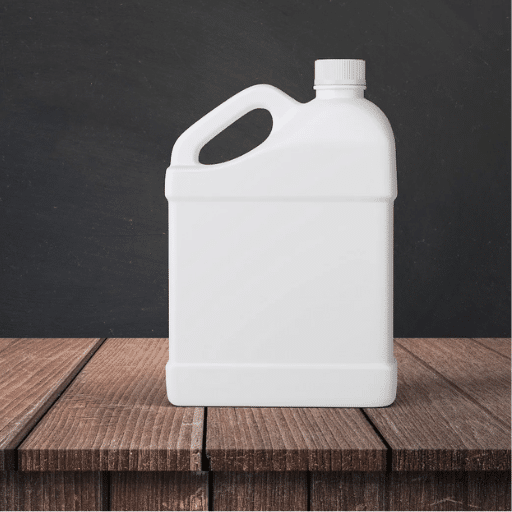
HDPE offers an excellent combination of stiffness, chemical resistance, moisture barrier performance, and processability, all at a cost position that makes it the most widely produced thermoplastic in the world. Its typical density of 0.941–0.965 g/cm³, tensile strength of 20–37 MPa, and melting point around 130°C make it suitable for everything from municipal water pipes to food containers to electrical cable jacketing.
But HDPE is not the right choice for every application. Its relatively low heat deflection temperature, susceptibility to environmental stress cracking, and high thermal expansion mean engineers must select grades carefully and design with these limitations in mind. Understanding HDPE properties, from density to MFI to chemical resistance, is the first step in making the right material decision. More importantly, the properties on a datasheet are only meaningful if the material you receive actually matches them.
For procurement teams sourcing HDPE from China, the critical control points are simple: specify the grade and MFI range, request a manufacturer-issued COA, and cross-reference key values against the datasheet before the material hits your production line.
Ready to source certified HDPE resin? Request a quote for verified HDPE with full COA documentation, 25 kg minimum order, response within 24 hours, FOB Shanghai.
Frequently Asked Questions
What are the key HDPE properties engineers should know?
The most important HDPE properties are density (0.941–0.965 g/cm³), tensile strength (20–37 MPa), melting point (~130°C), chemical resistance, and Melt Flow Index (MFI). These values determine whether HDPE is suitable for your specific application and processing method. To learn more about High Density Polyethylene (HDPE), please click to refer to our accompanying guide: High Density Polyethylene (HDPE): Complete Material Guide
What is the density of HDPE?
HDPE density typically falls between 0.941–0.965 g/cm³ according to ASTM D792. This higher density, driven by HDPE’s linear molecular structure and low branching, is what separates it from LDPE (0.910–0.940 g/cm³) and gives it greater stiffness and strength.
What is the melting point of HDPE?
HDPE melts at approximately 120–140°C, with most commercial grades peaking around 130°C. The exact melting point depends on molecular weight and crystallinity; higher-density grades with more crystalline structure tend to melt at the upper end of the range.
What is the MFI range for HDPE injection molding?
General injection molding typically uses HDPE grades with an MFI of 8–20 g/10 min. Thin-wall or complex geometries may require 20–50 g/10 min. For extrusion or pipe applications, much lower MFI ranges (0.2–1.5 g/10 min) are standard to maintain melt strength.
Is HDPE chemically resistant to acids and bases?
Yes. HDPE shows excellent resistance to most acids, alkalis, and alcohols at ambient temperature. It is widely used for chemical containers, acid tanks, and industrial piping. However, HDPE has poor resistance to aromatic solvents, chlorinated hydrocarbons, and strong oxidizing agents at elevated temperatures.
What is the difference between HDPE and LDPE?
HDPE has a linear molecular structure with minimal branching, resulting in higher density, greater stiffness, and better chemical resistance. LDPE has extensive branching, making it softer, more flexible, and transparent. HDPE is used for rigid containers and pipes; LDPE dominates flexible film and packaging applications.
How do I verify HDPE properties from a supplier’s COA?
Request a manufacturer-issued Certificate of Analysis (COA) for every lot. Cross-reference the measured MFI and density values against the manufacturer’s published datasheet. Lot-to-lot variation within a prime-grade HDPE should be small. Large deviations or supplier-generated COAs without manufacturer traceability are red flags.