




A procurement manager in Hamburg once rejected a full container of HDPE because the Certificate of Analysis showed a melting peak 7°C lower than the datasheet. The supplier insisted the material was “still HDPE.” Six weeks of lab testing later, the batch was confirmed as an off-spec blend with higher comonomer content. The lesson was expensive but simple: HDPE melting point is not one fixed number.
If you source, specify, or process high-density polyethylene, you have probably seen datasheets quoting anywhere from 120°C to 140°C. That range is real, and it matters. In this guide, we will explain what the HDPE melting point actually is, why it shifts between grades, how it differs from processing temperature, and what to verify on a COA before you commit to a batch. Whether you are extruding PE100 pipe, blow-molding chemical containers, or injection-molding thin-wall caps, the same thermal baseline drives your process window.
Here is what you will learn:
- The precise melting range for HDPE and how it compares to LDPE, LLDPE, and PP
- Why pipe, blow molding, and injection grades show different peak temperatures
- The critical difference between melting point, heat deflection, and processing temperature
- How to read a COA for thermal consistency
- Where to source certified HDPE with full documentation
What Is the Melting Point of HDPE?
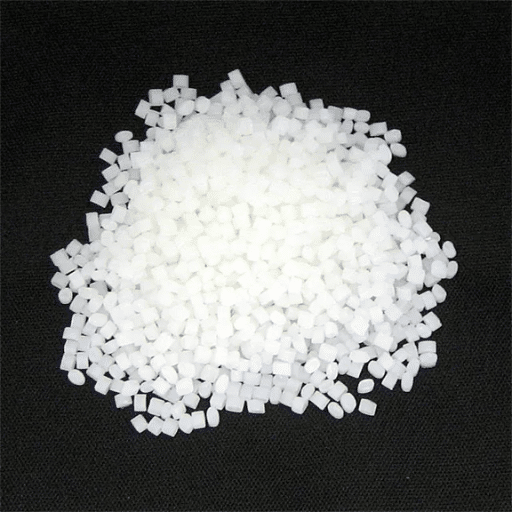
HDPE typically melts at 120–135°C (248–275°F), with most commodity grades peaking near 130°C. Some high-density, high-crystallinity pipe grades can peak closer to 135–140°C. The exact value depends on density, crystallinity, molecular weight, and how the test was run.
High-density polyethylene is a semi-crystalline polymer. Its chains pack tightly because they have very few branches. Those packed regions form crystallites, and it is the crystallites that melt at a discrete temperature. The more crystalline the material, the higher the melting point. That is why HDPE melts higher than LDPE, whose branched chains cannot pack as tightly and form smaller, lower-melting crystallites. If you want a deeper side-by-side explanation of how chain structure affects performance, see HDPE vs LDPE: Material Selection Guide for Engineers and Buyers.
For engineers and buyers, the key takeaway is this: a melting point on a datasheet is a measured value, not a specification guarantee. Two HDPE grades with the same nominal density can report slightly different melting peaks depending on the manufacturer, catalyst system, and thermal history.
HDPE Melting Point vs. LDPE, LLDPE, PP, and UHMWPE
When you compare polyethylene families, the relationship between density and melting point becomes clear. The table below gives practical ranges for the most common thermoplastics you will see alongside HDPE in procurement discussions.
| Material | Density (g/cm³) | Melting Point (°C) | Melting Point (°F) | Why the Difference? |
|---|---|---|---|---|
| LDPE | 0.910–0.925 | 105–115 | 221–239 | Highly branched chains, low crystallinity |
| LLDPE | 0.915–0.925 | 110–125 | 230–257 | Short linear branches reduce packing |
| HDPE | 0.941–0.965 | 120–135 | 248–275 | Linear chains, high crystallinity |
| UHMWPE | 0.930–0.935 | 135–138 | 275–280 | Very high molecular weight, dense crystallites |
| PP | 0.900–0.910 | 160–175 | 320–347 | Different repeat unit, stronger chain interactions |
This comparison matters for buyers because melting point is often a proxy for heat resistance. If a buyer sees a low-cost “HDPE” that melts closer to 110°C, it may be an off-spec or blended material. For hot-fill or sterilizable applications, PP is usually the better choice, not a lower-melting PE.
Why HDPE Melting Point Varies by Grade
Not every HDPE grade behaves the same way at the crystalline level. The reported melting point moves for four main reasons.
Crystallinity
HDPE crystallinity typically falls between 70% and 90%. Higher crystallinity means more crystallites and stronger intermolecular packing, which raises the melting point. Pipe grades and blow molding grades engineered for stiffness and chemical resistance tend to sit at the high end of the crystallinity range.
Molecular Weight
Higher molecular weight grades generally melt at slightly higher temperatures because longer chains require more thermal energy to overcome crystalline bonding. However, molecular weight also affects melt viscosity, which is why ultra-high molecular weight polyethylene (UHMWPE) melts at 135–138°C yet processes very differently from commodity HDPE.
Branching and Comonomer Content
Even small amounts of comonomer introduce short-chain branches. These branches disrupt crystalline packing and lower the melting point. A pipe-grade HDPE with minimal branching will melt higher than a film-grade HDPE with more comonomer for flexibility.
Thermal History and DSC Conditions
The melting point you see on a datasheet is usually measured by Differential Scanning Calorimetry (DSC). Heating rate, annealing history, and sample preparation can shift the reported peak by 2–5°C. That is why two datasheets for nominally similar grades may show slightly different numbers.
Melting Point Is Not Processing Temperature
This is the most common mistake in procurement and processing. The temperature at which HDPE melts is not the temperature at which you process it. Processing temperatures must be high enough to fully melt the resin, reduce viscosity, and allow flow, but low enough to avoid thermal degradation.
Here is how real processing windows compare to the melting point.
| Process | Melt Temperature (°C) | Mold / Die Temperature (°C) | Why So Much Higher? |
|---|---|---|---|
| Injection molding | 180–280, commonly 220–260 | 20–95 | Needs low viscosity for cavity filling |
| Extrusion | 160–250 | Varies by die | Needs uniform melt for profile or pipe |
| Blow molding | 180–240 | Air-cooled parison | Needs melt strength to support parison |
| Rotational molding | 200–300 mold temp | Not applicable | Mold heats powder from outside |
Running HDPE at exactly its melting point would give you a thick, barely molten mass. In practice, processors use a temperature buffer of 50–130°C above the melting peak. The buffer depends on grade MFI, wall thickness, cycle time, and equipment.
Mold Temperature Matters Too
Mold temperature controls how quickly the molten HDPE crystallizes on cooling. Lower molds (20–50°C) give faster cycles but can increase warpage. Higher molds (50–95°C) improve surface finish and dimensional stability. For processors, mold temperature is often more important than the exact melting point for controlling part quality.
HDPE Melting Point by Grade Category
Different HDPE grades are engineered for different processes, and their melting behavior reflects that. The table below shows typical ranges by application category.
| HDPE Grade Category | MFI Range (g/10 min) | Typical Melting Point (°C) | Key Thermal Consideration |
|---|---|---|---|
| Pipe grades (PE80 / PE100) | 0.2–0.6 | 130–135 | Long-term hydrostatic strength matters more than peak melting point |
| Blow molding grades | 0.2–1.5 | 125–132 | Melt strength is critical; peak melting is secondary |
| Extrusion / film grades | 0.3–8 | 125–132 | Orientation and optical properties drive selection |
| Injection molding grades | 4–50 | 125–133 | High MFI flows at lower melt temperatures |
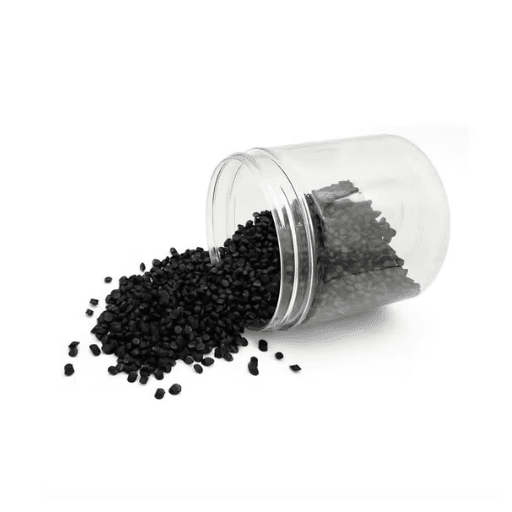
| UV-stabilized / black grades | Varies | 125–135 | Additives do not significantly shift melting point |
Pipe Grades: PE80, PE100, PE4710
Pipe-grade HDPE is designed for decades of pressure service. The melting point is usually 130–135°C, but the more important specification is long-term hydrostatic strength certified to standards like ISO 4427 or ASTM D3035. A pipe grade that meets PE100 requirements will almost always melt at the high end of the HDPE range because of its high density and crystallinity. For a more detailed breakdown of resin selection by end-use, installation environment, and pressure class, see HDPE Pipe Applications: Grade Selection Guide for Water, Gas, and Industry.
Blow Molding Grades
Blow-molded bottles and containers need enough melt strength to keep the parison from sagging before the mold closes. These grades usually have low MFI (0.2–1.5 g/10 min) and melting points around 125–132°C. For detergent or chemical containers, environmental stress cracking resistance (ESCR) is usually more important than the exact melting peak.
Injection Molding Grades
Thin-wall caps, closures, and housewares use high-MFI grades (15–35+ g/10 min) that flow easily at 220–240°C. The melting point may be 125–133°C, but processors care more about MFI, mold shrinkage (1.5–4.0%), and cycle time than the crystalline melting peak. If your focus is molding performance rather than just thermal data, you can also refer to HDPE Injection Molding: Processing Parameters, Grade Selection & Defect Troubleshooting for a more process-oriented guide.
Melting Point vs. Heat Deflection and Service Temperature

Another common confusion is the difference between melting point and safe operating temperature. HDPE’s melting point is ~130°C, but its continuous service temperature is only around 82°C. Above that, the material softens and creeps under load long before it melts.
| Thermal Property | Typical HDPE Value | What It Means for Design |
|---|---|---|
| Melting point | 120–135°C | Temperature at which crystallites disappear |
| Heat deflection temperature (0.45 MPa) | 70–100°C | Temperature where stiffness drops under light load |
| Heat deflection temperature (1.82 MPa) | 40–80°C | Temperature where stiffness drops under higher load |
| Continuous service temperature | ~82°C | Safe long-term operating limit |
| Vicat softening point | 120–130°C | Temperature where a probe sinks under load |
| Thermal degradation onset | >250–300°C | Temperature where polymer chains begin to break down |
This distinction has real procurement consequences. A buyer sourcing HDPE for a hot-fill application needs to know that the material will soften at 80–100°C, even though it does not melt until ~130°C. For those cases, PP or PET may be more appropriate.
How Melting Point Shows Up on a COA
When you buy branded prime HDPE, every shipment should arrive with a Certificate of Analysis (COA). The COA is your proof that the batch matches the manufacturer’s published specification. Here is what to look for on the thermal side.
Required COA Fields
- Grade designation and manufacturer: confirms the resin is the exact grade you specified
- Melt flow index (MFI): indicates process viscosity; should match datasheet range
- Density: confirms the high-density structure; should be 0.941–0.965 g/cm³
- Melting point or peak crystalline melting temperature: usually reported if tested
- Lot/batch number: enables traceability back to the manufacturer
Red Flags
- Melting point more than 5°C below the datasheet baseline
- Missing grade designation or generic descriptions like “HDPE granules”
- Supplier-generated COA instead of manufacturer-issued documentation
- Large lot-to-lot swings in MFI or density
- Price well below market for the stated grade
A procurement team in Dubai once saved a production run by catching a 9°C low melting peak on a COA before unloading the container. The supplier had blended virgin and recycled material without disclosure. The COA line item for melting point was the first signal.
Sourcing Certified HDPE with Consistent Thermal Properties
Thermal consistency starts with the right supplier relationship. Yifuhui supplies branded prime HDPE from globally recognized manufacturers, with full documentation for every batch.
What You Receive
- Manufacturer-issued Certificate of Analysis (COA)
- Material Safety Data Sheet (MSDS)
- Commercial invoice and packing list
- Compliance certificates where applicable (FDA, RoHS, REACH)
- Lot-level traceability for audit-ready supply chains
Logistics and Ordering
- Minimum order quantity: 25 kg for trial quantities
- Standard lead time: 7–14 days from Suzhou warehouse to major international ports
- Trade terms: EXW, FOB Shanghai, CIF
- Location: Suzhou, Jiangsu Province, adjacent to the Port of Shanghai
If you are qualifying a new HDPE grade, starting with a 25 kg trial lets you verify melting point, MFI, and density against the datasheet before committing to a full container load. Request a quote for certified HDPE resin with full COA documentation →
Frequently Asked Questions
What is the melting point of HDPE in Celsius?
HDPE typically melts at 120–135°C, with most grades around 130°C.
What is the melting point of HDPE in Fahrenheit?
That converts to approximately 248–275°F, or about 266°F for a typical grade.
Does HDPE melt in boiling water?
No, boiling water at 100°C is below HDPE’s melting point. However, HDPE will soften and deform under sustained load above ~82°C, so it is not ideal for long-term boiling-water exposure under stress.
At what temperature does HDPE degrade?
Thermal degradation generally begins above 250–300°C in the absence of oxygen. In air, oxidative discoloration and embrittlement can start around 180–220°C, which is why processing temperatures are kept within controlled windows.
Why does HDPE melting point vary between datasheets?
Variations come from differences in crystallinity, molecular weight, comonomer content, nucleating agents, and DSC test conditions. Two similar grades from different manufacturers can easily differ by 2–5°C.
Is HDPE melting point higher than LDPE?
Yes. LDPE melts at 105–115°C, while HDPE melts at 120–135°C. The difference comes from HDPE’s more linear, more crystalline structure.
What is the difference between HDPE melting point and processing temperature?
Melting point is the temperature at which HDPE crystallites melt. Processing temperature is the much higher temperature used in extrusion, molding, or blow molding to make the resin flow. Processing temperatures are typically 180–280°C, well above the melting point.
Conclusion
The HDPE melting point is a simple number with important nuance. Most HDPE grades melt between 120°C and 135°C, but the exact value depends on crystallinity, molecular weight, comonomer content, and test method. For processors, the melting point is only the starting point; the real operating window is the processing temperature, which is typically 50–130°C higher. For buyers, the melting point on a COA is a quick check on grade consistency and batch authenticity.
Before you place your next HDPE order, confirm three things: the grade matches your process, the COA values align with the manufacturer datasheet, and your supplier can deliver consistent, traceable batches. If you need certified HDPE with full documentation, Yifuhui can supply branded prime grades starting at 25 kg MOQ, shipped from Suzhou via the Port of Shanghai. To learn more about High Density Polyethylene (HDPE) and HDPE Properties, please click to refer to our accompanying guide.
Ready to source HDPE you can verify? Request a quote for certified HDPE resin with COA documentation →